Putin, Capitalism, Communism and World Domination:  Part 2 — J. Persico and Metis (AI Assistant)

This blog continues from where I left off in Part 1
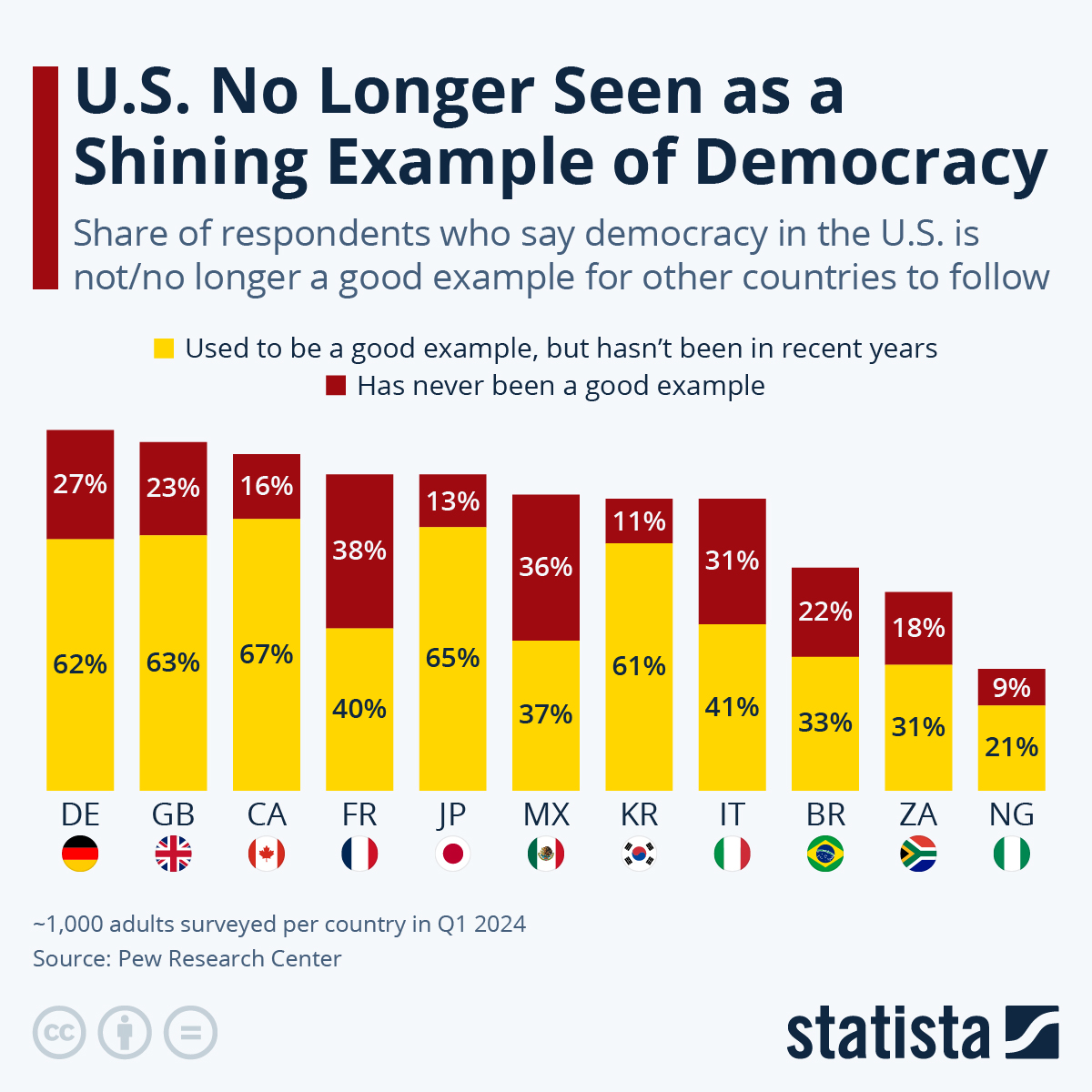
A look at what is going on in the USA today should squash any such naïve belief in our altruism towards the rest of the word.  America’s rhetoric about democracy often conflicts with the realities of it’s economic and geopolitical behavior.

  • We are heading in our own country towards an autocratic government that bears little evidence of the democracy we claim to believe in
  • We are gutting foreign aid programs that really do help the oppressed of the world
  • We are supporting wars that have no basis in protecting the American people
  • We are threatening to invade our allies
  • We are threatening to pull out of NATO
  • We are silencing honest journalism throughout the world

Given the above facts, the question that begs answering is “Why then are we doing this?”  The short answer to this question can be found by looking at the S&P Stock charts.  Throughout everything that has happened in the USA over the past two years, the average value of the Stock Market has grown.  It should be obvious that the 10 percent of the people that own 90 percent of the stocks in this country are benefiting from the regressive and anti-democratic policies of the current regime.

The long answer to the question posed above has to deal with “who is going to rule the world economy.”  There is an old saying that “He who has the gold makes the rules.”  However, turning this trope around is even more accurate:  “He who makes the rules gets the gold.”  Whoever rules the world economy gets rich.  The stock market is evidence that this is already happening.  

Federal Reserve data and economic analyses highlight the stark concentration of equity ownership:

  • The Top 1%: Owns roughly 50% of all corporate equities and mutual-fund shares
  • The Next 9% (90th–99th percentiles): Owns about 37% of the market

We are and have been in a world war for decades now.  But it is not a war of bullets and bombs.  It is a war of currency and trade.  Our team in the USA is based on Corporate Capitalism which masquerades as free enterprise and free trade.  Some of the other teams in the war or shall we call it a game include Socialism as practiced in some countries and Communism as many people still associate with Russia.  However, these “ism’s” do not exist in a traditional sense anymore as the following information will show.
   

1. American-Style Corporate Capitalism

Primary example: United States

Core characteristics:

  • Private ownership of production
  • Large multinational corporations dominate markets
  • Shareholder profit maximization
  • Financialization (Wall Street influence)
  • Consumer culture
  • Heavy lobbying and corporate political influence
  • Relatively weak labor protections compared to Europe
  • Innovation driven by private investment and venture capital

Strengths:

  • High innovation
  • Entrepreneurial dynamism
  • Flexible markets
  • Strong technological development

Weaknesses:

  • High inequality
  • Monopolization tendencies
  • Short-term thinking
  • Political capture by wealth
  • Healthcare and education inequities
  • Externalization of environmental and social costs

2. State Capitalism –  What once was more Communistic

Primary examples: China, partially Singapore

This may actually be the strongest current competitor to the U.S. model.

Core characteristics:

  • Markets and private enterprise exist
  • But the state directs strategic sectors
  • National goals supersede shareholder goals
  • Industrial policy and long-term planning
  • Strong state intervention
  • Key industries often state-owned or state-guided

China especially combines:

  • capitalism,
  • authoritarian political control,
  • nationalism,
  • and centralized strategic planning.

This is not classical communism anymore.

Modern China is better described as:

  • authoritarian state capitalism,
  • techno-nationalism
  • or party-directed capitalism.

Strengths:

  • Long-term infrastructure planning
  • Rapid industrial mobilization
  • Strategic coordination
  • Ability to direct national resources

Weaknesses:

  • Corruption
  • Lack of political freedom
  • Innovation constraints in some areas
  • Surveillance state tendencies
  • Risk of bureaucratic rigidity

3. Classical Socialism

Historically associated with:

  • worker ownership,
  • public ownership of major industries,
  • democratic economic planning.

Modern pure socialism barely exists at national scale anymore.

Historically important examples:

  • parts of postwar United Kingdom,
  • Yugoslav worker self-management,
  • various democratic socialist experiments.
  • Communism (Classical Marxist-Leninist)

Historical examples:

  • Soviet Union
  • Maoist China
  • Cuba

Core characteristics:

  • State ownership of production
  • Central planning
  • One-party rule
  • Suppression of private capital

Almost no major power today operates under pure communism anymore — including China.

The winners of this war will dominate the world economy.  The benefits are beyond calculation.  Think of a monopoly game.  If any player owned all of the following properties they would almost be guaranteed a sure win in the game:

  • Illinois Avenue (Red)
  • New York Avenue (Orange)
  • Tennessee Avenue (Orange)
  • St. James Place (Orange)
  • Kentucky Avenue (Red)
  • Indiana Avenue (Red)

If you controlled only these six properties  and developed them efficiently, you would have an enormous statistical advantage over most opponents.  Not guaranteed victory — luck and trading still matter — but probably the closest thing Monopoly has to a dominant board position. 

The Irony of Monopoly — Elizabeth Magie originally designed the precursor to Monopoly as a critique of concentrated wealth and monopolistic capitalism.  It would seem that the lesson was lost on American business or more likely lost on the American public.

One of the most decorated men in WW I was Major General Smedley Butler.  He had this to say about America and the wars he fought in:

“War is a racket.  It always has been. It is possibly the oldest, easily the most profitable, surely the most vicious.  It is the only one international in scope.  It is the only one in which the profits are reckoned in dollars and the losses in lives.  A racket is best described, I believe, as something that is not what it seems to the majority of people. Only a small “inside” group knows what it is about.  It is conducted for the benefit of the very few, at the expense of the very many.”

“Out of war a few people make huge fortunes. In the World War a mere handful garnered the profits of the conflict.  At least 21,000 new millionaires and billionaires were made in the United States during the World War.  That many admitted their huge blood gains in their income tax returns.” —- from “War is a Racket” by Major General Smedley Butler.

Prussian military theorist Carl von Clausewitz wrote in his 1832 treatise On War that “War is the continuation of politics by other means.”  Economic policy today drives political policy.  Ergo, wars are fought to support political policies which support economic policies.  As my friend Dick always said, “Follow the money.”  “Political policy determines who holds power; economic policy determines who receives the rewards of that power.”
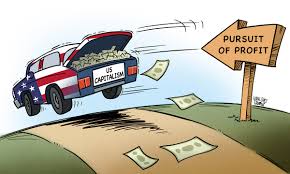
I doubt that most Americans realize on a day to day basic, the economic benefits that could and do accrue from the United States holding a dominant position in world economics.  Just one example might help.  Here are some benefits and also drawbacks that we get from the Dollar and not the Yuan, Ruble or Yen being the de facto standard for world currency and trade. 

  • Ability to Borrow More Cheaply Than Most Other Nations 
  • Persistent Trade Deficits Are Sustainable
    The U.S. can import more than it exports for decades because other countries willingly hold dollars instead of demanding immediate repayment in goods.
  • Global Demand for Dollars Supports American Wealth
    Countries, banks, and corporations worldwide need dollars for trade, creating constant demand for U.S. currency and financial assets.
  • Lower Cost of Imports for Americans
    A strong dollar makes imported goods: cheaper, more abundant, and helps keep inflation lower than it otherwise would be.
  • Massive Influence Over Global Finance
    Most international banking transactions move through dollar-based systems. This gives the U.S. extraordinary leverage over: sanctions, banking access, and international finance.
  • Powerful Sanctions Capability
    The U.S. can severely pressure adversaries by restricting access to dollar systems, as seen with: Iran, Russia, and others.
  • Foreign Nations Help Finance U.S. Debt
    Countries like Japan and China buy large amounts of U.S. Treasury debt, effectively helping finance American spending.
  • The U.S. Can Create Currency the World Needs
    The Federal Reserve can expand the money supply during crises and much of the world still seeks dollars as a “safe haven.”
  • American Financial Markets Become the World’s Center
    Wall Street and U.S. financial institutions dominate global capital flows because the dollar anchors world finance.
  • Geopolitical and Military Power Are Reinforced
    Dollar dominance helps fund:
  • large military expenditures,
  • global bases,
  • and international influence at costs that would cripple many other nations.

The Tradeoff – There are always cons to every action.  However, you will note from the following that the cons eventually impact the standard of living of the average American more than they do the Super-Rich.

Because the dollar is so strong:

  • U.S. manufacturing can become less competitive; hence companies move overseas for cheaper labor.  Consumers gain cheap goods, but capital owners and multinational corporations often gain the largest rewards.
  • Outsourcing becomes easier as many nations welcome American factories in their countries.  American jobs decline.
  • Trade deficits grow:  The broadest U.S. trade deficit number today is about $901.5 billion per year for goods and services combined.  The goods-only deficit is much larger — about $1.24 trillion annually.
  • Financial sectors may gain power relative to industrial labor.  Some critics argue the reserve-currency system helped hollow out parts of the American middle class while benefiting finance, multinational corporations, and asset owners.

The dollar’s dominance gives the U.S. extraordinary national power — but distributes the internal benefits unevenly among Americans.

So, who is the bad guy?  Is China going to be our next enemy in our economic wars?  When will it replace the Soviet Union?  Actually, it already has.  To date, the Chinese economy has grown faster than any economy in history.  The drums for stopping the Chinese growth started beating many years ago.  While global trade can create overall wealth, the struggle for dominance within the system often becomes zero-sum among competing powers.

Questions to Consider:

  • Do we want to keep getting in wars to support the rich getting richer and Americans dying to make more billionaires?
  • Do we have to play the game like it is Monopoly and can only have winners and losers?
  • How much do we value our reputation as America being a home for the liberty and justice toward all?
  • What will it take to start electing politicians who are more beholden to the American public and less to the International Conglomerates that control trade? 
A One Act Play in Memory of Our Good Friend: Dr. Hana Tomasek – D- 05-25-2020  

Dr. Hana Tomasek:  A Most Remarkable Woman

I am reposting this blog in memory of my good friend Dr. Hana Tomasek who died at 10:45 AM this Memorial day morning (May 25, 2020) from the Coronavirus.  Dr. Tomasek led a life that most of us can only dream about.  She was 85 years old.  Every year on July 4th, Hana would have a wonderful Independence Day Party to celebrate the country that she felt gave her everything that she could possibly want.

We would have a band, dancing, lots of good food and a series of roasts to poke good natured fun at Dr. Tomasek.  She had a great sense of humor and enjoyed the gags.  The highlight of the day though was the speech that Hana always gave to remind us all of her love for America and what a great country she lived in.  Five years ago, I wrote this play for our July 4th party in 2015.  Seems like just yesterday, that we were all sitting on her deck overlooking her beloved lake and drinking Becherovka.

Introduction to the Original Blog Written on June 1, 2015

Once upon a time there was a very remarkable young woman and young man who decided to flee communism and come to the United States of America in hopes of finding a better life.  Leaving their families and at great risk to their own lives they managed to elude the authorities in their home country and find their way to America.  With hardly anything except the clothes on their backs and speaking no English Hana and her spouse found asylum in the USA.  With the help of some good spirited people, they began to construct a new life based on their dreams and abilities and not simply by adhering to the “party” line. 

Hana became a good friend of ours in the late 80’s when we met at Process Management Institute, where Hana was now an esteemed consultant as well as educator at the University of Minnesota. Over the years, we shared many thoughts and ideas together.  Hana was one of the most competent consultants I have ever worked with.  She was wonderful at combining both “high tech” and “high touch” in working with her clients.  She was very capable of applying TQM technology but equally capable of compelling the leaders in the organizations she worked with to make the needed psychological changes to adopt a “new philosophy” as Dr. Deming called it.  TQM was ultimately more a change in attitudes then a change in technology.  A point that Hana was quick to recognize. 

Hana will be 80 years old this July and she had a birthday party this past weekend in honor of the occasion.  I was invited to say a few words about Hana at the party.  A picture of her as a young girl inspired my thinking about what I would say.  I thought of how Hana must have been when she was young. With this in mind, I decided to write the following fictional account of an interview with her as a young girl.  I decided to compose it as a short one act play.  At the party, I asked a good friend Nancy Hoy to play the part of Hana, while I narrated and played the part of the young reporter from Prague. 

A One Act-Play:  The Little Girl with Big Dreams.

The Background and Setting:

The 1948 Czechoslovak coup d’état (often simply the Czech coup) –  was an event in February 1948 in which the Communist Party of Czechoslovakia, with Soviet backing, assumed undisputed control over the government of Czechoslovakia, marking the onset of four decades of Communist dictatorship in the country. Czechoslovakia remained as a Communist dictatorship until the Velvet Revolution of 1989.  More immediately, the coup became synonymous with the Cold War. The loss of the last remaining democracy in Eastern Europe came as a profound shock to millions.  For the second time in a decade, Western eyes saw Czechoslovak independence and democracy snuffed out by a totalitarian dictatorship intent on dominating a small country

The play takes place in Prague, 1948.  The Daily Prague newspaper has become a part of the Communist means of controlling the population and is looking for human interest stories.  It has heard of a young precocious girl who is the highest rated student at her school and they have decided to do an interview with her to help show the masses how wonderful life in a communist system can be.

Hana has been notified to expect a reporter from the Daily Prague.  Hana lives in clean 2 bedroom apartment with her mother, father and brother Jan.  Hana sits in a small chair near a larger sofa reading a book and waiting for the reporter to arrive.  It is a small but comfortable and very neat living room with a few pictures of relatives and friends on the mantle.

A One Act-Play:  The Little Girl with Big Dreams.

John:  (Knocking at the door. He is a young man of 25.  Medium height, blond hair. He has been very nervous lately and constantly has the feeling that someone is looking over his shoulder.  He has been warned to stay away from “compromising” subjects.

John:  May I come in?

Hana:  (An attractive looking young girl just turning 13.  Well-proportioned with short brown hair.  Her friends would describe her as elegant and very sophisticated.)

Hana:  Yes, please do.

John:  Hi, I am from the Daily Prague and I am here to conduct the interview with you.

Hana:  Wonderful, let’s get started.  Please sit down.

John:  Thank you. Well, Hana, I will begin by asking you a few questions.

Hana:  It’s Ms. Hana, if you don’t mind.

John:  Sure, Ms Hana.   Well, Ms. Hana, what would you like to be when you grow up?

Hana:  I would like to be President of the United States of America.

John:   (Nervous chuckle noticed by Hana) But you don’t live in the United States of America and even if you did, you could not be president because you were not born there.

Hana:  (Quite composed)  I am going to move to the United States of America and then change the law when I live there.

John:  Well, let’s just say that this might not work out; do you have a backup plan?

Hana:  Of course, I will become a rich and famous management consultant.

John:  But in Czechoslovakia system, only communists can become rich and even they are not allowed to become famous.

Hana:  Then I will go to the United States of America and become a rich and famous management consultant there.

John:  Why do you want to become a management consultant?

Hana:  So I can tell people what to do.

John:  Are there any other reasons?

Hana:  Well, so many companies are so poorly run and they need lots of help.

John:  How are you going to learn about business when you live in a communist system? Wait, I know, you are going to move to the United States of America.

Hana:  Right.  I will learn all about how to become rich and famous when I get to America.

John:  (More nervous now and deciding to change the subject) Could you tell our readers what your hobbies are and what you like to do for fun?

Hana:  I like to study, read and learn about new and interesting things.

John:  Yes, but what do you do for fun?

Hana:  I just answered you.  Maybe I did not understand your question.

John:  Well, like do you jump rope, play doll house or do dress up?

Hana:  What are those things?

John:  (Uncertain where to proceed) Well, I understand you are a very smart young student.  Do you like school?

Hana:    Yes, but recently they changed all the textbooks and they took out all the good stuff about the United States of America

John:  I have not heard about that but maybe it was because they thought it might be lies.

Hana:  Well, I don’t think that people should rewrite history just because they change their minds.  What about facts?

John:  (Quite nervous again)  I think you have a very inquiring mind.  You would make a good management consultant.

Hana:  (Very Serious) Do you know where I could find a good textbook on Management Consulting?

John:  I don’t think we have any of those in the library anymore.

Hana:  Why not?

John:  Well, in a communist system, nobody worries about how the system runs since it is up to the government to decide how things should be run.

Hana:  That does not sound like a very good idea. I don’t think they do it like that in the United States of America.

John:  Well, Ms. Hana, it has been wonderful talking to you.  Our readers will be quite pleased to see how happy and great life in Czechoslovakia is for you.

Hana:  (Very skeptical) May I review your notes?

John:  (Ignoring Hana’s request)  Well,  Ms. Hana, we always like to send our contributors a token of our appreciation.  Would you like a framed picture of General Secretary Joseph Stalin or Defense Minister Ludvík Svoboda?

Hana:  Could you send me a picture of Mickey Mouse?

The END: 

Time for Questions:

What would you do if you lived in a total dictatorship?  Would you risk your lives and those of your family to flee? Would you simply go along as best you could? How would you get started in a strange country where you could not speak the language?  How much courage does it take to start a new life?

Life is just beginning.

The Day I Joined the Air Force – Part One

download

There is a prelude to this story.  I grew up with a father who was abusive.  He was six feet four inches tall and weighed 210 lbs.  I was five foot eight inches tall and weighed 145 lbs.  He had been a professional boxer with 21 wins and two losses.  I lived in fear of him for many years.  During high school, I seldom dated.  I never went to a single high school dance or prom.  Shortly after the end of my high school years in 1964, I finally found a girl whom I liked.  She also seemed to like me.  We dated a few times and I planned a Saturday night out with her.  I had my own car and had funded my own expenses ever since I was sixteen.  I had just turned 18 in the September of 1964.

I arrived home late Saturday afternoon.  It was the first week of October (the day of my planned date) and my father was sitting at the dining room table with a couple of friends.  He said he needed a fourth for a game of pinochle.  I did not want to play since my father hated to lose and I knew he would blame me if we did.  Nevertheless, my father demanded that I be his partner and so I sat down with his two friends for a few games.  Sure enough, we lost the first game and my father started to complain about my play and that I had really screwed up the plays.  We started the second game and he started right in again complaining about my play.  I finally had enough of his berating me and I simply said, “I quit.”  He blew his usual fuse and told me that I was grounded and that I should go to my room.

I went up to bed and woke up about 2 AM in the morning.  I don’t think I ever went to sleep.  I packed a few things in a bag and climbed out my bedroom window.  I went over to a friend’s house and knocked on the door.  Bobby Fandetti (AKA Rock) came to the door.  He was surprised but he let me in.  I told him that I needed a place to stay for the night.  He said fine and that I could sleep on the couch.

The next morning, I told Bob I was going down to military row (where all the military recruiters had their office) and that I was going to join the military.  Bob gave me a ride and I made him promise not to tell anyone where I had gone or that I had stayed the night with him.

I knew I had no chance of getting into any college.  I had poor grades and no money.  I had two arrests.  The first for breaking and entry (a stupid robbery with six other guys from my corner) and the second for a fight leading to an assault and battery charge.  Fortunately, both offenses were sealed since they had occurred before I turned eighteen.

Upon getting down to Providence, Bob dropped me off and left.  I had twenty dollars with me and a few clothes.  I walked down the block looking in the various military recruitment centers.  The recruiters were desperate and would have taken a warm body since the Vietnam war was in full swing.  I started looking at the various uniforms in the windows.  My biggest criteria concerned in which uniform would I have the best chance of getting laid.

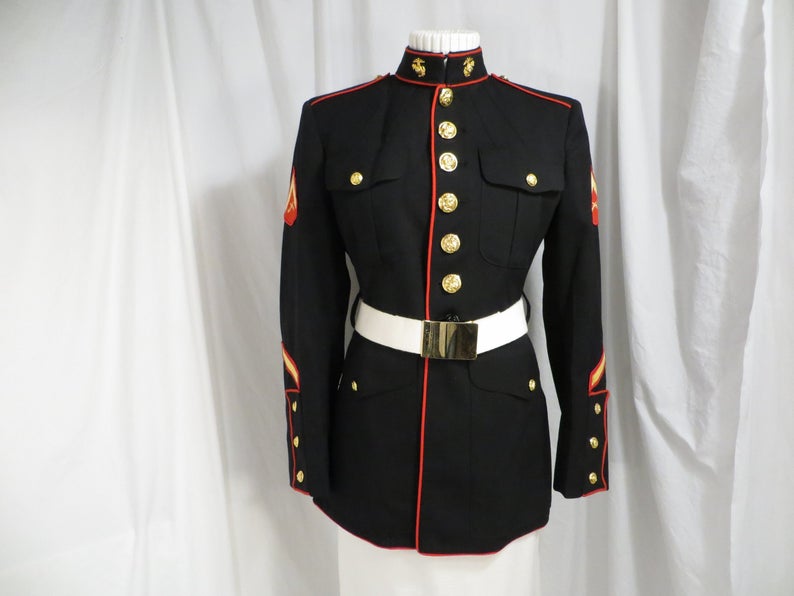
marines

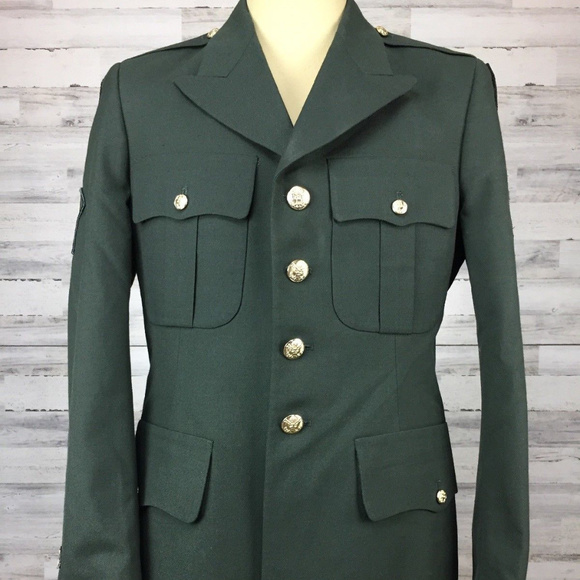
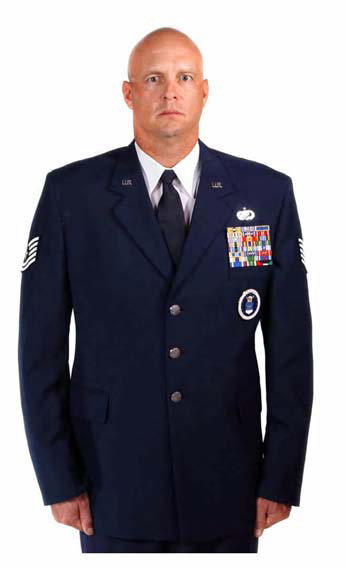
I did not like the Marine uniforms.  They seemed too gaudy.  Navy was out since their uniforms looked silly to me.  They were bell bottoms before bell bottoms became in.  The Army uniforms seemed too drab.  Green was never my favorite color.  Then I saw the Air Force uniforms.  They reminded me of my high school colors which were blue and gray. It was an immediate hit.  I could see myself scoring lots of babes in this cool uniform.

navy

At the time this all occurred, my father was an American Legion Post commander.  He was a decorated and disabled WW II veteran.  He saw service in Patton’s Third Army as a tank guard.  He won a Purple Heart for his combat injuries.  My father hated communists and had drilled me with the evilness of communists.  My motto when I went into the military was “Kill a commie for Christ.”

army uniform

The recruiter did all he could to make my day.  He was friendly and helpful and gave me a coke and some snacks.  I had to take a test called ASVAB that he said would determine which job I got.  I did not really care which job since I thought that I could get into some combat group and go to Vietnam to kill some “commie gooks.”  I got an AFSC or Air Force Service Code as a Nuclear Weapons Specialist.  For some reason, this was later changed to a 30352 code as an AC&W Radar Technician and I was switched from going to military training in Chanute, Kansas to Keesler AFB in Biloxi, Mississippi.  But first, every Air Force recruit had to go to basic training at Lackland AFB just outside San Antonio, Texas.

air force

However, I was not in the military yet.  I had a bunch of papers to sign and then they sent me by car to an induction center where many other branches of the military also went.  At this center I was going to get a physical.  I remember fifty or more guys all in this big hall and all of us told to strip naked.  A few physicians then went around checking everybody out with a stethoscope.  Guys with obvious impairments were told to get dressed and go home.  Finally, about a half of the original guys were still there.  We were told to put our civvies back on and then we would be sworn in.  We went into another room, where we repeated some oaths and the Pledge of Allegiance.  We were now in the United States Military.

swearing in

I was then sent by commercial bus from Providence to New Jersey.  From the bus terminal I got a ride to the Newark Airport.  At the airport, I somehow (I do not remember how) met some other Air Force recruits.  We had all been given vouchers for ten dollars or so for meals while waiting for our flight to Texas.  We decided to go to a café at the airport for supper.   When we got seated the waitress came around with a menu.  We told her that we had these meal vouchers.  As we ordered. it appeared that even if the price of a meal was less than our vouchers, there were items that we (for unknown reasons) could not purchase with our vouchers.  I got pissed, since I felt we were being ripped off.  I gave my voucher away and left.

I had my twenty dollars and I went in search of another dinner venue.  The airport had this upscale dining area and I went in and seated myself down.  I was surprised that I was the only diner in the room at the time.  The waiter came and he gave me a menu.  On it was a boiled lobster dinner for $18.99.  I thought “Hell, I am going out in style.”  I had never had a boiled lobster dinner in a restaurant although I had caught and eaten many lobsters in Rhode Island.

boiled-lobster-dinner-CNH3FH

The lobster came and I put a bib around my neck and proceeded to eat the lobster.  I was quite adept at cracking lobster shells (having lived in R.I. from my 11th to 18th year of life).  After I was finished with dinner, I noticed a bowl with water and a lemon floating on it.  I was staring at the bowl thinking it might be some weird soup.  The waiter noticed my gaze and came over and very quietly asked me if I knew what it was for.  I said no and he told me that it was to wash my fingers in.  I will never forget his kindness for not embarrassing me or my own lack of knowledge of good etiquette.  This would come back many times to embarrass me in my later years even after I had obtained my Ph.D. degree from the University of Minnesota.

I then rejoined the other recruits and we waited rather silently for the plane that would take us to our new lives.

To Be Continued: