
What’s the difference between someone who can speak but does not speak and someone who cannot speak?
NADA.
Perhaps, like the difference between someone who can read but does not read and someone who cannot read. No difference.
Can you speak but you remain silent?
Can you see injustice, but you say nothing?
Can you see cruelty to others, but you utter not a sound?
John Stuart Mill: “Bad men need nothing more to compass their ends, than that good men should look on and do nothing.”
Martin Luther King Jr.: The ultimate tragedy is not the oppression and cruelty by the bad people, but the silence over that by the good people.
Desmond Tutu: “If you are neutral in situations of injustice, you have chosen the side of the oppressor.”
Ella Wheeler Wilcox: “To sin by silence, when we should protest, makes cowards of men.”
Elie Wiesel: “I swore never to be silent whenever and wherever human beings endure suffering and humiliation. We must always take sides. Neutrality helps the oppressor, never the victim. Silence encourages the tormentor, never the tormented.”

Yesterday, I was listening to NPR, and host Scott Tong spoke with Mr. Viles Dorsainvil about the fear and coping mechanisms within the Haitian community in Springfield, Ohio. The Core Issue: Following a Supreme Court decision allowing the termination of Temporary Protected Status (TPS) for more than 300,000 Haitians, local community members have been summoned to an Immigration and Customs Enforcement (ICE) facility. Individuals reporting to these appointments are being outfitted with electronic ankle and wrist monitors, generating deep concern that this serves as the immediate next step toward mass deportation.
Pastor Viles Dorsainvil is a Moravian pastor, missionary, and co-founder and executive director of the Haitian Community Help & Support Center in Springfield, Ohio. Pastor Dorsainvil acts as an advocate and support for the Haitian community.
Towards the end of the interview, Pastor Dorsainvil was asked, “Are you not afraid to speak out in support of these people.”
He replied “Yes, of course I am. But someone must be the Voice for the Voiceless.”
That comment was the inspiration for this blog. Voices for the Voiceless. Heros and Heroines who speak out when silence is deafening and words can lead to unspeakable atrocities. Herewith are some short stories and bios of men and women who became the Voice for the Voiceless.

Vernon Dahmer (1908–1966)
Mississippi businessman and voting-rights activist
Dahmer was a successful Black businessman in Hattiesburg, Mississippi, who repeatedly encouraged African Americans to register to vote despite Klan intimidation. Most strikingly, he publicly announced that people who could not afford their poll tax could come to his store and he would pay it for them.
Dahmer was a member of Shady Grove Baptist Church where he was a music director and Sunday School teacher. He was also the owner of a grocery store, sawmill, planning mill, and cotton farm. As he described it, his main objective was to make a living for himself and to provide work for somebody else. He would hire local individuals from the community to work for him and did not discriminate between black or white.
The Ku Klux Klan retaliated against Vernon for trying to organize Black voters by firebombing his home in January 1966. Vernon fought the attackers while his family escaped the burning house.
He died the next day from his injuries. A congressional history specifically records that he was killed after offering to collect poll taxes so that his neighbors would not have to go to the courthouse themselves.
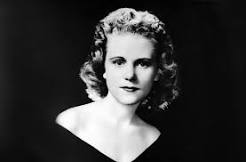
Viola Liuzzo (1925–1965)
Detroit mother of five who went to Selma
After watching television coverage of Bloody Sunday in Selma, 39-year-old Viola Liuzzo left her home in Michigan and drove to Alabama to help the civil-rights movement. She participated in the Selma-to-Montgomery campaign and transported marchers.
On March 25, 1965, she was driving a young Black activist, Leroy Moton, when Klansmen pursued their car and shot her to death. The National Park Service describes her as having “gave her life for the cause of civil rights.”
Growing up, her family was very poor and lived in one-room shacks with no running water. The schools Liuzzo attended did not have adequate supplies, and teachers had little time to deal with the many children in need. Because the family moved so often, Liuzzo usually began and ended the year in different schools. Having been poor in Tennessee for much of her childhood and adolescence, she was close to the racially segregated nature of the South. Her views on injustice had a powerful influence on her activism.

Emma Beatrice Tenayuca (1916–1999)
Mexican American labor organizer from San Antonio
Tenayuca began protesting injustice while still a teenager. At 16 she joined striking women workers; at 21 she became a leader of the enormous 1938 San Antonio pecan-shellers strike. The workers—predominantly Mexican and Mexican American—were among the poorest-paid laborers in America.
She was born into a Mexican American family, and their lineage in South Texas predated both Mexican independence and the Mexican–American War. The Tenayuca family were hit hard by the Depression, and all around her, Emma began to see the suffering of low class workers
But the episode that puts her in “Voices for the Voiceless” came in 1939.
San Antonio was a major hub of the pecan industry, partially due to the use of Mexican workers as a cheap source of labor. In 1938, thousands of San Antonio pecan-shellers started a spontaneous strike in protest of poor working conditions, with Tenayuca serving as the strike committee chair.
Tenayuca was preparing to speak at a political meeting in San Antonio when a hostile crowd of roughly 5,000 surrounded the auditorium and then stormed the building. She had to be smuggled to safety through an underground tunnel. Death threats eventually forced her to leave San Antonio.

Rev. James Reeb (1927–1965)
Unitarian minister who answered King’s call to Selma
James Reeb is another remarkable but comparatively forgotten figure.
James Joseph Reeb was an American Unitarian Universalist minister, pastor, and activist during the civil rights movement in Washington, D.C., and Boston, Massachusetts
After Bloody Sunday, Martin Luther King Jr. called upon clergy from around the country to come to Selma. Reeb went.
While participating in the Selma to Montgomery marches actions in Selma, Alabama, in 1965, he was murdered by white segregationists and white supremacists.
On March 9, 1965, after participating in the civil-rights demonstrations, Reeb and two other ministers ate at a restaurant serving African Americans. After leaving, they were attacked by white segregationists. Reeb was struck in the head with a club and died two days later. He was 38 and had a wife and four children. Three men were tried for Reeb’s murder but were acquitted by an all-white jury. His murder remains officially unsolved.
Another quote I like is “The test of courage comes when we are in the minority. The test of tolerance comes when we are in the majority. “ — by Ralph W. Sockman
Looking at these individuals who became voices for the voiceless, I am struck by something else. The people who threatened, attacked and murdered them generally acted with the support—or at least the acquiescence—of the surrounding majority. There was little courage in that.
It takes very little courage to shout when the crowd is shouting with you.
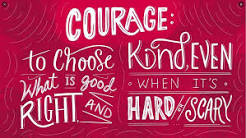
Courage begins when you are willing to stand apart from the crowd.
Inner Versus Outer
I began this essay with Pastor Dorsainvil’s remark:
“Someone must be the voice for the voiceless.”
There are so many of these unsung heroes like Pastor Dorsainvil that it is embarrassing to pick out only four. During the course of my life, I have come across dozens more men and women who faced their fears and showed us what integrity and courage mean in action.

That raises a larger question.
Why do some people risk their comfort, reputation, livelihood, and sometimes even their lives for people they don’t know?
And why do others remain silent?
A friend of mine describes part of the difference as inner versus outer orientation.
The distinction is certainly not absolute. Human beings are far too complicated to divide neatly into two boxes. Most of us contain some of both.
But the idea is useful.
An inner-oriented person derives meaning primarily from values that cannot easily be purchased: compassion, patience, mercy, kindness, integrity, community, spirituality, responsibility to others, and concern for the world we share.
An outer-oriented person is more likely to measure success through external evidence: money, property, status, achievement, recognition, possessions, power, and independence.
Neither orientation is entirely good or entirely bad. We need ambition. We need achievement. We need independence. Civilization would accomplish very little if nobody wanted to build anything, invent anything, earn anything, or succeed at anything.
The problem begins when outer success becomes the principal measure of human worth.
I asked my friend why so many people seem to be in such a hurry on the roads.
Speeding. Tailgating. Road rage. Passing dangerously. Honking half a second after the light turns green.
Where in God’s name is everybody going?
His answer was that this might be another manifestation of inner versus outer orientation.
The inner-oriented driver sees other people on the highway.
The extremely outer-oriented driver sees obstacles.
That may be an oversimplification, but I think there is something to it.
And it leads to another question:
Why does modern American society encourage so much outer-directed behavior?
One answer may be found in the economic system surrounding us.

I think this is one of the most interesting ways to examine capitalism—not simply as an economic system, but as a psychological system. A consumer economy does not merely satisfy existing needs; it also encourages, amplifies, and often manufactures desires.
I would distinguish at least 15 psychological drives:
- Security — We buy things that promise safety, stability, health, financial protection, and control over an uncertain future. Insurance, savings, homes, security systems, and warranties all appeal to this drive.
- Status — Consumption communicates where we believe we stand—or where we would like others to think we stand. Cars, clothing, homes, watches, vacations, neighborhoods, and educational credentials can become status markers.
- Social comparison — We judge what is “enough” partly by looking at other people. A perfectly adequate kitchen suddenly seems inadequate after seeing the neighbor’s remodeled kitchen. This connects strongly with what economists call relative consumption.
- Belonging — People buy things partly to become members of tribes: Harley riders, Apple users, golfers, sports fans, fashion groups, political groups, music subcultures. Products become badges of membership.
- Identity — Consumption helps answer the question, “Who am I?” We don’t simply buy hiking boots; we may buy the identity of being an outdoors person. We don’t merely purchase books; we surround ourselves with evidence that we are intellectuals.
- Novelty — Human beings are attracted to the new. The old phone may work perfectly well, but the new phone creates curiosity and excitement. Capitalism is exceptionally good at converting our attraction to novelty into repeated purchasing.
- Pleasure and sensory gratification — Food, alcohol, entertainment, travel, music, comfortable furniture, beautiful clothing, and countless other products appeal directly to our desire for enjoyment.
- Convenience and avoidance of effort — We have a powerful desire to save time and reduce inconvenience. Fast food, automobiles, dishwashers, delivery services, prepared meals, online shopping, and AI all capitalize on this.
- Control and autonomy — Ownership gives us a feeling of control. “My house, my car, my computer, my money.” Consumer capitalism often associates purchasing power with personal freedom: I can choose.
- Achievement — Acquiring things can become evidence that we have succeeded. The bigger house, promotion, expensive vacation, or luxury automobile can function almost like trophies.
- Fear of missing out (FOMO) — “Limited time only.” “Only three remaining.” “Everyone is talking about it.” Scarcity and social proof exploit our fear that other people are experiencing something from which we are excluded.
- Self-improvement — We continually purchase promises of becoming better versions of ourselves: exercise equipment, diets, books, courses, cosmetics, supplements, educational programs, productivity software. The underlying message is powerful: The person you are isn’t quite the person you could be.
- Sexual and romantic attraction — Advertising has exploited this almost since advertising began. Products become implicitly associated with attractiveness, desirability, youth, masculinity, femininity, romance, and sexual success.
- Reward and emotional regulation — “I’ve had a terrible day; I deserve this.” Shopping, eating, entertainment, travel, gambling, and other consumption can provide temporary relief from boredom, loneliness, frustration, or anxiety.
- Meaning and transcendence — This one is subtler. Consumption sometimes attempts to satisfy needs that aren’t fundamentally material at all: meaning, purpose, connection, beauty, adventure, even immortality. Travel can promise transformation; a luxury automobile can promise significance; a brand can promise membership in something larger than oneself.
And I would add one particularly important meta-drive:
The desire for “more”
This may be the psychological engine that a consumer capitalist economy depends upon most heavily. Perhaps underlying all fifteen is this sixteenth force: the desire for “more.”
A subsistence economy asks, “Do I have enough?” A consumer economy continually encourages us to ask, “What should I want next?” The system does not necessarily need to make people unhappy; it simply needs to maintain some distance between what we possess and what we desire. “Shop till you drop.” “He who has the most toys wins.” Perhaps America’s unofficial national anthem should be “Never Enough.”
Capitalism did not create most of these psychological drives. Status competition, sexual attraction, tribal belonging, novelty seeking, envy, security seeking, and acquisition existed long before modern capitalism. What consumer capitalism has accomplished extraordinarily well is attaching products and services to these ancient human impulses.
Religion tries to help us overcome these drives, but it fails dismally to compete with Madison Avenue.
In 2025, Americans donated an estimated $151.6 billion to religious organizations. That includes churches, synagogues, mosques, congregations and other organizations classified by Giving USA under “religion.” Religion remained the single largest category of American charitable giving, accounting for about 23% of charitable donations. —- The data comes from Giving USA 2026: The Annual Report on Philanthropy for the Year 2025, published by the Giving USA Foundation
Advertising is much larger. Estimates vary depending on exactly what is counted as advertising, but eMarketer projected total U.S. media advertising at roughly $400–422 billion for 2025. As a reality check, digital advertising alone generated $294.6 billion in U.S. revenue in 2025, according to the Interactive Advertising Bureau/PwC.
We go to church on Sunday,
We listen to the sermon about greed and love your neighbor,
We donate twenty dollars in the offering and then leave for the Mega Mall.
We buy the new Sony Play Station or iPhone, which are both on sale for only 650 dollars each.
Thus, the more interesting question may not be, “What psychological drives does capitalism create?” but rather, “Which existing human drives does consumer capitalism amplify, monetize, and sometimes manipulate?”
That avoids the simplistic conclusion that capitalism is inherently good or evil. Instead, it raises a systems question: What kinds of human behavior does our economic system encourage, reinforce, and reward?
And that brings us back to where we began.
Perhaps the struggle in America is not simply between liberal and conservative, Democrat and Republican, religious and secular, capitalist and socialist.
Perhaps beneath those arguments lies an older question:
What do I owe myself—and what do I owe other people?
Vernon Dahmer answered that question when he offered to pay the poll taxes of Black citizens who wanted to vote.
Viola Liuzzo answered it when she left her husband and five children in Michigan and drove to Alabama.
Emma Tenayuca answered it when she stood beside desperately poor workers even when thousands of people wanted to silence her.
James Reeb answered it when Martin Luther King Jr. called for clergy to come to Selma.
And Pastor Viles Dorsainvil is answering it today when he speaks for frightened people in Springfield, Ohio despite admitting that he, too, is afraid.

None of them were fearless.
That is the point.
Courage isn’t the absence of fear.
Courage is deciding that something else matters more than your fear.
So, the next time, someone honks at you because you have sat at the stop light too long, or the next time someone passes you on the right on a two lane road or they pass you on the left side with a solid yellow line, think about this concept of inner versus outer.
Have some sympathy for a driver who is only trying to get to the Mega Mall before the Sony Play Station sale ends.


Aug 19, 2026 @ 08:34:23
Very informative, and a beautiful tribute to the four amazing people who had the courage and determination to change social injustices in the face of those who violently opposed them.
It is a heartbreaking read, as it should be if anyone has the compassion for these brave and extraordinary human beings. We are all just human beings, black, white, red, yellow, it matters not, as in the end my belief is that we will be judged for what we did to better this world. I am wondering now if I have done enough. In comparison to these amazing people, the answer would be no.
LikeLiked by 1 person
Aug 19, 2026 @ 08:37:50
Hi Jeanine, thanks for the comment. Veterans have a saying that “all gave some but some gave all.” I think the people I spoke of “gave all.” People like us are hopefully giving some. I think if everyone gave some, the world would be a better place. So I think that is the real question to ask “Are you giving some?”
LikeLiked by 1 person
Aug 19, 2026 @ 09:44:31
I hope so John, surely something to keep in mind. Thank you. 😊
LikeLiked by 1 person
Aug 19, 2026 @ 16:36:56
Yes, I guess we can never really know.
LikeLiked by 1 person
Aug 19, 2026 @ 14:28:33
A great and interesting read John and I like your response to jennygirl, Too many of us look the other way and taking a step backwards, I see sport as having a lot to do with it. Opiates in all their forms, tend to dull the brain.
LikeLiked by 1 person
Aug 19, 2026 @ 16:34:52
Thanks Jon, I appreciate your taking the time to comment. It probably should have been two posts since I think I meandered into capitalism from the stories about self-less heroes. Somehow my brain made a connection there. Oh, well another day, another blog. Hope your summer is going well. We are still recovering here from something the Docs called Idiopathic, which I found out means “We have no clues what you’ve got.” John
LikeLiked by 1 person