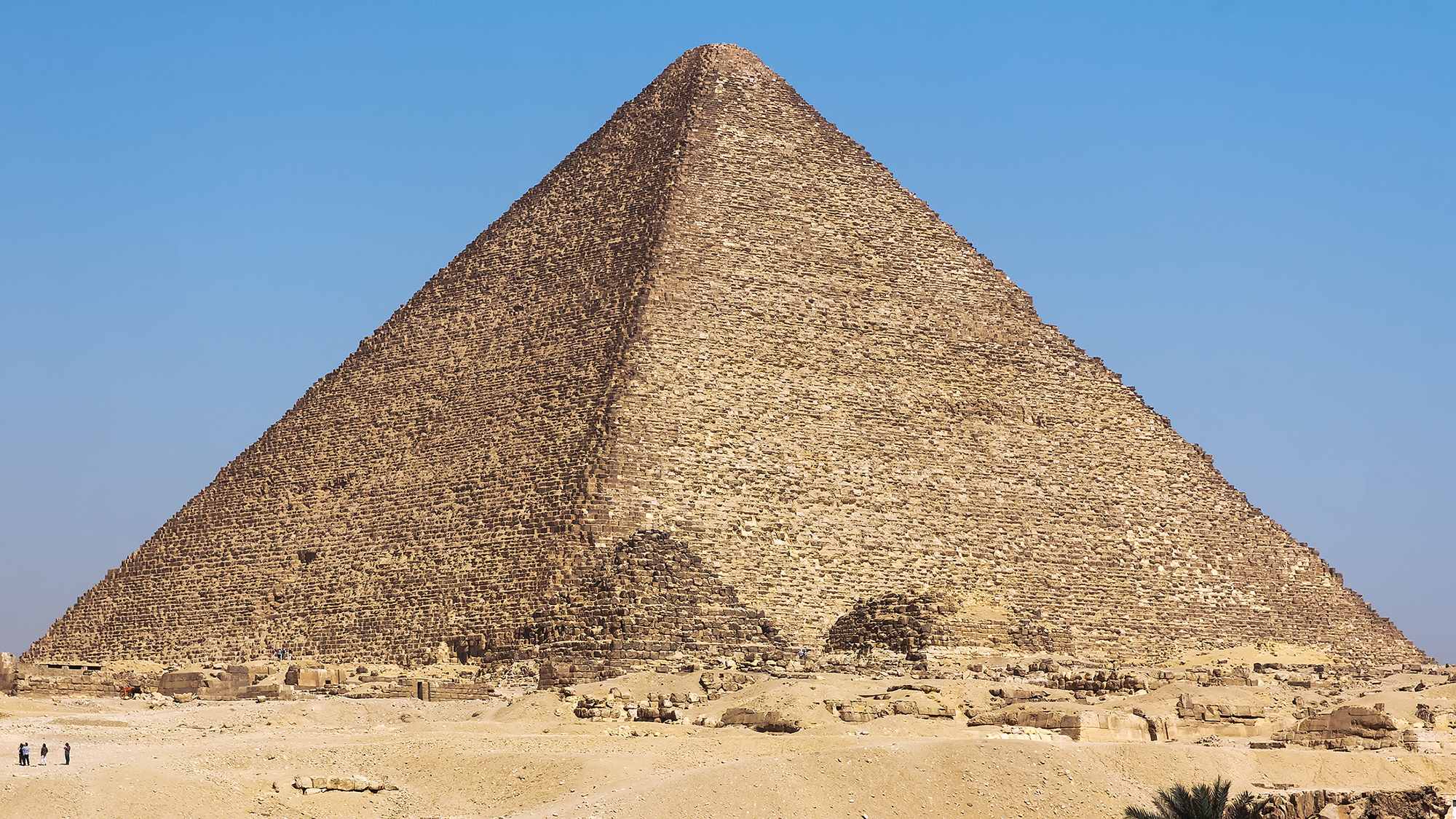
In 2017, I began an essay about Donald Trump with the Great Pyramid of Giza. I still think that was a good place to start. A pyramid makes you ask who could command enough labor and resources to build it. A cathedral, a palace, and a skyscraper invite the same question. The answers tell us something about how power was organized in each age.
What I would change today is how confidently I described power passing from one group to another. I had kings giving way to priests, priests giving way to governments, and governments giving way to corporations. That sequence made for a readable essay. It also made the transitions look more complete than they were. One of the best examples of how power actually works was already in my essay, almost at the end.
Smedley Butler and the rise of corporate power
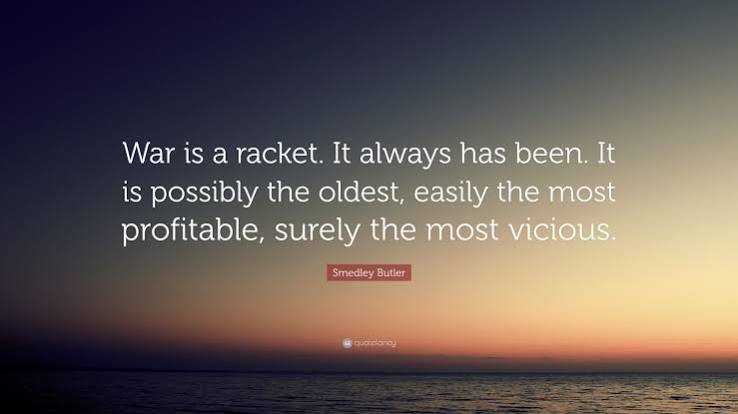
General Smedley Butler looked back on his career in the U.S. Marines and described using American military force in ways that served banks, oil companies, and other commercial interests. I quoted him because he showed how far private economic interests could reach into public affairs. They could benefit from the actions of an institution with powers no American corporation possessed on its own.
That relationship worked in both directions. Industrial capacity made it possible for governments to arm and supply millions of soldiers through years of fighting in the First World War. Butler asked who profited from that effort. A generation later, the United States drew on its factories, workers, and productive capacity to help win the Second World War. The government financed and directed much of that mobilization. American industry, in turn, gave the government the means to turn its decisions into ships, aircraft, trucks, and supplies on a vast scale. If you want to understand military power, you have to look at what a country can produce and sustain as well as what it can put on a battlefield. Smedley Butler, War Is a Racket · The National WWII Museum, “Becoming the Arsenal of Democracy”
I would keep the Empire State Building in the essay, too. Construction began in 1930, and the people behind it included a former General Motors executive and members of the du Pont family. They chose Al Smith, the former governor of New York, to head the development company. The building’s height gets your attention. The people who put it there tell you more about the relationship between industry, finance, and politics. Empire State Building history
The names change faster than the system
Look at the first Fortune 500, published in 1955 using 1954 figures, and then look at the list half a century later. Many of the names have changed. Fortune also broadened the ranking in 1995 to include service businesses, which makes the two lists harder to compare directly. The question that interests me is what happened to the companies that disappeared. Some declined or failed. Others were bought, and their factories, brands, and customers ended up in somebody else’s hands. A name can disappear from a list while the economic power it once represented is absorbed by an even bigger company. Library of Congress, “First Fortune 500 List Published” · Fortune’s account of the 1995 change
Google and Alphabet have made hundreds of documented acquisitions. The number caught my attention, but one purchase tells me more than the tally. When Google bought DoubleClick, it gained a major piece of the infrastructure publishers used to sell online advertising. A federal court found that this purchase and another acquisition helped Google gain monopoly power in two advertising technology markets. The court’s finding of unlawful monopolization rested on Google’s broader conduct. What matters for my argument is that buying a company can give the buyer control over something many other businesses depend on. That kind of power can accumulate one deal at a time. Google and Alphabet acquisition tracker · Federal court opinion on Google’s advertising technology business
Where Trump fits
In “WTF America?!”, the Meiselas brothers trace part of Trump’s rise back to Richard Nixon and Roger Ailes. Their account helps explain how a conservative media audience developed and how television presented Trump as a man who knew how to run things. I still have the question that led me to write the original essay. Why had so many Americans come to see success in business as a qualification for governing a democracy? Television could make Trump look like a commanding executive. The prestige of the executive had a much longer history. WTF America?! book preview
I was too quick in 2017 to declare big business the new sovereign. That word implies ultimate authority. The history I was pointing to is full of bargains, contests, and reversals. Sometimes governments direct industry. Sometimes businesses get governments to act on their behalf. Sometimes voters, workers, or competitors change the terms. A better test of who holds power is what happens when their interests collide. Who gets to set the rules? Who can get an exception? Who can make a decision stick? The Golden Rule that “He or she who has the gold makes the rules” is too often true.
An election can change who occupies the White House in a single night. It takes generations to build the institutions, fortunes, and habits of mind that make a particular kind of candidate seem like the answer. That is the road I was trying to trace in 2017. It still seems to me that we spend far more time talking about the man who arrived at the end of it than about who built the road.
Read the original essay, “The Road to Trumps Success Began 4,500 Years Ago”


