
Each song is my favorite version. Click on it and you can hear the song as I think it should be sung.
- Amazing Grace — Etta James
Amazing grace how sweet the sound
That saved a wretch like me
I once was lost, but now I’m found
Was blind but now I see
Everyone knows this song. It is one of the most popular hymns that was ever written. However, I did not know the story behind it until a few years ago. John Newton, the captain of a slave trading vessel repents for his crimes against humanity. The song is evidence that humans can be redeemed from even the worst of crimes if they find the grace to seek forgiveness and redemption.
- The Impossible Dream — Richard Kiley
To fight for the right
Without question or pause
To be willing to march, march into Hell
For that Heavenly cause
A song that became popular because of the musical “Man of La Mancha.” The musical was based on the story by Cervantes “Don Quixote.” Outside of the Bible this might just be the most popular novel ever written. It is the story of an old man who believed in justice and righteousness and set about a task to rid the world of evil. A man who despite his age was going to do all that he could in his remaining years to set the world right.
- I Got Plenty O’ Nuttin — Willard White
Folks with plenty of nothing
They’ve got a lock on the door
Afraid somebody’s going to rob ’em
While they is out making more
What for?
This song is from the Gershwin Musical “Porgy and Bess.” It speaks to the virtue of having nothing and being satisfied with that. Being satisfied with love, song, and heaven. Not striving for the things in life that will never bring happiness but only worry and misery. I think it speaks to all of us who conditioned by Madison avenue want more and more until we die buried under all the stuff that we have spent our precious time accruing.
- The Toreador Song — Dimitri Hvorostovsky
Because it is a celebration of courage!
It is the celebration of people with heart!
Let’s go, on guard! Let’s go! Let’s go! Ah!
Toreador, on guard! Toreador, Toreador!
And dream away, yes, dream in combat
From the famous opera Carmen by Bizet. The story of a soldier who sacrifices his life and career for the love of a frivolous but uber sexy woman. Carmen seduces Don Jose but ultimately leaves him for the fascinating and heroic Toreador Escamillo. Escamillo sings of what it is like to face death in the bull ring. His message is a message of courage for all of us. It harkens us to put aside our infatuation with life and take the kind of risks that make life worth living. To live without the risk of death is not to live at all.
- Where Have All the Flowers Gone? — Pete Seeger
Where have all the young girls gone?
Long time passing
Where have all the young girls gone?
Long time ago
Where have all the young girls gone?
Taken husbands every one
When will they ever learn?
When will they ever learn?
Pete Seeger is one of the greatest troubadours of all time. His career in singing and protesting injustice throughout the world lasted nearly eighty years. It was a loss for the world when he passed away in 2014 at the age of 94. Pete sang about racism, sexism, militarism and even a song about the brutality of boxing. He sang about narrow minded people that cared little or nothing about the world around them. In this song, he mourns for the soldiers that are caught up in the myopia of war. A new war every day bespeaking the “racket” that General Smedley Butler declared war to be. Don’t look for a “just” war. There are no just wars. Every war is an example of greed, stupidity, or shortsightedness. Pete knew this well and dedicated his life to singing the truth about war and man’s inhumanity to man.
- Kol Nidrei — Angela Buchdahl
Prohibitions, oaths, consecrations, vows that we may vow, swear, consecrate, or prohibit upon ourselves –
from this Yom Kippur until the next Yom Kippuer, may it come upon us for good –
regarding them all, we regret them henceforth.
They will all be permitted, abandoned, cancelled, null and void, without power and without standing.
Our vows shall not be valid vows; our prohibitions shall not be valid prohibitions;
and our oaths shall not be valid oaths
Even if I were Jewish, this is a very complex song to explain or interpret. I have looked at several interpretations of the words concerning vows and oaths taken. The major issues are what oaths and promises can be legitimately taken and expected to be followed and what oaths and promises can be forgiven. The distinctions between these two issues have created a great many controversies over the years. Some even claim that it was a Jewish way to get out of loans or money borrowed. This would lead to prejudice and misunderstanding on the part of non-Jews.
What I am impressed with by the song is the idea that we can be forgiven for oaths and vows that perhaps we should never have taken. We can all swear to things that we later regret. The idea of a day of forgiveness for these mistakes is very appealing to me. The relationship between Yom Kippur, the Jewish Holy Day of Atonement and the Kol Nidre is interesting. Yom Kippur begins in the evening, and the evening prayer (Maariv) is preceded by the special Kol Nidre prayer. I think this points to a strong bond between atonement and forgiveness both in terms of sin and in terms of vows and oaths that were taken. In any case, it is also a beautiful song to listen to.
- Motherless Child — Richie Havens
Sometimes I feel like a motherless child
Sometimes I feel like a motherless child
Sometimes I feel like a motherless child
A long way from home
A long way from home
When I first heard this song on the Woodstock Festival album, I thought he made it for me. Somehow, for most of my life, I have felt like a motherless child. This is strange since I had a mom. Everyone described her as a saint. She was never mean or abusive to me. I remember during a counseling session confessing that I felt less when my mom died than I did when my father died. He was a mean abusive man who made my life hell. I dreamed of killing him but never got up the nerve to do it.
But why did I mourn my father’s death more than my mom’s. My counselor recommended I read “Drama of the Gifted Child.” She explained that a mother’s role is to protect her children and clearly my mom did not. I never blamed her because I felt that she was living in her own hell with my father. Nevertheless, I felt more like I never had a mom. Hearing Richie Havens’ song, I felt like someone understood.
- The Bluebird of Happiness — Jan Peerce
When you find the bluebird of happiness
You will find perfect peace of mind
Knowing there’s a bluebird of happiness
And when he sings to you
Though you’re deep in blue
You will see a ray of light creep through
And so remember this, life is no abyss
Somewhere there’s a bluebird of happiness
Growing up with a father who loved opera, I was bound to hear Jan Peerce sing many of his repertoire. He sang many wonderful songs. However, this was my favorite. I guess you could almost say that this song was pop, but it would never be recognized as such by today’s kids. The “Bluebird of Happiness” spoke to my desire for peace of mind. I had only to find the bluebird and all my sorrows and fears, and unhappiness would vanish. I searched many years for this strange bird. I have not found it yet but perhaps I am closer than ever before.
- The Peat Bog Soldiers — Paul Robeson
Up and down the guards are marching,
No one, no one can get through.
Flight would mean a sure death facing,
Guns and barbed wire block our view
But for us there is no complaining,
Winter will in time be past.
One day we shall rise rejoicing.
Homeland, dear, you’re mine at last.
No more the peat bog soldiers (Die Moorsoldaten)
Will march with our spades to the moor.
No more the peat bog soldiers
Will march with our spades to the moor.
I first heard this song by the fabulous Paul Robeson. I was astounded. He is so versatile. He spoke out for liberty and justice no matter what language his songs were in. Parts of this song are in English and parts in German. Paul sounds like a native German speaker. I looked up the history of this song and found that it was one of the most popular protest songs of all time in Europe. It tells of the men in a concentration camp getting marched off each morning to work harvesting peat in the peat bogs.
This song was written by prisoners in Nazi labor camps in Lower Saxony, Germany. With their shovels and pails, they euphemistically refer to themselves as “The Peat Bog Soldiers.” These camps were established as soon as the Nazis gained power as a place to put their political enemies. Many of not most of the men and women in these camps would die. Nevertheless, they remained hopeful that someday Hitler’s reign would end, and they could march home in rejoicing. Can we remain as hopeful in the crisis facing us today? I ask myself that each morning when I wake up.
- Guantanamera — Joseito Fernandez
I am a truthful man from the land of the palm trees
Before dying I want to share these poems of my soul
My verses are a clear green, and they are a flaming crimson
I grow the white rose in June as in January
For the sincere friend who gives me his hand
And for the cruel one who would tear out my heart with which I live
I do not cultivate thistles nor nettles I cultivate a white rose
Guantanamera, guajira, Guantanamera
This song is one of the most popular songs of all time. Few people would not recognize the tune and lyrics. Not only has it been sung by hundreds of singers all over the world, but it has been featured in movies and other venues. For instance: “The song is played in The Godfather Part II, at the café in Havana where Michael Corleone talks with his brother Fredo Corleone. Richard Stallman wrote and sang a version titled Guantanamero, a commentary on the Guantanamo prison and the War on Terror.” — Wikipedia
Over the years, what started as a love song has evolved into a song about freedom and justice. A song supporting class equality and freedom for the poor. To me it also signifies seeking co-existence with our enemies as well as with our friends. Besides the moral significance, it is hauntingly beautiful. Parts of it are sung in Spanish and parts in English depending on the singer.
Well, there you have my top ten favorite inspirational songs. I would love to hear what your favorite songs are as well. Feel free to leave comments, lyrics, tunes or whatever you like. Just be sure to let us know what Key you want us to sing it in. 😊


 Compassion is the most important of the seven virtues. Compassion is just one stroke short of love. Compassion leads to love but it takes some doing to get there. The journey involves a number of steps each predicated on a trait or behavior that is uniquely human. In this blog, I want to describe the journey to compassion and beyond to love. Each step of the journey is a commitment to humanity. If you do not care about others, you will not be interested in the journey. Compassion is the opposite of narcissism. A narcissist loves them-self. A person with compassion loves others. With a narcissist, it is “all about me.” With a compassionate person, it is “all about them.”
 The journey starts with sympathy. We think of sympathy as “feeling sorry for someone.” It is the ability to have feelings for another person. We see another person who looks hungry or unhappy or ill and we feel some sense of remorse or regret for the other person. We might be distressed for them or we might simply be glad that we are not in their shoes. A part of us hurts or aches for the other person, but we do not identify with them on a deeper level. Our sorrow goes no further than to perhaps wonder what had befallen them to bring such misery.
 Our next step in our journey to compassion takes understanding. We need to try to understand others and to put ourselves in their shoes. We must avoid separation and thinking that we are so different from others. We must avoid judging others. When you couple understanding with sympathy, you have taken the next step. You have now arrived at empathy. To have empathy for others, is to combine sympathy and understanding. You are sorry for those who are less well-off then you are, but you do not separate yourself from them and instead you seek to find the common ground that links you to the other person. Sympathy involves the heart. Empathy involves both the heart and the mind.
 The next step in our journey is action. All of the empathy in the world will not make a difference if we do not take action. Empathy + Action = Compassion. Compassion is the way we make a difference to others. Jesus said “Feed my sheep.” He did not say to just take pity on them or to simply have empathy for them. Empathy by itself does not clothe the poor, feed the hungry or help the weak. We must make action and doing a part of our empathy for others. This is true compassion.
 Bob’s actions made a great impact on me, since I had seldom gone further in my life than either waiting to be asked for help or sometimes asking others if they needed help. It would never have occurred to me to just show up and help. Perhaps, you might think that simply showing up and helping someone is going too far. However, think about yourself. Would you really ask others for help? I know I probably would not. Pitching in to help when not asked may not always be warranted but I now see it as something worth endeavoring to do more often than not.
 Compassion is a much more useful and practical virtue for my life. I can deal with compassion and I can be more compassionate if I really aspire to. I am not sure I can be more loving. I have a hard time “loving” others whom I dislike or who do unkind things to people I do like. I more often “love” others who think and act like I do. I may be taking the easy way out, but if I can be more compassionate to others and if someday I am thought of as a compassionate person, that will be enough for me. If you are further along in your journey through life, then you should consider including love as one of your “most” important virtues. No one will be a worse person for it. For me today, compassion for others is enough of an effort.
 Once upon a time, I thought debates were the answer to the question of “how do we discover the truth?” I thought that if you put two intelligent people together and each took opposing positions on an issue, that through the interplay of ideas the truth would emerge. If you think about this a bit, it is the basis for our judicial system in America. One side argues for the defendant, the other side argues for the prosecution or against the defendant. It is also the basis for an academic exercise called Dialectical Research or Dialectical Inquiry.
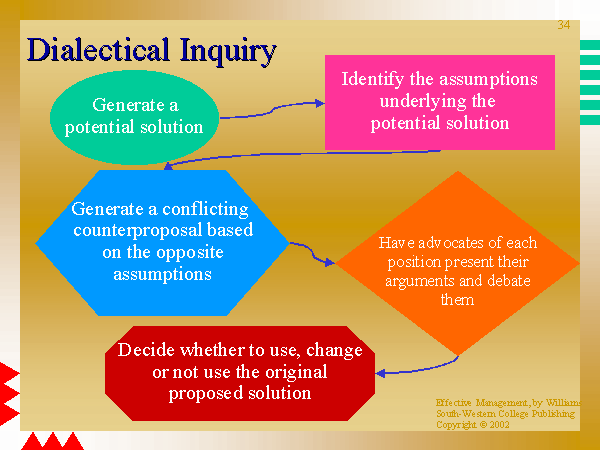 A dialectical investigation is a form of qualitative research which utilizes the method of dialectic, aiming to discover truth through examining and interrogating competing ideas, perspectives or arguments. This latter method is often applied through the use of case studies in which students or investigators discuss…
 We are surrounded by people who only do things because they get paid for it or because they will be rewarded by power, fame, or fortune. If the highest calling we can have in the world is to love others, then the next highest calling must be to perform some task or effort simply for the “Love of It.” Not because we are going to receive any payment for it. Not because we expect to get a promotion for it. Not even because we expect to get a pat on the back for it. Simply because we do it for the “Love of It.”
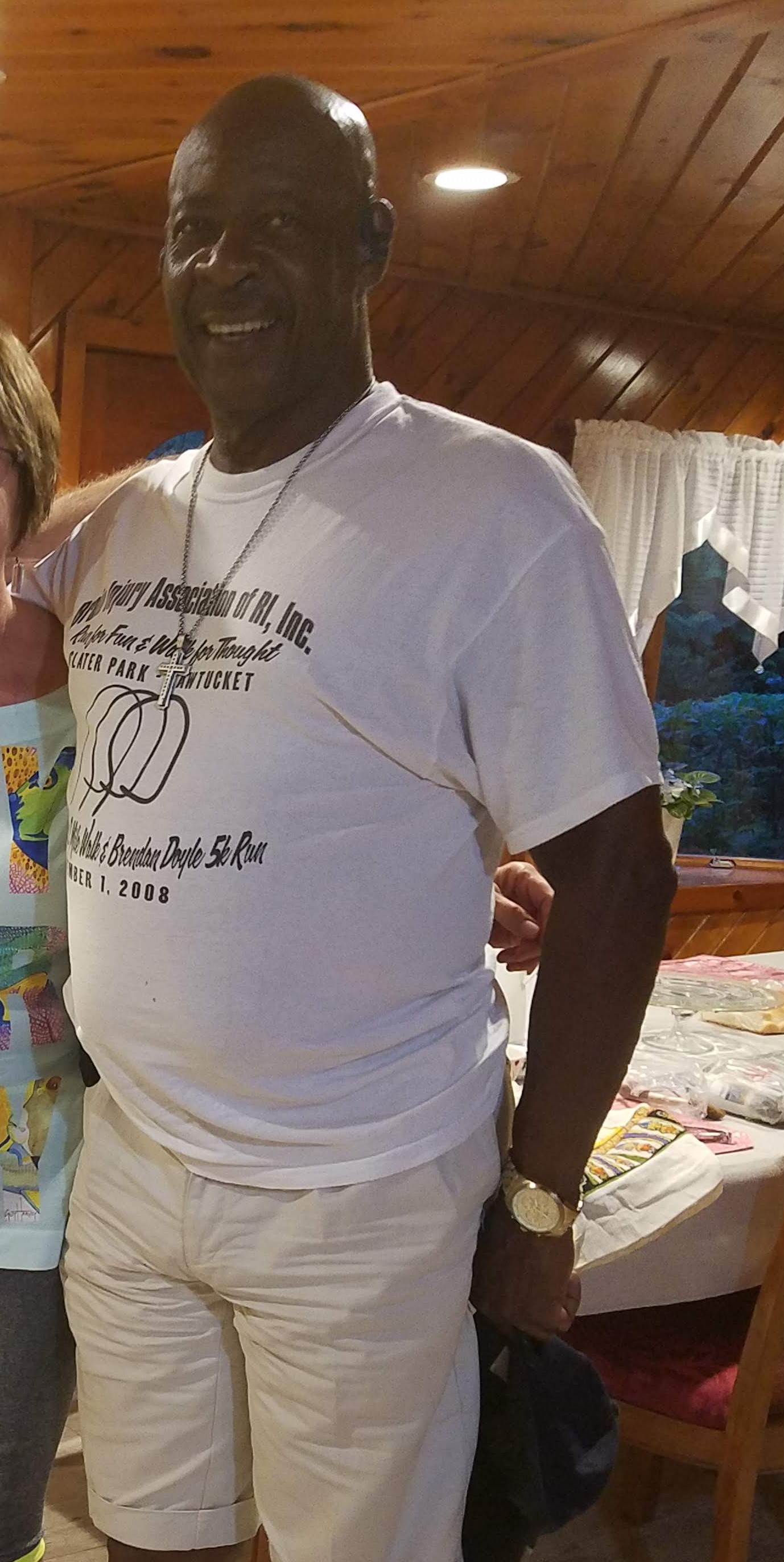
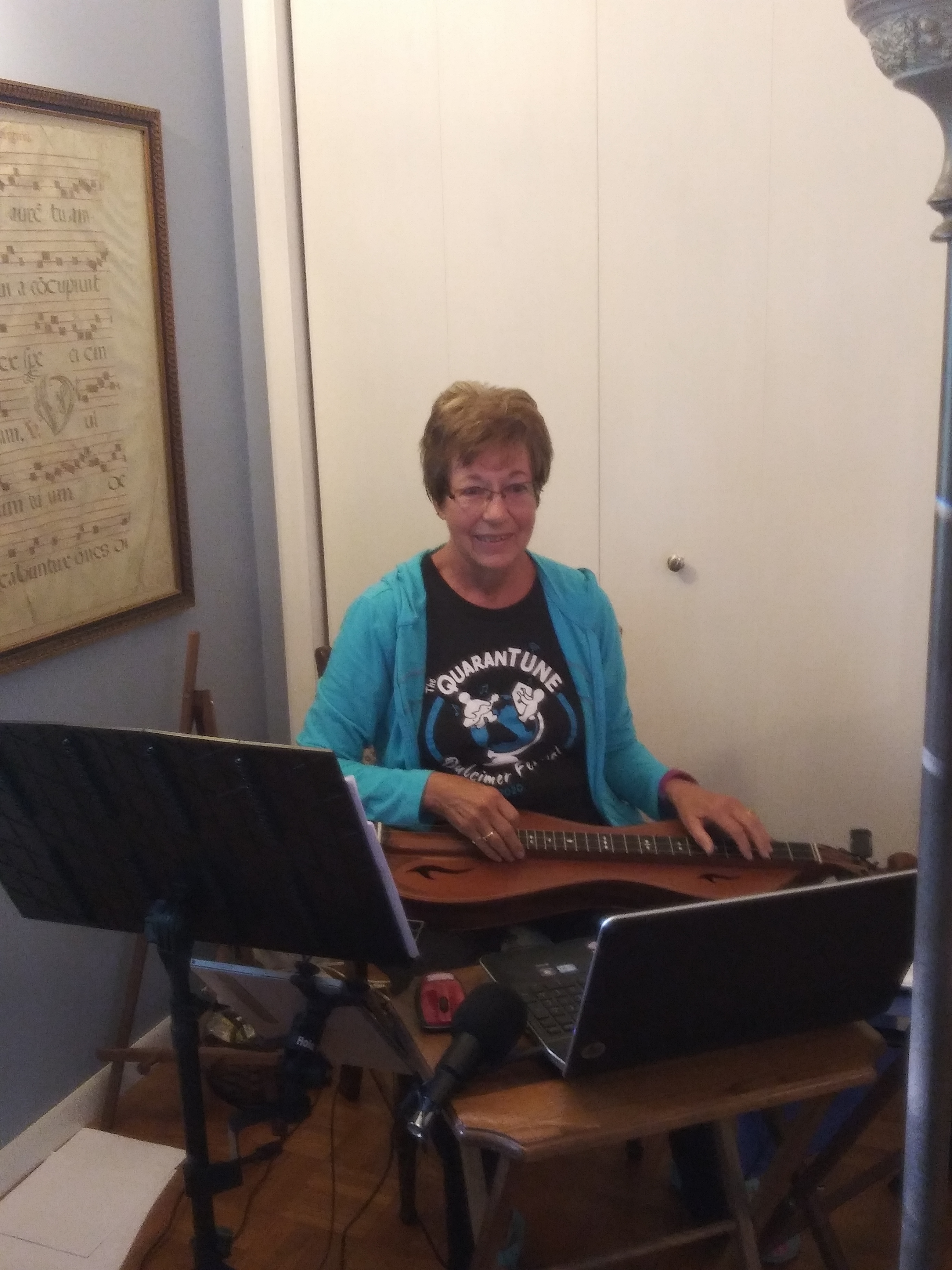

 There are going to be those of you who will say that the title of this blog is preposterous. A few years ago, I would have called “Bullshit.” Funny how aging changes ones perspective. I asked four friends all over the age of 70 what they thought about my proposition. They all nodded sagely and said that they agreed 100 percent. I then went to my spouse Karen who as a Home Care nurse spent many years working with the elderly. I expected her to deny my proposition. I was quite surprised when she also agreed. I asked her why. She explained as follows:
 I mentioned this to some running friends of mine. One of the younger ones asked me what I had done to prevent falling or to somehow adjust my attitude so that I could continue running. I explained that over the years I had started running with knee pads, elbow pads, shatterproof glasses, and hand guards like roller bladers used. I had the best trail running shoes that I could afford. He asked if I would be willing to look for some new ideas so that I could return to the mountain trails. I told him that I appreciated the offer but that I was finished with running rocky mountain trails.



 Aging Capriciously