America is adopting a pseudo masculinity to bring back the old “male is king of the domain” ethic. Sports is one pillar of this domain. A second pillar is the military. The third pillar is the right wing Christian nationalists. I am not against sports or the military or Christianity. However, these groups have been coopted by radical right-wing fanatics who want to impose their anachronistic beliefs on this country. These include beliefs such as:
- America must be a Christian nation
- Women do not belong in the workplace
- Women should be subservient to men
- Gay people have no right to participate in society
Each of these groups has their own champion but they sometimes play together. Trump can be seen at many “real men” sporting events such as MMA, boxing, golf and NASCAR. While golf is certainly not a machismo sport, you can explain Trumps attendance by looking at the demographics of golf. About 1–2% of PGA Tour players are Black, or roughly 2–4 golfers.
By frequency, his public appearances have been most concentrated in:
- Golf (by far the most common)
- UFC/MMA
- Football (NFL and college)
- Auto racing (NASCAR)
- Boxing
Pete Hegseth has become the champion of this fake machismo for the military. Elected to this post by D. J. Trump, Hegseth struts around showing off how tough he is. His idea of masculinity is out of sync with any real definition of masculinity. Totally bereft of empathy, compassion, or integrity, his main goal in life is to be a willing sycophant to the man who appointed him. How kissing someone’s butt exemplifies toughness is beyond my understanding. His most recent idea is to enforce mandatory testosterone testing on anyone over the age of 30 in the military. Hegseth stated that implementing mandatory annual testosterone screening for service members age 30 and older is necessary to optimize troop combat readiness, resilience, and long-term health. Hegseth and the Pentagon have declined to comment on how a “testosterone deficiency” would be measured or treated in female troops.
Is there evidence that screening every service member over 30 improves combat readiness?
According to Reuters, five of the six endocrinologists and medical experts they interviewed said there is little or no evidence supporting universal testosterone screening in healthy military personnel.
Most major medical organizations recommend:
- testing men only when they have symptoms, and
- confirming low levels with repeat morning blood tests before beginning treatment.
Are there any downsides to mandatory testosterone screening?
Medical experts interviewed by Reuters raised several concerns.
Possible risks include:
- infertility
- suppression of natural testosterone production
- acne
- enlarged breasts
- elevated red blood cell counts
- cardiovascular uncertainty (still debated)
- overtreatment of men whose levels fluctuate normally
So, we have a man in charge of our military who wants to institute mandatory testosterone testing of all military personnel over the age of 30 including women based on little or no scientific evidence that this will improve military readiness.
This administration is saturated with anti-science and anti-intellectual bias. Basically, that means that Trump, his supporters and most of the Republicans holding electoral offices are dismissive when it comes to science. Either that or they go brain dead when asked for any scientific facts to support their positions. Here are some examples:
- Climate Change — Jim Inhofe (R-OK)
“Do you know what this is? It’s a snowball… It’s very, very cold out.”
Then he tossed the snowball across the Senate chamber.
Scientific problem: Climate is measured over decades across the globe, not by one cold day in Washington, D.C. The overwhelming scientific evidence shows a long-term warming trend despite local cold weather.
- Vaccines — Robert F. Kennedy Jr.
One frequently quoted statement is:
“There is no vaccine that is safe and effective.”
That assertion conflicts with the scientific consensus. Medical organizations agree that vaccines, like all medical interventions, have risks, but licensed vaccines are considered both safe and effective for the vast majority of people because their benefits greatly outweigh their risks.
- Evolution — Congressman Paul Broun (R-GA)
Speaking in 2012, Broun said:
“All that stuff I was taught about evolution and embryology and the Big Bang theory… is lies straight from the pit of Hell.”
He added that he did not believe the Earth is billions of years old.
These comments directly rejected the scientific consensus in biology, geology, astronomy, and physics.
- Masks during COVID
Several Republican politicians argued that mask mandates were ineffective despite multiple studies showing masks reduce transmission under many circumstances, especially in indoor settings.
A notable example came from Florida Governor Ron DeSantis, who said:
“Lockdowns don’t work. Mask mandates don’t work.”
Scientists generally agreed that lockdowns involve complex trade-offs and that evidence on mask mandates varies by context, but there was broad support that masks themselves reduce respiratory virus transmission under appropriate conditions.
- Human Reproduction
During his 2012 Senate campaign, Todd Akin (R–Missouri) said, “If it’s a legitimate rape, the female body has ways to try to shut that whole thing down.”
Scientific consensus: There is no biological mechanism by which a woman’s body can prevent pregnancy because a rape is deemed “legitimate.” Medical organizations across obstetrics and gynecology rejected the claim as scientifically false.
Actually, anti-intellectualism and anti-science bias has been around since before the founding of the USA. Beliefs in the genetic superiority of the White race go back decades. By the late 1600s and early 1700s, writers began defending slavery in print. One influential example is Edward Long. In his “History of Jamaica” (1774), he argued that Africans were naturally inferior to Europeans. His work became influential among defenders of slavery.
Another was even Thomas Jefferson. In Notes on the State of Virginia (1785), Jefferson wrote that he suspected Black people were inferior to whites in “the endowments both of body and mind.” He expressed this as a hypothesis rather than a settled fact, and historians continue to debate how to interpret those passages, but they undeniably contributed to racial thinking.
Arthur de Gobineau in his four-volume work, “Essay on the Inequality of the Human Races” (1853–1855), argued that the “Aryan” or White race was intellectually and morally superior and that civilizations declined through racial mixing. Gobineau was the first to introduce “scientific race theory” and “racial demography”, and for developing the theory of the Aryan master race and White Supremacy. Some people call him the “Father of Racist Ideology.” His followers are evidence of the fact that bad science leads to bad theories and that you can as Abraham Lincoln said, “Fool some of the people all of the time.”
So, what does this have to do with Hegseth and his pseudo theories on what masculinity is about? No one denies the following facts:
- In primitive societies men did most of the hunting and women did most of the gathering
- Generally, men are bigger, stronger and faster than women
But today:
- Most of the hunting and gathering is done in the local supermarket
- Women are as smart as men
- Virtually all modern, well-designed IQ tests are standardized so that:
- Average male IQ ≈ 100
- Average female IQ ≈ 100
- If one sex consistently scored higher overall, the test would generally be considered biased and revised.
- So, the average difference is effectively zero between men and women
- Women are as courageous as men
- Studies often find that:
- Men report greater willingness to take physical risks.
- Women report greater willingness to endure social and emotional hardships for loved ones.
- Neither pattern is “more courageous.” They simply involve different kinds of risk.
- When circumstances require it, women have repeatedly demonstrated astonishing courage.
Think of:
- Harriet Tubman making roughly 13 missions into slave territory.
- Sophie Scholl distributing anti-Nazi leaflets knowing execution was a likely outcome.
- Joan of Arc leading armies at seventeen.
- Malala Yousafzai continuing her advocacy after surviving an assassination attempt.
- Boudica was queen of the Iceni, a Celtic tribe in what is now eastern England. Around D. 60–61, after her husband died, the Romans annexed the Iceni kingdom. According to the Roman historians Tacitus and Cassius Dio:
-
-
- Boudica was publicly flogged.
- Her daughters were sexually assaulted.
- Iceni nobles were stripped of their property.
-
- Rather than submit, she united several British tribes in revolt against Rome.
- Was Boudica courageous? By almost any definition, yes. She knew she was confronting the most powerful military empire of her age. The odds of victory were slim, yet she chose resistance rather than submission.
- One of the most famous speeches attributed to her by Tacitus includes this passage:
- “We British are used to women commanders in war. I am not fighting for my kingdom and wealth. I am fighting as an ordinary person for my lost freedom, my bruised body, and my outraged daughters.
Hegseth and his supporters want to take us back to before the dark ages, even before the Roman Empire. Hegseth would like to return to a time when he believes that Neanderthal men clubbed their intended wives into submission.
These attitudes about men and women are not funny. They are dangerous.
- Domestic abuse is a major problem in America
- Domestic violence is a pervasive crisis in the United States, with an average of 24 people per minute experiencing physical violence, rape, or stalking by an intimate partner. This translates to more than 12 million individuals impacted every single year.
- Assaults against Gays and Lesbians are much greater than the national average for all assaults
- Lesbian, gay, and bisexual (LGB) individuals are more than twice as likely to experience overall violent victimization (including assaults) compared to straight individuals. When looking specifically at violent hate crimes, LGBT people are nine times more likely to be targeted than non-LGBT people.
- Gun violence is an everyday occurrence. The Old West never had such tolerance or laws supporting open carry and weapons as we have today.
- Men commit approximately 85% to 90% of all gun violence in the United States, making them overwhelmingly the primary perpetrators. This gender disparity is consistent across firearm homicides, nonfatal shootings, and gun-related suicides.
Today we need empathy more than we need large biceps. We need brains more than we need male dominant attitudes and we need humility more than we need increased dosages of testosterone.
I challenge Pete Hegseth to a 21st Century Duel. He can select from either of the following three dueling “weapons” and I will meet him anytime anywhere. This duel is about the skills needed to survive in the twenty first century in a global economy and not in a prehistoric world dominated by Mastodons and Saber Toothed Tigers.
The Empathy Duel
Instead of pistols at dawn:
We shall each spend one afternoon a week for six weeks listening to a lonely or sick or disabled veteran without interrupting them.
Loser: Whoever says, “I can’t take it any more loses.”
The Library Duel
A showdown in the local library.
Weapons:
- One copy of Marcus Aurelius.
- One copy of Abraham Lincoln’s speeches.
- One copy of Fred Rogers.
Winner: Whoever can relate the teachings of each of these three men to their own lives and behaviors first wins. Must be concrete examples and validated by independent observers.
The Humility Duel
Contestants wear oversized cowboy hats.
Each must admit ten mistakes.
Every excuse costs one point.
Winner: The person with the least excuses for their mistakes wins.
I make this offer good for the next twelve months. After that I will conclude that Hegseth is nothing but a big chicken.
“Courage and conviction are powerful weapons against an enemy who depends only on fists or guns. Animals know when you are afraid; a coward knows when you are not.” — David Seabury







 Compassion is the most important of the seven virtues. Compassion is just one stroke short of love. Compassion leads to love but it takes some doing to get there. The journey involves a number of steps each predicated on a trait or behavior that is uniquely human. In this blog, I want to describe the journey to compassion and beyond to love. Each step of the journey is a commitment to humanity. If you do not care about others, you will not be interested in the journey. Compassion is the opposite of narcissism. A narcissist loves them-self. A person with compassion loves others. With a narcissist, it is “all about me.” With a compassionate person, it is “all about them.”
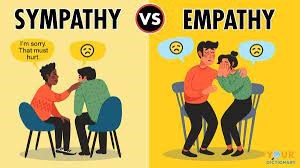
 The journey starts with sympathy. We think of sympathy as “feeling sorry for someone.” It is the ability to have feelings for another person. We see another person who looks hungry or unhappy or ill and we feel some sense of remorse or regret for the other person. We might be distressed for them or we might simply be glad that we are not in their shoes. A part of us hurts or aches for the other person, but we do not identify with them on a deeper level. Our sorrow goes no further than to perhaps wonder what had befallen them to bring such misery.
 Our next step in our journey to compassion takes understanding. We need to try to understand others and to put ourselves in their shoes. We must avoid separation and thinking that we are so different from others. We must avoid judging others. When you couple understanding with sympathy, you have taken the next step. You have now arrived at empathy. To have empathy for others, is to combine sympathy and understanding. You are sorry for those who are less well-off then you are, but you do not separate yourself from them and instead you seek to find the common ground that links you to the other person. Sympathy involves the heart. Empathy involves both the heart and the mind.
 The next step in our journey is action. All of the empathy in the world will not make a difference if we do not take action. Empathy + Action = Compassion. Compassion is the way we make a difference to others. Jesus said “Feed my sheep.” He did not say to just take pity on them or to simply have empathy for them. Empathy by itself does not clothe the poor, feed the hungry or help the weak. We must make action and doing a part of our empathy for others. This is true compassion.
 Bob’s actions made a great impact on me, since I had seldom gone further in my life than either waiting to be asked for help or sometimes asking others if they needed help. It would never have occurred to me to just show up and help. Perhaps, you might think that simply showing up and helping someone is going too far. However, think about yourself. Would you really ask others for help? I know I probably would not. Pitching in to help when not asked may not always be warranted but I now see it as something worth endeavoring to do more often than not.
 Compassion is a much more useful and practical virtue for my life. I can deal with compassion and I can be more compassionate if I really aspire to. I am not sure I can be more loving. I have a hard time “loving” others whom I dislike or who do unkind things to people I do like. I more often “love” others who think and act like I do. I may be taking the easy way out, but if I can be more compassionate to others and if someday I am thought of as a compassionate person, that will be enough for me. If you are further along in your journey through life, then you should consider including love as one of your “most” important virtues. No one will be a worse person for it. For me today, compassion for others is enough of an effort.

 Nevertheless, we still have the occasional spat, and they usually leave us both feeling quite depressed and disappointed. I am mostly disappointed with myself for not handing things well. It seems I too often say things or discuss things very differently than we have agreed on. We have found and used many models for dealing with conflict. One of our favorites is the “DESC” model. This stands for “Describe” what is happening in neutral terms. Talk about how this makes you feel in terms of “Emotions.” “Specify” what you would like to see happen differently. Define what the “Consequences” will or could be for change. Consequences are best provided that are positive, such as we will feel closer together. When we stick to this model things seem to go well. Our discussions stay on track and our resolutions come more effortlessly. When we stray from the model, accusations and insinuations escalate and the discussion becomes difficult if not painful.
 The other kind of kindness I will call “Emotional Kindness.” This is not doing things but saying things either verbal or non-verbal that honor and appreciate the other person. It respects their feelings more than their actions. It might be “I love you” or it might be an appreciation of something the other person says or thinks. It is building up the other person’s self-esteem and not putting down anything they might express or care about.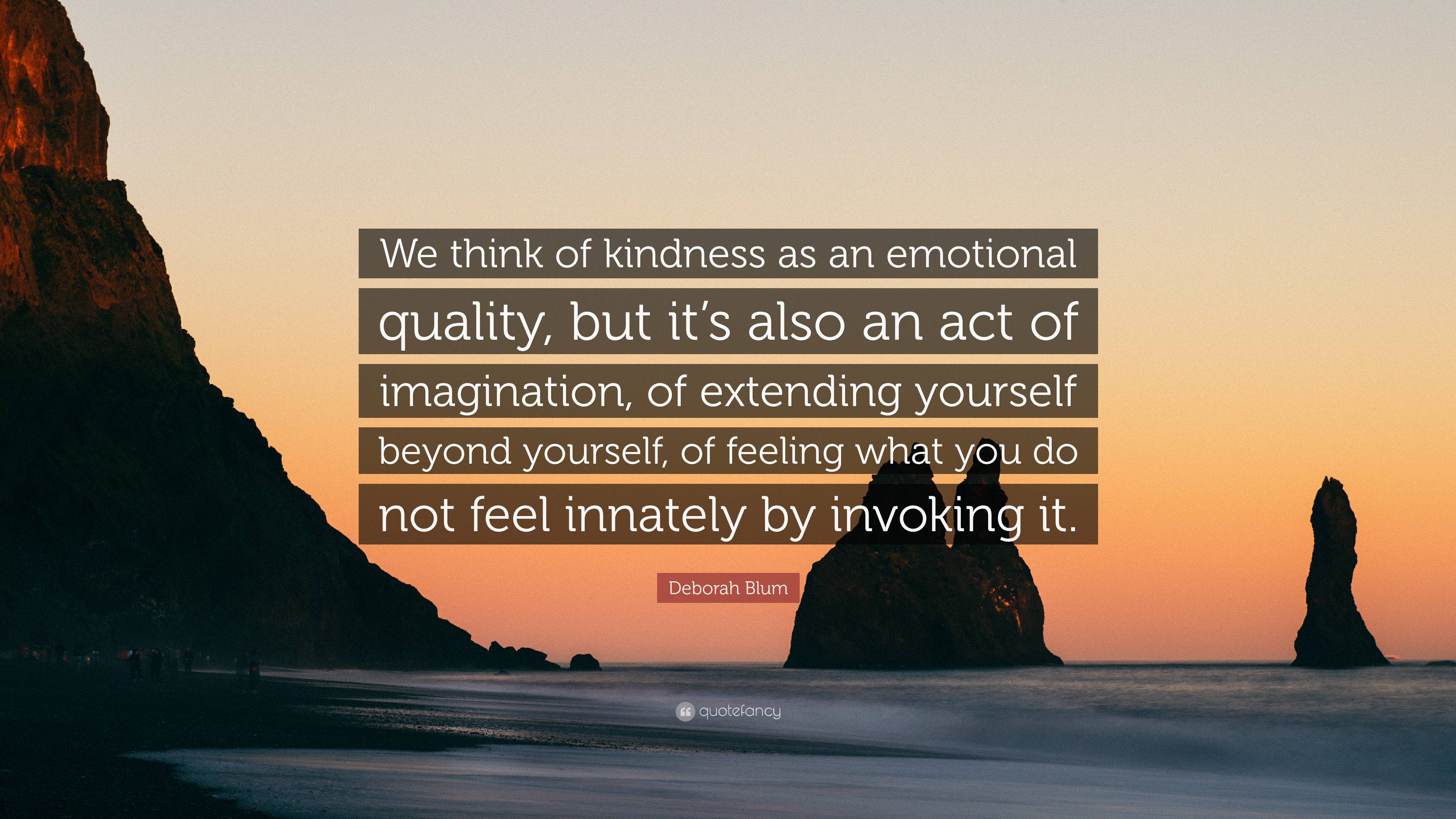


 I started running in 1975 after being a very good bicyclist for many years. I ran in freezing rain, below zero wind-chills and blistering heat. I even went out one time and ran with a tornado coming through the neighborhood. Like the U.S. Mail, nothing could stop me. Over the years, I met many people who would tell me “I used to run but my knees went out and I had to give it up.” I had enough sense not to tell them what I was really thinking so I usually said nothing or just a “too bad.” What I was really thinking was “If you really wanted to you could still be running.” The latter comment would be an example of neg-empathy. My silence was an example of neutral empathy. I did not make any connection to the feelings that the other person had, nor did I much want to. I could not identify with them since I ran “no matter what.” I was better than they were.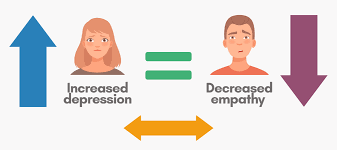


 Kindness is number four of my seven essential virtues for leading a happy and successful life. Every Thursday I start my day with the following prayer:
 There were few heroes when I was growing up who could measure up to my standards for clear and unemotional thinking. I grew up with a father who demanded toughness. My father’s motto was not to “get even” but to “get one up.” If someone hit me, he taught me to make sure that they would never think of hitting me again. My father was 6’ 4” tall and had been a professional boxer with a 21 and 3 record. He taught me fighting skills at a very young age. My neighborhood taught me to disregard the “rules of boxing” and to fight with whatever I had to win. I could easily protect myself and few people would bother me. Somehow, I became a protector for those kids who were less aggressive and who were picked on by the ever pervasive bullies. I kicked more bullies asses then I can count. I was always proud to help the underdog. Paradoxically, these traits did not make me more compassionate but made me harder and tougher.
 Through hardness and toughness I began to forge a wall that nothing could get through. Sentiments, compassion and empathy were increasingly blocked out by my need to be tough and to not take any shit from anyone in the world. Each episode where toughness prevailed was another brick that helped to build my wall higher and higher. I never thought I would get married but after getting my first wife pregnant, I “did the right thing” and married her. It was the manly thing to do. My dad had always taught me to take responsibility for my actions and my baby Chris was a direct result of my actions.
 One day we were in a grocery store just before Christmas. An apparently legless man pushing himself along on some kind of a wheeled board was inside the grocery looking for some money. I walked by him with Julie (my first wife) and ignored him. My wife turned back and started to give him some money and I said: “Shit, don’t give him any money, he can probably outrun me. I will bet he is just a fakir.” She gave him the money anyway and replied “What if he is not?” I never forgot that comment. I am not sure why my first wife married me. She once said that she thought all people had feelings and emotions until she married me. We subsequently divorced but I have to say that I probably owe my life to my first wife. She cared for me when I was suicidal and she always looked after me when I was hurt or needed help. Through her, I began to see what compassion and kindness were. This journey has continued with my second wife Karen who is one of the most considerate and most compassionate spouses anyone could have. Every day I learn something about kindness from her.
 I disagree with Shaw. I am getting older and I still respect and uphold the values of our Founding Fathers, but I refuse to live in a gated community or allow a homeowner’s association to tell me what color holiday lights to put up. I am not a believer in mincing words but I respect the rights of minorities and anyone else to be referred to as they want to be referred to. I respect the rights of Indians to have their ancestor’s graveyards not dug up for commercial or even academic reasons and I respect their rights not to be depicted as silly mascots for some college team. Trump and his supporters believe the US has become too PC. They blame minorities for this. They would like to live in a land where it is ok to call a Black person a nigger since we call Italians wops and French frogs. A Black person they argue has a double standard or they apply a double standard for Blacks and Whites. The bottom line of all this double talk is not too much PC but a lack of empathy and compassion and kindness towards others.
 Yes, there are extremists who want to take Huckleberry Finn out of the library just like there were Popes that knocked the genitals off of statues in Rome. But if you have any empathy or even the slightest understanding of culture and history, you will be less apt to say “My father didn’t own any slaves.” That is a little like replying to a woman who was raped “Well, I did not do it.” To which I can now hear someone replying, “Yes, but no Black people alive today were slaves, so why should they be so upset?” Yes indeed, why should they be so upset? If you are serious about looking at a reason, please regard the following article:
 The people that we will remember in our lives and who make the most impact on our lives are not the rich and famous. They are the people who most cared about us and looked after us. They were kind and loving towards us and somehow showed that we meant something to them and to the world. They may have been our fathers or mothers or an aunt or teacher or perhaps a close friend. How much money they had or how successful they were did not make a difference to us. Indeed, what they gave us could not have been purchased by money. Money doesn’t touch us but kindness does.


