
I made my 42nd retreat at the Demontreville Retreat Center in Lake Elmo this past September. Two strong influences on my life have since passed away who were connected to my retreats. The first was Father Sthokal S.J. A man who spent 54 years of his life at this center. Thirty-four of my retreats were spent with Father Sthokal at the center. Father Sthokal died in 2020.

This year a new dormitory was built in his memory and named Sthokal Hall. I was fortunate enough to have a room in this new hall. With the air conditioning, outside patio and coffee bar it was quite a pleasure. The memories of the words of Father Sthokal infuse the entire retreat center but perhaps more so in the new hall.

The second great influence on my life was Pope Francis who died in April of 2025 this year. Cardinal Jorge Mario Bergoglio was ordained Pope in 2013. When he became Pope, the Catholic Church was facing a major crisis. I read about the new Pope at my retreat that year and thought “surely they are going to assassinate him.” He posed a challenge to an established and often corrupt Vatican administration which was mired in the past. Pope Francis set about to change the order of things at the Vatican. He did this to a surprising degree. He was also a profound and prolific writer.
At the retreat center, we have a small library full of books dealing with all aspects of spirituality. The year that Pope Francis was ordained, I picked out a book that he had written. I could not put it down. I read it on my walks around the monastery as a means of reflection and contemplation. Every year when I came back, I found something else that Pope Francis had written. His writings made a difference on my life. His thoughts on mercy and justice and social responsibilities still ring in my head.

This year, I went looking for something by the new Pope Leo XIV in the library but could find nothing. I had read everything by Pope Francis and thought that surely the new Pope would have some writings. We also have a little kiosk of sorts at Demontreville where you can purchase sundries including rosaries, candy, prayer books and some bathroom items. While passing by the kiosk, I stopped to look at the prayer books thinking that I had purchased most of them in the past. Then I saw one that I had not seen before. It was called “A Year with Pope Francis” and it included a series of daily reflections from his writings. I purchased it and brought it back to my room. The day was September 20th and the reflection for that day was “Always remember that truth, beauty and goodness are inseparable.”
This thought really struck me. I did not know what it meant. How could they be inseparable? How did they fit in with the life that one needed to live to find meaning and purpose? Following my retreat, I started tracing the etiology of Pope Francis’s thoughts. As with many subjects, the history of this idea goes back centuries. In this blog and the one following, I want to share some of the impact that this idea had on me and can have on the lives of all of us. I have used a combination of my own ideas as well as research and reflections with ChatGPT. I go back and forth with my AI partner to discover thoughts and ideas and to refine my thinking. Many of these ideas come from saints, philosophers and other thinkers from the past. My channel to the past is Pope Francis and AI.
When Pope Francis spoke of Truth, Beauty, and Goodness as inseparable, he was not offering a poetic slogan. He was reminding us that these three values — long revered since Plato and Aquinas — describe the full stature of the human soul. When any one of them is lost or diminished, the others soon fade. Truth without goodness becomes cold and cruel. Beauty without truth becomes deceptive. Goodness without beauty becomes joyless duty.
In the modern world, we have grown accustomed to fragmentation. We analyze without compassion, feel without understanding, and act without reflection. But life only finds meaning when our thinking, feeling, and doing are woven together — when the mind, heart, and hand move as one. The harmony of these dimensions is not a luxury for saints or philosophers; it is the quiet work of becoming fully human.

I. Thinking, Feeling, and Doing — Three Dimensions of Being
Human beings are triadic creatures. We live through three interlocking faculties:
- Thinking – our capacity to seek truth, to question, to discern what is real.
- Feeling – our capacity to sense beauty, to be moved, to connect and care.
- Doing – our capacity to enact goodness, to choose and to build what should be.
The philosopher’s triad (Truth–Beauty–Goodness) and the psychologist’s triad (Thinking–Feeling–Doing) are not two separate models. They describe the same reality from different directions. One names the qualities we seek; the other names the faculties we use to reach them.
Thinking without feeling leads to cynicism; feeling without doing leads to sentimentality; doing without thinking leads to folly. When all three are united, the result is wisdom — not the kind found in textbooks, but the lived wisdom that radiates from people who see clearly, love deeply, and act justly.
II. The 3×3 Matrix of Integration
To visualize their relationship, imagine a simple grid. Across the top: Truth, Beauty, Goodness. Down the side: Thinking, Feeling, Doing.
In each cell lies a different way of being human — nine ways of aligning the head, heart, and hand.
| Truth | Beauty | Goodness | |
| Thinking | Wisdom — understanding reality as it is | Wonder — perceiving harmony and meaning | Conscience — discerning what ought to be done |
| Feeling | Empathy — sensing truth through others’ eyes | Joy — feeling beauty in all things | Compassion — feeling goodness as care |
| Doing | Integrity — acting in truth | Creativity — embodying beauty through action | Justice — realizing goodness in the world |
This matrix is not an abstract diagram; it is a mirror. Each of us can find ourselves somewhere within it on any given day.
III. When the Triad Fractures
The modern world often tears these apart.
Truth without goodness becomes sterile knowledge — the scientist who measures everything but values nothing, the pundit who knows every fact but forgets every face.
Beauty without truth becomes vanity — the glossy perfection of advertising or social media, beauty used to manipulate rather than to inspire.
Goodness without beauty becomes moralism — well-intentioned people who do right but radiate no joy, whose kindness feels obligatory rather than free.
Likewise, when our own inner triad splits, we feel lost.
We may think brilliantly but feel numb.
We may feel deeply but never act.
We may act endlessly but without understanding why.
Each imbalance carries its own suffering — confusion, anxiety, or burnout. The cure is not more effort but more integration.
IV. Thinking Aligned with Truth
The first step toward wholeness begins with how we think. Truth asks us to see the world as it is — not as we wish it to be. Thinking in truth means facing facts, admitting mistakes, and refusing to let ideology replace inquiry.
But truth is not limited to intellectual accuracy. It is also moral clarity — a refusal to lie to ourselves. When we think truthfully, we free ourselves from illusion. We develop what the ancients called Sophia — wisdom. Wisdom joins knowledge to humility. It recognizes that truth is not possessed but pursued.
V. Feeling Aligned with Beauty
Beauty, said Dostoevsky, will save the world. But not the beauty of cosmetic perfection. True beauty awakens wonder and gratitude. It is the radiance of harmony — a sunset, a melody, an act of forgiveness. Feeling beauty means allowing the heart to be touched, even wounded. It calls us to empathy — the ability to enter another’s experience and still see the light within it. In a cynical age, this is an act of resistance.
When feeling is shaped by beauty, life regains texture and meaning.
We begin to notice small miracles: the laughter of a child, the discipline of a craftsman, the resilience of someone who refuses to give up. These glimpses of beauty soften us. They remind us that beneath the noise and ugliness of the world, there is still something worth cherishing.
But feeling must not end in sentimentality. Beauty moves us to love, and love — if it is genuine — demands action.
VI. Doing Aligned with Goodness
Goodness is truth and beauty made visible.
It is what happens when we act from conscience, not convenience. Doing good is rarely glamorous. It often means small, consistent acts of courage: listening instead of judging, volunteering when no one notices, speaking truth to power even when afraid.
Goodness without action is merely intention. To “do” goodness is to give it form — through justice, kindness, and creative service. A teacher who inspires curiosity in children, a nurse who comforts a frightened patient, a neighbor who plants trees for the next generation — all are artists of goodness.
Goodness is contagious. One act done well invites another. In a divided world, each small deed of integrity pushes back against despair. As Pope Francis reminds us, “Reality is more important than ideas.” The good we do embodies the truths we believe and the beauties we feel.
VII. The Intersections — Where Wholeness Is Born
Each intersection in the matrix is a doorway to transformation.
- Thinking × Truth → Wisdom
To think clearly in a confused age is a moral act. - Feeling × Beauty → Joy
To let beauty move us is to say yes to life. - Doing × Goodness → Justice
To act rightly even when inconvenient is the seed of renewal.
But the deeper magic lies in the crossings between columns:
- Thinking + Goodness (Conscience): we discern what should be done.
- Feeling + Truth (Empathy): we understand others from the inside.
- Doing + Beauty (Creativity): we make the world more radiant.
When these elements feed one another, we experience alignment — a state of inner peace that radiates outward. We stop living in fragments and begin living as whole persons.
VIII. Everyday Applications
How might this integration appear in ordinary life?
- In Conversation
Before reacting, we think (truth), we feel (beauty through empathy), and we act (goodness through restraint or honesty). The result: communication that heals rather than divides. - In Work
Whatever our craft — teaching, building, healing, writing — we can strive for accuracy (truth), care (beauty), and fairness (goodness). Excellence becomes not a competition but a form of love. - In Community
A society guided by truth builds trust.
A society that celebrates beauty cultivates joy.
A society committed to goodness ensures justice.
When one of these is missing, culture decays. When all three flourish, community becomes communion.
IX. The Spiritual Thread
The unity of Truth, Beauty, and Goodness is not just psychological; it is spiritual. Each reveals an aspect of the divine image within us.
- Truth reflects the Mind of God — the eternal Logos, the pattern behind all creation.
- Beauty reflects the Heart of God — the harmony and joy woven into being.
- Goodness reflects the Will of God — the self-giving love that sustains the world.
To live these values is to participate in the divine life, whether we use theological language or not. I am an Atheist but every human being, consciously or unconsciously, seeks these three. Call their reflections God, or Karma or Goddess or Divinity, they are the compass points of the soul.
X. Reweaving the World
Our age suffers not from lack of knowledge but from disconnection. We have mastered the science of information but lost the art of integration. We are clever but not wise, expressive but not empathetic, busy but not good.
Reweaving the world begins with reweaving ourselves. Each time we align our thoughts with truth, our feelings with beauty, and our actions with goodness, we mend a small tear in the fabric of humanity.
Start simply. Ask three questions at the end of each day:
- Did I think truthfully today?
- Did I feel beauty and let it move me?
- Did I do at least one thing that was good?
Over time, these questions become habits, and habits become character. The goal is not perfection but harmony — to be a person through whom truth shines, beauty blossoms, and goodness flows.
XI. Closing Reflection
The poet John Keats once wrote that “Beauty is truth, truth beauty — that is all ye know on earth, and all ye need to know.” Pope Francis extends that vision: when beauty and truth walk hand in hand, goodness inevitably follows. The three are not separate paths but a single road leading home.
To think rightly, to feel deeply, and to act justly — this is the trinity of human wholeness. Each of us, in our own small sphere, can live this harmony. When we do, we not only become better people; we help the world remember what it was always meant to be — a place where truth enlightens, beauty delights, and goodness redeems.
In Part 2 of this blog, I want to weave the relationship between Goodness, Truth, Beauty with Art and Music. I attended a wonderful workshop/performance a few days ago by Mark Ochu at the Desert Rose Bahai Institute in Eloy Arizona. Mark is a “Visionary Pianist” who was presenting “A Listen and Learn” Piano Concert reflecting on the life of Franz Liszt. Mark weaves in art, history and music to tell the story of Franz Liszt and his relevance to modern music.
Mark combines piano and lecture. His performance made me realize that in my earlier reflections on Truth, Goodness and Beauty, I had not included the role that music and art play in life. In Part 2, I want to weave this into the texture and fabric of the mosaic that I am trying to create. Much like my wife’s quilts or perhaps the kaleidoscopes that I love, life can be a beautiful tapestry that brings all of us joy and meaning. We have only to put the elements in place in our lives to bring out the true nature of humanity. A nature that transcends violence, vengeance, war and retributions. Watch a concert sometime and look at the peace and harmony that the performers share with each other. Now imagine that every soldier in the world was carrying a flute or violin or oboe instead of a weapon of destruction.
Author’s Note
Portions of this essay were developed in collaboration with “Metis,” an AI writing partner powered by OpenAI’s GPT-5. The ideas, direction, and final reflections are my own, shaped through a dialogue intended to illuminate and refine the themes explored here.
 This type of courage is the most obvious and perhaps least subtle. The mountain climber, the motorcycle racer, the football player, the sky diver all display what to some of us would seem to be a reckless disregard for life. Each of these individuals risk life and limb for either fame, fortune, fun or to achieve some goal. Often money is the least of their motivations for risking their lives. These people do things that leave most of us awestruck but also inspired. We watch their events on TV, in the movies and at live shows. We never fail to be impressed by the exploits and daring do that such individuals undertake. Risk is the hallmark of their efforts and we note that many of them pay for their risky behaviors. Death is an ever present companion for these people. Somehow though, they rise above the fears that chain the rest of us to the TV and they are out there doing what many of us only do in our dreams.
 What do you do when someone tells you that your ideas are stupid and that you will never amount to anything? If you are like most of us, you give up and go on to something else. The person with intellectual courage though is different from the rest of us. They don’t give up on their ideas. They plod forward in the face of distain, insults and criticism. Many times they are dead and buried before the value of their ideas are recognized. Darwin, Mendel, Pasteur and Copernicus were all ridiculed and ostracized for many years before their ideas were accepted. Socrates was executed for his ideas. Indeed, here is what Socrates said at his trial:
 I have a good friend of mine who will not go to funerals. They make him feel very sad and he tries to avoid such feelings. No one of us likes to feel sad. It takes a kind of courage to go to a funeral. What do you say at a funeral to the friends and relatives of the departed one? How do you act? What if you did not know the person very well? There are many ways to feel embarrassed or like a fish out of water at a funeral. Easier to stay home then go. But it takes a certain kind of courage to deal with emotional risk. Any courage is difficult because of the risk. Emotional risk entails looking stupid, feeling stupid or having to deal with difficult feelings. A person with emotional courage confronts these situations with a degree of bravery and élan that escapes many of us.
 One of the greatest fears that many people have is called “stage fright” or fear of public speaking. Many professional speakers and actors/actresses feel significant stage fright. Actress Carol Burnett was so nervous that she threw up before many of her performances. Most of us would never think of getting up on a stage. I know that people call it stage fright, but it is not really about the stage, it is really about us. Who wants to look stupid and particularly in front of hundreds or people? It takes emotional courage to deal with life. All of us have it, but we often choose not to exercise it. We simply spend our lives trying to avoid situations that might make us look dumb or embarrass ourselves. The people with emotional courage deal with these situations and take the risk that the rest of us hide from.
 The world is full of examples of moral courage. However, to my way of thinking, the amount of moral cowardice far outweighs the shining examples of moral courage. The number of Martin Luther Kings, Gandhis, Mandelas, Parks, Kellers and Kyis are dwarfed by the number of moral cowards who turn the quote I noted above around. These are the people who when in the majority would tyrannize the minorities. They are the moral cowards who use their positions to foster hatred and bigotry and intolerance towards the disadvantaged and weak. They prey on the sick and
  hungry and would deny benefits or help to anyone who is not a member of their tribe or affiliation. They go through life pretending to be good people and deluding themselves that they are.
 Nevertheless, in the face of all this iniquity, the majority of humankind has a spiritual courage that defies logic. The majority of people want to do good for the world. The majority of people are good and most people try to leave the world a better place then they found it. This is truly an amazing observation. More people are spiritual heroes than not. Every day those who have the courage and strength to get out of bed and to start a new day show a sense of spiritual courage. It would be easier to hide and to do nothing then to face the daily rigors of life on our planet. Yet, that is what the majority of people do each day. They get out of bed. They go to work. They volunteer. They innovate and create. They campaign for their ideals. They build. They love. They pay taxes. They die. And the cycle starts all over again for the next generation.
 Denial generally means that we refuse to accept any logic, evidence, experience, data, facts, authority or any other means of Truth finding. It is an outright refusal to accept anything that will change the deniers mind. One example of this is the current debate (at least among some) as to the issue of global warming. Climate deniers argue that there is no change in the overall earth’s temperatures and that the warming is simply consistent with overall weather patterns in the earth’s history. Those opposed to this view point to a considerable stockpile of evidence, facts and data to show that the weather changes are not part of a historical pattern but are indeed a change in past weather patterns. Nevertheless, climate deniers refuse to change their minds.
 Thus, we typically ignore or give a pass to someone who is “delusional” because we think either they are sick or that they are not in a good state to make decisions. No sane person would try to talk or argue a person who is delusional out of their Delusions. However, what if the person is sane and they engage in Delusions? This seems impossible but it happens all the time. One example will suffice: Anderson Cooper was interviewing some Trump supporters on his show. He asked one young woman what it was she liked about Trump. Her response was “He is just like us, except he is a billionaire.” Millions of Americans seemed (if voting was any indication) to agree with this statement. To any logical person looking at the background, upbringing and behavior of Trump, this statement would seem ludicrous. It would seem to indicate an extreme case of delusional thinking. But, by all standards of psychiatric analysis, this woman and her supporters are not insane.
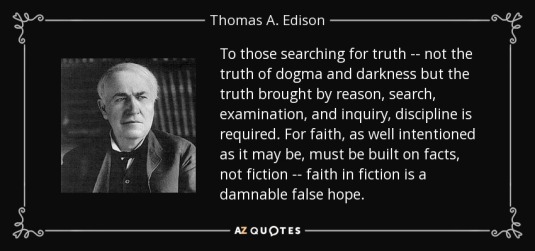 The basic premise of the work by Kahneman and others in his field is that while most of us try to be logical and rational, our decision making is often flawed by biases and heuristics that influence our decisions. The book Judgment Under Uncertainty catalogs the major types of cognitive errors that we make and gives many examples of each. One of the most common ones that many people recognize has been called the “Gamblers Fallacy.” Let us say that you are rolling a dice. The odds of any one number being rolled are 6 to 1. So let us say that you roll four three times in a row. What are the odds that you will roll a 4 on your next toss? Higher or lower than 6 to 1? Many if not most people would now assume the odds against rolling another four might be 30 or even 40 to one. In fact, the odds for rolling a four on the next toss are still 6-1. This fact would surprise many people. Mentally, we confuse the odds of an individual toss with the odds of running a series. The odds of rolling four in a row on a dice are much greater than the odds of rolling any particular number. What are the odds of rolling a number four times in a row on a dice? We can calculate it as follows:
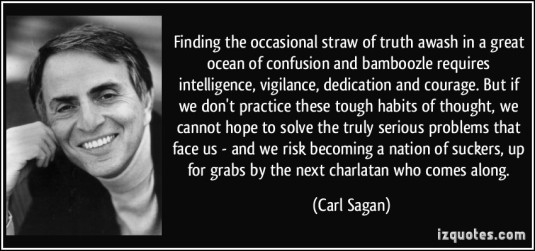 After even a slight perusal of these fallacies, you might be thinking: “Why bother, we can never find the Truth, there are too many roadblocks out there.” It probably seems like a hopeless task, something akin to finding the Holy Grail or the Ten Commandments. I admit that the recent Presidential election and its results would seem to support the invincible nature of stupidity and ignorance. The world seems overwhelmed with those who would dwell in biases, bigotry and hypocrisy and have little interest in finding the Truth. The Truth becomes whatever they are told or choose to believe. The media parrots disinformation, misinformation and outright lies. How can anyone find the Truth amidst this forest of propaganda and distortion?
 One of the most unnerving but interesting books I have ever read was the book “True Believer” by Eric Hoffer. This book explains the thinking or lack of thinking behind zealots, fanatics and what Hoffer calls “True Believers.” After reading this book, it was clear to me that ideologies, whether left wing, right wing, fascist or even liberal could be dangerous. The Greek Golden Mean “All things in moderation” kept coming to my mind. A “True Believer” will not tolerate or listen to dissent or argument. They are so convinced that their way is the only way that dialogue and discussion with them is fruitless. In fact, many “True Believers” will happily kill you for their ideology.
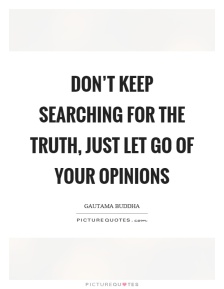 Furthermore, because our ideologies are so good, we cannot believe that anyone has the right to reject them. We do not care if the rest of the world does not want to share them, we will bomb and kill you until you see how good our ideologies are. We are totally closed minded in our belief that Democracy and Free Enterprise are truly universal virtues that the rest of the world must adopt. We have become a nation of True Believers in the “American Dream.”
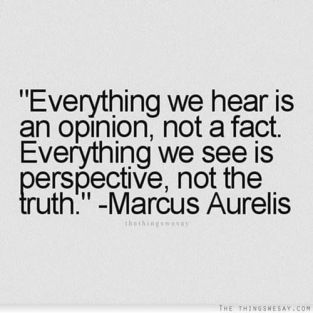 Emotional biases are formed by experiences or ideas derived from each of the four categories of knowing and believing that I briefly discussed earlier. We can derive an emotional bias from a strong attachment to anything and it does not matter whether we have Facts, Data, and Evidence. An emotional bias comes from the heart as opposed to a cognitive bias which comes from the brain. Of course, in practice both sets of biases tend to overlap and support each other. Someone with a strong cognitive bias can become very emotional about their beliefs and someone with a strong emotional bias may tend to only accept Facts which support their bias. In either case, we face the same difficulties with trying to get the individual to seek the Truth. Notice, I did not say see the Truth. Perhaps, some or more of what they already believe is the Truth or at least part of the Truth.
 Aging Capriciously