Trump vs Hitler:  A study in Politics and Psychology

By John Persico Jr. (with Metis)
Introduction: Why This Comparison Matters

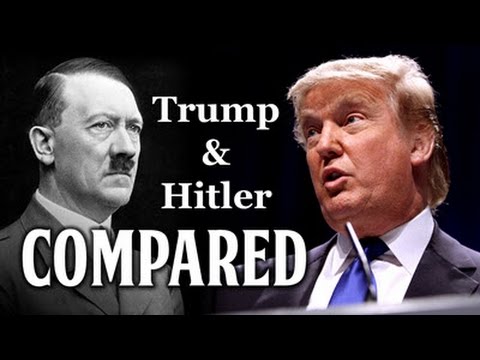
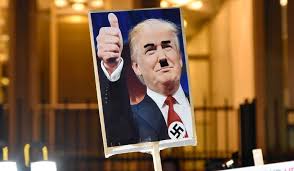
In recent years, comparisons between Adolf Hitler and Donald J. Trump have become common—and controversial.  Some people dismiss these comparisons as irresponsible.  Others use them casually as political insults.  I have been arguing for this comparison since well before Trump was elected in 2016.  I was told that I was taking a biased approach to Trump’s brand. 

I believe both approaches miss the point: either to say that Trump is simply another Hitler or to argue that comparisons are unfair.  There is a valid comparison, and Americans need to understand it. 

The purpose of comparison is not name-calling.  It is pattern recognition.

As someone who spent much of his professional life working in quality management, organizational development, and systems improvement, I learned early on that bad outcomes rarely come from one bad person alone.  They emerge when systems stop working.  Dr. Deming always said, “Put a good person in a bad system and the system will win every time.” 

Leadership failures are usually symptoms before they are causes.

This essay explores that idea by comparing Hitler and Trump across two dimensions:

  1. Political strategy
  2. Psychological profiles

Not to equate them—but to understand how democracies drift toward dangerous leadership.  Today NPR showcased an author who was an expert on how democracies devolve into autocracies.  It was chilling listening to her list of steps that move us in that direction.  We are marching towards it every day.  Trumps call for Nationalizing elections and now the State Department sanitizing any records that disagree with Trump’s lies are just another step. 
A Lesson from Consulting: “The Problem Was Never the Worker”

Early in my consulting career, I worked with a manufacturing firm that was experiencing high defect rates and growing customer complaints.

Management insisted the problem was “lazy workers.” They wanted stricter discipline.  More supervision.  More punishments.  More fear.  I studied the system.  In my younger days, I owed no allegiance to any corporate executive.  If I had a God of Leadership, it was Dr. Deming.  One of his key principles was “Drive out Fear.”  His 14 Points for Management were my Commandments.  If you did not listen to what we believed, I would simply walk.

After studying the system, I found

  • Broken equipment that was on no logical repair timetable.
  • Confusing procedures that had no root in logical process analysis
  • Inconsistent training and worse no training. 
  • Unrealistic production targets.  Goals arbitrarily set without any analysis of system capabilities.
  • No feedback loops either in the system or between employees and management.

The workers were doing the best they could in a bad system.

When leadership focused only on individual blame, nothing improved.  When we fixed the system, performance improved almost immediately.

That lesson stayed with me:

Systems shape behavior.

Politics is no different.
  1. How Power Is Built: Political Strategy

At one point, I believe that I had read just about every book written on Hitler.  During the seventies and eighties, that meant about 20-30 books specifically targeting Hitler’s rise, his personality, his strategies and of course his own book Mein Kamph.  Years went by and many more books have been written.  I can no longer say I that I have read most books about Hitler.  I can still say though that my knowledge of Hitler is not facile and is probably greater than the average person.  Let’s start with Hitler’s political strategy.
Hitler’s Strategy:

Hitler rose in post–World War I Germany, a nation crushed by:

  • Economic collapse
  • Social humiliation
  • Institutional distrust
  • Political fragmentation

He exploited these weaknesses methodically.  Much as Trump has, Hitler had an instinct for understanding the Zeitgeist and what bothered the average German citizen.  His strategy tapped into these elements.  As you read the following five pillars, see if you can relate these to the present Zeitgeist in America:

Hitler’s strategy rested on five pillars:

  • Scapegoating enemies
  • Centralized propaganda
  • Mythic nationalism
  • Organized intimidation
  • Legal takeover of institutions

He used elections first.

Then he dismantled democracy.

Power became permanent.

Opposition became treason.
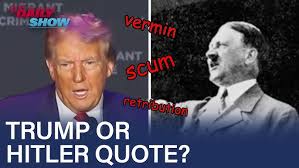
Trump’s Strategy:

Trump emerged in a very different environment: a media-saturated, polarized democracy where outrage travels faster than facts.  A nation where income inequality was growing faster than incomes.  A country that lost nine million manufacturing jobs to overseas competition added by NAFTA.  A country that did little or nothing to help the 9 million displaced workers, except to tell them to go back to college and get a degree. 

Trump’s strategy emphasizes:

  • “The people vs. the elites” framing – Anybody with a brain or independent thought must be destroyed.
  • Constant media dominance: Replacing supposed Left Wing Bias with Right Wing Bias.
  • Personal branding:  Trumps name on everything.  The Brookly Bridge should soon become the Trump Bridge.
  • Loyalty over law:  Double down, lie, sue, invert the law, ignore the law.  Follow your Fuhrer.  Trump is by default the New America Fuhrer.
  • Delegitimizing oversight:  Destroy all responsible government agencies. 
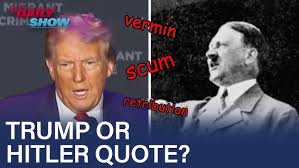
  • Resort to diversions:  Wars, acquiring new territory, attacking immigrants, attacking the Democratic Party, attacking potential opponents with dehumanizing insults.  Biden and the Obamas being the most recent examples.
  • Performance and Opportunism:  Rather than building a disciplined party structure, Trump has built a personality movement.  Politics became performance.  Trump has become a master of what I will call “Chaos Theater.”  Beyond Theater of the Absurd, Trump’s brand builds mayhem with ICE, Goons, Trump Supporters and his legion of Sycophants. 

Political Strategy Comparison

Feature

Hitler

Trump

Media Control

Total

Partial

Violence

Central

Indirect

Institutions

Destroyed

Weakened

Democracy

Abolished

Strained

Organization

Structured

Personality-based

Another Consulting Story: When Leadership Became Theater

Years ago, I worked with an organization where the CEO loved dramatic speeches.  Every  quarterly meeting was a show:

Big promises.
Big blame.
Big applause.

But behind the scenes:

  • Data was ignored
  • Problems were hidden
  • Staff were afraid to speak up
  • Long-term planning vanished

Performance declined steadily.  I was called in to help restore profits and sales.  At my second meeting (after I had done initial interviews with all of senior management), we had a senior management staff meeting.  I started the meeting off by a summary of what I had heard from the CEO’s direct reports.  In the middle of my presentation, he stopped me.  He interrupted with the following comment, “I have heard all of this before.  What I have in front of me is a bunch of whiners.  If they just do their jobs we would not need you.  That is the first strike.  The second strike is that one of your Power Point slides misspelled my name.”  Rather stunned, I apologized for the name error and went on.  This contract did not last long, and the company was later sold.

The CEO thought motivation came from threats, exhortations and slogans.  In reality, blind obedience soon replaced competence.  Eventually, the organization collapsed.  That experience taught me that when leadership becomes theater, systems decay.  Leadership must be based on trust and teamwork.  Which brings us back to politics.
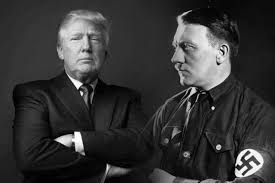
  1. Politics as System Performance

From a quality perspective, democratic institutions are like complex production systems.

They require:

  1. Reliable information:

Thomas Jefferson famously stated that he would prefer “Newspapers without a government to a government without newspapers”  Little did Jefferson realize that newspapers would one day become propaganda outlets for those with the most money to spread whatever beliefs they wanted regardless of truth or veracity. 

2. Feedback loops that can either build democracy or destroy it: 

Two examples of destructive feedback loops are the following:

  • Gerrymandering (Reinforcing Loop): Legislators redraw their own district lines, protecting incumbents from opposing voter opinions. This creates a “safe seat,” which allows them to ignore moderate views, leading to more extreme policy, which further divides the electorate and makes the next election even more partisan.
  • Media and Polarization (Reinforcing Loop): The decline of local news leads citizens to rely on national media, which tends to focus on partisan conflict.  This increased exposure to national conflict drives greater political polarization, increasing demand for more extreme, divisive content.

An example of a positive feedback loop upon which the Founding Fathers built our government are the loops between the Supreme Court, Legislature and Executive.  Originally it was thought that this system of checks and balances would keep our democracy strong and stable.  Unfortunately, any system can be undermined, and this is happening in the USA for the following reason:

What we call our American System of Checks and Balances works if the “Feedback Signal” is respected.  For this loop to remain stabilizing, two things must be true:

Independence: The judges must not be entirely controlled by the branch they are supposed to check.

Enforcement: The other branches must agree to follow the court’s ruling, even when they disagree with it.

If the President or Congress begins to ignore court rulings, the feedback loop breaks, and the system enters a state of “open-loop” instability, which often leads to authoritarianism or systemic collapse.  We can see this happening in America today as both the President and ICE and other government agencies now routinely ignore court orders.  The undermining of our system is further enhanced by partisanship that elects people who are more loyal to their parties than they are to the American public.  Or who are more loyal to the corporation that provide big bucks for their campaigns. 

3. Independent auditing and Controls

Increasingly we see an executive that is attempting to gut any auditing or independent agency that stymies his political policies or ambitions.  Trump has taken over the Justice Department with his sycophants and is now going after the Federal Reserve Board.

4. Professional standards:

A wide swath of professional standards are being eroded across the USA as any regulatory agency such OSHA, FFA, FDA, EPA, CDC and even NOA are facing emasculation when their policies conflict with those of Trump and his immediate billionaire supporters. 

5. Ethical leadership:

There is nothing I can say here that would be too severe or exaggerated in terms of the leadership provided by Trump.  To begin to compare the idea of ethical leadership with Trump’s leadership would take a book.  In fact, many books and articles have already been written on the subject. 

Those of you in my corner do not need any evidence to know that there is a vacuum of ethics in all branches of government today.  Those in the other corner are not going to change their minds regardless of what I say or what Trump does.  We have a gap in America today between those who believe in moral ethical leadership and those who believe leadership should be based on self-serving opportunities to make as much money as possible.
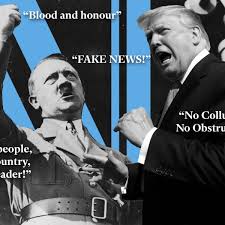
When any of the above five characteristics  weaken, showmanship and theater fills the gap.

  • Charisma replaces competence.
  • Loyalty replaces truth.
  • Noise replaces analysis.

This is how dangerous leadership becomes “normal.”

Looking Ahead to Part II

In Part II, we will examine the psychological profiles of Hitler and Trump and ask:

  • What kind of personalities thrive in broken systems?
  • Why do narcissistic leaders flourish during institutional decline?
  • What can citizens do to strengthen democratic quality?

I am asking you to undertake this further study, because understanding systems without understanding psychology is incomplete.  And understanding psychology without understanding systems is misleading. 

John Adams said:

“And liberty cannot be preserved without a general knowledge among the people, who have a right from the frame of their nature, to knowledge, as their great Creator who does nothing in vain, has given them understandings, and a desire to know—but besides this they have a right, an indisputable, unalienable, indefeasible divine right to that most dreaded, and envied kind of knowledge, I mean of the characters and conduct of their rulers.”

To be continued in Part II


What’s Wrong with Our Cops?

cops

My mentor, Dr. W.E. Deming used to say, “Put a good person in a bad system and the system will win every time.”  The latest cop fiasco with five Black men beating a young Black man to death no doubt has many people either scratching their heads or gloating.  Those scratching their heads are trying to understand how it can be that so many officers would beat a helpless man to death.  Those gloating are no doubt saying “See, it was Black cops beating one of ‘Their’ own to death.”  Still others are saying that if it were White cops, they would not have been charged with anything.  The problem with each of these perspectives is that they ignore the system.  Police operate within a system.  A bad system produces bad results.  Let me explain further.

We need to start off by understanding what a system is.  Some definitions that work for me are as follows:

1.

A set of things working together as parts of a mechanism or an interconnecting network.

“The state railroad system”

2.

A set of principles or procedures according to which something is done; an organized framework or method.

“The public school system”

3.

Deming defined a system as ‘a network of interdependent components that work together to try to accomplish the aim of the system.  The aim for any system should be that everybody gains, not one part of the system at the expense of any other’ 

A friend of mine said that the purpose of a police system is to to protect and serve the public.  

Systems can be very complex and difficult to understand.  When I was doing my management consulting, I would often bring a large group of senior managers from a company together to chart or map the “system” that they worked in.  This was usually a prelude to defining objectives and looking at “systemic” problems more wholistically.  That is a way of saying I wanted them to see the big picture.  We could do the same thing with any system.  In what is a very cursory or limited analysis of a “police” system, I offer the following factors or components.  These four factors make up a large portion of the system that police work in every day.  I would like to explain each and give my thoughts on how they create the dysfunction that seems to be prevalent in so many law enforcement agencies.  ‘

  1. Authoritarianism
  2. Exclusion
  3. Jeopardy
  4. Fascism

I do not claim that all police systems are dysfunctional.  I also do not claim that cops do not have a very difficult and demanding job.  There is perhaps no job in America that is more difficult than being a police officer.  Nevertheless, parts of the police system while designed to protect officers have been and still are major sources of dysfunction.

authoritarianism

  1. Authoritarianism

There is a saying that “Power corrupts, and absolute power corrupts absolutely.”  I speak from experience that many officers get corrupted by the power that the gun, badge and night stick welds.  Growing up on a street corner society, I had my share of run in with cops.  I was arrested before I was 18 for assault and battery and for felony larceny.  This does not count my numerous other altercations with police for which I “escaped.”  When I was young, I used to say that “The only good cop was a dead cop.”  Later, my opinion changed 180 percent and I began to appreciate the need for good policing.

The problem though is that in many cases, police let the power that they are given go to their heads.  This problem does not exist in isolation from the other factors that I will discuss but it is exacerbated by the tendency for police to think that they are above the law or that they do not have to answer to the public they serve.  Many cops take umbrage at being questioned as they act like they have the absolute right to ask questions but not to answer them.  How often have you heard in TV dramas the officer say, “I am asking the questions here.”  The person who asks the question has the power and is the authority.  The person answering is “powerless.”  TV is not reality, but it reflects some of the attitudes that exist in law enforcement.

community policing

  1. Exclusion

Cops are for the most part isolated or segregated from the public.  The old days of Officer O’Malley walking a beat and talking to kids and neighbors in a friendly demeanor no longer exists.  Talk of “community policing” is for the most part a myth or a relic of a bygone age.  We seldom see a cop unless we are in trouble, or we need something, or we are watching the 10 o’clock news.

Isolation is not a good thing.  It creates an “us-them” atmosphere.  We don’t see police as belonging to our neighborhood or as being “friends.”  We view them with hostility and suspicion when they knock on our front doors.  It does not matter whether they are Black and we are Black or whether they are White and we are White.  They knock on our door and we immediately feel threatened.

guns

  1. Jeopardy

A police officer is in life threatening jeopardy every single moment of every single day.  Perhaps, never in history have cops been so threatened.  Their lives are on the line twenty-four seven.  A cop can be blown away going to a domestic dispute or merely stopping a car to give a ticket or a warning.  The proliferation of weapons has made police more vulnerable.  The bad guy always gets the chance to shoot first and the cop must give a warning before he/she shoots.  It is easy to see why some cops go over the edge and shoot first without asking questions.  I do not say that this is justified but how would you like to go out every day not knowing whether or not you would be shot dead by some crazy who had an AK 47 or a AR 15 or a Glock 17.

facism

  1. Fascism

Before exploring this facet of law enforcement, we need to define fascism.  One definition from Wikipedia is as follows:

“Fascism is a far-right, authoritarian, ultra-nationalist political ideology and movement, characterized by a dictatorial leader, centralized autocracy, militarism, forcible suppression of opposition.” 

Police exist to protect the status quo.  There are many who mock the “Golden Rule” with,  “Those who have the gold make the rules.”  Cops are on the side of the system that pays the bills.  They protect the government against protestors, marchers, and often peaceful gatherings of citizens who they think pose a threat to “law and order.”  They also protect the government, companies and society against rioters, looters, thieves and not so peaceful protestors.

The major problem with cops is that they are on the other side of the equation when it comes to social upheaval and change.  They did not see Civil Rights as a necessary antidote to racism.  They did not see the suffragettes as giving women the right and dignity to vote.  They often were and still are on the other side of the union-management divide during strikes and labor protests.  It would seem to many people that cops work for corporate America and not the citizens of America.

I have pointed out four elements that in many cases define law enforcement to many Americans.  There are many other elements that make up the law enforcement system in the USA.  I have written several other blogs on this subject.  The four elements that I described are the most problematic and I think help to best answer the questions that this blog started with.  “How could five Black officers beat a young Black man to death.”

If you follow what I am proposing, you can understand that these five men were “just doing their job” as the system defined it.  I am sure that any one of these five men would define virtues that many would call exemplary.  I have no reason to think that they were “bad” men wanting to do bad things.  Caught up in a bad system, you and I would more than likely have done exactly what they did.  You can argue this latter point with me.  But in my experiences, I have seen too many “good” people do bad things when working in an environment that fostered either negative, immoral or unethical behaviors.

PSI watched the video today (Jan 28) of the beating that Tyre Nichols received.  At first, I did not want to watch the video.  I have seen too many videos of police brutality in the past.  They are sickening, sad, tragic and pitiful.  I did not think that I could bear to watch yet another one.  However, I did.  I do not feel that I have the right to comment on such cases if I do not see what has actually happened. 

The one thought that I got out of this video was that it could have been YOUR SON, Your FATHER,  YOUR BEST FRIEND, YOUR MOTHER, YOU or ME that was on the ground and beaten to death.  Tased, Confused, Disoriented, Maced, Kicked, Punched, and Battered, would you have run?  Would you have been able to comply with commands screamed at you?  

In my next blog, I will offer some ideas that might help to change the system.  Changing the system is the only way to change results.  Dr. Deming insisted that 94 percent of variations observed in workers’ performance levels have nothing to do with the workers.  Instead, most performance problems are caused by the system, of which people are but a part.  “People cannot perform better than the system allows”, which he explains in his book,  The New Economics.”

deming

For further thoughts on this subject of police violence, an excellent article that I came across is

The killing of Tyre Nichols was heinous and shocking. It was also not an aberration by Simon Balto

Reconstructing the Great Speeches – Frederic Douglass: “If There is No Struggle, there is No Progress”

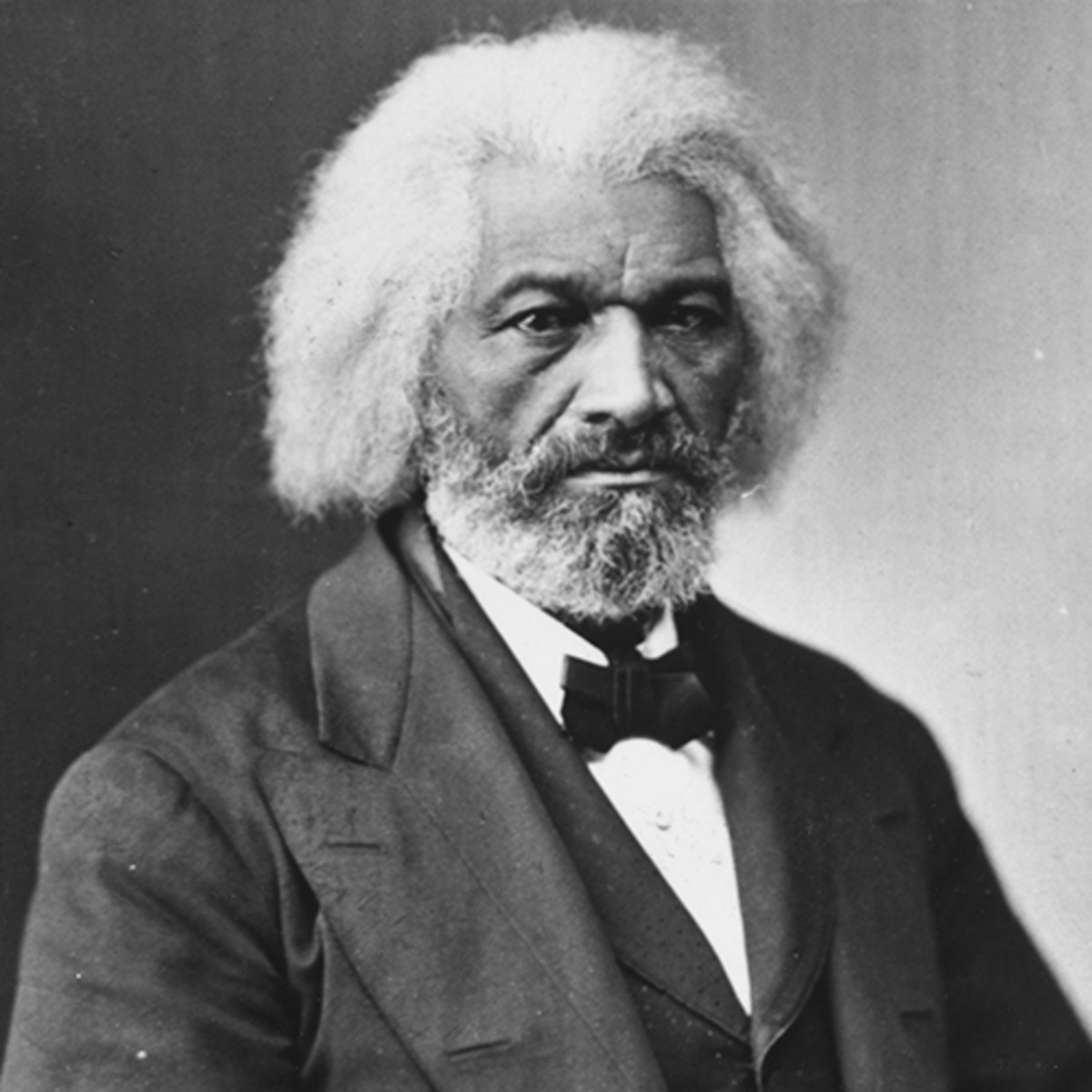
frederick-douglass-circa-1818---1895-photo-by-library-of-congressgetty-images

Actually, the name of this speech is the “West India Emancipation Speech.” However, the line from Douglass’s speech that “If there is no struggle, there is no progress” is one of the most memorable lines in the history of speech.  I first read about the life of Frederic Douglass sometime around the end of the sixties.  As you may know, this was a time of social unrest and many assaults on the systems that governed the USA.  I had become involved with a number of leftist groups and was reading Marx, Marcuse, Anarchist, Socialist and other writings belonging to what might be called a genre of “radical” literature.  I became interested in anyone who championed change in our government, and this of course led me to a number of black authors.

I first read about the life of Douglass (1818–1895) in his autobiography (“Narrative of the Life of Frederick Douglass”, 1845).  When I finally decided to go to college at the age of 25, I was required to take a speech class.  The year was 1971 and I was 25 years old.  The school offered me the opportunity to test out of the class.  I was required to do a speech in front of a professor who then would decide if I could bypass the class.  I decided to do an excerpt from Douglass’s “West India Emancipation Speech.”  I was enamored of this speech years ago and today it is still one of the most memorable speeches that I have ever heard.  Evidently, I did a good enough job on the speech since I was given credit for the class and I did not have to take it.

Context:

Frederic Douglas gave this speech on August 3, 1857 at Canandaigua, New York.  It was an address concerning the history of the West Indian slaves in their own struggle for freedom.  After years of slave revolts and civil disorder, England had abolished slavery in the British West Indies in 1834.  Douglass used the anniversary of this event as leverage for speaking out against slavery in the United States.  It epitomized his views concerning the role of struggle in the battle against slavery.  The slaves in the West Indies achieved their freedom only after many years of struggles and reprisals against the British slave owners.

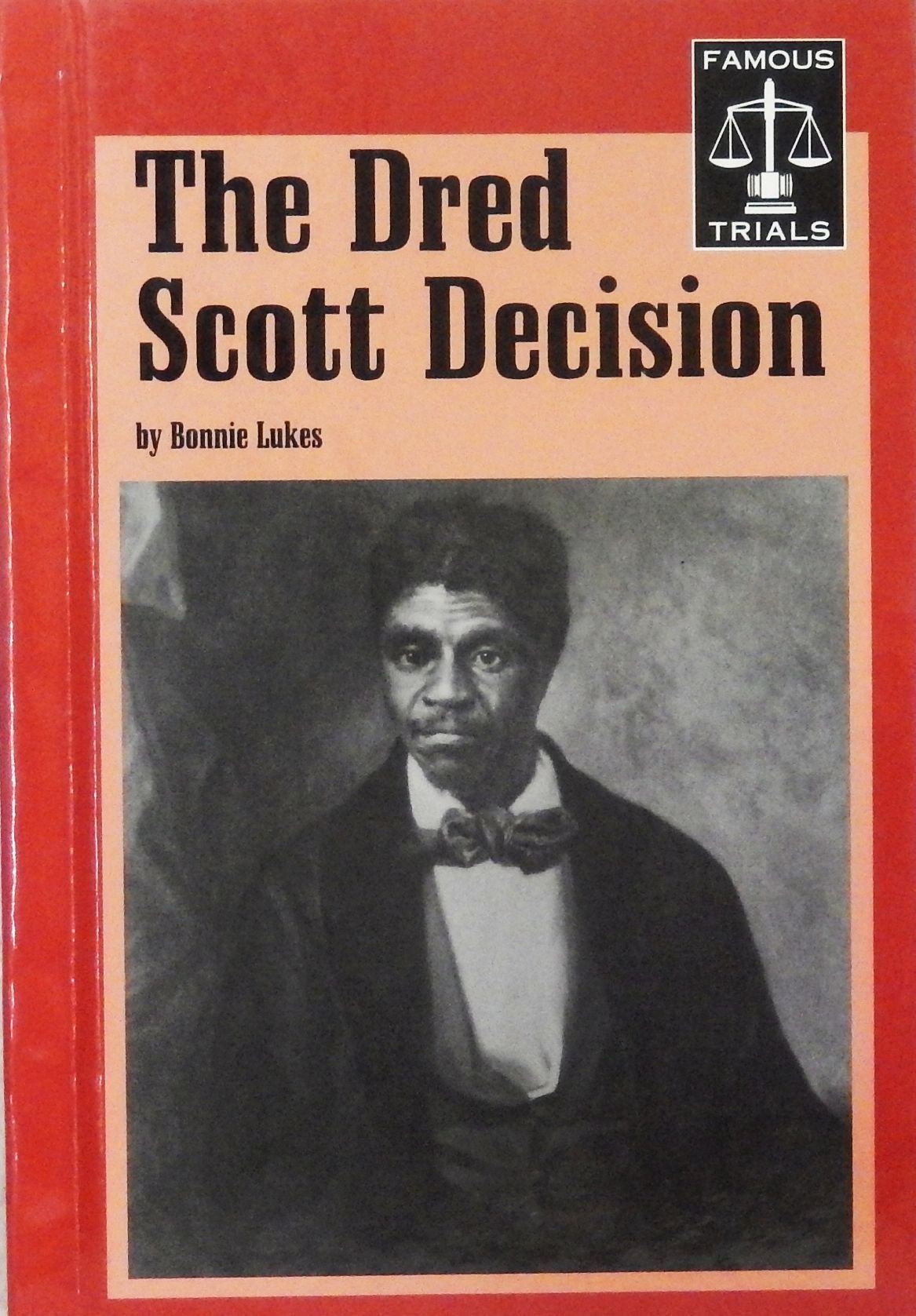
81IYcBLyoILTwenty-three years later, when Douglass gave his speech, the turmoil in the United States over the issue of slavery was growing.  It had always been a major source of dissension in the United States, but things were coming to a boiling point.  The Dred Scott decision had recently been rendered by the US Supreme Court.  This decision held that black people were not citizens and that slaves could not sue for freedom.  In March of 1857, James Buchanan was sworn in as the 15th President of the USA.  Buchanan was no friend of the abolitionists and he joined the Southern leaders in attempting to admit Kansas as a slave state.  He strongly supported the Dred Scott decision and today he would be considered an ardent racist.  The contrast between Lincoln who was elected four years later and Buchanan in terms of their policies towards slavery was the final straw that led to the Civil War.
Frederic Douglass was born a slave but escaped from Maryland to the north in 1838.  Douglass was 20 years old at the time.  He had taught himself to read and write.  He had natural skills for oratory and writing and it did not take him long to establish himself in the Abolitionist Movement as a leader and speaker against slavery.  Frederic was a man of deep compassion and empathy for others.  Douglas not only supported the rights of all minorities including Native Americans and Chinese immigrants to freedom and equality, but he also championed the rights of women to vote and to have full participation in government and civic affairs.

West India Emancipation Speech:

“The general sentiment of mankind is that a man who will not fight for himself, when he has the means of doing so, is not worth being fought for by others, and this sentiment is just. For a man who does not value freedom for himself will never value it for others, or put himself to any inconvenience to gain it for others.”

Reading this speech again after many years reminds me of how much I still adore the words and thoughts that Douglass has voiced.  I would not want a man as a friend who will not stand up for himself or others.  I loathe sycophants such as those who surround Trump.  I hate (yes hate) people who will abuse, denigrate, or attack other people.  I have fought physically and verbally to defend people who were helpless or were being bullied.  I would do so now and tomorrow.  The meek may inherit the earth but they will need the angry antagonistic people like me to acquire their inheritance.  I am glad that I do not profess to be a Christian because I do not believe in turning the other cheek.  Not once, not ever.  If there is a hell, I will go proudly to it knowing that I have fought to defend the rights of others.

“Who would be free, themselves must strike the blow.”

No nation or people in history were ever given their freedom by others.  Those who want freedom must take it for themselves.  Douglass was well aware of the struggles of other nations to achieve their independence.  He noted the struggles of the Turks and the Hungarians and the Irish to achieve their independence.

“I know, my friends, that in some quarters the efforts of colored people meet with very little encouragement. We may fight, but we must fight like the Sepoys of India, under white officers. This class of Abolitionists don’t like colored celebrations, they don’t like colored conventions, they don’t like colored antislavery fairs for the support of colored newspapers.”

The sentiments that Douglass voiced here are hard for many white people to understand or accept.  When Stokely Carmichael (Kwame Ture) the 4th Chairman of the Student Nonviolent Coordinating Committee wanted black people as the leadership of the Student Nonviolent Coordinating Committee in the sixties many white people were indignant.  How could they want to kick us out?  “We have marched, we have rallied, we have sat side by side with black people to help overcome racism and now they are turning on us?”

stokelycarmichael3

When Ture supported the concept of “Black Power” many former white supporters were threatened.  In a “Black Power” speech in 1966 Ture said: “It is a call for black people in this country to unite, to recognize their heritage, to build a sense of community. It is a call for black people to define their own goals, to lead their own organizations.” Black Power reflected the anger and pent-up disappointment with a system of white power that was forever promising blacks’ freedom and equality but never delivering on the promise.  Many white liberals thought that black folks were now going to far.

White leaders in the Civil Rights Movement did not and could not understand the needs of black people to lead their own struggle and fight for freedom and liberty.  Black people knew and understood that freedom achieved by others or given by others was no real freedom.  The fight against racism meant that blacks must lead the fight and white supporters must follow.  Frederic Douglass understood this concept one hundred year before the term Black Power was first used.

“Let me give you a word of the philosophy of reform. The whole history of the progress of human liberty shows that all concessions yet made to her august claims have been born of earnest struggle…. If there is no struggle there is no progress. Those who profess to favor freedom and yet deprecate agitation are men who want crops without plowing up the ground; they want rain without thunder and lightning. They want the ocean without the awful roar of its many waters.

His words have never been truer.  Greece fought the Persians.  Rome fought the Carthaginians.  England fought the Spanish.  The US fought the British.  The Chinese fought the Europeans.  Throughout history, countries have only achieved their independence by a struggle that as Douglass noted:  “This struggle may be a moral one, or it may be a physical one, and it may be both moral and physical, but it must be a struggle.” 

1592101150634

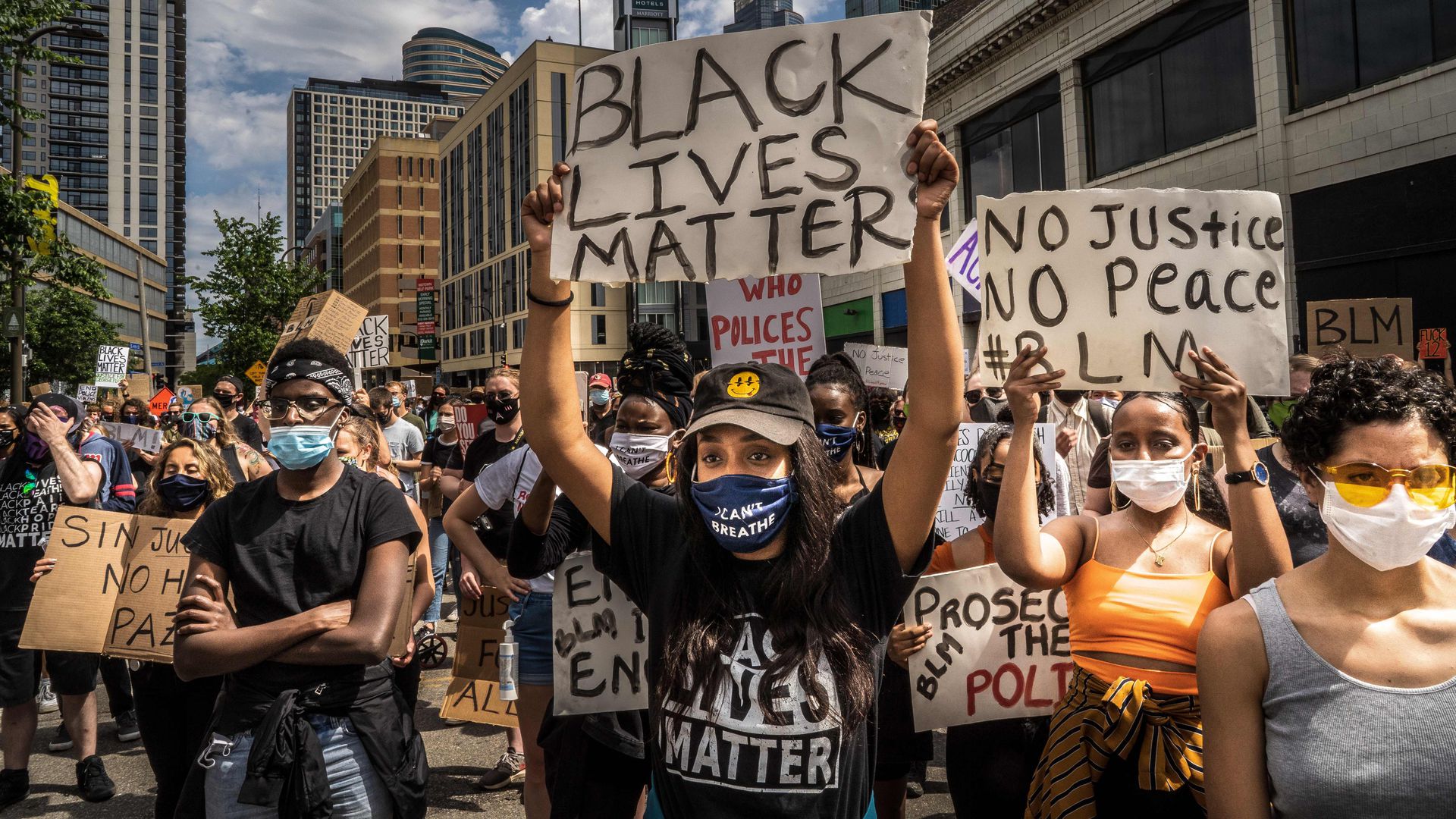
Today we see protests against racism that are led under the banner of the Black Lives Matter movement.  Some of these protests and rallies remain peaceful while at times others have become violent.  Many decry the violence, looting and physical attacks on the police that sometimes break out during these rallies.  I don’t defend the violence as necessary not do I defend the attacks on police as warranted unless they are in self-defense.  However, I do understand the difference between cause and effect.  When you are in a shell game, they tell you to “Keep your eye on the ball.”  This is almost impossible to do.  It is also impossible during the middle of the racism and prejudice that surrounds us to remember who the enemies and oppressors really are.

843d907c-d512-4c56-9cea-35ecaeda9e5f

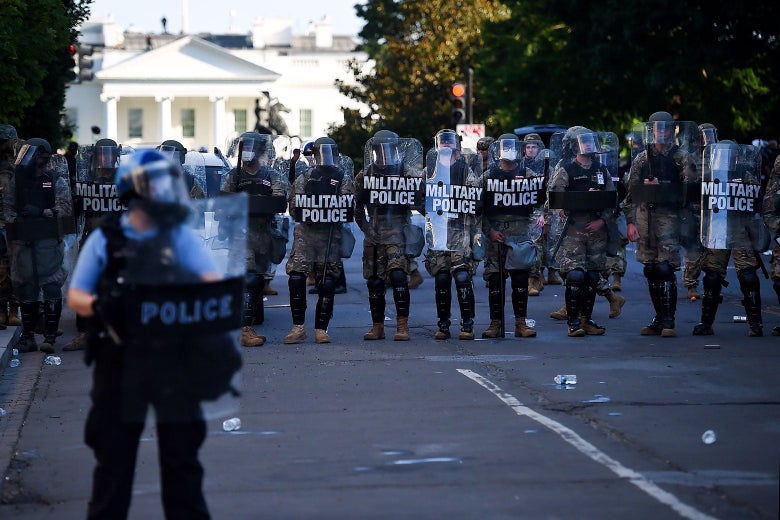
The police that are supposedly there to “Serve and Protect” seem more likely to be there to “Preserve and Protect” the status quo and the interests of big business.  Too often, the mere presence of police in SWOT uniforms and riot gear at rallies serves to antagonize and provoke more violence.  The very nature of SWOT uniforms and riot gear is both threatening and violent in and of itself.  To stand there peacefully holding a sign while surrounded by people with batons, mace, tasers, automatic rifles and handguns takes a fortitude that not many people have.  If you want to criticize a Black Lives Matter rally, you should first come out from your gated community and join a rally.  See how you feel when law enforcement is present and looking over your shoulder with a rifle.

Should the rallies result in physical harm to others or to property?  The answer is obvious, and it is no.  But when I hear the outcries against such violence, I think back on Douglass’s words that:

“Those who profess to favor freedom and yet deprecate agitation are men who want crops without plowing up the ground; they want rain without thunder and lightning. They want the ocean without the awful roar of its many waters.”

I repeat these words from above since I think they bear reflection.  Douglass knew that many abolitionists thought that slave revolts were “prejudicial to their cause.”  The same is often heard today when rallies turn violent.  But I want to ask, who is making this claim?  It is easy to stand on the sidelines and applaud but not so easy to stand up to violence being inflected physically on those who are protesting peacefully as has happened during Trumps recent Bible photo op outside the White House.

“Power concedes nothing without a demand. It never did and it never will. Find out just what any people will quietly submit to and you have found out the exact measure of injustice and wrong which will be imposed upon them, and these will continue till they are resisted with either words or blows, or with both. The limits of tyrants are prescribed by the endurance of those whom they oppress.

downloadToday we are witnessing a descent into tyranny and demagoguery the likes of which have never before been seen in America.  We have a President who lies whenever he speaks.  We have a Republican party that abhors social justice and will do everything they can to suppress the rights of Americans to vote.  We have a base of supporters for Trump that are racist, fascist, and anti-democratic.  Lured by whatever sirens they listen to; they support the right of Trump to do whatever he wants to do.  They call him their Messiah and voice unconditional support for his attacks on the press, minorities, immigrants, women, blacks, Latinos, disabled, foreign countries and even the disabled.  A President who is willing to sacrifice thousands of lives to support his quest for a second term.
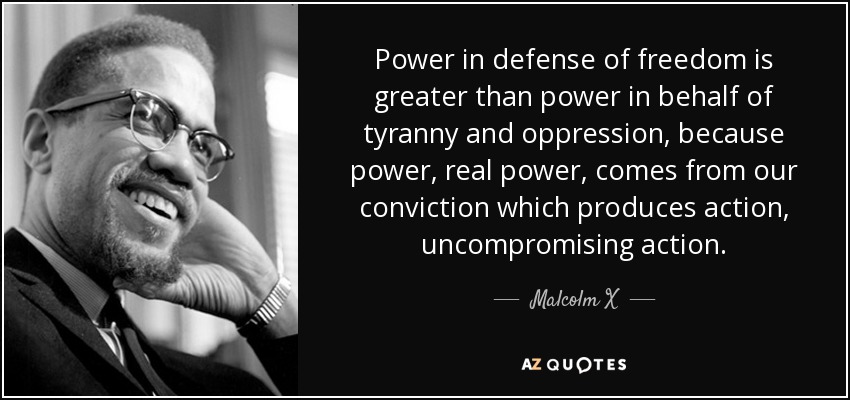
On a recent trip, I passed a sign in front of a house that read “Apathy is not an option.”  I am sure I know what the person meant who posted this sign.  Douglass would know what it meant and would fully understand that anyone professing a desire to stand on the sidelines would soon find themselves ruled by a tyrant.  There is no option today except to fight.  To paraphrase Patrick Henry, the chains of Americans are being forged in the White House.  They are being forged in the Senate.  They are being forged in the Supreme Court.  They are being forged wherever the Republican Party has attained a majority.  Quietly submit and you will attain the full measure of tyranny and injustice that your acquiescence has earned.

quote-power-in-defense-of-freedom-is-greater-than-power-in-behalf-of-tyranny-and-oppression-malcolm-x-18-45-52