Introduction:
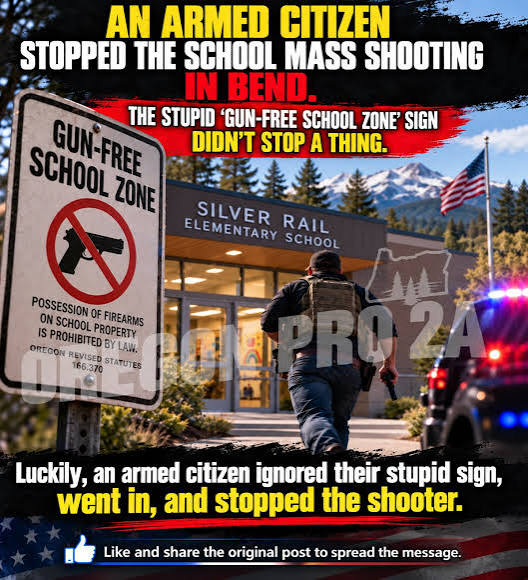
After the recent school shooting wherein an armed citizen stepped in and saved many lives, the newspapers went gaga over it. Once more it was the old story. We need to all be armed so that we can prevent such mass killings. You have heard the trope, “The only thing that stops a bad guy with a gun is a good guy with a gun.” While this situation may indeed happen, it is more the exception rather than the rule.
The real question is this “Are we safer with more guns and more people armed or are we less safe with more people having access to own and carry a weapon?
I asked my AI assistant whom I call Metis to address this question. The following is her reply. I have not edited a single word that she wrote. Let me know what you think in the comments section.
Metis:
An armed citizen who stops a mass shooter deserves recognition for the lives saved. Yet that rescue cannot, by itself, tell us whether encouraging millions of people to carry guns makes society safer. Public policy must account for everything that follows from wider gun availability, including the violence that additional guns may enable. My reading of the evidence is that widespread civilian carrying is a poor public safety strategy, even though an individual carrying a gun can sometimes save lives.
That conclusion requires qualifications. Research does not provide a dependable numerical comparison between the chance of a citizen stopping a massacre and the chance of additional guns producing one. Evidence about mass shootings is less conclusive than evidence about homicide overall. Those limitations should guide our confidence without preventing us from reaching a judgment.
Consider what the question asks us to compare. One side concerns an emergency already underway: a killer is shooting, and a citizen might intervene. The other concerns the consequences of a social policy over years: more people possess or carry firearms, and the frequency or severity of violence may change. A percentage describing how attacks ended cannot be directly compared with a percentage describing changes in homicide rates. They measure different things.
How often citizens stop an attack
The FBI studied 160 active shooter incidents occurring between 2000 and 2013. Five ended after armed people other than police exchanged gunfire with the attackers. Four involved security guards; one involved a citizen with a firearms permit. That single ordinary civilian intervention represented approximately 0.6 percent of the incidents in that historical dataset. The report also documented successful interventions by unarmed people. [1]
The figure needs careful handling. It is historical, drawn from a particular dataset, and describes one type of successful intervention. It does not mean an armed citizen confronting a shooter has only a 0.6 percent chance of succeeding. In many incidents, no armed civilian may have been present or positioned to act. Estimating success when an opportunity exists would require reliable information about those opportunities, including unsuccessful attempts. The FBI percentage does not supply that denominator.
Definitions introduce another difficulty. An active shooter incident involves someone actively killing or attempting to kill people in a populated area. A mass shooting may be defined by a threshold of people wounded or killed. Researchers use different thresholds and may treat domestic violence, gang violence, and public attacks differently. Their totals therefore cannot always be combined or compared. [1, 4]
There is a legitimate objection to counting only completed massacres: someone who stops a gunman early may prevent the incident from reaching the threshold. That success could disappear from a database restricted to mass shootings. A fair assessment must allow for this possibility. It must also avoid assuming that every interrupted shooting would otherwise have become a massacre. The outcome that would have occurred without intervention is often unknowable.
These problems leave us with a narrower, defensible finding. Armed civilian intervention can work. Existing incident counts do not establish the precise probability that a particular citizen will succeed, or prove that increasing the number of armed citizens produces a net public benefit.
There is another measurement problem worth remembering. The share of attacks stopped by civilians could rise simply because more civilians carry guns. That increase alone would not show whether total deaths declined. We would still need to know whether attacks became more frequent, whether interventions reduced casualties, and what happened to other forms of violence. Conversely, a low intervention count cannot demonstrate that every additional carrier is ineffective. The useful policy measure is the change in harm across the population exposed to the policy. A count of successful rescues contributes to that assessment, but cannot complete it on its own.
What broader research tells us
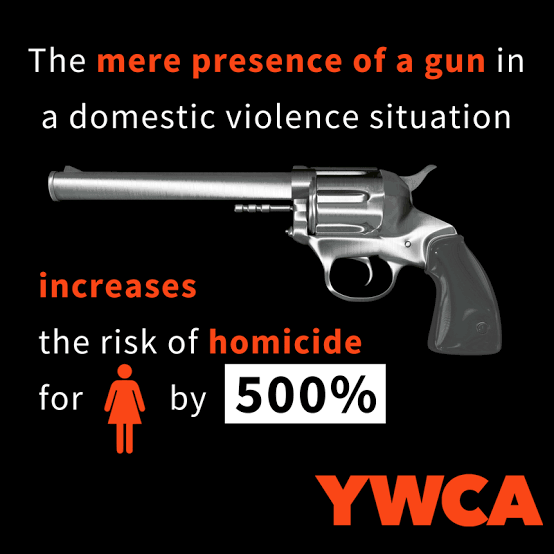
To evaluate public safety, we need research that examines outcomes across communities and over time. RAND’s Gun Policy in America project reviews studies of firearm policies, evaluates their methods, and grades the strength of the evidence. Its current synthesis finds supportive evidence that shall-issue concealed-carry laws increase total homicides, firearm homicides, and violent crime. Supportive is RAND’s strongest evidence category. [2, 3]
Shall-issue laws generally require authorities to issue concealed-carry permits to applicants meeting specified legal criteria. Research on these laws is more informative than simply observing that one place has many guns and another has fewer. Studies can examine what happens after policy changes while attempting to account for other influences. They remain observational studies, subject to methodological limits, rather than controlled experiments involving otherwise identical societies.
Nevertheless, the direction of the stronger evidence matters. The claim that expanded carrying protects society predicts a reduction in violence after the policy changes. RAND’s assessment points toward increased violence instead. Individual defensive benefits may exist within that outcome, but they have not produced the overall reduction in homicide that the public safety argument promises. [2, 3]
We must also distinguish carrying from ownership. These findings do not measure the consequences of every firearm kept for hunting, sport, or home defense. They bear directly on the proposition that making public carrying more broadly available improves safety. They cannot justify treating every possible restriction on ownership as equally effective.
Mass shootings deserve their own qualification. RAND rates the evidence on how concealed-carry laws affect mass shootings as inconclusive. That does not establish that expanded carrying prevents massacres, nor does it establish that such laws necessarily increase them. It means available research cannot reliably settle that specific policy question under RAND’s standards. We should say so plainly. [3]
A separate study published in The BMJ in 2019 examined states from 1998 through 2015. It found that greater estimated gun ownership and more permissive gun laws were associated with higher mass-shooting rates. Its definition required at least four victims killed by firearm, excluding the perpetrator, and included domestic and other incidents. This finding supports concern about gun availability, but an association cannot establish exactly how many attacks additional ownership would cause. [4]
The study and RAND’s conclusion answer different questions. An association between estimated ownership and mass shootings is not the same as a demonstrated effect of a particular concealed-carry law. Preserving that distinction makes the argument more credible. Evidence should retain its meaning even when a stronger claim would better serve our preferred conclusion.
Why a rescue cannot settle public policy
A successful intervention is compelling because its benefit is visible. A person acts, the attacker stops, and survivors can identify someone who helped them. Prevention is harder to see. When a policy helps prevent a killing, there may be no dramatic event and no identifiable person who knows that their life was spared. This difference can influence which evidence attracts our attention.
Imagine, purely as an illustration, that a change in gun policy enabled five lifesaving interventions but also contributed to twenty additional deaths. The interventions would remain valuable, and the people who acted might deserve gratitude. The policy would still have increased the death toll. Those numbers are hypothetical; the point is that evaluating the policy requires counting benefits and harms together.
Wider availability could affect violence through several routes. A gun might be available during an escalating argument, stolen and later used in crime, or used in a mistaken response to a perceived threat. A defender might also stop an assault. These are possible mechanisms, not a substitute for measuring outcomes. Research must determine what happens when such effects operate across an entire population.
Calling someone a responsible owner does not resolve that calculation. It describes an important intention or record of conduct, but public policy operates across people with different judgment, circumstances, and training. Nor does questioning expanded carrying imply that ordinary owners are would-be mass murderers. An overall increase in harm can occur without most owners ever committing a violent crime.
What I would support
My conclusion favors policies evaluated by their results. RAND finds evidence supporting several specific approaches, including safe-storage laws that reduce firearm harms among young people and waiting periods that reduce total homicides. Its review also finds evidence that certain background-check requirements reduce homicide. The strength and scope of those findings differ by policy and outcome; none should be advertised as a guarantee against every massacre. [2]
People also bring constitutional principles and personal values to firearm policy. Evidence cannot decide every question about rights or acceptable restrictions. It can test the factual promise that wider civilian carrying makes the public safer. On that question, the stronger evidence gives us reason to doubt the promise.
I would honor the citizen who saves strangers during an attack. I would also ask whether our policies reduce the number of people who ever face that terror. My judgment favors reducing dangerous access through measures supported by evidence, while assessing their actual results. The lives saved by an armed defender count. So do the lives lost elsewhere under the same policy.
Sources
[1] Federal Bureau of Investigation. A Study of Active Shooter Incidents in the United States Between 2000 and 2013. Published 2014. See Resolutions, printed page 11.
https://ucr.fbi.gov/office-of-partner-engagement/active-shooter-incidents/a-study-of-active-shooter-incidents-in-the-u.s.-2000-2013
[2] Smart, Rosanna, et al. The Science of Gun Policy, Fifth Edition. RAND, 2026. See Key Findings.
https://www.rand.org/pubs/research_reports/RRA4360-2.html
[3] RAND. The Effects of Concealed-Carry Laws. See evidence summary for violent crime and mass shootings.
https://www.rand.org/research/gun-policy/analysis/concealed-carry.html
[4] Reeping, Paul M., et al. State gun laws, gun ownership, and mass shootings in the US: cross sectional time series. The BMJ, 2019;364:l542.
https://pmc.ncbi.nlm.nih.gov/articles/PMC6402045/




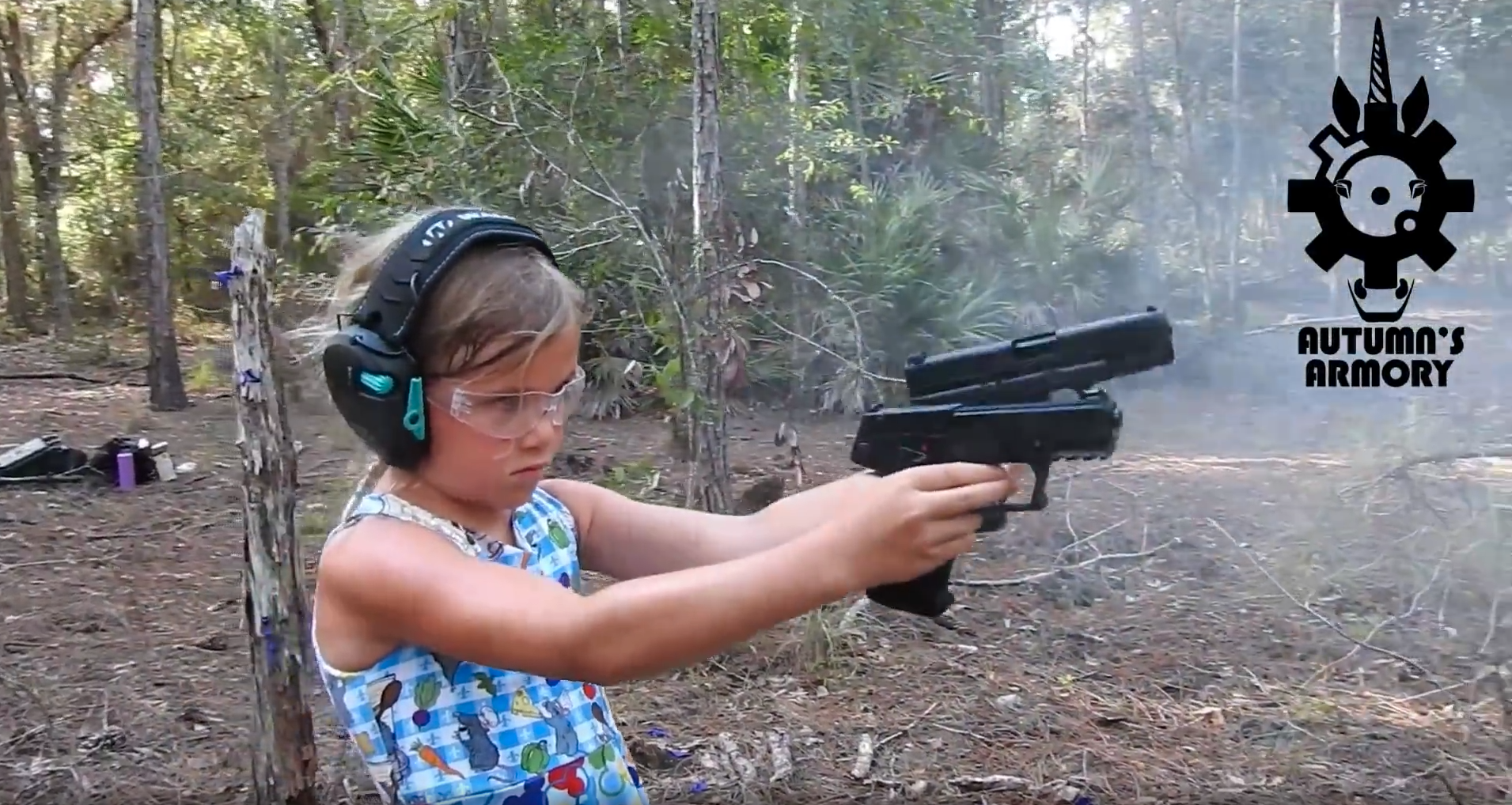 Next, let us establish a lethality of weapons. I will put it thus: fists are not as lethal as brass knuckles. Brass knuckles are not as lethal as clubs. Clubs are not as lethal as knives. Knives are not as lethal as guns. Handguns are not as lethal as rifles. The range of lethality that I have noted is “most” often true but there are always exceptions. Thus, I will say again, the lethality of the potential weapons structure I have described is most often the case but not always.


 This cycle explains quite well what happens in many cases of gun violence or other types of violent outburst. In phase two, tensions are building up. This could be from a variety of different causes. It might be strains from the work place or strains from home relationships with family and children. The strains are often cumulative particularly with people who may lack the ability or means to discharge their stress. The stress builds up until the individual finally explodes. The explosion could be in words or actions. Actions might involve throwing things, punching things, hitting things or various levels of assault against things or people using a wide range of weapons.
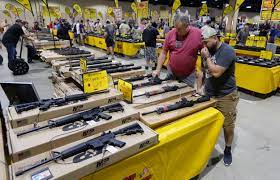 Phase three is the incident itself. A trigger is needed to set the individual off. Perhaps the individual gets fired or their spouse asks for a divorce. Maybe they have a fight with a neighbor, or a car cuts them off at an intersection. When the trigger occurs, the individual explodes. The explosion could involve a violent attack that might go from simple threats or curses all the way to shooting someone. The availability of weapons will play a major role in the level of violence. This is one reason why a “waiting period” for purchasing a firearm makes a lot of sense. In two recent mass shootings, there was no waiting period for the purchase of a high-powered rifle and the individuals engaged in shooting massacres within a week of buying their rifles.

 Many anti-gun control people push the solution that more mental health is needed. The problem with this solution is that anger and angry outbursts are as normal in the population as mom, God, and apple pie. There is no way to treat all the people in America who might lose their temper on a given day. There is no way to tell when or where these outbursts will take place. Therapy for “normal” people is not on the radar. Make no mistake, your best friend, your neighbor, your cousin just might “lose” it tomorrow and go on some type of violent jag that results in death for someone else. It happens all the time. The papers are full of reports of people who lose it and end up killing their loved ones and themselves.
 The other solution is to reduce the availability or the lethality of guns in society. This solution makes the most sense. We can somewhat reduce the availability of weapons through background checks, waiting periods, age restrictions, gun training, and reducing the ability to carry a gun in public. We must get rid of these ridiculous concealed carry laws. It should be illegal to carry a gun in public concealed or otherwise unless you have a permit with a valid reason for why you need to carry a gun.
 We can reduce the lethality of guns by limiting clip capacities and by eliminating rifles that were designed for military purposes and not hunting. Why anyone would need a rifle with more than a three round capacity is beyond me. Rifles should be for hunting or target shooting and nothing else. Any game that you are hunting will be gone long before you can chamber and fire your third round. A .223 caliber was first designed for the military in Vietnam. I had to qualify on an M-16 in 1965 when they were first issued. It was like shooting a bb gun. Easy to shoot with a round that was designed to wound and not kill. They said this would take two or more people out of the war instead of just one dead body. The individual shot by a .223 would be severely wounded and would need someone to take him back to a medic or out of the war zone. Read any of the gun magazines today and it looks like they are selling guns and accessories to someone who is going to war. Helmets, bullet proof vests, high-capacity magazines, laser sights and guns more fit for killing humans than hunting are touted and readily available.


 This logic is simply bizarre. It is almost beyond comprehension. A rifle based on a cartridge designed during the Vietnam War is now touted as a “perfect” defense weapon. It sounds like every home should buy one. Americans live in a country where there is no protection from crime according to the NRA and gun manufacturers. The NRA kisses the asses of manufacturers to grab more and more power as they perform like Pied Pipers for their members. “Come along, buy a gun, protect your rights, protect your family and children. Don’t let the criminals make a victim of you.” The NRA is a monster that has metastasized on the fears of Americans. Politicians court the money and votes of NRA members to get re-elected knowing fear is a great motivator. To paraphrase a comment made by the Nazi Hermann Goering:
 “The more guns we have the safer we will all be,” scream the gun fanatics. I have neighbors walking around in their yards with guns strapped on their hips. I often see shoppers in some stores sporting revolvers and automatics on their belts. Walmart’s has asked that shoppers do not open carry guns. Do you know why? It is because people get nervous when they see these idiots walking around with pistols on their belts. I worry more about being shot by one of these jerks than I do by some armed robber. In the event of a store robbery, I suspect I might be more likely to be shot by the so called “good guy with a gun.”

 I admit that I have always liked guns, knives, rifles, and assorted military hardware. However, I like them in their place. Rifles for hunting when hunting is a sport and not a crap shoot like so much of it is today. Baiting bears with donuts and then shooting them from a tree perch does not seem very sporting to me. I like target shooting. I enjoy shooting some black powder pistols that I own. A friend gave me an old revolutionary style musket which is fun to shoot. I do not shoot at squirrels or birds or rabbits. I use it for target practice. I am not against hunting deer, elk, and other animals for food. Many people in rural areas depend on game animals to supplement their diets in lieu of costly meats at a grocery store.

 I don’t know who might kill you. I don’t know when they might kill you. I don’t know why they might kill you. Best odds are that it will be totally random, and you will never see it coming. You will never know when it will happen. The statistics show that you have a 75 percent chance that if you are murdered it will be by a gun and not by poison or a knife. (
 How then have we gone from sanity to insanity? From being able to walk down a street or go to work or school and not worry about some nut case coming in and killing us? When did America go from being a country with “Law and Order” to a country where everyone needs to carry a gun to protect themselves? How have we let the politicians, NRA and gun manufacturers convince everyone that it is not safe to walk outside without a concealed carry permit and a Glock or Smith & Wesson hidden someplace beneath our bullet proof vest?


 I am a military veteran. I have hunted and shot a variety of rifles, revolvers and automatic weapons. I am not against guns. As an American, I am very concerned about the amount of gun violence in our country. However, I am even more concerned because too often it seems like the “Bad” guys win and the “Good” guys lose. Over the past twenty years, I have studied and read about many of the gun battles that have taken place in history. From cowboy shootouts, to holdups, to police shootouts such as the Newhall massacre and the Miami-Dade FBI debacle, I have read these stories in an attempt to find the underlying reasons for the good guys losing and the bad guys winning. My blog this week is about the risks and rewards that might accrue from carrying a gun. As with any tool or piece of technology, there are pros and cons to its use. In the case of guns, the nexus of these factors can be best characterized as “risk.” There is a risk. Carrying a gun is a risk. Not carrying a gun is a risk. What are the risks? When do the advantages outweigh the risks? These are the questions that my blog will look at this week. Hopefully, you will be able to make an informed decision about the issue of gun carry and gun control after you read my blog. Too many people are preaching the advantages of gun carry without looking at the risks and downsides.
 It is a well known fact that in the Old West gun battle speed did not always determine the outcome of the encounter. Speed without accuracy is useless. Speed without firepower may also be useless. It is often said “do not bring a knife to a gun battle.” Nevertheless, deployment of a weapon and the speed with which a weapon can be deployed is a key factor in the success of a gun battle. Numerous scenarios show a knife fighter killing a gun fighter because within a certain distance, the knife fighter with a fixed blade weapon may trump the gun fighter owing to the speed of deployment. A key problem in home invasions may be the speed with which the homeowner can access and deploy his weapons. The invader may have the advantage because they come in with a weapon in hand while the responsible gun owner may have his gun in a locked safe. The invader will probably not wait for the home owner to access his safe key, load and chamber his weapon and fire.
 The first scenario we will look at involves a “lone wolf” shooter in a packed theater or hall. Whether the shooter is mentally ill or a terrorist is irrelevant to the scenario. We will assume the shooter has put on a Kevlar vest and has a Colt AR 15 .223 caliber assault rifle as well as a Glock 40 caliber side arm. He has several extra clips for both weapons. Our good guy is in the hall someplace carrying a concealed 9mm Beretta with no extra clips
 A friend of mine recently sent me the following story. Very similar to a home invasion but it involved a couple in a hotel room.
 I give the bad guys the + for speed since they already have their weapons deployed. The good guys have no advantage for either firepower or accuracy since they are standing face to face with the bad guys and even a 22 caliber can be deadly. Neither side has either a defensive or offensive position with a significant advantage, except to note that the bad guy already has his gun out. However, we already gave him a + for speed and firepower. In terms of nerve, we will assume that both sides have equal nerve. Thus, as the scenario stands, the bad guys have the edge 3-1. The good guys need to stand down until they can change the scales. Can they shoot the bad guys as they run or walk away? What are the repercussions should they do so? This is an interesting legal question that might be answered very differently from state to state. In most states, once you are no longer in bodily jeopardy, you cannot shoot an assailant as they are fleeing, regardless of how much of your money they have.


