“Try Honey Before Vinegar” – Lessons on Leadership from Abraham Lincoln

America has lost the “Art of Leadership.”  We no longer develop men and women with integrity or selflessness.  Instead of Statesmen, we have political hacks only concerned with getting reelected.  Politicians with no backbones or the courage to stand up against injustice.  We have a Congress of sycophants willing to do whatever they are told to do regardless of how unethical or immoral it may be.  We have thousands of lawyers who do not uphold justice but find arguments to support an amorality that meets the letter of the law but ignores the significance of decency, goodness, honesty, conscience and fairness.

In this blog and the ones to follow,  I will write about insights regarding leadership from one of the greatest American leaders and Presidents of all time.  I found a compilation of these in an old collectors edition of “Civil War Times” published in Winter, 2013. There are 41 in total, and I have already covered the first in a previous blog.  I would like for you to hear the words of Abraham Lincoln and what he had to say about leadership.  I will include some of my own experiences from my years of working with senior management in over 32 organizations.  Some of the men and women I worked with were incredible leaders.  Most of them wanted to be better leaders and that is where I brought the teachings and thoughts of W. E. Deming to my consulting practice.  Dr. Deming achieved extraordinary results in business by tapping the knowledge, skills and abilities of ordinary people.  Senator Hubert Humprey famously said that “Democracy is a system that achieves extraordinary results with ordinary people.”

Insight # 2 – Try Honey Before Vinegar: 

Lincoln said, “If you would win a man to your cause, first convince him that you are his sincere friend.”  Springfield, Illinois, 2/22/1842

This seems to be a principle or idea that is not very well understood by many people today.  I constantly hear people tell me that if you want to change people’s ideas about things, you must “empathize with them.”  “You must really listen to them.”  To these admonitions, I say “Bullshit.”  You can listen to some fanatics all you want to, and they will still totally ignore anything you say that does not fit in with their preconceptions or ideology.

A good woman friend of mine and I were arguing about Trump and his supporters.  Repeatedly in every argument, she would say “John, you just have to really listen to them.”  I finally got tired of hearing this refrain and one day I challenged her.  I said, “Tell me one, only one, Trump supporter you have listened to who has changed their mind.”  She was dumbfounded.  She was stumped.  She was bewildered.  She could not think of one.  Months went by.  I would occasionally rub salt into the wound, “Did you change the minds of any Trump supporters today?”

You can listen to others all you want.  You can listen to hell freezes over.  You will not change a fanatic or zealot’s ideas by listening.  But Lincoln was smarter than all the psychologists we have today put together.  He knew that it would take more than listening to get others to think differently or to appreciate your ideas after you have heard theirs.  It takes believing and feeling that you are a “Sincere” friend.  Not just a Facebook friend or some online friend, but a “Sincere” friend.  Plato talked about the various types of friends, but he said nothing about a “Sincere” friend.  So, what is a “Sincere” friend and what does it take to make someone believe that you really and truly are a “Sincere” friend?  Let’s first define the meaning of “Sincere.”

An online dictionary defines “Sincere” as:

“Free from pretense or deceit; proceeding from genuine feelings.”

Wikipedia defines the virtue of Sincerity as follows:

“Sincerity is the virtue of one who communicates and acts in accordance with the entirety of their feelings, beliefs, thoughts, and desires in a manner that is honest and genuine.  Sincerity in one’s actions (as opposed to one’s communications) may be called ‘earnestness”’.

I think the word “Sincere” has a lot to do with integrity, honesty, trustworthiness and truthfulness.  The Jewish have a word for a person who is sincere and honest called a Mensch.  In Yiddish, a Mensch roughly means “a good person”.  The word has migrated as a word into American English with a Mensch being a particularly good person, similar to a “stand-up guy”.  A Mensch is a person with the qualities that one would hope for in a friend or trusted colleague.

I think we can now answer the question, “What does it take to impact someone’s ideas and ideology?”  The answer is very simple.  If you want to have someone listen to your ideas, you must be a Mensch or at least a very “Sincere” friend.  When I think about the people we elect to political leadership, I am struck by the lack of Menschs in either Congress or the Legislature.

In fact, I would argue that we have the exact opposite.  We have people you would not trust with a nickel.  People who we know will change their mind at the drop of a lobbyist’s donations.  Congresspeople, who continually lie to cover their malfeasance and incompetence.  Ask anyone of them what they do all day long and they will deny that they spend about 80 percent of their time fundraising for their next election campaign.

Try to suggest some new ideas to them as I have done countless times, and you will get the following answer, “I am very busy but send me something and I will look at it.”  Don’t hold your breath my friend.  You will die of asphyxiation before any of them, Democrat or Republican will ever get back to you.  However, mention that you are thinking of a large campaign contribution and doors will open in a New York minute.

Let us think of a scenario wherein a Trump supporter meets a Trump opponent.  We will call Mary the Trump supporter and Joe the Trump opponent.   Neither of them have ever met before and do not know each other.   The talk between them soon turns to politics.

Mary:  I think Trump is doing a great job.  He is really shaking the government up.  Just what we need.

Joe:  You think tariffs, job cuts and threatening our allies are what we need?  Are you crazy?

Mary:  He is already getting results.  Mexico and Canada have agreed to send more troops to the border.

Joe:  These are our allies.  What if I threatened you, how would you feel about me?  I am sure that long-term you would be looking for some way to get even.

Mary:  Well, I have to go.

Joe:  Yeah, so do I. Bye

If the above scenario had gone down between two long-term “Sincere” friends, how do you think it would have turned out?  I am betting both sides would have heard some value in the other sides position.  Furthermore, they might have  finished the discussion and gone out together to have a bite to eat or at least agreed on another time to get together.

Old Abe Lincoln knew a lot about leadership and the role that friendship played in it.

“On the contrary, assume to dictate to his judgment, or to command his action, or to mark him as one to be shunned and despised, and he will retreat within himself, close all the avenues to his head and his heart; and though your cause be naked truth itself, transformed to the heaviest lance, harder than steel, and sharper than steel can be made, and though you throw it with more than Herculean force and precision, you shall no more be able to pierce him, than to penetrate the hard shell of a tortoise with a rye straw.” — Lincoln, Address to Washington Temperance Society (February 22, 1842)

I have heard many conversations between Trump supporters and Trump opponents.  We attack each other.  We condemn each other for stupidity.  We assail each other for taking the Kool-Aide.  Then we retreat to the other sides of the room full of hate and disgust.  We ask ourselves, “How could anyone think like they do?”  “What is wrong with them?”  “They must be either, stupid, uneducated, brainwashed, racist or something else.”

If we are going to break down the walls and barriers that now separate us in the USA , we are going to have to do more than just listen to our opposition.  We are going to have to find ways of befriending each other.  Not just casual friendships but real “Sincere” friendships.  Friends who can accept and support mutual honesty and truthfulness with each other.

Too much of what I have seen in the media supports a narrative that my side is intelligent and smart, and the other side is dumb and uneducated.  I confess to having shared some of this narrative in my own writings.  It is now time to move past these simplistic and detrimental stereotypes and develop empathy and understanding that surpasses mere listening.  The way to do this is through “Sincere” friendship and not by demonizing the other side.

How do we fight an “Uncivil War”?  Insight # 3 from Old Abe has more valuable thoughts to help us in this struggle.  I will share these in my next blog.

 

My Final Will and Testament – Convictions – Reflection #3

download

Last year at my 40th Demontreville Retreat, one of the exercises that we were given by the Retreat Master included a very challenging set of thoughts.  The worksheet for the activity was labeled as “A Testament.” I took the worksheet and instructions home with me.  It had fourteen tasks or reflections to complete.  I did not desire to complete them during the retreat.  It is now almost a year since my retreat, and I have decided to make the mental and emotional effort necessary to complete this “Testament.”

I am going to complete one or two reflections every other day for the next few weeks.  I would love it if you would do these tasks along with me.  If you would like to share your thoughts, that would be great, but I am not expecting anyone to do so.  I would like to know if you find any benefit in completing these activities.

The worksheet started with these instructions:

Imagine that this is the last day of your life on earth.  In the time that you have left, you want to leave a “Testament” for your family and friends.  Each of the following could serve as chapter headings for your “Testament.”

  1. These are the Convictions that I have lived by.

I do not like the sound of the word Convictions.  I think I have lived by too many Convictions in my life.  There are of course two somewhat very different meanings that can be attached to this word.  Dictionary.com provides the following two definitions.  Let us look at these for a second.

  1. A formal declaration that someone is guilty of a criminal offense, made by the verdict of a jury or the decision of a judge in a court of law:  “She had a previous conviction for a similar offense”
  2. A firmly held belief or opinion:  “She takes pride in stating her political convictions”

maxresdefault

Regarding the definitions, one can see where a person might have some anxieties about the first association of Conviction with jail and prison.  I assure you that this is not where my anxiety comes from.  I am pretty sure it stems from the second definition.  “A firmly held belief.”  When I look back upon my life, I have had too many firmly held beliefs.  Behind my back, I know that I have been called “A know it all” many times.  I am still a very opinionated person as any of my readers can probably attest.  However, I would like to think that seldom if ever do I get into robust arguments any more with other people.  I even gave up trying to convince Trump supporters who include veterans, evangelicals, businesspeople, college graduates, relatives, and friends that Trump is a total scumbag with no morality or ethics.

I am trying hard to find any Convictions now that I am so dedicated to that I let them rule my life.  All of the great quotes, aphorisms, metaphors, analogies, theories, and ideas that I know of would fill an old encyclopedia Britannica.  But not one that I can think of would I waste five minutes defending.  I think that there are pro’s and con’s to everything in life.  For every up there is a down.  For every night, there is a day.  For every light, there is a dark.  For every right, there is a wrong.  Perhaps, Ecclesiastes comes as close to a Conviction as I want to live with today.

“For there is no lasting remembrance of the wise, just as with the fool, seeing that both will be forgotten in the days to come.  Alas, the wise man will die just like the fool!  So, I hated life, because the work that is done under the sun was grievous to me.  For everything is futile and a pursuit of the wind.” — Ecclesiastes 2

Is the above a Conviction or is it simply a belief?  Not sure it even matters.  Everything we do is blowing in the wind.

Custom-Made-Golden-Mountain-Landscape-Oil-Painting-on-Canvas

One story I like very much was told by OSHO about a mighty king who died.  This King believed that he was the greatest King on earth and also that he was the greatest King who ever lived.  The King died and found himself in the realm of the Golden Mountains.  These mountains were higher than the Himalayans and more vast than the entire Asian continent.  Here the King met the Caretaker of the mountains.  The Caretaker gave the King a magic pen and told him that he could write his name in the mountains.  This was permitted because he was a mighty King.  A few days later the King came back to the Caretaker and complained, “I have walked for many miles through the Golden Mountains and everywhere I went to sign my name, some other person had already signed their name.  Who are all these people?”  The Caretaker replied, “These are all the other mighty Kings before you who died.”

  • Convictions are more dangerous foes of truth than lies.”
  • “Tolerance is the virtue of the man without convictions.”
  • “Men never do evil so completely and cheerfully as when they do it from religious conviction.”

I would rather live by a set of virtues and values than a set of convictions. 

Next Reflection:    

  1. These are the things that I have lived for.


My Four Best of Everything:  – Part 3         

what_a_great_idea1

This is Part 3 of my four best of everything.  In this final part, I would like to share with you my four favorite ideas.

For those of you who missed Part 1 and Part 2, this was my introduction.

This week I am doing what I call my four best of everything.  Everything that matters to me anyway.  Perhaps I should say it is my four favorites of everything that I admire in the literary world because best is such a qualitative term.  There may be little difference between the word favorite and the word best, however, using the term best is more provocative and usually ends up in arguments or debates.  Since I do not want to be judgmental, I will use the term favorites in the text of this blog.

I am sure that each of you reading this will have some ideas concerning your favorites in these areas.  I invite you to put your ideas or thoughts concerning your favorites in my comment sections.  The more ideas you have the better.  Don’t be shy.  Use any language you want to share your ideas with the rest of the world.  Let us know what you like and why you like it.  Plenty of room in the blogosphere.

My Four Favorite Ideas:

internal-coverIf you think about the ideas or premises or nostrums that guide your life, you will soon notice that we have many ideas that along our journey we have adopted.  The sources of these ideas are vast.  Fairy tales and children’s stories give us ideas such as “A stitch in time saves nine” or the “The race does not always go to the swift” or “Those who do not plan ahead may starve in the winter.”  Many of our ideas about living no come from our parents and family.  My mother used to say such things as “Ignorance is bliss” and “If you give them enough rope, they will hang themselves.”  My father was fond of saying “Believe nothing of what you hear and only half of what you see.”  He also used to like to say, “You have nothing to fear from the dead, only the living.”  These two later beliefs have guided a great deal of my life.

As we grow up and go to school, leave home and get a job, we no doubt pick up more ideas that we will covertly and sometimes overtly use to guide our lives.  By guiding, I mean we will use these ideas to make choices that impact the direction of our lives.  One of the many ideas that I carry in my brain came from Dr. George Box of the University of Wisconsin.  He said, “All models are wrong, some are useful.”  This premise has guided much of my working life.  I have used this Box’s thought when consulting to find a more productive way of addressing organizational changes that are needed in a client’s business.

However, since this blog is about the best or at least my favorites, I need to start discussing my four favorite ideas.  There is no particular relevance to the following order.

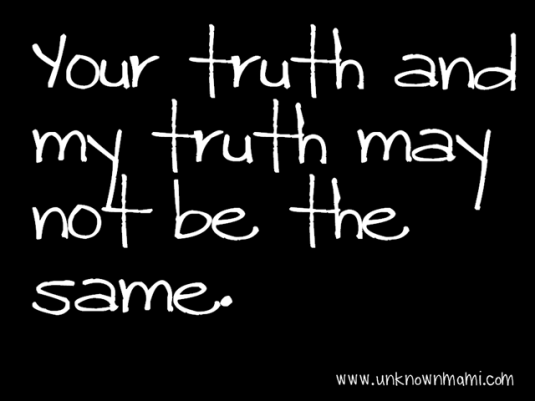
There is No Truth:

your-truth-and-my-truth

Obviously, if you accept my truth, then it poses a paradox.  How can this be true if there is no truth?  But in many ways, that is the nature of most truths.  They are paradoxical.  If they are relative, they are not always true which is a contradiction.  If they are absolute, there are usually exceptions that can be found which makes them false.  What a dilemma!  From the time we are born we are taught to say the truth, speak the truth, search for the truth, but we are all liars.  We don’t know what the truth is and there are many times we would not say it if we did.

If someone came to your front door and said, “Is your mother home, I want to kill her”, what would you tell them?  Would you admit that she was home, if she was?  I doubt it.  We all say we want the truth, but the fact is that many of us will never find the truth because (As our leaders believe) and as Jack Nicholson said, “You can’t handle the truth.”

A friend of mine explained his version of the truth to me several years ago.  He said “Imagine a bookshelf with five shelves.  On the bottom shelf, I put things that people tell me that are opinions and unsubstantiated or uncorroborated pieces of information.  As time goes by and I find more evidence in support of this so called “truth”, I will move the bit of information to the 4th shelf.  Each time I get more evidence it goes up a shelf.  On the top shelf, I have things that I believe are true beyond a ‘reasonable’ but not absolute doubt.  For the time being, I accept the top shelf ideas as true, but I hold out the possibility that I will later find some bit of evidence that invalidates even this Top Shelf truth.”  I like this model of truth.  Let me give you an example of how it plays out for me.

About two months ago, I came across an article that said “In 30 years, all beef and diary farms will be dead.  Things of the past.”  Living in Wisconsin, I was astonished by this bit of information.  I did not put much credibility into the idea.  Given my predilection for cheese, steak and butter I could not reasonably accept any truth to this idea.  Nevertheless, I put it on the bottom shelf of my “Truth Bookcase.”  A few weeks later, I was attending the Annual Nobel Conference at Gustavus Adolphus in Minnesota. This past year it dealt with the environment and global changes to it.  I was surprised when one of the speakers echoed the same idea that I had heard a few weeks ago.  Namely that diary and beef farms would in twenty or thirty years mostly be a thing of the past.  I moved this thought up a shelf.  Two days ago, I was reading the local newspaper and they had an article about diary farms in Wisconsin.  According to this article, ten percent or 800 diary farms in Wisconsin went out of business this past year and there was no sign that the trend would not continue.  I was astounded. I had no idea that the diary industry was so shaky.  I moved the original idea that at least diary if not the beef industry would be gone in thirty years up another shelf.  Two shelves to go.

Thus, truth becomes a process. It is not a final goal.  There is no final absolute truth.  It is a nominal, like in quality improvement that we can never reach.  We can only get closer and closer, but we can never reach a truth that is God like.  The truth that humans can know will never be infallible.

Everything Will Change:

unnamed

This idea seems so obvious that I almost ashamed to list it as one of my favorites.  Nevertheless, I keep having to remind myself that “This too will pass.”  Life is a stream of events and even if Santayana was right in that “Those who forget the past are condemned to repeat it”, there is still nothing in the past that will ever be recreated exactly as it happened one hundred or one thousand years ago.  Heraclitus was also right when he said, “You never step in the same river twice.”

All is change.  If we could see the atoms of time that surround us, I am sure that we would see a stream of “time” atoms that are flowing like a river with swift currents and eddies and backwaters.  This is the flow of time and the river of change.  Sometimes going backwards but inevitably surging forward and sweeping everything out of its way.

We poor humans are caught up in this river and we must do our best to keep from drowning.  We are swept along like so much flotsam.  The river of time that we are in is invisible to the naked eye, but this does not stop it from changing the lives of those swept along by its currents.  Every day, we deal with new events while the old events keep playing out.  A continuous series of changes.  New wars, new disasters, new diseases, new horrors all mixed in with new ideas, new joys, new births, new technologies, new celebrations.

There are those who we say are “stuck in the past.”  The good old days never die for many.  We see the sad efforts that many have to hold onto the past or to “Make America Great Again.”  Why, can’t things just be like the were when I was a kid?  Movies were twenty-five cents and a bag of popcorn was ten cents.  The good guys were good guys and the bad guys were bad.  Police officers walked the streets and helped people in need.  It was happy days.

African Americans were denied voting rights and the basic liberties as stated in the constitution.  A women’s place was in the kitchen and a man was the undisputed king of home.  White people won all the wars they started, and Indians stayed on the reservation.  Mexicans came over to pick tomatoes and then went back home.  A child’s place was to be seen and not heard and the World Series was the greatest sporting event in the world that only White Americans played.  Oh my!  What ever happened to the good old days.

You Can’t Take It with You:

1101978090_univ_lsr_xl

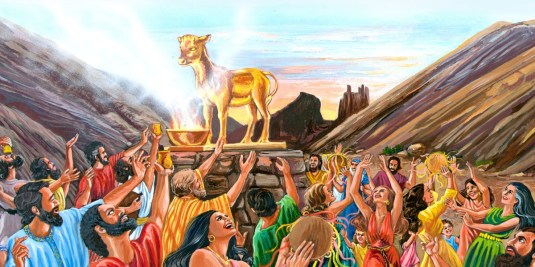
Who says I can’t take it with me?  I sure as hell am going to try.  Like Pharaoh, I am going to build a big mausoleum and I am going to put my house, motorcycles, cars, rings, watches, shoes, clothes, wife, kids and anything else I own right beside me when I die.  I am going to collect the biggest batch of things that the world has ever seen, and I am going to have it all buried with me.  Isn’t that what life is all about?  Collecting stuff, collecting things.  Shopping for more stuff and more things until we drop dead.

Maybe I am getting carried away here a bit.  Of course, I can’t take it with me.  Pharaoh might have had it buried with him, but it did not take the tomb raiders long to take it back.  Maybe you can get something that can’t be taken away?  A building named after you.  An airport or street named after you.  A testimonial placed somewhere in your honor.

Alas, people are fickle.   Buildings get torn down.  Name places change with the whims of those in power.  There are only so many airports and streets and there are millions of people clamoring to have their names in places that they think will insure their posterity.   You can’t even take fame with you.  In a hundred years or so no one will remember who you were.

One of the famous tropes among baby boomers is remembering where they were when JFK died. I once asked one of my freshmen college classes this same question and to my astonishment got blank looks.  I could not believe it when one of them said, “Who was JFK?”  Who will remember you when you die?  Maybe your wife and a few friends assuming they outlive you.  So what can you take with you?  Fame, fortune, power, money?  What did Marc Anthony in Shakespeare’s Julius Caesar say: “The Evil that men do lives after them; the good is oft interred with their bones.”  There is nothing on this earth that you can take with you.  There is nothing that will outlive the entropy and erosion that will destroy all the mightiest monuments that have ever been built.  Everything else is an illusion that you take with your to your grave but that is as far as it will go.

Love is the Only Real Purpose in Life:

nLQMZk

You can spend your life looking for its meaning or you can spend your life trying to find its purpose.  Your search will uncover many ideas but none of them will ever suffice.  Nothing will satisfy your quest until you realize that love is the only purpose a human life exists for.  Every prophet who ever existed recognized this simple truth.  Love is the only thing that gives life meaning and purpose.  It is so simple that it escapes many of us.

We look for purpose and meaning in our work, our jobs, our acquisitions, our accomplishments, our credentials and our status, but none of these give us happiness.  The only satisfaction we get in life is from loving others.  The individual who does not know love for others lives a lonely unhappy life.  Love is the power that makes life worth living.  As Jackie Wilson sang in his song Higher and Higher: “You know your love, keeps on lifting me higher and higher.”

I sometimes think love is one of life’s great mysteries.  I have spent a great deal of my life asking the question “What is love?”  I am 73 years old and I am still puzzled as to what love really is.  Is love the same as passion?  Is love good sex?  Is love caring for someone else?  Is love simply wishing no harm for anyone else?  Does love need reciprocity?

People use the term love for many things.  I love my car.  I love my dog.  I love my Nikes.  I love you.  I love him.  I love her.  I love everybody!  Jesus said that love was more than just words.  Love exists in the doing.  How do I show my love for others?  “Greater love has no one than this, that they will lay down their life for another.” – John 15:13.   Do I need to die for someone else to show true love?

I don’t believe that loving things is love.  I don’t think loving my car or my Nikes is true love.  For that matter, I do not think that loving my life is true love or even that loving my wife is true love.  I think true love is a more intangible quality that we can only approximate.  To know true love is to be a lover in a more universal sense.  True love seems most evident during a crisis.  I think that the people who stayed behind on the Titanic to let others have a seat in the lifeboats were true lovers.  I think Harriet Tubman (who ran the underground railroad) was a true lover.  I think Martin Luther King was a true lover.  Lovers are not perfect people by any means, but they know that life is more than just loving oneself or even another single individual.

Let’s be clear here.  I love my wife and I love my sister, but does that make me a true lover?  Not necessarily.  What if I love my wife and sister but I hate immigrants?  What if I love you but I hate Black people or Latino people or people who belong to another religion or another country?  To know true love one cannot hate anyone.  Today we hear a vocal minority decrying “haters.”  However, these same people hate Democrats, liberals, Non-Christians, Gays, immigrants and minorities.  They may love Trump, McConnell, Nunes, Christians and Republicans but they are more haters than lovers.  Jesus did not say “Only love those who are related to you or whom you like.”  He did not say that you can pick and choose who you love.

Love is the most important journey of our lives.  To find true love is to find a love for the world both in concrete and abstract terms.  It is to love globally as well as locally.  It is to love non-kin as well as kin.  It is to love the rich as well as the poor.  It is to love the sick as well as the healthy.  It is to love Democrats as well as Republicans.  Probably no task is more difficult, but no task has more promise for humanity and for our own souls.

Well, this concludes my best of everything series.  In Part 1, I covered some of my book preferences.  In Part 2, I covered more literary ground and in this final Part 3, I have covered some of the ideas that I think are my favorite guides for trying to live a good life.  I am certainly no exemplar of any of these ideas.  I journey down the path and get stuck in some bogs.  On other days, I take a wrong turn.  I often hesitate when I should be charging forward.  On some days, I even go backwards.  My life has regrets, recriminations and misgivings that would fill an NFL stadium.  I know right from wrong and still too often choose the wrong.  But one of my other guides is “do not kill the message because you don’t like the messenger.”  You may need to find your own guides, but you won’t go wrong with any of the four that I have described in this blog.  Try them and let me know what you think.