
You have just read the title of this blog, and you thought, great idea but impossible. There is no way that we can stop the lies and misinformation that infect our political system. I submit that you are wrong. I submit that nothing is impossible if “We the People” decide that we have had enough. I am sure that this year in the USA, we have all had more than enough. I don’t care if you are a Democrat, Republican, Independent, Green, Libertarian, Constitutionalist or Socialist, I know that you are probably as sick and tired of the continuous lies that fuel our election process as I am.
“But wait” you say, “In twenty-five days, it will all be over.” I sincerely wish you were right, but you are not. No sooner than this election is over then you will get requests from someone running for dog catcher in Fairbanks, Alaska asking you for money.
Dear Sir,
Thank you so much for your generous campaign contribution for my election. It was thanks to your help and thousands of other donors that I was elected. But now is not the time to let up. Our sleazy lying opponents have already collected a million dollars to fund their next campaign. We must stop them now before it is too late. Please pledge at least $100 dollars (or whatever you can afford) before midnight to help us reach our goal of 10 million dollars to re-elect me as dog catcher of Fairbanks. My opponent says that she will ban stray dogs from wandering around our streets. I promise to do better than that. I will take all the homeless dogs off the street and provide adequate food and housing for them. My campaign motto is “Make American Dogs .” That stands for MAD because I am mad that we have so many homeless dogs.
PS: You can buy a MAD hat at my office for the low price of only $39.99. All proceeds will go to building more dog shelters
IF you think the above letter is funny, it is only so because you know it is true. No sooner than this election is over, the cycle of lies, slander and calumnies will begin again. How can we stop it? Believe it or not we can stop it. But before describing what I think we can do, it is important to define some terms. What is a Calumny? What is a lie? What is a slander? I will use the Oxford Online Dictionary to provide a common definition of each and a few examples.
A Calumny is the making of false and defamatory statements about someone in order to damage their reputation. — https://languages.oup.com/google-dictionary-en
As an example, I have a flyer before me that claims one presidential candidate will send police door to door to seize firearms. This is a lie because it is not true, but it is also a calumny because it is designed to damage the candidates reputation.

A Slander is the action or crime of making a false spoken statement damaging to a person’s reputation.
Here is one example from another political flyer. Candidate X has invited criminals, drug dealers and terrorists into our neighborhoods. Another lie because no candidate on either side has ever done such an egregious offense.
If you study these two words, calumny and slander, they are very confusing. One source describes the differences as follows:
“While both “slander” and “calumny” refer to making false statements to damage someone’s reputation, “calumny” is considered a more formal and serious term, often implying a malicious intent to spread false accusations, while “slander” simply refers to making a false spoken statement that harms someone’s reputation; in legal terms, “slander” is the specific act of making a defamatory oral statement, whereas “calumny” is a broader concept encompassing the act of making a malicious false accusation.” — Generative AI
A Lie is an untrue statement with intent to deceive. She told a lie when she said she didn’t break the vase. He lied to create a false or misleading impression.
Lying is common to both calumnies and slanders but whereas slanders and calumnies can be illegal and subject to lawsuits, lies are a more generic family of comments that seem to escape legal action. Part of the reason deals with intention. A lie may be intentional, but it may not be meant to harm but only to deceive. (Some might quibble about my distinction here). For instance, I lie to my date because I want to impress her or him but not because I want to harm him or her. I lie on my resume to get the job because I think the credentials required are ridiculous and I know I can do a great job despite lacking the formal requirements.
Today, we see lies about everything. Sadly, people are willing to believe these lies. The famous Nazi propagandist Joseph Goebbels and German Leader Adolph Hitler have both been described as partisans of what has been called “The Big Lie.”
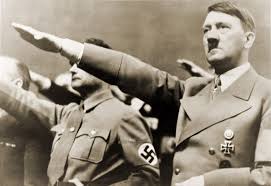
“The German expression was first used by Adolf Hitler in his book Mein Kampf (1925) to describe how people could be induced to believe so colossal a lie because they would not believe that someone ‘could have the impudence to distort the truth so infamously’. The phrase “Big Lie” was used in a report prepared around 1943 by Walter C. Langer for the United States Office of Strategic Services in describing Hitler’s psychological profile. The report was later published in book form as ‘The Mind of Adolf Hitler in 1972.’ Langer stated the following in respect to Hitler’s personality.” — Wikipedia
“His primary rules were; never allow the public to cool off; never admit a fault or wrong; never concede that there may be some good in your enemy; never leave room for alternatives; never accept blame; concentrate on one enemy at a time and blame him for everything that goes wrong; people will believe a big lie sooner than a little one; and if you repeat it frequently enough people will sooner or later believe it.” — “Mind of Adolf Hitler, 1972”
When I was a young student going to a Catholic School, I learned that there were two types of lies. One was called “White Lies” and the other were simply “Black Lies.” White lies were lies told for good reasons. White Lies might be defended by those who believe that the ends justify the means. Thus, politicians who believe they can save the USA from defeat by its enemies might tell “White Lies” to get elected so they can save the country. Black Lies are generally regarded as lies told for selfish reasons or reasons to benefit someone else. Using AI again, we find the following distinctions:

White Lies are told to please someone or to benefit the relationship and are generally considered acceptable. For example, telling a friend that their new haircut looks great. White lies are often motivated by empathy and compassion.
Black Lies are told to gain personal benefits or to avoid a deserved penalty. Black lies are generally considered universally wrong. For example, a used car dealer lying about the condition of a car. Black lies are often motivated by selfishness. — Generative AI
The nuances depicted in many of the definitions given above make ascertaining any criminal liability for lying very difficult. One person’s “good intentions” might be another person’s “road to hell.” Lawyers and pedants would have a field day debating these distinctions. For those of us who know a horse from a cow, the distinctions are quite clear. Namely, we are sick and tired of being lied to and having to listen to calumnies and slanders from either side attacking and trying to destroy the reputation, character and morals of people whom we personally respect.
I do not care which side you are on, left, right, up or down, enough is enough. To demolish the character of people with lies and more lies simply to win an election is wrong.
It is wrong.
It is sick behavior, and it is destroying our country. You can proclaim all you want that the country is too divided, but it can never come together when one side demonizes the other. Lying Fascist Greedy Right-Wing Republicans versus Lying Commie Radical Left-Wing Democrats. What if someone called your mother or wife one of these terms? How would you feel? What would you do? I know what I would do, and it would probably land me in jail.

What is my solution?
Let us start a national movement that puts power back in the hands of voters. You can argue all day long about false ballots, hanging chads, illegal voters, fake ballots and you will get nowhere. As long as we have a voting process there will be human errors and even some iniquities in the process. But what if we refuse to vote? There are no laws against NOT VOTING in the USA. What if we say, “I have had enough. I am not voting in any election until we have a fix against political slander, lies and calumnies.”
There is no law that could put us in jail for not voting. Imagine what it would do to the political process. It would be like throwing a giant monkey wrench in the system. The elections systems all over America would come to a grinding halt. All we have to do is “NOT VOTE.” We agree to stop voting for anyone until some efforts and sanctions are enacted for lying, slander and calumnies in the political process. Until then, I say we sign petitions not to vote. Buy yard signs saying “I am not voting anymore.” Start a National I Am Not Voting Party consisting of people like us who are tired of a system built on money, greed and lies.

Please feel free to share this blog with anyone else who is sick and tired of lies and more lies.



 I have read at least a dozen books and heard a different theory each month on why Trump was elected. From racism, to sexism, to xenophobia, to white supremacy, to rural alienation, to immigration, to abortion, to anti-immigration, to income gaps, to blue collar woes, to anti-globalism, to Christianity, to government overreach, to tax issues, to wage gaps, to inflation, to isolationism, to lack of American jobs, to anti-education, each one of these and several more have been promoted as the “reason” for Trumps support.


 “Primary-source accounts of the trial and execution of Socrates are the Apology of Socrates by Plato and the Apology of Socrates to the Jury by Xenophon of Athens, who had been his student; contemporary interpretations include The Trial of Socrates (1988) by the journalist I. F. Stone, and Why Socrates Died: Dispelling the Myths (2009) by the Classics scholar Robin Waterfield.” —-



 When I started working with Process Management International in 1986 after completing my doctorate degree at the University of Minnesota, I met the famous quality improvement expert and renowned statistician, Dr. W. E. Deming. Over the next seven years, he had the most profound influence on my life in terms of helping me to understand process improvement, statistics, quality and the use of Data to improve everything from widgets to health care. Under the influence of Dr. Deming, our company adopted his motto “In God we trust, all others bring Data.” Dr. Deming also said “Without Data, you’re just another person with an opinion.” So what is Data?
  If we understand what Data is, you have now entered the deep forest. However, we have a long way to go before we can get out of the forest. There are numerous obstacles along the way. Referring again to the concepts of validity and reliability, we must ask ourselves the same questions we asked about our Facts. Is our Data reliable and valid? How did we collect the Data? What method did we use to collect the Data? Are we taking a few samples each day for several weeks or are we taking a few samples for only a few days? Are we using a random sample or a stratified random sample? Different methods of collecting Data will lead to different results. And we are not even talking about interpreting the Data yet. For instance, when I worked at W.T. Grants cutting shades back in the late 60’s, I was told to make sure I took my measurements with a metal tape measure and not a cloth or plastic measure. The reason given was that it was easier to stretch a cloth tape measure and get a false result. This would lead to cutting a shade that was too large and would not fit.
 Unfortunately, the scientific method is not infallible. It is subject to bias and disagreement over Data and interpretations. Even more problematic is that the scientific method is not a strong method when it comes to testing subjective theories that cannot be verified by Fact. For instance, “Is the Mona Lisa beautiful?” As stated, this is a subjective question that each individual will hold a different opinion on. However, if I asked: “Is the Mona Lisa the most beautiful painting in the world?” I could attempt to answer that question with a bit more objectivity. I could conduct a survey to see what percentage of people think it is the most beautiful. Subjective studies are not as strong as objective studies since they usually lead to results that follow a bell shaped curve. Thus, if we conducted the above survey, we would probably find that a certain percentage of people thought it was the most beautiful painting and a certain percentage did not. As in politics, opinions of beauty would be all over the place. This is why politics is so much more difficult to “Fact check” than issues like the atomic mass of hydrogen. Politics is a very subjective field that resists efforts to test and Fact check. Some examples that would be difficult to test with the scientific method would include:
 Finally, if I have left you with some understanding of the difficulty with interpreting Data, I will have felt successful. The first step to knowledge is awareness of our cognitive limitations. We also need to be more skeptical when people present us with Facts and Data. My father used to say “Believe nothing of what you hear and half of what you see.” I still consider this good advice. There are too many fools and charlatans out there trying to convince us of things for a multitude of reasons that will benefit them and not us. Just as we would not walk down a dark alley in an unknown city by ourselves, we need to exercise caution when presented with Data and Facts. The more we understand the limits of Data and Facts, the more prepared we will be to make decisions based on Data and Facts that have a higher degree of validity and reliability. If the Data, Facts and Evidence that you base your knowledge on are not accurate than everything you think you know will be at best a half truth and at worst a total lie.
 “The prosecution had expert witnesses that testified that the Evidence was often mishandled. Photos were taken of critical Evidence without scales in them to aid in measurement taking; items were photographed without being labeled and logged, making it difficult, if not impossible, to link the photos to any specific area of the scene. Separate pieces of Evidence were bagged together instead of separately causing cross-contamination; and wet items were packaged before allowing them to dry, causing critical changes in Evidence.”
  A validity error is when we are not measuring the right thing. IQ tests have been repeatedly criticized for not really measuring the intelligence of a human being or for being biased by many cultural Factors. Thus opponents of IQ tests argue that they are not valid measures of intelligence. A reliability error is when our measures are not consistent. The scale example given above illustrates the problem with reliability. Most people use a scale to weight themselves and most scales have problems with reliability. However, if you tried to equate your weight with your health, you would be assuming that the scale could also measure health and this would be a problem with validity. Scales cannot measure health although health might be correlated to some degree with appropriate height and weight.
 Before we move on to looking at the concept of Data, we will look at two more problems with the concept of Facts. These are distortion and bias. Distortion relates to twisting the meaning of something. This can happen by taking something that someone has said out of context. For instance, I might be talking at a conference and say something in sarcasm such as “Yeah, I will definitely vote for Trump.” My words could be repeated verbatim and it would sound like I was endorsing Trump. It is difficult to detect sarcasm. To most people reading or hearing my words second hand, it will sound like I am a strong Trump supporter. Slick politicians and advertisers will often distort a Fact to make it sound like the Fact is supporting their position.
 Aging Capriciously