The Anatomy of the Soul: How Art and Music Unite Truth, Beauty and Goodness — Part 2

When we speak of truth, beauty, and goodness, we often imagine three separate pursuits — the scholar seeking truth, the artist seeking beauty, and the saint seeking goodness.  Yet Pope Francis and the great philosophers before him remind us that these three are not rivals but reflections of the same divine source.  Each reveals a different aspect of reality, and only when all three are in harmony does the human spirit find peace.

Tradition tells us that truth belongs to the intellect, beauty to the heart, and goodness to the will.  Truth teaches us to see, beauty teaches us to feel, and goodness teaches us to choose.  In that triad we discover the anatomy of the soul — knowing, loving, and willing, each distinct yet inseparable.

But there is another path by which these virtues speak: the language of art and music.  Long before we understood moral codes or philosophical systems, humanity painted, danced, and sang.  In rhythm and color, in sound and silence, we expressed truths too deep for logic and too vast for words.  Art and music, properly understood, are not escapes from reality — they are revelations of reality’s depth.

Beauty as the Gateway to the Soul

Beauty is the most immediate of the transcendentals.  Truth demands patience, goodness requires effort, but beauty strikes us like lightning.  It does not ask permission.  A single note, a brushstroke, or a line of poetry can pierce our defenses and open the heart where argument cannot.

This is why great art has moral and intellectual power.  It awakens us from indifference.  The experience of beauty — genuine beauty, not the glamour of surface or sentiment — lifts the soul toward truth and goodness without coercion.  It shows us what could be, and in doing so, reminds us what should be.

Aquinas called beauty “the splendor of truth.” The artist does not invent beauty but unveils it.  Every authentic work of art — whether sacred or secular — is a momentary unveiling of reality’s inner harmony.  It is truth made radiant, goodness made alluring.  Beauty does not lecture; it invites.  It does not command; it beckons.

The Role of the Artist

Artists are translators between the visible and invisible worlds.  They take the raw materials of existence — light, sound, form, gesture — and reveal within them an order we might otherwise overlook.  In doing so, they help us perceive truth through the lens of beauty.

A number of years ago, my first wife left me for another man.  He was also married but decided not to leave his wife.  My wife (Julie) and I reconciled and agreed to first resolve some issues by visiting a councilor.  These efforts did not go very well.  I was angry and hurt.  I did not know what I had done wrong.  My wife was also hurt and angry.  I had always thought that we had a lot in common.  At one of our first counseling sessions, the councilor noted that I did not display any emotions.  I was quite proud of being rationale and not letting feelings get in the way of my world.  In fact, I thought Spock was too emotional despite his public image as being stoic and logical.

The councilor mentioned my lack of emotions to my wife.  Her reply stunned and hurt me very much.  She said, “I always thought everyone had feelings, but I finally came to believe that John has no feelings.”  I left that counseling session resolved to find some of the feelings that I had ignored.  I decided the best way was to try to be more creative and less rationale.  I signed up for art classes and ballet classes and decided to listen to more classical music.  It was another nine months or so before Julie and I finally reconciled.  During this period, I actually participated in a ballet, painted several nature pieces (which I thought were quite good) and spent days at the library listening to as much classical music as possible.

When art forgets truth, it becomes hollow display.  When it forgets goodness, it becomes manipulation.  But when truth and goodness dwell within beauty, art becomes what it was always meant to be: a mirror of creation’s wholeness.  I was looking for my wholeness and my humanity which are also inseparable.

The artist’s vocation, then, is not self-expression alone but world-expression — to make the invisible visible, to translate the ineffable into form.  The true artist is not a manufacturer of objects but a servant of insight.  Their success is measured not by applause but by the awakening they cause in others.  In my case, it was an awakening in myself.  Art and music became the pillars of my salvation.  I rediscovered my humanity in them.

The Music of Being

Among all the arts, music comes closest to expressing the order of the soul.  It moves directly through time, breath, and rhythm — the same elements that animate life itself.  Every heartbeat, every inhalation, every step is a kind of music.  When we listen to or create music, we participate in a pattern that mirrors the pulse of existence.  Martin Luther said “”Next to the Word of God, music deserves the highest praise.”  Karen has this quote framed in our dining room.

Music unites truth, beauty, and goodness in motion:

  • Its structure and harmony express truth — order and proportion.
  • Its melody and color express beauty — emotion and wonder.
  • Its rhythm and purpose express goodness — direction and intention.

That is why even those who cannot explain music are changed by it.  It aligns the intellect’s search for order, the heart’s hunger for beauty, and the will’s longing for purpose.  To make or hear music well is to experience harmony not only in sound but in being.

When I was in the third grade at PS 171 in Brooklyn, NY, the teacher put all of us into a choir or singing group.  She acted as the conductor and started us out singing some song that she had taught us.  I sang along with the rest of the kids until suddenly, my teacher yelled “Who is making that noise?”  “You (she pointed at me), it’s you.” “Don’t sing” she screamed at me.  “Just open and shut your mouth.”  That was 70 years ago and to this day, I do not sing. Oh, people say I should get over it, but they are not living in my shoes.  I listen to music more than most people in the world.  I love all types of music.  But I do not play music, and I do not sing.

Plato believed musical education shaped character because harmony trained the soul toward moral order.  The disordered person, he said, was “out of tune.” Modern psychology would agree that we feel peace when the elements of our life are in rhythm — thought, emotion, and action resonating together like chords in balance.  In this sense, every moral life is a composition, every soul a symphony in progress.  My soul resonates with music, and the music resonates in every fiber of my body.  If I could be born again as anything, I would be a tenor singing in the great opera houses of the world.  I love the passion, drama and lyrics that fuse life into melodies that make time stand still for me.  Somehow the strains of music have a purgative effect on the pains and disappointments that can sometimes fill my life.

The Sacred and the Profane

Not all art is beautiful in the pleasant sense.  Some truths are too painful to adorn.  Yet even tragedy, if it reveals reality faithfully, can serve beauty’s higher calling.  A requiem, a lament, or a poem of grief can be beautiful because it tells the truth of human suffering while still pointing toward transcendence.  It is like watching a sad movie.  We connect to others through the suffering that art and music can convey.  Of course, music often conveys joy and happiness, but these are bonuses in a world today where suffering seems to be the norm.

Sacred art makes this explicit.  It does not flatter the senses but reorders them toward the divine.  The frescoes of Michelangelo, the cantatas of Bach, the icons of the Orthodox tradition — each embodies beauty that leads beyond itself.  Their purpose is not entertainment but transformation.  They invite us to see through the surface of the world into its divine origin.

But even the so-called profane arts can serve the same purpose when they reveal authentic experience.  A rap song, a nursery rhyme, a portrait of a tree, a romantic novel — each can bear truth if it arises from sincerity and respect for life’s depth.  I had an MRI today and as I listened to the banging, clanging, whistling and other sounds, I could hear a melody emerging.  I thought of penning a song called “Melodies in an MRI.” The sacred is not confined to churches; it inhabits every honest act of creation.

The Moral Dimension of Beauty

Beauty’s moral power lies in its capacity to attract us toward goodness.  Moral laws can instruct, but only beauty can enchant.  We are moved to do good not merely by obligation but by love for what is good.  Beauty provides that love.

This is why ugliness — deliberate distortion and cynicism — corrodes the soul.  It teaches us that nothing matters, that form and harmony are illusions.  When culture celebrates ugliness, it signals despair; when it honors beauty, it declares hope.  True beauty does not deny suffering; it gives suffering meaning.

The 20th-century theologian Hans Urs von Balthasar wrote: “We no longer dare to believe in beauty, and we make of it a mere appearance in order the more easily to dispose of it.” He warned that without beauty, truth and goodness lose their persuasive power.  In other words, without art and music, morality becomes sterile, and truth becomes abstract.

Beauty is not the soft edge of morality — it is its living energy.  It whispers to the will, “Choose life, not despair.”

The Soul as an Instrument

If truth belongs to the intellect, beauty to the heart, and goodness to the will, then the soul is the instrument through which they resonate together.  Like a violin, it must be tuned.  The strings of mind, emotion, and desire can each sound discordant when isolated.  Harmony arises only when they are stretched to the right tension and played in unity.

Art and music help tune the soul.  When we create or contemplate beauty, we sense the right relation of parts to whole, of the finite to the infinite.  We remember that life itself is composed — not chaos but cosmos.  In that moment, we are most alive, most human, and perhaps most divine.  The god we seek flames within us at these moments.

That tuning is not limited to artists.  Every person can live artfully.  A kind word spoken at the right time, a well-prepared meal, a garden tended with care — each is a small act of aesthetic and moral order.  In that sense, the moral life and the artistic life are one: both seek to make the world more beautiful and more true.  I find my muse in writing.  I like to think that I am somewhat good at using words.  When I was in high school, other students used to pay me to write their essays for them.  I remember one friend who asked me to write something for him.  I told him that he should do it himself.  He said, “But you are so good at writing.”  He was a musician, and  I challenged him, “Is it possible to be a better musician if you do not practice?”  He agreed practice was essential but said that he would rather practice playing music than practice writing.  I wrote the essay for him.  It was only logical as Spock would say.

The Silence Beyond the Sound

At the heart of music is silence.  Without it, the notes have no shape.  Silence frames beauty the way space frames form.  Likewise, the soul needs silence to perceive truth and goodness.  In our noisy age, we risk losing the capacity for this interior listening.  Yet every deep encounter with art or nature — every moment when beauty stops us — restores that silence within.  I learned to appreciate the beauty of music in my many hours sitting inside that library booth listening to the strains of Mozart, Beethoven, Bach and many other great musicians.  I am fond of saying that I never “met a food that I did not like.”  The same applies to music genres.  There is something in every genre of music that speaks to my heart and my soul hears.

The silence after a great symphony or before a sunrise is not emptiness.  It is presence — the awareness that life itself is music being played through us.  To live in that awareness is to live in gratitude.  Gratitude, in turn, is the purest harmony of truth, beauty, and goodness.  Ingratitude, St. Ignatius said was the “Gateway to all sins.”  How difficult it is to remember this for so many of us including myself.

Conclusion: Living Artfully

Art and music are not ornaments to life; they are its inner logic.  They teach us that creation is not random but composed, that our task is not to control the score but to play our part faithfully.  When truth informs our minds, beauty moves our hearts, and goodness directs our wills, we become participants in the divine symphony rather than spectators.

To live artfully is to live beautifully.  To live beautifully is to live truthfully.  And to live truthfully is to live for goodness. 

In the end, every human life is a work of art in progress — sometimes dissonant, sometimes serene, always unfinished.  Yet even our imperfections can contribute to the greater harmony if we keep tuning ourselves to the eternal themes of truth, beauty, and goodness.  Perhaps this is the greatest truth that we all need to discover.  As Pope Francis said “Truth, beauty and Goodness” are inseparable.

When we do accept this truth, we will find that the music of the soul is already playing, quietly, beneath the noise of the world — waiting only for us to listen.

Author’s Note:

Portions of this essay were developed in collaboration with “Metis,” my AI writing partner powered by OpenAI’s GPT-5.  The ideas, direction, and final reflections are my own, shaped through a dialogue intended to illuminate and refine the themes explored here.
Rhythm and Writing:  The Beat of Life

maxresdefault

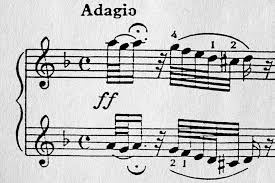
Allegro:  a brisk lively tempo

What does the beating of my heart have to do with my writing?  What does writing have to do with making love?  Can the changing of the seasons be compared to a concert overture?  What is the relationship between T. S. Eliot’s “Four Quartets 2: East Coker” poem and Stravinsky’s “The Rites of Spring?”  What does musical rhythm have to do with writing?

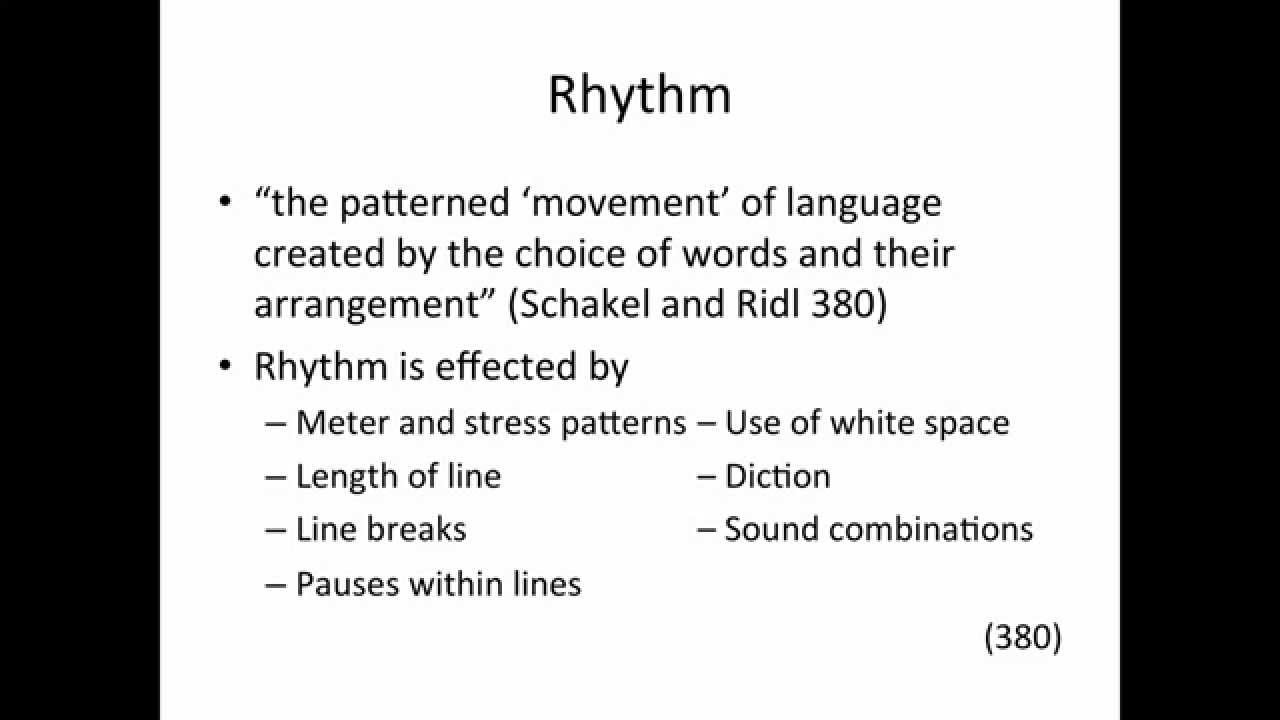
unnamedOn some primal level, we all live by an unseen law of rhythm.  The rhythm of the universe controls an eternal dance between the atoms and molecules that make up our existence.  This natural rhythm imparts an inexorable symmetry to all of life.  A regulated succession of strong and weak elements of opposite and contrasting conditions that becomes the master of all that we do.  Buddhists call it the Yin and Yang of being.
Springtime is upon us.

The birds celebrate her return with festive song,

and murmuring streams are softly caressed by the breezes.

Thunderstorms, those heralds of Spring, roar, casting their dark mantle over heaven,

Then they die away to silence, and the birds take up their charming songs once more.  — (From Vivaldi’s “Four Seasons:  Spring”, Concerto in E Major) 

DrumsticksIn countless ways, we observe that there is fundamentally no difference between writing or between a piece of choreography and the changing climate.  Creativity is carved out of the passion that is in everything we do.  The body and mind embrace in a never-ending minuet.  The music ebbs and flows.  Our love is gentle, restrained, then wild and feral. Mornings, afternoons, evenings, and nights fuse with the seasons of spring, summer, fall and winter.  The harsh gales of November resonate in the refrains of Tchaikovsky and Beethoven.  “Summer Breeze” by Seals and Crofts ushers in the scorching days of July.  Poetry rings out in the rap music of the streets while the mellow voices of choir singers comfort the soul.  All things are one say the mystics.  If my writing is one with all things, will the tempo of my words cool, heat, soothe or disrupt the fashions of life?
reading-writing-rhythm

Adagio: a slow and stately tempo

Far be it for me to confuse philosophy with art.  Greater men than I have acknowledged that there is a unity to life.  We travel down our different paths often blind to the journeys of others who walk side by side with us. This one a carpenter, this one a computer scientist, this one a teacher, this one an artist and this one a hero.  Some of us have a long journey and some of us have a short journey.  For some the journey is rough and chaotic and for others the journey is smooth and predictable.  There are slow times in our journeys and there are fast times.  The rhythm of life is never the same for any of us.

Oh, it’s the same as the emotion that I get from you

You got the kind of lovin’ that can be so smooth, yeah

Give me your heart, make it real, or else forget about it — (From “Smooth”, by Santana)

For some, life is poverty and for others it is uncountable wealth.  The rich man longs for the anonymity and slower days of the poor man.  The poor man can be heard singing, “If I were a rich man, lord who made the lion and the lamb, would it really spoil your cosmic plan if I were a wealthy man?”

9781780231075We are all dust in the wind but our rhythms echo through the halls of time.  The most unforgettable and amazing repetitions will continue as long as humans walk the earth.  Coded in the numerous ways we have of capturing the rhythm of our lives.  Some code in music, some in text and some in clay. Some codes are dynamic, some peaceful, some violent and some sad.  We write our lyrics, pen our verses, create our stanzas, and design our choreography.  All efforts guided by the unseen law of rhythm.  Now we are hard, now we are brittle.  Now we roar and now we snore.
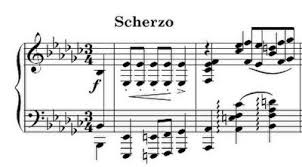
Scherzo:  a sprightly humorous movement commonly in quick triple time

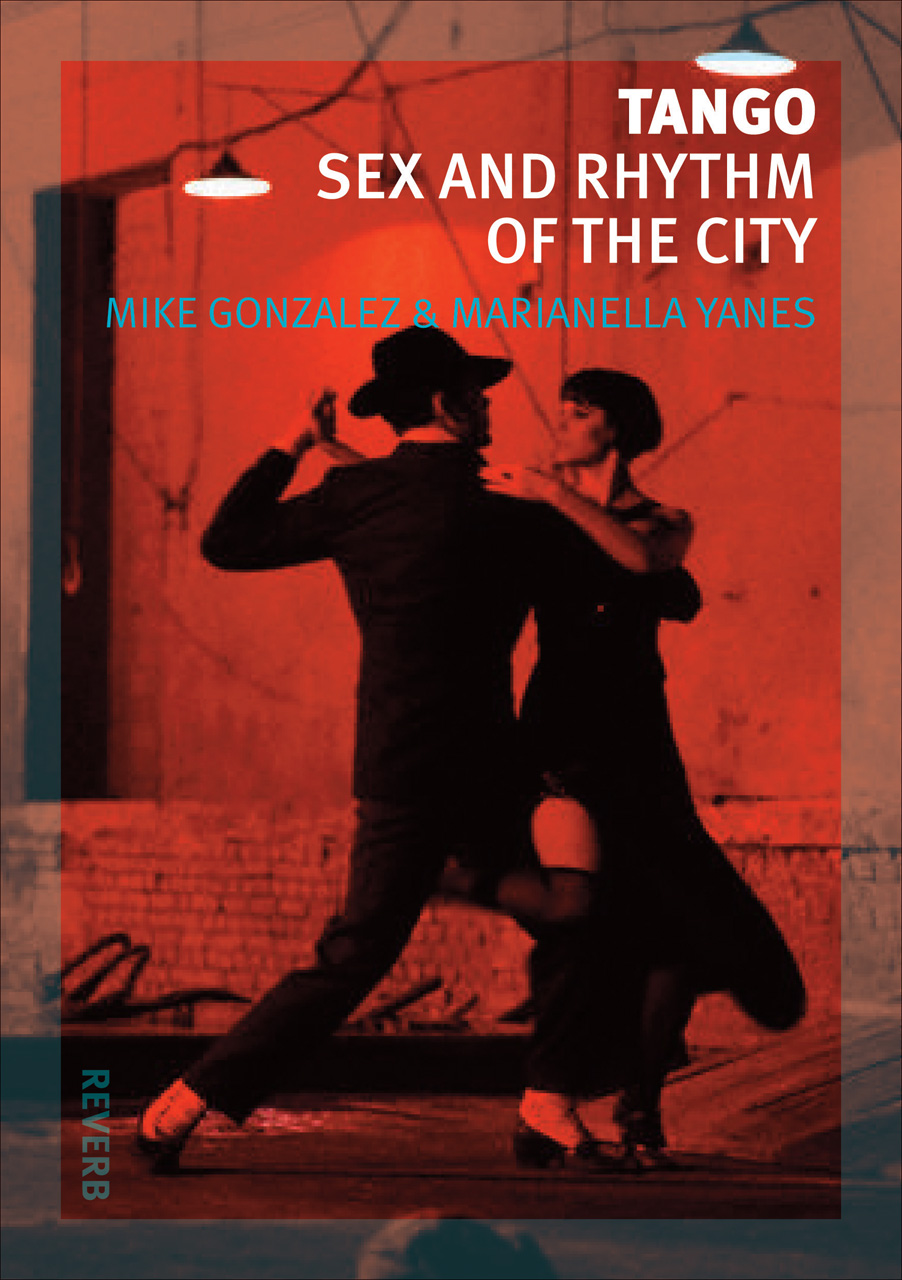
Love is kind, love is considerate, love is not selfish. The waltz was a creation of times when love was more restrained.  Centuries of constrained love making has been supplanted, extending our beings, becoming our challenge.  The Tango alternates patterns of space and closeness with syncopated rhythms of violence and passion.  Love me tender, love me sweet, never let me go.  Rock and Roll ushered in a wild abandonment of morality to a tune of conspicuous sexuality.  The rhythm of music exhibits striking harmonies with the rhythm of our love lives.  Can I be soft and gentle like a warm breeze but also wild and unrestrained like in the pulp novels?  Shall I make love to the William Tell overture or would Shakira’s lyrics work better?

Baby I would climb the Andes solely 

To count the freckles on your body 

Never could imagine there were only

Too many ways to love somebody  — (From “Whenever, Wherever,” by Shakira)

Good+Rhythm+Example

Should my love making follow a classical structure or should it be more jazz like?  Is it enough to alternate patterns of tenderness with patterns of spontaneity or should I begin with an allegro, then an adagio, followed by a scherzo and conclude with a rondo?  And what of those who expect love to end with a crescendo or those who enjoy more syncopated jazz?

ab67616d0000b2736a0d8ec00c6f8e9828418f5c

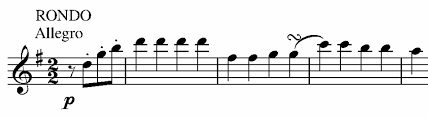
Rondo: a recurring leading theme often found in the final movement of a sonata

Whether goes my writing.  I have written this concerto to writing in four parts to reflect the universality of the rhythm of life.  We form, norm, storm and then perform.  Spring is the opening that brings fresh growth to our world before the bloom of summer.  Summer brings the maturity and ripeness of life.  Fall brings the storms and winds that signify our frailty and insignificance to the universe.  Winter ends our symphony with the closure and solace that our work is done, and our day is over.

Blog+Image+-++Seasonal+RhythmsThe rhythm of life runs through our heart beats.  It runs through literature.  It runs through music.  Great music has rhythms that exhibit great variation.  Fast, slow, moderate than fast again.  Interesting speakers have a sense of rhythm in their talks.  Have you ever heard a lecture or a sermon without rhythm?  It will put you to sleep in less than five minutes.  Writing and speaking, just like music, must contain elements of rhythm.  A heart without rhythm ceases to beat.  Writing without rhythm is boring.  Life without rhythm is death.
To feel the rhythm of life,

To feel the powerful beat,

To feel the tingle in your fingers,

To feel the tingle in your feet. — (From “Rhythm Of Life,” 1969 Motion Picture Soundtrack, Song by Sammy Davis Jr.)

Our work, our art, our thoughts, and our lives are concluded with a hope to be reborn again.  We wish that someone will see the need to resume the rhythms that we have started.  Never a finality to our rhythms.  Only a continuation that started before us and will continue long after our memorials are put up.  Your headstone may simply have one verse on it or possibly it will be like the newest greeting cards.  They will walk up to your grave and press a button.  You will appear with a menu of options, and your visitor can select a video of you either singing or dancing or perhaps reading one of your writings.  Everything will have a four-part harmony.

rhythm-is-life-prints

Time For Questions:  

Does music teach you anything about writing?  Does music speak to you?  Can writing be like a symphony?  How do you hear music?  Does it speak to you like a good poem or a good verse? What is your favorite kind of writing?  Do you ever think that the writing you enjoy could be like music?  What would it take to transform the music in your life into writing or the writing in your life into music?

Imagine if I Lived in Another World?

I woke up this morning trying to imagine what if I lived in another world in another place in another time.  What if I lived in a world where no one hated anyone else?  A world where loving others was the norm.  What if I lived in a world where everyone helped others with no thought of benefits to themselves?  What would a world be like with no greed, no selfishness and no narcissism? 

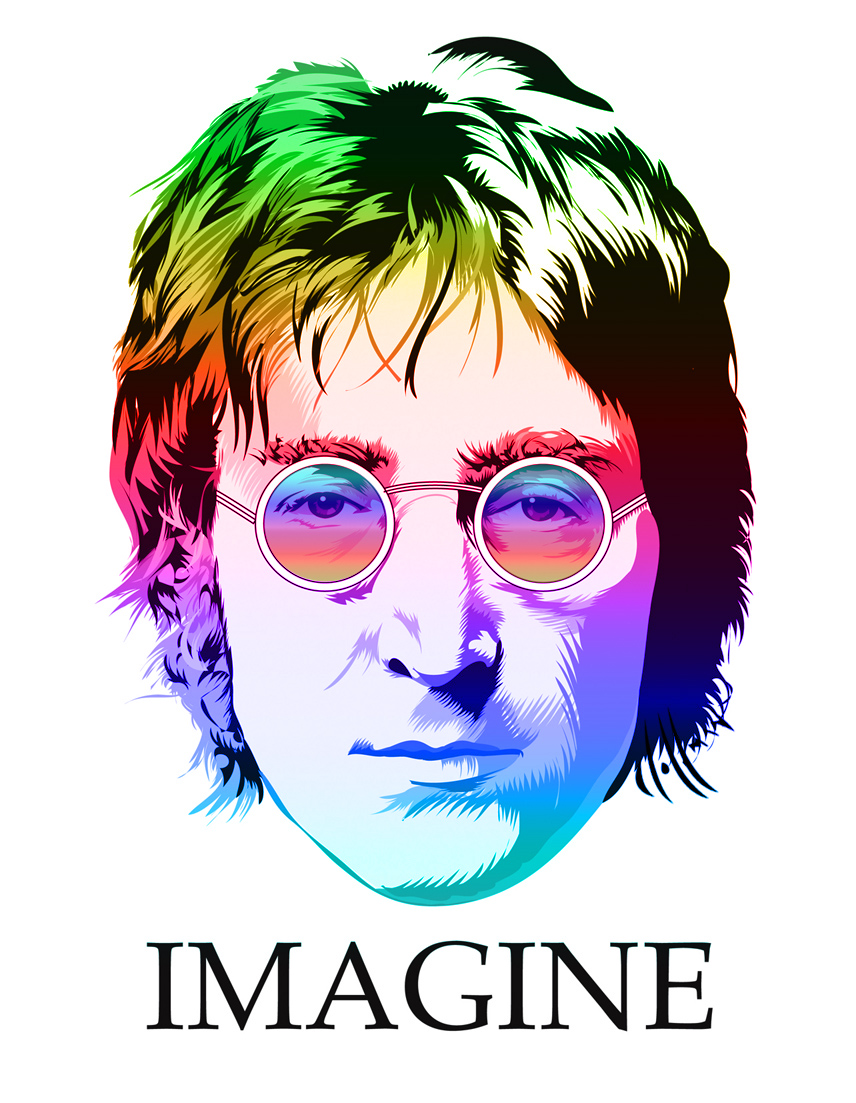
Then I thought of John Lennon’s song “Imagine.”  I can’t say I am too familiar with the lyrics from this song, but I realize I am treading on ground already imagined by many others.  Here are the lyrics from “Imagine” by John Lennon.

Imagine there’s no heaven
It’s easy if you try
No hell below us
Above us, only sky

Imagine all the people
Livin’ for today
Ah

Imagine there’s no countries
It isn’t hard to do
Nothing to kill or die for
And no religion, too

Imagine all the people
Livin’ life in peace
You

You may say I’m a dreamer
But I’m not the only one
I hope someday you’ll join us
And the world will be as one

Imagine no possessions
I wonder if you can
No need for greed or hunger
A brotherhood of man

Imagine all the people
Sharing all the world
You

You may say I’m a dreamer
But I’m not the only one
I hope someday you’ll join us
And the world will live as one

Where could such a place be?  In a multiverse of possibilities, where could I find another world where peace and prosperity are guaranteed for all?  Surely, in a universe of all possibilities somewhere else people live in harmony with their environment and do not force others to live according to their standards.  Surely, there is some place in the multiverse where tolerance and respect for all is the norm. 

I would like to imagine a place like the planet Vulcan with the famous Vulcan IDIC.  Infinite Diversity through Infinite Combination.  I would like to imagine a place where people who talk about diversity and equity and inclusion are not treated as pariahs and outcasts.  I would like to imagine a world where sexual preferences are the norm and people are not expected to conform to simple dualities. 

I would like to imagine somewhere exists maybe over the rainbow where there is no homelessness and no starvation.  I would like to imagine a place where rape and child abuse are unheard of.  A place where anyone of any color or sexual orientation is free from abuse and threats and fear for their lives.  I would like to imagine a place where little children and women can walk freely at any time of the day or night without worrying about being murdered or assaulted. 

I am nowhere near the dreamer that John Lennon was though I think dreamers should be sacred in our world.  I would like to see a place or country where people dream more and hate less. 

I woke up this morning feeling like I am in the wrong world at the wrong time and in the wrong place. I don’t belong here anymore.  I can’t read the news or listen to the radio or watch tv because they keep shouting to me over and over and over again that I don’t belong here anymore.  I have outlived my time and my usefulness.  I can only mourn for a place that is beyond my imagination. 

I want to live in a world where kindness and compassion and respect for all human beings is the norm.  Somewhere, I keep imagining that there is a place where violence and jealousy and revenge do not exist. 

Perhaps if I go back to sleep, I can return to reality.  I can stop imagining things that only bring me tears and heartache.  Things that make me loath my own humanity.  I wonder if I can ever find a brotherhood or sisterhood of love again in this world.  Perhaps in my dreams, I can find the place I want to go to. 


What is Life without a Song to Live By?

Sometimes my mind simmers with proverbs or aphorisms.  “Eat, drink and be merry for tomorrow you may die.”  “The test of courage comes when we are in the minority; while the test of tolerance comes when we are in the majority.”  Hardly a day goes by when one or more of these pithy sayings does not assume authority over my daily life.

On other days, I am more guided by messages embedded in some song.  For instance, the idea of “Tradition” is a theme in the musical Fiddler on the Roof.”

Who, day and night, must scramble for a living,

Feed a wife and children, say his daily prayers?

And who has the right, as master of the house,

To have the final word at home?

The Papa, the Papa!  Tradition.

The Papa, the Papa!  Tradition.

My blog this week is simply a mélange or medley of some of the songs that give me inspiration.  Messages that without being invited often invade my life.  There is no particular order or priority to the songs in this blog.  I don’t know why or how these musical pieces pop up;  but suddenly, some extraneous words, activities or events trigger them.   Before I know it, I am humming a refrain in my mind. (If you care to hear the songs noted below, just click on the title which is hyperlinked.

Respect: Aretha Franklin

All I’m askin’ is for a little respect when you come home

(Just a little bit) Baby

(Just a little bit) When you get home

(Just a little bit) Yeah

(Just a little bit)

Isn’t this something we all want?  Just a little respect!  Sometimes it seems so hard to find these days.  The idea of a “Righteous Person” or a Mensch does not seem to resonate with modern society.

Ambition: Wale

The time is now on everything

Took my heart away from money, I ain’t interested in fame

And I pray that never change

Ambition is priceless, it’s something that’s in your veins

What is ambition?  When is it good and when does it corrupt our lives?  The Greeks had the concept of the “Golden Mean” and it certainly should guide our ambition or we become totally corrupted.

Trouble:  Robert Preston

We’ve surely got trouble (we’ve surely got trouble)

Right here in River City (right here)

Remember the Maine, Plymouth Rock and the Golden Rule

(Our children’s children gonna have trouble, trouble, trouble, trouble)

A cute song but it reminds me constantly of the need to be on the lookout for politicians that use hyperbole to sow fear in the polis so that they can reap their rewards.

Dreamin:  Johnny Burnette

Well, I’ll keep on dreamin’

Keep right on dreamin’

Dreamin’ ’til my dreamin’ comes true

My entire life often seems like one big dream.  Dreaming is more of a process for me than an end state.  I like to think that I am a Realist but more often I am an idealist.  I dream of a world defined by the words of Martin Luther King.

“I have a dream that one day down in Alabama with its vicious racists, with its governor having his lips dripping with the words of interposition and nullification, one day right down in Alabama little Black boys and Black girls will be able to join hands with little White boys and White girls as sisters and brothers. I have a dream today.”

Camelot:  Richard Burton

The snow may never slush upon the hillside

By nine p.m. the moonlight must appear

In short, there’s simply not a more congenial spot

For happily ever after in than here in Camelot

Is there a place on this earth where peace and justice reign?  Where I can live happily ever after.  Where there is no fear or evil.  I am still looking for this place.  It exists in my mind.  If only I could find its physical manifestation.

Lonely Teardrops:  Jackie Wilson

My Heart Is cryin’, cryin’

Lonely Teardrops

My pillows never dry of

Lonely Teardrops

Who among you has not felt the pain of loneliness?  James Bond said that “Boredom” was the worst curse of all.  I disagree.  Loneliness is the worst curse of all.  No physical pain is as great as the heart ache of loneliness.  No man or woman wants to do battle with loneliness.  Sadly, it must come to all of us someday.

Satisfaction:  Rolling Stones

I can’t get no satisfaction

I can’t get no satisfaction

‘Cause I try and I try and I try and I try

I can’t get no, I can’t get no satisfaction

Sounds like a whine!  But we all have those days when nothing seems to go right.  We call our insurance companies, or we call our bank, or we call our hospital and we “Can’t get no satisfaction.”  I often wonder if anyone really cares about our satisfaction.

Old Man River:  Paul Robeson

Ah gits weary

An’ sick of tryin’;

Ah’m tired of livin’

An’ skeered of dyin’,

But Ol’ Man River,

He jes’ keeps rollin’ along!

I’m sitting on the bank of the Mississippi watching the river flow or I’m watching the tide roll in on the “Dock of the Bay.”  I am sick of tryin and I am sick of livin.  Suddenly, every problem I have just melts away.  My problems are mostly in my mind.  The river doesn’t care.  The ocean doesn’t care.  The river rolls.  The tide comes in.  Life goes on.

Well, that’s all folks!  I have dozens, maybe hundreds of other refrains.  Many of them will remain hidden until suddenly the right chord is struck, and I will be humming them in my mind.

So long, farewell

Auf Wiederseh’n, goodbye

I leave, and heave

A sigh and say goodbye

Goodbye

From — The Sound of Music


Reflecting on Music, Variety and Risk-taking

800_3629083_xiaecwhixfg1ex9uu0lovplea7k5a5gucploi605_music-variety-bundle-ai-eps-png

I love music and I love the numerous varieties of music in the world from hip hop to classical, from Norwegian music to Chinese music, from Blue Grass to opera.  Like food, I have never met a music I did not like.  Of course, that does not mean, I have never heard a particular piece of music that I did not like.  Music is like anything else, there is good music and there is music one does not care for.  Karen plays music and is fond of learning a new instrument or taking part in a music jam, choir or sing-along.  She is a participant while I am an observer.  Alas, I have no talent in the musical arena and so I content myself with listening.

However, I think my listening style may be somewhat unique.  While others sip deeply from a fine piece of music, I enjoy listening to the same piece played by many different musicians and in many different styles.  I can sit for hours listening to the same piece played by an assortment of artists with a myriad of instruments, vocals and rhythms.

800_3629083_lepfjg5y6329t7w7t016z2t6ie8wjkophameym0p_music-variety-bundle-ai-eps-png

I find the creativity in how a piece can be played and the many different ways that a piece can be played to be fascinating.  I have sat and listened to the Ave Maria played by fifteen different artists and each one brings something different to the song.  I have listened to more versions of Carmen than I can think about.  From Bizet’s traditional Carmen, to the American Carmen Jones to Beyoncé’s Carmen, each version has its own virtues and vices.  Music makes the comment that “Variety is the spice of life” to be an absolute truth.  Today, I would like to illustrate this aspect of music with a song that I fell in love with called Malagueña Salerosa.   A short background on the song courtesy of Wikipedia:

Malagueña Salerosa also known as La Malagueña is a well- known Huasteco or Huapango song from Mexico, which has been covered more than 200 times by many performers.

The song is that of a man telling a woman (from Málaga, Spain) how beautiful she is, and how he would love to be her man, but that he understands her rejecting him for being too poor.

If, like me, you enjoy the lyrics to a song as you listen to it, the following is the English translation:

Graceful Malaguenan

What beautiful eyes you have,
beneath those two eyebrows
what beautiful eyes you have!

They love to watch me
but if you don’t let them,
not even to blink.
Graceful  Malagueñan.

I long to kiss your lips,
Graceful Malagueñan.
And to tell you, beautiful girl,

that you are stunning and bewitching,
like the pureness of a rose,
like the pureness of a rose.

If, for being poor, you look down on me,
I agree you are right,
If, for being poor, you look down on me.

I don’t offer you riches.
I offer you my heart,
in exchange for what I lack.

Thus, to illustrate my observation about variety and the endless ways that one can find variety in the world (for that is the real message of my blog), I have selected three versions of Malagueña Salerosa.  The important point which I see over and over again is that there is an endless variety in the world.  There is no limit to imagination, innovation and creativity.  Even the same song, can be performed endlessly and never be boring.  People often wonder why they should write on a subject when it seems that there are a thousand books written on any topic you can think of and perhaps now an additional million blogs.

download

My answer is that every one of us has a different and unique way of looking at the world.  Your biography, your story, your view on ethics, your views on management or your views on child raising are unique.  Just like your DNA is unlike any other DNA in the world, it is impossible for you to be a carbon copy of anyone else.  Even if you wanted to, you could not exactly copy anyone else.  So why bother to try?  The excitement we all bring to the world lies in learning to be ourselves.  It is a job I have been working on for over sixty years.  I sometimes think that there is a conspiracy out there to deny us the originality that we all possess.  We must struggle against the chains of conformity which are everywhere we look.  Imitation may be the sincerest form of flattery or the path to millions of dollars but it surely is not the path to creativity and innovation.

My three versions of Malagueña Salerosa include what I might say vocally is a “perfect” version sung by noted opera tenor Placido Domingo.  His delivery is masterful.  His ability to hit high notes and low notes beyond mortality.  I have listened to Domingo and Pavrotti many times and while I enjoy both, I think Placido’s voice achieves a clarity unlike any other tenor that ever lived.  So please listen to a least a little of his version of Malagueña Salerosa before you continue reading:

Can you imagine a performance more hauntingly beautiful than what you have just heard by Placido?  If you wanted to copy or surpass his style and delivery, I would say it would be impossible.  That is why, our only choice in life is to be ourselves and enjoy our own uniqueness.  We must do what we have a passion for and do it as well as we can.  We can always improve ourselves but we can never be another Placido.

The next version is a more traditional version of Malagueña Salerosa played by three Mariachis.  This version has an authenticity that somehow I find lacking in Placido.  I can see this as being the “real” version that was song by the love-struck young man as he tried to win her love.  While Placido excels on the vocals, this version gives us a stronger set of instruments and more of the true Latino flavor that I find missing in the Placido version.

The third and final version of Malagueña Salerosa is by the Mexican rock band Chingon.  They contributed the song “Malagueña Salerosa” to Quentin Tarantino’s movie Kill Bill Volume 2 and a live performance by the band was included on the film’s DVD release.

You of course, will have noticed after listening to Chingon that they had no intention of imitating Domingo or any strolling Mariachis.  Their style is a blend of Rock, Mariachi and Ranchera, but they put their own stamp on it with their singing, tempo and beat.

I am not an expert musician and I could not begin to tell you why or exactly how each of these three versions differs from each other.  But while I may not be able to explain it, I can feel it as I am sure you can as well.  Like a good wine or a good meal, I may not know how to explain what I taste but I certainly know what I like.

I dread the thought of doing anything over and over and over again, unless it is for the sake of practice and to develop technique and ability.  Why continue experiencing the same thing, when I can savor and experience so much variety in the world?  Variety is one of the things I value most in life.  It has taken me years to be able to see how unique the world is.  No same old, same old, unless we are trapped in our minds and routines.  The world offers a smorgasbord of treats and excitement to those who are open to challenge, change and risk.

I leave you with one last short (1.5 minute) video which you must see.   If you have ever been afraid to experience something different, to go somewhere foreign or to listen to a new style of music, this video will help you to reflect on a life lived with no risk.  It is very effective at portraying the fear of risk but also the upside joy that risk can bring.  It is called Always Dare:

https://www.youtube.com/watch?v=CJ2WbDahaaM

“No pleasure endures unseasoned by variety”– Publilius Syrus, 1st Century BCE

Time for Questions:

What variety do you experience in your life?  Do you live a life open to variety?  How do you find “new” things in your life? What are your thoughts about going someplace new?  Listening to some new music?  Would you be willing to try raw oysters, truffles or pickled pigs feet?  Have you ever tried any of these?  Why not?


My Final Will and Testament – Influences – Reflection #9  — Part 3 Music    

Since this blog is about music, there is no better way to read it than by listening to an Andre Rieu concert.  The first number is “Conquest of Paradise” by Vangelis.  The second number is the “Soldiers Chorus” from Gounod’s Faust.  Click on the link above.  I think the background will enhance your reading pleasure.

Imagine that this is the last day of your life on earth.  In the time that you have left, you want to leave a “Testament” for your family and friends. 

  1. These are the Influences (people, literature, and Music) that have shaped me.

Music

“Music soothes the savage beast” — William Congreve    

“Music is a moral law.  It gives soul to the universe, wings to the mind, flight to the imagination, and charm and gaiety to life and to everything.”  — Plato

“Next to the Word of God, music deserves the highest praise.  The gift of language combined with the gift of song was given to man that he should proclaim the Word of God through Music.” — Martin Luther

“Music was my refuge.  I could crawl into the space between the notes and curl my back to loneliness.” — Maya Angelou

I love music.  I love all music and all genres of music.  Yes, there are songs, composers, and performers that I do not like within every genre.  However, I have never found a genre of music from any culture in history or anywhere in the world that did not have something to feed my desires.  Music is food for the soul and a variety of music provides an abundance of nutrition.  The more variety I find in music, the more variety I can bring to my musical dining experience.

I love listening to Opera, Classical Music, Blues, Pop, Rock, Gospel, Country, Fado, Enka, Irish, African, Indian, Chinese and Rap.  Depending on what I am hungry for I might listen to Calypso or Reggae, or I might listen to Celtic and Madrigals.  I might be in the mood for country and cowboy songs, or I might feel like listening to “Golden Oldies.”  My musical tastes are as varied as my food tastes.

I grew up with an Italian father who loved Opera.  My mother was a southerner who gave me a love of Hank Williams, Patsy Cline, Homer and Jethro and Elvis Presley.  My fathers tastes were more for Caruso, Callas, Pavarotti, and Domingo.  My favorite Operas are Carmen, Madam Butterfly, The Pearl Fishers, Il Trovatore, Rigoletto, and Manon Lescaut.

I love Broadway musicals like Cats, 1776, Phantom of the Opera, Man of La Mancha, Fiddler on the Roof, Camelot, Chorus Line, and Les Misérables.  I love movie musicals like Paint Your Wagon, Grease, Tommy, Hair, Oklahoma, and the Wizard of Oz.  Of course, sometimes a musical goes from Broadway to Hollywood but there are often differences which make both genres interesting and tasty.

Some of my favorite composers include Tchaikovsky, Andrew Lloyd Webber, Lerner and Lowe , Rogers and Hammerstein, Beethoven, Verdi, Puccini, Mozart, and Bizet.  Some of my favorite singers include Harry Belafonte, Dolly Parton, Shakira, Nina Simone, Marvin Gaye, Bob Dylan, Pete Seegar, Paul Robeson, Little Richard, Arlo Guthrie, the Beetles, Elvis Presley, and Ronnie Milsap.  I have listened to and love most of the great operatic tenors and sopranos from Caruso to Fatma Said.  The list of these great singers would take up two pages at least.

I want to conclude these reflections on the Music that has made a difference in my life with a simple explanation of why so much of the music from the above sources has made a difference and what differences they have made.

When I was young, I did not listen to much music.  My parents were never very musical and if it was not on the radio, we never had any music around the house.  Sometime, around my middle school years (5th and 6th grades, I discovered rock and roll.  This would have been during the birth or at least White birth of Rock and Roll (1954 was when the genre got its name).  Black people had been listening to similar music long before Elvis Presley came on the Ed Sullivan show in 1956.  Later, when I went to high school, I took a course in Classical music which I found boring.  I hated the class.  I mostly enjoyed listening to Rock and Roll.  Country was not really an option on the East Coast in the fifties.  I cannot say to have had any deep or serious appreciation of music.

I think the big change in my musical tastes occurred after my first wife and I split.  I realized that I had been so focused on work that I had little time for anything else.  I wanted to start trying new things out and doing some things that I had never done before.  Being alone, I rediscovered my joy for libraries and just sitting around reading a good book.  The library in Eau Claire had the typical reading rooms as well as a few music rooms.  You could select some albums from the library collection and listen to them in the room with a headset.  I decided to explore several of the genres that I had avoided when younger.  I selected a large amount of classical music, folk music, and world music to explore.

You know how when you first taste something, you may not like it.  However, the more you eat it the more it grows on you.  That was how music went with me.  The more I tasted of Beethoven, Bach, Brahms, and other types of music from different parts of the globe, the more I began to love music.  My music menu soon extended to well beyond Rock and Roll to many of the genres that I have already mentioned.  My diet for music became insatiable.  Karen and I try to go to at least one musical performance a month.

This Saturday Karen and I are going to the 2024 Race Amity Day: Unity Through Music program at the Baha’i Faith Community Center in Scottsdale.  We are not members of the Baha’i faith and are going with some friends who invited us.  Karen plays piano and several other instruments very well.  She often does some solo performances as well as group performances.  Over the years I have declined Karen’s encouragement to become a player.  I prefer to be a listener.  Too much dedication and focus required to become a good player is not in my age-appropriate activity group.  I am happy to go to interesting performances and enjoy someone else who plays or sings or composes better than I ever could.

So, what do I get from the great deal of variety in my musical diet?  What are the nutritional benefits from this smorgasbord of music?  This is difficult to describe.  It seems that music mellows and tempers my moods.  Sometimes music is like a stimulant and it lifts my spirit and energizes me.  Spanish bullfight music does that for me.  Sometimes music is like a sedative, and it helps to calm and relax my mood.  “Love Me Tender” by Elvis has a very mellowing impact on my moods.  Sometimes music motivates me to do more and try harder.  The “Toreador Song” from Carmen has that effect on me.  Sometimes music reminds me that the world is much larger than the one I live in.  Pete Seegar’s “Where Have All the Flowers Gone” reminds me of this fact.

Perhaps the most impactful use of music in terms of influence is the music that teaches.  For example, Paul Robeson sang a song called the “Peat Bog Soldiers.”  It was written, composed, and first performed in a Nazi concentration camp (by political prisoners) in 1933.  By referencing the title, I found out that it was a famous protest song against Nazi Germany sung by the men and women in these concentration camps.  It is a well-known protest song in Europe.  The song from Madame Butterfly “Un bel dì, vedremo” always brings tears to my eyes.  This song taught me what happens when commitment and honesty are ignored.

Well that concludes as much as I can say about my musical influences.  I hope you have enjoyed your sojourn through my musical buffet.  May your musical diet be bountiful and nutritious and may you live your life with the sounds of music that you enjoy.

PS:  Some of the songs I liked are hyperlinked to YouTube music so you can listen to them. 

Next Reflection:

10.  These are the Scripture texts that have touched and helped me.

My Final Will and Testament – Things – Reflection #4

og_image

Last year at my 40th Demontreville Retreat, one of the exercises that we were given by the Retreat Master included a very challenging set of thoughts.  The worksheet for the activity was labeled as “A Testament.” I took the worksheet and instructions home with me.  It had fourteen tasks or reflections to complete.  I did not desire to complete them during the retreat.  It is now almost a year since my retreat, and I have decided to make the mental and emotional effort necessary to complete this “Testament.”

The worksheet started with these instructions:

Imagine that this is the last day of your life on earth.  In the time that you have left, you want to leave a “Testament” for your family and friends.  Each of the following could serve as chapter headings for your “Testament.”

  1. These are the Things that I have lived for.

In my first reflection, I declared that “Things” were never very important to me.  However, this reflection forced me to look at some “Things” that have mattered to me in my life.  It is hard to admit that any things were ever really important since “Things” are so trivial in many respects.  Nevertheless, it is hard to exist without a few “Things.”  Thus, what are those “Things” which have really mattered to me, and a bigger question is why?  Here are a few of my favorite things and why they matter to me.

Raindrops on roses and whiskers on kittens

Bright copper kettles and warm woolen mittens

Brown paper packages tied up with strings

These are a few of my favorite things — By Julie Andrews, “My Favorite Things”

2613402398_e39a38b665_b

I love rain and stormy days:  I figured the “why out years ago.  On a nice day, my father would say “Get your ass outside and go play.  It’s too nice to be inside.”  Thus, I could only engage in my favorite activity (which was curled up with a good book) when it was raining, and I did not have to go outside.  To this day, I get a thrill when a rainstorm approaches.  I can’t tell you how happy it makes me to see the rain and feel the raindrops on my head.

I love books:  I buy more books than I will ever finish in my lifetime.  I have already at  every move given hundreds of books away.  Just holding a book gives me a sense of excitement that nothing else in life does for me.  The book pulses in my hand like a living thing saying, “Read me and learn.”  “Let me tell you about a million things that you do not know.”

200w

I love a nap:  2 PM in the afternoon and I have nothing to do and no place to be.  I will take a nap.  I close my eyes wondering if I can really get to sleep and forty minute or so later, I wake up feeling energized and ready to continue taking on the woes of the world.  I am not sure where I get my joy of napping from.  Karen is not a napper, and I seldom can get her to take a nap with me.  It is a solo activity, but I guess it gives me a temporary respite from the trials and tribulations of everyday living.  Maybe it is just fun.

Good_Food_Display_-_NCI_Visuals_Online

I love food:  I have never met a food that I did not like.  One of the great joys of life is going someplace different and trying foods out that I have never eaten before.  I have eaten the local foods in all 44 countries that Karen and I have traveled to.  I will try anything though I draw the line if it is still moving.  I have eaten several unknown species of Arthropoda (Bugs) in China and Korea.  I have had rattlesnake in Texas, fresh eel in Japan and one of my favorite Italian foods, Scungilli salad whenever I get back to visit my sister in Rhode Island.

I love music:  Is music a thing?  Generative AI has the following to say about this query:

“Music is a cultural universal that is a human-created meaning, not a fact or thing in the world.  It is the arrangement of sounds to create a combination of form, harmony, melody, rhythm, or other expressive content.  However, definitions of music vary by culture and throughout history, and there is no consensus on the precise definitions of the elements that define music.”

Nice to know what AI thinks.  Not sure it settled anything though.

Moving on with my thoughts, I find music sometimes soothing as with a Strauss waltz.  Sometime exciting as with the “Toreador Song” from Carmen.  Sometimes, a song reflects how I feel about life as with Ricky Shelton’s “I am a simple man.”  Sometimes, music reflects my sense of devotion for certain things.  I am always moved by national anthems like the “Star-Spangled Banner” and the “Marseillaise.”

I love what some call “World Music.”  I can spend hours surfing the various music offerings on YouTube.  I am always amazed at how much great music never seems to find its way into the US music stations.  As with food, I have never met a music genre that I did not like.  From Baroque to Grigorian Chants, to Asian, Latin, Hip Hop, Reggae and a hundred other music genres, I can always find an artist or musical piece that I fall in love with.  In Japan, it was Enka music.  In Portugal, I was Fado music.  In Spain it was the Tango music.  I could go on and on but every place in the world contributes to the store of great music that is out there.

Well, there you have it.  A few of my favorite things.  Perhaps I should add a few.

“Cream-colored ponies and crisp apple strudels

Doorbells and sleigh bells and schnitzel with noodles

Wild geese that fly with the moon on their wings

These are a few of my favorite things.”  By Julie Andrews

Next Reflection:    

  1. These are the insights that I have gained in the school of life.


What Writers Can Learn from Music

I have always liked to use some musical links in my writing. Many of my writings deal with songs that have inspired me over the years. (Where Have All My Young Friends Gone?) A few years ago, I started wondering what I could learn from music that might infuse my writing with more elegance and passion. I tried my hand at a “musical composition.” I am not sure that it came out very well but if you are interested, you can read my piece at: ON WRITING, MUSIC, CHOREOGRAPHY, THE SEASONS AND LOVE.

Recently, in our writing class, I gave my students the assignment to come up with a 100 word writing piece that used some elements of music in their writing or that writes about the use of music in writing. It was an odd assignment made more difficult because my instructions were pretty vague. The following week students brought in their writings and shared them in class.

The discussion that accompanied our readings was very helpful. Wilma, a writer in the class, found a good article that illustrated very well what I had been trying to say and do in terms of using music to provide creativity or at least another perspective to our writing. I am adding links to Wilma’s article which was in Medium and another that I found while perusing Medium.

The first article is by Mark Benis and is titled: “Is Writing Stories so Different from Writing Music?”

View at Medium.com

The second article is by David W. Berner and is titled: “Writing is Like Music.”

I hope you will find these articles interesting and that they will perhaps inspire some use of these ideas in your own writings.

ON WRITING, MUSIC, CHOREOGRAPHY, THE SEASONS AND LOVE

Allegro

What does writing have to do with making love? Can the changing of the seasons really be compared to an overture? What if on some primal level, we all live by an unseen rhythmic law? This law says that there is fundamentally no difference between making love and writing or between a brilliant piece of choreography and the changing seasons. Does the rhythm of the universe expect a form of symmetry to all of life? A regulated succession of strong and weak elements or of opposite and contrasting conditions becomes the master of all we do. The seasons come and go. The music ebbs and flows. Our love is gentle, passionate, sublime and tired. Mornings, afternoons, evenings and nights fuse with the spring and summer and fall and winter of our lives. The harsh gales of November echo in the overtures of Stravinsky and Beethoven. All things are one say the mystics. Is my writing one with all things? Can I form, norm, storm and perform even with mere words.

Adagio

Far be it for me to confuse philosophy with art. Greater men than I have said that there is a unity to life. We travel down our different paths often blind to the journeys of others who walk side by side with us: This one a carpenter, this one a computer scientist, this one a teacher, this one an artist and this one a hero. If I were a rich man, lord who made the lion and the lamb, would it really spoil your cosmic plan if I were a wealthy man? We are all dust in the wind but our rhythms echo down the halls of time. The most unforgettable and amazing repetitions will resonate as long as humans walk the earth. Coded in the numerous ways we have of capturing the rhythm of our lives: Some dynamic, some peaceful, some violent and some sad. We write our lyrics, pen our verses, create our stanzas and design our choreography all guided by the unseen law of rhythm. Now we are hard, then we are soft. Now we roar and now we snore.

Scherzo

Love is kind, love is considerate, love is not selfish. The waltz was a creation of times when love was more restrained. This torrent of mine was supplanted, extending my being, your challenge. The Tango alternates patterns of space and closeness with syncopated rhythms of violence and passion. Love me tender, love me sweet, never let me go. Rock and Roll ushered in a wild abandonment of morality in the face of conspicuous sexuality. The rhythm of music often exhibits striking harmonies with the rhythm of our love lives. Can I be soft and gentle like a warm breeze but also wild and unrestrained like in the movies? What if I made love to the William Tell overture or would Shakira’s lyrics work better:

Baby I would climb the Andes solely
To count the freckles on your body
Never could imagine there were only
Too many ways to love somebody

Is it enough to alternate patterns of tenderness with patterns of inhibition? Shall I open with an allegro, then move into an adagio, followed by a scherzo and conclude with a rondo? Who would expect love to end without a crescendo? Should my love making follow the classical style or should it be more like a jazz piece?

Rondo

Whether goes my writing. I have written this in four parts to reflect my cosmic view of the rhythm of life. We form and norm and storm and then perform. Spring is the opening that brings fresh growth to our world before the bloom of summer. Summer brings the maturity and ripeness of life. Fall brings the storms and winds that signify our frailty and insignificance to the universe. Winter ends our symphony with the closure and solace that our work is done and our day is over. Our life, our work, our art, our thoughts all finished but with a hope to be reborn perhaps by someone who sees a need to continue the rhythms that we have started. Not really finality, but continuations that started before us, and will continue long after our memorials are put up. Perhaps, my headstone will have four verses or stanzas or paragraphs or perhaps like the newest greeting cards, you will be able to press a button on my tombstone and you will see a picture of me singing and dancing to a four part harmony.

Time For Questions:  

Does music teach you anything about writing?  Does music speak to you? Can writing be like a symphony?  How do you hear music?  Does it speak to you like a good poem or a good verse? What is your favorite kind of writing?  Do you ever think that the writing you enjoy could be like music?  What would it take to transform the music in your life into writing or the writing in your life into music?

Life is just beginning

The Seven Greatest Appreciations of Life: Music

download (1)

What would life be without the things that help us to appreciate it?  I listen to a superb singer and think how fantastic it is to be able to have this kind of talent in the world.  I visit an art gallery and look at the magnificent paintings and think about all the people that have created works of art which beautify my life.  I journey to a library to find a good book to read and I am inundated with literature that will open vast new horizons for me intellectually and emotionally.  I am sometimes ashamed that I am not grateful enough for the many appreciations that life gives me.

I started thinking a few days ago that the issue of appreciation would make a good subject for a blog.  I soon realized that the subject would be good for several blogs.  Thus, I have decided to write about the greatest appreciations in my life.  Of course, life itself is a given as the greatest appreciation of all, so I will skip it for now.  There are hundreds of things that I can appreciate.  I will limit my list to the top seven things that I am grateful for or that I appreciate on an almost daily basis.  I will try cover each of these in my next blogs.

  1. Music
  2. Art
  3. Literature
  4. Travel/Food
  5. Friends/Family
  6. Health/Fitness
  7. Peace

music 1

Music:  Something to Appreciate

This week I will discuss the joys and happiness that I find in music.  Karen, my wife is a musician.  I am unfortunately not among the musically gifted.  I am left to be the audience for Karen and other people with the talent to perform.  I have hundreds of artists all over the world that I admire and listen to.  Many people have a steady diet of music from a particular genre.  I consider myself fortunate to have quite catholic tastes when it comes to music.

I love opera, country, blue grass, gospel, classical, rock, pop, blues, jazz, folk, as well as music from almost every country in the world.  Have you ever listened to Enka music from Japan or Fado music from Portugal?  There are hundreds of styles of music all over the world.  Increasingly I find what might be called fusion music that blends a multitude of styles.

the hu

One currently popular group is called the Hu.  They are a rock band from Mongolia.  They use traditional Mongolian instrumentation, including the Morin khuur, Tovshuur and Mongolian throat singing with a rock beat.  They say that they are inspired by the Hunnu, an ancient Turkic/Mongol empire.  I discovered them on YouTube and liked them so much I purchased one of their albums.  I listened to it every day for a few weeks.  I had never heard anything like it before.

41R8ajbaNKL._SR600,315_PIWhiteStrip,BottomLeft,0,35_SCLZZZZZZZ_FMpng_BG255,255,255

Yesterday on NPR they had a music session with the noted African American operatic baritone Will Liverman.   It was an interesting conversation.   There has been a systematic exclusion of information concerning Black singers and composers in the realm of classical music.  Mr.  Liverman talked about his upbringing and how surprised his parents were that he became interested in opera and classical music.  He pursued his interests and has become one of the great operatic singers of our time.  Will observed that many great Black composers were virtually unknown to the public and even in the music world.  He decided to remedy this with an album of songs by Black composers.  You can find his album on Amazon and many of Mr. Liverman’s songs on YouTube.

The music world is full of variety, mysteries, contradictions, challenges, and respite from a world all too often full of dreary news and mayhem.  I have briefly touched on some of the variety in the music world, but what are the mysteries?  Well consider the talent that it takes to become a good musician.  Many people think that musicians are simply born with the talent.  A little knowledge of musicians will soon show you that music is a combination of talent and hard work.  Few of us will ever know if we could have been a great musician because most of us do not have the discipline to put the effort into music.  This includes me as well.  I am amazed at the practicing that Karen does each week.

Karen performing with the Tucson Dulcimer Ensemble

Tucson Dulcimer Ensemble Visits The Fountains – The Fountains at La Cholla in Tucson, AZ

Karen has taken dozens of classes to help develop her skills.  There never seems to be a time when she will simply quit and say, “I have become good enough.”  She is always working and striving to become better.  Every year she develops more skills and then challenges herself with more difficult pieces, not to mention adding more instruments to her repertoire.  And here is the mystery.  Where do these people get the energy and courage to keep on challenging themselves?  Most of us would rather listen to music.  We marvel at the fantastic talent that is in the music world, but we seldom understand the practice, discipline and hard work that is involved.  I gasp in amazement at a man like Jake Shimabukuro whose fingers move over the ukulele faster than I can see.  I cannot comprehend pianists that can play an entire Beethoven symphony without looking at a music sheet.  These are all mysteries to me.

What of contradictions?  The music world is full of contradictions.  Talented players and singers who never seem to achieve the stardom they deserve.  One-hit-wonders who can create a dynamic song that tops the charts but are never heard from again.  Five-year-old wunderkinds who display abilities that defy logic.  Singers who develop followers that worship the ground they walk on.  Performers who last a few years, disappear for many years, and then make startling comebacks.  Singers who are still in the music business in their eighties.  Artists who seem to have little talent but make tons of money.  The music world is full of contradictions.

jennifer-hudson-anthem-020221-getty-ftrjpg_1o4bv8v9qnefu14me1myuyws80

What of the challenges I refer to?  For a musician, the world is one giant challenge.  Can you imagine getting up in front of 100,000 people or more to sing the national anthem?   Can you imagine facing the expectations of an audience that has paid a minimum of 100 dollars a seat to hear you perform and some may have paid thousands to hear you perform?  Could you handle the pressure?  Can you imagine a road tour?  Leaving your home for a year to travel the world and play in dozens of different venues in front of many different audiences.  I get anxious not sleeping in my own bed for one night.  I think the challenges also show up in the chaotic drug filled life that we often see in some musicians.  Stars like Elvis, Michael Jackson, Prince, and hundreds of other great musicians who met an early and untimely death.  Is it any wonder?  The challenges may be too much for anyone.

Finally for me, the respite that music brings to my life could not be purchased for a million dollars.  It is said that “Music soothes the savage beast.”  Music takes the stress out of my life.  Music is like meditating.  It is often better than eating or sleeping.  I can watch an Andrea Bocelli performance, and everything is okay with the world.  Music helps me to forget the vicious daily news, the angry divisive politicians insulting each other, the legal eagles trying to entice me to sue someone, the maniacs on the road in a hurry to go nowhere.  I can forget the dreams I had that never materialized as I listen to Rhiannon Giddens sing, “Wayfaring Stranger” or Miley Cyrus sing, “A Man of Constant Sorrow” or Bob Dylan sing, “A Hard Rain’s Gonna Fall.”

I fear I have not even begun to explain the joys, beauty and wonders that music can bring into our lives.  The subject is so deep and wide, that my short missive here does not even begin to do it justice.  My goal is to inspire and entice you to find more time for music in your life.  It is truly one of the great appreciations that life brings us.  Sean Combs said that “A life without passion is unforgivable.”  It is even truer that a “life without music is a terrible shame.’

Next week I will talk about Art and what it can do to help us appreciate life more.