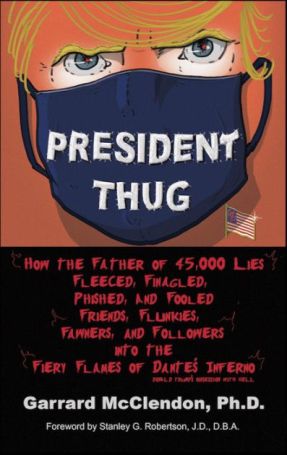
Can We Break the Cycle of Lies, Calumnies and Slander in our Political System?

You have just read the title of this blog, and you thought, great idea but impossible.  There is no way that we can stop the lies and misinformation that infect our political system.  I submit that you are wrong.  I submit that nothing is impossible if “We the People” decide that we have had enough.  I am sure that this year in the USA, we have all had more than enough.  I don’t care if you are a Democrat, Republican, Independent, Green, Libertarian, Constitutionalist or Socialist, I know that you are probably as sick and tired of the continuous lies that fuel our election process as I am.

“But wait” you say, “In twenty-five days, it will all be over.”  I sincerely wish you were right, but you are not.  No sooner than this election is over then you will get requests from someone running for dog catcher in Fairbanks, Alaska asking you for money.

Dear Sir,

Thank you so much for your generous campaign contribution for my election.  It was thanks to your help and thousands of other donors that I was elected.  But now is not the time to let up.  Our sleazy lying opponents have already collected a million dollars to fund their next campaign.  We must stop them now before it is too late.  Please pledge at least $100 dollars (or whatever you can afford) before midnight to help us reach our goal of 10 million dollars to re-elect me as dog catcher of Fairbanks.  My opponent says that she will ban stray dogs from wandering around our streets.  I promise to do better than that.  I will take all the homeless dogs off the street and provide adequate food and housing for them.  My campaign motto is “Make American Dogs .”  That stands for MAD because I am mad that we have so many homeless dogs.

PS:  You can buy a MAD hat at my office for the low price of only $39.99.  All proceeds will go to building more dog shelters

IF you think the above letter is funny, it is only so because you know it is true.  No sooner than this election is over, the cycle of lies, slander and calumnies will begin again.  How can we stop it?  Believe it or not we can stop it.  But before describing what I think we can do, it is important to define some terms.  What is a Calumny?  What is a lie?  What is a slander?  I will use the Oxford Online Dictionary to provide a common definition of each and a few examples.
A Calumny is the making of false and defamatory statements about someone in order to damage their reputation.  — https://languages.oup.com/google-dictionary-en

As an example, I have a flyer before me that claims one presidential candidate will send police door to door to seize firearms.  This is a lie because it is not true, but it is also a calumny because it is designed to damage the candidates reputation.

A Slander is the action or crime of making a false spoken statement damaging to a person’s reputation.

Here is one example from another political flyer.  Candidate X has invited criminals, drug dealers and terrorists into our neighborhoods.  Another lie because no candidate on either side has ever done such an egregious offense.

If you study these two words, calumny and slander, they are very confusing.  One source describes the differences as follows:

“While both “slander” and “calumny” refer to making false statements to damage someone’s reputation, “calumny” is considered a more formal and serious term, often implying a malicious intent to spread false accusations, while “slander” simply refers to making a false spoken statement that harms someone’s reputation; in legal terms, “slander” is the specific act of making a defamatory oral statement, whereas “calumny” is a broader concept encompassing the act of making a malicious false accusation.”  — Generative AI
A Lie is an untrue statement with intent to deceive.  She told a lie when she said she didn’t break the vase.  He lied to create a false or misleading impression.

Lying is common to both calumnies and slanders but whereas slanders and calumnies can be illegal and subject to lawsuits, lies are a more generic family of comments that seem to escape legal action.  Part of the reason deals with intention.  A lie may be intentional, but it may not be meant to harm but only to deceive.  (Some might quibble about my distinction here).  For instance, I lie to my date because I want to impress her or him but not because I want to harm him or her.  I lie on my resume to get the job because I think the credentials required are ridiculous and I know I can do a great job despite lacking the formal requirements.

Today, we see lies about everything.  Sadly, people are willing to believe these lies.  The famous Nazi propagandist Joseph Goebbels and German Leader Adolph Hitler have both been described as partisans of what has been called “The Big Lie.”
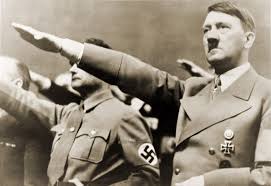
“The German expression was first used by Adolf Hitler in his book Mein Kampf (1925) to describe how people could be induced to believe so colossal a lie because they would not believe that someone ‘could have the impudence to distort the truth so infamously’.  The phrase “Big Lie” was used in a report prepared around 1943 by Walter C. Langer for the United States Office of Strategic Services in describing Hitler’s psychological profile.  The report was later published in book form as ‘The Mind of Adolf Hitler in 1972.’  Langer stated the following in respect to Hitler’s personality.”  — Wikipedia

“His primary rules were; never allow the public to cool off; never admit a fault or wrong; never concede that there may be some good in your enemy; never leave room for alternatives; never accept blame; concentrate on one enemy at a time and blame him for everything that goes wrong; people will believe a big lie sooner than a little one; and if you repeat it frequently enough people will sooner or later believe it.”  — “Mind of Adolf Hitler, 1972”

When I was a young student going to a Catholic School, I learned that there were two types of lies.  One was called “White Lies” and the other were simply “Black Lies.”  White lies were lies told for good reasons.  White Lies might be defended by those who believe that the ends justify the means.  Thus, politicians who believe they can save the USA from defeat by its enemies might tell “White Lies” to get elected so they can save the country.  Black Lies are generally regarded as lies told for selfish reasons or reasons to benefit someone else.  Using AI again, we find the following distinctions:

White Lies are told to please someone or to benefit the relationship and are generally considered acceptable. For example, telling a friend that their new haircut looks great.  White lies are often motivated by empathy and compassion.

Black Lies are told to gain personal benefits or to avoid a deserved penalty.  Black lies are generally considered universally wrong.  For example, a used car dealer lying about the condition of a car. Black lies are often motivated by selfishness.  — Generative AI

The nuances depicted in many of the definitions given above make ascertaining any criminal liability for lying very difficult.  One person’s “good intentions” might be another person’s “road to hell.”   Lawyers and pedants would have a field day debating these distinctions.  For those of us who know a horse from a cow, the distinctions are quite clear.  Namely, we are sick and tired of being lied to and having to listen to calumnies and slanders from either side attacking and trying to destroy the reputation, character and morals of people whom we personally respect.

I do not care which side you are on, left, right, up or down, enough is enough.  To demolish the character of people with lies and more lies simply to win an election is wrong.

It is wrong. 

It is sick behavior, and it is destroying our country.  You can proclaim all you want that the country is too divided, but it can never come together when one side demonizes the other.  Lying Fascist Greedy Right-Wing Republicans versus Lying Commie Radical Left-Wing Democrats.  What if someone called your mother or wife one of these terms?  How would you feel?  What would you do?  I know what I would do, and it would probably land me in jail.

What is my solution? 

Let us start a national movement that puts power back in the hands of voters.  You can argue all day long about false ballots, hanging chads, illegal voters, fake ballots and you will get nowhere.  As long as we have a voting process there will be human errors and even some iniquities in the process.  But what if we refuse to vote?  There are no laws against NOT VOTING in the USA.  What if we say, “I have had enough.  I am not voting in any election until we have a fix against political slander, lies and calumnies.”

There is no law that could put us in jail for not voting.  Imagine what it would do to the political process.  It would be like throwing a giant monkey wrench in the system.  The elections systems all over America would come to a grinding halt.  All we have to do is “NOT VOTE.”  We agree to stop voting for anyone until some efforts and sanctions are enacted for lying, slander and calumnies in the political process.  Until then, I say we sign petitions not to vote.  Buy yard signs saying “I am not voting anymore.” Start a National I Am Not Voting Party consisting of people like us who are tired of a system built on money, greed and lies.

Please feel free to share this blog with anyone else who is sick and tired of lies and more lies. 
Writing the Big Lie

johnson.image_2

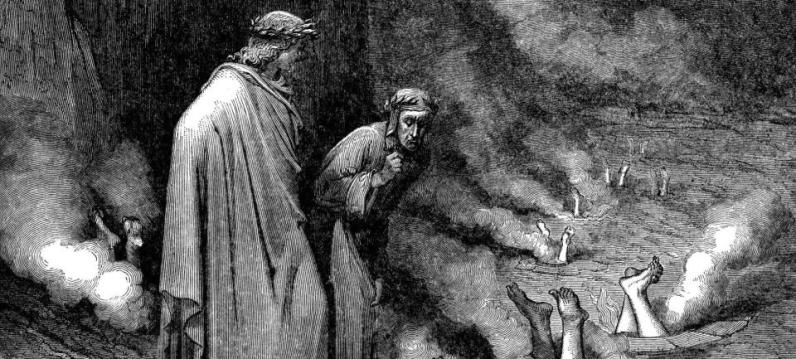
The eighth circle of Hell in Dante’s Inferno is for the sin of fraud. Generally, this includes counterfeiting, hypocrisy, lying, stealing, and more.

 What is the punishment in circle 8?

Circle 8 of Hell in Dante’s Inferno has ten different areas for fraudsters. Dante describes these as separate ditches or trenches within the circle. In the first ditch, demons whip pimps and seducers. In the second, flatterers are buried in sewage and feces. In the third, “simonists” – those who abuse church power – are buried upside down and their feet are burned. In the fourth, sorcerers or fortune tellers are forced to walk around with their heads on backwards. In the fifth, the politically corrupt are buried in boiling tar. In the sixth, religious hypocrites are forced to wear torturously heavy church robes. In the seventh, snakes bind thieves’ hands behind their backs and torture them in various other ways. In the eighth, those who lied for personal gain are turned into living flames. In the ninth, people who sowed division walk in a circle. When they pass a certain demon, it chops their head or limbs off – their wounds slowly heal as they walk around again, and the demon chops them again when they come back around. In the tenth and final ditch, counterfeiters are punished with various afflictions like scabies, itching, or thirst.  —- From Study.Com by Angie Armendariz, Arielle Windham, and Jenna Clayton.                         

Christians believe that everyone is a sinner.  That is why every week at a Christian church you will hear an aisle full of practitioners asking forgiveness for their sins.  The times I accompany my spouse to church, I am reluctant to confess any sins or to ask for any forgiveness.  I can’t help but wonder what I should ask forgiveness for.  Many the day I regret something I have said or done but seldom do I think this makes me a sinner.  When they say that Christ died for my sins, I wonder how he could have known the stupid and sometimes malicious things I actually have done?  Perhaps this is an example of a Big Lie.

Writers all lie.  Some more than others.  There are lies of omission.  There are lies of commission.  There is hyperbole.  There is obfuscation.  Writers of course are not the only ones who lie.  The government lies.  The army lies.  The CIA lies.  Even your parents probably lied to you more than you think.  Sometimes we lie to get our point across.  Sometimes we lie to protect another.  Sometimes we lie to protect ourselves.  Sometimes we lie because of erroneous beliefs, common but false tropes, misinformation, and disinformation.

The media today is one big melting pot of lies.  CNN, MSNBC, FOX News, Breitbart and all the other major networks are cesspools of daily lies.  Left wing, right wing, Democrats, Independents, Republicans, John Birchers all lie.  Studies show that average people also lie fairly regularly.  “Do as I say and not as I do” is one form of lying.  The biggest lies we engage in are lies to ourselves.  Self-talk is full of lies.  “I would never do that.”  “I get better every day.”  “I get enough exercise.”  “I am a follower of Jesus Christ.”  Some studies such as noted below show that the assumption that most people are liars is not exactly true.  Many people are opportunistic liars.

“People also have good and bad lie days, when they tell more or fewer lies than is typical for them, Levine says.  People do not lie for the most part, he says, a few pathological liars aside. Also, for the most part, people do not lie unless they have a reason to.  Our daily communication demands are a big driver for most of us on how honest or dishonest we are,” Levine said.New research shows most people are honestby Shannon Thomason

On the subject of writers as liars, I include advertisers, marketers, political speech writers, media script writers and even blog writers.  We are all guilty of Big Lies.  The following quote is attributed to the Nazis Joseph Goebbels, but it was also written in Hitler’s Mein Kampf:

“If you tell a lie big enough and keep repeating it, people will eventually come to believe it. The lie can be maintained only for such time as the State can shield the people from the political, economic and/or military consequences of the lie. It thus becomes vitally important for the State to use all of its powers to repress dissent, for the truth is the mortal enemy of the lie, and thus by extension, the truth is the greatest enemy of the State.”

Upon reading the above quote, it might give you some pause when it comes to believing anything that comes out of the mouth of a press secretary or any other official State representative.  To repeat “The Truth is the greatest enemy of the State.” My father once said, “Believe nothing of what you hear and half of what you see.”  This might have been the best advice that I have ever received.  This is why all teachers today say that they believe Critical Thinking skills are the most important tools we can teach students.  Unfortunately, this is also a Big Lie.  It is something that might be believed but it is not practiced.

I call a Big Lie something that is truly and wonderfully believed either by the writer or speaker.  Unfortunately, they may not adhere to it in practice or in their daily lives.  They talk and write a good game, but they do not deliver.  As Martin Luther King said about the “Declaration of Independence”,

“When the architects of our republic wrote the magnificent words of the Constitution and the Declaration of Independence, they were signing a promissory note to which every American was to fall heir. This note was a promise that all men — yes, Black men as well as White men — would be guaranteed the unalienable rights of life, liberty, and the pursuit of happiness.  It is obvious today that America has defaulted on this promissory note insofar as her citizens of color are concerned. Instead of honoring this sacred obligation, America has given the Negro people a bad check, a check which has come back marked insufficient funds.”

9780996883252_p0_v1_s1200x630Our Founding Fathers wrote a Big Lie and African Americans have been paying for it ever since.  Women and other minorities were not even mentioned in the Big Lie, but it applied to them as well.  Lies can be committed because people believe things that do not mesh with reality.  Lies are a coverup for many government actions that our politicians do not see as palatable for the public.  The Gulf of Tonkin incident, the overthrow of Salvador Allende, the weapons of mass destruction in Iraq are only a few of the lies that have been fed to the American people.  Of course, our politicians would have us believe it is for our own good.  The really sad part is that the media is always complicit in these lies by reporting them with little or no verification of their truthfulness.  Some of these lies fall into what I call the “Realm of Taboos.”  Taboos are a good place to look for Big Lies.

A Taboo is defined by the Online Oxford dictionary as, “A social or religious custom prohibiting or forbidding discussion of a particular practice or forbidding association with a particular person, place, or thing.”  Taboos arise when reality clashes with Big Lies.   For instance, it is a Big Lie to think that Americans always fight a virtuous war.  Our government wants us to believe that any war we fight is to protect the right to Life, Liberty, and the Pursuit of Happiness.  It would not do any good to let the public know that most of our wars have been wars of aggrandizement.  Wars fought to protect our economic interests.  Thus, we develop Taboos that prohibit subjects from being discussed.  This saves government and politicians from being exposed as Big Liars.

One particularly egregious lie is that someone is never too old to hold public office.  We have a plethora of “old” politicians and judges who would be better retired.  The average age of senators in the 118th Congress is 64 years old.  There are 54 senators older than 65.  I am 77 years old in two weeks and my days have dwindled down to about four to five ENERGY hours per day.  The rest of my day is spent napping, reading, watching TV, or just enjoying a good Bourbon.  Many of the politicians holding office probably cannot say that they could do any better than I could.  But no one has yet disputed their right to run for office.

“American society on the whole fears aging. It is a culture that works overtime to stave off death, even while having one of the lowest life expectancies in the world compared to the amount spent on health care every year. It is considered taboo to bring up age in a variety of contexts, including whether or not someone is still hardy enough for the rigors of public service after more than eight decades on the planet.” — Aug. 31, 2023, by Hayes Brown, MSNBC Opinion Writer/Editor

imagesSo, we tell a Big Lie that age does not matter.  And we have no one willing to challenge that lie.  However, it is not only physical aging that puts people at a disadvantage, but mental aging as well.  Many older people are stuck in a past generation of ideas and values that are no longer relevant today.  Values and cultures change over time and people born in the 40’s and 50’s are less likely to understand and adapt to the changes that daily life brings.  If you can only see the “Good Old Days”, you may be suffering from old age.  The average age of Nobel Prize winners when they conducted their prize-winning research is 44.1 years.  As for writing, “According to experts, we start becoming more creative and prolific in whatever field of art or study we work, around the age of 25.  Most people reach their peak after the age of 35 or in their 40s. This is when they produce their most valuable work.  After the age of 45, most artists’ prolificity starts slowly declining.” — The Adroit Journal

Conclusions:

  • Big Lies are part of reality.
  • People often do not want to know the truth.
  • Politicians believe that people cannot handle the truth.
  • Big Lies are told to conceal realities that will adversely impact governments.
  • We all lie sometimes. Some of us more than others.
  • Writers have a responsibility to tell the truth as much as possible.
  • We cannot always see the culture of lies that we are caught in.
  • Follow my father’s advice: “Believe nothing of what you hear and half of what you see.”
  • When you do not believe something, gain insights from 360 Degree Thinking.

360 Degree Thinking can be defined as, “being cognizant of ideas and insights coming from a variety of sources, both internally and externally, and understanding the critical interconnectedness of these ideas.” It is about your ability to view ideas and information coming from all sides and on all levels in all timeframes (for example, short, medium and long-term priorities).   —- Ideas for Action

Why You Should Believe Nothing You Read or Hear in the News!

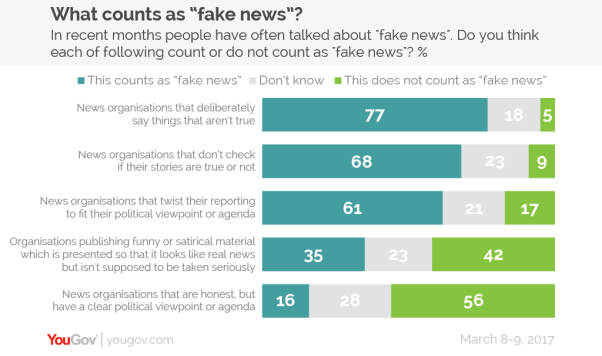
news-icons (1)I want to make an argument as to why most of what you hear or read is biased, prejudiced and based on narrow minded thinking.  Most of what you read will not lead you to the truth but will take you down a path away from the truth.  My argument will also apply to what you are about to read.  I am biased, narrow minded and prejudiced.  So why should you read or listen to what I am about to write?  Well, let’s start at the beginning.

Like many of you reading this, I consider myself somewhat of a truth seeker.  Although, I believe few if any “absolute” truths actually exist.  Nevertheless, I read a wide variety of books and magazines.  I listen to many different sources including TV, Radio, Podcasts, TED Talks, documentaries, and YouTube videos.  I attend training sessions, conferences, and talks by noted experts whenever possible.  I also scan many different news sources each day to find a variety of perspectives concerning political events and popular news.  My friends consider me well informed and very knowledgeable on a wide range of subjects.

maxresdefaultI have been seeking the truth or what might pass as “truth” for most of my 75 years on this earth.  I was considered the “smartest” guy in the room in many of my high school and college classes.  The authorities or those that are supposed to be good judges of truth and knowledge gave me two undergraduate degrees, one master’s degree and a Ph.D. Degree.  Once upon a time, I belonged to many different professional associations and was also a member of MENSA, the so-called high IQ society.  None of my qualifications or associations prepared me any better than anyone else upon this earth to find the TRUTH.  Like most of you, I am still looking and hoping that the “Truth will set me free.”  If only, I can find it.
Fake news-01

A few days ago, I noticed seven different editorials on Google News concerning the Ukrainian War.  Each of the editorials was written by a professional journalist and each espoused some very critical ideas.  Some of these ideas would carry weight with readers and no doubt influence public opinion for good or bad.  Six of the journalists’ names were listed and one was not.  Now most stories we get in the news whether on TV or print are written by journalists.  Less frequently it will be some “policy” expert or high-ranking government official who will be doing an opinion piece or some type of interview.

I started to ask myself a few questions:

  • What are their professional qualifications?
  • How much influence or weight do these journalists carry?
  • How much slant or bias do these journalists carry?
  • Are journalists and the media really qualified to tell us what we should or should not be doing?

I looked up each of the journalists to see what their qualifications were.  Basically, they were professionally trained journalists and most of them had extensive experience in foreign relations.  Neither of these attributes makes them an expert on the Ukraine but it is conceivable that they might have more knowledge in some areas of foreign policy than the general public.  Again, more knowledge does not mean less biases. Here are the news sources and brief bios for the six journalists I researched:

The Washington Post- Liz Sly and Dan Lamothe

Liz Sly (born in the United Kingdom) is a British journalist based in Beirut.  She is currently a correspondent with The Washington Post covering Syria, Lebanon, Iraq and other countries of the Middle East.   She graduated from the University of Cambridge.

Dan Lamothe is an award-winning military journalist and war correspondent.  He has written for Marine Corps Times and the Military Times newspaper chain since 2008, traveling the world and writing extensively about the Afghanistan war both from Washington and the war zone.  He also has reported from Norway, Spain, Germany, the Republic of Georgia and while underway with the U.S. Navy.

NPR – Greg Myre

Greg Myre is an American journalist and an NPR national security correspondent with a focus on the intelligence community.  Before joining NPR, he was a foreign correspondent for the Associated Press and The New York Times for 20 years.  He reported from more than 50 countries and covered a dozen wars and conflicts.

The Wall Street Journal – David Henninger

Mr. Henninger was a finalist for a Pulitzer Prize in editorial writing in 1987 and 1996 and shared in the Journal’s Pulitzer Prize in 2002 for the paper’s coverage of the attacks on September 11. In 2004, he won the Eric Breindel Journalism Award for his weekly column.  He has won the Gerald Loeb Award for commentary, the Scripps Howard Foundation’s Walker Stone Award for editorial writing and the American Society of Newspaper Editors’ Distinguished Writing Award for editorial writing.  He is a weekly panelist on the “Journal Editorial Report” on Fox News.

The Atlantic – Eliot Cohen

Eliot Asher Cohen (born April 3, 1956, in Boston, Massachusetts) is an American political scientist. He was a counselor in the United States Department of State under Condoleezza Rice from 2007 to 2009.  In 2019, Cohen was named the 9th Dean of the Paul H. Nitze School of Advanced International Studies (SAIS) at Johns Hopkins University, succeeding the former dean, Vali Nasr.  Before his time as dean, he directed the Strategic Studies Program at SAIS.

Cohen was one of the first neoconservatives to publicly advocate war against Iran and Iraq.  In a November 2001 op-ed for The Wall Street Journal, Cohen identified what he called World War IV and advocated the overthrow of Iran’s government as a possible next step for the Bush Administration. Cohen claimed “regime change” in Iran could be accomplished with a focus on “pro-Western and anticlerical forces” in the Middle East and suggested that such an action would be “wise, moral and unpopular (among some of our allies)”

The New York Times – Cora Engelbrecht

Cora Engelbrecht is a contributor to the RIGHTS blog.  She recently received her BA in nonfiction writing from Wesleyan University, and now works in New York as a freelance writer, researcher, and graphic artist.  Her interest for human rights and global conflict stems from her time spent researching and writing abroad in Tanzania and South Africa.

rathom-trench-fb

I next turned to the question of how much influence do journalists carry?  The story of John Revelstoke Rathom (1868–1923) is very informative in this regard.  He was a journalist, editor, and author based in Rhode Island at the height of his career. In the years before World War I, he was a prominent advocate of American participation in the war against Germany.

c9713250-e5eb-46c7-8ea9-2810435084fa-9781643139364“Rathom campaigned for the U.S. to enter World War I in support of the British.  Under his management, the Providence Journal produced a series of exposés of German espionage and propaganda in the U.S.  In 2004, that same newspaper reported that much of Rathom’s coverage was a fraud: ‘In truth, the Providence Journal had acquired numerous inside scoops on German activities, mostly from British intelligence sources who used Rathom to plant anti-German stories in the American media.’” –  Wikipedia

It seems logical to assume that since we did enter the war and since the Brits did go out of their way to bias American policy that the efforts of Rathom and others had a major influence on our decision to enter the war on England’s side. America was persuaded by the media that we should enter the war when there was substantial public opinion to stay out of the mess that Europe was in.  My own reading of WW I shows a totally different scenario than from WW II.  I have little doubt that we should have entered the war against Hitler.  However, the picture from WW I is quite different.  I think that each side had equal claims to legitimacy for their war efforts.  But the media heavily influenced our eventual entry into the war.

Next I wanted to see if anyone had opinions about the bias or prejudices that the typical journalist might have.  I found the following comment in a recent article by Politico, “Why Journalists Love War”, by Jack Shafer  03/17/2022

“NBC News reporter Richard Engel, a veteran foreign war correspondent, dropped a tweet a few days after the war began that appeared to lament that U.S. forces hadn’t strafed the huge Russian convoy approaching Kyiv, seemingly unimpressed that such a strike might launch World War III.  Reporters didn’t call in bombers at White House press secretary Jen Psaki’s Monday briefing, but the tone of their repeated questions almost made it sound like they were advocating a no-fly zone and fresh jets for Ukraine.  And the New York Post left no ambiguity about where they stood with its super-partisan “Fight Like Zel” cover headline.”

“The overwhelming majority of U.S. journalists have taken a more subdued position on the war, identifying with Ukraine against the aggressor Russians, but stopping just short of cheerleading. Even so, journalists can’t hide the seductive draw of the bloodworks.  They can’t help themselves. They love war.”

Photojournalist,Documenting,War,And,Conflict

Of course, this is only one opinion.  However, it fit well with my observations.  I have noticed every day calls by journalists for increased efforts to support Ukraine that might well lead to a Nuclear War.  As I read these brash comments, I sit wondering where were the calls to intervene in Nigeria, Rhodesia, Yemen, and Cambodia?  Why are the news outlets pushing a narrative that implies world disaster if the Ukraine falls to Russia?

Listen please!  I would like to see the Ukrainians kick all the Russian asses back to Siberia or some other cold place.  However, I am not willing to start a Nuclear War over the Ukraine.  There have been too many missed opportunities by the West during the past five years that would have avoided the present war.  What is it that brings out the desire to have a nuclear confrontation with Russia?  Nothing I can see except a Democratic Party that needs to look tough and a cadre of journalists pushing a narrative for more and more support by our country for a nation that we do not even have a treaty with.

“The link between safety and ethics may not be immediately obvious, but the same ambitions and economic factors that pressure inexperienced and poorly prepared freelance journalists to enter battle zones also pressure journalists to present the news as they think that their paymasters most want to hear it.”  — https://ethicaljournalismnetwork.org/ethics-safety-solidarity-journalism — Originally published as a chapter of “Conflict reporting in the smartphone era – from budget constraints to information warfare”

A book that I am reading is “The Science of Fear” (2008) by Daniel Gardner.  The following  insight by Gardner is quite pertinent to this discussion.

9780226567198“The media are among those that profit by marketing fear – nothing gives a boost to circulation and ratings like a good panic – but the media also promote unreasonable fears for subtler and more compelling reasons.  The most profound is the simple love of stories and storytelling.  For the media, the most essential ingredient of a good story is the same as that of a good movie, play or tale told by a campfire.  It has to be about people and emotions, not numbers and reason.  Thus, the particularly tragic death of a single child will be reported around the world while a massive and continuing decline in child mortality rates is hardly noticed.” — Pg. 294
Ever since the decline of print news and the rise of the internet, the media has become a cesspool of click bait headlines, gross news reports about inane subjects, media celebrities touted as royalty and increasingly bizarre stories designed to spread fear.  There is no more morality or ethics in the news than there is in a cartel, mafia, or mega-corporation.  It is all about the money and there never seems to be enough these days.  Is the media biased is actually a very stupid question.  Right, left, central it does not matter.  They all have one agenda and that is to sell advertising for their corporate sponsors

My final question was, “Are journalists and the media really qualified to tell us what we should or should not be doing?”  My answer is that they are no more qualified than anyone else on the street or even one of your friends or relatives.  A study done several years ago and published in a book called “Expert Political Judgment: How Good Is It? How Can We Know?” (2005) by Philip E. Tetloc examined the link between experts’ opinions and how often they were right.

Im-an-expert-600x412

Tetloc in his heavily researched study found that experts are often no better at making predictions than most other people, and how when they are wrong, they are rarely held accountable.  Kahneman and Tversky in their book “Judgment Under Uncertainty” (1982) identify dozens of cognitive biases that impact the thinking ability of human beings.  They both later won a Nobel Prize for their work in behavioral economics.  It is often the most highly educated people who suffer from these biases the most.

Thomas Kuhn’s “The Structure of Scientific Revolutions” (1962) dealt with the biases that the scientific community held regarding theories and principles.  Kuhn showed how difficult it was for the scientific community to let go of “old paradigms” and adopt new paradigms.  This was true even when all the evidence showed that the new paradigms did a better job of explaining the subject under study than the old paradigm.  Science history is full of many theories that took fifty or more years to be accepted simply due to the biases and resistance to change that is prevalent among scientists.  This is as true of scientists as it is of journalists, politicians, and the average person.

What is the answer:

A friend of mine said that the most important thing we have to do is to teach our children to question everything.  To question is the heart and soul of critical thinking.  However, we must be cautious lest we raise a nation or world of nihilists.  There is a difference between rejecting everything and questioning everything.

I am not a nihilist though I see a fine line between my thinking and nihilism.  I do not believe in absolute truth, but I think there are approximate truths.  As we learn more and more about anything, our truths get closer to the absolute, but we can never reach it.  I think the same way about meaning in life.  Meaning exists but only in our minds.  It will change many times during our lives.  The same is true for morality and values.  They exist but only in our minds.  Like the Velveteen Rabbit, they become real when we make them so.

Purchasing-Power-of-the-US-Dollar

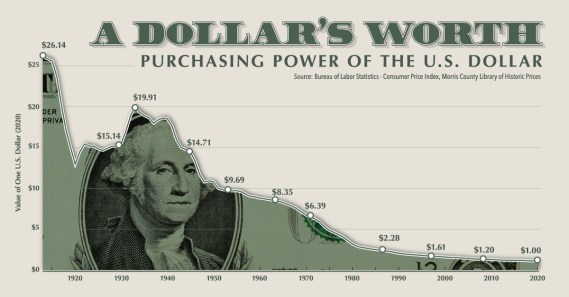
I used to hold up a dollar bill and ask my students how much was it worth?   They typically replied one dollar.  I asked them why it was worth a dollar?  Answers varied, but the truth or close to it is that it is because people believe that it is worth a dollar.  In terms of labor, ink, and paper, it costs the Federal government 6.2 cents to print a dollar.  In terms of buying value, a dollar in 1926 is worth only 15.58 cents today.  However, this is not an absolute either since the current value of a dollar actually varies from state to state.  The value of a dollar varies about 30 cents from the lowest to the highest state across the USA.  In Mississippi, a dollar is worth $1.16, while in Hawaii, the dollar is only worth 84.39 cents.

So, seeing is believing or is believing seeing?  Is there a difference between perception and reality or are they the same?  Can we ever escape the Rashomon effect?  The biases in perception created by our own desires to protect our egos or the egos of others.

1200-610551-47762564-39573934

There is little I have learned in my life that supports my willingness to accept anything as 100 percent factual, 100 percent truthful or 100 percent valid and reliable.  The solution is to question everything.  Do not accept anything as absolute.  When it comes to politicians, lawyers, salespeople, and journalists, we all need to be on guard.  Their built-in bias is not for the truth but for the dollar or at least 84 cents on the dollar.

quote-the-media-has-enormous-power-the-media-is-undergoing-huge-changes-now-it-seemed-like-thomas-hunt-morgan-67-60-81

 Update:  4/29/22

Just read the following on CNBC.  This “brilliant” analysis by a guy who writes regularly for a variety of news outlets and is listed as a “Tutor” notes the following:

“I think it’s outside the realm of possibility right now that there’s going to be a nuclear war or World War III that really spills over that far beyond Ukraine’s borders,” Samuel Ramani, a geopolitical analyst and associate fellow at the Royal United Services Institute, told CNBC.

Dr. Samuel Ramani’s credentials for this brilliant piece of optimistic analysis is that he is a tutor of politics and international relations at the University of Oxford, where he received his doctorate in March 2021. Somehow this makes him an expert in what Russia will do next in the Ukraine.  His “beyond optimism” comes at a time when Putin is starting to get more and more desperate in his bid to defeat the Ukraine.  Putin is becoming a cornered rat and NATO is pushing him into more and more of a corner.  Despite this, the genius who is less than two years since he finished his Ph.D. degree says “it is “OUTSIDE” the realm of possibility that Putin will launch a nuclear strike.  It would only be “OUTSIDE” if Nuclear weapons did not exist.  Questions I have are:

  • Why is CNBC relying on the credentials of someone with so little expertise to give us such an analysis?
  • How could anyone in their right mind say that something is impossible when that something already exists?
  • What is the “narrative” behind the focus by the Western news?
  • Why is NATO supporting a war when we have no treaty with the Ukraine.