Once in a while it is fun to do a blog on a song that means a lot to me and I hope to some of my readers as well. I have done several of these “song blog posts” in the past. I hear the song while I am writing and I only wish that I were musical enough to be able to sing it as well as write about it.
This particular song is from the musical Cats which is an Andrew Lloyd Webber musical. Mr. Webber had a slew of great musicals with some very unforgettable songs. This song is called “Memory.” The song “Memory” from the 1981 musical Cats was composed by Andrew Lloyd Webber with lyrics written by Trevor Nunn, which were based on the poems of T.S. Eliot.
The song is about an elderly feline Grizabella who dreams of the days when she was young and beautiful and full of energy. She has a chance to be reborn again and holds out hope for this to happen, which is reflected in the song. The song is more than just about growing old, it is about aging, loss, regret, identity, hope and the courage to continue living. For those of us over a certain age who think of themselves as “elderly” it was like this song was written for us. I know when I hear the rising and falling tones that I feel sad but also joyful. Perhaps there is a life again after this one.
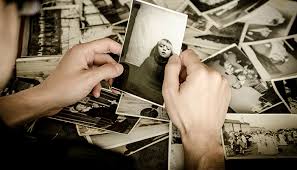
My memories come alive like characters in a movie that I am watching. Only the movie is in my mind. My father is driving in the car with my mom and I. My mother is taking me to a Chinese restaurant on a Friday night in Jamaica. I am pulling my sisters hair because she is annoying me. My cousin and I are building a tree fort, but no girls are allowed. Time goes by from childhood to adolescence, to youthful adult, to middle age, to growing old but not wanting to admit it, to finally conceding that I am old, to realizing that death is what my next adventure may be. In all of these stages, friends, enemies and relatives make brief appearances on stage with me. But I remain the star of my show. Perhaps someday, someplace, somewhere, they will make a movie of my life. “The Young John Persico.” But I doubt it and it would probably not be a big box office hit anyway.
Memory
Turn your face to the moonlight
Let your memory lead you
Open up, enter in
If you find there
The meaning of what happiness is
Then a new life will begin
In this first verse, we see an association between happiness and starting a new life. It makes us wonder if we struggle to live a life and that living does not really begin until we know what happiness means. But happiness is not going to mean the same thing to you as it does to me. I thought that once I was retired and beyond a reasonable prospect of finding meaningful work that my “happy” days were over. I have never been so happy as when I was doing work that had meaning and purpose. Work that would make a difference to the world and just maybe make the world a slightly better place than when I entered it.
Memory
All alone in the moonlight
I can smile at the old days
I was beautiful then
I remember
The time I knew what happiness was
Let the memory
Live again
The singer (Grizabella) remembers a time when she was admired, attractive, and full of life. She isn’t merely recalling youth—she is remembering when she felt that she belonged.
“I was beautiful then” isn’t simply about physical beauty. It means:
- I mattered.
- I was loved.
- I had purpose.
- I knew joy.
This is something many older people experience. We don’t simply miss being young—we miss being the person we once were. We look in the mirror, and we do not recognize the person that we see because the images that we have in our mind do not match the image we see in the mirror. I still run as fast as I did when I was 30 years old except my mile times back then were six minutes and now they are 13 minutes. I think my watch must be running slower. On a recent scuba diving trip, the deck hands called me “Pops.” I had to look around to see who they were talking to.
We don’t go to wild parties anymore, first because we never did and second because we would not last five minutes anyway. My life seemed to have more purpose when I was working. There was and is an indelible association in my mind with getting a weekly paycheck and having a real purpose in my life. A monthly Social Security check does not seem to do the trick.
I knew what happiness was when I cashed my paychecks. Each check represented the value of my work for the world. I was naïve but happiness was working and getting paid. As we grow older and wiser, the meaning of happiness evolves and matures. Happiness goes from certainty to uncertainty and back to certainty. But like the Zen Cycle, the new or latest certainty has a different character and a different profile than the certainty we had when we were young.
Burnt out ends of smoky days
The stale cold smell of morning
A street lamp dies
Another night is over
Another day is dawning
I wake up in the morning. An ugly taste in my mouth. Cigarette butts fill the numerous ashtrays, and the smell of tobacco lingers in the air. Empty bottes of wine and beer are scattered around the kitchen and a few tables. The kitchen sink is full of plates and glasses. There is a stillness in the room which contrasts vividly with the noise and boisterousness of the previous nights. Interesting how life can change so quickly like day goes into night. But it is time to get back to business. Nothing is forever. Friends, relatives, and jobs are so much smoke in the air. Here today and gone tomorrow. The only certainty is that life goes on with or without us.
Daylight
I must wait for the sunrise
I must think of a new life
And I mustn’t give in
When the dawn comes
Tonight will be a memory too
And a new day will begin
This verse makes me think of the famous line from the Shakespeare comedy, “As You Like It.”
“All the world’s a stage, and all the men and women merely players; they have their exits and their entrances, and one man in his time plays many parts, his acts being seven ages.”
Well, I am ending my seventh chronological age and in September will begin my eighth age. Karen wants me to go for nine, but I keep telling her that the odds are against it. But if I don’t give in, if I don’t concede to the inevitable, perhaps I have more memories to create. Can I talk myself into surviving when like others before me, I no longer feel like I fit into the present world. I am reminded of the words written by Thomas Jefferson.
On May 11 in 1819, Thomas Jefferson wrote about making peace with his slow descent toward death.
“A decline of health, at the age of 76, was naturally to be expected,” he wrote, “and is a warning of an event which cannot be distant, and whose approach I contemplate with little concern. For indeed in no circumstance has nature been kinder to us than in the soft gradations by which she prepares us to part willingly with what we are not destined always to retain.
“First one faculty is withdrawn and then another, sight, hearing, memory, eucrasy, affections, and friends, filched one by one till we are left among strangers, the mere monuments of times past, and specimens of antiquity for the observation of the curious.”
Maybe I am too pessimistic, but I think we have a time we belong to and a time we don’t belong to. My parents did not belong to the Elvis and Beatles era, and I do not belong to the Taylor Swift and JayZ era. I increasingly feel like “a specimen of antiquity” as did Jefferson.
By the way, Eucrasy means (a healthy, well-balanced state of the body). I had to look that up. I am always amazed at how erudite our Founding Fathers were.
Sunlight through the trees in summer
Endless masquerading
Like a flower as the dawn is breaking
The memory is fading
Life is a charade. We play many roles and fulfill many identities in life. Many if not most of these simply fade away like Mac Arthur’s “Old Soldier”. Our memories fade. Strange it is to wonder what we will be left with. I remember digging trees with Mexican Braceros who did not speak English. I remember climbing a tree to escape the police when I was in high school. But I can’t remember my first date or the first woman I was really in love with.
I remember going to the 1964 Worlds Fair when I was 16 and spending two days looking at exhibits by myself. I remember both times when I tried to eat a fried banana. Once at the 1964 Worlds Fair and once in 1966 at a Mardi Gras celebration in New Orleans. Suffice it to say that the bananas did not agree with me. But I did not give up. Years later in Mexico, I tried again and was successful. The third time was a charm. Would I have tried more times with some other endeavors in my life. Those are memories that I try to forget.
Touch me
It’s so easy to leave me
All alone with the memory
Of my days in the sun
If you touch me
You’ll understand what happiness is
Look, a new day
Has begun
Now we reach the emotional climax.
Many people hear this as a request for physical affection. I think it is far more profound.
She is asking:
- See me.
- Recognize me.
- Treat me like I still matter.
Every lonely elderly person understands this plea. We want to know that we still count. Perhaps that is why grandparenting has become so important. As Baby Boomers leave behind so many of the things that they lived for, grandchildren replace the antiques of their lives with the youth and curiosity that we once owned. We may not go raging into the night, but we do not want to go lonely into the night.
I was stumped though by what the line “If you touch me, you’ll understand what happiness is.”
I asked Metis (AI Assistant) how she would interpret this line. She gave me four possibilities.
The one I like best says that compassion gives people back their humanity. When someone reaches out with kindness— they help restore the person’s dignity.
Grizabella is saying: “Compassion transforms not only the lonely person—it transforms the compassionate person as well.”
Finale:
I do not really have much more to say so I will not call this a conclusion section. I leave it to you to form your own conclusions. What would be a fitting end or denouement to this blogpost? My friend SoundEagle has advised me not to call these blogs but blogposts. A sort of technical difference but I have taken his advice.
I like the idea of a finale since it goes along with the music theme of the blog. So, what better way to end this blog. You guessed it.
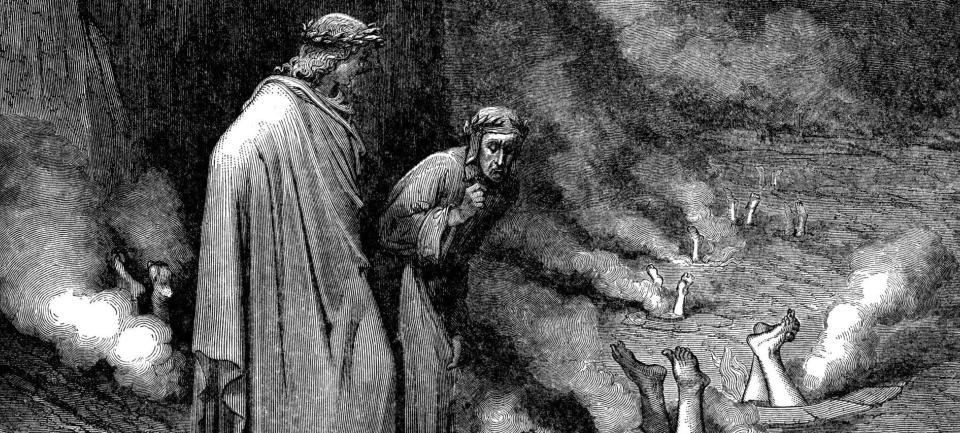
 Our Founding Fathers wrote a Big Lie and African Americans have been paying for it ever since. Women and other minorities were not even mentioned in the Big Lie, but it applied to them as well. Lies can be committed because people believe things that do not mesh with reality. Lies are a coverup for many government actions that our politicians do not see as palatable for the public. The Gulf of Tonkin incident, the overthrow of Salvador Allende, the weapons of mass destruction in Iraq are only a few of the lies that have been fed to the American people. Of course, our politicians would have us believe it is for our own good. The really sad part is that the media is always complicit in these lies by reporting them with little or no verification of their truthfulness. Some of these lies fall into what I call the “Realm of Taboos.” Taboos are a good place to look for Big Lies.
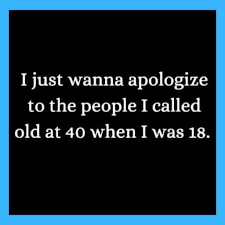 So, we tell a Big Lie that age does not matter. And we have no one willing to challenge that lie. However, it is not only physical aging that puts people at a disadvantage, but mental aging as well. Many older people are stuck in a past generation of ideas and values that are no longer relevant today. Values and cultures change over time and people born in the 40’s and 50’s are less likely to understand and adapt to the changes that daily life brings. If you can only see the “Good Old Days”, you may be suffering from old age. The average age of Nobel Prize winners when they conducted their prize-winning research is 44.1 years. As for writing, “According to experts, we start becoming more creative and prolific in whatever field of art or study we work, around the age of 25. Most people reach their peak after the age of 35 or in their 40s. This is when they produce their most valuable work. After the age of 45, most artists’ prolificity starts slowly declining.” —

