
When I was growing up in Brooklyn, NY, my favorite music genres were opera, country/western and rock and roll. A very strange mixture. I acquired my taste for opera from my Italian father who had a large collection of old records by Enrico Caruso, Mario Lanza, Franco Corelli, Giuseppe Di Stefano, Mirella Freni and several other well known operatic singers. I inherited my love of country/western from my mother and her roots in rural Alabama. Long before Merle Haggard, Travis Tritt, Garth Brooks, George Strait, Hank Williams Jr., and Taylor Swift became popular, I was listening to Homer and Jethro, George Jones, Loretta Lynn, Johnny Cash and of course Hank Williams Sr. Going down to Alabama each summer to visit my grandparents in Ensley Alabama where they lived on a farm exposed me to some of the best country music ever written.
My love of rock and roll was much more contemporary. Every Italian who lived in my neighborhood in the fifties could make some claim to knowing people like Frank Sinatra, Connie Francis, Dion DiMucci, Frankie Avalon, Dean Martin, and Frankie Valli. Many of these singers grew up in Italian neighborhoods in NYC. They anglicized their names due to early discrimination against Italians. But we all knew that they were Italian, and we were proud of them.
When Karen and I started dating in 1983, she loved music but was unfamiliar with both opera and country. I took her and her children to the We Fest Music Festival in Detroit Lakes Minnesota in 1986. We camped and spent three glorious days basking in the music from:
- Waylon Jennings
- Conway Twitty
- Ronnie Milsap
- George Jones
- Tom T. Hall
- Loretta Lynn
- Reba McEntire
- The Kendalls
- The Bellamy Brothers
- Jessi Colter
We did not get VIP seating, so each morning her son Kevin and I would grab some folding chairs and as soon as they opened the gates, we would run as fast as we could to get down as near as we could to the stage. By the time, the music fest was over, Karen and her children were all Country Western music fans.
Little did I know at the time, how Country music would change the political life of America. Unlike Rock and Roll and Opera, Country music has had a more profound impact on America. Country music was both a reflection of and in some sense a cause of the partisanship that divides the USA today.
I had a good friend in New York City
He never called me by my name, just Hillbilly
My grandpa taught me how to live off the land
And his taught him to be a businessman
He used to send me pictures of the Broadway nights
And I’d send him some homemade wine
But he was killed by a man with a switchblade knife
For 43 dollars, my friend lost his life
I’d love to spit some Beech-Nut in that dude’s eyes
And shoot him with my old .45
‘Cause a country boy can survive
Country folks can survive
 The “Good Old Boys” of modern country music started in the seventies telling us that rural people were good people. That real life took place in rural areas. Cities were evil. Rural people were God fearing and patriotic. City people were heathens and atheists.
‘Cause you can’t starve us out and you can’t make us run
‘Cause we’re them old boys raised on shotguns
We say grace, and we say ma’am
If you ain’t into that, we don’t give a damn
City folk worship money and are not patriotic. All city folk care about is the stock market and getting ahead.
The preacher man says it’s the end of time
And the Mississippi River, she’s a-goin’ dry
The interest is up and the stock market’s down
And you only get mugged if you go downtown
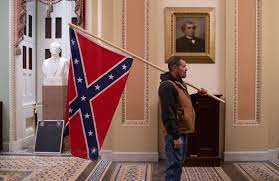
 Donald Trump’s anthem was a song by Lee Greenwood called “God Bless the USA.” Under more normal circumstances, I would applaud this song. Greenwood won the Country Music Association’s award for Male Vocalist of the Year in 1983 and 1984, and his “God Bless the USA” had been awarded the CMA’s Song of the Year honors in 1985. However, when welded by Trump and his supporters it evokes overtones of racism and xenophobia. What else can you think when you see people marching around with Swastikas and Confederate Flags singing “God Bless the USA?”
And I’m proud to be an American
Where at least I know I’m free
And I won’t forget the men who died
Who gave that right to me
And I’d gladly stand up next to you
And defend Her still today
‘Cause there ain’t no doubt
I love this land
God Bless the U.S.A.
I give credit to Lee Greenwood for penning this song. Although he never served in the military his heart is in the right place. The problem is that patriotism can become jingoism when it is only supported by words and not actions. In 1774, Samuel Johnson printed “The Patriot,” a critique of what he viewed as false patriotism. On the evening of 7 April 1775, he made a famous statement: “Patriotism is the last refuge of the scoundrel.”
 “This practice is no certain note of patriotism. To instigate the populace with rage beyond the provocation, is to suspend public happiness, if not to destroy it. He is no lover of his country, that unnecessarily disturbs its peace. Few errors and few faults of government, can justify an appeal to the rabble, who ought not to judge of what they cannot understand, and whose opinions are not propagated by reason, but caught by contagion.” — The Patriot, by S. Johnson, 1774.
Years ago, I wrote a blog about Right Wing political commentators. Talk show hosts found on the Patriot Radio and widely listened to in rural areas. I noted that of the top ten political commentators on the Right not one had served in the military. “Bigots, Liars and Right Wing Radio Talk Show Hosts” — 2016 I stated in my blog the following: “These bigots want to equate patriotism with military service and heroism with serving on the front lines but look at the record for most of the top bigots.”
- Mike Savage, did not serve
- Sean Hannity, did not serve
- Rush Limbaugh, did not serve
- Bill O’Reilly, did not serve
- Michael Medved, did not serve
- Glen Beck, did not serve
Who do you think listens to these hypocrites? If you answer, the “Good Old Boys” you are on the right track. This brings up the question, What is a “Good Old Boy?” I asked one friend who is African American, and he immediately replied, “A Redneck.” The online Oxford English dictionary defines a “Good Old Boy” as:
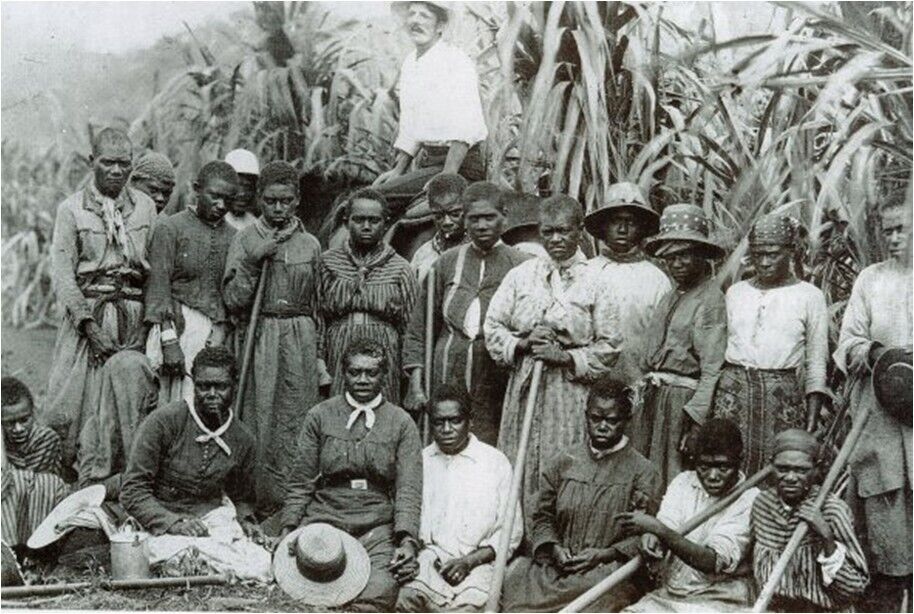
“A man who embodies some or all of the qualities considered characteristic of many white men of the southern US, including an unpretentious, convivial manner, conservative or intolerant attitudes, and a strong sense of fellowship with and loyalty to other members of his peer group.”
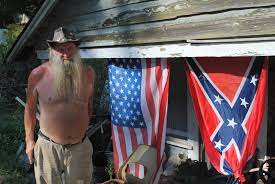
In some venues there is a definite pejorative connation to being a “Good Old Boy.” However, a great deal of Country music celebrates both the lifestyle and values of this group. Over the years, I believe that this discrepancy has led to a chasm between so called rural America and urban America. The differences put a spin on life where each side denigrates the other side. The problem is that there is a great deal more of Country music doing the denigrating. Intellectuals, educated people, people in high places are routinely belittled by many country music artists.
- Cause I’ve got friends in low places
- Where the whiskey drowns and the beer chases my blues away
- And I’ll be OK
- Yeah, I’m not big on social graces
- Think I’ll slip on down to the oasis
- Oh, I’ve got friends in low places
Let me be clear on one thing. Country music did not cause the schism in America. There certainly is not a cause-and-effect relationship between the two. Art is said to reflect reality. However, art can have an influence of reality. Music spreads sentiments and values just as powerfully as does the internet or the news media.
“according to research, even how we perceive the world around us can be influenced by music. Researchers at the University of Groningen showed in an experiment that listening to sad or happy music can not only put people in a different mood, but also change what people notice.” — How music can change the way you feel and act
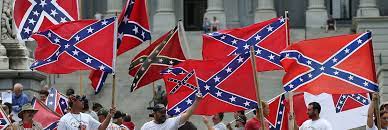
Over the past few years, I have lost much of my affinity for Country music. I still listen to and love the classics by Cash, Nelson, Cline, Williams Sr., and many other old timers. These musicians did not try to portray redneck racists as “Good Old Boys.” They did not put down people who lived outside rural America. They did not flaunt a fake patriotism to separate Americans by virtue of demographic or educational criteria. They did not sing songs to insult other people because of who they were going to vote for. They sang songs about love, heartache, loneliness, and work that spoke to all Americans, not just a bunch of “Good Old Boys.” The myth of “Good Old Boys” is a series of fake attributions that many of these phony patriots want you to believe. The following are a few of some common myths about “Good Old Boys”:
- “Good Old Boys” are just old-fashioned cowboys at heart:
- How many cowboys have you seen in Alabama, Mississippi, Louisiana, and Georgia? Most of these would be cowboys sporting their make-believe cowboy hats have never ridden a horse or roped a cow in their lives.
- “Good Old Boys” are rugged individualists who can live off the land:
- Right, and I am Santa Claus. I watch these “Good Old Boys” up here running around with their ATV’s and 4-wheel drive pickups and most of them don’t look like they could walk a mile never mind run a mile.
- “Good Old Boys” really respect women:
- Oklahoma, Kentucky, Nevada, Alaska, Arizona, and Missouri have the highest rates of domestic violence in the country. If you look at all the states where “Good Old Boys” claim to be from, you will find little or no difference between rates of domestic violence in these states and the rest of the USA. — Domestic Violence Statistics . Taking the rights of women in consideration, most of the States making it impossible for a woman to exorcise her reproductive rights are in the Deep South.
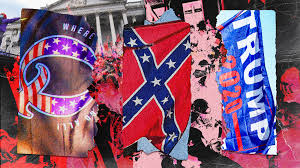
- “Good Old Boys” are more patriotic:
- Sure, if you watched the insurrection at the Capital on January 6, 2021, you could see ample evidence of their patriotism. That is if you could see over their swastikas and Confederate flags.
- “Good Old Boys” are more “God fearin”:
- Yes, years ago in the Deep South, God created Man and said “Let him have Black men for slaves. Let the Black men go forth and pick cotton for their plantation masters to get rich. Let the White masters have Black women for rape and mistresses. Let the Black women bare many children to work the fields and make more money for their White slave owners.” And God said all this knowing that the “Good Old Boys” would obey his words and life would be good – at least for the “Good Old Boys.”
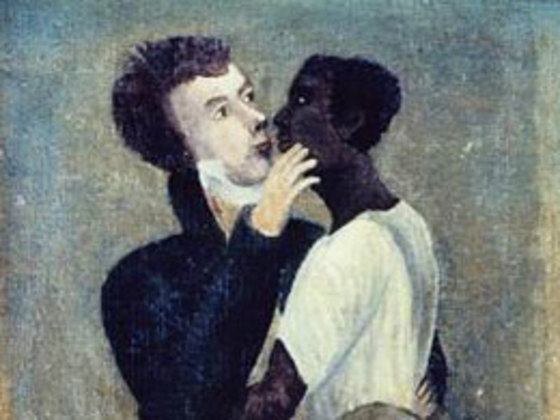
So, the next time you hear one of these “Good Old Boy” country songs, think twice before you start singing along. Evil can not only be banal it can also be surreptitious and stereotyped.
PS:
Jason Aldean’s hit song “Try that in a Small Town” is just another example of what some have called the Culture Wars. This is from Slate:
“Is Jason Aldean’s “Try That in a Small Town” a song, or a Fox News polemic set to music? Right up front, let me say that the answer to why this song is No. 1 is the media headlines more than the melodic hooks. (Which, to be fair, are considerable—Aldean’s chorus can really overtake your frontal lobe.) It’s No. 1 thanks to a form of consumer data activism that is becoming ever more commonplace on the charts in the 2020s. Just in the last fortnight—which is when everything about this song blew up—much has been written, tweeted, and ranted about Aldean’s piece of musical agitprop, all of which has fueled digital consumption and hence the song’s inevitable Billboard explosion.”https://youtu.be/b1_RKu-ESCY


 Aging Capriciously