I Am an Inconsistent Man

inconsistencyOver time, I have noticed that the most popular post I have on my blog site is my Home page “Who is Dr. John Persico Jr.?”  I realize that most readers want to know my credentials to see if anything I am going to say has any credibility.  Am I someone you can trust?  Can you depend upon my words or my facts?  Am I just another wannabe Guru so full of my own opinions that I have no room for other points of view?

Upon re-thinking my Home page, I realized that it really does not do justice to describe who I am.  It does not answer the questions that I raised above.  In fact, if you take it at face value, it could be very dangerous for you.  It could lead you to paradoxes and quandaries which are unsettling.  It might lead you “circulus in probando” down a path that flows around until it comes right back to where it started.

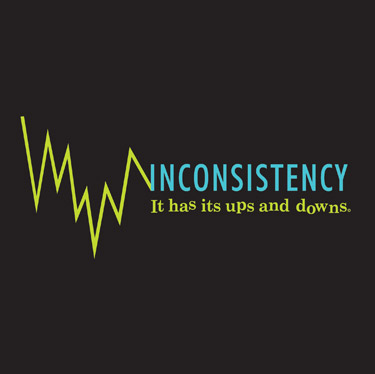
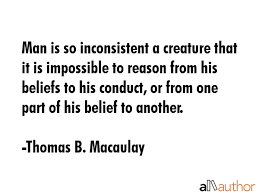
A discussion with a friend the other day led me to realize that I am a very inconsistent man.  Sometimes I say one thing, but then I change my mind.  I am a very erratic person.  Sometimes, I am very logical and at other times I am very illogical.  Many of the ideas competing in my mind are incompatible.  In fact, not only are they incompatible, but they are genuinely irreconcilable.  This creates an uncertain and unpredictable me.  If you are looking for consistency, if you want certainty in an uncertain world, I do not have much of it to give to you.  I am capricious and arbitrary.

images rrr

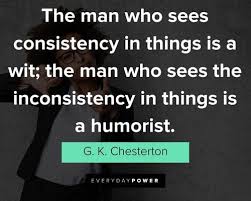
I am changeable and often at odds with my own beliefs.  My life is discordant.  Many of my friends would say discrepant.  I subscribe to the motto that, “A foolish consistency is the hobgoblin of little minds.”  I prefer the incongruous and incoherent.  The fickle and dissonant are the music of my life.  Boring is living with certainty and sameness.  God, please surround me with temperamental unstable mercurial and out of step people.  James Bond said that “Boredom” is the worst curse of all.  What could be more boring than a life whose patterns show no variability?  Only sameness.  All White motifs.  No mosaics struggling with each other for our attention.

images rrrr

I have a friend who wants to be called at definite hours and with a pattern of hours that are predictable.  “Let’s set a time to talk each day.”  “No, No, I am a serendipitous caller.  Let fortuosity guide our conversations.”    The unforeseen and the unpredictable make life more interesting.  Do we want to be rats on a treadmill?  Sometimes, I walk by a health club and ten people are all sitting on exercycles facing the window and pedaling furiously to go nowhere.  In my mind, I make faces at them and tell them, “Get a real bike and go ride in the traffic.”   

It is these same people who say “I don’t like fish.  They taste too fishy.”  I try not to reply “Do you also dislike mollusks, cephalopods and crustaceans or is it just members of the  Gadidae family that you don’t like?”

imagesThose who march to the proverbial beat of a different drummer live with risk, but they also are not bored.  We only experience life when we are open to the unknown and the unpredictable.  Walk through a cemetery at midnight.  Take a train or bus to someplace you have never been before.  Read a book in a new genre.  Watch a movie that is offbeat.  Try some foods that you think you might not like.  Meet some new people.  Embrace the strange and esoteric.  Life is not a cherry; it is a seething caldron of uncertainty and innumerable possibilities.  You will never truly live if you simply stand at the edge of the caldron and wait for it to stop bubbling.

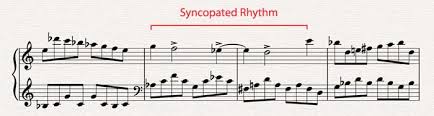
God save me from consistency, constancy, periodicity, routine, steadiness, regularity, and invariability.  Give me a life with syncopation.

download


The Persico’s Holiday and Christmas Letter for 2023

Happy Holidays to All our Friends, Relatives and Everyone Else as Well. 

John: I bring you a gift this year.  Whether you are celebrating Hanukkah, Kwanzaa, or Christmas, it is the season of giving.  It is the season of happiness, joy, hope, peace, and love.  I wish these were my gifts to you, but that would be impossible.  I don’t have the ability to do that.  However, if I am not being too presumptuous, there is a secret I can share with you.  It is not a really a secret but a path to everything that you could wish for.  There are many paths in this world that will bring you to what you want but they are not always easy to follow.  Some will tell you that “loving everyone” is the path to happiness and peace.  A great idea, but in truth one that I have found nearly impossible to follow.

Some will tell you that gratitude is the path to contentment and happiness.  I have found this path easier to follow but not always appropriate.  Some things I am never going to be grateful for.  Then I realized that much of my unhappiness comes from “disliking.”  I may dislike some people, some places, or some things.  For example, I dislike ham and freeways.  I don’t think that I will ever love either one, but I don’t have to dislike them.  I can choose to simply accept a certain neutrality towards them.  I will call this the path of neutrality.  A path characterized by neither liking nor disliking something or someone.  When I stop disliking something, I have given myself power over my own life by taking control of the choices I make.  When I dislike something, I am controlled by what or whom I dislike.  Instead, we can choose a path of neutrality.  In 2024, try taking a trip down the path of neutrality.  If I make any progress, we may meet each other on the path.  As Porky Pig said, “That’s all for now folks.” Time to hear from Karen.

Karen: Merry Christmas, Happy Holidays, and a Happy New Year to all!

2023 has been an interesting year for us.  In February, I made a trip to Minnesota to visit my daughters Juli, Susan, and Megan with a side trip to Cornucopia, WI to stay a few days with Kevin.  We had fun together with many late-night talks and watching the deer on Kevin’s property.  However, I had asked for one blizzard while I was there, and no one provided that for me, In fact, it was warm with melting snow much of the time.  The rest of the winter was the snowiest on record.  Hopefully my upcoming trip in January this year will provide at least one good snowstorm.  On my return from Wisconsin, John and I finally caught Covid for the first time.  Not pleasant, but no lingering effects,

In June, we started off for Wisconsin in the RV and had a nice visit in Albert Lea with my cousin Jane and husband Bill.  We had made reservations for the summer in an RV park not too far from Frederic for three months—I called it the Great Experiment.  Could we really live together in a 26-foot RV with all our stuff?  The answer was “not too well”.  Mosquitos and wood ticks attacked us whenever we were outside.  John had too little space to do his exercises, and the kitchen table was the only place for the laptop.  My solution was to practice my instruments and work on my quilting in the screen house with a nice fan while John stayed inside with the air conditioning on frigid.  We took one trip in August to visit my cousin Gretchen and husband Robert in Door County on Washington island.  We had a good three days together, reminiscing and listening to Robert’s stories about his life in South Africa.  We left for our AZ home at the beginning of September.

We came back home to AZ for a few weeks, then left for a trip to South Africa.  It was a wonderful trip, and it was made more meaningful after Robert’s story sharing.  As a person who lived through the apartheid era, he has written several books about his experiences growing up in South Africa.  We stayed in Cape Town for a week.  In and around Cape town we visited some historic towns, wineries, museums, flower gardens, churches, and the famous Table Mountain.  One day we took a boat trip out to see some penguins and other sea birds.  We then flew to Johannesburg where we toured Soweto, the Apartheid Museum, Nelson Mandela’s home and several other historic areas.  Next by car we went to a Scottish resort.  We spent a day or so just relaxing.  It was then on to Kampala Game Reserve to spend three days on morning and evening “game drives” to find various African wildlife.  We have seen most of the same species in zoos, but it is nothing like seeing them up close in the wild.

Friends have asked us what we liked most about South Africa.  The scenery was wonderful.  The food was fantastic.  The history was fascinating albeit very sad.  But the best part of the trip was the South African people.  They were warm, friendly, and hospitable.  They were the icing on the trip.  No where did we find anybody who was not helpful and willing to go out of their way to make us feel at home.

That is the END.  At least for this year.     Attached are some pictures from our South Africa Trip.  

Wishing you good health, peace, love, and joy for 2024.

Karen and John

Why Do I Write?

downloadOver the years, I have noticed that I have about as many people each week who view my “Who is Dr. John Persico Jr?” profile as read my blog.  I suppose it is only natural that people would want to know something about me before believing anything I say.  If only everyone did the same thing with the politicians that they vote for.  But that is another issue.

images

I left Arizona about three weeks ago and have not posted anything since then.  We took our RV back to Wisconsin for the summer to visit some friends and relatives.  My previous record for living in this 26-foot RV trailer was 7 days.  I am now going on 16 days and have not lost my mind yet.  I have spent more time at the local hardware store looking for things that we either needed or thought we had brought with us than I have spent sleeping.  I found out over time that homes were money pits, I am beginning to wonder if the same is true of RV homes.  I have ninety more days to go to find out.

why-write-joan-didion-quote-writers-block-writing-habit

Anyway, we have most things straightened out and I started feeling the need to write something.   It was like the need to exercise; I NEED to write.  Something in my life was missing.  Dozens of topics went through my head.  Spinning around like a ball on a roulette wheel, which topic would my mind stop at.  I must write something and soon.  Spinning, spinning, spinning, it finally stopped at “Why Do I Write?”  I suppose I feel somewhat like Hank Williams Jr. sang in his famous song, “Family Tradition”:

They get on me and want to know,

Hank, why do you drink?

Hank, why do you roll smoke?

Why must you live out the songs that you wrote?

Over and over

Everybody makes my prediction,

So, if I get stoned, I’m just carrying on,

An old family tradition.

I can’t say that I am carrying on a family tradition.  More like I am starting one.  But I have done and still do my share of smoking, drinking, and carrying on.  I certainly try to live out the blogs that I wrote.  But as I started trying to answer the question as to why I write, I came up with the following reasons.  Some realistic, some not.  Some mundane, some grandiose.  Some memorable, some not. Some inspiring, some disappointing.  Like’em or leave’em, here are my reasons for posting nearly 700 blogs over the past 13 years or so.

  • To influence
  • To persuade
  • To change ideas
  • To challenge ideas
  • To share ideas
  • To titillate
  • To shock
  • To inform
  • To remember
  • To celebrate
  • To bless
  • To find peace
  • To find happiness
  • To share joy
  • To share pain
  • To share sorrow
  • To organize
  • To rally
  • To tell a story
  • To have fun
  • To be creative
  • To act as a catharsis
  • To become immortal
  • To become famous
  • To receive honorable mention someday
  • To leave a legacy
  • To leave a history
  • To set some records straight
  • To support causes that I believe in
  • To honor those who I think deserve it
  • To skewer those who I think deserve it
  • To make a difference
  • To find out who I am
  • To help others remember who I was

why-write

Well, there you have it friends.  My reasons for writing.  Many of you who read my blog are wonderful writers.  If you leave a comment, tell me why you write.  I suspect some of you will have much better reasons for writing than I have.  Notice, money was not one of my reasons.  Not that money is not important to me, but I would rather be known as a great writer than a billionaire.  Both titles have to date eluded me and probably will continue to do so.

images (1)


What Writers Can Learn from Music

I have always liked to use some musical links in my writing. Many of my writings deal with songs that have inspired me over the years. (Where Have All My Young Friends Gone?) A few years ago, I started wondering what I could learn from music that might infuse my writing with more elegance and passion. I tried my hand at a “musical composition.” I am not sure that it came out very well but if you are interested, you can read my piece at: ON WRITING, MUSIC, CHOREOGRAPHY, THE SEASONS AND LOVE.

Recently, in our writing class, I gave my students the assignment to come up with a 100 word writing piece that used some elements of music in their writing or that writes about the use of music in writing. It was an odd assignment made more difficult because my instructions were pretty vague. The following week students brought in their writings and shared them in class.

The discussion that accompanied our readings was very helpful. Wilma, a writer in the class, found a good article that illustrated very well what I had been trying to say and do in terms of using music to provide creativity or at least another perspective to our writing. I am adding links to Wilma’s article which was in Medium and another that I found while perusing Medium.

The first article is by Mark Benis and is titled: “Is Writing Stories so Different from Writing Music?”

View at Medium.com

The second article is by David W. Berner and is titled: “Writing is Like Music.”

I hope you will find these articles interesting and that they will perhaps inspire some use of these ideas in your own writings.

ON WRITING, MUSIC, CHOREOGRAPHY, THE SEASONS AND LOVE

Allegro

What does writing have to do with making love? Can the changing of the seasons really be compared to an overture? What if on some primal level, we all live by an unseen rhythmic law? This law says that there is fundamentally no difference between making love and writing or between a brilliant piece of choreography and the changing seasons. Does the rhythm of the universe expect a form of symmetry to all of life? A regulated succession of strong and weak elements or of opposite and contrasting conditions becomes the master of all we do. The seasons come and go. The music ebbs and flows. Our love is gentle, passionate, sublime and tired. Mornings, afternoons, evenings and nights fuse with the spring and summer and fall and winter of our lives. The harsh gales of November echo in the overtures of Stravinsky and Beethoven. All things are one say the mystics. Is my writing one with all things? Can I form, norm, storm and perform even with mere words.

Adagio

Far be it for me to confuse philosophy with art. Greater men than I have said that there is a unity to life. We travel down our different paths often blind to the journeys of others who walk side by side with us: This one a carpenter, this one a computer scientist, this one a teacher, this one an artist and this one a hero. If I were a rich man, lord who made the lion and the lamb, would it really spoil your cosmic plan if I were a wealthy man? We are all dust in the wind but our rhythms echo down the halls of time. The most unforgettable and amazing repetitions will resonate as long as humans walk the earth. Coded in the numerous ways we have of capturing the rhythm of our lives: Some dynamic, some peaceful, some violent and some sad. We write our lyrics, pen our verses, create our stanzas and design our choreography all guided by the unseen law of rhythm. Now we are hard, then we are soft. Now we roar and now we snore.

Scherzo

Love is kind, love is considerate, love is not selfish. The waltz was a creation of times when love was more restrained. This torrent of mine was supplanted, extending my being, your challenge. The Tango alternates patterns of space and closeness with syncopated rhythms of violence and passion. Love me tender, love me sweet, never let me go. Rock and Roll ushered in a wild abandonment of morality in the face of conspicuous sexuality. The rhythm of music often exhibits striking harmonies with the rhythm of our love lives. Can I be soft and gentle like a warm breeze but also wild and unrestrained like in the movies? What if I made love to the William Tell overture or would Shakira’s lyrics work better:

Baby I would climb the Andes solely
To count the freckles on your body
Never could imagine there were only
Too many ways to love somebody

Is it enough to alternate patterns of tenderness with patterns of inhibition? Shall I open with an allegro, then move into an adagio, followed by a scherzo and conclude with a rondo? Who would expect love to end without a crescendo? Should my love making follow the classical style or should it be more like a jazz piece?

Rondo

Whether goes my writing. I have written this in four parts to reflect my cosmic view of the rhythm of life. We form and norm and storm and then perform. Spring is the opening that brings fresh growth to our world before the bloom of summer. Summer brings the maturity and ripeness of life. Fall brings the storms and winds that signify our frailty and insignificance to the universe. Winter ends our symphony with the closure and solace that our work is done and our day is over. Our life, our work, our art, our thoughts all finished but with a hope to be reborn perhaps by someone who sees a need to continue the rhythms that we have started. Not really finality, but continuations that started before us, and will continue long after our memorials are put up. Perhaps, my headstone will have four verses or stanzas or paragraphs or perhaps like the newest greeting cards, you will be able to press a button on my tombstone and you will see a picture of me singing and dancing to a four part harmony.

Time For Questions:  

Does music teach you anything about writing?  Does music speak to you? Can writing be like a symphony?  How do you hear music?  Does it speak to you like a good poem or a good verse? What is your favorite kind of writing?  Do you ever think that the writing you enjoy could be like music?  What would it take to transform the music in your life into writing or the writing in your life into music?


Life is just beginning

What’s So Funny Today?

616uoKbsUVL

On Tuesday, my writing class suggested that for the next class we should all write something funny.  I left the class and started to rack my brains for something funny to write about.  I even thought about rewriting one of my other blogs.  However, I have a goal to come up with at least one original writing each week.  The thought of rewriting an earlier blog seemed like cheating.  After a fruitless mental search, I was willing to sacrifice creativity for humor.  But not one of my 900 or so blogs struck me as funny and something that I could rewrite.  I would have to come up with a new idea.

41Ug6TO4iwLI remembered from many years ago, a leader at a support group that I belonged to advised me that I should have more humor in my life.  I asked him “Do you know any good books about getting more humor in one’s life.”  He laughed, “You can’t read about humor, you have to do it.”  The thought has often struck me over the years that it is one thing to read about things, it is another thing to do them.  Could it be, I am just a writer and not a doer?  Was it still possible that I needed more humor in my life.  Maybe a clown I am not?

I brought the subject up to my spouse Karen and she reassured me that I am often very funny.  I know that I can be very sarcastic.  Like the time that I told the woman sitting on the plane next to me that maybe the human race was going to be extinct soon like many other species.  Why did she think that we had any superior reason to inhabit the earth when many other species have already perished?  “Climate change” I told her “Proves that we cannot take care of the earth.”  She gave me a truly angry look and went back to reading her book.  I suppose she was reading some tome about “How we can save our planet in nine days or less.”  I doubt that she thought I was funny.

Over the last four years, I have laughed often about Donald Trump, Republicans, Trumpists, Trump sycophants, climate change deniers, power hungry politicians, greedy lawyers and lying real estate developers.  My top three lying groups include the aforementioned individuals.  Can you guess which are my top three?  My laughing at these groups has come from my incredulity at the things they say and do.  I could never have thought that there was so much stupidity in the human race.  Is stupidity funny?  Does laughing at stupidity give one a sense of humor or a sense of sadness?

A few hours after my writing class this week, I was stricken with some type of intestinal gas attack.  It was very painful and not very funny.  I did find some humor in this attack which I would like to share with you.  I think this might be a genuine bit of humor, but I want to know if you find it funny.  If so, I will consider this writing effort a success.  It might prove that I can find humor in my life even if it be in strange places.

gallbladder-painA year ago, (June 2020) almost to the day, I had a sharp pain in my chest.  I fell to the floor and passed out.  I know that this is not very funny but stay with me and I will get to the funny part.  I promise.  Karen thought I was having a heart attack and she called 911.  They came, attached an IV to my arm and I had my first ever ambulance ride to the emergency clinic in St. Croix Falls.  After a blood test, an Ultra Sound, an X-Ray, and a CAT Scan, they decided that I had a Gall Bladder problem.  Three hours later, I was sent home with an appointment for the next day back at the hospital to see a doctor.

I arrived for my appointment and was met by a doctor who told me that I needed to have my Gall Bladder removed.  Now, I am not against surgery, but I have often advised and written on the perils of rushing surgery.  I have spoken my thoughts many times about the hasty and frequently unneeded surgeries that the medical profession pushes on a naïve public.  Thus, I argued about the need for surgery.

My point was that they did not know what caused the Gall Bladder attack.  They had no evidence (since the Gall Bladder was too swollen to see anything) if I still had any potentially dangerous Gall Stones waiting to attack me again.  I suggested a second Ultra Sound in a few weeks when the swelling had subsided.  I was curtly advised by the doctor that they could not do another one and that either I got the surgery or not.  The surgeon was available the next day.  I decided not and left the room.

Subsequently, I was advised by friend and foe alike that Gall Bladder surgery is a breeze and I had nothing to fear.  “You don’t really need your Gall Bladder.”  Disdaining all this well-intentioned advice, I stuck with my decision to keep my Gall Bladder.  The coming year went by event free except for the Covid 19 Epidemic.  Nothing funny about that.

As I mentioned earlier, just after my weekly writers’ class, I started to get gas in my chest and a pain in my lower right side.  I sometimes get gas pains after eating but I had not eaten anything in several hours and the pain was not in my abdomen but more in my chest.  It was just under my right ribs exactly where the Gall Bladder pain was one year ago.  It continued to increase.

31777172484_de8ed635a6_b

By 11:30 PM, it was apparent that I was not going to be able to sleep so following some advice I read on the Internet, I grabbed a hot ginger tea and went for a walk.  I was accompanied by Karen who wanted to make sure she was around if I passed out again.  Going for a walk in Frederic Wisconsin at Midnight was very surreal.  We met only one other person.  It was a local police officer accompanied by a canine companion.  The dog acted as though we had just robbed the First National Bank of Frederic.  The police officer pulled him closer and announced that his dog was often suspicious of strangers.  I suppose an old lady and old guy out at midnight would constitute “suspicious” strangers.  We continued our walk.

I felt somewhat better by the time we got back home.  I laid down and the pain started to come back.  In a short while, it hurt too much for me to find any sleep.  I sat up and tried to read but could not concentrate.  I tried to think of something funny but still had no luck.  Funny would not come.  Eventually, I managed a long night of quite restless sleep.  When I woke the next morning, we called the local clinic for an appointment.  They gave me an appointment at 11 AM that same morning at the Frederic Clinic in town.

frederickI saw a Physician Assistant at the clinic.  He was polite and thoughtful.  He gave me some rudimentary tests.  A little prodding and touching here and there.  He then advised me to go to the Emergency Department at the St. Croix Medical Center.  He said the Frederic Clinic was not equipped to do the more complicated tests that I would need and that I should get these tests done immediately..  He suggested that it might be time to get rid of the unneeded and problematic Gall Bladder.  I was quite ready to agree.  I had managed to keep my Gall Bladder for almost 75 years.  It had a good run, and perhaps it was time for it to retire.

1519799057144

Karen and I drove down to the St. Croix Medical Center, parked our truck, and walked into the Emergency Department.  They greeted us very warmly and after the usual administrative stuff and a brief wait we were ushered into a patient room.  A friendly doctor came into the room.  A few brief introductions and then he listened as I informed him about my past history with this Gall Bladder.  I conceded that I was ready to have my Gall Bladder removed. They could get the 37,000 dollars that Medicare reimburses for such a procedure.

He nodded wisely and then described the tests that he wanted to have done.  These included several blood tests and an Ultra-Sound.  Unlike the previous doctor from a year ago, he did not seem anxious to remove my Gall Bladder.  He concluded with, “Let’s wait and see what the tests show.”

57171431-cartoon-wise-old-doctor-gestures-and-emotions-After a short wait, I was brought by wheel chair into another room.  I laid down on yet another bed.  A new nurse (or was it a technician) came into the room.  I assumed that she was going to perform the test.  Someone else brought the apparatus for conducting the Ultra Sound into the room and left.  The nurse or Ultra-Sound Technician started to poke and prod me with a rod connected to the machine.  This increased my burping considerably and went on for longer than I had remembered a year ago.  I guess they wanted to be really sure this time that I needed my Gall Bladder removed.  I was resigned to this eventuality.

After the test was over, I rested in bed for about ten minutes before the friendly doctor I had seen earlier came back to see me.  He had a big smile on his face.  I figured for sure that he was thinking about his share of the 37,000-dollar operation that he was about to perform.  As they say at comedy shows, “Give it up for the Doctor.”  Or as my mom used to say, “Every dog has its day.”

“Well,” he started “your Gall Bladder looks great.  No evidence of swelling or gall stones.”  I could not believe my ears.  Was I hearing him correctly?  Something stopped me from asking if he was kidding or trying to be funny.  He looked profoundly serious.  Could they have made a mistake?  Did they really want me to keep this Gall Bladder for another 75 years?  What about the 37,000 dollars?  No surgery?  “Nope, just go home and take some Maalox and you will be fine.”  He then apprised me of the fact that I had some fat on my liver and that I should watch my fat intake more.  I wondered if he had any advice on how to get rid of a fatty liver.  How about surgery, I was tempted to ask but decided against it.

Do you see the humor here or the funny part?  It strikes me as exceedingly funny.  First they want to take my Gall Bladder and I refuse to give it.  A year later and I want them to take my Gall Bladder and they don’t want to take it.  Should I call it the “Miracle of Peake Street and the Cured Gall Bladder?”  Would it start my qualification as a saint in the Catholic Church?  Old guy goes from faulty useless Gall Bladder to healthy like new better than ever Gall Bladder?  I think some of the official Catholic saints had less going for them than this.

Well, as Porky Pig said “Th-th-th-that’s all folks!”

tenor

The Seven Greatest Appreciations of Life: Literature

stock-vector-literature-hand-drawn-vector-illustration-with-doodle-icons-images-and-objects-arranged-in-a-circle-477961258

I am definitely biased when it comes to literature.  Without reading, books, magazines, articles, stories, plays, parables, and fables, I do not know what my life would be.  There are few things that enrich life more than the written word.  Movies, plays, and videos would be nothing if there were no words to go along with them.  Even sports and athletic events are heavily dependent on the written word.  Talk show hosts, TV actors, comedians and many other performers hire dozens of writers to script plots and routines that are the life blood of the entertainment industry.

I woke up this morning thinking how to convey the value of literature.  There is so much that I could say.  There is so much that needs to be said.  The question is how best to do justice to the world of literature and to keep this blog from becoming a book.  The thought came into my mind, that literature is everything to me from A to Z.  This gave me the idea to use the alphabet as a device to convey the importance literature has had for me.  But more importantly I want to inspire you as I have been inspired by the many books that I have read over the years.  I want to briefly touch on how they have enriched my life.

For each letter of the alphabet, I will try to note a few authors or books that I have read and what they have meant to me.  Some of my authors will be fiction writers, some poets, some non-fiction writers but each has left me with a piece of the puzzle.  The puzzle I refer to involves the existential quest to find the meaning of life.  I suppose that I may never find the meaning, but literature has helped create many of the puzzle pieces for me.  I am still struggling to put them all together.  The process is more fun than getting the finished puzzle.

A –

Aesop, Alistair MacLean, Agatha Christie, and August Wilson.  A few of the many authors whose writings have enriched my life.  From drama to morals to spies, I am sure that everyone has been exposed to these writers, perhaps without realizing it.   Numerous shows and movies have been based on their literature.  A is a good place to mention the following question, “What is the difference between someone who does not know how to read and someone who knows how but does not read?”

61aJkCcMlhL._SL500_Several of my stories have been influenced by Aesop’s stories.  When growing up, I loved reading stories of foxes, rabbits, scorpions, and other animals that Aesop used in his writing.  His parables and morals still guide my life in a myriad of ways.  I watched a few of August Wilson’s plays that were performed at Penumbra Theater in St. Paul, MN.  It was my introduction to the world of African American literature which was sorely missing in our education system.  For a good escape into the world of murder, drama and spies, MacLean and Christie cannot be beat. On countless rainy and often sunny days as well, I have curled up and said, “To hell with the world.  I am dropping out for a few hours into a world of fantasy.”

B –

I could speak of many authors here but nothing in literature has spawned more stories or ethics or plays or even religions than the Bible.   If you peruse my blogs, you will find at least a dozen stories that I have written that have been based on biblical sources.  There are many authors involved in the Bible.  The Bible notes for different books either who was the author or who they think the author might have been.  In many cases, the authors are unknown.

39891-HolyBible-Bible-read-ThinkstockPhotos-585291064.1200w.tn

Is the Bible fiction or non-fiction is a question that would create great dissention depending on who you asked?  Many would say that the Bible was the literal truth given by God to prophets to pass down to humanity.  Others would say, it was a series of stories that were embellished in the telling.   Neither of these issues ever bothered me.  The point is that the Bible is one of the greatest books in history, if not the greatest.  It has history, drama, murder, sex, morals, and good advice all wrapped up in one binder.  Read it and you will see why some people say that it is the only book they read.

C –

392278aCamus, Eldredge Cleaver, and Cervantes could not be more different.  Camus the existentialist.  Cleaver the revolutionary.  Cervantes the dreamer.  What puzzle pieces they inspired in me.  Hard to find out how they fit together but in the grand scheme of things, I would not leave any of them out.  Cleaver wrote, “Soul on Ice.”  One of the most inspiring prison writings ever written.

“From my prison cell, I have watched America slowly coming awake. It is not fully awake yet, but there is soul in the air and everywhere I see beauty…. I was very familiar with the Eldridge who came to prison, but that Eldridge no longer exists.  And the one I am now is in some ways a stranger to me.”  — Eldridge Cleaver, Soul on Ice, 1968

Camus helped me to understand Existentialism from an applied perspective.  A great deal more helpful than a strictly theoretical understanding.  Cervantes created a character that I would like to be.  A man forever hopeful and willing to battle the world regardless of the forces arrayed against him.  A man willing to “dream the impossible dream.”   If only, I can retain Quixote’s optimism until the day I am no more.

D –

Dostoevsky, Dickens, and W. E. Deming.  I knew Dr. Deming personally.  I had dinner with Dr. Deming and took several clients to visit him at his home in Washington, D.C.  I helped out at several of his five-day seminars.  My first job after completing my Ph.D. degree was attained by reading his book, “Quality, Productivity and Competitive Position.”  A tour de force that would revolutionize American business.  A book that told me that 95 percent of what I learned in graduate school was wrong.  I learned more from Dr. Deming than I learned from all the great professors who wrote so many of the textbooks that I had been studying for 5 years.  Dr. Deming told me I wasted my time.  I was loath to accept his finding but gradually came to realize that he was right.  Eventually, the blinders were lifted from my eyes and I could see the truth of American business.  The truth that Dr. Deming had tried to share with the world.

dc4253eb835dea93048762c544e7375f

I cannot say that I have read all of Dostoevsky’s or Dicken’s works.  What I can say is that few writers I have read have been more articulate about the human condition than these two authors.  They are natural born psychologists.  Their insights into people are so profound that it seems a mystery to me that anyone could as accurately portray humanity as they have done in their writings.  It is not really stories that they tell so much as creating a picture of the inner souls of their characters.  It is easy to describe the outward characteristics of a character but much more difficult to portray their inner characters.  Both Dickens and Dostoevsky portray humans at their best and at their worst.  Reading either of them is better than reading a textbook on human psychology or taking a Psych 101 class.

E –

Jacques Ellul.  Jacques wrote the “Technological Society.”  I read this book in 1982 when I started graduate school.  There are many books that describe the “what” of technology.  Books that talk about computers, software, hardware, and the impact that they will have on society.  The central premise of Jacque’s book is this:  “In our technological society, technique is the totality of methods rationally arrived at and having absolute efficiency (for a given stage of development) in every field of human activity.”  Not exactly what we read about or think about when we hear the word technology.

But technology is technique.  It is not simply something electrical or digital.  Technology is a philosophy of life.  Ellul showed me the deeper meaning and relationship between life and gadgets.  Society is influenced by technology in more ways than I could ever have imagined.  Understanding technology has given me the ability to appreciate both its pro’s and con’s.  There is always a downside as well as an upside to new gadgets, particularly things like social media, the internet, and computers.  Each of these technologies have impacted our lives both for good and bad.

F –

BondAnatole France and Ian Fleming.  I discovered Fleming’s books on James Bond, after I saw the hit movie “From Russia with Love.”  I subsequently read every one of Fleming’s books and have seen every movie in the Bond franchise.  I loved the character so much I continued to read “Bond” books even when they were written by other approved writers.  I was attracted to the character who was everything I wanted to be.  Handsome, rugged, dashing, brave, a man’s man and a woman’s man as well.  I will never forget the line from one of Fleming’s books, “Boredom is the worst curse of all.”  Eventually, I outgrew James Bond but there will always be a part of me that wonders what it would be like to live in his world.

France on the other hand gave me a different view of the world.  I read several of his books during the early seventies when I was in my socialist learning stage.  I identified with many of his ideas.  France was awarded the Nobel Prize in 1921.  His books were often both ironic and satirical.  He approached subjects steeped in religion with a perspective that might have seemed atheistic.  He challenged us to think of God and Satan and their relationship together.  I think many of my blogs have been influenced by France.  Particularly my blog titled, “A Conversation between Satan and God.

G –

Grendel-2007-Beowulf-movie-Crispin-Glover-cJ. K. Galbraith, Goethe, and John Gardner. Perhaps my favorite story as well as my favorite opera are based on a man selling his soul to the devil in return for some privilege. Goethe wrote the story and called it Faust after a learned man who wanted more than knowledge.  Gounod did the opera based on Goethe’s story.  Many other stories have been based on the idea of a bargain between Satan and humans.  One other that I have always liked was “The Devil and Daniel Webster.”  It told the story of a New Hampshire farmer who sold his soul to the Devil in exchange for success.  When the devil came to collect his due, the farmer called on Daniel Webster to defend him.  This story ended happily as opposed to Goethe’s story which has a tragic ending.

Like many people, I would like to be more successful, more famous, and more admired.  Would I sell my soul to the Devil?  There have been times in my life when I would gladly have sold it.  I am at a point now where fame and fortune do not mean as much.  If I have a soul, I will depart this world with it intact.

J. K. Galbraith was a noted economist and Harvard Professor.  In his book, “The New Industrial State,” he supported much of what Dr. Deming had to say about American business.  I was particularly struck by Galbraith’s denunciation of MBA programs.  Deming also detested these programs and argued that they were destructive for American business.  Galbraith has been lionized and villainized.  Anyone with the audacity to challenge the inherent greediness of Capitalism cannot expect to win friends.  My thinking on Capitalism reflects what I have learned from both Deming and Galbraith.

John Gardner wrote several of my favorite stories.  He was a professor of literature well known for his writing and critiques.  Just when I thought I could learn everything from philosophy, I find a writer who mercilessly skewers philosophy with a character based on Socrates.  Agathon is a wise cynic who knows all about the world but nothing about life.  Gardner also wrote “Grendel” which was the Beowulf story told from the perspective of the beast.  Gardner had a unique way of turning things inside out and getting you to see an entirely different perspective.  His books often dealt with issues of morality, freedom, and justice.  From Gardner I leaned that life is seldom simple and when we look at the world it becomes complex and contradictory. 

H –

Chris Hedges.  Hedges wrote the “Empire of Illusion.”  This book portrays the American Dream as an illusion.  Hedges disparages the idea that America is exceptional and that we live in the land of the free and the home of the brave.  The book was published in 2010 and clearly outlines the descent of America into Trumpism.  On its webpage, Amazon summarizes the main theme of Hedge’s book as:

“A prescient book that forecast the culture that gave rise to Trump — a society beholden to empty spectacle and obsession with image at the expense of reality, reason, and truth.”

No society can make progress if illusions and fantasies guide its policies rather than truth and knowledge.  America today seems to be sorely lacking in truth or knowledge.  Morris Berman another critic of American culture gave up on changing anything in this country and moved to Mexico and off the grid.  I question every day pre-Trump and post-Trump whether America is on an unstoppable downhill slide and if there is anything I can do about it.  Will I be able to help make a difference and steer this country towards the dreams and values that it was founded on?   I wrote sixteen Anti-Trump articles dealing with the menace and danger that he held for America.  A president who represented everything that was bad for the future of our country.  He lost the election but how can anyone forget that 75 million Americans voted for him.

I –

0b243a477fd3257de4b036b2c7e4e52bIvan Illich and Washington Irving.  When I was in my undergraduate program in education which I started in 1971, I decided to read as much of the counter-education literature that I could find.  My most memorable readings were “Pedagogy of the Oppressed” by P. Freire, “How Children Fail” by John Holt and “Deschooling Society” by Illich.   I have read many more books on education since the 70’s but it seems to me that nothing new has been added to the schooling critique leveled by these educators.  Schools are still failing students and society.  Educators are like fish.  They live up to the Chinese saying that “The fish are the last ones to see the water.”  I have written numerous critiques of the education system in America as have many other educators, but nothing changes.  The solutions to the problems that ail our education system are rooted in a theory of education that was appropriate 100 years ago but is now obsolete.

School prepares people for the alienating institutionalization of life, by teaching the necessity of being taught. Once this lesson is learned, people lose their incentive to develop independently; they no longer find it attractive to relate to each other, and the surprises that life offers when it is not predetermined by institutional definition are closed.” ― Ivan Illich,

Washington Irving wrote my favorite ghost story.  The “Legend of Sleepy Hollow” still scares and thrills anyone reading it.  Sit outside in the fall just before Halloween on a dark night in the woods and read this story.  Keep looking over your shoulder in case the Headless Horseman is out for his night ride.  Perhaps you will see Ichabod Crane running pell-mell through the woods to escape the Horseman.  This is only one of many great stories that Irving wrote.  I learned to brave the night woods knowing that I was a friend of Irving.

J –

The-12-Personality-Archetypes-Which-One-Dominates-YouCarl Jung was one of the many theorists I studied at the University of Wisconsin for my M.S. degree in Counseling.  Carl Jung was one of the acolytes of Freud along with Alfred Adler, Wilhelm Reich, Otto Rank, and his daughter Anna Freud.  Each follower eventually broke with Freud and founded their own school of psychology.  Jung started the most esoteric and enigmatic of these schools.  His philosophy or methods are called Jungian Analysis and appeal to many people due to his emphasis on the interpretation of dreams, archetypes, and symbolic behaviors.  Jung gave me an appreciation for the elements in life that we might simply write off as useless or meaningless.  To undergo a dream interpretation can be a very life changing experience.  I discovered that there is no single path to self-awareness and psychological health.  Different schools of therapy appeal to different people and each may be effective.

K –

41mABQ-2vlL._SX329_BO1,204,203,200_John F. Kennedy, Ezra Klein, and Daniel Kahneman.   What do a President, Journalist and Nobel Prize winner in Economics have in Common?  I learned from Kennedy’s “Profiles in Courage” about what integrity really means.  Kennedy may not have written much of this book but the lives of the people he shares puts an exclamation point on the values that JFK had for this country.

I read Kahneman and Tversky’s “Judgement Under Uncertainty” in 1982 when I was in graduate school for my Ph.D. degree.  Years later they would win the Nobel Prize for Economics after having totally changed the way we think about and understand human economic behavior.  Much of the theory I was exposed to in graduate school was proven wrong by the research that Kahneman and Tversky conducted.  I learned a new way to think about economics and organizational behavior from this book.

Klein’s book “Why We’re Polarized” takes a more nuanced and data driven look at the gap that is separating Americans today.  He avoids the nauseous palliatives and bromides offered by so many writers on this subject.  You could fill an entire library bookshelf with all the authors telling us why Americans are divided and angry and how we can solve the problem.  Almost all see the division as a major problem.  Not Klein though.  He suggests it might be inevitable.  His book is laced with data proving that this divide did not just spring up with Trump but has its roots many years before Trump was on the radar.  One might say that Klein proves the adage that, “Those who forget the past are condemned to repeat it.”

So what do these three authors have in common besides a last name that begins in K?  The answer is that each man has helped me to think about life in America and what it could be with more intelligent reflection and commitment to the values that our Founding Fathers promoted.  Economics is worthless without social commitment and social commitment is shallow without a strong economic system.  The principles of economics are not iron clad laws but continue to be better understood.  No doubt many years from now, we will see much of our economic decision making through a new set of lenses.  Kahneman has been a major force in the evolution of economic thinking.  Kennedy and Klein show us what is possible with integrity and intelligent thinking applied to politics and governance.

L –

795355R. D. Laing and Fritz Leiber. Do you know Fafhrd and the Gray Mouser?  If not, you are missing two of the most interesting and funny characters in the genre called Sword and Sorcery.  Fritz Leiber coined the phrase “Sword and Sorcery” and helped birth an entire new form of literature.  When we think of fantasy, most often we think of Lewis Carroll’s, “Alice in Wonderland.”  This classic story is imbued with fantasy and magic, but no one actually does any magic in the story.  Magic is limited to Alice’s dreaming.  Many fairy tales have more actual magic than Alice in Wonderland.  Tolkien’s “Hobbit and Ring Trilogy” come to mind.

When we think of Science Fiction, a more modern form of fantasy, we think of Star Wars and stories that blend fantasy and science.  Sword and Sorcery is different.  It blends heroic fantasy with magic.  Magic is the exact opposite of science.  The Marvel character, Dr. Strange is one of the few Marvel characters to blend fantasy with magic or the occult.

“So tell me, giant philosopher, why we’re not dukes,” the Gray Mouser demanded, unrolling a forefinger from the fist on his knee so that it pointed across the brazier at Fafhrd. “Or emperors, for that matter, or demigods.”

“We are not dukes because we’re no man’s man,” Fafhrd replied smugly, setting his shoulders against the stone horse-trough. “Even the duke must butter up a king, and demigods the gods. We butter no one. We go our own way, choosing our own adventures—and our own follies! Better freedom and a chilly road than a warm hearth and servitude.” — “Swords in the Mist”

R. D. Laing was a psychologist.  When I was in school for my graduate degree in counseling psychology, as I often did, I sought out the unconventional theorists.  Besides Wilhelm Reich, and Thomas Szasz, Laing was one of the most unconventional thinkers in the field of psychology.  Much as Thomas Kuhn became a target for many in science because of his radical thinking on science and paradigms, Laing also became the target of many in his field who felt threatened by his critique of psychology.  And well they should have for Laing challenged some of the major theories prevalent in the field at his time:

“Laing maintained that schizophrenia was “a theory not a fact”; he believed the models of genetically inherited schizophrenia being promoted by biologically based psychiatry were not accepted by leading medical geneticists.   He rejected the “medical model of mental illness.”  – Wikipedia

To go where no man has walked before, one does not have to go to Mars or another planet.  There are plenty of places in the human mind where few dare tread.  You go to these places at a risk to your sanity and reputation.  The status quo must protect itself and people who move to a different drummer or question common assumptions are treated as an invading virus that must be eradicated.  The normal system has no room for mutations.  You will be barraged by assaults from those in the system who have no desire to change.  Vested interests will marshal their big guns to eradicate you if you think differently.  You will begin to question your own sanity.  Only the strong can survive.

M –

Miyamoto Musashi, C.W. Mills and Yukio Mishima.  Two out of three in this group are Japanese.  I wonder if there are more last names starting with M in Japan?  Musashi was the greatest swordsman who ever lived.  He wrote philosophy with his sword.  His “The Book of Five Rings” blends swordsmanship and strategic thinking for anyone who wants a practical philosophy for success.  Some people talk about success but Musashi put his life on the line over thirty times fighting opponents in duels to the death.  His ideas about life and death are forged in a crucible of reality that few of us could ever comprehend, much less undertake.

miyamoto_musashi___vagabond_by_asi4abarai_dd23c8p-fullviewMishima was an author, poet, actor, and modern-day samurai who wanted to reinstate the Bonsai spirit in Japanese Culture.  After WWII, Americans occupied Japan and did everything they could to drive out the Samurai attitudes and policies that dominated Japan the previous fifty years or so.  Mishima created a group of followers who thought that they could overthrow the elected Japanese government and restore the old ruling order.  He greatly overestimated support for his ideas and after a failed rebellion he committed Seppuku or Hari Kari as it is also known.  I read a few of his novels and came to appreciate his writing and even his politics to some extent.  In his “The Sailor Who Fell from Grace with the Sea” he states that “living is merely the chaos of existence.”  He has also noted that “I still have no way to survive but to keep writing one line, one more line, one more line….”  A sentiment that I think anyone serious about literature would surely appreciate.

C. W. Mills was a sociologist, professor, and author. He became famous for many of his writings on Organization Theory.  By the time I was in graduate school, pursuing my degree in Organization Theory, he was no longer a popular theorist.  His writings were no longer mandatory readings.  I suppose I chose to read him since he had long since fallen out of favor.  My habit again of looking at those who are lepers in the establishment.

Mill’s, “The Power Elite” dispelled my nascent socialist leanings by clearly disputing the idea of a cabal of rich capitalists plotting to take over the world.  The ideas he had on bureaucracy as internalized social control had also been expounded by Max Weber.  When I was employed as a consultant at Pearl Harbor Naval Shipyard in 1989, I augmented the prevailing quality theories I endorsed with the theories of Mills and Weber.  Mills died in 1962 at the age of 45 and Weber died in 1920 (Of the Spanish Flu) at the age of 56.  Neither man lived a long life, but their ideas were as valid in the 1980s, and even today as when they were written almost one hundred years ago now.

Conclusions:

I am halfway through the alphabet, and I realize that this blog is much too long.  After writing A-M, I do not think either you are I have the fortitude for N-Z.  I will offer to send you my list of authors for these letters.  People like Nietzsche, OSHO, Plato, Poe, Roddenberry, Idries Shah, Tolkien, Twain, Voltaire, Alice Walker, Mary Wollstonecraft, Yeats, and Emile Zola all made a big difference on my views of the world and thereby on my life.  But for now, this is enough.  If I have not yet convinced you of the importance of reading and literature both for pleasure and for learning, I am doomed to a hell for poor writers and debaters.  It will fall to a “better man than I” to convince you that reading is essential for a good life.

What is the difference between someone who can read and does not and someone who does not know how to read? –  Answer:  NOTHING!


Mentors, Muses, Role Models, and Shooting Stars – Part 1 of 2

php

Why do some people achieve success and happiness while other people flounder on the shoals?  One man/woman becomes Prime Minister or President and their brother/sister becomes a drug addict.  I suppose there are many reasons and many that we can probably do nothing about.  Some things are beyond our power to change.  However, there is one reason that contributes to success and it is in our power to modify or amplify.  I speak specifically of the ideas or concepts in the title of this blog:  Mentors, Muses, Role Models, and Shooting Stars.

In 1983, I joined the American Society for Training and Development (ASTD).  I was still in graduate school working on my degree in Organization Development and it seemed useful to join a professional organization that represented my career goals.  As a member of the ASTD, I attended monthly meetings and eventually submitted several articles to their magazine for publication.  One of the most interesting projects I volunteered for was to help establish a “Mentoring Program” for young upcoming professionals in the field of Training and Organization Development.  This project together with a Human Resource Development organization that I started for students at the University of Minnesota were some of the high points of my academic career.  Grades did not count for much to me except to get credits that were needed to graduate.  Helping people was truly gratifying.

TDA_121216-5

Mentors:

A “Mentor” can be defined as: “A trusted advisor.”  Someone with more experience who knows the ropes and takes a less experienced person under their wings to help guide them through the Scylla and Charybdis that are lurking in most organizations.  This can make the difference between success and failure.  I have found myself over my head several times because of not properly understanding a new boss or company politics.  downloadOnce, as a new employee, I was attending my first department meeting with my co-workers and supervisor.  I deemed it prudent to keep my mouth shut and observe.  At the end of the meeting, my supervisor turned to me and noted, “Well, John, you haven’t said a word.  What do you think?  Give me your honest opinion.”  I took her at her word and gave her my honest uncensored opinion.  Big mistake, as I am sure you knew.  Turns out my boss only liked “Honest Opinions” when they agreed with her opinions.  A good mentor would have warned me of this peril before I put my foot in my mouth.

A good mentor can do a great deal more than simply alert you to pitfalls.  A mentor may share information about his or her own career path and what helped him/her to become successful.  A mentor can provide guidance, motivation, emotional support, and coaching.  A mentor may help with setting goals, developing contacts, and identifying resources that will help you to get ahead.  I personally believe everyone should have a mentor.  In addition to career mentors, there are mentors who may help you with your hobbies or any other activities that add value to your life.  Having a mentor is not all about careers and jobs.

How does one find a mentor?  Some organizations have mentoring programs and match up new employees with seasoned veterans.  A friend of mine at the ASTD and I worked together on the aforementioned mentoring program.  We put together guidelines to help companies establish their own in-house mentoring programs.  I was quite surprised and pleased when at an ASTD awards banquet, we were acknowledged for the mentoring program that we had developed.

Mentors can be formal or informal.  In 1998, I was “adopted’ by an older gentleman named Gordon Backlund when I started working at the Metropolitan Council in Minnesota.  He came up to me after a meeting and announced “I see you know nothing about politics in a government organization.  I am going to teach you.”  I was grateful for his offer.  Gordy taught me a bunch about how to survive and we became good friends in the process.  He was an informal mentor since the organization did not have a formal mentoring program.  It would be great if every organization had a program, but most do not.  In the latter case, it is up to you to find a mentor.  If you care about your success in life as well as in business, you will find a mentor or mentors.  The following is a particularly good video with some tips on “how to find a mentor.”  There are many other good videos on the subject and even some good TED talks on the topic.

Here is a great video on how to find a mentor by Marie Forleo


Muses:

A muse in ancient Greece was the name for the nine goddesses who presided over the arts and science.   A muse for me is someone who inspires me.  Since I think of myself as a writer, a muse is someone who can inspire my writing.  A muse indirectly motivates imagesme by giving me support and stimulation to be creative.  I was thinking back over the years that I have been writing.  My first paid article was in 1983.  It was published in a San Francisco Men’s Journal.  My piece was called “The Three Types of Male Intimacy.”  I was paid about 25 dollars.  It was not much but it felt like a start.  I have since published about 40 journal articles, three books and over 600 blogs.  It is a good thing that I never quit my day job since I could barely pay my monthly entertainment bill with the proceeds from my writing.

In 2010, I met Dr. Carolyn Wedin.  She was a retired English Professor Emeritus from the University of Wisconsin.  She had started a writing class in Frederic, Wisconsin.  I joined the class and thus began my honest efforts to become a writer.  I say honest, because until then I had not engaged in professional efforts to improve my writing skills.  Anyone who says that they are a writer, artist, singer, sculptor, musician, or chef and does not engage in some form of professional development is in my humble opinion, not serious about their craft.

My partner Karen has played the piano since she was a little girl.  She plays well enough to be asked to play both piano and organ at church when the regular pianist is out sick or on vacation.  About 15 years ago, we were visiting in Mountain View, Arkansas when Karen noticed someone on the “Pickin Parlor Green” playing a small acoustic wooden lap instrument.  She enjoyed the sound and also thought how easy it would be to pack up and carry such an instrument.  Pianos and organs do not lend themselves to easy carry or transport.  She inquired as to what the instrument was and was told that it was a Mountain Dulcimer, also known as an Appalachian Dulcimer.  Deciding to try one out, she purchased an inexpensive dulcimer on eBay for about 100 dollars.

Item-4045

Karen tried playing it for a while on her own.  She purchased some instruction books and starting plinking away.  Not having much success, she came to the conclusion that she needed instruction.  She found a good instructor and continued with her until we retired.  We then moved to Wisconsin and Arizona.  Nevertheless, other dulcimer lessons have continued for many years.  We go to at least two music camps each year.  One is in Mountain View, Arkansas and the other is in Bardstown, Kentucky.  We often attend the Minnesota Blue Grass and Old Time Music Association (MBOTMA) summer festival where they offer classes and practice in a variety of instruments.  There is also lots of practice time in what are known as music jams.  These jams are events where musicians self-organize into groups with many different skill levels.  There will be people playing guitars, violins, mandolins, banjos, dulcimers, harps, and numerous other string instruments.

IMG_2017

For several years, Karen was tentative before venturing out into her first music jams.  There is a definite etiquette that one must learn before joining a jam session.  Karen soon found a group of women in Tucson who were called “The Tucson Dulcimer Ensemble (TDE).”  They practice every two weeks and do a few performances each year.  The sessions they hold are both training and practice with a good dose of inspiration thrown in.  Karen has become more confident since playing with the TDE and is now a good enough player to be asked to do solo performances.  Where once she dreaded the thought of playing solo, she now looks forward to the challenge and I suspect, the applause.

But what of a muse?  Do we really need one?  Who was or is my muse for writing?  This past year Dr. Wedin had a series of illnesses and accidents rendering her unable to continue the “Write Right Now” classes that she had started.  Some of her students who have attended them for many years volunteered to take over, but it was not the same.  It is hard to describe Carolyn’s style of encouragement and critique, but I venture to say it is unique.  She inspires without criticizing.  She encourages without demoralizing.  She suggests without demanding.  When you have finished a session with Dr. Wedin, you have new ideas and a renewed motivation to go home and write.

Perspiration or Inspiration: Which is more Important to the Writer? —-A blog I wrote a while ago


Missing Carolyn and her inspiration, I went into a downward spiral.  I considered giving up writing.  I had said it all.  There was nothing else left to write about.  I had exhausted all my ideas and creativity.  I was finished.  I was kaput.  My writing days were over.  That was when I realized that Carolyn had been my muse.  She was my inspiration for what I think of as my writing in Creative Non-Fiction.  Part of me knew that Carolyn could not continue teaching.  No one lives forever and all things eventually change.  The Covid-19 Virus will probably put the finishing touches on the writer’s class for this summer: “Oh, what will I do?”

MV5BOWIzZGUxZmItOThkMS00Y2QxLTg0MTYtMDdhMjRlNTNlYTI3L2ltYWdlXkEyXkFqcGdeQXVyNjc1NTYyMjg@._V1_“I do not know what writing awaits me,

I only know I must be brave,

And I must face a life that dates me,

Or lie a coward, a craven coward,

Or lie a coward in my grave.” 

 (A slight modification from “High Noon” by Frankie Laine)

Taking advice from this old Frankie Laine song, I must find a new muse.  We all need a “little help from our friends” or someone who can guide and inspire us.  They say that the truth will set you free.  I know not about the truth, but I do know that when we understand something it gives us the freedom to make good decisions and choices.  Since I realize how important a muse is to my writing, I must decide how to find my next muse.

Looking at an obvious source for a muse, i.e., the Internet, one finds that most topics treat the subject as an exercise in finding your personal creativity either by looking inward or by researching a range of resources including classes and educational activities.  Searching Google for help in finding an actual real person as a muse, I did not find anything especially useful.  I did find numerous articles like:

  • How to Awaken Your Muse to Spark Your Creativity
  • Learning how to find your inner muse
  • 7 Tips to Awaken Your Creative Muse – Can-do-ideas

By the way, I got the same results on “YouTube” but I did find an interesting song by Them Coulee Boys called “Find Your Muse.”

I don’t want to find my “inner” creativity.  I want to find a real person like Dr. Wedin, who can inspire and challenge me.  Telling me to find my inner muse is similar to telling an athlete to find their “inner coach.”  This is a great idea up to a point, but I am sure that most musicians, athletes, and other artists would much rather find another human being as a coach or mentor.  It is wonderful to be able to talk to someone who has a different perspective and who can talk back.

The search for a muse does not have a single starting point or a definite ending point.  Much like mentors, muses will come and go in the life of an artist. The quest for a muse is like looking for the love of your life.  They may be just around the corner or they may be on another continent.  The one thing I am sure of is that unless you are seeking, you will probably not find one.  There is a Zen saying that goes like this, “When the student is ready, the teacher will appear.” I have a feeling that the same is true for finding a muse.  When you are ready, your muse will appear.  But being ready means having your eyes and ears and heart open.  That is what seeking is all about.

In Part 2, I will describe how a Role Model and a Shooting Star can help you in life as well as in your career. 

My Four Best of Everything – Part 1

51RiYPBJoBL._SX330_BO1,204,203,200_

Have you ever gone to a concert where the performers asked you to join in?  Well, I am asking you to join in today and contribute to my blog.  This week I am doing what I call my four best of everything.  Everything that matters to me anyway.  Perhaps I should say it is my four favorites of everything because best is such a qualitative term.  There may be little difference between the word favorite and the word best, however, using the term best is more provocative and usually ends up in arguments or debates.  Since I do not want to be judgmental, I will use the term favorites in the text of this blog.

I am going to share with you my four favorite fiction writers, my four favorite non-fiction writers, my four favorites writings/stories (both fiction and non-fiction) and my four favorite ideas.  After I list each of my favorites, I will provide a short explanation of why I like this writer or selection so much.  Each of my favorites are listed in no order or preference.  Asking me to pick the “best” of any of these would be impossible.

I am sure that each of you reading this will have some ideas concerning your favorites in these areas.  Like the concert performer inviting you to join in on song, I invite you to put your ideas or thoughts concerning your favorites in my comment sections.  The more the better.  Don’t be shy.  Use any language you want to share your ideas with the rest of the world.  Let us know what you like and why you like it.  Plenty of room in the blogosphere.

My Four Favorite Fiction Writers:

Mark Twain: I started reading Mark Twain when I was in grade school and fell in love with his short stories.  Later I graduated to his novels and then some of his commentaries.  I love his ability to combine satires with humor.  He had the ability to send a message about life while still making his reader laugh.

the war prayer

“O Lord our God, help us to tear their soldiers to bloody shreds with our shells; help us to cover their smiling fields with the pale forms of their patriot dead; help us to drown the thunder of the guns with the shrieks of their wounded, writhing in pain; help us to lay waste their humble homes with a hurricane of fire; help us to wring the hearts of their unoffending widows with unavailing grief; help us to turn them out roofless with their little children to wander unfriended the wastes of their desolated land in rags and hunger and thirst…”  — Mark Twain, “The War Prayer”

Kurt Vonnegut: My first book of Kurt’s was the novel “Cats Cradle”.  I am not sure if you would call it simply satire or more nihilism, but I was 18 when I found his pick and was just doing into the military.  I could not wait to read the other novels that he wrote, and I binged on Kurt for the next year or so.  I think I may have co opted many of his ideas as they became my ideas for much of my life.

“Perhaps, when we remember wars, we should take off our clothes and paint ourselves blue and go on all fours all day long and grunt like pigs. That would surely be more appropriate than noble oratory and shows of flags and well-oiled guns.”  — Kurt Vonnegut, “Cat’s Cradle”

Anatole France: I discovered France about five years after Vonnegut.  A very different writer but also with a keen sense of social justice and injustice.  I loved “Penguin Island”, “The Revolt of the Angels” and “Thais.”  How these stories shaped my thinking about life, I will never know but I am sure that they fueled my already growing skepticism about life, good, evil and truth.

“No, let us not conquer the heavens. It is enough to have the power to do so. War engenders war, and victory defeat. God, conquered, will become Satan; Satan, conquering, will become God. May the fates spare me this terrible lot!‎” — Anatole France, “The Revolt of the Angels”

21836186._SX540_

Edgar Allen Poe: Yes, it is true, sometimes I do read material that is simply escapism.  My favorite genres for many years were science fiction, science fantasy, horror and murder mysteries.   I am pretty sure that I read everything that Poe wrote.  I found many other fiction writers that entertain me but only Poe could blend horror, mystery and the foibles of humanity to create the strange stories that he wrote.

“He did not perceive that my smile now was at the thought of his immolation.”  — Edgar Allan Poe, “The Cask of Amontillado”

My Four Favorite Non-Fiction Writers:

Thomas Jefferson: Call him a Founding Father.  Call him a hypocrite.  Call him a racist.  Call him whatever you want, but no one has ever in my mind approached his depth of intellectual vigor in terms of delineating the necessities for a truly just society.  You need to separate the man from the message.  The message that Jefferson left us was sublime.  The man himself was not up to the message but that does not diminish the message one iota. 

“Experience hath shewn, that even under the best forms of government those entrusted with power have, in time, and by slow operations, perverted it into tyranny.” — Thomas Jefferson, “A Bill for the More General Diffusion of Knowledge”W. E. Deming:

Dr. W. E. Deming:  Dr. Deming is the only one of my favorites that I have had the pleasure to not only meet but to also work along side of.  He was cantankerous, irascible and cynical.  He was also brilliant, compassionate and a true humanist.  His vision for humanity was a workplace that embraced both the scientific method with a love for all employees.  Dr. Deming spent most of his teaching and consulting life dedicated to making his vision a reality.  I had the privilege of working alongside Dr. Deming several times.  He taught me most of what I now know about organizations and how to continuously improve them.

“To manage, one must lead. To lead, one must understand the work that he and his people are responsible for. Who is the customer (the next stage), and how can we serve better the customer? An incoming manager, to lead, and to manage at the source of improvement, must learn. He must learn from his people what they are doing and must learn a lot of new subject matter.” — Dr. W. E. Deming, Out of the Crisis

00oshoOSHO: His given name was Bhagwan Shree Rajneesh.  OSHO was a religious teacher from India.  He wrote numerous books on life, religion and spirituality.  He also gave talks and started several communities for his followers.  His books and talks were full of insights and stories to make you think and question your own life.  OSHO became infamous when he tried to start a community of acolytes in a rural area of Oregon.  The town OSHO started was called Rajneeshpuram.  It became a target for locals who thought that their community was being taken over by a bunch of cultists.  Things went south when some of OHSO’s devotees exceeded authority and tried to retaliate against the local community.  This is perhaps another case, where the man did not live up to his message.  Nevertheless, I have never found any spiritual writings that are as profound and thought provoking as OSHOs.

“Never belong to a crowd; Never belong to a nation; Never belong to a religion; Never belong to a race. Belong to the whole existence. Why limit yourself to small things? When the whole is available.” — OSHO

Daniel Kahneman: I first read Kahneman and Amos Tversky’s book “Judgement Under Uncertainty” in 1982.  Twenty years later Kahneman won the Nobel Prize for Economics.  Tversky had died in 1996.  Their research and work challenged the very bedrock of economic decision making since they attacked the assumption of human rationality that prevailed in modern economic theory.  I completed my Ph.D. degree and went into management consulting.

images

One of the key foundations of my consulting was based on the work into heuristics and biases that were described in “Judgement Under Uncertainty.”  Corporations could make some brilliant decisions but too often they were guided by fallacies and misconceptions that relied more on emotions and prejudice than good data and facts.  Today, economics has taken a giant leap forward in understanding human decision making based on the work of Kahneman and his many followers.

“Searching for wisdom in historic events requires an act of faith—a belief in the existence of recurrent patterns waiting to be discovered.” — Daniel Kahneman and Amos Tversky, “Judgment Under Uncertainty”

I hope you have enjoyed or at least found my list of favorites interesting.  I will follow up with Part 2 which will deal with my four favorite “Writings” and my four favorite “Ideas.” 

Now it is your turn to list some of your favorite authors or speakers or books in the comments section.  I am looking forward to hearing what some of you have found interesting and why you found them interesting.


Dragons I Adore

As part of a writing assignment, I describe one of my favorite hobbies.  I love to collect interesting and unique dragons.  Dr. Wedin, our writing instructor, asked each of us to do a short piece on any hobbies that we had.  The following is my contribution to this assignment for our writing club.  I have included a few of my dragons. 

20180827_094355[1]


I collect dragons.  Dragons are popular in many world cultures.  Three countries have dragons on their national flags.  Many more places such as Moscow also have dragons on their flags.  In China, the color of a dragon is symbolic.  Red, yellow, green, black, purple, white or gold, they all have different meanings.  A purple dragon represents love and romance.  A gold dragon symbolizes wealth and prosperity.  A white dragon is an omen of death.  There are nine types of Chinese dragons.  Some fly, some live underground, some have horns, and some are spiritual.  Dragons in China are generally benevolent or helpful to people.

In Western culture, dragons are usually depicted as evil.  We are all familiar with Saint George and the dragon and of course the famous Smaug in Tolkien’s story, the “Lord of the Rings.”  Throughout medieval history, one of a knight’s principle roles was to rescue women from dragons.  Why dragons loved to steal women is a good question since I have never heard of a dragon that ate a woman?

20180827_094514[1]

While most people regard dragons as mythical creatures, some people believe that dragons once really lived.  There is some evidence of this in the Bible.  The Book of Job, chapter 41 — seems to describe a dragon in great detail:

“I will not fail to speak of Leviathan’s limbs, its strength and its graceful form. Who can strip off its outer coat? Who can penetrate its double coat of armor? Who dares open the doors of its mouth, ringed about with fearsome teeth? Its back has rows of shields tightly sealed together; each is so close to the next that no air can pass between. They are joined fast to one another; they cling together and cannot be parted. Its snorting throws out flashes of light; its eyes are like the rays of dawn. Flames stream from its mouth; sparks of fire shoot out. Smoke pours from its nostrils as from a boiling pot over burning reeds. Its breath sets coals ablaze, and flames dart from its mouth” (NIV).

20180827_094443[1]

In Indonesia, you can still find a live dragon known as the Komodo dragon.  It does not fly or breath fire, but you would not want one as a pet.  The Komodo dragon is actually a species of lizard, but who knows, maybe the Komodo dragon is a descendant of some long dead dragon that once roamed the world with dinosaurs.

I am fascinated by the variety of dragons.  Some are cute and cuddly.  Some are mean and ferocious.  Some are noble and dignified.  Some are evil and malignant.  You can find a dragon to represent just about any value or virtue that is important to you.

20180827_094408[1]

My dragons keep me company and help reflect my different moods.  I have dragon paintings, dragon sculptures, dragon paper weights and a computer dragon which watches over me while I am writing or engaged in some internet search.  At night, my dragons keep the evil spirits of the world from entering my house.  They are my guardians and my friends.

20180827_094349[1]

When I pass from this world, I hope my wife will bury my dragons with me.  I will need to take them to the next world to begin a new adventure with them there.

Time for Questions: 

Do you collect anything?  Why or why not? If so, what do you collect?  Why did you choose these to collect?  What is the most fun for you in terms of collecting?

Life is just beginning.

You can’t take it with you, so who will you give it to?

Previous Older Entries Next Newer Entries