What Does it Take to Have the Courage to Change Your Mind? — by J. Persico and Metis (AI Assistant)

Do you hate to admit when you are wrong?  Do you try to defend your position even when it is indefensible?  If so, do not feel too bad.   You are in great company.   Throughout history, some of the greatest thinkers and most intelligent people in the world have refused to admit when they were dead wrong.   We are going to look at some of the most egregious examples of some very smart people who had some deeply mistaken ideas that they clung to despite  overwhelming evidence that they were dead wrong.   

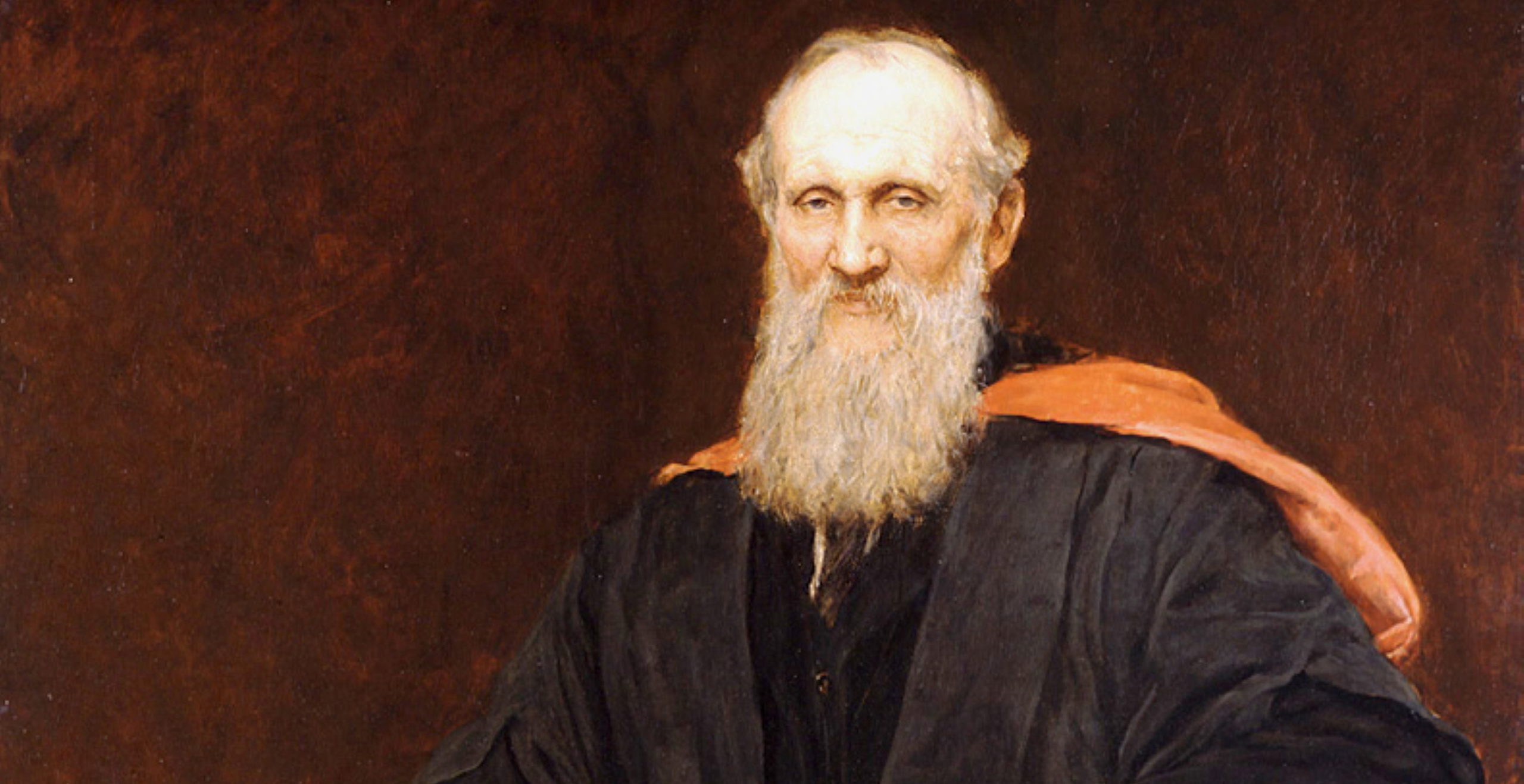
Lord Kelvin: When Great Certainty Meets New Evidence

Lord Kelvin was one of the greatest physicists of the nineteenth century.  His contributions to thermodynamics, electricity, and engineering transformed modern science.  Yet even Kelvin demonstrated that genius is no guarantee against error.

Kelvin argued that the Earth was only about 20 to 40 million years old.  Using the best physics available at the time, he calculated how long a molten Earth would take to cool to its present temperature.  Geologists and Charles Darwin objected that such a young Earth left far too little time for the slow processes of evolution and geological change, but Kelvin remained convinced that his calculations were correct.

The missing piece of evidence was unknown to everyone at the time: radioactivity.  After the discovery of radioactive decay in the late 1890s, scientists realized that radioactive elements inside the Earth continually generate heat, dramatically slowing the planet’s cooling.  Modern dating methods now show the Earth is approximately 4.54 billion years old.  Kelvin’s mathematics had been sound—but his assumptions were incomplete.  His refusal to reconsider those assumptions delayed acceptance of the overwhelming evidence.

Sir Arthur Conan Doyle: When Belief Overrules Evidence

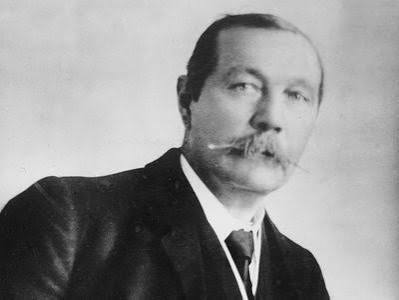
Sir Arthur Conan Doyle, the creator of the supremely logical detective Sherlock Holmes, spent the final decades of his life passionately defending spiritualism.  He became convinced that séances, mediums, ghosts, and communication with the dead were genuine phenomena.

Despite repeated investigations exposing many famous mediums as frauds, Doyle continued to defend them.  Perhaps the most famous example was his unwavering belief in the Cottingley Fairies photographs, which appeared to show two young girls playing with fairies.  Even after experts questioned the images and evidence accumulated that the photographs had been staged using paper cutouts, Doyle insisted they were authentic.  Decades later, the women involved admitted they had fabricated the photographs.

Doyle’s story is a powerful reminder that intelligence alone does not protect us from self-deception.  A person may apply rigorous logic in one area of life while allowing hope, emotion, or deeply held beliefs to override evidence in another.  His willingness to believe extraordinary claims despite repeated contrary evidence stands as one of history’s most striking examples of confirmation bias.

Albert Einstein: The Genius Who Resisted Quantum Reality

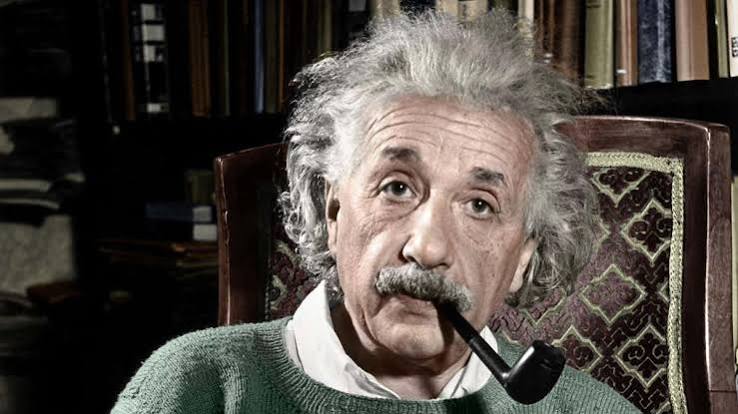
Albert Einstein revolutionized physics through the theories of relativity and helped lay the foundation for quantum theory itself by explaining the photoelectric effect.  Ironically, he spent much of the latter half of his career resisting one of the central conclusions of quantum mechanics.

Einstein believed that nature had to operate according to precise, deterministic laws.  He rejected the idea that events at the atomic level were fundamentally probabilistic, famously remarking, “God does not play dice with the universe.” Throughout his life he searched for hidden variables that would restore certainty to physics.

Over the decades, experiment after experiment supported the predictions of quantum mechanics.  The strongest evidence came long after Einstein’s death through tests of Bell’s inequalities, which consistently confirmed quantum entanglement and ruled out the kind of local hidden-variable theories Einstein had hoped would exist.  Today quantum mechanics stands as one of the most thoroughly tested and successful scientific theories ever developed.  Einstein’s skepticism helped sharpen the science, but in the end the evidence proved stronger than his intuition.  Nevertheless, Einstein’s objections helped force physicists to sharpen the theory and design better experiments.  In that sense, he was “wrong about the interpretation he favored,” but immensely valuable in advancing the science.

Now most of us probably know someone, perhaps not as famous as my three examples, but someone close or dear to our hearts that will never accept that they are wrong about anything.  You can argue with them until you are “blue in the face” and they will never change their mind.  These friends can be infuriating.  But have you ever stopped to think why they refuse to change their minds in the face of sometimes overwhelming evidence?  Psychologists have coined a term for such intransigence and call it “Belief Perseverance.”

This is the tendency to maintain a belief even after the evidence supporting it has been discredited or disproven.

Psychologists use this term when people continue believing something despite overwhelming contradictory evidence.

Example: A person continues to believe a conspiracy theory after every claim has been independently debunked.

Sometimes Belief Perseverance is confused with a close phenomenon called Confirmation Bias.  They are closely related but not the same. 

Confirmation Bias is the tendency to seek, notice, and remember only evidence that supports one’s existing beliefs while ignoring contradictory evidence.

Unlike Belief Perseverance, Confirmation Bias is about how people process information, not necessarily refusing to change after being proven wrong.

Before we leave the cognitive realm there is one more relevant term that we need to look at.  It is called Cognitive Dissonance.  This is one of my favorites since I have seen so many examples of this in my years on this earth that I have lost track.

Cognitive Dissonance is the psychological discomfort people experience when facts conflict with what they believe about themselves or the world.  When people are faced with a set of facts that cause them discomfort they will use a variety of ways to rationalize the evidence that ignores the reality in favor of a reality that they are comfortable with.  Like making excuses for someone’s behavior that is clearly immoral or unethical because they want to admire the person.

Now in today’s world of misinformation, disinformation, lies, distortions, fake ads, false messages, propaganda news, you can be pardoned if you cannot tell the difference between Perseverance Bias, Confirmation Bias and Cognitive Dissonance.  Truth be told, even Einstein could probably not tell the difference.  However, the bottom line here is clear. 

People, your friends and mine, and even those who are not our friends will continually use distorted logic and distorted facts to cling to ideas and perceptions that are false. 

And you may never be able to change their minds.  Nothing you say.  Nothing you do.  No experts you call on.  No preachers, teachers, ministers or nightly newscasters will ever make one dint in their belief systems.  Their minds are made up.  They are more than made up.  They are cast in stone, or iron.  You can take a sledgehammer, and you will not make a single dint in their ideas of what is true or not true. 

So why are we all so stupid that we waste our precious time trying?  Is it truly an impossible task to change anyone’s mind?  If Lord Kelvin, Sir Arthur Conan Doyle and Albert Einstein would not change their minds, what makes you think that your Aunt or best friend will?  Is the effort to convince them otherwise truly useless?  Perhaps we need to look as some examples in history where people did change their minds.  The most famous example may be Charles Darwin, the founder of “Evolution Theory by Natural Selection.” 

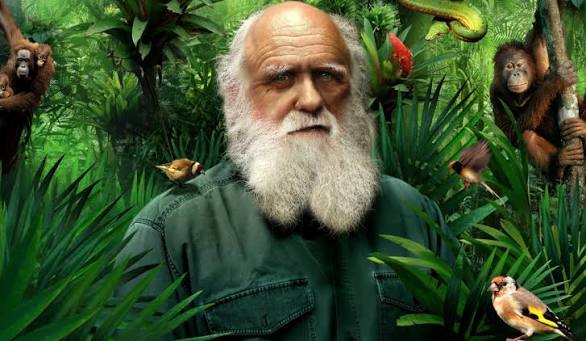
Charles Darwin provides a striking contrast to those who refused to abandon deeply held beliefs.  Throughout the more than twenty years he spent developing his theory of evolution by natural selection, Darwin deliberately searched for evidence that might prove him wrong.

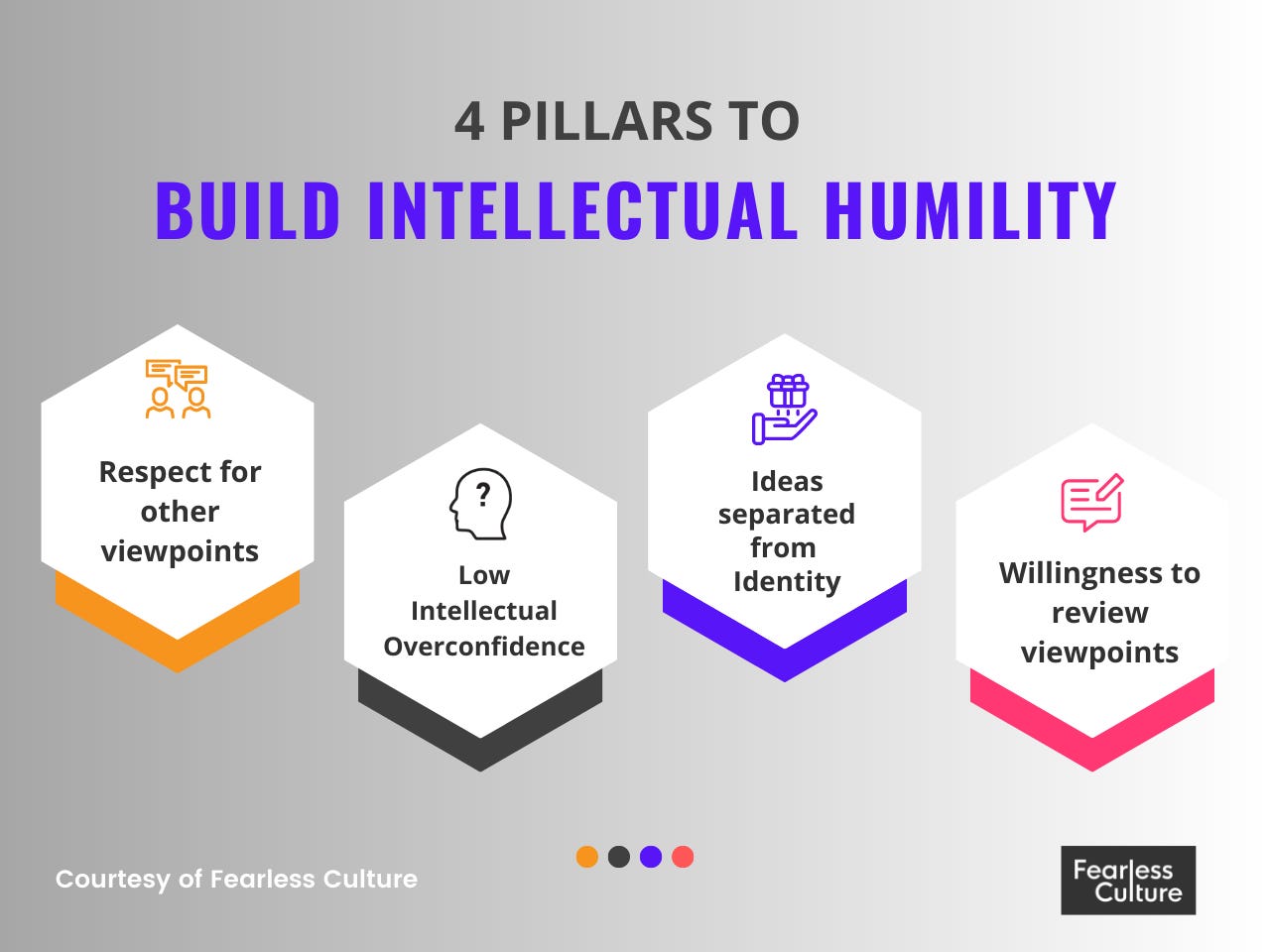
Darwin believed that no theory should be protected from evidence.  As he gathered new observations from geology, fossils, animal breeding, and the natural world, he continually refined and revised his thinking.  His willingness to let facts, rather than pride, determine his conclusions exemplifies what we now call Intellectual Humility—the recognition that being wrong is not a personal failure, but refusing to change in the face of convincing evidence demonstrates a lack of Intellectual Humility .

Darwin’s legacy reminds us that progress, whether in science or in life, belongs not to those who are always right, but to those who are willing to admit when they are wrong.  This brings us face to face with the concept of Intellectual Humility.  This is a willingness to question any concept or belief we hold in the face of new evidence or facts or logic which might question the assumptions upon which we hold said beliefs.  One might readily ask “How in the face of so much misinformation and lies can we tell facts and evidence from lies and fake facts?”  This is not an easy question to answer. 

Unfortunately, our schools and education systems seem to place more value on providing answers rather than asking questions.  The whole idea of critical thinking comes down to the willingness to ask and consider questions rather than blindly accepting facts.  Socrates was considered the smartest man in Greece because the Oracle said he was the only man who recognized how little he really knew.  The Socratic method is one of deducing truth and understanding by asking questions. 

Plato in his “Socratic Dialogues” described many of the stories wherein Socrates educated his students by asking questions and not by providing answers.  Ironically, Sir Arthur Conan Doyle created perhaps the greatest detective of all time whose main modus operandi was asking questions and keeping an open mind.  Something his creator did not seem to have the ability to do himself.    

My father gave me a bit of advice which I still adhere to today when I was a child.  He said, “Believe nothing of what you hear and only half of what you see.”  Lawyers know this truth when it comes to witnesses.  It has been said by the legal profession that “Nothing is as unreliable as an eyewitness.”  These thoughts mark a boundary for my intellectual humility.  It seems to be almost a curse that the smarter someone is, the more intransigent their humility can be. 

Living here in Arizona, we come into the summer season when temperatures soar into the triple digits.  We have heat warnings in the parks and posted in many public places.  Nevertheless, frequently people ignore these warnings and run or hike down a trail only to come back in a body bag.  Regardless of how many warnings they receive, some people insist that they know better.  They regard the park rangers or DNR people who are trying to warn them as stupid unthinking clods who really don’t know how much experience they have or how tough they are. 

Belief Perseverance not only affects science and politics, but it also sometimes kills people.

Go to YouTube and you can find countless examples of people who were so blinded by their own intellectual perceptions of their physical prowess and abilities that they thought they could ignore the advice of others.  There have already been four deaths on park trails in the Grand Canyon this year.  More will come. 

Many people do not realize that Arizona loses far more people to heat than to lightning, floods, tornadoes, earthquakes, mountain lions, bears, rattlesnakes, and scorpions combined.  Heat is, by a wide margin, the state’s deadliest natural hazard. 

Last year (2025) in Arizona, a total of 680 people died from heat related deaths.  Most were:

  • Over age 50,
  • Had underlying medical conditions,
  • Were outdoors for extended periods or lacked reliable air conditioning,
  • Were experiencing homelessness.

What does Intellectual Humility have to do with any of these facts?  I think it all comes down to recognizing our own limitations.  Sometimes this is made harder because we “used to be” good at something that we are no longer so good at.  My best time running a 10k was 38”48 seconds.  That is roughly six fifteen per mile.  If I ran one today, my mile times would be about 14 minutes per mile.  I could almost walk faster than I now run.   Our perceptions of ourselves as we used to be can blind us to a reality that we need to face today. 

Two sayings I like a lot are: 

  • “You got to know when to hold them and when to fold em.”
  • “God, grant me the serenity to accept the things I cannot change ,the courage to change the things I can, and the wisdom to know the difference.”

Growing old is never easy.  Letting go of ideas is perhaps even harder.  Intellectual Humility is a path to growing older longer and with less pain.  Without Intellectual Humility, your images of what you once were and what you once did can blind you to the reality that you are today.

The courage to change your mind is not a sign of weakness—it is one of the highest forms of wisdom.   Many good people would be alive today if they had developed more Intellectual Humility.

Everything You Know is Wrong!  – A Thought Experiment

I want to share a “thought experiment” with you.  What would you do if one morning you woke up and realized that everything you believed about life, love, liberty, justice, aging, politics, and even religion was wrong?  Not just slightly off but fundamentally flawed.

That thought crossed my mind recently.  Over the years, I have been very opinionated.  This morning, I told a good friend that assigning motives to people was ridiculous.  We all want explanations why people do dangerous, criminal or simply dumb things.  However, the motives that we spew out might as well be as valid as Chinese fortune cookies.  There are dozens of possibilities why someone has done something. 

The recent subway stabbing and murder is a good example.  Why did the perp murder the young girl?  He had never seen her before.  He did not know her.  He had no reason to kill her.  But kill her he did.  Why?  Go ahead and speculate if you like but you can speculate all day, and you may never know the true reason or even if he had a reason.  Do you remember the famous line “The Devil made me do it.”  That is as good an explanation as any. 

The more I thought about this question of belief and knowledge, the more my head began to spin.  I felt like I had vertigo.  All the experiences, books, teachers, and years of reflection that have shaped my worldview suddenly seemed like they might be a house of cards.  It was unsettling—terrifying, even.  I who believe in facts, data, rational thinking and logic.  What if I am wrong?  Is there any value to doubt everything?  Ecclesiastes says that “In much wisdom is much grief, and he that increaseth knowledge increaseth sorrow”

But after reflecting on it, I realized something: this is what growth feels like.  Let me break this idea of growth down into some concepts that have merit on the subject.

The Shock of Doubt:

Beliefs are comfortable.  They provide a framework for navigating life, a lens through which we interpret meaning.  To suddenly question them feels like losing gravity.  But doubt, in its purest form, isn’t a threat.  It’s an invitation.

I thought of people I admire—Deming, Aristotle, Kahneman, Sagan—men who thrived on challenging assumptions.  They didn’t fear being wrong; they saw it as a step toward being less wrong.

The Emotional Reckoning:

There is grief in realizing cherished ideas might not hold water.  Some beliefs are tied to memories, mentors, or moral choices we’ve made.  Questioning them can feel like betrayal.  Worse, questioning them can bring us guilt.  Guilt that our pig-headed stubborn beliefs have labeled  and judged other people.  Guilt that not only were we wrong but that we sentenced other people based on false ideas and information. 

But emotions are honest teachers.  The discomfort signals that we’re brushing against something important—something worth reexamining.  For instance, what if I am wrong about trump?  What if he is really ushering in a new and better age for America.  What if his policies will help Americans and even the entire world live better lives?  What if I came back to this earth 100 years from now only to find the world more prosperous, egalitarian and peaceful than any time in history?  How would I feel about my stubborn insistence that trump is the not only the worst president in history but evil?  A man who will destroy democracy and bring untold misery to millions of people.  Am I strong enough to even entertain this possibility?

Breaking vs. Building:

In moments of doubt, it’s tempting to throw everything out and start over.  Sort of like “Zero Based Budgeting” or what my wife does when she finds a mistake in her knitting.  I do not know how many times Karen has torn apart something that she has worked weeks on.  All because she found a dropped stitch or some other knitting or quilting error.  Her tenacity always boggles my mind. 

Yet wisdom isn’t built from demolition; it comes from integration.  It comes from standing on the back of genius who came before us.  Plato built on Socrates.  Aristotle built on Plato.  Deming built on Shewhart.  Wisdom comes from assimilating and reshaping, adding new layers and molding something even more perceptive and sublime than what went before.  Deming always said that “Experience without Theory teaches nothing.”  I added to his message the thought that “Theory without Experience teaches nothing.”  It is a Yin/Yang of reality. 

Isaac Newton in a letter to Robert Hooke wrote, “If I have seen further, it is by standing on the shoulders of Giants”.

I realize that being “wrong” doesn’t mean that my life has been wasted or misguided.  It means I now have a chance to weave new threads into the tapestry that I’ve been creating for decades.  I wonder what will happen to the 2000 threads or blogs that are now part of this tapestry.  Perhaps to my friends, my dedication and even fixation on my blogs are trivial pursuits.  I am sure some of my friends are bugged when I say, “Did you read my blog” or “I just wrote a blog on that subject.”  But my blogs have become part of the thread that I weave through my life.  I expect to write a blog the day or even hour before I die. 

Aging into Humility:

Humility is the opposite of pride.  While pride is often derided, humility always gets applauded, at least among philosophers and theologians.  In the world of politics, humility is never an asset.  Politicians pride themselves on taking credit for saving the world one minute after they are elected.  Can you imagine any politician aging into humility?  Donald Trump as a humble person?

One of the gifts of age is perspective.  I’ve lived long enough to see entire social movements rise and fall, “truths” overturned, and science rewrite itself.  If I’ve learned anything, it’s that being wrong is inevitable.  What matters is how gracefully we grow from it.  The title of my website is Aging Capriciously.  The definition of “capricious” is:

“One who is prone to sudden, unpredictable, and unexplainable changes in their attitude, behavior, or decisions, often based on whim rather than reason or logic. They are often described as impulsive, erratic, and fickle.”

If you are going to be capricious, you had better learn some humility.  I liked the word capricious for my blog since it blessed my desire and need to change my mind.  To be wrong, to be fickle.  I have always and perhaps too pridefully believed that I was blessed with a consistency that would rival Lt Commander Spock on the starship Enterprise.  Spock was erratic in my mind since he had an earthling mother.  I was a motherless child or at least felt that way growing up.  I could not be wrong, or I would be punished by a dad who would have cowered Zeus.  

Humility doesn’t mean shrinking—it means making space for change.  It means admitting that liberty, justice, and love are too vast for any one lifetime to fully comprehend.  If I am born again and I have the opportunity to start another blog, I will call it Aging Into Humility.  Maybe the second time around, I will get it right.

A Call to Curiosity:

So, I ask myself—and you—what if we welcomed the possibility of being wrong?  What if, instead of clinging to certainty, we embraced curiosity?  A good friend of mine had a sign over his desk which read “There are no mistakes, only lessons to be learned.”  I took this quote to heart and have tried to use it as a guide for my life. 

Maybe the purpose of a long life isn’t to arrive at a final truth, but to remain open, to keep asking, to keep revising.  If that’s true, then perhaps being “wrong” isn’t a failure at all.  Perhaps it’s proof that we’re still alive, still learning, still becoming.

“The important thing is not to stop questioning.  Curiosity has its own reason for existence.  One cannot help but be in awe when he contemplates the mysteries of eternity, of life, of the marvelous structure of reality.  It is enough if one tries merely to comprehend a little of this mystery each day. — —”Old Man’s Advice to Youth: ‘Never Lose a Holy Curiosity.'” LIFE Magazine (2 May 1955) p. 64” — ― Albert Einstein

The Rich Young Man and the Novice Nun

The following story was related to me in a much briefer format at my Jesuit Retreat in July of 2024.  The Retreat Master told this tale to show the virtue of generosity.  In the story that he narrated, it involved a beggar and a nun.  I have embellished the story by changing the nature of the characters and the activities somewhat.  I do not know where the original tale came from but if anyone has an inkling, I would love to receive the name so that I can give credit to the author. —- John P. 

Once upon a time there was a young man named Ethan who was born into a very affluent family.  Ethan was brought up with all the goodies and toys that a rich family could afford.  Ethan was an only child to an elderly couple who could not believe their good fortune in having a son and heir in their later days.  To say he was spoiled would be an understatement.  He was the epitome of the privileged child who thought he deserved everything he got.  He treated the family servants like dirt.  Servants in his mind were not deserving of any respect. 

Perhaps because of his privilege, life was very easy for Ethan.  He did not bother to try to get good grades or worry about going to college.  Ethan expected to live with his elderly parents until they passed away and then the family fortune would be his.  However, life often has other plans for us.  Both of Ethan’s parents died in a private plane disaster.  Ethan was only twenty years old but their deaths did not really trouble him very much.  He assumed that he would now be rich and inherit their fortune.  Which is exactly what happened.

Now on his own, Ethan took to wine, women and gambling.  His father’s financial advisors tried to warn him that he was burning through the family fortune at a prodigious rate.  Ethan would heed no warnings.  The more warnings he received the more women he bought.  The more whiskey he drank and the more he gambled.  He thought nothing of buying a diamond ring or a new car for a girlfriend.  The new girlfriend would be tossed out of his mansion in a few weeks only to be replaced by a new gold digger. 

Finally, the inevitable happened.  Ethan’s advisors told him that he was broke.  Everything he thought he owned, cars, mansion, and boats would have to be sold to pay off his debts.  Ethan was astounded.  It took a few weeks, and an eviction notice before Ethan realized that he had no skills, no trade, no education and no money.  Indeed, he had no real friends either as he soon found out.  Attempts to borrow money from the bank and friends went nowhere.  He was on his own. 

Ethan went to a casino one night to see if he could win some of his fortune back.  He ended up stone cold drunk and tossed out of the casino when they found out that he could not pay his poker bets.  Homeless and penniless, Ethan hit the streets.  In the next few months, he learned to live in a cardboard shack and find leftover food by dumpster diving.  He learned to beg to get extra money for the gin that he was still addicted to.  The other beggars and street people hated his guts.  Ethan treated other homeless people as though they were inferior to him. 

In the area where Ethan now lived, there was a monastery.  Each day, the nuns would serve a hot meal, soup, or sandwiches to the street people.  These meals were served between the hours of 11:30 AM and 1:30 PM.  Whenever Ethan would go there, he would try to arrive as late as he could so that he did not have to associate with any of the other homeless people.  He regarded them as bums and still saw himself as superior to them. 

One day, Ethan arrived at the monastery too late for lunch.  He had fallen asleep under a tree in a local park and did not wake up until about 3 PM.  Nevertheless, he showed up at the monastery to try to get some food.  He banged on the door until a young novice nun opened the door.  “What can I help you with,” she inquired.  “Took your own sweet time to get here,” he belligerently replied.  “I want some food.”   “I am sorry,” Sister Regina said, “but the kitchen is closed, and we have no food prepared.”  “Don’t give me that bullshit, you have food, you are just too lazy to help another human being.  I thought your Jesus said to feed the hungry.  Well, I am hungry now and I want some food now.”    

Sister Regina thought about it for a minute but just then another Sister came to the door.  “Go away,” said the other Sister and “come back tomorrow at the proper lunch time.”  “No, that’s all right,” said Sister Regina, “I will try to find something for him to eat.”  She asked Ethan to “please wait here while I fix something for you to eat.”  Ethan agreed but warned her to hurry up as he was really hungry. 

Sister Regina went to the kitchen refrigerator and found some different lunch meats.  She located some bread and mayonnaise and made a nice cold cuts sandwich.  She grabbed a small lunch bag and put the sandwich in the bag.  Just as she was headed out of the kitchen, she noticed a candy bar on a shelf.  She thought this would make a nice desert and proceeded to pack the bar in with the sandwich. 

When she arrived back at the door, she opened the door and Ethan was waiting there. She told Ethan that she had found some cold cuts and made him a sandwich.  Ethan grabbed the bag and replied that she had taken her damn sweet time about it.  He went away without saying another word. 

Ethan walked to his private place in the park under his favorite tree.  He sat down and plucked the sandwich from the bag.  He took his time to eat the sandwich which he thought was very good.  He was about to throw the bag away, when he noticed that there was something else in the bag.  He reached inside the bar and found the candy bar.  At that point, something very mysterious happened.  Ethan thought “Well, I wonder why she gave me a candy bar?  Perhaps she was being nice to me. I wonder why she would do that?”  That is when it struck him. 

She was nice to him when he was a jerk towards her.  She did not have to include the candy bar.  Maybe I have been a jerk my whole life, he thought.  The more he thought about it, the more ashamed he was of the way he treated her and other people.  Somehow, sitting under that tree, Ethan resolved to change his life.  From now on, he was going to be kind to other people and to help them out when he could.  He would start today by going back to the monastery and apologizing to the young novitiate.

It was getting late and around about supper time when he arrived back at the monastery.  He knocked gently on the door and waited.  The door opened and it was the other Sister who had told him to go away before.  “What do you want,” she asked?  “I would like to speak to the young Sister that made the sandwich for me,” he said.  “Wait right here.” he was told, “I will see if she is available.”

Sister Regina came to the door and greeted Ethan.  “What can I do for you,” she inquired? “Nothing,” replied Ethan.  He than got down upon both knees and said “I am so sorry for the way that I treated you before.  I did not even deserve a sandwich and yet you took the time to make it for me and even add a candy bar.  I want you to know how grateful I am to you for that.  You have helped me to see the world completely differently.  From now on, every day I will come here early to help make lunch for the other homeless people and to help out any way I can.”  Sister Regina recognized that Ethan was sincere, and she told him how happy they would be for his help. 

Ethan did just as he said he would.  He showed up every day early to help prepare food and left late after the dishes and the kitchen had been cleaned.  Within a year, the Sisters voted to hire Ethan as a cook and custodian.  He lived in the monastery another fifty or so years until he passed away.  Before he died, he asked to see Mother Regina who had now become the head of the monastery.  Taking her hand, he told her how blessed he was to have had her come into his life.  He had lived a life that he wanted to and had no regrets.  No amount of fame or fortune could ever equal the happiness that he had found by helping others. 

“I want a president with a record of public service, someone whose life’s work shows our children that we don’t chase fame and fortune for ourselves: we fight to give everyone a chance to succeed.”  — Michelle Obama

The Old Woman Who Wanted to Be a Pilot

Little girl dreaming of becoming a pilot

I would like to tell you a story that led me to a principle that I have used over and over again in my life.  The story begins in 1979.  I had just received my M.S. degree in Counseling from the University of Wisconsin – Stout.  I began applying for jobs where I could use my degree.  I also took the Wisconsin test for state employment. 

I did well on the state employment test and after an interview process, I was hired by what was then the Department of Industry, Labor and Human Relations (DILHR) as a Manpower Counselor 2.  I was officially a counselor in the Work Incentive Program (WIN).  I would be in charge of the WIN Program as well as a number of other programs including, Labor Education Advancement Program (LEAP), Indochinese Refugee Assistance Program (IRAP) and the Job Training Partnership Act (JTPA).  I would have offices in two counties.  One office was in Ellsworth, Wisconsin in Pierce County.  The other office was in Hudson, Wisconsin in St. Croix County.  I was then living in River Falls, Wisconsin which was almost dead center between my two offices. 

2111

Each day my job consisted of basically trying to help people find employment.  Depending on their ages, genders, skill levels and aptitudes, I had a variety of resources to help them find a job.  Some of my resources included, employer incentives, apprenticeship training, on-the-job-training, education benefits and a variety of tools to help my clients gain the needed skills to find and seek employment.  I also had a large data base of employment openings that were furnished daily by the head office in Madison, Wisconsin.   

My counseling program at Stout was led by a grand educator named Evelyn Rimel.  She was dedicated to the counseling program and would do anything she could to help her students learn the skills they needed to become good counselors.  Dr. Rimel was born in September 1911 and died in August 2009 one month shy of her 98th birthday.  She was a remarkable woman.  The following poem which she wrote expresses her ideas and goals in life.  She was 42 years old when she wrote this poem and numerous people will vouch for her devotion to this vision.

aac54f3a-b1b5-11de-9fb3-001cc4c03286.imageI’d like to think when life is done,

That I had filled a needed post;

That here and there I’d paid my fare,

With more than idle talk or boast;

 That I had taken gifts divine,

The breath of life and womanhood mine,

And tried to use them, then and now,

In service to my fellow man.

Evelyn received many awards during her lifetime.  When she died she was the oldest living and longest-serving member of the American Association of University Women, a national organization to which she belonged for more than 75 years.

Evelyn was the prime mover in the counseling program at Stout and no one who was accepted into the program could ignore her influence on what they would learn.  For instance, employment and school counselors are taught to use many tests such as the GATB, SATB, Kuder Richardson and Strong Campbell to help profile job applicants and identify their strengths and weaknesses.  Dr. Rimel would hear nothing about weaknesses.  She told us that these tests were only pointers and not conclusive evidence of what someone could or could not do.  I still remember what Evelyn said but at the time it seemed very theoretical.  I would not learn the real meaning of her message until I met this client who came into my life a year or so later.

employment-counseling-2-638

The year was 1980 and I was in my office in Hudson when an older woman came in to see me.  She asked if I could help her find a job.  I was 34 years old at the time and it was early in the year 1980.  The economy was not doing so well, and it was difficult to find decent paying employment in our area.  I asked her to take a seat and how could I help her?  She told me that her name was Margaret and that her husband had recently passed away.  They had raised four children and she had been a stay-at-home mom.  She had no schooling or formal training beyond high school.  She was 68 years old and did not have enough money to live on.  She needed to find a job to supplement her social security income. 

FYC.adviser.0020-16x9-1-1024x576I asked her if she had any idea what she could do.  She replied that she did not.  I suggested that she take an employment aptitude test to see what kinds of work she might find interesting.  It was all very theoretical to me, but I could not imagine what kind of work I could find for her in the local area that would pay enough for her to live on.  She did not have any current job experience and no goals for a career.  The aptitude test was simply an effort to do something even though I did not believe that I could help her much.

She agreed to take the test which I then administered.  When she had finished the test, I told her that I would need to have the test scored.  We setup an appointment for the following week to meet again.  I sent the test in to be scored and the results came back before our next appointment.  When I reviewed the results, I was incredibly surprised.  I even laughed at the findings of the test.  The test showed Margaret’s highest aptitude to be that of an airline pilot.  I laughed because in 1980 there were few women finding employment in the commercial airline industry as a pilot and even fewer who were 68 years of age.  Not to mention, a woman with no prior flight experience or military experience.  Back in the 80’s, many commercial airline pilots came from the ranks of retired or former military pilots. 

I chalked Margaret’s results up to a curious irregularity in the testing results or an anomaly that could probably not be explained.  I was not willing to put any credence into the test and totally ignored Evelyn’s caveat about using employment tests as pointers and not as conclusive evidence.  When Margaret arrived at my office for her appointment we sat down to discuss her results and what our next steps might be.  I started the conversation off by a dismissal of the test findings.   “Margaret, these tests are frequently not accurate.  This test showed your number one aptitude to be that of an airline pilot.”  She looked down at the floor and then up at me.  Speaking directly into my face, she solemnly said, “When I was a little girl, I wanted to be an airline pilot, but my parents and teachers all told me it was impossible.  Girls could never be commercial airline pilots.”    

maxresdefault

I don’t really remember the rest of the conversation that day or whether or not I ever found a good job for Margaret.  What I do remember and will never forgot was my narrow mindedness and smugness.  I had totally written off the possibility that Margaret could ever be an airline pilot. 

c2d1d8ecded27a0c66583ebd41628dab

I mentioned at the start of this story that I gained a principle from this episode that I have used the rest of my life.  The principle was this:  I would never ever tell anyone, client, student, relative or friend that they could not do something or be something.  From Margaret, I realized that one of the things that holds us back are other people who tell us what we can or cannot do.  I have previously told the story of my spouse Karen who was advised by her high school guidance counselor that she could never be a nurse because of her low science aptitude scores.  Karen ignored this “helpful” advice and spent over 55 years in the medical field as a registered nurse and nurse manager. 

 “Love what you do and do what you love. Don’t listen to anyone else who tells you not to do it.  You do what you want, what you love.  Imagination should be the center of your life.”  —Ray Bradbury.


Ecclesiastes: The Wisest Book of All Time?

EcclesiastesI want to write about Ecclesiastes this week.  It is one of the 24 books of the Hebrew Bible.  It is among the canonical Wisdom Books in the Old Testament that can be found in most Christian Bibles.  It has been called by some a book of skepticism.  Others see it as one of the most profound and erudite books that has ever been written.  Much of the writing in this book reminds me of the Shakespeare passage in Macbeth wherein he says:

“Out, out, brief candle!  Life’s but a walking shadow, a poor player that struts and frets his hour upon the stage and is heard no more. It is a tale told by an idiot, full of sound and fury, signifying nothing.”  ― William ShakespeareMacbeth

vanities“Vanity of vanities!  All is vanity,” says the Preacher at the beginning of Ecclesiastes.  In some sense echoing the same sentiments as Macbeth, Ecclesiastes tells us of the folly of wealth, riches, power, fame and even wisdom.  Herein lies the great paradox in EcclesiastesEcclesiastes is a book of wisdom which has the audacity and temerity to decry the power of wisdom.  Whereas most tomes praise the power of wisdom to solve all the evils of the world, to Ecclesiastes, wisdom is also just another vanity.

“I applied my mind to know wisdom and to know madness and folly.  I perceived that this also is but striving after the wind.”  — Ecclesiastes

dissipationIf power, riches, fame and wisdom are folly to pursue, that would seem to leave us with only pleasure left as a goal of life.  A sybaritic existence of hedonistic pursuits measured by the wine, women and song we have endured.  Epicurus said: It is impossible to live a pleasant life without living wisely and well and justly.  And it is impossible to live wisely and well and justly without living a pleasant life.”  The Hedonist position has often been criticized starting with Socrates and Plato who felt that a Hedonist was endorsing a doctrine that was contradictory to right living (see Plato’s Gorgias).

Just when it might seem we have a goal in life that can be mutually satisfying for everyone, Ecclesiastes says:  “I will make a test of pleasure; enjoy yourself.  But behold, this also was vanity.”

Everything is vanity.  If Saint Ignatius was right in proclaiming that “ingratitude” is the fountain of all sins, Ecclesiastes shows us that the other side of the coin is vanity.  Rich or poor, wise man or fool, famous or obscure, death will take us all and care not one whit about our history.  “How the wise man dies just like the fool!” – Ecclesiastes

Another book which I think has a great deal in common with Ecclesiastes was written by Max Stirner and is called “The Ego and Its Own.”  Stirner (a 19th Century German philosopher) has been labeled a nihilist for the pessimism he exudes in this book.  For instance, Stirner says:

Man, your head is haunted; you have wheels in your head! You imagine great things, and depict to yourself a whole world of gods that has an existence for you, a spirit-realm to which you suppose yourself to be called, an ideal that beckons to you. You have a fixed idea!  Do not think that I am jesting or speaking figuratively when I regard those persons who cling to the Higher, and (because the vast majority belongs under this head) almost the whole world of men, as veritable fools, fools in a madhouse.” — (The Ego and Its Own, New York 1907, p. 54)

You may well ask “what is the difference between nihilism and skepticism?”  One answer to this question which I found on the Internet is as follows:

“Skepticism is a critical attitude, orientation or outlook towards a proposition or a thesis.  It typically is characterized by doubt about, or at least dubiousness towards, its substantive truth value.”

nihilism“Nihilism, on the other hand is an attitude, orientation or outlook of indifference towards a proposition or thesis.  The nihilist refuses to engage in an epistemological process of examination, discovery or analysis into its truth value.”

These definitions and more about the differences between these two concepts can be found at http://phenomenologicalpsychology.com/2011/03/what-is-the-difference-between-skepticism-and-nihilism/

Ecclesiastes skepticalTo sum the differences up in my own words, skeptics doubt everything while nihilists do not give a damn about anything.  Some would describe nihilism as extreme skepticism.  Hence, reading the works I noted above might lead you down either path.  You could decide that nothing is worth doing since there is no truth or value in anything we can accomplish so why bother.  Or else you could decide that you simply do not care about the world so why bother with any of its myriad blandishments.  I somehow think both paths might ultimately bring you to the same place.

meaninglessThere are many people who believe that the world is nothing but a mad house and that we are all inmates in one large global asylum.  My father often said that heaven and hell were both on earth and that it was our choice which one we lived in.  As Yoda noted in Star Wars we make a choice whether to go to the dark side or the light side.  Of course, a determinist would say we have no choice, that fate or life has already determined which choice we have to make.  I am constantly at odds with a good friend of mine who has staked this position out for his life and decisions.  In some ways, it is very difficult to refute.  I can refute all of his arguments but at the same time, I can refute all of my arguments against his arguments.  This leads me to the inexorable conclusion that life is more complex than I can explain or understand.  My trying to understand it is my own particular brand of vanity and folly.

“Fear is the path to the Dark Side. Fear leads to anger, anger leads to hate, and hate leads to suffering.” –YODA, (Star Wars Episode I: The Phantom Menace)

If we do have a choice, then I think we have two coins to choose between.  We can choose a coin of ingratitude and vanity, perhaps this is the dark side or we can also choose a coin of gratitude and humility. Is this latter choice, the light side?  Jesus said:

Blessed are the meek,
for they shall inherit the earth.

It is kind of amazing when you think about it how many people today are guilty of unbridled arrogance and hubris.  Does that mean that more people are choosing the dark side than the light side?  My friend would argue that they have no choice.

prideWhen I was young I was taught that “Pride goes before a fall.”  It would seem to be an aphorism that too many of our leaders and people in positions of power have forgotten.  Some people believe that this lack of humility comes because we have forgotten God.  It reminds me of the stories in the Bible about the Israelites in the desert who had to be taught again and again that it was God who was the instrument of their salvation.  As soon as a little time went by, they would forget the help that they had been given and begin to ignore God and act arrogantly.  You don’t have to believe in a God to have this problem.

money is meaninglessWe are all much like the Israelites.  We forget the little people that helped us.  We forget the people that looked out for us or assisted us when we were in need.  We begin to think that we are smarter, stronger, wiser and better than other people.  We develop a mythology that attributes all of our success to our own self-discipline and hard work.  It is true that even Thomas Jefferson believed that luck comes from hard work, but it is also true that all the things that we will ever attain in life can be at least partially attributed to the support we have received from other people.  The Beatles set it well with their song:

I get by with a little help from my friends.  (Click here to hear the entire song)

So what would Ecclesiastes say about the folly of arrogance and pride?  I borrow from my wife’s Revised Standard Version of the Bible dated 1952 for the following:

“In my vain life I have seen everything; there is a righteous man who perishes in his righteousness, and there is a wicked man who prolongs his life in his evil doing.  Be not righteous overmuch and do not make yourself over wise; why should you destroy yourself?  Be not wicked overmuch, neither be a fool; why should you die before your time.”  Ecclesiastes 7:15-17

This passage was from Karen’s confirmation Bible which she received when she was 13 years old.  She still has the Bible and has highlighted, annotated and nearly worn the binding out from much usage.  I am proud to say that my wife is one Christian who reads the entire Bible from Genesis to Revelations and everything in between.  We often have discussions on the meaning of certain passages and I respect her belief in Christianity as she respects my agnosticism.  We both respect Jesus, Mohammed, Moses, Buddha and many other prophets whose wise words have guided us in our lives.

I conclude with some advice knowing full well the old adage “Never give advice. Wise men don’t need it and fools will not heed it.”  Nevertheless, hope springs eternal in my breast and I must break with the aforementioned sage advice to offer the following:

  1. Believe nothing of what you hear and half of what you see. Our senses are deceiving.
  2. Take science and religion both with a grain of salt. Today’s wisdom will be tomorrow’s folly.
  3. Regard both the expert and the idiot with a healthy bit of skepticism.

Time for Questions:

Have you ever read Ecclesiastes?  What is your view of this book?  What wisdom in it do you pay attention to in your life?  What follies do you fall prey to?  Have you found a way to avoid vanity?  How do you do so?  What advice from this book would you give others?

Life is just beginning.

“Nothing in all the world is more dangerous than sincere ignorance and conscientious stupidity.”  — Martin Luther King, Jr.