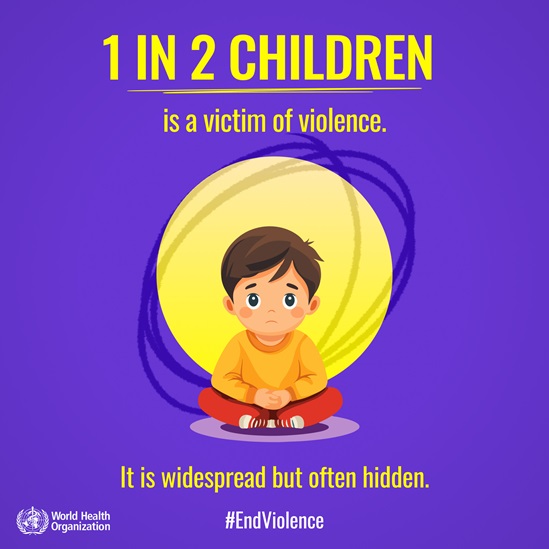
Before we discuss social violence, we need to define what we will be talking about:
- Social Violence — violence arising from social conflict, alienation, inequality, bullying, gangs, community breakdown, and interpersonal disputes.
This is one big category. How many people are really impacted by social violence?:
Because “Social Violence” spans multiple categories, tracking an exact, single daily number is difficult. However, data from federal agencies like the Centers for Disease Control and Prevention (CDC) and the Federal Bureau of Investigation (FBI) outline how this breaks down daily across the United States
- Community & Youth Violence: Over 1,900 young people (ages 10 to 24) are treated in U.S. emergency departments each day for physical injuries resulting from community assaults and interpersonal violence
- An estimated tens of thousands of people in America are directly impacted by interpersonal and community violence every single day, with millions more suffering from the chronic, long-term effects of social conflict, bullying, inequality, and alienation.
- Intimate Partner & Domestic Violence: According to the CDC’s National Intimate Partner and Sexual Violence Survey (NISVS), an average of 24 people per minute experience physical violence, rape, or stalking by an intimate partner. This equates to nearly 34,500 victims every single day. Furthermore, domestic violence hotlines receive over 20,000 crisis calls daily.
I will devote an entire blog to Domestic Violence later in this series.
There have always been bullies. I remember growing up hating bullies. When I went into the military, there were bullies at every base. My father taught me early on how to deal with bullies. I spent as much time helping others deal with bullies as I did myself. However, bullying has become a norm not only in physical space but also in cyber space. It has become an epidemic in cyber space as people can hide behind firewalls and phony aliases.
Cyberbullying rates have risen significantly, with roughly 31% to 33% of U.S. teenagers reporting they have been cyberbullied within the last 30 days. Long-term data shows that up to 58% of teens have experienced some form of online harassment at least once in their lifetimes.
Recent studies highlighting the scope of cyberbullying reveal several key trends:
Demographics and Key Shifts
- Rising Rates for Boys: Historically, girls reported higher rates of online harassment. However, recent data from the Cyberbullying Research Center shows a sharp increase among boys, with 36.6% reporting recent cyberbullying compared to 28.6% of girls.
- Age Vulnerability: Early adolescence is the highest-risk period. Children aged 12 to 13 years old (those transitioning into middle or high school and receiving their first smartphones) experience a major spike in victimization.
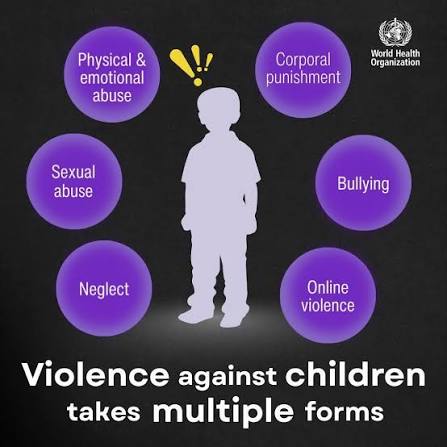
Other forms of social violence albeit not well documented are evident to parents of young children. Years ago, when I was a child, I would walk to school by myself, today that is no longer the norm as parents drive their kids to school or the bus stop where they wait until their child gets on the bus.
On Halloween we used to go trick or treating by ourselves and often get cookies or homemade treats. Those days are also over as parents drive or accompany their children house to house and throw away anything that is not shrink wrapped. Many children simply go to supervised parties rather than brave the dangers of the open street.
This leads us to the issue of pedophilia. Growing up I never heard of the word. Today, it seems everywhere you turn, a pedophile is lurking in the shadows. Nevertheless, the dangers from pedophiles shrink in comparison to the dangers from other sources.
While clinical pedophilia drives a significant and highly dangerous portion of chronic, serial child sexual abuse, as many as half to three-quarters of individual child sex crimes in the U.S. originate from situational, non-pedophilic offenders. — https://www.aic.gov.au/publications/tandi/tandi429
In the macro-data of child welfare agencies, over 75% of all child maltreatment perpetrators are parents or primary caregivers, where neglect and physical abuse dominate the figures. — https://laurenskids.org/awareness/about-faqs/facts-and-stats/
Furthermore, roughly 35% to 40% of detected youthful sexual offenses against children are committed by older juveniles (adolescents or teenagers acting out due to trauma, peer hazing, or developmental issues) rather than adult pedophiles. — https://laurenskids.org/awareness/about-faqs/facts-and-stats/
I want to conclude this section on Social Violence by talking about social conflict. I think we see a great deal more of that in many places.

Social conflict is the struggle for agency or power in society. Social conflict occurs when two or more people oppose each other in social interaction, and each exerts social power with reciprocity in an effort to achieve incompatible goals but prevent the other from attaining their own. It is a social relationship in which action is intentionally oriented to carry out the actor’s own will despite the resistance of others.
To be more specific, airlines have now become havens for people engaging in social conflict. School board meetings with the public can and do become places where civility pales and sometimes seem non-existent. Town council meetings often devolve into acrimony with name calling and people being expelled from the meetings. Even grocery store lines can become places of hostility as more and more people are in a hurry to get someplace. One could write a book about road rage which has been on the increase for many years.
- Roughly 82% of U.S. drivers admit to actively driving aggressively or showing road rage within the past year. (https://www.thezebra.com/resources/research/road-rage-statistics/)
- Vocal and Visual Outbursts: Around 42% of drivers admit to loudly yelling or cursing at others, and roughly 38% acknowledge using obscene hand gestures. (https://www.thezebra.com/resources/research/road-rage-statistics/)
- Physical Altercations: While minor incidents make up the bulk of data, roughly 11% of motorists admit to taking extreme actions, such as intentionally bumping another vehicle or stepping out of their car to confront someone face-to-face. https://newsroom.aaa.com/2025/09/study-finds-almost-all-drivers-experience-road-rage-but-it-can-be-stopped/
What is happening in America? Where is the violence and rage coming from?
Metis, my AI assistant gives the following answer:
America’s rage does not have a single cause. It grows from a convergence of forces: economic insecurity, political polarization, social isolation, rapid cultural change, distrust of institutions, and a media environment that rewards outrage. Social media magnifies grievance and repeatedly tells people whom they should fear or blame. Politics increasingly portrays opponents not simply as wrong, but as enemies threatening our way of life.
At the same time, we seem to have lost some of the social restraints that once moderated public behavior. Frustration more readily becomes confrontation; disagreement becomes insult; inconvenience becomes personal offense.
Most Americans are not violent. But we have created an environment in which anger is constantly stimulated, amplified, and sometimes legitimized. Perhaps the deeper problem is not that Americans suddenly became worse people. We have built systems that profit from keeping people frightened, divided, impatient, and angry—and then seem surprised when some of that anger becomes rage.
My next Blog Post in this series on Violence and Hate in America will look at:
Racial and Ethnic Violence


Sep 19, 2026 @ 05:13:54
Sure reads like the devolution of a society but in my vague memory the US has always glorified violence? It used to be against others but now it seems more internalized.
LikeLiked by 1 person
Sep 19, 2026 @ 07:13:47
Yes, it is sad. I see more and more glorification of it in our town as well as in our government. THanks Wayne for taking the time to comment. I appreciate it. Hope the Fall is a great time for you. I miss the Wisconsin weather down here. John
LikeLiked by 1 person
Sep 19, 2026 @ 10:10:50
I’ve worked with social-emotional learning programs in public education. They feel like a step in the right direction, although perhaps insufficient considering the magnitude of the problem. Metis’ analysis was very interesting. Thank for you writing on this important topic, John! Best wishes to you.
LikeLiked by 1 person
Sep 20, 2026 @ 09:01:50
Thanks Deermoonflower, I appreciate your comment. I hope the rest of my series works out well and is also interesting. John
LikeLiked by 2 people
Sep 19, 2026 @ 10:16:03
Great post John. I am looking forward to your later “Domestic Violence” dedicated post. This awful reality and its stats must be exposed and frequently addressed. Why? I think I have a general idea, but first I want to address your sentence here; Metis answered:
All of those forces definitely contribute to one’s frustration, impulsive behavior, and their feeling of little-to-no-control over their own well-being. This is legitimate for sure. But it is not introspective. Those mentioned forces are external or an environment one finds themself. Why not find and embrace the perceived temporary problems and spend more time on HOW to react and mentally process what you as an individual you are in control of—unless you are suffering from serious mental-illness(es)—and act upon your own coping skills/tools.
Now, the latter (last part) does require teaching, healthy role-models, and recognizing everyone’s and everything’s limitations, including your own. But that does not mean you can’t do it or have no control of outcomes. Quite the contrary.
That said, this does lead me to my ultimate point: education and awareness of self, circumstances, and others. Then possessing the skill-sets and tools to better cope, peacefully and respectfully. Easier said than done, right?
Not everyone is BORN into a zip code where they have good to great opportunities to high-quality education and stellar role models. This failure is a reflection of the state, the nation’s public education system for ALL without exception. That is the original purpose of the U.S.’s public education systems (pre-K to 12th grade) and their ISD’s, their principals & vice-principles, teachers/educators, counselors, and just as critical… the nearby accessible mental health clinics for those children and families with little-to-no access to psych treatments by licensed experienced medical-clinical staff and professionals. Rural areas suffer the greatest by far. 😔
John, for example, the wife and I live in a Texas county (Kerr) with the HIGHEST domestic violence rate in the entire state. The majority of the offenders are male between 17–55 years old. Many many other rural Texas counties have the same problem, but not as bad as Kerr County. Why is this? Why are offenders unable to cope in healthy methods? Well to your credit John the contributing factors are indeed…
But I’m pretty convinced that the problem(s) ultimately start even earlier, much earlier with available high-quality education for ALL Americans, not just the wealthiest or the most gifted Americans attending private, expensive institutions.
What are your thoughts John? Would you agree or disagree? I’m curious.
LikeLike
Sep 22, 2026 @ 10:50:16
Well, there is a lot I agree with Professor Taboo. However on the issue of Education I have written much about the decay and rot in our present system which I believe is obsolete. I cannot blame a system that is dysfunctional. I rather blame the fact that we do not change what needs to be changed. It starts with having a vision but visions can and do need to be changed as the times change. I think my blog post will explain it better than I can. I wrote this eight years ago.
Creating a Twenty First Century Education System – https://agingcapriciously.com/2018/04/27/creating-a-twenty-first-century-education-system/
LikeLiked by 1 person