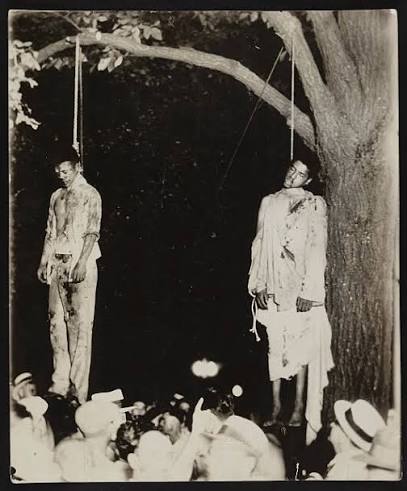
I will start this blog with a caveat. Racial and ethnic violence exists all over the world. It always has but the past does not have to predict the future.
When I went to Japan, I was turned away one night from a club by a doorman who said, “No Gaijin allowed.” In Hawaii, I was warned that Haoles were not welcome at certain beaches by natives. In parts of Mexico, I will be derided as a Gringo. In Europe for centuries, Jews have been persecuted and discriminated against.
My experiences differ enormously in severity from many people who face racism and ethnic violence in America, but they illustrate how people all over the world often draw boundaries between insiders and outsiders.
Prejudice and discrimination were not invented in America, and neither was racism. Nevertheless, in the Land of the Free and a country that prides itself on liberty, we should show the world what tolerance and inclusiveness mean. Instead, we talk one game while we walk another game. How many remember these words inscribed on the Statue of Liberty’s pedestal?
The New Colossus — By Emma Lazarus
Not like the brazen giant of Greek fame,
With conquering limbs astride from land to land;
Here at our sea-washed, sunset gates shall stand
A mighty woman with a torch, whose flame
Is the imprisoned lightning, and her name
Mother of Exiles. From her beacon-hand
Glows world-wide welcome; her mild eyes command
The air-bridged harbor that twin cities frame.
“Keep, ancient lands, your storied pomp!” cries she
With silent lips. “Give me your tired, your poor,
Your huddled masses yearning to breathe free,
The wretched refuse of your teeming shore.
Send these, the homeless, tempest-tost to me,
I lift my lamp beside the golden door!”
Who approved these words? Did the Republicans approve them? Did the Democrats approve them? Or was it some radical group of communists and atheists who approved them?
Do our actions today with ICE and our immigration activities look like we are living these words? If not, would you be in favor of removing them from the statue? Wouldn’t it be more honest?
Do we still want the huddled masses? Do we really want the wretched refuse from other countries?
What are our excuses for the present way we are treating immigrants?
This brings us to racism. There are many who want America to be a White nation. A nation of European Whites.
Approximately 388,000 enslaved Africans arrived directly in mainland North America (the future United States) during the transatlantic slave trade, with an estimated 1.8 to 2 million people dying on the ships during the Middle Passage globally.
Do you think these people wanted to come to the USA?
For those who survived the crossing, the abuse continued after they reached American shores.
It did not stop after the Civil War.
It did not stop after World War 1 or after World War 2.
It did not stop after the Civil Rights marches in the sixties or even after the Civil Rights Act was passed in 1964.
It has continued with restrictive voting laws.
States like North Carolina, Texas, Georgia, and Florida have enacted various combinations of laws implementing stricter voter ID requirements, reducing early voting days, limiting ballot drop boxes, and restricting assistance with mail-in ballots.
Critics and civil rights groups argue that these voting measures intentionally target minority voters.
Discrimination continues based on race in this country.
Arizona passed and signed the “stop to see your papers” law (Senate Bill 1070) on April 23, 2010. This law targeted many Latino citizens who were living legally in the USA.
The law was never rescinded but under the terms of a 2016 settlement with immigrant rights groups, officers are strictly prohibited from prolonging any traffic stop or detention solely to investigate a person’s immigration status.
In an effort to overcome the impact of nearly 250 years of legal slavery in the colonies and the United States, the US Government and many private organizations developed what were called Affirmative Action and Diversity Programs.
Many people saw these programs as a hand up to Blacks and other historically excluded groups, including Native Americans, Women, Asian Americans, Latinos and disabled people.
Other Americans saw these programs as unfair and a handout rather than a hand up.
I asked my AI assistant, whom I call Metis, to examine the research. AI can make mistakes and reflect biases, so its conclusions deserve the same scrutiny as anyone else’s. Judge this assessment by the studies behind it.
“Affirmative action and diversity programs have helped address the economic consequences of racism and exclusion. Research documents employment and educational benefits for historically excluded groups in several important settings. However, programs varied, and some diversity initiatives achieved little measurable improvement.
Research tracking more than 100,000 private firms found that affirmative action increased Black and Native American employment shares among federal contractors. These gains persisted even after firms stopped holding federal contracts. Recruitment, mentoring, and fairer advancement practices also helped women enter management and careers previously difficult to access.
In education, research on California’s affirmative action ban found that ending the policy reduced underrepresented applicants’ degree attainment and subsequent average earnings, with earnings losses driven by Hispanic applicants. In that setting, estimated benefits to underrepresented applicants exceeded the costs to white and Asian applicants at the admissions margin.
People with disabilities benefited from a related but distinct approach: workplace accessibility and accommodations. Employer surveys suggest that many accommodations cost little or nothing and can improve retention and productivity.
The broader economic argument is straightforward: excluding capable people wastes talent. America benefits when more people can develop their abilities and contribute. However, we cannot attribute all progress by women and minorities to affirmative action; education, antidiscrimination protections, and other social changes also mattered.
There were drawbacks. Preferences could disadvantage individual white or Asian applicants competing for limited opportunities. Programs could benefit relatively affluent minority applicants while overlooking economically disadvantaged people from other groups. Beneficiaries sometimes faced unfair doubts about their qualifications, and poorly designed initiatives could generate resentment.
Furthermore, diversity training did not necessarily change workplace behavior. Research suggests that mentoring, broader recruitment, and managerial involvement often accomplished more than brief training courses. Attendance at a seminar tells us little about whether hiring, pay, or promotion became fairer.
These limitations justify careful evaluation and improvement. They do not erase the economic gains or the injustice these programs sought to address.
Social justice requires attention to both historical discrimination and present economic disadvantage. Effective programs deserve support; ineffective ones deserve revision or replacement. Our goal should be institutions that recognize and develop talent wherever it exists and give people a fair opportunity to build secure lives.”
The real truth is that racism and ethnic discrimination exist not only because some people are narrow minded, bigoted, xenophobic and fear that other groups will take away what little they may have. Racism exists because some people benefit from the exploitation of other people.
Generosity towards those not in their tribe or clan is not a characteristic of the racist bigots in this country.
There are three attitudes that I believe help sustain racism:
- Xenophobia: the intense fear, dislike, or hatred of people perceived as foreigners, strangers, or outsiders. Xenophobia and racism overlap, but racism can also target people whose families have lived in the same country for generations.
- Resentment: Fear that others will either take something that they perceive as belonging to their group only or fear that others will get something that they do not get.
- Narrow Mindedness:
- Intolerance of difference: Showing strong dislike or judgment toward people who hold different values, religions, or political views.
- Absolute certainty: Believing that one’s own opinions are absolute facts and that no other perspective could possibly be valid.
- Lack of curiosity: Showing no interest in learning why other people think or act differently.
- Quick dismissal: Rejecting new facts or arguments immediately without taking the time to understand them.
Conclusions:
Let’s conclude with the original question. Is America a Land of Hate, Racism and Ethnic Violence?
For 2025, law enforcement agencies reported 10,881 hate crime incidents to the FBI. Among victims of single-bias incidents, 55.6% were targeted because of race, ethnicity, or ancestry.
Although these figures demonstrate a serious problem, they do not, by themselves, establish the character of an entire country.
I do think they suggest that we still have a serious responsibility as citizens of a Democracy to help prevent any group from being targeted by violence regardless of their race, skin color, political or religious beliefs.
America has a history of racial cruelty and a history of people who fought that cruelty.
Which history are you helping to carry forward?
When someone is demeaned because of race, religion, or birthplace, do you challenge it, excuse it, or remain silent?
Our answers matter most in what we all do next.
My thanks to Metis, my ChatGPT AI assistant, for research support, fact-checking, and thoughtful editorial suggestions. The opinions expressed and final editorial decisions are my own.
Here are some of the studies that Metis based the above research on.
- Kurtulus, F. A. (2016). The impact of affirmative action on the employment of minorities and women: A longitudinal analysis using three decades of EEO-1 filings. Journal of Policy Analysis and Management, 35(1), 34–66. https://doi.org/10.1002/pam.21881
- Miller, C. (2017). The persistent effect of temporary affirmative action. American Economic Journal: Applied Economics, 9(3), 152–190. https://doi.org/10.1257/app.20160121
- Bleemer, Z. (2022). Affirmative action, mismatch, and economic mobility after California’s Proposition 209. The Quarterly Journal of Economics, 137(1), 115–160. https://doi.org/10.1093/qje/qjab027
- Kalev, A., Dobbin, F., & Kelly, E. (2006). Best practices or best guesses? Assessing the efficacy of corporate affirmative action and diversity policies. American Sociological Review, 71(4), 589–617. https://doi.org/10.1177/000312240607100404
- Holzer, H. J., & Neumark, D. (2000). What does affirmative action do? Industrial and Labor Relations Review, 53(2), 240–271. https://doi.org/10.1177/001979390005300204
- Job Accommodation Network. (n.d.). Costs and benefits of accommodations. https://askjan.org/topics/costs.cfm


Sep 27, 2026 @ 15:51:11
John, my humble opinion, is that most of us fear what we don’t know or understand.
Education is the answer to this and I’d suggest social media is watering down education?
As for “racism”, I suggest the term has no meaning in today’s world, ignorance and bigotry, yes. But with the constant migration and interbreeding of humanity, I’ll repeat myself and suggest the term “racism” has no meaning.
LikeLiked by 2 people
Sep 27, 2026 @ 16:20:50
Jon, Most of the research shows that education and diversity programs are not very effective. You can fix discrimination but you cannot cure prejudice. Racism from a biological perspective has no meaning or at least RACE does not, but the term racism still denotes something that people relate to and that is important to language and communication. Thus, I still think the term has a pragmatic if not a great semantic value at least as it relates to the concept of racism and not race.
LikeLiked by 2 people
Sep 27, 2026 @ 18:30:40
John, the fact that people relate to the term ‘racism” does not make it acceptable, it only indicate the need for more education. Which brings me back to my comment regarding “fear and understanding”.
What we have here, is a classic case of public manipulation by the rich and powerful, keep the people divided and you have won the war.
Until the electorate wakes up to the fact that division is a politician greatest weapon, nothing will change.
LikeLiked by 1 person
Sep 28, 2026 @ 11:27:35
I think like in the starfish story Jon, we will have to do it one person at a time. I think if my blog posts can do that I will be happy. And remember the famous words by Lincoln “You can fool etc.”
LikeLiked by 1 person
Sep 28, 2026 @ 14:27:45
I can only hope John your blogs trigger the minds of other, as much as they trigger mine. However, I must be entering a period of depression, as currently, I feel the world is taking one step forward and two of three steps back.
I never thought I’d be happy to be old, but age has it’s merits.
LikeLike
Sep 28, 2026 @ 14:52:44
I can certainly agree with you Jon, I might be optimistic for a day or so, but eventually I also love to visit the haunts of depression at least for a little while. I used to count my days left on this earth with one of those count-down timers but Karen thought it was too morbid so I tossed it. I guess I figure I have between 2 and 3650 days left. I don’t think I will have any regrets but I know that I fear Karen going before I do which is quite selfish but I dread loneliness now more than fear of hell or anything else.
LikeLike
Sep 28, 2026 @ 15:05:13
John, my wife went to prepare the way for me twenty years ago, so I can say worry not about loneliness, you always have your memories and dreams.
I happen to think the next phase, whatever it holds, might be exciting. I wonder, could I possibly meet another Trump?
LikeLike
Sep 28, 2026 @ 16:09:03
Nice thoughts about dying Jon. Sorry to hear your wife passed away so many years ago. Did you ever think of remarrying? I do not think I would especially at 80. As for trump, if I go to hell, I will hope to meet him there.
LikeLike
Sep 28, 2026 @ 17:21:32
An interesting question John. The simple answer, is yes, I have thought about it. But, I am a very judgemental person and the lovely lady who may have been prepared to take the risk of marriage, would have been under constant scrutiny. That is no way to engage in a loving and successful coupling.
LikeLike
Sep 28, 2026 @ 21:26:20
Marriage is never easy but marriage like life is full of risks and to enjoy either you must be willing to take risks. On the other hand, the older I get, the less willing I am to take risks. It seems somewhat ironic since I am closer to one foot in the growth so you would think it would not make much difference to me now. When I was younger, I was a real risk taker. Most of my friends thought I had a death wish. They nickmamed me “Madd Pazz.” I would probably be calle “Mellow Pazz” today or maybe Mellow Yellow. 🙂
LikeLike
Oct 01, 2026 @ 05:53:47
It would be a perfect world if everyone just saw a human being standing in front of them. Strip the book of its cover, and there stands a lone skeleton, 206 bones, in most cases, although babies could have 207, as the extra bone is fused with others as they grow. 😀
So remove the outer layers, and we see that we are quite identical, shy of some folks being taller, shorter, wider, thinner, etc. 😊. If only folks could see through to the heart and soul of the person in front of them. Judge a person for who they are, not what they are, it matters not. The only thing that matters is the question, “Are they a good person?”. Good blog Dr.John!! ❤️
LikeLike
Oct 01, 2026 @ 08:38:40
I tend to judge by what they do but perhaps not judging is the best idea. If only I could not judge but it seems to be my nature. Thanks for commenting Jeanine. Glad yuo like the blog.
LikeLike
Oct 02, 2026 @ 09:24:01
Look no further than our ruthless, diabolical immigration deportation activities for the answer to the question posed.
LikeLike
Oct 03, 2026 @ 08:12:31
Yes, we have really descended on the humanity scale in this country. That might make a good blog. I wonder if there is a humanity scale?
LikeLike