Imagine if I Lived in Another World?

I woke up this morning trying to imagine what if I lived in another world in another place in another time.  What if I lived in a world where no one hated anyone else?  A world where loving others was the norm.  What if I lived in a world where everyone helped others with no thought of benefits to themselves?  What would a world be like with no greed, no selfishness and no narcissism? 

Then I thought of John Lennon’s song “Imagine.”  I can’t say I am too familiar with the lyrics from this song, but I realize I am treading on ground already imagined by many others.  Here are the lyrics from “Imagine” by John Lennon.

Imagine there’s no heaven
It’s easy if you try
No hell below us
Above us, only sky

Imagine all the people
Livin’ for today
Ah

Imagine there’s no countries
It isn’t hard to do
Nothing to kill or die for
And no religion, too

Imagine all the people
Livin’ life in peace
You

You may say I’m a dreamer
But I’m not the only one
I hope someday you’ll join us
And the world will be as one

Imagine no possessions
I wonder if you can
No need for greed or hunger
A brotherhood of man

Imagine all the people
Sharing all the world
You

You may say I’m a dreamer
But I’m not the only one
I hope someday you’ll join us
And the world will live as one

Where could such a place be?  In a multiverse of possibilities, where could I find another world where peace and prosperity are guaranteed for all?  Surely, in a universe of all possibilities somewhere else people live in harmony with their environment and do not force others to live according to their standards.  Surely, there is some place in the multiverse where tolerance and respect for all is the norm. 

I would like to imagine a place like the planet Vulcan with the famous Vulcan IDIC.  Infinite Diversity through Infinite Combination.  I would like to imagine a place where people who talk about diversity and equity and inclusion are not treated as pariahs and outcasts.  I would like to imagine a world where sexual preferences are the norm and people are not expected to conform to simple dualities. 

I would like to imagine somewhere exists maybe over the rainbow where there is no homelessness and no starvation.  I would like to imagine a place where rape and child abuse are unheard of.  A place where anyone of any color or sexual orientation is free from abuse and threats and fear for their lives.  I would like to imagine a place where little children and women can walk freely at any time of the day or night without worrying about being murdered or assaulted. 

I am nowhere near the dreamer that John Lennon was though I think dreamers should be sacred in our world.  I would like to see a place or country where people dream more and hate less. 

I woke up this morning feeling like I am in the wrong world at the wrong time and in the wrong place. I don’t belong here anymore.  I can’t read the news or listen to the radio or watch tv because they keep shouting to me over and over and over again that I don’t belong here anymore.  I have outlived my time and my usefulness.  I can only mourn for a place that is beyond my imagination. 

I want to live in a world where kindness and compassion and respect for all human beings is the norm.  Somewhere, I keep imagining that there is a place where violence and jealousy and revenge do not exist. 

Perhaps if I go back to sleep, I can return to reality.  I can stop imagining things that only bring me tears and heartache.  Things that make me loath my own humanity.  I wonder if I can ever find a brotherhood or sisterhood of love again in this world.  Perhaps in my dreams, I can find the place I want to go to. 


Something Americans Really Need to Read

The following blog was posted by Dr. Jane Fritz who is a Canadian citizen. This past week, both my personal experiences talking to Trump supporters and recent polls show a majority of USA voters are supportive of the policies being undertaken by the Trump administration. To many of my ilk, this is beyond comprehension. I hope this blog will make at least a few people realize that we do not live in a bubble. We live in a world that we must share with other people and we must do so with a win-win attitude not an “I win cause I am an American with more guns and money” and “You are a second rate country or people.” Adopting the attitudes we see being fostered today will make us the pariahs of the world and not the “Shining Country” on the hill. Dr. Fritz has posted this on her blog site and given me permission to share it with those of you in the USA.

An Addendum from another Canadian friend in reference to our community of local Arizona Canadians who come down for the winter:

Hi John,
        Your friend is lucky to maintain his sense of humour in the current situation. Thanks for the chance to laugh in the middle of this social “Sharknado”.  I’ve tried to hold onto both my sense of humour and my composure, but I’m sorry to say, both are melting away like a Calgary snowpack in a Chinook.
        There has been a lot of interest around national anthems lately, singing them, booing them, and what it all means. I don’t claim to know the intentions or heart of anyone but myself, so here’s my experience.
        For several years I’ve been honoured to sing our Canadian anthem alongside an American friend who sings the American anthem at a large event in our park.  Years ago a friend pointed out that Canadians in the crowd sing along with the American anthem, but Americans, by and large, do not join in singing the Canadian anthem.  I made a point of observing the crowd over the next few years and asking friends, both American and Canadian about their choices. Americans told me that they do not sing the anthems of other countries, even at an event that celebrates the friendship between our countries. Canadians told me that they chose to sing the American anthem as a “polite gesture to our American hosts”.
        This is the last year I will spend in the USA, and I looked forward to singing our anthem at the Hands Across the Border event this year.  While waiting for the start of the event I spoke with, and listened to, others in the crowd.  I deliberately avoided any mention of politics, but it was the topic “du jour”. Some Americans around me actually apologized for the way your government is treating ours. Some defended the treatment.  As the time came to make my way to the front to sing, I reflected on all the years of previous events and how they compared to this year.
        The American anthem is sung first. As I opened my mouth to join my American colleague I was stunned to find that my throat closed and no sound emerged. I tried again on the second line of the anthem, same result. Then it hit me, I couldn’t join in singing that anthem, and never would again. I cannot honour the anthem of a nation so openly hostile to my own. I stood, silently, ill at ease, until the microphone was handed to me to sing the Canadian anthem.
        In all the years I’ve sung at that event, I have never heard my fellow Canadians sing more loudly or proudly.  We sang not only to demonstrate pride in our country, but somewhat sadly, to demonstrate defiance to an American administration and contingent of Americans who disrespect our sovereignty and discount the years of friendship between our nations.  And that, I think, says it all.
        Thanks for keeping me in the loop on the very interesting emails from your friends, John.  I really enjoy them.

Hi John, 

      Everything your friend wrote rings true for me. As you know, this is our last season here in Arizona, and our last visit to the USA.  It’s been a bizarre winter.  The unease I felt at the time of the election grew as the inauguration passed and the increasingly unhinged presidential orders began. Some of my American friends and neighbours are genuinely dismayed, and some pay lip service to condemning the administration’s actions, but I sense a curious kind of admiration underneath their words. Yes, they admit that Trump is a bully who disrespects his nation’s allies and panders to his nation’s enemies, but Americans have always admired a ruthless strongman, and Trump embodies that archetype. As America’s stature on the world stage diminished, the desire for a leader who would snatch back the mantle of superpower status grew. Now, they surmise, the world will sit up and pay America the respect they feel is due.        
 
Unfortunately, history’s lessons are easily forgotten. America has abandoned its democratic principles and mistakes fear for respect.  Other nations may acquiesce out of fear of economic or even military reprisal, but as history repeatedly demonstrates, nations that rule through coercion do not hold sway forever.  No nation’s people can be oppressed indefinitely.
 
No doubt, there will be short-term gains for America under this administration, but as one of my academic colleagues used to say, today’s solutions breed tomorrow’s problems. In this case, one of the unintended consequences of the current policies will be a generation of the world’s children who will grow up under an umbrella of fear to become revolutionaries and terrorists.
 
I am saddened to see a nation once the beacon of democracy now so loathed by other nations, but more than that, to see a nation so short-sightedly bent on self-destruction. The only ray of hope I see is that so many of my American friends recognize the wrongness of the path their nation is taking, and are, albeit slowly, coming to the realization that they must act. Whether they will or not is the burning question. 
 
I feel powerless to help and can only watch this once great nation implode.  I do; however, return home with a sense of determination to uphold the principles of democracy and resist the invasion of fascist ideology to Canada. Like many of my fellow Canadians, I am a quiet patriot, but a patriot nonetheless. 
Hugs to you and Karen. 

“Determine That It Will be Done, and Then We Shall Find a Way” — Lessons on Leadership from Abraham Lincoln

America has lost the “Art of Leadership.”  We no longer develop men and women with integrity or selflessness.  Instead of Statesmen, we have political hacks only concerned with getting reelected.  Politicians with no backbones or the courage to stand up against injustice.  We have a Congress of sycophants willing to do whatever they are told to do regardless of how unethical or immoral it may be.  We have thousands of lawyers who do not uphold justice but find arguments to support an amorality that meets the letter of the law but ignores the significance of decency, goodness, honesty, conscience and fairness.

In this blog and the ones to follow,  I will write about insights regarding leadership from one of the greatest American leaders and Presidents of all time.  I found a compilation of these in an old collectors edition of “Civil War Times” published in Winter, 2013. There are 41 in total.  I have already covered the first two in previous blogs.  I would like for you to hear the words of Abraham Lincoln and what he had to say about leadership.  I will include some of my own experiences from my years of working with senior management in over 32 organizations.  Some of the men and women I worked with were incredible leaders.  Most of them wanted to be better leaders and that is where I brought the teachings and thoughts of W. E. Deming to my consulting practice.  Dr. Deming achieved extraordinary results in business by tapping the knowledge, skills and abilities of ordinary people.  Senator Hubert Humprey famously said that “Democracy is a system that achieves extraordinary results with ordinary people.”

Insight # 3 – Determine That the Thing Can and Shall be Done, and Then We Will Find a Way to Do It — Speech to Congress, June 10, 1848

Abe Lincoln was an interesting blend of idealist and pragmatist.  There are many pundits today who talk endlessly about what should be done and how it should be done.  Such idealism is not only admirable but also necessary.  However, idealism in never enough.  I do not trust others who tell me “what to do” but never lift a hand to help me do it.  The Right-Wing in America has for many years belittled Academics as “Pointy Headed Intellectuals” with no common sense.  Democrats, Liberals and Intellectuals have too often seen what needed to be done but lacked the courage or fortitude to get it done.

I found a wonderful political button twenty-five years ago which unfortunately I have lost.  On one side it read “Democrats, the Party of Wimps.”  On the other side, it read “Republicans, the Party of Greed.”  In the years since, I have noticed how appropriate these labels were.  When the Democrats had majorities in many states, they bickered and dithered while the Republicans gerrymandered districts as fast as they could.  This gerrymandering is one of the key reasons that Republicans have come to dominate politically across the USA.

“In 2011, Republicans leveraged their new state-level dominance and recent advances in districting technology to enact a very aggressive and sophisticated redistricting plan, which allowed them to win a majority in the 2012 House midterms, despite losing the popular vote for the House and losing the presidential election. This was a qualitative escalation in the gerrymandering wars, widely documented, and widely excoriated—especially by Democrats.”Where We Have Been: The History of Gerrymandering in America

When Obama selected Garland for a Supreme Court position, he sat back and did little or nothing while McConnell blocked any efforts to advance Garland’s nomination.  Contrast this with Lincoln’s effort to remove potential spies during the start of the Civil War.

“Abraham Lincoln suspended the writ of habeas corpus during the Civil War to suppress potential Confederate sympathizers and secure the nation’s capital, particularly in Maryland, where there were significant threats to Union troop movements and a risk of disruption to supply lines to Washington D.C., justifying his actions as necessary to protect the country during a time of rebellion; he argued that the extreme circumstances of war allowed him to temporarily suspend this right to maintain public safety.” —- Google AI

The insight here by Lincoln can be phased as “Where there is a will there is a way.”  As another example, the Democrats faced during Biden’s term a Supreme Court with a 6-3 majority against them.  Biden, if he had been bold, could have changed this situation.  Biden could have found grounds to indict both of the two Supreme Court justices who were accused of taking bribes during his administration.  If Biden had removed these justices and prosecuted them (with some courage) he could have appointed two justices “temporarily” to replace them.  This would have given Democrats a 5-4 edge.  During this “temporary” period, any challenges to Biden’s actions would have been supported by a Supreme Court in his pocket.

If you think I am being cynical, denigrating or somehow abandoning the purpose of the Supreme Court, you are very naïve.  The Supreme Court has never been and never will be neutral until a new means of appointing justices can be imposed.  I refer to you the numerous pro-slavery and Jim Crow laws which many Supreme Courts have upheld which clearly were cruel, unethical and immoral decisions.

“The three most important Supreme Court Justices before the Civil War—Chief Justices John Marshall and Roger B. Taney and Associate Justice Joseph Story—upheld the institution of slavery in ruling after ruling.” — Supreme Injustice: Slavery in the Nation’s Highest Court, by Paul Finkelman – Jan 8, 2018

“Jim Crow laws, enforcing racial segregation, were upheld for approximately 60 years from after the Reconstruction era until the mid-20th century with landmark civil rights legislation. The Supreme Court’s decision in Plessy v. Ferguson in 1896 was pivotal in maintaining these laws until their abolition in the 1960s. —Brainly.Com

America has long been a nation that has scorned people who were labeled as intellectuals, geeks and daydreamers.  Some of this scorn is deserved.  Ideals without action are like dreams without plans, they can go nowhere.  The Yin/Yang of life is thinking and action not one or the other.  Today, more than at any time in the history of this country, intellectuals, scientists, thinkers and day dreamers are under fire by an administration that puts thoughtless actions ahead of dreams and ideals.  For example, I refer you to Trump’s Palestinian solution.  We will kick all the Palestinians out of the Mideast and build seaside resorts in Gaza.  If this is not an example of “thoughtless” action, than I do not know anything about life and justice.

Abraham Lincoln knew how to dream but he also knew when and how to act.  Some called him a dictator.  In reality he stood up to the bullies of his time.  Lincoln took actions to support his dream of a slave-free America.  He carefully timed the actions to achieve his dreams with an ability to muster the resources and means to accomplish them.  Lincoln had ideals but he was also a pragmatist.  Lincoln realized that until and unless the South was defeated, we would not be able to abolish slavery.  Once victory was in his grasp, Lincoln wrote the Emancipation Proclamation to free slaves throughout the nation.

President Abraham Lincoln issued the Emancipation Proclamation on January 1, 1863, announcing, “that all persons held as slaves” within the rebellious areas “are, and henceforward shall be free.  The following goals were furthered by the timing and wording of the Emancipation Proclamation:  (From Search Labs | AI Overview)

  • Lincoln believed that freeing slaves was a military necessity to save the Union.
  • The proclamation declared that all enslaved people in rebellious states were free.
  • It allowed Black men to serve in the military.
  • Lincoln intended the proclamation to inspire enslaved people to support the Union.
  • Lincoln wanted to prevent other countries from giving the Confederacy military aid.

When I worked with companies, one of my goals was to create a culture of continuous improvement modeled somewhat on Dr. W. E. Deming’s 14 Points for Management.  The concept of a Continuous Improvement Culture (See My Book The TQM Transformation) was linked to Demings 14 Points.  Several if not most of these points were viewed as a radical departure from what managers were taught in business schools and MBA programs.

I once had a manager who told me that if he made the changes I was endorsing, it would be suicidal for his career.  I replied, “Most radical changes require a leadership willing to sacrifice everything for their ideals including their lives.”  He laughed as he jokingly said, “I am not willing to fall on my sword for this company.”  In truth though, history supports to a large degree that radical change often requires the ultimate sacrifice.  Many men and women have given their lives to support the ideals that they believed in.  A far cry from the sycophants that we see in Congress today who will not even give up their seats in support of the Democracy that they claim to believe in.

How do we fight an “Uncivil War”?  Insight # 4 from Old Abe has more valuable thoughts to help us in this struggle.  I will share these in my next blog.    


Perspiration or Inspiration: Which is more Important to the Writer?

I wrote this blog nine years ago. It is still one of my favorites. I think it summarizes the two major modes of writing. I sometimes have preferred one and then later I switch to the other. A few more years go by and I switch again. I guess I am a switch hitter. I don’t think one mode is superior to the other. It seems my mode is determined by my moods and very little else. So without further ado, I hope you find some “motivation” here for your writing. I realize that many of my you are bloggers and writers. If you find some ideas in here that are useful or not useful, I welcome your comments. John

“Try Honey Before Vinegar” – Lessons on Leadership from Abraham Lincoln

America has lost the “Art of Leadership.”  We no longer develop men and women with integrity or selflessness.  Instead of Statesmen, we have political hacks only concerned with getting reelected.  Politicians with no backbones or the courage to stand up against injustice.  We have a Congress of sycophants willing to do whatever they are told to do regardless of how unethical or immoral it may be.  We have thousands of lawyers who do not uphold justice but find arguments to support an amorality that meets the letter of the law but ignores the significance of decency, goodness, honesty, conscience and fairness.

In this blog and the ones to follow,  I will write about insights regarding leadership from one of the greatest American leaders and Presidents of all time.  I found a compilation of these in an old collectors edition of “Civil War Times” published in Winter, 2013. There are 41 in total, and I have already covered the first in a previous blog.  I would like for you to hear the words of Abraham Lincoln and what he had to say about leadership.  I will include some of my own experiences from my years of working with senior management in over 32 organizations.  Some of the men and women I worked with were incredible leaders.  Most of them wanted to be better leaders and that is where I brought the teachings and thoughts of W. E. Deming to my consulting practice.  Dr. Deming achieved extraordinary results in business by tapping the knowledge, skills and abilities of ordinary people.  Senator Hubert Humprey famously said that “Democracy is a system that achieves extraordinary results with ordinary people.”

Insight # 2 – Try Honey Before Vinegar: 

Lincoln said, “If you would win a man to your cause, first convince him that you are his sincere friend.”  Springfield, Illinois, 2/22/1842

This seems to be a principle or idea that is not very well understood by many people today.  I constantly hear people tell me that if you want to change people’s ideas about things, you must “empathize with them.”  “You must really listen to them.”  To these admonitions, I say “Bullshit.”  You can listen to some fanatics all you want to, and they will still totally ignore anything you say that does not fit in with their preconceptions or ideology.

A good woman friend of mine and I were arguing about Trump and his supporters.  Repeatedly in every argument, she would say “John, you just have to really listen to them.”  I finally got tired of hearing this refrain and one day I challenged her.  I said, “Tell me one, only one, Trump supporter you have listened to who has changed their mind.”  She was dumbfounded.  She was stumped.  She was bewildered.  She could not think of one.  Months went by.  I would occasionally rub salt into the wound, “Did you change the minds of any Trump supporters today?”

You can listen to others all you want.  You can listen to hell freezes over.  You will not change a fanatic or zealot’s ideas by listening.  But Lincoln was smarter than all the psychologists we have today put together.  He knew that it would take more than listening to get others to think differently or to appreciate your ideas after you have heard theirs.  It takes believing and feeling that you are a “Sincere” friend.  Not just a Facebook friend or some online friend, but a “Sincere” friend.  Plato talked about the various types of friends, but he said nothing about a “Sincere” friend.  So, what is a “Sincere” friend and what does it take to make someone believe that you really and truly are a “Sincere” friend?  Let’s first define the meaning of “Sincere.”

An online dictionary defines “Sincere” as:

“Free from pretense or deceit; proceeding from genuine feelings.”

Wikipedia defines the virtue of Sincerity as follows:

“Sincerity is the virtue of one who communicates and acts in accordance with the entirety of their feelings, beliefs, thoughts, and desires in a manner that is honest and genuine.  Sincerity in one’s actions (as opposed to one’s communications) may be called ‘earnestness”’.

I think the word “Sincere” has a lot to do with integrity, honesty, trustworthiness and truthfulness.  The Jewish have a word for a person who is sincere and honest called a Mensch.  In Yiddish, a Mensch roughly means “a good person”.  The word has migrated as a word into American English with a Mensch being a particularly good person, similar to a “stand-up guy”.  A Mensch is a person with the qualities that one would hope for in a friend or trusted colleague.

I think we can now answer the question, “What does it take to impact someone’s ideas and ideology?”  The answer is very simple.  If you want to have someone listen to your ideas, you must be a Mensch or at least a very “Sincere” friend.  When I think about the people we elect to political leadership, I am struck by the lack of Menschs in either Congress or the Legislature.

In fact, I would argue that we have the exact opposite.  We have people you would not trust with a nickel.  People who we know will change their mind at the drop of a lobbyist’s donations.  Congresspeople, who continually lie to cover their malfeasance and incompetence.  Ask anyone of them what they do all day long and they will deny that they spend about 80 percent of their time fundraising for their next election campaign.

Try to suggest some new ideas to them as I have done countless times, and you will get the following answer, “I am very busy but send me something and I will look at it.”  Don’t hold your breath my friend.  You will die of asphyxiation before any of them, Democrat or Republican will ever get back to you.  However, mention that you are thinking of a large campaign contribution and doors will open in a New York minute.

Let us think of a scenario wherein a Trump supporter meets a Trump opponent.  We will call Mary the Trump supporter and Joe the Trump opponent.   Neither of them have ever met before and do not know each other.   The talk between them soon turns to politics.

Mary:  I think Trump is doing a great job.  He is really shaking the government up.  Just what we need.

Joe:  You think tariffs, job cuts and threatening our allies are what we need?  Are you crazy?

Mary:  He is already getting results.  Mexico and Canada have agreed to send more troops to the border.

Joe:  These are our allies.  What if I threatened you, how would you feel about me?  I am sure that long-term you would be looking for some way to get even.

Mary:  Well, I have to go.

Joe:  Yeah, so do I. Bye

If the above scenario had gone down between two long-term “Sincere” friends, how do you think it would have turned out?  I am betting both sides would have heard some value in the other sides position.  Furthermore, they might have  finished the discussion and gone out together to have a bite to eat or at least agreed on another time to get together.

Old Abe Lincoln knew a lot about leadership and the role that friendship played in it.

“On the contrary, assume to dictate to his judgment, or to command his action, or to mark him as one to be shunned and despised, and he will retreat within himself, close all the avenues to his head and his heart; and though your cause be naked truth itself, transformed to the heaviest lance, harder than steel, and sharper than steel can be made, and though you throw it with more than Herculean force and precision, you shall no more be able to pierce him, than to penetrate the hard shell of a tortoise with a rye straw.” — Lincoln, Address to Washington Temperance Society (February 22, 1842)

I have heard many conversations between Trump supporters and Trump opponents.  We attack each other.  We condemn each other for stupidity.  We assail each other for taking the Kool-Aide.  Then we retreat to the other sides of the room full of hate and disgust.  We ask ourselves, “How could anyone think like they do?”  “What is wrong with them?”  “They must be either, stupid, uneducated, brainwashed, racist or something else.”

If we are going to break down the walls and barriers that now separate us in the USA , we are going to have to do more than just listen to our opposition.  We are going to have to find ways of befriending each other.  Not just casual friendships but real “Sincere” friendships.  Friends who can accept and support mutual honesty and truthfulness with each other.

Too much of what I have seen in the media supports a narrative that my side is intelligent and smart, and the other side is dumb and uneducated.  I confess to having shared some of this narrative in my own writings.  It is now time to move past these simplistic and detrimental stereotypes and develop empathy and understanding that surpasses mere listening.  The way to do this is through “Sincere” friendship and not by demonizing the other side.

How do we fight an “Uncivil War”?  Insight # 3 from Old Abe has more valuable thoughts to help us in this struggle.  I will share these in my next blog.


The Lost Art of Leadership: Lessons on Leadership from Abraham Lincoln

America has lost the “Art of Leadership.”  We no longer develop men and women with integrity and courage.  Instead of Statesmen, we have political hacks only concerned with getting reelected.  Instead of people with a backbone and the guts to stand up against injustice, we have a Congress of sycophants willing to do whatever they are told to do regardless of how unethical or immoral it may be.  We have thousands of lawyers who do not uphold justice but find arguments to support an amorality that meets the letter of the law but ignores the significance of decency, goodness, honesty, conscience and fairness.

In my next blogs, I want to write about 41 insights regarding leadership from one of the greatest American leaders and Presidents of all time.  I found a compilation of these insights in an old collectors edition of “Civil War Times” published in Winter, 2013.  I would like for you to hear the words of Abraham Lincoln and what he had to say about leadership.  I will include some of my own experiences from my years of working with senior management in over 32 organizations.  Some of the men and women I worked with were incredible leaders.  Most of them wanted to be better leaders and that is where I brought the teachings and thoughts of W. E. Deming to my consulting practice.  Dr. Deming achieved extraordinary results in business by tapping the knowledge, skills and abilities of ordinary people.  Senator Hubert Humphrey famously said that “Democracy is a system that achieves extraordinary results with ordinary people.”

I should issue one caveat before I begin this series.  There are some who disparage “Honest Abe” as not really caring about slavery.  They argue, Lincoln only fought the war to save the Union and not to free the slaves.  My readings and knowledge of Lincoln shows that nothing, I repeat NOTHING could be further from the truth.  Lincoln was appalled at slavery from the time he was a young child until he issued the Emancipation Proclamation.  The idea that Abe did not care about slavery is a lie fostered by a bitter Confederacy that wanted to hide their heinous practice behind the cloak of states rights.

Lincoln said,  “I have here stated my purpose according to my view of official duty; and I intend no modification of my oft-expressed personal wish that all men everywhere could be free.”  –August 22, 1862, Letter to Horace Greeley

Lincoln also said, “My paramount object in this struggle is to save the Union and is not either to save or destroy slavery.  If I could save the Union without freeing any slave I would do it.” —August 22, 1862, Letter to Horace Greeley

Two very different goals.  Two very different thoughts.  What are we to make of Lincoln’s motivations?  The Confederacy pushed the latter because it justified their defense of States rights to choose slavery as a viable economic system.  Several of the constitutions of the new Confederate states proclaimed their rights to practice slavery.

In its statement for seceding from the Union, the state of Georgia wrote the following:

“The party of Lincoln, called the Republican party, under its present name and organization, is of recent origin.  It is admitted to be an anti-slavery party.  While it attracts to itself by its creed the scattered advocates of exploded political heresies, of condemned theories in political economy, the advocates of commercial restrictions, of protection, of special privileges, of waste and corruption in the administration of Government, anti-slavery is its mission and its purpose.”

Alexander H. Stephens, the Confederate vice president said the following:

“Our new government is founded upon . . . its foundations are laid, its corner-stone rests, upon the great truth that the negro is not equal to the white man; that slavery – subordination to the superior race – is his natural and normal condition.”

Lincoln was always against slavery.  Long before he became president he argued about the evil and immorality of slavery.  He modified this position to include saving the Union at the beginning of the war as a political expedient to gain support for the war.  As it became clear that the North would win and thereby have the power to free the slaves and abolish slavery, that became his main objective.  There can be no doubt that he did both.  There can be no doubt that in doing so, he signed his death certificate.  Like Martin Luther King, Malcolm X and many other civil rights martyrs, the cause of equal rights for all has always been a precarious position to assume.

Lincoln said that “Four score and seven years ago our fathers brought forth on this continent, a new nation, conceived in Liberty, and dedicated to the proposition that all men are created equal.”  Martin Luther King in his famous “I have a Dream” speech said that this promise was an uncashed check.  It is now “Eight Score” years from the date of the Emancipation Proclamation and we are once again engaged in a battle between racism and equality, between prejudice and tolerance and between fascism and democracy.  We have begun a new “Uncivil War” which has divided the hearts, minds and loyalties of Americans from the East Coast to the West Coast every bit as deeply as did our first Civil War.

Today we face a battle between those who believe that America should be a White Supremacist Christian nation ruled by rich oligarchs and those who believe in the concepts of Equity, Diversity and Inclusion.  One half of America wants to create a country that believes in the concepts of White exceptionalism, America First and Evangelical Christianity above all over religions.  This half praises individual rights above individual responsibilities.  The rights of the individual are more important than the rights of society.

The other half of America wants to create a country where racism, sexism, exclusivity and prejudice does not exist.  This half believes that responsibilities are just as important as rights.  That the rights of others in society must be protected from those who would trample on them.  This group believes in democracy over oligarchy.  These Americans believe that we all have the right to “Life, Liberty and the Pursuit of Happiness” as long as we take responsibility to insure that everyone in our nation shares these rights.

The war between these two sides of America has now entered a new phase.  The first phase started many years ago.  The second phase has started on January 21, 2025.  I want to help us to remember the ideas and insights of Abraham Lincoln as we move into this second phase.

Insight # 1

Fight the Good Fight:  The probability that we may fall in the struggle ought not to deter us from the support of a cause we believe to be just.  — Springfield, Illinois, 12/20/1839

Lincoln was thirty years old when he said these words.  They reflect the words of Frederic Douglas who said, “ If there is no struggle, there is no progress.  Those who profess to favor freedom, and yet depreciate agitation, are men who want crops without plowing up the ground.” 

The words of Patrick Henry also come to my mind,

“If we wish to be free– if we mean to preserve inviolate those inestimable privileges for which we have been so long contending–if we mean not basely to abandon the noble struggle in which we have been so long engaged, and which we have pledged ourselves never to abandon until the glorious object of our contest shall be obtained–we must fight!  I repeat it, sir, we must fight!

I keep these words and thoughts in my mind as our “Uncivil War” commences the next four years to preserve and protect what we call our democracy.  I have no doubt that many people have struggled throughout American history to save things that they believed in.  There has been times when African Americans, Latinos, Women, Indigenous People, Asian Americans and LGBTQ people have all been persecuted and where life must have seemed totally unjust and not worth living.  Many of us woke up on November 6th with similar feelings.  I cringed when I saw people walking around town waving Trump flags and others proclaiming that they voted for Trump.  I consoled myself with “hoping they would get what they deserved.”  Then I realized that “hope” was not enough.  We must fight for what we believe in.

How do we fight an “Uncivil War”?  Insight # 2 from Old Abe has some valuable thoughts to help us in this struggle.  I will share these in my next blog.


Unbreaking America: Solving the Corruption Crisis

Dear Friends, 
 
I am very impressed with this video, the ideas promulgated and the presentation made to support the ideas.  To me it is brilliantly done and executed.  It might provide a pathway out of the morass that we are now experiencing politically in the USA.  Please take 12 minutes to watch this video.  Send it to others if you like it or tell me to go to hell if you hate it.  
 

Peace, Wisdom and a Long and Healthy Life,
John,
Dr. John Persico
612-310-3803
www.agingcapriciously.com

I Don’t Need a Hero, I’ve Got Two of Them!

This week two courageous and brave women spoke their truth.  In doing so, they stood up for America and the world.  They are my Heroes.  In standing up to speak out, they risked violence, retributions and death threats.  They have since received some of each.  That is why there are so few heroes.  Freedom is not free.  It means being willing to risk your reputation, your career and even your life.  However, it has been said that “Evil triumphs when good people are silent.”  Both of my heroes have been feted in the news, but I want to dedicate this blog to the truth that each was trying to tell.  I do not think that their words should ever be forgotten.  I will share their own words here, since I could never be as eloquent as both of these women were. 

Every year for the next four years, I am going to post their words here on my blog on January 20, to remember the tragic episode that happened this day in the Land of the Free and the Home of the Brave. 

Bishop Mariann Edgar Budde::

Let me make one final plea.  Mr. President, millions have put their trust in you.  And as you told the nation yesterday, you have felt the providential hand of a loving God.  In the name of our God, I ask you to have mercy upon the people in our country who are scared now.  There are gay, lesbian and transgender children in Democratic, Republican and independent families, some who fear for their lives.  And the people, the people who pick our crops and clean our office buildings, who labor in poultry farms and meatpacking plants, who wash the dishes after we eat in restaurants, and work the night shifts in hospitals, they — they may not be citizens or have the proper documentation, but the vast majority of immigrants are not criminals.  They pay taxes and are good neighbors.  They are faithful members of our churches and mosques, synagogues, gurdwara and temples.

I ask you to have mercy, Mr. President, on those in our communities whose children fear that their parents will be taken away, and that you help those who are fleeing war zones and persecution in their own lands to find compassion and welcome here.  Our God teaches us that we are to be merciful to the stranger, for we were all once strangers in this land.  May God grant us the strength and courage to honor the dignity of every human being, to speak the truth to one another in love and walk humbly with each other and our God for the good of all people, the good of all people in this nation and the world.

____________________________________________________________________________

Amy Goodman in her Democracy Now Podcast added the following comments to the courage of Bishop Budde.  

AMY GOODMAN: Episcopal Bishop Mariann Edgar Budde addressed President Trump and his family at the inaugural prayer service at the National Cathedral in Washington as Trump and Vice President JD Vance sat in the front pew.  Trump was later asked at the White House about her sermon.

REPORTER: What did you think of the service?

PRESIDENT  DONALD  TRUMP:  What  did you think?  Did you like it?  Did you find it exciting?  Not too exciting, was it?  I didn’t think it was a good service, no.  Thank you very much.

AIDE: Thank you, press.  Thank you, press.

PRESIDENT DONALD TRUMP: They can do much — they can do much better.

AMY GOODMAN: President Trump later posted a message about Bishop Mariann Edgar Budde on his social media platform Truth Social, writing, quote, “The so-called Bishop who spoke at the National Prayer Service on Tuesday morning was a Radical Left hard line Trump hater.  She brought her church into the World of politics in a very ungracious way.  She was nasty in tone, and not compelling or smart.”

Republican Congressman Mike Collins of Georgia posted a message online saying, quote, “The person giving this sermon should be added to the deportation list.”

______________________________________________________________________________________

Ms. Pam Hemphill:

The following is from an online newscast and includes a discussion with Ms. Hemphill and a reporter.  Some of my immediate comments below are taken from an NPR radio show this past Thursday featuring a discussion with Ms. Hemphill.  That is when I first heard her story.  

“President Trump this week issued pardons to more than 1,500 Jan. 6 defendants, but one 71-year-old woman turned down the president’s offer of clemency, telling NPR it would be a dishonor to the truth of what happened that day.” — NPR Reporter

“I broke the law that day, period. Black and white,” Pamela Hemphill told NPR’s All Things Considered of the role she regrets playing at the Capitol that day. “I’m not a victim, I’m a volunteer.”

Some Trump voters express reservations with his sweeping Jan. 6 pardons

Hemphill was an ardent Trump supporter when she joined thousands of people in Washington, D.C., who attempted to halt the certification of President Biden’s 2020 election victory.

Fueled by Trump’s repeated lies that the election had been rigged against him and his supporters, Hemphill was among those who stormed into the halls of Congress, leading lawmakers to flee and hide.

Taking a pardon now in light of her actions, Hemphill said, “would be a slap in the face to the Capitol police officers, to the rule of law and to our whole nation.”

The Road to Trumps Success Began 4,500 Years Ago

egypt-cairo-pyramids-of-giza-and-camels-2

I wrote this blog 8 years ago.  It is even more relevant now than it was then to explain the larger forces behind Trump’s success.  You have only to see the phalanx of billionaires standing behind Trump to know what I am talking about.  I hope that some day people will see the “bigger picture” and stop looking at the minor forces than are playing a role in politics today.  The bigger picture is more chilling and portrays a world in which we are all nothing more than pawns for the corporations who really run the world.

First Posted:  2017, Shortly after Trump was elected President in 2016: 

The journey of Donald Trump from businessman to the head of the largest corporate state in the world did not as many assume start just 12 months ago.  In fact, the roots of Trumps ascendancy can be traced back to at least 2,500 BCE.  Never before in history, has anyone with a business background and so little experience in either politics or military become the leader of a major state.  However, we did not see the buildup to this happening because most of the time we are focused on short-view trends and we miss entirely the long term trends that entail even more potent forces at play.

In numerous attempts to explain the election of Trump, most pundits have looked to the micro forces, such as international trade, disillusion among blue collar White males, the Affordable Care Act, distrust of Hillary Clinton, Russian interference in the election, White backlash and rising income inequality.  While these forces might explain Trump’s election they do not explain why America has now seen fit to elect a businessperson with no political experience as its 45th President.

In fact, the election of a person with a business background to run the country represents a major shift in power that has been taking place for nearly fifty years and can be linked to other power shifts since the beginning of recorded history.  In this blog, I will explain how and why we now find America being run by the elite of corporate America.  To do this, we must go back to the ancient Egyptians.

In approximately 2,500 BCE, the Pharaoh Khufu built the largest of the Pyramids known as the Great Pyramid of Giza as a burial chamber.  The Great Pyramid was the tallest man-made structure in the world for more than 3,800 years.   It was one of three large pyramids built in the Giza complex.  Then as now, humans marked their sovereignty by creating tall structures to show their power and prestige.  This phenomenon has been so consistent that it provides an insight into the sovereign powers that rule that planet and the various power shifts that have occurred throughout history.

sovereign-buildings

I mean to use the term sovereign to express the possessing of supreme or ultimate power.  For nearly 3,000 years, Kings, Pharaohs, Dictators, Emperors and those born of royal blood who were “related to Gods” were the ultimate sovereigns over most of humankind.  The early Romans and Greeks made some attempts to commute the power of their rulers by selecting some representatives of the population but these were generally of royal blood themselves and seldom of plebeian birth.  Julius Caesar who tried to be a “man of the people” was himself born into a patrician family.

Around the fall of the Roman Empire in 400 CE, sovereign power shifted from the nobility to the Catholic Church (at least in Europe).  Bear in mind that the shifts I refer to did not take place overnight.  These transitions in power took place gradually over decades and with many tug of wars between the transitioning sovereigns.  It was Pope Leo (440 CE) who first asserted Papal primacy and he was supported by the Romans because of the political chaos in the West.  Pope Gelasius I (492 CE) declared that priestly power was abpower-of-the-popesove kingly power.  The Pope was supreme and no appeals could be made for his decision.  Sovereign power had now shifted to the clergy of the Roman Catholic Church.
Throughout most of Europe, the clergy and other minions of the Catholic Church assumed roles of leadership and sovereignty.  As the power of the church grew, so did the churches, cathedrals and basilicas which they built.  Each one was larger than the last one and all were designed to be larger than any buildings of the nobility or royalty.  The Church catheldralmanifested its power in the grandeur and elegance of its buildings.
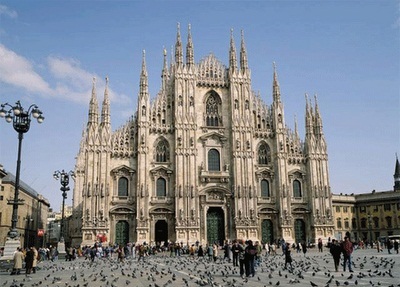
The Catholic Church remained the dominant sovereign power in Europe until the reign of Pope Boniface VIII.  The clash of the Church to remain dominant over the newly emerging nation/state rulers took place in an epic battle between Pope Boniface VIII (1294 734-conflict-church-monarchs-12-638CE) and King Phillip IV of France.  Several other skirmishes had already taken place between Popes and rulers in the decades preceding with the battles seesawing back and forth.  However, the decisive battle for sovereignty was between Pope Boniface VIII and King Phillip IV.  It was vicious and at times bloody.  It saw the end of Church sovereignty and the beginning of the
sovereignty of nation/state rulers.   Boniface was captured by forces loyal to Philip and was beaten and nearly executed.  He was released from captivity after three days and died a short time later.  His defeat marked the end of the power of the Church to rule and the rise of the power of rulers of nation/states.

There are four characteristics of a nation/state.  These are:

  • Defined territory
  • Self-Rule (Sovereignty)
  • Some form of organized government
  • A population of people sharing a national identity

versailles-and-giverny-day-trip-in-paris-115463During the period of nation/state rulers, they built some magnificent buildings such as Versailles in France, Castello Del Valentino in Italy, the Palace of Placentia in London and the Schönbrunn Palace in Vienna.  If not the largest buildings in each country, they dwarfed in overall grandeur and size the churches that had been built by the clergy.  The period of nation/state rulers lasted from about 1400 CE to the middle of the 19th century.

The power of most of these nation/state rulers (usually with some pedigree of nobility) began to wane as the people in each country demanded more and more input into economic and political decisions.  Eventually, the nobility in most European countries were forced to make concessions to the idea of democratic or at least some form of republican rule.  The transition from rulers to republics was insured by the rise of a new class which we today call politicians or bureaucrats.  In time, these professional politicians became sovereign and replaced the old style rulers by virtue of a concept called elections or voting.  No one voted for Henry the VIII of England or Czar Nicholas II of Germany or King Ferdinand of Spain, but with the emergence of State governments, politicians and bureaucrats would become the new sovereigns.

how-bureaucrats-captured-government

The rise of most modern states started about the mid seventieth century.  Increasingly, although rulers in many nations could still be very powerful and even dictators, there was now some agency in every country that attempted to provide a balance to the ruler’s power.  In England, they established a parliament in 1706 that was later characterized by a House of Lords and a House of Commons.  In France, they created a National Assembly in 1791.  In Germany, they established a parliament in the 1870’s.  By the beginning of the 20th Century, although many nations had still kept their nobility as a form of tradition, most of the reins of government were in the hands of bureaucrats or elected officials.  Prime Ministers and Presidents had replaced Kings and Queens in the political decision making process.

national-capitolThe new sovereigns started building.  No more castles or palaces were built to house the new rulers.  Instead, capitals, state houses and mansions would be the new domiciles for politicians and bureaucrats.  Government leaders were no different though than Kings and Clergy when it came to siting their residences.  They also sought the high ground to place their buildings on.  The tallest buildings in the land now belonged to the Government.  This situation would not last very long.  Even more changes were taking place.  In a few short years, nations would no longer have an exclusive on sovereignty.  A new challenger was rapidly emerging.

capitalists

The new challenger started to emerge with the first corporations which began over a thousand years ago.  However, until the power of mercantilism started to become critical to state and military power in the late 16th century, the early corporations were rather toothless.  An excellent book titled Power Inc. covers the rise of the modern corporation in much more detail than I shall go into here.  The book by David Rothkopf is fittingly subtitled:  “The Epic Rivalry between Big Business and Government–and the Reckoning That Lies Ahead.”   

“In his new book, Power, Inc., David Rothkopf sounds an alarm.  He argues that thousands of private actors who he calls “super citizens” now hold greater power than most countries in the world.  He notes, for instance, that corporations have grown to the point where roughly the richest two thousand are more influential than 70-80 percent of the world’s nations. Walmart, for example, has revenues higher than the GDP of all but 25 nations.” — Roy Ulrich, the Huffington Post

The capitalistic industries wasted no time in starting to construct new buildings that would soon dwarf all of the previous tombs, castles, cathedrals and capitals throughout the world.  These buildings are so tall that they have been labeled as “skyscrapers.”  The world’s first skyscraper was the Home Insurance Building in Chicago, erected in 1884-1885.  Its 138 foot peak would be dwarfed by skyscrapers today.  The Flatiron Building in NYC was built in 1902 and is twenty floors high and 307 feet to its peak.  The Empire State Building was built in 1931 in NYC and for many years it was the tallest building in the world standing over 100 stories and 1400 feet in height.

With the rapid economic development of many former third world countries there has been a proliferation of corporate skyscrapers with many countries vying for the honor of having the tallest building in the world.  Searching on Google for the “tallest buildings in the world” one finds the following information for buildings over 300 meters tall:

“As of 2016, this list includes all 135 buildings (completed and architecturally topped out) which reach a height of 300 meters (984 ft.) or more as assessed by their highest architectural feature.”Wikipedia

skyscrapersThe list includes skyscrapers built in China, United Arab Emirates, Dubai, South Korea, Taiwan, Malaysia, Russia and several other nations.   Perhaps presaging the emergence of China and Asia as the dominant world economies, Asia is already assuming the role of having many of the largest buildings in the world.  What we are witnessing is a contest of global economies vying for supremacy in terms of world economic sovereignty.  An interesting aside is that the world currency is considered a reflection of the nation that is the most powerful in this arena.  To date, the United States still holds that distinction but many are predicting the demise of the US dollar as the standard for world currency.

tpp-free-trade

But what does this have to do with Trump you may be starting to ask?  What does commercial sovereignty have to do with political sovereignty?  The answer to the second question is everything.  The major reason for the success of the Allied powers in both WWI and WWII was the economic might of the United States.  Economic power translates into military power and military power translates into political power.  This fact has been recognized for over 500 years now.  Spain’s ascendancy to a world power was built on its confiscation of wealth in the New World.  Hitler recognized that Germany could not be a dominant world power without confiscating the wealth of Jewish citizens and also of its neighboring countries.

“Great Britain was once a dominant military force in the World while it had a dominant economy.  At the start of the First World War, it devalued its exchange rate.  By the end of the War, owing to its military expenditure, it had large trade deficits and falling gold reserves.” — Buoyant Economies

The question of Trump brings a larger issue to the fore.  Generally, we have seen that as the dominant world power shifts, the leadership shifts along with it.  The features of buildings as a representation of power has followed these shifts.  However, in terms of the new power of corporations, it would seem that the buildings have been created before the shift in leadership.  That is until Trump became President of the United States of America.

a-corporate-worldIs Trump’s election an anomaly or does it truly represent the emergence of corporate power into the political arena?  My view on this is that Trump’s election is merely the tip of the iceberg.  For over 20 years now the United States has been electing more and more political leaders who are not politicians.  I am considering someone as not a politician if they are people who have not made a career of politics.

Many business people are jumping right into the political arena without experience in either local, state or federal government.  The founder of Electronic Data Systems, Ross Perot may be remembered by many voters as the ultimate tycoon-turned-politician.  Perot ran for president in 1992 and 1996 as a third-party candidate.

An article written in 2010 before Trump had become a candidate stated the following concerning the election of corporate people to public office:

“Whoever believes politics is big business must have seen this coming. The high levels of accountability from running a corporation and high expectations of seeking a seat in government have many parallels.  Amid this confluence of business and political streams, Chief Executive magazine dubbed 2010 “a high-water mark for the CEO as candidate.”

More than 40 business magnates – the presidents and founders of banks, restaurants and tech giants – are running for seats on Capitol Hill or for governor’s offices in 25 states. And looking ahead Donald Trump says he is “absolutely thinking about” a 2012 presidential bid.” — Ten Business Leaders with Politics in their Blood, by Bill Briggs

During the Republican runoff to the nomination of Trump, we saw Carly Fiorina who was a former CEO also emerge as a potential candidate.  We now have ten governors with no former elected government service.  Seven former US presidents with business experience have all been elected in the 20th or 21st century.  The following chart shows the net worth of the wealthiest senators in the US. Congress as of 2012.senator-net-worth

The next chart shows the average net worth of 90 incoming freshman representatives to the 113th US Congress

January 3, 2013 to January 3, 2015

Year Number of Freshmen Reports Average Net Worth Change from previous year
2011 90 $7,835,242 —-

More data can be found at Ballotpedia at https://ballotpedia.org/Main_Page

the-50-richest-people-on-earthMy point here is that most millionaires make their money in business.  On the 2016 Forbes lists of richest 400 people in the world, richest billionaires in the world and richest people in the world, the majority (about 2/3) have made their money in business.  Furthermore, they are self-made in that they did not inherit their fortunes.  Perusing Forbes, it is clear that the dominant path to becoming rich is to sell something that people want at a price they can afford.

It is clear that wealth accumulated to a business background has increasingly become a stepping stone to politics and political leadership.  Trumps presidency is the crown on the new sovereignty.  Business leaders are now rapidly replacing politicians and bureaucrats in the area of political leadership.  Already Trump’s nominees include the chief executive of Exxon Corporation; the chief executive of CKE Restaurants; the former chief executive of the World Wrestling Entertainment; a former Goldman Sachs executive; a billionaire investor; a right wing media executive and a former chief executive of Nucor Corporation.  These are only a few of the still to come appointments that Trump will make.

corporate-powerIt is my prediction that business leaders will continue to make the transition to political leadership.  The business model is now the sovereign model for world power.  The power of the state has been usurped by the power of big business.  Global power is corporate power.  The public is sick of career politicians.  The common people bring a (perhaps unfounded) belief in the power of business to save the world.  Considering that we have tried the power of academia, the power of science and the power of big government to save the world, perhaps the power of business can do better.  One might argue that they can at least do no worst.

Conclusion:

From Khufu to Trump, we have now briefly (my apologies for many simplifications and no doubt omissions in history) covered 4,500 years of political and economic history in a short seven or so pages.  I can see the great historians and economists of the world having fits at my narrative. Nevertheless, my thesis remains.  Simply put Trump is now the successor to Khufu, Caesar, Pope Boniface, Henry the VIII, Bismarck, Churchill and Roosevelt.  Big business is now the dominant sovereign power in the world.  How long will it last?  How long will it take all politicians to be replaced by business people?  I have no answers to these questions; but one must assume that somewhere down the road, another sovereign power will emerge or may already be emerging.  Until then, be prepared for most decisions to have a “let’s make a deal” flavor to them.

Time for Questions:

How long will the reign of big business last?  How long will it take politicians to all be replaced by business people?  Will business succeed in making the world a better place?  Why or why not?

Life is just beginning.

“I spent 33 years and 4 months in active military service . . . And during that period I spent most of my time as a high-class muscle man for Big Business, for Wall Street and the bankers. In short, I was a racketeer, a gangster for capitalism.

Thus, I helped make Mexico and especially Tampico safe for American oil interests in 1914. I helped make Haiti and Cuba a decent place for the National City Bank boys to collect revenues in. I helped in the raping of half a dozen Central American republics for the benefit of Wall Street.

I helped purify Nicaragua for the international banking house of Brown Brothers in 1902–1912. I brought light to the Dominican Republic for American sugar interests in 1916. I helped make Honduras right for American fruit companies in 1903. In China in 1927, I helped see to it that Standard Oil went on its way unmolested.

Our boys were sent off to die with beautiful ideals painted in front of them. No one told them that dollars and cents were the real reason they were marching off to kill and die.”
― General Smedley Butler

“Our aim is not to do away with corporations; on the contrary, these big aggregations are an inevitable development of modern industrialism, and the effort to destroy them would be futile unless accomplished in ways that would work the utmost mischief to the entire body politic. We can do nothing of good in the way of regulating and supervising these corporations until we fix clearly in our minds that we are not attacking the corporations, but endeavoring to do away with any evil in them. We are not hostile to them; we are merely determined that they shall be so handled as to serve the public good. We draw the line against misconduct, not against wealth.”
― Theodore Roosevelt

My Blog to Honor Dr. Martin Luther King, Jr.

Previous Older Entries Next Newer Entries