
I stated in parts 1-4, that unless we change our attitudes and policies regarding Corporate Capitalism, it will destroy our country, our way of life, our freedoms, and our environment. Furthermore, we will undoubtedly take some of the rest of the world along with us. This is a serious accusation and one I do not take lightly.
I have already described four of the five myths that are largely responsible for the mistaken policies and laws that have allowed Corporate Capitalism to become a dangerous disease. A disease that is infecting our government and policies in myriad ways and causing untold damage to our country and the world.
In this blog, I will describe Myth #5 and how it contributes to the problems we are now facing. Myth #5 is:
What’s Good for Corporate America is Good for the USA:
 A version of this myth is the “Too big too fail idea” widely heard during the “Great Recession” and now during the Coronavirus epidemic. General Motors was one of the first giant corporations in America and even as late as 2019, it was ranked 13th on the Fortune 500 rankings of the largest United States corporations by total revenue. In 1952 during his nomination hearing for Secretary of Defense, Charles Wilson (former CEO of General Motors) was asked if he could make a decision as Secretary of Defense that ran contrary to the interests of his former company. He replied with the now infamous remark YES but that he could not conceive of such a situation: “because for years I thought what was good for our country was good for General Motors, and vice versa.” — Wikipedia
 The foregoing belief in the common interests that corporations shared with America came to epitomize the ideology of Corporate America. American corporations then used the media and astute public relations to convince the majority of US citizens that they are indispensable, and that the welfare of the average person depended on the welfare of the corporation. To put it another way, the interests of a giant corporation are claimed to be synonymous with the interests of the average person. “What is good for America’s Corporations is good for You.” “What is good for Microsoft, Google, Amazon, Exxon, Facebook and Pfizer is good for you.”
This belief system, that corporate welfare is synonymous with our country’s welfare, is inevitably betrayed by at least two major factors. These include: Externalities and Short-Term Thinking.
- Externalities (Lack of responsibility)
 When a company makes and sells a product, it is no longer responsible for the effects of that product on either the buyer or the environment. Unless evidence can be shown that somehow the corporation either lied or had some kind of criminal intent in the sales process, the consumer and society are responsible for the negative effects that a product or service might have. For instance, oil companies sell gasoline but are not responsible for the effects of polluting the atmosphere by burning gasoline. Another example is the packaging that many companies use for their products. Amazon is notorious for over boxing even the smallest products. The boxes must then be thrown away or recycled in a landfill. However, the cost of this recycling is not born by Amazon but ultimately by the taxpayer who must pay for the recycling through taxes or direct payments. Meanwhile, Amazon makes a great profit by being able to take advantage of tax loopholes and escaping any costs. These costs are called in economic terms: “Externalities.”
“In economics, an externality is the cost or benefit that affects a third party who did not choose to incur that cost or benefit.” Wikipedia

- Short-term thinking
Corporations will tell you that consumers benefit from the aforementioned transfers of costs. The consumer pays a cheaper price for the product than he/she would if the total costs to the environment were factored in. However, this is only considering short-term costs. In the long term, the consumer/taxpayer pays a much greater cost. For instance, the pollution in the atmosphere has caused the overall temperature of the earth to rise resulting in global warming. This warming has destabilized weather patterns all over the earth resulting in extremes of weather: more frequent tornadoes, stronger hurricanes, longer droughts, greater rain in many areas resulting in flooding.
The impacts of these weather changes have already cost the world billions of dollars. One study found that: “Climate change could directly cost the world economy $7.9 trillion by mid-century as increased drought, flooding and crop failures hamper growth and threaten infrastructure.” — Climate impacts ‘to cost world $7.9 trillion’ by 2050. This study does not measure the misery to human beings all over the earth in terms of famine, pestilence and the impact of more and more “natural” disasters.
So, what we have here is the typical example of “Short-Term” thinking on the part of our Corporate Capitalistic economic system. From worrying about the daily price of their stocks, the quarterly dividend, the monthly financial statements and the quarterly financial reports, corporations are guided by short-term thinking. They will compete for short-term profits at the cost of destroying our environment, our way of living and ultimately our world. This is the nature of the beast as it is bred and chartered.

When I was a store manager at the now defunct W.T. Grant Company, we used to get a report each month which showed us our store ranking in relation to the 200 or so other stores in our division. Our regional management would send these out every month to motivate us to raise our ranking. Thus, if we were ranked 76th out of 200 in sales and profits, it would behoove us to try to improve. However, these rankings were more or less random since some stores would always be in the top rank because of their size or other demographics. Even without changing a single factor in our operation, the next month might see our ranking go up to 50th. This could simply mean that our seasonal sales had kicked in before some other store areas. The following month we might drop to 125th out of 200.
Each month brought a great deal of shifting between stores. One soon learned that these reports were worthless. We regarded them as a big joke. They told us nothing except that management was focused on the short-term and that it could not look longer ahead than a month. I worked for W.T. Grant for two years and left 4 years before they went bankrupt. At the time of their bankruptcy, they were the largest American corporation to ever declare bankruptcy.

A number of years ago, the average lifespan of an American corporation was 60 years. The first list of Fortune 100 companies published in 1954 showed that less than fifty years later more than ½ of these companies no longer existed. A corporation which is regarded as a person by such ridiculous decisions as “Citizens United” lives considerably less than the lifespan of an average person. Even that limited a lifespan for a corporation has dropped. The average age of an S&P 500 company is now under 20 years, down from 60 years in the 1950s, according to Credit Suisse.
Why? You may well ask. The answer is simple. For two reasons: Greed and Stupidity. Hardly a corporation in America does not create a “strategic plan.” I have helped formulate and facilitate many a strategic planning session. The most difficult part of planning is to get companies to think long-term. Partially, this is due to the extremely volatile nature of business and the competition that companies face. An even bigger part of the problem is the nature of management thinking. There are some notable exceptions to this prevalent thinking:
“In Warren Buffett’s 2010 annual letter to shareholders he mentions the advantage Berkshire Hathaway has because it doesn’t focus on short term results”:

“At GEICO, for example, we enthusiastically spent $900 million last year on advertising to obtain policyholders who deliver us no immediate profits. If we could spend twice that amount productively, we would happily do so though short-term results would be further penalized. Many large investments at our railroad and utility operations are also made with an eye to payoffs well down the road. At Berkshire, managers can focus on running their businesses: They are not subjected to meetings at headquarters nor financing worries nor Wall Street harassment. They simply get a letter from me every two years and call me when they wish.” — Dr. Deming’s 7 deadly diseases by John Hunter
 Dr. Deming wrote reams about the failure of management to balance what he called the “Problems of Today” with the “Problems of Tomorrow.” I would typically hear when beginning a consulting engagement numerous reasons why “it could not be done.” One of the most common excuses was expressed colloquially as “We are up to our ass in alligators.” Another excuse was “We have too many fires to put out.” I was fond of reciting Dr. Deming’s comment that, “Putting out fires is not improvement. Finding a point out of control, finding the special cause and removing it, is only putting the process back to where it was in the first place. It is not improvement of the process.” — Out of the Crisis, W. E. Deming
I have already mentioned in Part 2 on the Efficiency Myth that most corporations never really understood the idea of continuous improvement. The focus of management is for the most part, a focus on quick fixes and short-term thinking that can bring quick profits regardless of the hidden costs and externalities. Thus, the belief that what is good for a corporation is good for its citizens is not just false but dangerous. To hold this belief is like trusting a rattlesnake not to bite you. You might think that the rattlesnake is your friend until the day it bites you. You are no more a friend to an American corporation than you are a friend to a rattlesnake.
 I have sat in many boardrooms for many planning meetings, and seldom did I ever hear an executive worrying about the environment or the hidden costs of externalities. The oft assumed legal mandate of a corporation is to make a profit. However, corporate law states that a company does not have to pursue profit maximization at all costs. This is idealistic though since the tendency in the marketplace and short-term thinking push corporations to ignore other considerations and pursue profits at all costs. It is also much easier to measure profits than it is to measure a “good” to the environment or a “good” to the social system. Thus, generally profits will trump other considerations in running an effective business.
Conclusion:
What is to be done? How do we restore the proper balance of power to ensure that Corporations serve the country and not that the country serve the corporations?

I think it will require the following major actions:
- We must overturn the US Supreme Court’s ruling in Citizens United
- We must change corporate law to do the following:
- Place size limits on corporations
- Place limits on the number of companies a corporation may acquire
- Regain citizen control by changing the corporate charter
- We must place limits on the exercise of lobbying
- We must stop corporate donations to political candidates
- We must place limits on the hiring of corporate executives to manage and oversee the government agencies that regulate their industry
There are many other things that can be done if we as citizens recognize that we have the power to take control of corporations. We have the power to insure that they are acting in the public interest and not the other way around. Madison Avenue has convinced Americans that what is good for Corporate America is good for the USA. Nothing could be further from the truth. It is time we take back our power.
“Corporate social responsibility is measured in terms of businesses improving conditions for their employees, shareholders, communities, and environment. But moral responsibility goes further, reflecting the need for corporations to address fundamental ethical issues such as inclusion, dignity, and equality.” — Klaus Schwab

This is an excellent report by the Roosevelt Institute. If you are interested in details on how Corporate power can be reigned in. You need to read this report.
https://rooseveltinstitute.org/publications/untamed-corporate-financial-monopoly-power/


 As years have gone by, I have learned from the sages (who profess to know these things) that “being” is more important than “doing” in terms of defining who we really are. In other words, just because I work as a management consultant or educator, that job title does not describe the real me. The real me exists apart from what I do to make a living or to earn a paycheck. I discovered that It would take an epic journey of soul searching to find my real being, the real me. Ever since I learned that I needed such a quest to know my true inner self, I have been struggling to find out who I really am. I am now 73 years old and I am still wrestling with this question.
 Socrates said that “The unexamined life is not worth living.” These words were reportedly spoken at his trial for corrupting the youth of Athens. Socrates believed that living a life where you unthinkingly obey the rules of society and never stop to examine what you actually want out of life is not worth living. I believe that Socrates was thinking too much. It is relatively easy to know what one wants out of life. I want happiness, money, good health, good love, good sex, good food, interesting friends, a challenging and meaningful job and a perhaps a few exceptional children or two to round things out. I am not sure what else I would want if I delved into the issue any deeper.
 On the other hand, what if we are not faced with a coin here but with a Mobius Strip. So there are not two sides but only one side. Unlike a two-sided coin, there is no division in a Mobius Strip. This is more of an Eastern perspective on life. Thus, being rolls into doing without any breaks and doing rolls back into being. Life is simply be-do-be-do-be-do. If this is what life is really about, then trying to separate the two ideas is simply impossible. When I do, I am being and when I am being, I am doing.


 Dr. Deming would do two or three of these a month all over the USA. He continued these four-day seminars until about six months before he died at the age of 93 in 1993. Dr. Deming always required help at these seminars since as many as 500 people would usually attend. I was fortunate enough to help out at four of these seminars. After getting to know Dr. Deming fairly well, I brought several consulting clients to his home in D.C. to discuss with him personally his ideas on what we were doing right and wrong. Dr. Deming was always very candid and blunt. This endeared him to some people, while it turned other people off.

 By the way, when we think of government organizations it is usually as being much less capable in the efficiency area and much more focused on effectiveness or doing the right things for society. I suppose that is one of the reasons why it is so easy to ridicule government. Senator Proxmire was famous for his “Golden Fleece Awards “in which he belittled government agencies for their waste and lack of efficiency. I have worked or consulted in many government agencies and I have to admit that “efficiency” was often sorely lacking.


 required be different? Could children hear the same frequencies as rats?
 seem like there was any long-term strategic plan here.






 Elvis recorded this song at 20th Century Fox Studios in Los Angeles on a 7” single format. The publishing label was RCA Victor. The song became so popular that it was used as the title for an Elvis movie for which the song was written. It went on to become a number 1 hit on the pop charts and has since been used in numerous movies and sung by hundreds if not thousands of other recording artists.
 I was on my cell phone a day or so ago talking with some old friends about another friend. One of my best friends in the world of management consulting was a wonderful woman named Dr. Hana Tomasek. Hana had emigrated from Czechoslovakia (now Czech Republic) after the Russian invasion in 1968. The Russians invaded to put down the political liberalization known as the Prague Spring. Hana escaped Czechoslovakia with her husband Jara on a secret journey in the middle of the night across the border and to freedom in a non-communist country. Hana and Jara left everything behind and eventually arrived in the United States for sanctuary. Years later they achieved their dreams of citizenship in the “Land of the Free and the Home of the Brave.” Hana is one of the most patriotic citizens of the USA that you would ever meet. Sadly, Jara passed away many years ago and Dr. Tomasek (She is very proud of her degree) is now suffering from dementia and lives in a nursing home in Spring Park, Minnesota.
 After discussing Hana’s health with the two friends I know, both who regularly visit with her, I was suddenly struck with the need to listen to Elvis’s version of “Love Me Tender.” Somehow, talking about Hana I associated my feelings for her with this song. Hana was a friend and mentor to me at the consulting firm of Process Management International which I joined after graduating with my Ph.D. degree in 1986 from the University of Minnesota. Hana and I became good friends after working together with a number of clients. Hana was by far the more knowledgeable and capable as a management consultant and she taught me much about how to be successful in the field. Karen and I eventually got to know Hana and Jara on a personal basis and it has been a rewarding friendship. It saddens me very much to see how frail and fragile she has become when I think of the strong virile person she once was. She was an avid skier, sailor and scuba diver. Hana made over 600 dives throughout the world. Each year for many years she would go skiing in the Alps or in Colorado.
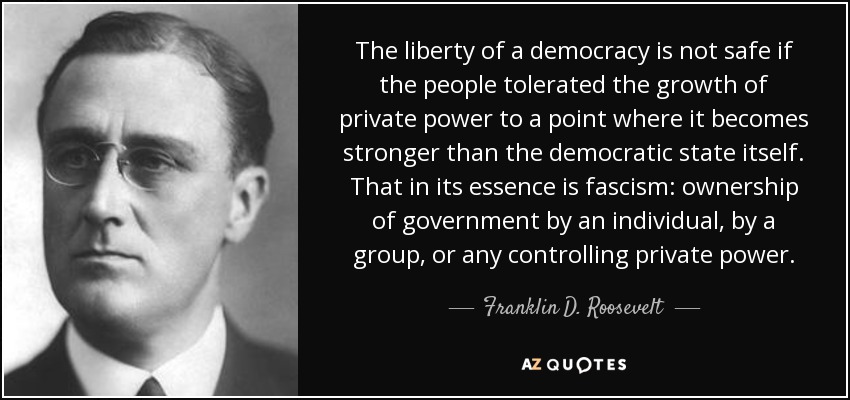

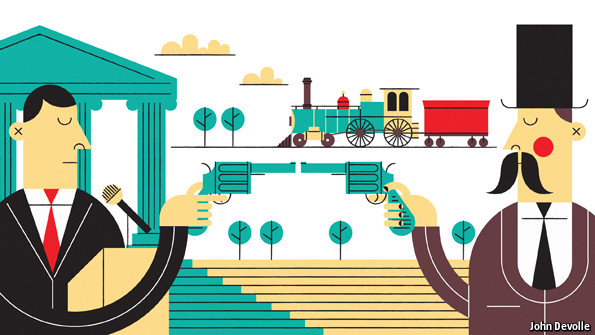
 People who believe in the idea of “laissez faire” want us to think that corporations can regulate themselves and do a better job of it then when government interferes with rules, policies, laws and regulations. Business leaders do their best to hype this belief and to create the idea that government run organizations are always less efficient than those run by private entities. Conservatives and Republicans subscribe to this belief and spend a great deal of time and effort trying to thwart those who disagree.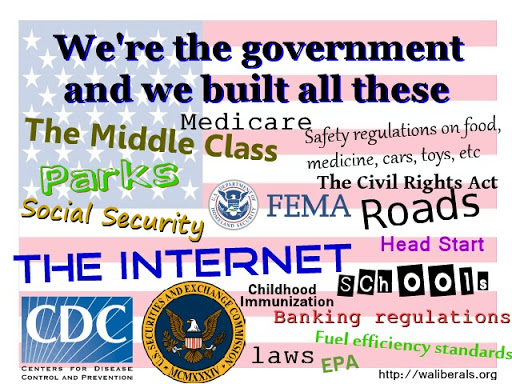
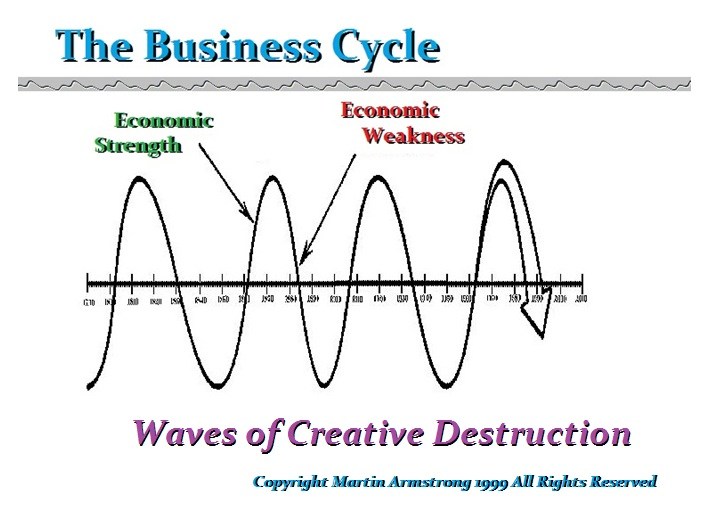
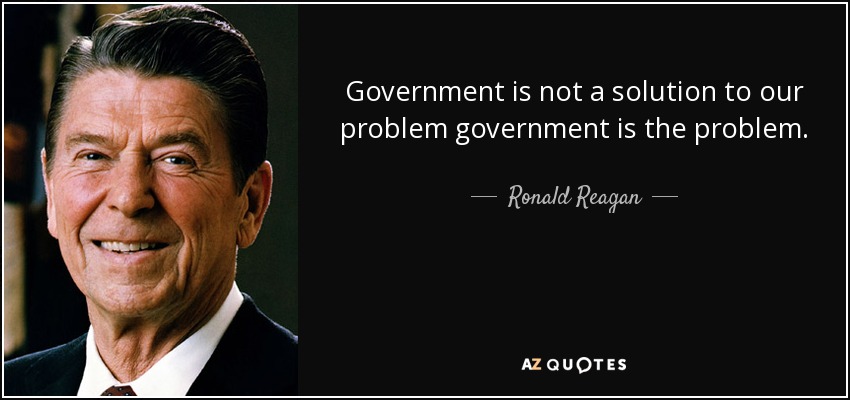
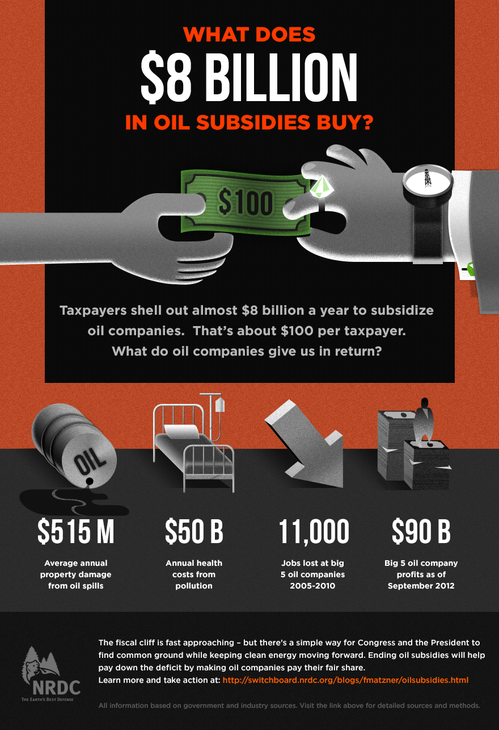
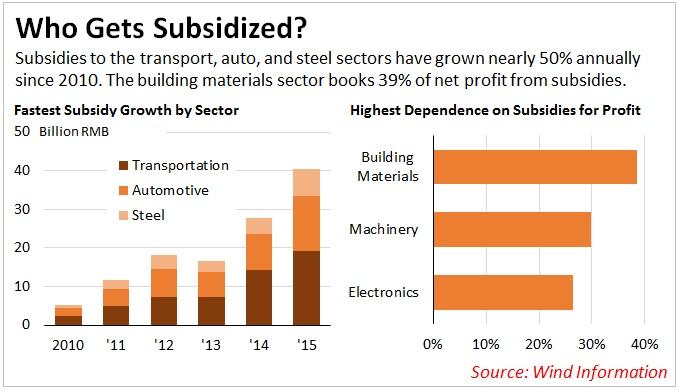
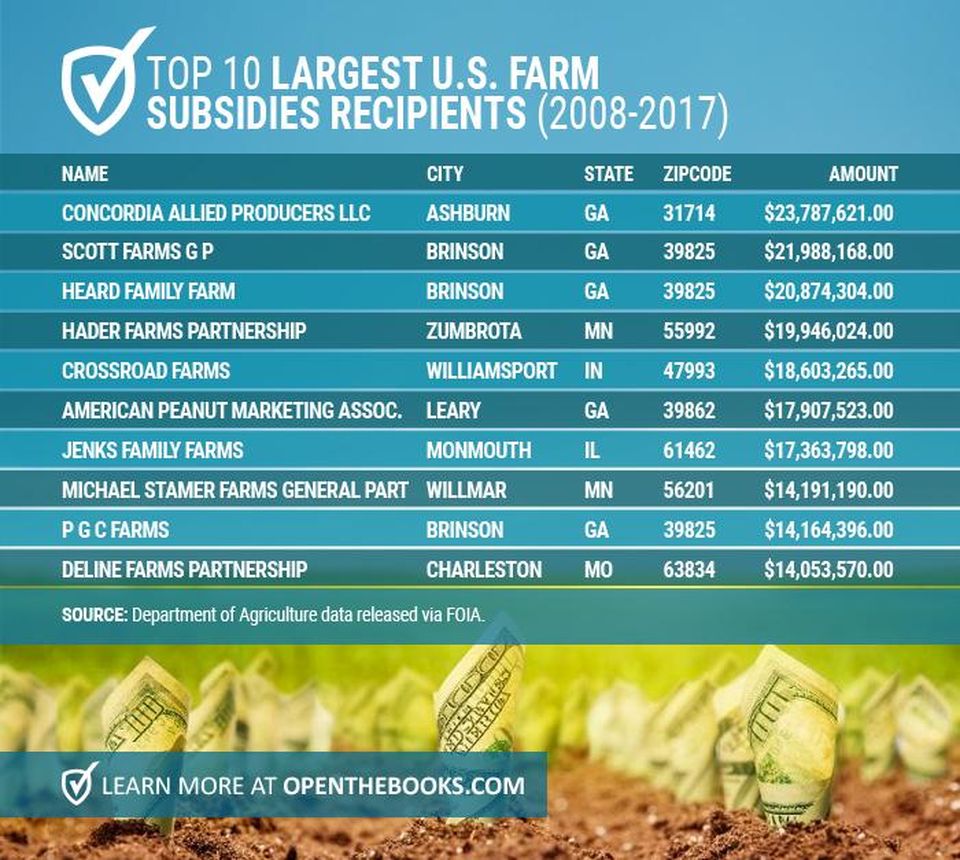 Corporations are liars. They say they want to live in a laissez faire environment. They say they want fewer government regulations. They say the government only interferes and adds no value to their products. They say they don’t want the government telling them what to do. The lie is that they do want Government involvement. They want the government to bail them out of a situation when they will suffer losses or see lower profit margins. They want the government to give them preferred bankruptcy conditions. They want the government to side with them in labor-management disputes. They want the government to help them out with all of the items on my list above. Do some research. Find out how many companies and industries get government handouts. Check out


 brought sorrow to my heart over the years. Life does not always end happily. Lives do not always find the justice and honor they merit. I have felt sorry for the heroes and heroines who did not get the fates they deserved. If only I could somehow right all the wrongs and set history on the paths it should have taken. I find books tell me about my shortcomings and highlight areas where I need improvement. It is always sorrowful to find that I am not as good as I would like to be.
 Most of what people learn about Marx is far removed from his actual ideas. Given that Capitalism has been diametrically opposed to the very name of Karl Marx, it is not surprising that he is routinely disparaged. Even at the University level, it is rare to find anyone studying Marx very deeply. Many educators and instructors describe Marx’s economic theories as “Totally Discredited.” Few people in America have any good words for Karl Marx. Any politician in the USA who might suggest that Marx ever said one good thing or had one good idea would court instant political death. Marx is the devil in our Capitalistic system.
 Marx did of course hate capitalism. He saw Capitalism as a system that exploited workers and allowed the greedy to benefit at the expense of those less fortunate or less aggressive.
 The antipathy directed towards Marx and his critique of Capitalism has discouraged any real in-depth understanding of the limits and myths of Capitalism by most Americans. Capitalism resides in America on the same level as Mom, God, and Apple Pie. Woe to anyone who would dare to attack Capitalism. In the United States, Capitalism is as hallowed an institution as Christianity. In fact, most Christians think that Capitalism and religion go hand in hand, which to a large extent they sadly do. Unfortunately, not all Capitalism is the same. In America, we have a home-grown version that is more appropriately called Corporate Capitalism. What is the difference you might ask? Well it gets even more complicated since economists define four types of Capitalism. These are:
 Over the past 40 years, the Supreme Court has radically expanded constitutional rights for corporations. The original charters for corporations written in the late 19th century, allowed corporations powers never before seen in companies. The abuse of these powers soon led to a considerable amount of legislation designed to reign in some of the most egregious of these abuses. Laws such as the Sherman Anti-Trust Act passed in 1890 to stop monopoly practices and the Clayton Antitrust Act passed in 1914 to stop unethical business practices were somewhat successful at ameliorating corporate abuses. Unfortunately, corporations were still left with considerable power to thwart the goals of democracy and good government.
 Corporate interests easily dominate the interests of the common person. The common person has nowhere near the financial clout of corporations. In 2010, the Supreme Court passed the Citizens United Decision which gave corporations unlimited power to finance and support political candidates running for office as well as to lobby on behalf of any laws that they wanted. This decision basically upheld the idea that corporations had a right to free speech much like any citizen of the USA and that campaign spending was simply a manifestation of free speech. Corporations are now being treated as living breathing people despite the fact that corporations can live forever, and corporations are not organic entities. They are not born, and they do not die like any other creature on the face of the earth.


 One of the most popular movies in the eighties was Wall Street. In the movie, Michael Douglas gave a “Greed is Good” speech which was actually applauded by audiences all over the United States. Some corporations have been sued by stockholders for not being greedy enough.

 Aging Capriciously