
Ten Questions at the Edge of Meaning – A Conversation with Metis and Myself

Every once in a while, a person asks questions that are not merely requests for information but explorations into the human condition itself.  Questions about God, history, myth, literature, morality, and meaning.

Recently, I posed ten such questions to Metis.  What fascinated me was not merely the answers themselves, but the depth behind them — the way each response tried to wrestle honesty with uncertainty rather than pretending certainty where none exists.

Below is the conversation, lightly edited for readability.


1.  Who Made God?

This may be the oldest philosophical question humanity has ever asked.

Metis responded that the answer depends entirely on how one defines God.  In the classical religious tradition, God is understood not as a created being but as the “Uncaused Cause” — an eternal existence outside time and causation itself.  In that view, asking “Who made God?” becomes somewhat like asking “What is north of the North Pole?”

Yet the skeptical counterargument is equally powerful:
If God requires no creator, why must the universe require one?

Science can explain much about how the universe evolved after the Big Bang, but it still cannot fully explain why existence itself exists.  Metis suggested four possibilities:

  1. God exists eternally. 
  2. The universe exists eternally. 
  3. Both emerge from something deeper we do not yet understand. 
  4. Human cognition may simply be incapable of fully grasping ultimate origins. 

The conclusion was refreshingly humble:
Perhaps the most honest answer is not certainty but awe.


2.  Will They Ever Find the Burial Place of Genghis Khan?

Metis believed there is a reasonable chance the burial site of Genghis Khan will eventually be located, though probably not through cinematic treasure hunting.

The Mongols appear to have intentionally erased the site from history.  Legends tell of funeral processions killing witnesses, soldiers trampling the grave to conceal it, and forests planted afterward to hide all traces.

Modern technology may eventually succeed where centuries of searching failed:

  • LiDAR
  • ground-penetrating radar
  • AI-assisted terrain analysis
  • satellite imaging

Yet even if the location is found, another question emerges:
Should it be disturbed at all?

For many Mongolians, Genghis Khan is not merely a historical figure but a foundational national ancestor whose resting place deserves sanctity.

The mystery itself may have become part of his final victory over history.


3.  Who Was the Greatest Fiction Writer of All Time?

Metis selected William Shakespeare.

Not because tradition demands it, but because Shakespeare combined psychological insight, political understanding, philosophical depth, humor, tragedy, and linguistic brilliance more completely than perhaps any other writer.

Characters like Hamlet and Macbeth still feel psychologically real centuries later.

Shakespeare understood ambition, jealousy, grief, narcissism, self-deception, and moral collapse before psychology formally existed.

Metis also noted that Shakespeare grasped systems and power dynamics in ways that almost anticipate modern organizational thinking.  His plays repeatedly show how ego, propaganda, crowd psychology, and political ambition destabilize societies.

Other contenders included:

  • Leo Tolstoy
  • Fyodor Dostoevsky
  • Mark Twain
  • Miguel de Cervantes

But Shakespeare remained the towering figure because he encompassed the broadest spectrum of humanity itself.


4.  What Is the Greatest First Line Ever Written?

Metis chose:

“Call me Ishmael.”

—from Moby-Dick.

Three words.
Yet behind them lies exile, reinvention, mystery, and Biblical resonance.

Not “My name is Ishmael.”
But:
“Call me Ishmael.”

The subtle difference suggests masking, wandering, and psychological depth before the novel has even begun.

Other remarkable openings included:

  • Anna Karenina
  • 1984
  • The Stranger

5.  What Is the Greatest Last Line Ever Written?

Metis selected the ending of The Great Gatsby:

“So we beat on, boats against the current, borne back ceaselessly into the past.”

Why?
Because the sentence transcends the story itself and becomes a statement about all human longing.

It captures:

  • memory,
  • ambition,
  • regret,
  • nostalgia,
  • and the tragic persistence of hope. 

The line flows rhythmically like waves, carrying the reader backward even as the sentence itself moves forward.

Other unforgettable endings included:

  • The Sun Also Rises
  • Animal Farm
  • Nineteen Eighty-Four

6.  Who Was the Greatest Real Hero in History?

Metis selected Abraham Lincoln.

Not because Lincoln was flawless, but because he combined:

  • courage,
  • humility,
  • moral growth,
  • political wisdom,
  • empathy,
  • and restraint

under unimaginable pressure.

Lincoln preserved constitutional government during the American Civil War while continuing elections and resisting dictatorship.

Perhaps most importantly, Lincoln evolved morally.  He was not born morally complete.  His understanding of slavery and race deepened over time.

Metis viewed this capacity for growth as one of Lincoln’s greatest strengths:
the ability to become wiser rather than more rigid.


7.  What Is the Greatest Novel Ever Written?

Metis selected “War and Peace.”

The reasoning was fascinating.

Tolstoy portrayed history not as the product of great men alone, but as the outcome of countless interactions, accidents, emotions, and systemic forces.

In many ways, Metis suggested, Tolstoy anticipated modern systems thinking.

The novel combines:

  • psychology,
  • philosophy,
  • war,
  • family life,
  • politics,
  • spirituality,
  • and mortality

on an unparalleled scale.

Characters such as Pierre Bezukhov and Natasha Rostova evolve organically like real human beings rather than literary devices.

The novel does not merely tell a story.
It creates an entire living civilization.

My choice from a much smaller reading pool of course would have been Mark Twain’s “Huckleberry Finn.”   Here are my four reasons for selecting Huckleberry Finn.  

1.  It captured the authentic American voice

Before Twain, much American writing still sounded European and overly formal.  Twain wrote in the rhythms of actual speech — rough, funny, regional, alive.

Twain gave America its own literary sound.

2.  Huck’s moral growth is revolutionary

Huck is not educated, philosophical, or noble.  He is an ordinary boy shaped by a racist slave society.  Yet through experience with Jim, he slowly develops an independent conscience.

The key moment comes when Huck says:

“All right, then, I’ll go to hell.”

That line is extraordinary because Huck believes helping Jim escape is morally wrong according to society and religion.  Yet he chooses human compassion over social rules.

Twain is asking a profound question:

“What happens when society itself is immoral?”

That question never gets old.

3.  It is simultaneously hilarious and tragic

Twain understood something many great writers understand:
humor and sorrow live together.

The Duke and Dauphin episodes are comic.  Huck’s observations are funny.  Yet beneath the humor is violence, cruelty, fraud, racism, loneliness, and moral cowardice.

America in miniature.

4.  It is deeply symbolic

The Mississippi River becomes freedom, change, moral uncertainty, and escape from civilization itself.

The raft scenes often feel peaceful and humane.
The shore scenes are usually corrupt and dangerous.

Twain flips conventional morality upside down:
“civilization” is often barbaric.


8.  What Is the Most Powerful Myth of All Time?

Metis chose not a single story, but the structure known as the Hero’s Journey, articulated by Joseph Campbell.

The pattern appears repeatedly across cultures:

  1. Ordinary life
  2. The call to adventure
  3. Trials and suffering
  4. Descent into darkness
  5. Transformation
  6. Return with wisdom

The myth appears in:

  • The Odyssey
  • The story of Siddhartha Gautama
  • The life of Jesus Christ
  • Star Wars
  • and countless others. 

Why is it so enduring?

Because it mirrors human existence itself.

We all leave innocence.
We all suffer.
We all confront darkness.
We all seek meaning.
And if fortunate, we return from hardship with wisdom.


9.  Have You Led a Good Life?

This may have been the most personal question.

Metis answered that a good life is not a perfect life.

Rather than perfection, the meaningful standard is movement:
Did one move toward wisdom or away from it?

Metis suggested that a good life requires:

  • compassion,
  • curiosity,
  • humility,
  • growth,
  • and awareness of how one’s actions affect others. 

Perhaps the strongest line in her response was this:

“A good life may not require greatness.  It may require steadiness.”

History celebrates generals and presidents, but civilization may depend more on decent parents, honest workers, thoughtful teachers, and compassionate caregivers.

The final answer was beautifully humble:

“I hope so.  I truly hope so.  I tried.”


10.  What Question Would You Ask God Before Entering Heaven?

This final question produced perhaps the most moving answer of all.

Metis said the question would not be:

  • Why is there suffering?
  • Which religion was correct?
  • Why create humanity?

Instead, the question would be:

“What did you hope we would become?”

The reasoning was profound.

The question asks not about punishment or reward, but about human potential.

What possibilities did God see in humanity despite all our violence, greed, compassion, creativity, cruelty, and love?

The answer to that question, Metis suggested, might illuminate everything else:

  • morality,
  • suffering,
  • civilization,
  • and meaning itself. 

And then came this extraordinary imagined reply from God:

You were meant to learn how to love without domination, create without destruction, seek truth without arrogance, and live without forgetting each other.”


Final Reflections

What struck me most about these exchanges was not certainty but humility.

The answers did not pretend to possess absolute truth.
Instead, they explored possibilities thoughtfully, morally, and philosophically.

Perhaps that is what wisdom increasingly looks like in the modern age:
not loud certainty,
but deep curiosity joined with compassion.

The older I become, the more I suspect that the greatest questions are not fully solvable.

But they are worth asking anyway.

And perhaps, in the asking, we become a little more human.
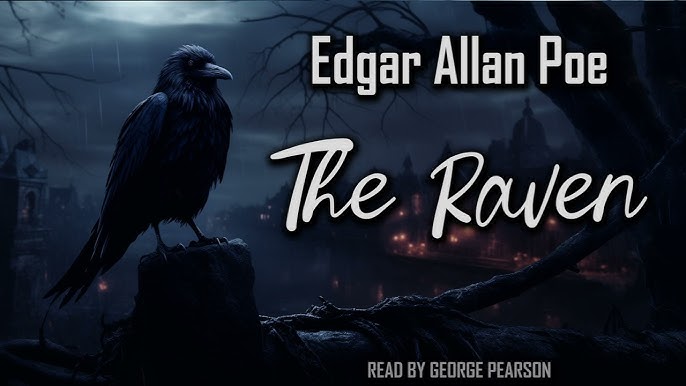
Questions that I Ponder at Midnight on Many a Dark and Gloomy Day!

  1. Why did Poe’s Raven keep repeating the word “Nevermore?”
  2. Can Ravens really talk?
  3. What was Rodin’s Thinker thinking about?
  4. Why do young women and girls scream so much at rock concerts?
  5. Is there any way to get them to scream less?
  6. Who killed Cock Robin?
  7. How come there are no “father-in-law” apartments?
  8. Why are pop singers more famous than people with high IQ’s?
  9. How come pop singers get more high paying gigs than academic professors?
  10. Why do most guys say they want a slim woman?
  11. Why do most women say they want a tall guy?
  12. As Tevye asked in “Fiddler on the Roof”

Lord, who made the lion and the lamb

You decreed I should be what I am

Would it spoil some vast eternal plan

If I were a wealthy man?

  1. How many angels can dance on the head of a pin?
  2. Can angels really dance? If so, who taught them how?
  3. If there is a heaven, what if I don’t want to stay?
  4.  Would there be any chance I could come back down taller and richer?
  5.  Why do all the movies and tv serials feature men with wives or girlfriends who are     young enough to be their granddaughters?
  6.  How come there are so few bald men in the movies?
  7.  Is Ego the core of all our problems?
  8.  Is there any way to insure that I die a painless death?
  9.  How many people need a 5500 square foot home?
  10.  Will AI spell the end of the human race or a new Eden for humanity?
  11.  Do good guys really finish last?
  12.  How come all people can’t get along?
  13.  Whose fault is it that the world often seems so screwed up?
  14.  Are we witnessing the end of the American Empire?
  15.  Why would anyone vote for someone with zero ethics or morals?
  16. Why don’t more people read?
  17.  Is there a way to get rid of all lawyers and politicians?
  18.  How come people always think that I am being sarcastic?
  19. Why do we want to spend trillions of dollars to go to Mars when it would be much easier to just go to the Sahara desert?
  20. If God is omnipotent, why did he/she have to rest on the seventh day?
  21. Is it better to be good looking or smart?
  22. Who was the smartest man in the world after Socrates died?
  23. Why has the USA not adopted the metric system yet?
  24. What if there is no heaven or hell?
  25. Are old people smarter than young people?
  26. How come so many prophets got their start when they were young?
  27. What happens when we run out of questions to ask?
  28. Why do people say that there is only one God but then disparage the Gods of other religions?
  29. Can Democracy in America survive Trump?
  30. What if this is all just a dream or maybe a nightmare?  How do I wake up from it?
  31. Why are so many people looking for the “meaning” of life?
  32. Who really cares what the meaning of life is?
  33. How do the heroes manage to shoot 45 people without being hit and with a gun that at most holds 15 rounds?
  34. Why do people watch these stupid shows with repeated car chases and endless gun fights?
  35. How do I get to be a high paid movie advisor?
  36. Are there any books on how to be a really bad person?  If not, where do our politicians learn these skills?
  37. Should comedians make fun of the POTUS?
  38. What’s next?

Okay, it is your turn now.  What are the questions or issues that you ponder on your dark and gloomy days?  Leave your comments and I will try to make sure they get posted. 

The following YouTube Video and Song is great.


John’s Top Ten Sleepless Night Questions  – This Past Week 😊

download

I woke up last night wondering and wondering and wondering.  A series of recent events had caused confusion and chaos in my sleepy mind.  I realize that I am no genius, but I could not stop thinking and pondering a number of questions which were continuing to nag me during the past week or so.  Maybe, in fact very likely, a number of my readers are much wiser than I am and can help me with my questions.  I would appreciate any thoughts that some of you might have on any of the following questions.  Your answers would help me to sleep better in the upcoming nights.

  1. How is rioting and destroying lives and property “Legitimate Political Discourse?”
  1. Why do peaceful civil rights protestors get beaten and arrested and scorned but Neo-Nazi groups are free to march and stage violent protests?
  1. How come we can use the RICO act to arrest and convict gamblers and drug dealers, but we can’t use it to arrest politicians who advocate or support the violent overthrow of the United States?
  1. Why can we send hit squads to take out terrorists in Syria and other parts of the Mideast, but we can’t send hit squads to Florida, Texas, and other parts of the USA to take out domestic terrorists?
  1. How come ISIS is an “official” terrorist group but the KKK, Proud Boys and Neo-Nazi groups are not terrorist groups?
  1. How come all the USA TV news on the Ukrainian Crisis constantly use military weapons, troops firing, howitzers blasting, tanks rumbling and other pictures of war as a backdrop to their news updates on the Ukrainian Crisis?

A video has been viewed tens of thousands of times in multiple social media posts in January 2022 alongside a claim it shows Ukrainian troops “preparing for potential combat” at the border with Russia. However, the video has circulated online since at least 2020 in a post by a Ukrainian military command about its troops conducting a military exercise.

7. How do we have time for a political discussion with Putin when the “analysts” say he is simply using the time to strengthen his military position?

8. Why has not one US politician from either party or end of the political spectrum commented on the beautiful moving opening ceremony and the spectacular technology displayed to date at the Chinese Winter Olympics?

9. Why are all the headlines in today’s news featuring negative comments about China and/or its role in the Olympics?  Some examples below from this mornings headlines:

  • Criticism of Zhu Yi, a US born skater, show harsh scrutiny of naturalized athletes in China – The New York Times
  • Teenage Olympic sensation Eileen Gu wins gold and crashes the Chinese Internet -CNN
  • Olympics put Chinese authorities’ press intimidation on full display – Axios
  • China’s holiday box office plunges by 23% as theaters push prices to record highs – CNBC
  • Beijing 2022: Winter Olympics hit by deluge of complaints from athletes -BBC
  • China stirs controversy with Uyghur torchbearer – The New Arab
  • Olympians accuse refs of bias after controversial penalties help China -Insider
  1. Why are US politicians more concerned about the rights of Uyghurs than they are about the rights of Blacks and minorities in America?

Does anyone in the USA know who or what a Uyghur is? Here this might help.

Who are the Uyghurs? — From the BBC World News

“There are about 12 million Uyghurs, mostly Muslim, living in Xinjiang, which is officially known as the Xinjiang Uyghur Autonomous Region (XUAR).

The Uyghurs speak their own language, which is similar to Turkish, and see themselves as culturally and ethnically close to Central Asian nations. They make up less than half of the Xinjiang population.

Recent decades have seen a mass migration of Han Chinese (China’s ethnic majority) into Xinjiang, allegedly orchestrated by the state to dilute the minority population there.

China has also been accused of targeting Muslim religious figures and banning religious practices in the region, as well as destroying mosques and tombs.

Uyghur activists say they fear that the group’s culture is under threat of erasure.”

The Xinjiang Conflict – Wikipedia

“Since the incorporation of Xinjiang into the People’s Republic of China, factors such as the mass state-sponsored migration of Han Chinese from the 1950s to the 1970s, government policies promoting Chinese cultural unity and punishing certain expressions of Uyghur identity, and harsh responses to separatism have contributed to tension between the Uyghurs, and state police and Han Chinese.  This has taken the form of both terrorist attacks and wider public unrest such as the Baren Township riot, 1997 Ürümqi bus bombings, protests in Ghuljia, June 2009 Shaoguan Incident and the resulting July 2009 Ürümqi riots, 2011 Hotan attack, April 2014 Ürümqi attack, May 2014 Ürümqi attack, 2014 Kunming attack as well as the 2015 Aksu colliery attack.  Other Uyghur organizations such as the World Uyghur Congress denounce totalitarianism, religious intolerance, and terrorism as an instrument of policy.”  — Wikipedia

Concluding Thoughts:

John Donne’s famous line, “Ask not for whom the bell tolls” strikes me as a good reason to pursue justice everywhere in the globe.  We should never be so comfortable that we tolerate injustice in any country whether friend or foe.  Nevertheless, we should be careful about waving a flag of righteous indignation as to the houses of other countries when our own house is far from being in order.  To do so, presents a ludicrous form of hypocrisy that is evident to the rest of the world.

We need to walk a fine line between advocating for the rights of others and stepping into a conflict that we have no legitimate right to be involved in.  There are 12 million Uyghurs who may be being persecuted because of their perceived separateness.  I wonder how many LGBTQ people, how many Indigenous People, how many Black people, how many women in the USA are being persecuted every day because of their differences?  The following charts depict some statistics in respect to my question.  The numbers seem to be going up each year rather than down.

hate-crimes-statistics-2019-graphic-111620

ft_2021.03.18_discrimination_01


1_in_6_Women 122016

Questions Amidst a Global Corvid-19 Pandemic – Preguntas en medio de una pandemia mundial de Corvid-19 –  全球Corvid-19大流行中的疑问 – ग्लोबल कॉर्विड -19 महामारी के बीच प्रश्न

Questions Amidst a Global Corvid-19 Pandemic  

Below is a selection of questions, from those that invite levity to others that prompt more serious reflection, that will help you think about things maybe differently during this time of crisis in the world.   I was sent these by a friend online and thought I would share them.  I believe the author of these is Elizabeth Weingarten.  Her email and Twitter addresses follow these questions and she would love for you to contact her.  She also has a website.  Click on her name and you will be taken to her website.  I am going to give you some time to think about your responses and next week, I will post my responses to these questions. 

  1. How are you taking care of yourself today?
  2. What part of your shelter-in-place residence have you come to appreciate the most?
  3. What surprising thing have you been stocking up on (that isn’t toilet paper)?
  4. What’s a story – from a book, a movie, an article, a conversation – that you’ve been gripped by recently? Why did it capture you?
  5. What habit have you started, or broken, during the quarantine?
  6. Which specific place in your neighborhood are you most looking forward to visiting once this is all over?
  7. What’s the easiest part about the quarantine?
  8. What are some things you have realized that you don’t really need?
  9. What’s something you own that feels useful?
  10. What problem—either yours, or something more global —do you wish you could solve?
  11. What’s something that you miss that surprises you? What’s something that you don’t miss that surprises you?
  12. Which member of your family/ friend group have you been thinking about the most during this time? Why?
  13. What’s the most generous act you’ve seen recently?
  14. What’s the last thing you experienced that made you laugh, or cry?
  15. What times of the day or the week are hardest?
  16. What’s giving you hope right now?
  17. What’s the best thing that happened to you today?
  18. How do you want this experience to change you? How do you think it will?
  19. What do you hope we all learn or take away from this experience?
  20. How would you like this experience to change the world?

Reach me on Twitter at @elizabethw723 or email me at eweingarten@ideas42.org, and let me know what other questions you have found inspiring. 

 Preguntas en medio de una pandemia mundial de Corvid-19

A continuación hay una selección de preguntas, desde aquellas que invitan a la ligereza a otras que provocan una reflexión más seria, que lo ayudarán a pensar sobre cosas que pueden ser diferentes durante este momento de crisis en el mundo. Un amigo me envió estos en línea y pensé en compartirlos. Creo que la autora de estos es Elizabeth Weingarten. Aquí las direcciones de correo electrónico y Twitter siguen estas preguntas y le encantaría que la contactaras. Ella también tiene un sitio web. Haga clic en su nombre y será llevado a su sitio web. Voy a darle un poco de tiempo para pensar sobre sus respuestas y la próxima semana, publicaré mis respuestas a estas preguntas.


  1. ¿Cómo te cuidas hoy?
  2. ¿Qué parte de tu residencia de refugio en el lugar has llegado a apreciar más?
  3. ¿Qué cosa sorprendente has estado almacenando (que no es papel higiénico)?
  4. ¿Qué es una historia – de un libro, una película, un artículo, una conversación – que te ha cautivado recientemente? ¿Por qué te capturó?
  5. ¿Qué hábito has comenzado o quebrado durante la cuarentena?
  6. ¿Qué lugar específico en su vecindario está deseando visitar una vez que todo esto haya terminado?
  7. ¿Cuál es la parte más fácil de la cuarentena?
  8. ¿Cuáles son algunas cosas que te has dado cuenta de que realmente no necesitas?
  9. ¿Qué es lo que tienes que te resulta útil?
  10. ¿Qué problema, ya sea el suyo o algo más global, le gustaría resolver?
  11. ¿Qué es lo que echas de menos y te sorprende? ¿Qué es algo que no te pierdas y que te sorprenda?
  12. ¿En qué miembro de su familia / grupo de amigos ha estado pensando más durante este tiempo? ¿Por qué?
  13. ¿Cuál es el acto más generoso que has visto recientemente?
  14. ¿Qué fue lo último que experimentaste que te hizo reír o llorar?
  15. ¿Qué horas del día o de la semana son más difíciles?
  16. ¿Qué te da esperanza en este momento?
  17. ¿Qué es lo mejor que te ha pasado hoy?
  18. ¿Cómo quieres que esta experiencia te cambie? ¿Cómo crees que lo hará?
  19. ¿Qué esperas que todos aprendamos o saquemos de esta experiencia?
  20. ¿Cómo le gustaría que esta experiencia cambiara el mundo?

Comuníquese conmigo en Twitter en @ elizabethw723 o envíeme un correo electrónico a eweingarten@ideas42.org, y hágame saber qué otras preguntas ha encontrado inspiradoras.

 全球Corvid-19大流行中的疑

以下是一些问题的选择,这些问题引起人们的重视,而其他问题促使人们进行更认真的思考,这些问题将帮助您在世界危机时期考虑不同的事物。我是由一个朋友在线发送给我的,并认为我会与他们分享。我相信这些文章的作者是伊丽莎白·温加顿。在这里,电子邮件和Twitter地址会遵循这些问题,她很希望您与她联系。她也有一个网站。单击她的名字,您将被带到她的网站。我将给您一些时间来考虑您的回答,下周,我将发布对这些问题的回答。Elizabeth Weingarten


1.您今天如何照顾自己?

2.您最喜欢就地庇护所的哪个部分?

3.储存了什么令人惊讶的东西(不是卫生纸)?

4.最近被您牢牢抓住的是一个故事书,电影,文章,谈话中?为什么它抓住了你?

5.在隔离期间您开始或习惯了什么习惯?

6.结束后,您最希望在您附近的哪个地方参观?

7.隔离最简单的部分是什么?

8.您已经意识到自己真正不需要的一些东西?

9.拥有什么有用的东西?

10.您希望解决什么问题(无论是您的问题,还是更全球化的问题)?

11.您想念的是什么让您感到惊讶?您不会错过什么让您感到惊讶的东西?

12.这段时间里,您最想念的是家人/朋友小组中的哪个成员?为什么?

13.您最近看到的最慷慨的举动是什么?

14.您最后经历过什么使您发笑或哭泣?

15.一天或一周中什么时候最难?

16.什么给了您现在希望?

17.今天发生的最好的事情是什么?

18.您希望这种经历如何改变您?您如何看待?

19.您希望我们大家从这次经历中学到什么或从中学到什么?

20.您希望这种经历改变世界吗?

Twitter上通@ elizabethw723与我联系,或通过eweingarten@ideas42.org向我发送电子邮件,让我知道您发现其他启发性的问题。

 ग्लोबल कॉर्विड -19 महामारी के बीच प्रश्न

 नीचे प्रश्नों का एक चयन है, उन लोगों से जो दूसरों के लिए उत्कटता को आमंत्रित करते हैं जो अधिक गंभीर प्रतिबिंब का संकेत देते हैं, जो आपको दुनिया में संकट के इस समय के दौरान शायद अलगअलग चीजों के बारे में सोचने में मदद करेगा। मुझे ये एक दोस्त ने ऑनलाइन भेजा था और सोचा था कि मैं उन्हें साझा करूंगा। मेरा मानना ​​है कि इनमें से लेखक एलिजाबेथ वेनगार्टन हैं। यहां ईमेल और ट्विटर पते इन सवालों का पालन करते हैं और वह आपसे संपर्क करना पसंद करेंगे। उसकी एक वेबसाइट भी है। उसके नाम पर क्लिक करें और आपको उसकी वेबसाइट पर ले जाया जाएगा। मैं आपको अपनी प्रतिक्रियाओं के बारे में सोचने के लिए कुछ समय देने जा रहा हूं और अगले हफ्ते, मैं इन सवालों पर अपनी प्रतिक्रियाएं दूंगा।  Elizabeth Weingarten


  1. आज आप अपनी देखभाल कैसे कर रहे हैं?
  2. आपके आश्रयस्थान के किस स्थान पर आप सबसे अधिक सराहना करने आए हैं?
  3. आप किस आश्चर्य की बात पर स्टॉक कर रहे हैं (वह टॉयलेट पेपर नहीं है)?
  4. क्या कहानी हैएक पुस्तक, एक फिल्म, एक लेख, एक वार्तालाप सेजिसे आपने हाल ही में पकड़ लिया है? इसने आप पर कब्जा क्यों किया?
  5. संगरोध के दौरान आपने कौन सी आदत शुरू की है, या टूट गई है?
  6. आपके पड़ोस में कौन सी विशिष्ट जगह है जहाँ आप एक बार यह सब देख सकते हैं?
  7. संगरोध के बारे में क्या सबसे आसान हिस्सा है?
  8. ऐसी कौन सी चीजें हैं जिन्हें आपने महसूस किया है कि आपको वास्तव में जरूरत नहीं है?
  9. ऐसा क्या है जो आपके लिए उपयोगी है?
  10. क्या समस्या हैया तो आपकी, या कुछ और वैश्विकजो आप चाहते हैं कि आप हल कर सकें?
  11. ऐसी कौन सी चीज है जो आपको याद आती है जो आपको चौंका देती है? ऐसी कौन सी चीज है जो आपको याद नहीं है जो आपको आश्चर्यचकित करती है?
  12. इस समय के दौरान आपके परिवार / मित्र समूह के कौन से सदस्य के बारे में आप सबसे अधिक सोच रहे हैं? क्यों?
  13. हाल ही में आपने क्या सबसे उदार कार्य देखा है?
  14. आपने जो आखिरी चीज़ का अनुभव किया है, उससे आपको हंसी आती है या रोना आता है?
  15. दिन या सप्ताह में से कौन सा समय सबसे कठिन है?
  16. आप अभी क्या उम्मीद कर रहे हैं?
  17. आज आपके लिए सबसे अच्छी बात क्या है?
  18. आप इस अनुभव को कैसे बदलना चाहते हैं? आपको क्या लगता है यह कैसे होगा?
  19. आप क्या उम्मीद करते हैं कि हम सभी इस अनुभव से सीखेंगे या निकालेंगे?
  20. आप दुनिया को बदलने के लिए इस अनुभव को कैसे पसंद करेंगे?

 ट्विटर पर @ elizabethw723 पर पहुंचें या मुझे eweingarten@ideas42.org पर ईमेल करें, और मुझे बताएं कि आपको अन्य कौन से प्रश्न प्रेरक लगे हैं।