
It is around this time of the year that many of us start asking the question “What is the true meaning of Christmas?” I am sure that for those who do ponder this question, your inquiry is no doubt prompted by an assortment of stimuli. For example: Black Friday, Cyber Monday, shop till you drop lists, Toys for Tots, Christmas countdowns, gift rages, children meltdowns, commercials, jingles and endless exhortations to buy that special gift that will truly show someone you love them.
I must be humble. Many have tried to answer this question before me. I am nowhere near the first nor do I assume the last who will ever tackle this issue. Thus, I offer my opinion where no doubt many wiser than I have gone before me and many wiser will go after. However, if I merely offer you some fresh insights into this age old question, I will have accomplished my goal. Perhaps I may see things in a slightly different perspective than all the wise people who have already treaded on this question.
I am going to break the key question “What is the true meaning of Christmas?” into three parts or three sub-questions.
The first sub-question is “Why do we celebrate Christmas?” The answer to this question is obvious. A man named Jesus was born on or near this date in the time of the Roman occupation of Israel. He is alternately revered as a great prophet, the son of God, the Messiah or a humble man with a simple but profound message. Many who respect him honor his memory on December 25 each year.
The second sub-question is “What should we celebrate at Christmas?” The most common means of celebrating the life of a great person is to remember what they stood for. Jesus IMHO stood for two major ideas which were radical in his time. The first major idea was to “Love Everyone.” This meant that you needed to love your enemies as well as your friends. Easy to love your friends said Jesus, much more difficult to love your enemies. The second major idea was to “Forgive Everyone.” Again, not just forgiveness for your friends and relatives but also for those you hate and your mortal enemies. Thus, at Christmastime, Christians and those who wish to venerate Jesus of Nazareth should be celebrating both Love and Forgiveness. We see many manifestations of the love at this time of the year but much less focus on forgiveness. The truth of this will be more evident when we look at the third sub-question: “How do we Celebrate Christmas?”
“How do we celebrate Christmas?” How do we take the two major ideas that Jesus stood for and remember them. Each concept could be honored in a variety of ways. The primary way that we seem to express the idea of Love is through the giving of gifts. We can give gifts of the spirit or gifts of the world. Gifts of the spirit express our love for others by giving some of ourselves. We give some immaterial expression of love to others that we care about. We might choose to spend time with a loved one or simply help them out with a project or task that needs doing.
We also give physical or material gifts. These include toys, gadgets, technology, clothes, jewelry etc. Material gifts express our love by transferring our money into presents for others based on their perceived wants and needs. It is quite common to see gifts given based on wants but needs are less frequently factored into the gift giving equation. One could posit a hierarchy of gift giving, going from easiest to give to most difficult. I think it would look something like this:
- Material gifts based on wants (easy)
- Material gifts based on needs (more difficult)
- Spiritual gifts based on wants (difficult)
- Spiritual gifts based on needs (very difficult)
It is not always easy to distinguish between wants and needs, particularly when dealing with children who often confuse the two. The good parent should be able to tell the difference, but all too often parents are more interested in simply satisfying their child’s wants rather than dealing with their child’s needs. The Love of Jesus becomes a love focused on completing a shopping list of wants. Little attention is spent on needs while even less time is spent on spiritual gifts. It is easier to buy a gift card than to spend time with a friend or loved one.
How do we deal at Christmastime with the second major idea that Jesus promoted, the idea that we should Forgive others? This idea does not seem to have seriously entered the panoply of displays that we see or that are observed at this time of the year. Somehow, Forgiveness gets forgotten at Christmas time. A cynic might wonder if it is not because this is the hardest idea to implement. Can you imagine sending a beautiful gift of flowers or jewelry to someone you loath and detest? Can you imagine spending time with someone you hate or giving some gift of the spirit to someone you dislike? I suggest that such demonstrations of Forgiveness would be unusual for most Christians as well as non-Christians.
So “What is the true meaning of Christmas?” After dicing and slicing this question what are we left with? A short summary of the main points that I have made to address this question might help:
- We celebrate the birth of Jesus of Nazareth, a great prophet, teacher and to some God
- Jesus’s mission and purpose was to teach us Love and Forgiveness
- We attempt to celebrate his concept of Love during the time we think he was born
- We substitute gift giving for more substantive displays of Love or more difficult expressions of the concept
- We leave out or neglect Jesus’s concept of Forgiveness
Perhaps this Christmas, we can all try to GIVE more Forgiveness. If there is a “True Meaning of Christmas”, if Jesus were alive today, I am sure he would be most pleased if we all spent more time trying to love our enemies as well as our friends and to forgive those who “Trespass against us.”
Time for Questions:
What is your “meaning” for Christmas? How do you celebrate the birth of Jesus? What could you do more of this year to truly celebrate his message? What can we do to help make Forgiveness part of the Christmas message?
Life is just beginning.
“How many observe Christ’s birthday! How few, His precepts!” ―
“And in despair I bowed my head;
“There is no peace on earth,” I said;
“For hate is strong,
And mocks the song
Of peace on earth, good-will to men!”
Then pealed the bells more loud and deep:
“God is not dead, nor doth he sleep!
The Wrong shall fail,
the Right prevail,
With peace on earth, good-will to men!”
―













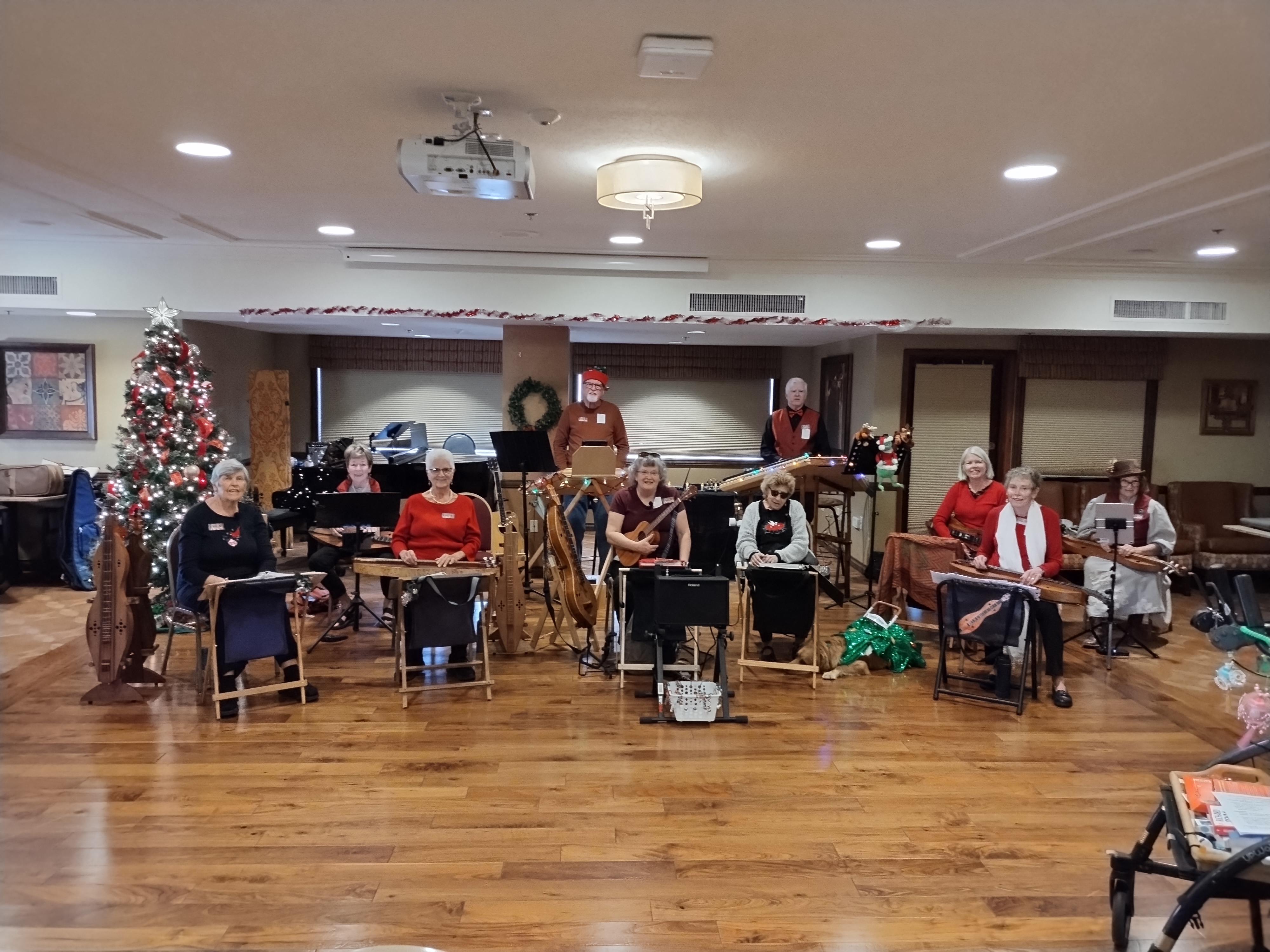







 Every year since Karen and I were married we have put up a Christmas Tree. Putting up a tree was once something I hated almost as much as I hated the entire Christmas event. I would be more than happy to forget that Christmas ever existed. I made my first wife miserable with my incessant complaints about Christmas and made a promise to myself not to let my hatred of Christmas get in the way of Karen’s love for the holiday. So very dutifully I unload the tree and boxes of ornaments, put on some Christmas songs, and help Karen decorate our tree.


 Moving on from the medical stuff, we sold our Wisconsin house. We are now year-round residents in the state where my brother-in-law said, “People go to die.” Can you guess where this is? Hint, it is not Florida, although it would be a close second. Karen and I were not offended by his claim since we have known many people who seemed to die around here. Last year, we started a Holiday Tradition of remembering departed friends and relatives on New Year’s Eve while singing “Old Auld Lang Syne” and talking about what we missed or did not miss about each of them. We hope they were listening to the good points that Karen mentioned and not their weak points that I am more prone to point out.






 Jesus talked about the three classes of good people. The first class hears his message but has little time to do anything about it. The second class hears the message and when convenient they try to help others and spread the message of Jesus. The third class commits their body and soul to sharing Jesus’s message. The third class of men/women make a commitment to doing this year round and 24/7. For the third class, it is not a onetime thing or something to be done when they have time or are not busy. It is a lifetime commitment to share his message with the world.
 The Joy of Christmas is a state of fulfillment, contentment and gratitude. Through the love of others who give selflessly of themselves, we can all be free to experience a Joy that cannot be bought or traded. It is one of the reasons that giving and not receiving is said to be the true path to happiness. During the holidays, we are excited about the chance to give to others. And nowhere is that feeling of giving more delightful than in watching the face of a young child receive something that we know they really wanted. However, Joy to the World should mean more than just giving toys to tots. There are physical gifts which we can give but there are also emotional and spiritual gifts as well.
 I am frequently critical of all the toy drives that I see going on at Christmastime. Not just because I think most kids in America have more toys than they know what to do with, but because of the message that this sends. Why not I ask, have a “books for tots” drive? Why not give books for a present? Why is it always about toys? We become so narrowly focused that we lose sight of the larger picture.
 Thus, Jesus did not come to replace the commandments but he did come to go beyond the commandments. God brought the commandments to Moses but the message that Jesus brought to us is in addition to the commandments. Jesus extended the Ten Commandments with a list that has come to be known as the Eight Beatitudes. A beatitude is something that gives one both happiness and blessedness. Jesus gave these Eight during his famous Sermon on the Mount:
 I am continually surprised by so-called Christians who seem to revel in the Ten Commandments but treat the Eight Beatitudes as though they were bastard children of Satan. When was the last time you heard anyone wanting to put up a statue or sculpture or sign with the Eight Beatitudes on it? The Message of Christmas is the Eight Beatitudes. The Joy that Jesus wanted to bring to the world can only come by following the Eight Beatitudes. If you call yourself a Christian but you do not practice these in you daily life, then you are not spreading the Gospel of Jesus.
 words of the Beatitudes go beyond any one religion. They speak to a way of being in the world and a way of treating other human beings. Just as I have found valuable teachings in other religions, I think more Christians should be willing to share the Message of Jesus in the Eight Beatitudes. Keep in mind though, that sharing this message will never work unless you also live by the message. You must be the change you want to see in others. Do you know what the famous Indian Chief Sitting Bull said when asked what he thought of Christianity? Chief Sitting Bull replied: “I have read your Bible and the religion seems good but I do not see many White people practicing it.”

 Aging Capriciously