The Uncertainty of Everything – “From Deming to quantum gravity—how certainty quietly slipped away”By John Persico Jr. & Metis

There was a time—not so very long ago—when reasonable people believed that if you simply built a better ruler, you could measure the world perfectly.

Measure a mountain carefully enough, they said, and you would know its exact height.  Build a better clock, and you would know the precise passage of time.  Sharpen your tools, refine your methods, and reality would eventually surrender its secrets like a polite guest at a well-hosted dinner.
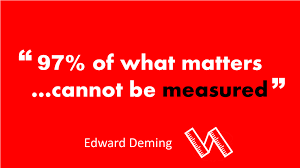
Then along came Dr. W.  Edwards Deming, who politely cleared his throat and said, “Not so fast.”

Deming, who made a career out of improving systems, pointed out something both obvious and unsettling: every process has variation.  Not just some processes—all of them.  Your measuring instrument varies.  Your environment varies.  You vary.  Even the act of measuring introduces its own disturbance.  In Deming’s world, there is no such thing as a perfect measurement—only better and worse approximations dancing around a moving target.

So far, so good.  That’s practical wisdom.  That’s engineering.  That’s life.

But then physics showed up and said, “Hold my beer.”

Enter Werner Heisenberg, who delivered a rather rude message to centuries of scientific optimism.  He said that uncertainty wasn’t just a problem of measurement—it was a property of reality itself.
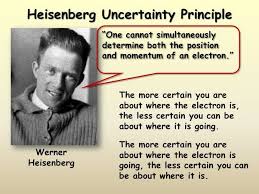
In what is now called the Heisenberg Uncertainty Principle, he demonstrated that certain pairs of physical properties—like position and momentum—cannot both be known precisely at the same time.  Not because our instruments are flawed.  Not because we haven’t tried hard enough.  But because the universe simply does not allow it.

That’s a different kind of problem altogether.

It’s one thing to say, “We can’t measure perfectly.”
It’s quite another to say, “There is no perfect value to measure.”

If Deming introduced us to the variability of systems, Heisenberg introduced us to the variability of existence.

Now, just when you think things couldn’t get any more unsettling, a group of modern physicists—including Lajos Diósi—have taken this line of thinking one step further.

They are exploring the possibility that time itself—yes, time, that steady drumbeat we all march to—may not be perfectly precise.  Not just hard to measure.  Not just influenced by clocks or observers.  But fundamentally, intrinsically… a little fuzzy.

The idea emerges from attempts to reconcile quantum mechanics (Heisenberg’s playground) with gravity (the domain of Albert Einstein).  Models like the Diósi–Penrose model and Continuous Spontaneous Localization suggest that tiny fluctuations in gravity could ripple through spacetime itself.

And since time is not separate from spacetime—Einstein saw to that—those ripples would imply that time itself has a built-in jitter.

Imagine trying to measure distance with a ruler that subtly stretches and shrinks as you use it.  Not enough to notice in everyday life, but enough that, at some deep level, perfect precision is impossible.  That, in essence, is what these models suggest about time.

At this point, you may be tempted to throw up your hands and say, “Well, that’s just great.  First my tape measure lies to me, and now time itself can’t be trusted.”

But wait.  We’re not quite done dismantling certainty.
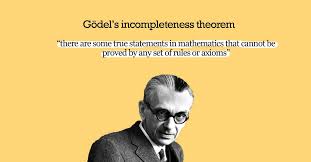
Enter Kurt Gödel, who wasn’t even a physicist, but a logician—a man concerned not with measuring the world, but with understanding the limits of reasoning itself.

Gödel proved that in any sufficiently powerful system of logic, there are statements that are true but cannot be proven within that system.  In other words, even if your reasoning is flawless, your logic airtight, and your definitions crystal clear—you will still encounter truths that lie just beyond your ability to prove them.

Let that sink in for a moment.

Deming says: your measurements vary.
Heisenberg says: reality varies.
Gödel says: even your reasoning about reality has limits.

If this were a poker game, certainty folded three hands ago.

Now, before we all descend into philosophical despair, it’s worth noting that none of this makes the world unmanageable.  Airplanes still fly.  Bridges still stand.  Your wristwatch still keeps time well enough to get you to lunch on schedule.

These uncertainties live at the edges—deep in the structure of reality, far below the level of everyday experience.  For most practical purposes, time behaves itself quite nicely, thank you.

But the implications are profound.

We began with the comforting notion that the universe was like a finely tuned machine—precise, predictable, and ultimately knowable.  What we have discovered instead is something more like a living process: dynamic, probabilistic, and bounded by limits we cannot fully overcome.

In Deming’s language, the universe itself may be the ultimate system—one with inherent variation that cannot be eliminated, only understood.

And perhaps that’s not a flaw.

Perhaps it’s a feature.

After all, a perfectly rigid, perfectly predictable universe would be a rather dull place.  No surprises.  No creativity.  No emergence.  No room for the unexpected turn, the improbable event, the human story.

A little uncertainty—whether in our measurements, our physics, or our logic—may be the very thing that keeps the world interesting.

So, the next time your watch runs a second fast, or your measurements don’t quite line up, you might take comfort in this thought:

It’s not just you.

It’s the universe.

And it’s been that way all along.

How Do You Know if You Know Anything?

truthHow do you know if you know anything?  You have two paths to answer this question.  The first path involves your belief that you do know something.  You can choose this path if you are fairly certain that you know something.  It may surprise you, but this is not a path of science.  This is a Faith-Based path.  No matter what anyone tells you, science relies on faith almost as much as religion relies on faith.

Consider the Heisenberg Principle of Uncertainty and Gödel’s Incompleteness Theorems.  Both theories show that ultimately, we can never be certain of anything, and that the fundamental bedrock of even science must then be a degree of faith.  Formulated by Werner Heisenberg, Nobel Prize winning physicist in 1927, the Uncertainty Principle states that we cannot know both the position and speed of a particle, such as a photon or electron, with perfect accuracy; the more we nail down the particle’s position, the less we know about its speed and vice versa. 

Godel’s first incompleteness theorem states that “No consistent system of axioms whose theorems can be listed by an effective procedure (i.e., an algorithm) is capable of proving all truths about the arithmetic of natural numbers.  For any such consistent formal system, there will always be statements about natural numbers that are true, but that are unprovable within the system.  The second incompleteness theorem, an extension of the first, shows that the system cannot demonstrate its own consistency.” — Wikipedia

trust

Let me provide a simple example of what these theories tell us.  For instance, you may say, “I know the earth is round.”  I challenge you to prove this.  The only way that you can prove it is by relying or trusting on the wisdom of experts who say that the earth is round.  Even if you have a picture of the round earth, how do you know that it is real?  In essence, you are relying on faith.  It is your faith in someone you trust whom you believe has more knowledge than you do.  You cannot prove the earth is round so your belief is based on faith.  This explains why climate change deniers are so difficult to argue with.  They refuse to accept any evidence from experts on climate whom they disagree with.  Instead, they find the inevitable expert who disagrees with many other scientists.  Most of us have faith in the majority.  But history has countless examples of where the majority were wrong. 

8d0e042d12f274260bd38c8f1d0bebeb

The second path you can take is what I call the Path of the Atheist.  In this path, you accept what Socrates did that you know nothing.  Socrates was called the wisest man in the world because he believed that “I know that I know nothing.”  The atheist does not believe anything unless it can be proved to them personally.  Since it is impossible that anyone can ever prove anything to you beyond a shadow of a doubt, you must conclude that knowledge (like God) is impossible to know or prove.  The atheist concludes that all possibility of ever conclusively proving anything is impossible.  Thus no one can really know anything. 

The Path of the Atheist diverges from the Faith Based path since with faith we believe things.  We believe that there are facts and there is an ultimate truth.  Even if we cannot find them ourselves.   The scientist’s belief is tempered by realistic probabilities based on experiments and history.  The Path of the Atheist does not believe that there is any ultimate truth.  Truth is only a process that gets us closer to some approximation that we are finally willing to settle for.  The Atheist says, “Show me an ultimate truth that is unvarying and that you can prove will be forever true.”  You might argue that the sun will come up tomorrow, but you only have history to rely on for this.  The dinosaurs might have believed that they would live forever but all it took was one large asteroid to wipe out millions of years of evolution. 

As we go through life, we sometimes choose one path and sometimes the other.  Given whatever circumstances we are confronted with, we select the path that provides the most comfort and certainty for us.  Even the Path of the Atheist is comforting since the atheist does not expect any irrefutable truth.  This gives the atheist the ability to ignore whatever fads and foibles society is following in search of a truth that does not exist, or at least for the atheist does not exist.   

truth as factual

What is the meaning of all this?  Are we arguing about how many angels can dance on the head of the pin?  Are we engaging in the same logic that Bishop Berkeley did.  A man who denied that there is a reality of matter apart from what the mind perceived.  Some philosophers have argued that we cannot prove or ever know if we are living or dreaming.  I would guess that most of you reading this blog persist in the idea that you are truly alive and not dreaming now. 

What then is the value of discussing truth?  In this age of misinformation, disinformation, false facts, and fake news, it is a matter that we all need to take more seriously.  For generations and centuries, humans have searched for the truth.  We are told that the “Truth will set us free” and that truth is a value even more important than honesty.  But as Sara Gran said ““Most people wouldn’t know the truth if it bit them in the ass and paid for the privilege.”  Could it be that to paraphrase Colonel Nathan R. Jessup in a “Few Good Men”, “You don’t want the truth because you can’t handle the truth.” 

truth will set you free

Truth is a great deal more complicated than we realize.  It is one of those “holy grails” which if we find may give us eternal life.  Problem is that no one has found either the Holy Grail or the Truth.  It is said that you have your truth and I have my truth.  Dr. Deming, an expert on quality insisted that nothing could be accomplished without an operational definition of any concept that was going to be studied.  He said “An operational definition is a procedure agreed upon for translation of a concept into measurement of some kind.”   The science of an operational definition lay in the measurement of the concept but the starting point for measurement lay in the agreement between two “reasonable” people as to what measurement procedure would be used.  Without an agreement there was no starting or ending point. 

We may meet someone on the street or at a party or it may be a friend or relative and they advance some theory or ideas which contradicts the facts as we know them.  A popular controversy these days among some is whether Trump really won the election and if it was not stolen from him.  If you believe it was stolen, you will have a set of ideas about what constitutes a “fair” election. 

trumpThe Faith Based Path could lead one to accept that hundreds of systems across America could not all have been wrong and that the tallies were accurate because someone you trust told you they were.  If you do not trust the poll counters, you will reject the decisions made by election boards and cling to the idea that Trump was cheated by liars and scoundrels.  Either way it is a matter of faith.

If you follow the Path of the Atheist, you may reject the vote tallies because you do not believe any voting procedure could be foolproof.  You accept that there is error in any system and the deciding factor for you lies in the degree of error that you are willing to accept.  Given your proclivity to accept a certain amount of error, you will either accept of reject any election results based on the voting tallies.

I chose the Faith Based path and accepted that fifty state election boards cannot all be wrong.  On the other hand, I followed the Path of the Atheist since I know that error exists in any procedure, and I do not trust that any election process can rule out all the errors in the system.  I accept the errors in life just as I accept the risk of dying on the road tomorrow when I drive someplace.  It is not a matter of faith; it is a matter of statistical probability.  Tallies like life will never be perfect.

truth 2

What do we do?  First stop looking for an ultimate truth.  Truth is like beauty and is in the eye of the beholder.  Second, ask others what they base their truth on.  See if you can come up with an operational definition for establishing truth that you are both willing to accept.  Third, agree on a way to measure the outcome of whatever you are measuring or looking at.  Accept that error will always exist and that predictability for any ultimate truth is near zero. 

The best we can achieve in life is a “useful” truth that we may find to make life easier and happier for all of us.