By John Persico Jr. (with Metis AI Partner)
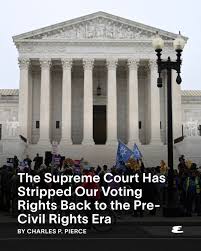
There are moments when I read a Supreme Court decision and wonder—not about the law—but about the underlying thinking. The recent ruling in Louisiana v. Callais is one of those moments.
The Court struck down Louisiana’s attempt to create a second majority-Black congressional district, calling it an unconstitutional racial gerrymander. On its face, that sounds principled—race should not dominate political decisions. A clean, simple rule.
But simple rules often fail in complex systems. And voting in America is nothing if not a complex system.
The Problem the Court Pretends Not to See
Let’s start with a basic fact: people are not randomly distributed. I learned this in my doctoral program when doing work with displaced workers on the Iron Range in Minnesota. We used a technique called “Stratified Random Sampling” to obtain more representative samples than you would get with simple Random Sampling.
People have never been randomly distributed. Not by race. Not by income. Not by religion. Not by education. There are Black neighborhoods, Indian neighborhoods, Hispanic neighborhoods and Asian neighborhoods, not to mention rich neighborhoods, elderly neighborhoods, and too many other stratified neighborhoods to name.
If you’ve spent any time looking at maps—real maps, not legal abstractions—you know this immediately. Neighborhoods cluster. Communities form. History leaves footprints.
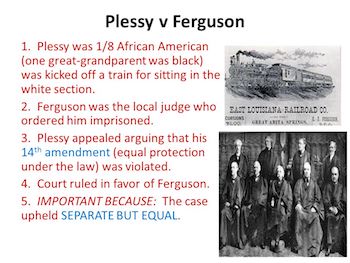
And race, in particular, has left very deep footprints in this country.
So when we draw voting districts “without regard to race,” we are not creating neutrality. We are simply accepting the existing distribution as given, as if it emerged from a fair process.
It didn’t.
A Little Statistics (Without the Headache)
In my former life working with Deming’s ideas, I learned something fundamental:
how you sample determines what you see.
If you take a simple random sample of a population that is unevenly distributed, you risk missing important subgroups. That’s not bias—that’s bad design.
The fix is straightforward: stratified sampling. You deliberately ensure that meaningful subgroups are represented.
Now translate that into voting:
- Minority populations are often geographically clustered
- Voting patterns often correlate with those populations
- Without intentional structure, representation can become distorted
Majority-minority districts are not some strange political invention. They are, in effect, a design correction—an attempt to ensure that a non-random population is not misrepresented by a “neutral” process.
The Court looks at this and says: “You’re using race.”
I look at it and say: “You’re ignoring reality.”
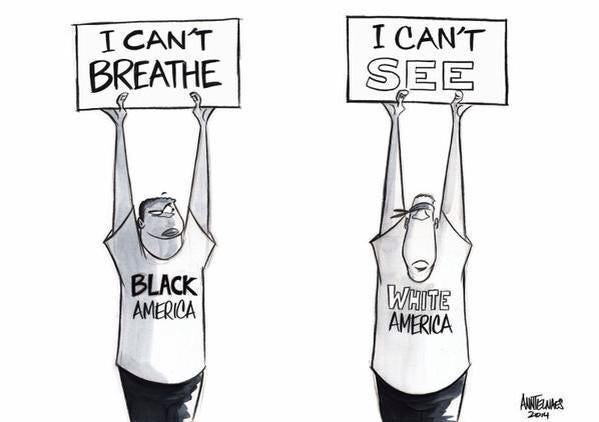
The Illusion of “Colorblindness”
The current legal trend emphasizes what is often called a “colorblind” approach. The idea sounds noble: treat individuals without regard to race.
But here’s the problem:
a colorblind rule applied to a system shaped by race is not neutral—it is preservative.
It preserves whatever inequalities already exist.
If race were not already a factor in housing, education, income, and yes, voting patterns, then ignoring it might make sense. But it is a factor. It has always been a factor.
So we end up in a strange place:
- Race shapes outcomes in reality
- But the law increasingly refuses to acknowledge it in design
That’s not neutrality. That’s selective blindness.
Let’s Be Honest About Politics
There is another layer here that we should not politely ignore.
Political actors understand these dynamics very well. They know that race correlates with voting behavior. They know that how districts are drawn can shift power.
So when cases like this are brought forward, they are not just abstract constitutional debates. They are strategic moves in a larger political game.
To pretend otherwise is to confuse theory with practice.
What Kind of Fairness Do We Want?
At the heart of this issue is a simple but uncomfortable question:
What do we mean by fairness?
The Court is increasingly focused on process fairness:
- The rules must not explicitly use race
But many of us are concerned with outcome fairness:
- Do people actually have a meaningful opportunity to elect representatives?
These are not the same thing.
You can have perfectly “neutral” rules that produce systematically uneven outcomes. Anyone who has studied systems—business, education, healthcare—knows this.
Deming warned us about this decades ago. A system can be working exactly as designed and still produce poor results.
The Deeper Issue
This is not really about Louisiana.
It is about whether we are willing to design systems that acknowledge reality, or whether we prefer systems that look fair on paper while ignoring how the world actually works.
Race has been a factor in America since before it was a country. It continues to shape where people live, how they vote, and what opportunities they have.
You can pass a law that says, “Don’t consider race.”
But you cannot pass a law that makes race irrelevant.
A Final Thought
There’s an old saying in quality management:
“If you don’t understand variation, you will mismanage the system.”
The Supreme Court, in this case, seems less concerned with understanding variation than with enforcing a rule.
That may satisfy a legal doctrine.
But it does not necessarily produce a fair system.
And in the long run, systems—not doctrines—determine outcomes.
Conclusions:
Do you think the six to three vote on this issue by party line represents a vote for fairness? Not since the days of slavery have we had a Supreme Court so stacked with partisan advocates. Almost every one of their votes leans towards the policies of Trump and his sycophantic Republican followers. The Supreme Court is not about the pursuit of law although it tries to pretend it is. The Supreme Court has little or no concern with upholding the Constitution of the USA. It is a biased groups of Justices willing to ignore the Constitution to further the aims of a Republican Party gone off the rails. A party with an agenda to support corporate interests over the interests of the people and to support laws that favor a decrease in the power of the people to run a democratic nation. There is a belief by many in a “Prosperity Gospel” today that preaches that the rich are smarter, harder working and have more rights to run the country than the poor.
If you are poor, they are coming for your vote. And the Supreme Court decision will help them get it.

 Aging Capriciously
Apr 30, 2026 @ 16:00:20
Thanks for sharing Ned. I hope your readers find it informative. I had another blog scheduled to post but I thought this issue was too important to let go by. We are slipping further down the slope to a dictatorship. IMHO John
LikeLike
May 03, 2026 @ 14:35:35
If “the rich are smarter, harder working”, don’t they have the right to “run the country”?
Depending on how you define equal, we have never all been equal and never will be.
But I like what you have said John and agree with much of it.
LikeLike
May 03, 2026 @ 15:30:37
Ahh, I love the question Jon. It really deserves a forum all of its own. Who was it said that a democracy is a rule of the mediocrity? On the other hand, HHH famously said “A democracy is a system that achieves extraordinary results with ordinary people.” I used to use this line with my clients since often they would say that they needed the BEST employees in the market place. I would tell them “Even if you could afford them, everyone else is looking for them to and there are probably not enough to go around.” If it is the system and not the people who help create extraordinary results than we need to create better systems that will allow more people to shine. Deming always said “Put a good person in a bad system and the system will win every time.” There will always be a bell shaped curve of people in terms of abilities and competencies. I will never be a Luciano Pavarotti or a Usain Bolt but given the right circumstances, I think I could sometimes anyway achieve extraordinary results.
Thanks for asking this question. It would really make a good blog because I am sure that I am prejudiced and many people could amplify the contrary and I am sure find good reasons to jettison the hoi polloi.
LikeLike
May 03, 2026 @ 16:09:53
Are Democracy, how I love the word, as I have stated many times, a concept/ideal (Democracy) that is constantly used and abused by our leaders and the media.
Every country that is not Communist (another used and abused word) claims to be democratic!! There are that many claims to being democratic, that Democracy has lost it’s meaning.
I live in Australia, which is a Monarchy and it is legislated that you must vote, but even we claim to being a Democracy!!!
LikeLike
May 03, 2026 @ 16:39:37
Jon, some quotes on what democracy is that you might enjoy. One is from your homeland.
George Bernard Shaw – The Cynic’s View: “Democracy substitutes election by the incompetent many for appointment by the corrupt few.”
Winston Churchill – The Voter’s Dilemma: “Democracy is the worst form of government, except for all the others.” —
The “Succulent” Definition: As famously proclaimed in a viral Australian video, “Gentlemen, this is democracy manifest!” (usually shouted while being arrested at a restaurant).
LikeLike
May 03, 2026 @ 17:20:15
John, thank you, I love all three of them. Cynical? Not me!!
LikeLike
May 03, 2026 @ 18:17:32
Jon, I kinda got a kick out of them myself. I suppose it is a little like “gallows humor.” As Ben Franklin said “We must all hang together or we will surely all hang separately.” He was another very wise man. IMHO.
LikeLike