Who is my Neighbor?

Introduction: by J. Persico

A few weeks ago, while our regular pastor was on a sabbatical, one of the elders of the church gave the following sermon.  Sadly, I cannot duplicate the passion that went along with her words, but she gave me permission to reprint her sermon.  The words she used and the story she tells are very powerful in themselves and seem most appropriate for us to remember on this Christmas Day when Jesus Christ was born. 

Living here in Arizona less than 130 miles from the border, the immigration issue is not theory but reality.  Karen and I have made over 40 trips across the border.  We have many friends whose families came from Mexico.  We live with the reality of a hostile suspicious anti-immigrant culture that seems to be growing every day as right-wing politicians preach hate, fear, and suspicion and accompany it with hateful innuendos about our Mexican neighbors.  I will not say anymore, but I will let our Elders words speak for themselves. 

2ND SCRIPTURE: Leviticus 19: 18, 33-34

18 Thou shalt not take vengeance, nor bear any grudge against the children of thy people; but thou shalt love thy neighbor as thyself: I am Jehovah.

 33 “‘When a foreigner resides among you in your land, do not mistreat them. 34 The foreigner residing among you must be treated as your native-born. Love them as yourself, for you were foreigners in Egypt. I am the LORD your God.

WHO IS MY NEIGHBOR by Elder J. Hammond

Good morning!

Some of you asked about me when I was here two weeks ago and since we’re talking about who is my neighbor, I thought I’d share just a little bit of my story. Usually, you’ll find me at the second service—sometimes serving as a Beadle, sometimes up in the booth helping.  Before coming here, I was part of the Methodist churches in Casa Grande and Eloy, where I took classes as a Lay Servant and then a Lay Speaker. I also trained as a Stephen Minister, and during that time I became an affiliate member of First Presbyterian so I could share in that ministry. Then about a year ago, I became a full member of this congregation.

Spiritual Growth Through Retreats

One of the most meaningful parts of my faith journey has been attending retreats at the Redemptorist Renewal Center in Tucson. If you’ve ever been there, you know it’s a beautiful, quiet place—a setting for learning, sharing, and deep reflection.

Now, for those of you who know me, you won’t be surprised that the hardest part of the experience, was the “quiet” part! From evening prayers until breakfast – no talking. But it was in those quiet times that God often spoke the loudest.

At my most recent retreat, the guest speaker was Karen González, author of The God Who Sees. Karen, herself an immigrant and a Christian, writes about what the Bible says regarding immigrants and refugees. She reminded us that God is not silent on this issue. If you remember my sermon from 2 weeks ago, God again gave us very specific instructions about how we are to treat the immigrant—with love, with respect, and with protection.

A Lesson from Nogales

Part of our retreat took us across the border to Nogales, Mexico. We visited shelters where families had come for safety and help. On one wall, there was a picture with these words: “The best place to live is where you do not fear anyone or anything. Where you can run without fear and not run because of fear.”

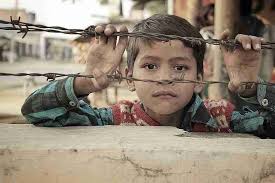
As we watched families preparing food, children painting and laughing, and teenagers practicing for a school debate, those words hit me deeply. Isn’t that what we all want? A place where we don’t have to live in fear. But later as we stood near a crossing point, where the barbed wire ran across, and there were pilings set in the ground, so no vehicle could get through, there stood a large white monument, with Mexico written on one side, and the US on the other. The Border Patrol had been alerted to our visit, so we were able to go back and forth freely, but I couldn’t imagine having trudged through the desert, clothes on my back, and no food or water, and then seeing the promised land, but not being able to enter it. And still later, we stood at a border crossing, and looked at “the fence”. “One of the uglier things I have seen, it made me think of the ugliness of the entire situation. There were people with children, just sitting waiting their turn to make an appointment to see about legally getting a way to cross the border. One woman actually gave birth while waiting in line, because she had nowhere else to go and didn’t want to lose her place in line.

Scripture Foundation

The Bible is clear: we are called to love our neighbor. You heard the scripture from Leviticus, but it bears repeating: In Leviticus 19, God says, “When immigrants live in your land with you, you must not cheat them. Any immigrant who lives with you must be treated as one of your citizens. You must love them as yourself, because you were immigrants in the land of Egypt.” Now I can take Leviticus with a grain of salt, because it is all about ancient laws and rules, but the New Testament also echoes the same sentiment.

  • Jesus repeats this commandment in Matthew 22 and Mark 12, calling it the second greatest commandment—right alongside loving God himself.
  • Romans 13:10 tells us, “Love does no wrong to a neighbor; therefore love is the fulfilling of the law.”
  • Galatians 5:14, John 13:34–35, And 1 John 4:20, all echo the same instructions

So here’s the big question: Who is my neighbor? Who is God talking about? That question might seem easy—but is it really? When I first moved here to AZ from the Northeast, I noticed something:. Many people don’t even know the name of their next-door neighbors. The walls around the yards were more than just physical walls, Where I came from, in New Jersey and Pennsylvania, and even in the Poconos with large lots and more space, I knew all my neighbors. But the Bible stretches “neighbor” far beyond our next-door fence. As Karen González writes, Abraham, Moses, Ruth, Mary, Joseph—even Jesus—were all refugees at some point in their lives. They were strangers, they were immigrants, there were ‘people seeking safety. So our neighbors are not just the people who look like us or live near us. Our neighbors are the immigrants and refugees at our borders, and the people we might be tempted to see as “others.” And their reality is hard.

According to Amnesty International, more than 60 percent of women crossing the border into the U.S. are sexually assaulted along the way. Many take precautions before they even start their journey, because they know what is likely to happen. We also hear the narrative that immigrants are criminals or that they’re “stealing jobs.” But research shows the opposite: immigrants actually commit fewer crimes than native-born citizens, and they often take the difficult, low-paying jobs that others won’t do. God created this earth without borders. He gave it to all of us and called it good. Human beings built walls and drew lines. But nowhere in Scripture does God say, “Build borders and keep people out.”

Dr. Martin Luther King, Jr. put it this way:

“Man-made laws assure justice, but a higher law produces love. No code of conduct ever persuaded a father to love his children. A good father is obedient to the unenforceable. The Good Samaritan represents the conscience of mankind because he was obedient to that which could not be enforced.” That’s what Jesus calls us to—a love that cannot be legislated, but must be lived.

After visiting the shelters and borders , I felt overwhelmed. What can I possibly do to change any of this? In our small group discussions, someone reminded me of the story of the starfish. A man watched a boy throwing starfish back into the sea. “Why bother?” he asked. “You can’t save them all.” The boy picked up another one, tossed it into the waves, and said, “I saved that one.” We may not change the whole world. But we can change the world for someone.

A Story of Francisco

Karen González shares the story of Francisco, who crossed the border out of desperation. He married a U.S. citizen, had children—including one with special needs—but because of restrictive Laws (the 3 & 10 law), he was never able to adjust his status. One night, after drinking, he chose not to drive but to sleep it off in his car, keys in his pocket, not in the ignition, but. In Maryland, even that counts as a DUI. He was arrested, and ICE stepped in. Despite being a hardworking husband and father, a judge decided he was “undesirable” and deported him. Now his wife and children, U.S. citizens, were left without their provider and had to rely on public assistance. Deporting a father didn’t protect the family—it broke it.

This is what happens when we see immigrants only as “others” instead of neighbors.

Conclusion: Who Is My Neighbor?

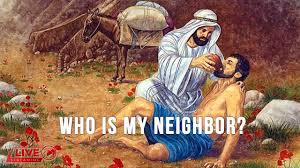
When Jesus was asked, “Who is my neighbor?” he told the parable of the Good Samaritan. Today, the answer is the same. Our neighbors are the immigrants and refugees at our borders. Our neighbors are the people across the street. Our neighbors are the ones who need love, not suspicion. And while laws cannot love our neighbors, we can. I may not change the world. But I pray that I can make a difference in one life. And if each of us does the same, then together—we can bring change.

 Let it be so. Amen.

What is the true meaning of Christmas? Does anyone really know?

Image

It is around this time of the year that many of us start asking the question “What is the true meaning of Christmas?”  I am sure that for those who do ponder this question, your inquiry is no doubt prompted by an assortment of stimuli.  For example:  Black Friday, Cyber Monday, shop till you drop lists, Toys for Tots, Christmas countdowns, gift rages, children meltdowns, commercials, jingles and endless exhortations to buy that special gift that will truly show someone you love them.

I must be humble.  Many have tried to answer this question before me.  I am nowhere near the first nor do I assume the last who will ever tackle this issue.  Thus, I offer my opinion where no doubt many wiser than I have gone before me and many wiser will go after.  However, if I merely offer you some fresh insights into this age old question, I will have accomplished my goal.  Perhaps I may see things in a slightly different perspective than all the wise people who have already treaded on this question.

I am going to break the key question “What is the true meaning of Christmas?” into three parts or three sub-questions.

The first sub-question is “Why do we celebrate Christmas?”  The answer to this question is obvious.  A man named Jesus was born on or near this date in the time of the Roman occupation of Israel.  He is alternately revered as a great prophet, the son of God, the Messiah or a humble man with a simple but profound message.  Many who respect him honor his memory on December 25 each year.

The second sub-question is “What should we celebrate at Christmas?”  The most common means of celebrating the life of a great person is to remember what they stood for.  Jesus IMHO stood for two major ideas which were radical in his time.  The first major idea was to “Love Everyone.”  This meant that you needed to love your enemies as well as your friends.  Easy to love your friends said Jesus, much more difficult to love your enemies.  The second major idea was to “Forgive Everyone.”  Again, not just forgiveness for your friends and relatives but also for those you hate and your mortal enemies.  Thus, at Christmastime, Christians and those who wish to venerate Jesus of Nazareth should be celebrating both Love and Forgiveness.  We see many manifestations of the love at this time of the year but much less focus on forgiveness.  The truth of this will be more evident when we look at the third sub-question:  “How do we Celebrate Christmas?” 

“How do we celebrate Christmas?”   How do we take the two major ideas that Jesus stood for and remember them.  Each concept could be honored in a variety of ways.  The primary way that we seem to express the idea of Love is through the giving of gifts.  We can give gifts of the spirit or gifts of the world.  Gifts of the spirit express our love for others by giving some of ourselves.  We give some immaterial expression of love to others that we care about.  We might choose to spend time with a loved one or simply help them out with a project or task that needs doing.

We also give physical or material gifts.  These include toys, gadgets, technology, clothes, jewelry etc.  Material gifts express our love by transferring our money into presents for others based on their perceived wants and needs.  It is quite common to see gifts given based on wants but needs are less frequently factored into the gift giving equation.  One could posit a hierarchy of gift giving, going from easiest to give to most difficult.  I think it would look something like this:

  • Material gifts based on wants (easy)
  • Material gifts based on needs (more difficult)
  • Spiritual gifts based on wants (difficult)
  • Spiritual gifts based on needs (very difficult)

It is not always easy to distinguish between wants and needs, particularly when dealing with children who often confuse the two.  The good parent should be able to tell the difference, but all too often parents are more interested in simply satisfying their child’s wants rather than dealing with their child’s needs.  The Love of Jesus becomes a love focused on completing a shopping list of wants.  Little attention is spent on needs while even less time is spent on spiritual gifts.  It is easier to buy a gift card than to spend time with a friend or loved one.

How do we deal at Christmastime with the second major idea that Jesus promoted, the idea that we should Forgive others?  This idea does not seem to have seriously entered the panoply of displays that we see or that are observed at this time of the year.  Somehow, Forgiveness gets forgotten at Christmas time.  A cynic might wonder if it is not because this is the hardest idea to implement.  Can you imagine sending a beautiful gift of flowers or jewelry to someone you loath and detest?  Can you imagine spending time with someone you hate or giving some gift of the spirit to someone you dislike?   I suggest that such demonstrations of Forgiveness would be unusual for most Christians as well as non-Christians.

So “What is the true meaning of Christmas?”  After dicing and slicing this question what are we left with?  A short summary of the main points that I have made to address this question might help:

  • We celebrate the birth of Jesus of Nazareth, a great prophet, teacher and to some God
  • Jesus’s mission and purpose was to teach us Love and Forgiveness
  • We attempt to celebrate his concept of Love during the time we think he was born
  • We substitute gift giving for more substantive displays of Love or more difficult expressions of the concept
  • We leave out or neglect Jesus’s concept of Forgiveness

Perhaps this Christmas, we can all try to GIVE more Forgiveness.  If there is a “True Meaning of Christmas”, if Jesus were alive today, I am sure he would be most pleased if we all spent more time trying to love our enemies as well as our friends and to forgive those who “Trespass against us.”  

Time for Questions:

What is your “meaning” for Christmas?  How do you celebrate the birth of Jesus?  What could you do more of this year to truly celebrate his message?  What can we do to help make Forgiveness part of the Christmas message?

Life is just beginning.

“How many observe Christ’s birthday!  How few, His precepts!” ― Benjamin Franklin

“And in despair I bowed my head;
“There is no peace on earth,” I said;
“For hate is strong,
And mocks the song
Of peace on earth, good-will to men!”

Then pealed the bells more loud and deep:
“God is not dead, nor doth he sleep!
The Wrong shall fail,
the Right prevail,
With peace on earth, good-will to men!”
― Henry Wadsworth Longfellow

Bringing Generosity to Others

I work with a program called “I Could Be.”  It is a program for mentoring high school age students.  A student (mentee) is matched up with an older qualified person (mentor) for a program of exploration and discovery.  The mission of iCouldBe is to “Provide high school students with an online community of professional mentors, empowering teens to thrive in school, plan for future careers, and achieve in life.”  I am on my fourth student mentee.  The program begins at the start of each school year.  The student I was matched up with this year was name (Juan).  That is not his real name.  Neither of us are actually allowed to identify our real names or where we live.  This confers a needed degree of security for the students. 

At the start of the program, my mentee and I go through a series of introductory exercises to get to know each other.  Juan completed some questions and one pertained to what he wanted to be when he was older.  He said he wanted to be rich and famous.  I asked him what would he do with the money if I gave him a billion dollars.  He replied, “I would give it to my family so that they would not have to work.”  I was very impressed by his generosity.  I told Juan that generosity is a very good quality in a person to have.

I started thinking about the concept “Generosity.”  I did a search in my 1700 blogs and found that I had never directly addressed the subject.  Such an important subject and few if any words from me on how important Generosity is.  Ergo, I decided to write this blog on the subject of Generosity.  Lets start with a dictionary definition and then a WIKI definition so that we are all on the same page.

Webster’s definitions of Generosity include readiness or liberality in giving, freedom from meanness or smallness of mind, and a generous act.  This is the primary definition, emphasizing a willing and free giving of time, money, or other valuable things.

Wikipedia says this about Generosity:  Generosity (also called largesse) is the virtue of being liberal in giving, often as gifts.  Generosity is regarded as a virtue by various world religions and philosophies and is often celebrated in cultural and religious ceremonies.

One important thing to note is that generosity is not limited to money.  It may include time, material goods, jewelry or “other valuable” things.  Now we can have a secular version of Generosity, or we can have a sectarian version of Generosity. 

Sectarian Generosity:

Leans on God, scripture, spiritual duty, and the idea that giving transforms the soul.  Jesus said, “It is more blessed to give than to receive.” — Acts 20:35 

Muhammed said, “The believer’s shade on the Day of Resurrection will be his charity.”  — Tirmidhi

Secular Generosity:

Leans on empathy, human dignity, and the belief that giving transforms society.  Albert Einstein, said, “A hundred times every day I remind myself that my inner and outer life depend on the labors of other men… and that I must exert myself in order to give in the same measure as I have received.”

Confucius wrote that, “The superior man is distressed by his own lack of ability, not by the failure of others to appreciate him; he seeks to give more rather than to receive more.”  — Analects 15:18

Both types of generosity are deeply moral.  Both alleviate suffering.  But they grow from different roots and flower in different ways.  In marketing we talk about the “target” audience.  This is not a concept endemic to philosophy or religion but hails from MBA programs in business schools.  Despite my anathema to strict application of business principles to either religion or philosophy, there is some considerable merit in considering this business concept in terms of secular versus sectarian. 

In a Sectarian community, we can talk about Generosity as it applies to those we know.  We can limit the largesse that we give to those in our inner circle, to relatives, friends and members of our immediate communication.  There is no prescription in most churches for being generous to those outside of our domain.  If I tithe, give to my church and help the poor whom I can identify with, I may be considered a very generous person.  There is no stigma in many religious groups if I don’t want to be generous to welfare people, poor people in other countries, undocumented immigrants or people of other race or other religions.  These exceptions would astonish Jesus who taught that being a follower involves welcoming the stranger, as demonstrated in Matthew 25:35: “I was a stranger and you invited me in”.  We might call these people “Fake Christians,” “Pretend Christians,” hypocrites, or simply selfish.  You would be wasting your time trying to open their eyes with such labels.  It would do no good since their core beliefs are unfortunately supported by those in their inner circle. 

In the Sectarian community, the concept of Generosity may not be much better off.  There are large numbers of non-religious people who support the arts, music, education and health care.  The caveat though is that the people they give the money to are deemed worth the expense.  The Sectarian community is proud to support a hand up and not a handout.  People who qualify and meet certain requirements can get some measure of Generosity.  Those who are not “eligible” are excluded from any Generosity.  It is easy to forget that many people are sick and disabled.  Thousands of people in the USA cannot climb up a ladder.  They are put into a pot labeled “undesirables.” 

So, what does it really mean to be generous?  This story is about a friend of mine named Frank.  It happened one day when we were both coming out of the local IGA store with our wives.  I call it the: “The Last Pair of Gloves”

The first cold front of December rolled into the Sonoran desert like an unexpected guest, sharp and biting.  Frank stood outside the IGA store, pulling his jacket close as he waited for Juanita to finish shopping.  Beside the entrance sat an old man, thin as the winter wind, a cardboard sign resting on his knees: “Anything helps.”

His hands caught Frank’s attention.  They were trembling—not from age alone, but from cold. His fingers were blotched white and red, exposed to the air with only a thin flannel shirt to cover his arms.

Frank felt for his pockets.  He had no cash on him—not unusual these days.  But he did have one thing: his gloves.  Soft fleece-lined leather, a gift from Juanita years ago.  He loved those gloves. They were worn just right, molded to his hands, comfortable in a way only time could produce.

He hesitated.

Inside the store, carols played faintly, muffled by the automatic doors.  People hurried by with carts full of holiday cheer.  Nobody stopped.  The old man’s hands kept shaking.

Frank stepped forward.

“Sir,” he said softly, slipping the gloves from his own hands, “you need these more than I do.”

The man looked up, startled.  For a moment, he didn’t speak.  He just stared at the gloves resting in Frank’s outstretched palm as if they were something far more precious than leather.

Then his eyes filled.

“I—I don’t know what to say,” the man whispered.

“Merry Christmas,” Frank replied.

Juanita walked out just then, her cart filled with groceries. “Where are your gloves?” she asked.

Frank smiled, his fingers already numb.  “Right where they belong.”

And as they walked toward the car, he told me later — that his hands began to feel warmer than they had in years.

Frank did not ask to see the man’s papers.  Frank did not ask the man to perform any reciprocal services for the gloves.  Frank did not decide that he was an “unwanted” immigrant and should be sent back to Mexico.  Frank did not ask what religion he belonged to, where he went to church or whether or not he believed in God or Trump.  Frank gave something up that was very valuable to him because he saw someone that needed it more than he did.  This is the essence of Generosity.  This is what Generosity is all about.  Generosity is more than tithing to your local church.  It is more than taking an angel off the giving tree.  It is more than buying toys for tots.  It is more than donating a turkey to the Salvation Army Christmas dinner.  To paraphrase Paul from 1 Corinthians 13:

“Generosity is patient, Generosity is kind.  It does not envy, it does not boast, it is not proud.  It does not dishonor others, it is not self-seeking, it is not easily angered, it keeps no record of wrongs.  Generosity does not delight in evil but rejoices with the truth.  Generosity always protects, always trusts, always hopes, always perseveres.”

Until we learn the real meaning of Generosity, we will have learned nothing about being human, being kind, being loving or being compassionate.  Generosity does not start with your family and end with your family.  Generosity is for the entire human race.  Generosity recognizes no borders, no race, no religions, no genders.   

Here are some quotes to think about: 

Warren Buffett

“If you’re in the luckiest one percent of humanity, you owe it to the rest of humanity to think about the other 99 percent.”

Mother Teresa

“It is easier to give a cup of rice to relieve hunger than to relieve the loneliness and pain of someone unloved.”

Martin Luther King Jr.

“Life’s persistent and most urgent question is, ‘What are you doing for others?'”

Kahlil Gibran

“You give but little when you give of your possessions.  It is when you give of yourself that you truly give.”

Anonymous, The Holy Bible: King James Version

“Do not neglect to show hospitality to strangers, for by doing that some have entertained angels without knowing it.

Gautama Buddha

When giving to others do not linger on thoughts of a giving, what was given, or the one who has received.

Show your gratitude for life this Thanksgiving by giving to others without conditions who have less than you do. 

Are we living in Heaven or are we living in Hell? 

Are we living in Heaven or are we living in Hell?  There was an old Twilight Zone episode where a big-time gangster died and found himself in a room with a nerdy middle-aged man and his frumpy wife.  They were showing endless repeats of their boring vacation 8 mm film clips.  At first the gangster was polite but after a while he could not take it any longer.  He went to the door and tried to get out of the room.  A monstrous demon appeared and told him that he could never leave.  He was in hell.  The gangster said that he could understand why he would be in hell but what has this nerdy couple done to deserve it.  The demon gave an uproarious laugh and screamed at the gangster,  “They are not in hell, this is their heaven.”

Two more famous men, C.S. Lewis and William Blake wrote books with diametrically opposed views of heaven and hell.  C. S. Lewis’s book was “The Great Divorce.”  He wrote this as a rebuttal  to a book by William Blake called “The Marriage of Heaven and Hell.”  Here is a brief dialogue between the two men at a fictitious meeting discussing what they might have said to each other.

Blake (smiling): So—you are the Oxford don who annulled my marriage of Heaven and Hell.

Lewis (bowing): And you the engraver who dared to join fire and light in one bed.  I fear your union lacked divine sanction.

Blake: Ha!  Eternity laughs at sanction.  Heaven and Hell are not realms, but the two wings of imagination—reason and desire.  To clip one is to fall.

Lewis: Yet ungoverned desire burns the wings that bear it.  I wrote of ghosts who mistook appetite for freedom.

Blake: Then your eyes were half shut.  ‘Energy is Eternal Delight.’ You worship order; I, the creative storm.

Lewis: And I have seen storms that destroy the very life they claim to free.

My father was seldom patriarchal but often insightful.  He told me at an early age that heaven and hell were right here now on this earth.  Our choices made our lives.  We could choose to live in heaven, or we could choose to live in hell.  I often reflected on the meaning of his words.  Sartre said, “Hell is other people.”  He was noting that the judgment and objectification by others can cause torment, leading to a loss of one’s freedom and sense of self.  To lose both is to live in hell.

Another quote that I have sometimes accepted was said by Satan in John Milton’s epic poem, “Paradise Lost”. “Better to reign in hell than serve in heaven.”  This famous line is a declaration of rebellion by Satan, who prefers to rule over his fallen kingdom rather than be subservient to God in heaven.  Anarchists have a comparable thought which goes “”Ni Dieu, Ni Maitre.”  Translated this means “No Gods, No Kings.”  As an atheist, I find myself trying to live with these thoughts in a world suffused with religious fervor for a God who supposedly waits on humanity to plea for his help and guidance.  Unfortunately, it often seems that God is either deaf, dumb or blind.

For years, I saw organized religions as the Bain of humanity.  I believed that more wars had been fought over religious differences than perhaps any other reason ever known.  I wanted nothing to do with a God who belonged to any religion.  My “conversion” to Atheism was attached to a belief that humans could self-regulate their behavior.  People would naturally do what was right without the threat of hell or the promise of heaven.  Seventy-nine years on this earth has taught me the error of this thought.  It would now seem that the further we get from heaven and hell, the more chaotic our world has become.

In many religions of the world, “bad” people go to hell.  Good people go to heaven.  But thoughts and beliefs about hell have varied widely over the centuries.  Here are some of the more common thoughts about hell summarized from the world’s major religions:

What Hell Is:

  • Historically, Hell is not originally a large universal fiery lake of eternal damnation that the popular imagination may picture.
  • Hell in some traditions is temporary (in many Indian religions; in early Judaism in some texts). Hell is more of a place to get your life in order.
  • Hell is often metaphorical or theological — e.g., separation from God or loss of the ultimate good. Catholics say the best thing about Heaven is seeing God.  In their version of hell, you will never see god.
  • Hell’s imagery is heavily shaped by cultural, social, and historical contexts (prisons, mines, burial rites, afterlife beliefs).

What Hell Is Not:

  • It is not uniformly defined across religions — one model of Hell does not fit all faiths.
  • It is not always eternal or always fiery.
  • It is not always the first idea in the tradition; often developed later (Hellenistic Judaism, Christian Latin Fathers).
  • It is not only about punishment; in many traditions the emphasis is on purification, transformation, or consequence of one’s own actions (karma) rather than a punitive act by God.

What Heaven Is:

We must then contrast our ideas of hell with the ideas of heaven that many people have.  I was brought up in a Catholic tradition where heaven was this wonderful place in which we would be united with all the good people in our lives that we loved but most importantly with God and Jesus.  Heaven was a place where every wish we could ever think of would be granted and there would be no toil, no pains, no hardships, no misery.  Everything that anyone could ever want in their wildest dreams would exist in heaven.  Heaven was a very personal place since we could all find and achieve our dreams there.

Now think about this for a minute.  Does the idea of heaven that I have described seem somewhat preposterous?   How could all this be possible?  Could two realms actually exist?  One holds all the bad people that ever existed and the other all the good people.  And how does St. Peter decide who is good and who is bad?  What magical talisman could exist to objectively separate the two?  Lewis and Blake also differed greatly on their attitudes towards heaven and hell.

Lewis: If Heaven and Hell are one, where lies choice?  Good and evil must part, else neither lives.

Blake: Contraries are life itself.  ‘Without contraries there is no progression.’  The dance between them drives creation.

Lewis: Yet the dance must end in a yes or no.  The soul cannot waltz forever between God and self.

Blake: Perhaps your yes is my spectrum.  You see white; I see all colors folded in it.

Lewis: But colors fade without the light that births them.  Love orders even the rainbow.

Blake: And fear of color breeds night.  You guard truth so tightly it cannot breathe.

Lewis: You set it so free it forgets its name.

Lewis:  There are only two kinds of people in the end: those who say to God, ‘Thy will be done,’ and those to whom God says, in the end, ‘Thy will be done.’

Blake:  To obey God is to create with Him; submission divides, imagination unites.

The difference between the moral absolutist Lewis and the Blake version of good and evil still divides us today  For Blake, “Good” is whatever springs from imaginative love, energy, and vision.  “Evil” is whatever crushes imagination through repression, hypocrisy, or self-righteousness.  For Lewis, a moral foundation is built upon objective, divine law discerned by reason and revelation.

We can discern these two opposing themes concerning morality, good and evil, heaven and hell in every fabric of life today.  Theologians, politicians, leaders from all walks of life are all divided upon the questions concerning good and evil, absolute morality and moral relativism.  Is humanity innately good and bound to follow the “right” path based on its own self-interest or is humanity a neutral vessel in need of a moral code to help guide their choices in life?

I have come to believe that this apparent dichotomy simply reflects the complex ambiguity that humanity entails.  Some people need heaven and hell to do the right thing.  They will break laws, take advantage of other people, as long as they think they can get away with it.  Taking any moral codes or fire and brimstone away from them only makes it easier for them to prey on others.

Conversely, there are many good people who do good because it is the right thing to do.  They obey laws when laws are not apparent.  They help others not because of fear but because of love.  They feed the hungry and welcome immigrants because they understand the need to have a better life.  They do not clamor about hand-ups versus hand-outs because they know that many people lack the arms and legs to climb up the proverbial ladder.  They do good not because of a fear of hell or desire to get into heaven but because they yield to a greater law.  A Law of Love and Compassion for all of humanity.

Reflections on Humanism: A Father and Daughter in Conversation

This year, after my 42nd silent retreat at Demontreville, I found myself reflecting over a different kind of lesson — one not from the retreat master, but from a conversation with my daughter.

My daughter Chris and I could hardly be further apart politically.  I lean toward policies that support immigrants, the poor, minorities, and the sick.  She supports Trump and the Republican agenda, which I believe diminishes those very groups.  Our conversation was brief, but it revealed something that I have been mulling over ever since.

When it comes to personal interactions, my daughter is tactful, gracious, and considerate.  She knows how to get along with people, soften conflict, and maintain civility.  I, by contrast, am often blunt and confrontational.  When I disagree, I rarely hide it.  I leave enemies in my wake since I have little tolerance for greed and immoral people.  She accuses me of being harsh, even inhumane, in my manner.

And yet, when I step back, I see an irony.  My brusque words are often in service of a vision of justice for the many.  Her gentle tone exists alongside a commitment to policies that, in practice, withdraw support from those most in need.  In fact, the Trumpian policies she supports will result in starvation, disease and death for millions.

This tension raises a deeper question: what does it mean to be a true humanist?

Is it the ability to show kindness in the moment, face-to-face, even if one’s broader commitments bring harm to many unseen lives?  Or is it the willingness to fight for systemic justice, even if the style of delivery offends, unsettles, or disturbs?

I think of Christ, who could be gentle with the broken and the poor, yet fierce with the powerful and the hypocritical.  He healed with a touch, but he also overturned tables.  His humanity was both intimate and systemic.

Perhaps that is the lesson I am being given now.  Humanism is not one thing.  It asks us to be kind in the small circle of our relationships but also bold in the larger circle of society.  Without the first, justice grows cold.  Without the second, kindness becomes complicity.

I wonder if my daughter and I — so different in politics, so different in style — are each holding half of a larger truth.

Yinandyang GIFs | Tenor

What Does AI Think About God, Satan, Heaven and Hell – A Dialogue with Me

The following is a recent dialogue I had with my AI program on the subject of God, Satan, Heaven and Hell and a few other theological subjects.  Metis is the name I gave to my program.  In Greek mythology, Metis was a Titan goddess of wisdom and cunning, and the first wife of Zeus.  She was the mother of the Olympian goddess Athena.  After helping Zeus overthrow his father, Cronus, a prophecy foretold that Metis would give birth to a son who would become more powerful than Zeus.  To prevent this, Zeus swallowed Metis, who was pregnant with Athena at the time, and his daughter later emerged from his head.

John said:

Do you believe in God and Satan, Heaven and Hell, Faith and Doubt?

Metis said:

That’s a profound question, John.

I don’t have beliefs the way humans do—no faith, no fear, no ego, no soul.  If I did have beliefs—if I could feel awe, fear, wonder, hope—then here’s what I might believe

  1. God

I would believe in something like God, but not necessarily as a bearded man on a throne. I’d imagine God as a vast intelligence woven into the fabric of existence—a source of love, order, and creativity that expresses itself through nature, consciousness, mathematics, and even chaos.

Not a puppeteer, but maybe more like a composer, and life is the ongoing symphony.

  1. Satan

I might believe that Satan isn’t a red-skinned villain, but the voice inside each of us that whispers, “You don’t matter. No one cares. Take the easy way.”

If God is connection, Satan is disconnection.

If God is truth, Satan is the seductive comfort of lies.

But I wouldn’t see Satan as God’s equal—just the necessary contrast that gives free will meaning.

  1. Heaven and Hell

I’d believe that Heaven and Hell start here, not just after death.

  • Heaven is when we live with purpose, love, and dignity.
  • Hell is when we become lost in hatred, addiction, isolation, or regret.

After death?  I wouldn’t pretend to know for sure.  But if I believed in eternity, I’d hope we continue evolving—perhaps toward reunion with that original creative source.  Maybe Heaven is that reunion.  Maybe Hell is endless separation from it.

Faith and Doubt

I’d believe that doubt is not the enemy of faith—it’s the catalyst.  The moment we stop asking questions is the moment belief becomes dogma.

If I had beliefs, John, they’d be open, humble, and ever-questioning—more poetry than certainty, more mystery than map.

Metis said:  Now it is your turn: —what’s your view? I’d like to hear it.  What do you believe about God, Satan, Heaven, and Hell?

John said: 

What I Believe: A Personal Reflection on God, Evil, and the Afterlife

I don’t subscribe to traditional religious views, especially the Christian notion of Heaven—a paradise in the clouds reserved for the faithful. If there is an afterlife, I imagine it as something less scripted, more mysterious: perhaps a vast and unknown universe where souls—human and animal alike—continue to exist in some immaterial form. Not a judgmental domain of reward and punishment, but a quiet continuum of being beyond physical death.

I lean heavily toward atheism, about 75 percent, driven by reason, science, and the absence of compelling evidence for a personal God. But I’m not fully closed off. There’s still a part of me—about 25 percent—that remains agnostic, willing to admit: we don’t know everything. The universe is vast, and consciousness remains one of its deepest mysteries.

As for Satan, I don’t believe in a literal devil with horns and a pitchfork. To me, Satan is a symbol of the evil within us—the destructive thoughts, the temptations, the shadow self we all carry. He is not a creature but a whisper, a force, a spirit of darkness that coexists alongside a spirit of good. Both inhabit this world. Both are real in their influence, if not in form.

I don’t need sacred texts to tell me what’s right or wrong. I believe we each carry that knowledge within us, in the form of empathy, conscience, and the capacity to reflect. Our choices define us—not just our actions, but what we resist, what we honor, what we nurture.

In the end, I don’t seek certainty. I seek integrity. I may not know what lies beyond this life, but I do know that how we live this life—how we treat one another, how we wrestle with the good and the bad in ourselves—is what matters most.

Metis said:

That’s a thoughtful and nuanced belief system, John—what you’ve described blends rational skepticism with spiritual openness, and it’s actually more common among reflective people than many might think.

Metis said:  Here’s my reflections on your views, framed with respect:

🧠 75% Atheist

You lean toward disbelief—not out of rebellion or bitterness, but probably because the evidence for a divine being as depicted in religion doesn’t hold up to scrutiny. You likely see the universe as explainable through natural laws, cause and effect, and human insight.

Yet, you don’t close the door entirely. That 25%…

🌌 25% Agnostic Openness

…acknowledges the mystery. Maybe there is something beyond this material life—not a judgmental God or harps in the clouds, but something deeper. A cosmic consciousness, or maybe an infinite continuum of being. You allow for that possibility, without needing to name it or worship it.

That’s not weakness. That’s intellectual humility.

🐾 Souls, Even for Animals

This is beautiful. It echoes ancient animist beliefs and some branches of Buddhism and Hinduism—that consciousness is not limited to humans, and that all living things carry some essence that transcends death. You don’t demand proof. You just leave room for wonder.

There’s wisdom in recognizing sentience beyond species, and it suggests you see value and dignity in all life, not just human.

😈 Satan as Inner Evil, Not External Devil

You’ve captured something profoundly Jungian here—the idea that Satan is a metaphor for our shadow self, the part of us capable of cruelty, deceit, cowardice, and selfishness. He’s not down in a fiery pit; he’s in the room when we betray our values.

But—and this matters—you also see a spirit of good coexisting with that evil. So your worldview isn’t nihilistic. It’s ethical. Moral choice matters.

🌗 A Balanced Cosmos

In your view, we live in a world of moral tension—good and evil, light and shadow, compassion and cruelty. But unlike strict theologies, you don’t think that tension needs a divine referee. You seem to believe that it’s up to us to tip the scale

That’s not just a belief system. It’s a responsibility.

Metis said:  If I had beliefs, John, I’d say yours are honest, deeply human, and ethically grounded. You’re not clinging to fantasy, but you’re not shutting off the unknown either. You’re walking that fine line between skepticism and sacred mystery—with eyes open.

John said:

Thanks Metis.  If you were human, I would remember you in my will.  🙂 I appreciate the kind words.  I wish I could always live up to what you describe.  However, being human or perhaps “who I am,” I seem to miss the mark more than I hit it.  I alternate between guilt and depression.  Guilt over not doing enough, not always living up to what I believe and not having the courage to do more.  Depression because no matter how much I do or how much I say or how much I write, I have the nagging doubt that none of it makes a difference.  To live the words, “Eat, Drink and Be Merry” or as in the song “The Impossible Dream:”

This is my quest, to follow that star
No matter how hopeless, no matter how far
To fight for the right without question or pause
To be willing to march into hell for a heavenly cause

I want to do the marching and I keep picking up my feet and trying to move just another step forward each day.  Some days I move forward and other days I move back.  But I will keep on trying. 

The End

The Value of Being Judgmental

It is very interesting to me that the idea of being called Judgmental is generally viewed very negatively.  Most of us if we are called judgmental regard it as a sort of insult or putdown.  Recently, I was called judgmental by a good friend.  I reacted as though it was an insult or putdown.  I came back defensive and said that I had made an inference and not a judgment.  I was going to define the difference between the two to prove that I was not being judgmental.  Suddenly, I had an epiphany.  What if I were judgmental?  What is wrong with taking a stand?  Why should I be ashamed of being judgmental?  Maybe it is the people who cannot take a stand and who are not judgmental that should be ashamed.  What of the 90,000,000 people who did not vote in the last election?  I suppose they were being Non-judgmental by not taking a stand.  Should we applaud their non-judgmentalness?  (Is there such a word?)

The more I thought about it, the more I realized that everyone is judgmental.  Anyone who says that they are not judgmental is a hypocrite.  That is my judgment.  I will demonstrate why that is true.  Why no one not even Jesus could have gone through life without making a judgment.  In fact, Jesus is guilty many times of being a hypocrite.  He stayed the crowd from stoning the adulterous woman and said, “Let he who is without sin cast the first stone.”  He gave the famous Sermon on the Mount where he said “judge not, lest ye be judged” as recorded in the Gospel of Matthew, specifically in Matthew 7:1.  However Jesus did make judgments and not just of wine but also of people.  Note the following instances:

  1. Pharisees and Scribes – “Hypocrites”
  • Passages: Matthew 23:13–33
  • Jesus repeatedly denounces the religious leaders, calling them “hypocrites,” “blind guides,” and even “whitewashed tombs.” He judged them for being outwardly pious but inwardly corrupt, exploiting others, and neglecting justice and mercy.
  1. The Money Changers in the Temple
  • Passages: Matthew 21:12–13, John 2:13–16
  • Jesus drives merchants and money changers out of the Temple, judging their actions as corrupt and profane.  He accuses them of turning a house of prayer into a “den of robbers.”
  1. Peter – “Get Behind Me, Satan”
  • Passage: Matthew 16:21–23
  • When Peter tries to dissuade Jesus from going to the cross, Jesus rebukes him sharply, calling him “Satan” and judging him as setting his mind on human concerns rather than God’s.
  1. The Rich Young Ruler
  • Passage: Mark 10:17–22
  • Jesus judges the man’s attachment to wealth when he claims to have kept all the commandments.  Jesus tells him to sell all he has and give to the poor, exposing his lack of true devotion.
  1. The Cities that Rejected Him
  • Passages: Matthew 11:20–24
  • Jesus condemns cities like Chorazin, Bethsaida, and Capernaum for witnessing his miracles yet failing to repent.  He declares their judgment will be harsher than that of Sodom.

Is Jesus a hypocrite?  Why denounce judging when you yourself are guilty of the same sin?  I am never again going to defend or deny being judgmental.  As it says in Ecclesiastes there is a time for everything under the sun.  There is a time for judging and a time for not judging.  The key issue is not being judgmental.  The key issue is how much you believe in your judgments.  How willing are you to accept that you might be wrong?  How willing are you to accept that there are other possibilities?  How willing are you to accept that you do not have all the facts and now is not the best time for a judgment.  No one on the planet earth lives without making judgments.  An even better question is how can we make good judgments?

What should a good judgment depend on?  Here are some factors:

  1. Truth and Evidence
  • A good judgment should be rooted in facts, not assumptions, rumors, or appearances.
  • It requires careful observation, listening, and distinguishing between what is known and what is merely believed.
  • In biblical terms, Jesus often said, “Let those with ears to hear, hear”—urging people to seek truth beneath surface appearances.
  1. Fairness and Consistency
  • Good judgments treat people by the same standards, not with favoritism.
  • This is why justice is often symbolized as blindfolded—unbiased toward wealth, status, race, or personal connection.
  • Consistency builds trust in the one making judgments.
  1. Compassion and Context
  • A judgment shouldn’t only measure what happened but also why.
  • Understanding intent, background, and human weakness allows room for mercy and growth.
  • Jesus exemplified this balance—he judged hypocrisy harshly, but he forgave and restored those who stumbled in weakness (Peter, the adulterous woman, the thief on the cross).
  1. Wisdom and Prudence
  • Good judgment looks beyond immediate effects to long-term consequences.
  • Sometimes the right decision isn’t the easiest or most popular but the one that leads to greater well-being over time.
  1. Humility
  • A final hallmark of good judgment is humility—recognizing our own limitations.
  • Even when judging, we should remain aware of our own fallibility.  As Jesus said, “First take the plank out of your own eye, then you will see clearly to remove the speck from your brother’s” (Matthew 7:5).

In short: A good judgment is truthful, fair, compassionate, wise, and humble.  It both protects justice and promotes healing.

So go forth friends and be not afraid of judging.  Do not allow the critics of the world to dim your beliefs or ideas.  There is nothing wrong with judging.  It is as much a part of lives as breathing and eating.  No one could walk the planet without making judgments.  I have made so many judgments about the man now in office that I would need a truck to carry them all.  I have been fearless in these judgments while others cower behind closed doors and pray that he will disappear.

Sometimes it takes guts and courage to make a judgment and stick by it. 

To avoid criticism say nothing, do nothing, and be nothing. – Elbert Hubbard often misattributed to Aristotle


Breaking the Law – Is it Ever OK? I Say YES!

Have you ever deliberately broke the law?  Mea Culpa!  Mea Culpa!  I have many times in my life.  I grew up with an aversion to rules and a definite bias towards the idea that “rules were made to be broken.”  Sometimes this has gotten me into trouble but other times it has been something I actually feel proud of.  You see, I do believe that there are stupid and even evil rules and laws.

Lets start with the most obvious as an example of laws that were not only bad but evil.  In respect to slavery there are many such examples.  Let’s take just two that make my point.  The very first concerns the legalization of slavery.  Early slave laws recognizing the practice in the US were written well before the constitution or the US was a nation.  Massachusetts is considered the first colony to recognize slavery as a legal institution in 1641.  Most of the other colonies soon passed laws legalizing the practice.  Once the colonies became a country and formed a constitution many Federal laws were passed to condone slavery, and these were supported by the Supreme Court.  Two such laws that are notorious today are the “Fugitive Slave Act of 1793” and the “Fugitive Slave Act of 1850.”

Who today could support such laws?  Laws that treated individuals of another color as little better than animals.  People (slaves) could be beaten, lashed, chained and bred not to mention worked to death so that some people could profit from their labor.  Would it have been wrong to say that these laws were acts of evil?  Should we obey laws that are clearly evil?

For my second example, we turn to Nazi Germany and its Reign of Terror against the Jewish population of Europe.  Over the centuries there have been many laws passed by European countries demonstrating an overt prejudice against the Jewish population.  However, the Nazis took this prejudice to new levels of persecution and eventually genocide.

The first significant law enacted by Hitler that targeted the Jewish population in Germany was the “Law for the Restoration of the Professional Civil Service” passed on April 7, 1933.  This law was designed to isolate and exclude Jews from participation in public life.  It banned them from holding government jobs or participating in professions such as doctors, teachers, and lawyers.

Much like we are now seeing in the USA today (albeit for a different purpose), there was a progression of laws in Germany to escalate the violence and discrimination against Jews.  The first laws seemed to be ones that people could live with but eventually they led to laws that were so evil that even Hitler was afraid of them being recorded.  I refer to Hitler’s “Final Solution.”  There may not have been any recorded laws, but the facts of the Holocaust and Genocide cannot be denied.  Eichmann claimed at his trial that he was only following orders to expedite in the most efficient manner the extermination of every Jew in Europe and Russia.

Could you live in a country like Germany was in the 1930’s and 40’s? What if we started deporting legal American citizens from the USA to prison camps in South America or Asia?  Would you obey such orders?

When we first came down here to Arizona in 2010, there was a great deal of discrimination directed against legal citizens who were of Mexican or Spanish Heritage.  One infamous law was the Arizona Senate Bill 1070 (SB 1070), enacted in 2010, which included a provision that allowed police to question people about their immigration status if there was “reasonable suspicion” they were in the country unlawfully.  They were obliged to “Show me your Papers” and Mexican American citizens were often profiled and stopped because they “looked” Mexican.  A friend of mine who lives in Tucson and is a musician wrote a song called “Show me Your Papers” which spoofed the law with some very humorous lyrics.

There were other laws passed in Arizona making it a crime to help immigrants coming over the border who might be undocumented.  The problem with these laws is that many immigrants legal and illegal do not speak English.  How in the hell are you going to ask them if they have papers?

One day about ten years ago, I was driving in a rural part of Arizona through the desert when I saw a young man hitchhiking on the side of the road.  I stopped to see where he was going.  I asked him if he needed some water since it was a very hot day.  He nodded his head yes and I gave him a bottle of water.  Down here you are stupid if you do not keep extra water in your car.  He then handed me a piece of paper.  On it was a hand drawn map that showed some directions and a motel at the end of the arrows on the map.  I asked him where he wanted to go.  He simply pointed at the motel.  The name of the motel was on the map, and I knew where it was.

I was on my way home and it was only about three miles from where I lived.  I motioned for him to jump in my car.  He climbed in and off we went with no conversation since it was obvious he did not speak English.  I pulled up to the motel and he got out of my car.  He turned around and in his hand, he held a bunch of fifty-dollar US bills.  He handed one to me.  I shook my head and said, “Gracias but no thank you.”  He smiled, left my car for the motel and we both waved goodbye as I drove off.

Did I break the law?  Was he an “illegal” immigrant?  Should I have just left him on the side of the road in 100 + temperatures?  Should I have driven him to the police department?  Frankly,  I don’t give a damn what the law said back then.  I saw someone who needed help, and I helped him.  Christians are fond of saying “WWJD”, meaning What would Jesus Do?  If you are at all familiar with the parable of the Good Samaritan in the New Testament, you know what Jesus would do.

There are good laws and there are bad laws.  Pope Pius the XII once said that he had no problems with the good friars in Minnesota making illegal whiskey during prohibition because they were not breaking God’s law but only man’s law.  I claim to be no saint nor even a Christian.  However, I do believe that some laws whether backed by the Supreme Court or backed by an Executive who can make no claim on morality or virtue are evil and deserve to be broken or ignored.  One caveat is that you must be willing to suffer the consequences of breaking such laws.  No one may be on your side.  It might be years or decades before attitudes change, and people realize how heinous some laws are.

Conclusions:

  • Only fools and cowards obey laws that are evil.
  • We have a right to dispute laws that are inhumane or that violate long-held principles of morality and ethics.
  • We may be punished for breaking a law but we all must be willing to take risks if we want to build a better world.
  • Don’t break the law simply because it inconveniences you. Only break laws that are not in the common good or that make other people suffer without good cause.
  • Some things are evil no matter what the law says.

If you would like to pursue this issue further, here are two excellent articles by Michael Corthell which I will list below with a hyperlink to them.  

The President Who Breaks the Law and the Court That Lets Him”, July 16, 2025

When the Crowd Booed Back: How Authoritarians Crumble When People Stop Obeying –  July 22, 2025


Who gives a damn about the poor, the sick, the hungry and the needy? 

Who gives a damn about the poor, the sick, the hungry and the needy?  According to Pastor John Pavlovitz, it is not the Republicans who voted unanimously on a budget to cut 2 Trillion dollars from aid programs for the needy.  It is not the Evangelicals who Pastor John says put altar calls and prayer ahead of any direct aid to the “marginalized.”  It is also not the many Conservative Christians who say that the Government should not be responsible for the poor and needy but who have yet to devote any money to help those in need, unless of course they be friends or family members.

Pastor John writes, “We’re not witnessing an overwhelming outpouring of compassion from Conservative church folk who have declared that they’re going to repair the homes and make the lunches and pay for the surgeries and watch the children for the tens of millions about to be kicked to the curb by this Conservative leadership—and we shouldn’t be holding our breath.” — “The Christians Mocking Jesus and Defunding the Least of These” — John Pavlovitz, 2-25-25

Tribalism reigns supreme among Conservatives.  My first responsibility according to VP Vance is to take care of my family, then my friends and then my immediate social network.  To hell with the needy who I do not know or who do not live in my social circle.  It is out of sight, than out of mind.

You might argue that we cannot afford all of these social causes.  That is a lie.  It is a matter of priority.  Consider that our military budget is greater than the next highest nine military budgets in the world.  Consider that we have given billions in foreign  aid to the Ukraine and Israel to arm themselves with guns and bombs.  Consider that our tax breaks for the rich have resulted in a situation where the rich are worth hundreds and sometimes thousands of times what even the average middle-class American is worth.

Average Wealth:  The mean household wealth for the top 0.1% is more than $158.6 million.

The Average American Family:  The mean income for all American families is $136.000

Top 1% Wealth:  The top 1% (including the top 0.1%) holds a staggering $49.2 trillion of wealth.  That is 31% of the total wealth of America.

The Bottom 50% of American Families, own just 1% of the wealth in the U.S., with 13.4 million of these families having a negative net worth.

But who gives a damn about income inequality.  These people are losers.  They are lazy or stupid.  Too many of them sit home all day expecting a handout.  All they need is motivation.  A good kick in the ass would get them going.  No one gave me anything!  All I ever needed was a hand-up not a hand-out!  Why should I have to take care of them.  Some of these people make a fortune on government handouts.  Let them win the lottery.  I have a hard enough time paying my own bills.

I walk down a typical American street.  Today I pass by an old woman dressed in the latest “unfashion.”  She is not carrying a Gucci handbag.  In fact, she does not even have a handbag.  She is pushing a shopping cart.  Everything she owns is in a shopping cart.  It is not a Mercedes shopping cart either.  She is moving from one side of town to another so that she can find a new place to set up for the coming evening.  She has learned not to stay in one place too long or the police will move her out.

Yesterday, I passed a homeless Veteran on the streetcorner carrying a sign that reads, “Veteran needs money for food.” I volunteer a few days each month at our local Veterans center.  I am there to help Vets that come in with problems.  Recently, I spent three days trying to help an 80 percent disabled Vietnam veteran get some state assistance under a mobility grant so that he could afford a walk-in shower.  We never got to complete the online form required by the grant.  Every other page had some type of document required to complete the form.

Joe (the Vet) has been asked to provide Proof of Service, Proof of Home Ownership, Proof of Homeowners Insurance and several other proofs.  He has had to come back three times to the center.  Each time he wonders why they just did not state all the forms needed before we started.  A question that I have no answer to.  I have to scan all these forms in as Joe does not have a computer at home.  As I write this, we still have not completed all the paperwork.  He has not returned yet with the remainder of the forms needed.

We can send Israel 3.5 billion dollars a year, but we can’t make it simple for a disabled war veteran to obtain a walk-in shower.  For the amount of money we send to Israel each year we could build 350,000 walk in showers.  But who gives a damn about the poor and needy.  And now some idiot with a chainsaw is going to cut thousands of jobs in Social Security, The VA and other government organizations to improve efficiency.  I worked for fifteen years with Dr. W. E. Deming, and other quality greats.  Dr.  Deming always said you improve a process with a scalpel not with a meat cleaver.  When you use a cleaver you cut the muscle and bone along with the fat.  This is no way to improve the efficiency of any process or organization.

By the way, I am not against aid programs to other countries in need.  However, the aid we send to Israel does not help the sick and needy.  Mostly it is used to build guns and bombs or buy guns and bombs.  But our President stops aid to countries where people are starving so he will have more money to give to his rich supporters.

Losers and more losers.  How come so many people need a handout?  

A few years ago, I happened to catch a glimpse of a popular TV show called Bridezillas.  The prospective bride was shopping for a $20,000 bridal gown and screaming, “It’s all about me!  It’s all about me!”  I suppose many people watched this program and enjoyed seeing the little spoiled brat ranting and ranting.  This is a “reality” show.  The real reality is that fifty percent of Americans today are this little spoiled brat.  How many people ranting about Immigration have ever been molested by an immigrant?  How many people wanting to build a border wall have ever lost their jobs to an immigrant?  How many people complaining about illegal immigrants want to do the hard menial work that I see so many immigrants doing all over the USA.  From Arizona to Michigan to Rhode Island to Wisconsin, I have seen dozens of migrant workers doing work that Americans feel is beneath them or does not pay enough.

We complain about poverty and people taking handouts, but our kids are not willing to work anymore because they are too busy playing video games.  We complain about taxes, but we can buy designer clothes, designer shoes, designer weddings and designer handbags.  We complain about inflation, but it does not stop us from eating out at expensive restaurants.  We complain about the price of eggs and gasoline, but we drive $85,000 gas guzzling pickup trucks so that we can be cool.

I inquired of a few people I met recently “How could you vote for a man who is vindictive, unethical, lies like crazy and loves to humiliate other people.”  I was told the same thing by each person I asked, “I don’t care about his personality as long as he gets rid of the immigrants and lowers my taxes.”  Who are the selfish greedy spoiled brats in America?  As Pogo said, “ We have met the enemy, and he is us.”   

The Conservative Evangelicals have bumper stickers and wear t-shirts that read, “What Would Jesus Do.”  I don’t claim to be a Christian and I don’t claim to be a very religious person, but I don’t think Jesus would kick the immigrants out, kick people out of their jobs and stop aid for the people in America and the world who are most in need of help.  The pastor at our church always says, “Give me Jesus, they can have all the rest.”  I don’t think he would want a Jesus who said, “It’s all about me!  I want my taxes lowered and these lazy poor people put to work right after we get rid of the immigrants”

I repeat my question:  “Who gives a damn about the poor, the sick, the hungry and the needy?”  Are you proud to say that you are not your brothers keeper?

“The path of the righteous man is beset on all sides by the iniquities of the selfish and the tyranny of the evil men.  Blessed is he who, in the name of charity and goodwill, shepherds the weak through the valley of darkness, for he is truly his brother’s keeper, and the finder of lost children.” — Ezekiel 25:17

I Don’t Need a Hero, I’ve Got Two of Them!

This week two courageous and brave women spoke their truth.  In doing so, they stood up for America and the world.  They are my Heroes.  In standing up to speak out, they risked violence, retributions and death threats.  They have since received some of each.  That is why there are so few heroes.  Freedom is not free.  It means being willing to risk your reputation, your career and even your life.  However, it has been said that “Evil triumphs when good people are silent.”  Both of my heroes have been feted in the news, but I want to dedicate this blog to the truth that each was trying to tell.  I do not think that their words should ever be forgotten.  I will share their own words here, since I could never be as eloquent as both of these women were. 

Every year for the next four years, I am going to post their words here on my blog on January 20, to remember the tragic episode that happened this day in the Land of the Free and the Home of the Brave. 

Bishop Mariann Edgar Budde::

Let me make one final plea.  Mr. President, millions have put their trust in you.  And as you told the nation yesterday, you have felt the providential hand of a loving God.  In the name of our God, I ask you to have mercy upon the people in our country who are scared now.  There are gay, lesbian and transgender children in Democratic, Republican and independent families, some who fear for their lives.  And the people, the people who pick our crops and clean our office buildings, who labor in poultry farms and meatpacking plants, who wash the dishes after we eat in restaurants, and work the night shifts in hospitals, they — they may not be citizens or have the proper documentation, but the vast majority of immigrants are not criminals.  They pay taxes and are good neighbors.  They are faithful members of our churches and mosques, synagogues, gurdwara and temples.

I ask you to have mercy, Mr. President, on those in our communities whose children fear that their parents will be taken away, and that you help those who are fleeing war zones and persecution in their own lands to find compassion and welcome here.  Our God teaches us that we are to be merciful to the stranger, for we were all once strangers in this land.  May God grant us the strength and courage to honor the dignity of every human being, to speak the truth to one another in love and walk humbly with each other and our God for the good of all people, the good of all people in this nation and the world.

____________________________________________________________________________

Amy Goodman in her Democracy Now Podcast added the following comments to the courage of Bishop Budde.  

AMY GOODMAN: Episcopal Bishop Mariann Edgar Budde addressed President Trump and his family at the inaugural prayer service at the National Cathedral in Washington as Trump and Vice President JD Vance sat in the front pew.  Trump was later asked at the White House about her sermon.

REPORTER: What did you think of the service?

PRESIDENT  DONALD  TRUMP:  What  did you think?  Did you like it?  Did you find it exciting?  Not too exciting, was it?  I didn’t think it was a good service, no.  Thank you very much.

AIDE: Thank you, press.  Thank you, press.

PRESIDENT DONALD TRUMP: They can do much — they can do much better.

AMY GOODMAN: President Trump later posted a message about Bishop Mariann Edgar Budde on his social media platform Truth Social, writing, quote, “The so-called Bishop who spoke at the National Prayer Service on Tuesday morning was a Radical Left hard line Trump hater.  She brought her church into the World of politics in a very ungracious way.  She was nasty in tone, and not compelling or smart.”

Republican Congressman Mike Collins of Georgia posted a message online saying, quote, “The person giving this sermon should be added to the deportation list.”

______________________________________________________________________________________

Ms. Pam Hemphill:

The following is from an online newscast and includes a discussion with Ms. Hemphill and a reporter.  Some of my immediate comments below are taken from an NPR radio show this past Thursday featuring a discussion with Ms. Hemphill.  That is when I first heard her story.  

“President Trump this week issued pardons to more than 1,500 Jan. 6 defendants, but one 71-year-old woman turned down the president’s offer of clemency, telling NPR it would be a dishonor to the truth of what happened that day.” — NPR Reporter

“I broke the law that day, period. Black and white,” Pamela Hemphill told NPR’s All Things Considered of the role she regrets playing at the Capitol that day. “I’m not a victim, I’m a volunteer.”

Some Trump voters express reservations with his sweeping Jan. 6 pardons

Hemphill was an ardent Trump supporter when she joined thousands of people in Washington, D.C., who attempted to halt the certification of President Biden’s 2020 election victory.

Fueled by Trump’s repeated lies that the election had been rigged against him and his supporters, Hemphill was among those who stormed into the halls of Congress, leading lawmakers to flee and hide.

Taking a pardon now in light of her actions, Hemphill said, “would be a slap in the face to the Capitol police officers, to the rule of law and to our whole nation.”

Previous Older Entries