
Two years ago at my 40th Demontreville Retreat, one of the exercises that the Retreat Master gave us included a particularly challenging set of thoughts. The worksheet for the activity was labeled as “A Testament.” I took the worksheet and instructions home with me. It had fourteen tasks or reflections to complete. I did not desire to complete them during the retreat. It is now over a year since this retreat, and I have almost completed the mental and emotional effort necessary to write all fourteen reflections for my “Testament.” This reflection will finish the task that I started several months ago.
To Recap Somewhat: The worksheet started with these instructions:
“Imagine that this is the last day of your life on earth. In the time that you have left, you want to leave a ‘Testament’ for your family and friends. Each of the following could serve as chapter headings for your “Testament.”
This is the final reflection. It is Number 14 on the worksheet.
- These are my unfulfilled desires:
The following unfulfilled desires are in no particular order. I have waited a long time to compose this last reflection for my final Testament. I struggled with how to say what I wanted to say without seeming like I was expecting any sympathy or support. I neither look for nor desire any support. At my age, I have been through enough self-reflection and counseling to know that I am not going to change my mind. You see it is not a mind thing at all. It is a feeling thing. Try as I might, I still cannot shake these feelings.
I knew that I would not feel-good writing this reflection because it sums up too much of my life. I grew up hard and I gave back hard. I do not know if I would do anything different if I had a second chance. The world has always been a hard place for me. I had the feeling all my life of being a “Motherless Child.” The last thirty years of my life were based on my hope that I could and would make and see a difference in the world. The recent US elections have shown me how wrong I was. I have not given up but I have little faith in the outcome.
Here than are the three major areas of my unfulfilled desires. I hope to make a case for how important these are for you as well as they are for me.
- To leave the world a better place than when I entered
Years ago, I did not care one iota for this goal. I was only concerned with making money, being successful, getting rich and having an enjoyable time. People who are Baby Boomers like me all say that they knew where they were when JFK was assassinated. Fact is, I have not a clue where I was. Sad to say, I did not care about his being assassinated. I was not interested in politics and did not see that it had anything to do with my goals or desires. Politics was so far out of my stream of consciousness that I had no desire to vote or be involved.
When I joined the military in 1964 at the age of 18, I wanted to go to Vietnam to kill communists. My right-wing father had instilled in me the thought that communism was bad and all commies deserved to die. Despite three tries to get to Vietnam, I never left the United States. However, during my last two years in the service, I met many returning Vietnam vets. The real scoop that these returning vets gave me on the war completely turned my ideas around. I realized that the war was immoral and unjust, and that we were killing many innocent people who wanted to live the same kind of life that we did in the good old USA. Life, liberty, and the pursuit of happiness seem to be universal goals. My military experience taught me this truism. I became increasingly politicized over the following years.
There are many ways to make a difference in the world. For years, I split my goals. On the one hand, I wanted to make as much money as possible and on the other hand, I wanted to make a difference in the world. I finally arrived at the point in my life where money was no longer a primary goal and making a difference was everything to me. The feeling that I was helping others to live the life of their dreams. I realized that the biggest obstacle to peace and prosperity lie in changing systems. Dr. Deming used to say “Put a good person in a bad system and the system will win every time.”
I came to believe that many systems in the USA needed changing. The criminal justice system, the health care system, the education system, and the Fourth Estate were all broke. I could see that they were so broken that it was not simply a matter of patching them up. We needed to start from the ground up and craft totally new systems to reach goals for the 21st Century and not the 19th or 20th Century. I believed that the only way to accomplish this was by finding leaders and supporting leaders who believed in the same goals that I did. Obvious to anyone today, such a vision did not materialize. Is it impossible? Are all politicians sycophants and crooks?
Whether or not you voted for Trump, the saddest part about the American elections is that nearly eighty-nine million people did not vote. This figure represents 36% of the countries eligible voting population. How do we change systems when one third of the people are against the changes needed and one third of the people do not give a damn?
I have tried over the years through writing, consulting, teaching, marching and protesting to make a difference. It feels like trying to stop the tide from coming in with a bucket and shovel. A futile effort that maybe makes one feel like they are doing something but in the end it is “All sound and fury signifying nothing.” Perhaps a reason for depression or even despair but not good enough for giving up and quitting. If I have learned one thing in life, it is that we really can never know whether or not we have made a difference. Only time will judge my life and I am sure that I will not be around to see the verdict.
- To have taken better care of the people in my life
I have never been a “people” person. Ideas were the stuff and building blocks of my life. I would rather go to an academic lecture than a wedding or a birthday party. I had no desire to see my grandkids play football or baseball. I never cared whether my parents showed up at my games so why should I bother going to watch any idiotic sporting events? Too much time is spent on what I call the “Opiate” of the masses today. I still do not understand how any intelligent people can suddenly lose their minds over a “home” game or a Super Bowl final. God (If there is one) why cannot you save us from this malady?
Nevertheless, more empathy on my part towards the people in my life would have been nice. I realize that I have intellectual empathy towards people, and I care deeply about poverty and injustice. However, I lack emotional empathy that connects me with the person rather than the concept. I would sooner go to a protest march than a funeral. As Jesus said, “Let the dead bury the dead.”— Luke 9:60.
You cannot bring them back so why the fuss? I now realize that funerals are not for the dead. I did not have this insight when I was younger. The past few years, I have helped to organize three “Celebrations of Life” for some close friends. I was touched by how much each of these events meant for the surviving friends and relatives. My regret is for the people that I neglected by not having this kind of emotional empathy many years ago.
- To have been a kinder and more generous person than I was
Growing up hard, I thought that all people should be hard. Life should be based on facts and data and not wishes and dreams. In more ways than I can tell in this short reflection, I was not kind to many friends and relatives including both of my wives. AA has a point where you make an inventory of the people whom you need to apologize to or make amends to for some wrong that you did to them. I have thought of this AA process many times but I would not know where to start. I no longer remember many of the names of the people that I hurt. I am not sure how I could contact them or what they would say.
Several years ago, I was on the Oprah Winfrey show as a guest. Oprah had a show each year dealing with forgiveness. I had written Oprah with my story about my relationship with my daughter Chris. I was very mean and intolerant of Chris’s behavior when she was only a young child. She had stopped talking to me after I left my first wife. I did not write Oprah because I wanted to be on the show. I wrote suggesting a show about parents and children who were alienated from each other.
I was subsequently called by an Oprah staff member who said that Oprah liked the idea and would I be willing to come on the show. I answered NO! That was the end of that or so I thought. Several months later, the Oprah show again called me and asked, “Would I come on if my daughter also agreed to come on the show?” I thought about this for a while and finally agreed to the idea. Maybe ten years had passed between Chris and I without a word. I hoped that maybe a public apology on my part would be enough to turn things around between us.
Prior to the show starting, I was in the iconic Green Room getting my bald head polished so as not to shine too much. Oprah came in to visit me with her little dog. We talked general pleasantries for a few minutes and then she warned me not to get my hopes up too high. Chris had accepted her invitation to be on the show with me. However Oprah cautioned that my apology and request for forgiveness might not be accepted.
I came out on the stage and my daughter sat opposite to me. Oprah sat between us. Oprah started by asking me what I did that I wanted to ask Chris to forgive me for. I talked about my meanness, my emotional abuse, and my lack of tolerance for Chris. I asked Chris for her forgiveness. She said NO! She did not forgive me and would not. That was the end of that.
Maybe thirty or so more years went by with little or no communication between Chris and I. About five years ago, I reached out to her with a text message when I came back to Minnesota. She agreed to have lunch with me. The first two hours went by with her telling me how much she disliked me. The third hour something changed, and we had a most amiable discussion. For the next four years, each time I came back to Minnesota, Chris and I met for lunch in Stillwater Minnesota. We would have a long lunch to talk about our lives and what we were doing. For about 3 hours once a year, we have a normal father daughter relationship.
I am not sure if Chris has really forgiven me or not. At this point, it does not seem to matter. I have asked her to come down to Arizona to visit but she merely nods her head. I have not told her that I am probably not coming to Minnesota anymore. All my good friends have passed away. It does not make sense to me to come up to Minnesota for a once-a-year three-hour lunch. Not sure where our relationship will go from here. I did get a Thanksgiving greeting from her a few days ago and that was something new. A brief message that means the world to me.
Conclusions and Finality:
Well, there are no conclusions to living until the real finality takes over. My insights now will not fix the past for me. Writing is not cathartic for me either. I have gone over these thoughts more times than I can count in the past fifty years. So why do I bother? As with most writers, I hope to make a difference. Maybe some of you reading my story will avoid the mistakes that I made. If so, no amount of money or success could make me happier.
- The good life is inspired by love and guided by knowledge: Bertrand Russell
- Life is about creating yourself: George Bernard Shaw
- Happiness depends upon ourselves: Aristotle
- Life is like riding a bicycle. To keep your balance you must keep moving: Albert Einstein
- All life is an experiment. The more experiments you make the better: Ralph Waldo Emerson


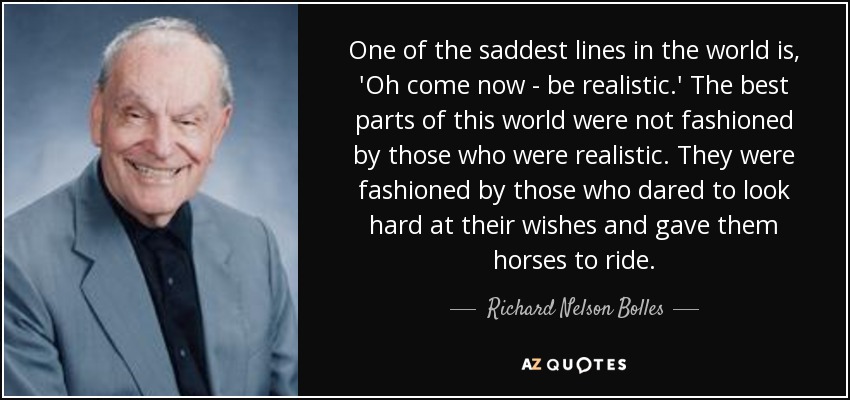 Ostensibly, it was just another book to help job seekers find work. However, Bolles wrote more than just tips on writing resumes and job letters and where to find work, he wrote a bible on how to live a better life and what work could really mean for us. Bolles gave us a broader vision of work and the role it could play in our lives. Bolles vision of work was more than just the idea of productivity and pay. At the core of Richard’s concept of life was his idea that life could be divided into three boxes: Work, Play and Education. But there is a novel twist to Bolle’s ideas about work, play and education that no one had ever put forward before. Before we go into his unique idea, let’s examine each of the three boxes. After this, I will present the truly revolutionary idea that Bolles had about them. Finally, I will discuss the implications of Bolles ideas to the present coronavirus crisis that we are facing today throughout the world.

 I posed a general question to the miners’ present. “What if we integrated work, education and play in your jobs. What would life be like for you,” I asked. There was silence for a moment. I did not know if I would get a response. Suddenly a hand shot up. I recognized the man and asked him what he thought. I never would have guessed his reply in a million years. It was perfect but it still astounded me. He said very simply “I would not know whether it was Monday or Friday.” To this very day, I cannot think of a more profound or telling comment than that.
 Our work activities at home are generally allocated towards improving our living conditions. We work on repairing our appliances, roofs, etc. because we either enjoy doing it or because we are trading our time for money. If we hire someone to do it, it will cost us money that we might not be able to afford. We may not have the skills to so some work that needs to be done, so we are often forced by necessity to contract out needed repairs. Some people have never learned how to cook and so either spend extra
 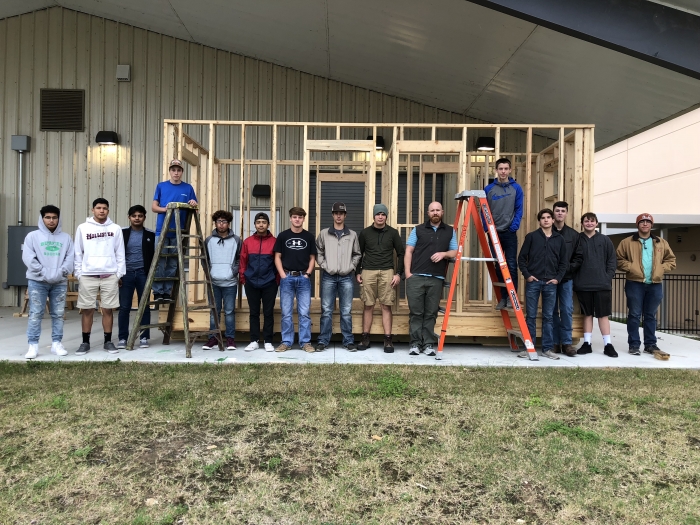 money on prepared meals or they often eat out. I never learned any wood working skills when I was in high school because these classes were deemed “general education” and I was in the “college track.” The home economics classes mostly dealt with sewing and cooking and were largely populated by girls. Even today in most high schools, girls dominate the home economics classes and boys dominate the construction related classes. There is admittedly more cross over then when I was in school in the sixties, but it is by no means 50-50 in gender distribution.
 From teachers and many educators, we hear the lament that children will miss three or more months of schooling. Unfortunately for the teachers that feel this way, students may miss out on “schooling”, but I think not on learning. Many studies have shown that students home taught learn more and score higher on standardized tests than public school students. I have been working in high schools as a substitute teacher for three years now and much of the work I see being done in classrooms can easily be accomplished from home. Whether or not students working from home are less bored with the subject matter remains to be seen. Nevertheless, there are plenty of opportunities for children to learn from home at their own pace and to some extent be more excited by a custom curriculum which suits their needs. There is obviously a great deal more that can be done in this area to create customized education programs.


 Aging Capriciously