Why History Takes Some People Seriously — J. Persico and Metis-AI Expert

Sometimes my best blog ideas come at 3 AM in the morning.  This morning I woke up thinking about “What does it take to be taken seriously?”  Are people just reading my blogs and thinking “That sounds nice” or “Sounds like a good idea but not for me.”  I hope that I am writing these blogs as more than mere entertainment.  I want my ideas to be taken seriously.  But what does that mean to be taken seriously? 

I wrote down the title and then decided to list several people I know who I thought were taken seriously.  My simplistic definition of “seriously” at this point simply meant that lots of people have read or listened to the ideas of these “great” people. 

I decided to go to Metis, my AI assistant with the following prompt:

“What did the following writers all have in common: Thomas Hobbes, Rousseau, Voltaire, Harriet Stowe, George Orwell, Charles Dickens and Shakespeare?”

Metis replied:

That’s a good one, John.  My first reaction is that there are several defensible answers, but I suspect you’re aiming at something deeper than “they were all famous writers.”

The strongest common thread is this:

They all used the written word as a weapon to challenge the prevailing order and change how people thought about society.

Each of them attacked an accepted belief, institution, or power structure:

  • Thomas Hobbes redefined the purpose of government through the social contract.
  • Jean-Jacques Rousseau argued that legitimate government rests on the will of the people.
  • Voltaire attacked religious intolerance, censorship, and absolutism.
  • Harriet Beecher Stowe exposed the human cost of slavery and galvanized abolitionist sentiment.
  • George Orwell warned against totalitarianism, propaganda, and the abuse of language.
  • Charles Dickens exposed poverty, child labor, and the injustices of industrial society.
  • William Shakespeare explored ambition, power, justice, tyranny, love, and the human condition in ways that continue to shape Western thought.

Another fascinating connection is that almost all of them made powerful people uncomfortable. Kings, churches, governments, aristocracies, slaveholders, industrialists, or dictators viewed their ideas as dangerous.  Many were censored, persecuted, exiled, or vilified during their lifetimes.

This reply really did not help me.  These writers received popularity and fame but were they taken seriously?  It struck me that perhaps they were seen more as interesting and entertaining than people who were making a profound impact on the destiny of the human race.  Like celebrities on at TV show.  Oprah, Kimmel, and others.  We watch them and then go back to our daily lives and nothing changes. 

I needed to sharpen my definition of what I meant by “taken seriously.” 

I went back to bed.  The next morning, I went back to the proverbial drawing board and came up with another group of people who I thought really made a difference.  I again wrote another prompt for Metis: 

“After I went back to bed last night, I thought of another angle on this subject.  Not just who was widely read but whose writings had the most impact on human history.  I came up with the following list:  None can argue that these men did not make an impact.  My new list included:  Jesus, Mohammed, Confucious, Aristotle, Buddha, Martin Luther, Karl Marx, Lao Tzu, Moses and Plato.”

I think if you can extract some common principles that made these writers, philosophers and prophets not just listened to but acted on to create changes in the world, I will have a good outline for my paper on Being taken Seriously.” 

______________________________________________________________________________

Metis Again Replied:

John, I actually think you’ve sharpened the question considerably.

Instead of asking, “Who were the greatest writers?” you’re asking,

“What characteristics did the people have whose ideas actually changed civilization?”

That’s a much richer question because it looks at impact, not literary style.

Looking at your list—Jesus, Muhammad, Confucius, Aristotle, Gautama Buddha, Martin Luther, Karl Marx, Lao Tzu, Moses, and Plato—their conclusions are often incompatible.  Yet they share remarkable structural similarities.

If I were writing your paper, I would argue that history takes people seriously for reasons that have little to do with charisma or fame.

Here is the outline I would propose.

The Ten Characteristics of Civilization-Changing Thinkers

1. They addressed humanity’s biggest questions.

None of them wrote about trivial matters.

2. They built a complete worldview.

They did not simply solve one problem.  Each created an intellectual framework.

3. They challenged the existing order.

Every one of them questioned prevailing authority.

4. They made complicated ideas understandable.

This may be one of the greatest lessons.  Jesus used parables.  Buddha used stories.

5. They appealed to something higher than self-interest.

They asked people to live for something larger.  Truth, justice, freedom, equality

6. They connected ideas with action.

None merely described reality.  Each expected followers to live differently.

7. They embodied their teachings.

Whether one agrees with them or not, followers generally believed these leaders sincerely lived what they taught.

8. They endured opposition.

Nearly every civilization-changing thinker paid a price.  Ridicule.  Persecution.

9. They created communities, not merely readers.

This may be the single biggest distinction.  Millions have read Dickens.  Millions have read Shakespeare. 

Few formed lifelong communities around them.

Your list created civilizations.

10. Their ideas remained useful across generations.

This may be the ultimate test.  If an idea still helps people solve problems hundreds or thousands of years later, it possesses unusual depth.

That is why we are still discussing Aristotle after 2,300 years.

History is filled with people who were famous.  It is far more selective about those it takes seriously.  Fame attracts attention.  Being taken seriously changes civilization.

John: 

When I worked In quality improvement, we taught our clients about process and outcomes.  One is cause and the other is effect.  The ten factors that Metis described above all deal with outcomes.  What we need to write and to be taken seriously are processes or causes that link to outcomes.  Based on the research I did, I have come up with ten process factors that link to the ten outcomes above.  Not on a one to one basis but more on a multi-factor basis in that several causes may link to one or more effects. 

What this means to a writer that wants to be taken seriously is that you need to address as many of these process factors as possible.  I will go through each of them individually with my own experiences and opinions.  I certainly do not claim to have changed civilization.  What follows is simply my attempt to identify the habits shared by those who did change the world.  On the other hand, great coaches are seldom great athletes.  Great teachers are seldom great philosophers.  Some of us can see what needs to be done but are not really capable of doing it ourselves.  I invite those of you who have had more impact with your writings to critique my viewpoints and hopefully add your own.  My comments section is open to any discussion and ideas you might choose to share. 

How to Be Taken Seriously?

A person is taken seriously not because they are loud, famous, or certain.  They are taken seriously because they consistently demonstrate qualities that thoughtful people respect.

1. Seek truth above winning.

    Your loyalty should be to the evidence, not to your ideology.  Let the facts speak.  A court of law should be governed by facts and evidence but too often, the egos of the lawyers are driven by winning and not justice.  Do not let your writing resemble an unfair trial.  Be rigorous to the evidence.  Admit what you do not know.  Socrates, the wisest man in Greece claimed to know nothing.

      2. Challenge assumptions – including your own.

      Every great thinker questioned accepted wisdom before questioning others.  I had two rules when I was consulting.  One was to never assume.  Check out all my assumptions.  Hold everything that I think is true as a possibility and not an absolute truth.  Absolute truth is another name for God and unless you are God, you do not have an absolute truth.  Darwin took twenty years of research before he published his conclusions.

      3. Understand before criticizing.

      The strongest arguments begin with accurately presenting the opposing view.  A good friend of mine told me about the time he was in a meeting speaking when someone replied, “That is stupid.”  My friend was one of the smartest people I ever knew.  This incensed me on behalf of my friend.  In my younger days, I would have punched this ass in the mouth if he had called me stupid. 

      I asked my friend what did he say?  He replied, “I asked him why he thought it was stupid?”   I will never forget this.  It was well beyond my capacity to imagine anyone calling me stupid and then simply requesting their opinion.  At a company business meeting, I once threatened to throw another colleague out the window for a sarcastic remark he made.  Most thought I was joking.  I admired my friend for his open-mindedness and restraint.  I hope I have learned some of it in old age.

      4. Appeal to both reason and humanity. 

      Facts inform minds.  Stories move hearts.  I have learned this lesson only in the past few years or so.  I now realize why we have a heart and a brain.  They are both channels of communication.  Your writing will be more powerful and persuasive if you address both.  Jesus told stories that spoke to the heart as well as the mind.  The story of the adulterous woman and the prodigal son are two stories that have resonated with the world for over 2000 years. 

      5.  Write clearly.

      If an intelligent high-school student cannot understand your point, the problem is probably not with the student.  After completing my Ph.D., I took a position in a quality consulting firm called PMI for Process Management Institute.  I wanted to be considered a serious consultant, so my education continued after I took this position.  I published over fifty papers and two books during my time as a consultant. 

      However, I was not writing for the academic world, I was writing for the business world.  I had to unlearn “academese” and learn to speak English again; one syllable at a time over the next few years.  As my English teacher once told me, there are two ways that you can say anything.  You can say “Up the proverbial estuary without means of locomotion” or you can say “Up shit creek without a paddle.”  The first will only be understood by a select group of scholars while the second will be understood by just about anybody who speaks the English language.

      6. Speak about enduring principles.

      Justice, freedom, dignity, responsibility, compassion, truth, and courage never go out of style.  What are you about?  Why do you want to be taken seriously?  Changing people requires them to buy into more than just your hats or t-shirts.  People are motivated by visions and missions that promise them a better life.  If you want your ideas to be taken seriously, your writing must hold out the possibility of living in a better world.  Patrick Henry will never be forgotten because he was willing to choose liberty even if it meant his death.  

      7. Admit uncertainty.

      Nothing builds credibility faster than saying, “I don’t know,” when you don’t know.  Perhaps the downfall of many leaders and managers has been an inability to admit what they do not know.  Ironically, none of us trust the “know it all.”  Yet, we all have a difficult time saying, “I did not know that.”  Or “I do not understand, can you explain it to me?” 

      Ego has led to the downfall of many a great person.  The man or woman who can admit uncertainty is someone we trust more than the person who is sure of everything they say.  Napoleon refused to admit that there was any possibility he could be defeated when he invaded Russia.  His arrogance led to the almost total destruction of his army.  Napoleon Bonaparte invaded Russia in June 1812 with approximately 600,000 to 650,000 troops.  After six months of brutal fighting, extreme cold, starvation, and disease, only an estimated 100,000 to 112,000 soldiers survived the retreat out of Russia.  Hitler was warned but he made the same mistake.

      8. Change your mind when the evidence changes.

      Dogmatism destroys credibility; intellectual humility strengthens it.  Intellectual humility can save your life.  Every year, many people will die on hiking trails in Arizona during the hot summer months.  They will be told “You should not be out on this trail; it is too hot.”  They will ignore the warming or say something like “I have been running, hiking, working out, lifting weights etc. for more years than you are old.  I can handle it so don’t worry.”  These are the famous last words of many people who had little or no humility. 

      The Titanic is a classic example of a lack of intellectual humility.  It was believed that nothing (even God) could sink this great ship.  So sure, were the builders and owners that they only had 20 lifeboats on the ship.  This was not even enough for half of the passengers.  They also ignored numerous warnings of icebergs since they believed that nothing could sink the Titanic.  The rest is a well known story. 

      9. Offer solutions, not merely complaints.

      Anyone can criticize.  The serious thinker proposes a better path.  One of the personal problems I have with so many authors and writers is that they do a great critique of the issue or problem.  Than we come to the last chapter and their conclusions and suggestions for change are either non-existent or incredibly naïve.  I find academics usually have better solutions than journalists.  Journalists are excellent at describing problems but seldom can propose any useful solutions.  Do not just tell others what is wrong.  Spend as much time, telling them what they can possibly do to change things now.  Give them hope and a vision and not just woe and sorrow. 

      10. Live consistently with what you write.

        Character is the ultimate source of credibility.  People are taken seriously not because they seek influence, but because they consistently demonstrate wisdom, integrity, courage, clarity, and a commitment to truths larger than themselves.  I can think of no more powerful word that I want to live my life by than that of Integrity.  It is a shame that today we see so many people impressed by outcomes regardless  of the integrity of the person associated with them.  Jesus said “What doth it profit a man if he gains the whole world but suffers the loss of his own soul.”  

        John F. Kennedy wrote a book called “Profiles in Courage.”  It featured eight United States Senators who risked their careers, reputations, and political futures by standing up for their personal principles.  Defying their constituents and political parties, these lawmakers prioritized national interest and moral conscience over personal ambition; thus, establishing a timeless standard for political integrity.

        Among my favorites stories was the case of Sam Houston who repeatedly defied mobs and risked his life by speaking out against the secession of Texas from the Union in 1861.  Several times he was threatened with being lynched for his beliefs, but he never backed down. 

        11. Ask unforgettable questions.

        Socrates’ legacy wasn’t a doctrine or a body of parables and principles, but a method of questioning.  Jesus frequently answered questions with questions.  Buddha often taught through dialogue.  Confucius framed moral reflection through inquiry.  Plato’s dialogues revolve around probing assumptions.  Even Marx began with the question of why economic inequality persists.  If you want to get peoples’ attention, start with a powerful question. 

        12. Pursue Significance, Not Wealth.  Write to be useful.  Write to make a difference.

        Today, there are thousands of people trying to make a living on the internet as media influencers.  Many of them care passionately about their ideas and what they see as methods to help people live better lives.  Unfortunately, there are many who care only about the money they think they can make by having hundreds or even thousands of subscribers. 

        I wrote a blog challenging people on this premise.  I understand that you can write to make money, but that is a very different animal than writing to help people live better lives.  Each of these directions start out from very different assumptions.  One is based on helping yourself while the other is based on helping others.  

        One of the most surprising discoveries I made while researching the most influential people in history was that very few became wealthy.  Of the ten civilization-changing figures I studied—Jesus, Muhammad, Confucius, Aristotle, Buddha, Martin Luther, Karl Marx, Lao Tzu, Moses, and Plato—none became fabulously rich.  Only Aristotle and Plato lived comfortably.  Buddha renounced a life of wealth, and most of the others lived modestly or even in poverty.

        Yet their ideas transformed civilizations and continue to influence billions of people today.  History rarely remembers people for what they accumulated; it remembers them for what they contributed.  If your primary goal is wealth, people may question your motives.  If your primary goal is truth, service, and improving the human condition, your ideas are far more likely to be taken seriously.

        Conclusions:

        History has never lacked intelligent people.  It has never lacked eloquent people.  It has never lacked passionate people.

        What it has always lacked are men and women whose character gives lasting credibility to their ideas.

        Being taken seriously is not something you demand from others.  It is something you earn.  

        You earn it – one act of integrity, one act of humility, one act of courage, and one act of truthfulness at a time.

        The End.

        The Ten Greatest of Everything – To Me Anyway

        1_BF7Q_kXqzl3IsxDrnerpyA

        What does it mean to be the “Greatest?”  Is the “Greatest” the same as the “Best?”  I tried rolling both off my lips in sentences as follows, “He was the best person in the world.”  “She was the greatest person in the world.”  “Would you rather be the greatest or the best?”  “Usain Bolt is the greatest 100-meter sprinter who ever lived.”  “Usain Bolt is the best 100-meter sprinter who ever lived.”

        I give up.  They seem different but I cannot tell why.  Let’s see what the good old dictionary has to say about this conundrum.  (Definitions from Oxford Languages.)

        Best:  of the most excellent, effective, or desirable type or quality.

        Great:  of an extent, amount, or intensity considerably above the normal or average.

        As Winnie the Pooh says, “It hurts my head.”  Somehow I like “Great” better than “Best” so I will leave the distinctions and arguments to the linguistic experts.  For now, my list will be looking at people and things that I find are the “Greatest” to have ever existed.  I would hazard that if they were the “Greatest” that they are also the “Best.”

        One further caveat before we dive or is it delve into my list.  No one is expected, must, should, or probably will agree with me.  That is fine.  You should create your own list.  Variety is what makes life interesting.

        For each of my “Greatest”, I will list the criteria that I use in making my selection.  I presume that there are many different criteria that one could use.  Some of my criteria will be very subjective posing grounds for wonderful arguments.  As Tevye (in Fiddler on the Roof) said, “Posing problems that would cross a rabbi’s eyes!  And it won’t make one bit of difference if I answer right or wrong.  When you’re rich, they think you really know!”

        So here goes.

        jesus-rembrandt-paintingjpg

        1. Greatest Prophet – Jesus Christ
        • Criteria: Most followers
          • 2.1 billion followers worldwide
        • Honorable Mention: Muhammed
          • 1.5 billion followers worldwide

        download

        1. Greatest Book – The Bible
        • Criteria: Most sold
          • 3.9 billion copies over the last fifty years
        • Honorable Mention: Quotations from the Works of Mao Tse tung
          • 820 million copies sold

        1200px-Gilbert_Stuart_Williamstown_Portrait_of_George_Washington

        1. Greatest General – George Washington
        • Criteria: Most Heroic Activity
          • Passed on the offer to be crowned king or ruler for life
        • Honorable Mention: Simon Bolivar
          • A great military leader. He took the title of dictator but voluntarily resigned after leading numerous battles to liberate South America from Spain

        Okay, go ahead and scream over my picks.  Tell me that computers, rating experts, number of battles and so on would show that Napoleon, Caesar, Hannibal, Alexander, Genghis Khan, Khalid Bin Walid or Subutai were the greatest.  However, I challenge you to show me one of these Generals who after winning battles against great odds and then becoming the country’s leader also voluntarily stepped down and did not take the mantle of dictator that his nation wanted to crown him with.

        egypt-gettyimages-1085205362

        1. Greatest Empire – Egypt
        • Criteria: Longevity
          • From 3100 BCE to 30 BCE
        • Honorable Mention: The Pandyan Empire
          • This society of Southern India is considered by some to be the longest-lasting empire in history.

        A criteria based on land mass would have yielded, The Mongol Empire, The British Empire, and the Roman Empire.  However, I think longevity is a better criteria of greatness than size.

        1_omubHP3AmKqSsJQO6OZ5bg

        1. Greatest Leader – Mahatma Gandhi
        • Criteria:  Most admired
          • Almost every list of greatest leaders has Gandhi on it. He might not always be in first place but if you averaged his position out, he would easily be number 1 as most admired leader in the history of the world
        • Honorable Mention: Nelson Mandela
          • Easily the second most admired leader in history. President Mandela’s struggles are epic as was his sense of forgiveness and charity.

        william-shakespeare-194895-1-402

        1. Greatest Writer – Shakespeare
        • Criteria: Most influence on literature
          • In the English language, no one outside the Bible is quoted more than William Shakespeare
        • Honorable Mention: Plato
          • This is a difficult pick. Many would choose Homer, Dostoyevsky, Twain, Richard Wright, Kant, Goethe, Machiavelli, or Karl Marx.

        So here is how I resolved Honorable Mention:  I typed in Google each of the following names to see how many hits I would get.  These are my results:  Plato, 185 million; Goethe, 69 million; Marx, 24.4 million; Homer, 80 million; Dostoyevsky, 6.2 million; Thomas Paine, 4.1 million; Twain, 60 million; Richard Wright, 3 million; Machiavelli, 12 million. Plato won by a long stretch.

        01booktalkconfucius

        1. Greatest Philosopher – Confucius
        • Criteria: Most impact on human thought/behavior
          • Tricky here to distinguish between a writer and a philosopher since they are obviously two sides of the same coin. However, given the population of Chinese in the world and the number of times that Confucius is quoted, I have to give the mantle of greatest to Confucius.  My sentimental favorite is Socrates, but I am not sure that he had the same impact on humanity.
        • Honorable Mention: Gautama Buddha
          • Leader of the fourth largest religion in the world.  The influence of Buddhism is felt in every genre of literature, in every religion and in the daily lives of every person living on the planet earth.  Some might see it as an esoteric religion since it is so different than the monotheistic religions.  However, it is just this difference which provides for so much of its influence on the world.  I cannot conceive of a world not balanced by both God and Non-God religions.

        VSGZHGib_400x400

              8.  Greatest Scientist – Albert Einstein

        • Criteria: Most lists of the greatest scientists
        • Honorable Mention: Marie Curie
          • Madame Curie comes up on almost all the lists of greatest scientists. She is one of the few people to ever win two Nobel Prizes in Science.  She is the only person to ever win two Nobel Prizes in two different scientific disciplines: Physics and Chemistry.

        mm

        1. Greatest Athlete – Alexander Karelin
        • Criteria: Most wins by an individual, not a member of a team.  Over the period of his active wrestling, Karelin won 887 matches and only lost 2.
        • Honorable Mention: Serena Williams
          • To date, Williams has won 346 of her tennis matches. She is the winner of 23 major singles titles, most of any man or woman in the Open Era of tennis.

        bach_beethoven

             10.  Greatest Composer – Bach or Beethoven

        • Criteria: Most pieces composed, or most pieces played
          • I really could not decide on this one. Neither man had the most composed pieces but when you look at most played and how many each composed, there is little question that the two composers are the greatest of all time.
        • Honorable Mention: Wolfgang Amadeus Mozart
          • I personally like Mozart better than any other composer in the history of the world. I like Verdi, Puccini, and Bizet a great deal, but they are nowhere near as prolific or popular as Mozart.

        Well, there you have it folks.  My list of the “Greatest” in the world.  I had fun doing this list.  It was a real challenge.  Too many choices making it very difficult to pick.  Looking up the criteria to use and looking at all the different opinions made it a very interesting task.

        “Never underestimate the power of dreams and the influence of the human spirit. We are all the same in this notion: The potential for greatness lives within each of us.” — Wilma Rudolph

        What Needs to Be Done Starting in 2021 – IMHO

        download

        Getting Trump and his Senate sycophants out of office is only the first step in making America the country it needs to be.  The following is an agenda that I think would help to exceed the dreams of our founders and would meet the needs of citizens who want to live in a country characterized by true equality, true freedom, and true justice.  These items should be our “Second” priority after getting Trump out of office.

        • Universal day care for all working parents
        • Develop a National Agency Against Racism and Sexism
        • Low cost Internet for all citizens
        • Term Limits for all National political offices – 2 six-year terms maximum. No holding any public office for ten years after
        • Expand Affordable Care Act to insure healthcare for all citizens
        • Major Education Changes – develop a 21st century education system (see my blog on this subject)
        • Infrastructure Plan (Biden Plan a Start)
        • Start Closing Military Bases overseas
        • Major Campaign Funding Reform
          • Repeal Citizens United
          • Abolish Lobbying
        • Limit Executive Privilege and Executive Orders
        • Limit for Supreme Court Tenure to 15 years
        • Restore fair representation by eliminating gerrymandering
        • Abolish the electoral college
        • Reform corporate law to restore the balance of power between workers and management.
        • Adopt a plan for immigration based on care and compassion for all human beings
        • Reform the criminal justice and legal system
        • Ensure that LGBTQ citizens have the same rights as all other citizens in the USA
        • Reform tax law so that it is equitable and fair
        • Work international to establish a global mandate for a stable climate that will include efforts on climate restoration, climate mitigation and environmental sustainability

        f228fe4403ce11b951226c0049a137f5

        Mentors, Muses, Role Models, and Shooting Stars – Part 2 of 2

        greatness

        Why do some people achieve success and happiness while other people flounder on the shoals?  One man/woman becomes Prime Minister or President and their brother/sister becomes a drug addict.  I suppose there are many reasons and many that we can probably do nothing about.  Some things are beyond our power to change.  However, there is one reason that contributes to success and it is in our power to modify or amplify.  I speak specifically of the ideas or concepts in the title of this blog:  Mentors, Muses, Role Models, and Shooting Stars.  In Part 1, I talked about the importance of Mentors and Muses.  In Part 2, I will discuss the importance of Role Models and Shooting Stars.

        Who-is-my-role-model

        Role Models:

        A Role Model is anyone either real or imagined who provides inspiration to another person that will allow that person to dream about doing things that they never would have thought possible.  A role model allows a child to think about being greater than anyone they have ever known.  Role models lift people up to help them aspire towards being more than they are.  Parker Posey, the little Black girl whose mom brought her to the National Art Museum in Washington D.C. saw a picture of Michele Obama on the wall and thought “I want to be just like her.”  Later on Parker said in an interview that she would rather be president than first lady.  The great English scientist Isaac Newton said in 1675, “If I have seen further it is by standing on the shoulders of Giants”

        Blog-LessonsFromLeaders

        A role model is in a sense a giant.  I asked Dr. Deming one night when we were coming back from dinner what he wanted to be when he was in college.  He immediately replied, “I wanted to be just like Walter Shewhart.”  Few people outside of quality control have probably ever heard of Dr. Walter Shewhart but the name of Dr. W. E. Deming is known the world over.  Dr. Deming had stood on the shoulder of a great man and reached even higher than Dr. Shewhart.

        I was once asked why I did not go to Harvard since I grew up in Rhode Island and Harvard was only 45 miles away.  I laughed with some mild regret.  Truth be told, I never would have thought I could go to Harvard.  No one in my family had ever gone to college.  We had no money.  I did not know a single person who ever want to college.  Years have gone by and I have met many Harvard graduates.  I have no regrets now about not attending Harvard.  My regrets come from never having thought that it was possible that I could ATTEND college.

        mandelaI teach part-time as a substitute teacher in two high schools in Casa Grande, Arizona.  Both public schools have a large minority population of Latino’s, African Americans, and Native Americans.  I talk to many of these students when they are seniors about what their plans are after they graduate.  Many of them remind me of myself when I graduated high school.  I had no clue about what I could do or be.  My father wanted me to become a postman like he was, and my mother did not really have any idea or inclinations about careers.  I looked around and in 1964, thought “Well I will join the military and see what happens.”  I had no dreams or goals for my future.  I had no role models when I was growing up.
        I think every child should have a role model.  I have heard the arguments against.  Role models always end up being tarnished.  Role models may not present realistic possibilities.  Role models will stereotype kids into traditional channels.  Role models may pose negative characteristics rather than positive.  For instance, if your role model is Billy the Kid or Adolph Hitler, it might not suggest a desirable future.

        “All the role models are being exposed and this is good because role models are shit. The quicker we exposed them the better. The whole concept of role models is frightful! You gotta make your own role.”  — William S. Burroughs

        But I am not talking about negative role models.  I am talking about positive role models.  A positive role model is anyone with some desirable characteristics or values.  Furthermore, I think we need to educate our children by presenting a variety of role models and not trying to hold up any one role model as perfect or god-like.  We can never imitate or copy anyone else.

        I could have taken Dr. Deming as my role model.  Dr. Deming was loved and admired by many, but he was also criticized by many.  A friend of mine from Nigeria told me this old African folk tale:

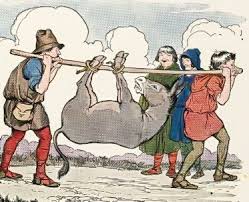
        “Once upon a time there was a father, his son and a donkey.  They decided to go to market one day and purchase some food.  All three set out with the father riding the donkey and the son walking along side.  They soon came to a village and as they passed through the town, the father heard villagers saying, “What a cruel old man, he rides while the poor son walks.”  Whereupon, the father got off the donkey and put his son up to ride.  They next came to another village and as they passed through, again came voices.  This time they heard “What a stupid old man, he walks while his young healthy son rides.” 

        downloadThe father decided he would join his son on the donkey.  As they passed through the next village, people shouted “Look at that.  Two people on one donkey.  How cruel and mean.’’  The father deliberated and made the following decision.  He and his son came down off the donkey and picked the donkey up.  They carried the donkey all the way to their final destination and as they entered the village, they heard uproarious laughter and saw everyone in the market place pointing at them and saying “Have you ever seen two more stupid people in your life.  They are carrying a donkey that could be carrying them.”
        I will bet that you know the moral of the previous story.  It applies to role models.  There are no perfect people.  We are all defective in one way or another.  You cannot please everyone.  But think about the value that a role model can have.  If you Google role models, you will find lots of lists of the “top” role models for children.  Perusing these lists as I have done, you will admire many people, but you may also be appalled at some of the role models.  For instance, I have found Marilyn Monroe, Justin Bieber and Lance Armstrong.  These are people that I find objectionable for a number of reasons.  Now I have no doubt that if I put my top ten list of role models up, there are some that you would find objectional.  I repeat that there are no perfect role models.  This fact should remind you not to throw the baby out with the bath water.

        “We look at the way some kids behave and instantly blame the parents, and more often than not we’re correct. The school bully is often a sign of poor parenting. That’s the immediate cause, but if we search for the root cause we have to dig much deeper than that. What on earth in that kid’s head makes it seem okay to bully people? Why are the parents doing such a poor job of bringing up their children? Probably because they didn’t have very effective role models themselves when they were growing up. It could go back generations.”   ― Karl Wiggins, You Really Are Full of Shit, Aren’t You?

        4QaL8214

        Shooting Stars:

        A shooting star or a rising star is someone whom you hitch your wagon to.  It is someone that you recognize is going places and doing things that you admire.  If you knew someone was taking a trip that you wanted to be on, you would join that person and take the trip together.  A rising star or shooting star will take you to places that you might never have dreamed of going yourself.  You will find many great military leaders, business leaders and scientists who hitched their wagon to a shooting star and later achieved greatness themselves.

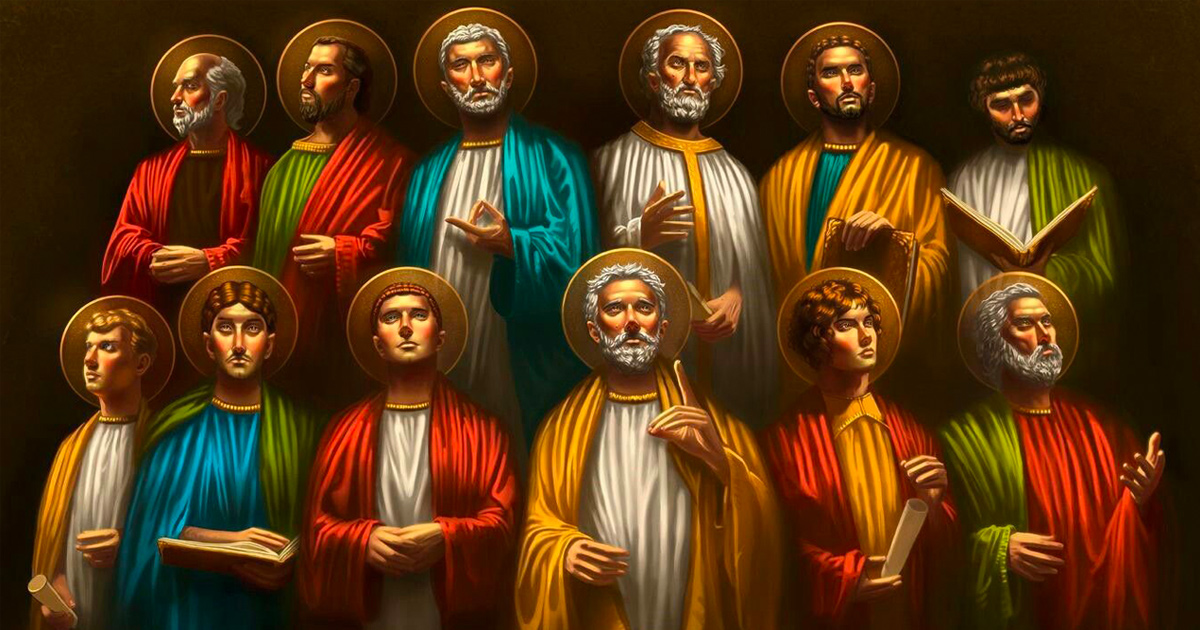
        12-disciplesPerhaps the most famous example is in the spiritual arena.  Twelve men chosen somewhat randomly hitched their wagons to a shooting star and achieved fame and glory far beyond anything they could have dreamed of.  Today we remember the shooting star and his 12 apostles.  Each of the apostles later went on to their own fame and glory spreading the word of their lord and master.  Sometimes, it is the shooting star that gets forgotten but, in this case, through the efforts of his 12 followers, the name of Jesus Christ rings throughout the centuries in every corner of the globe.

        Conclusions:

        How do you find a shooting star or a role model?  I will leave you with some advice:

        1.  Most important, you must believe that success and greatness is not simply dependent on your own resources and energy. As the Beatles said, “I get by with a little help from my friends.”

        2.  Nevertheless, as a pundit once said, “Pray to the lord but row for the shore.” You can get all the help you need, but you are ultimately responsible for your own destiny.

        3.  Look for role-models that have the values you would like to have. If you are going to select anyone, you must first know what are the key values that you want more of in your life.

        4.  List seven of the most important values that you admire in your role model. Put them on a piece of paper that you can review every day.  Each day start by reviewing one value and asking yourself “What can I do today that would help me better exemplify this value?”  At the end of each evening, do a review of your day’s activities.  Ask yourself “How well did I do today on this value?”

        5.  Do not be afraid to imitate your role model. You must learn the basics in any activity before you can improvise.  Deming was not ashamed to say that he wanted to be “Just like Dr. Shewhart.”  Great people are never ashamed to admit that they admire other great people.  It is only weak and insecure people who are narcissistic to the point that no one else counts.

        6.  As pertains to shooting stars, ask yourself “Who do you know in your career or profession who you think is a shooting star?” In every field that I can think of, you will surely find someone who is better than you are or who has more skills than you have.

        7.  Get to know this person.  Remember the saying “Birds of a feather flock together.”  This can be a good thing when you flock with highly intelligent, skilled, ethical, and motivated people.

        “Hang On To People That Inspire You. Do Work That Energizes You.” ― Wesam Fawzi


        What is the One Thing that is Hardest to Find in Life? 

        What is the one thing that we all want in life but that we can’t buy or pay for?  We can live a life without it but we will end up feeling like we only lived a shell of a life.  We can chase all over the world for it but we will sometimes end up finding it in our back yard.  We can live a life with security and comfort and never find it.  We can settle for the mundane but we will regret that we did not have the courage to grab it when it was in our reach.  Sean John says “Life without passion is unforgiveable.”  You can buy his cologne for fifty dollars an ounce but it will not give you passion.  Most of us will never have passion in our lives.  We might think a one night stand or our favorite team winning the Super Bowl or taking a trip to some exotic land is passion but deep down inside of us we know that these activities are only surrogates for passion.

        The saddest people I’ve ever met in life are the ones who don’t care deeply about anything at all. Passion and satisfaction go hand in hand, and without them, any happiness is only temporary, because there’s nothing to make it last. ― Nicholas Sparks

        You can climb Mount Everest.  You can dive to the bottom of the Mariana Trench.  You can get a Ph.D. degree but you can never get passion simply by accomplishing things.  Passion is not a fad or a commodity.  You can’t buy it in Walmart or find it on top of the Empire State building.  Most of us do not grow up with a desire for passion.  We do not even know that it is missing in our lives.  Passion gets smothered in us when we are very young.  It is extinguished before it can be ignited.  Passion scares people.  Authorities and parents both fear passion.  The passionate person is a juvenile delinquent.  Early on, parents, teachers and others wage a campaign to destroy the roots of passion in children.

        Sex is the consolation you have when you can’t have love ― Gabriel Garcí­a Márquez

        Someplace deep inside all of us, the embers of passion still burn.  We go through life thinking that there must be more to it then what we are experiencing.  We look for God.  We look for Ghosts.  We look for love.  We look for things but still they do not bring us the passion that we crave.  Some spark must be ignited in us to rekindle our passion.  When they speak of quality, they say that you will know it when you see it.  However, you can’t see passion.  You have to feel passion.   We know it exists because from time to time, we can get a glimpse of it in others.  The passion that we sometimes see in others thrills us to the bone and leaves a certain degree of incredulity in its wake.  We know we are missing something that seems unfathomable to us.  Greatness and passion seem to comingle.  Does greatness produce passion or does passion produce greatness?

        I want to know what passion is. I want to feel something strongly.”  ― Aldous HuxleyBrave New World

        Hollywood is perhaps the most frequent purveyor of passion.  We get our impressions of passion from our Hollywood idols and movie stars.  Passion is pervasive in Hollywood.  From superheroes saving the world to unrequited love romances to tales of great daring, we glimpse a world where passion is the norm.  A world where passion is as common as grass.

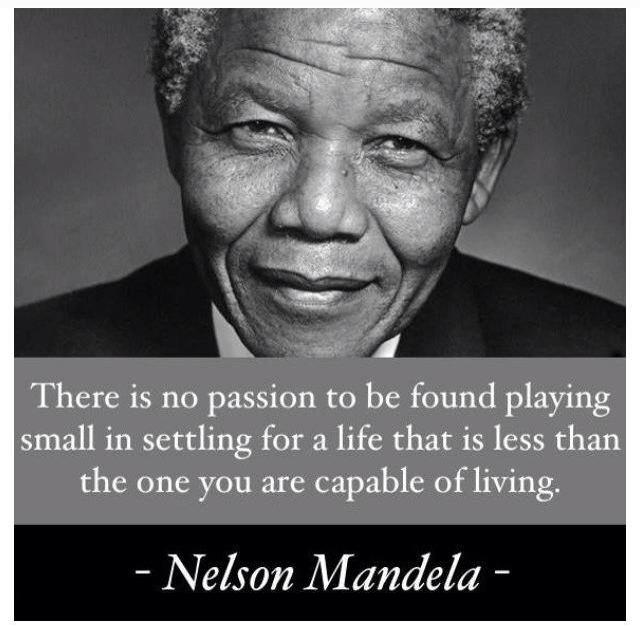
        There is no passion to be found playing small – in settling for a life that is less than the one you are capable of living.” — Nelson Mandela

        Looking at passion from a theoretical perspective, (something rarely done) we can see that there are three areas in which we can inspire passion.   These conform to our three life components.  We can be passionate about ideas or thinking.  We can be passionate about doing or activities and we can be passionate about feelings.  What about things you may be asking?  I will argue that we cannot really be passionate about things.  Hard core motorcycle riders usually care more about riding their bikes than they do looking at them.  Trophies, money and even fame are ephemeral and rarely suffice to infuse passion in anyone’s life.

        Maybe the bike is more dangerous, but the passion for the car for me is second to the bike. — Valentino Rossi

        People who are passionate about ideas are intriguing.  We find that they have a love for the mind and all things cerebral.  We may not understand their theories and concepts, but we are fascinated by the premises and hypotheses that they can spin out.  History has shown that a key element of progress lies in the intellect that a civilization can bring to its culture.  The Jews, the Greeks and the Chinese each stand out in our minds with their history of great thinkers from Abraham and Maimonides to Socrates and Plato to Confucius and Lao Tzu.  These cultures had a deep respect for the ideas and philosophies of its great thinkers.

        Some of us are passionate about books, education, museums, history, biographies, TED talks, documentaries and other intellectual activities.  We would rather read a good book then go to the Eiffel Tower or the beach.  Our ideal life is of the mind and not of the body.  We no sooner finish one book then we are off to another.  Our dream of heaven is one vast library with no late charges.

        You have to be burning with an idea, or a problem, or a wrong that you want to right. If you’re not passionate enough from the start, you’ll never stick it out.”  — Steve Jobs

        Some people are passionate about their activities.  Great explorers like Marco Polo, James Cook and Zheng He lived for the adventure and excitement of finding new places and new civilizations.  For such adventurers the risk was hardly a consideration given their dreams and desires for discovery.  One cannot imagine anyone undertaking the hazards and deprivations that met these men without a true love for action and doing.  People like this cannot be content in an arm chair reading a good book or sitting in front of a fire place with a family watching TV.

        Some of us are passionate about our work or our sports.  We love what we do so much that we would pay our employers to let us do the work that they are paying us to do.  This is what passion means.  To love something so much that you would pay someone to let you do it.  We live for the activity whether work, traveling, sports or a hobby.  Our dream of heaven is an activity that allows us to become intimately involved with the act of creation or the challenge of overcoming some obstacle or the chance to exceed some goal.

        If you don’t love what you do, you won’t do it with much conviction or passion.”  — Mia Hamm

        Our final passion involves the realm of feelings.  We usually think of passion as connected to sex.  We have watched the all night love affair of two Hollywood stars as they undress and ravage each other in a fit of what one might call sexual frenzy.  We marvel at their physical dexterity.  Two bodies engaged in positions that would challenge the authors of the Kama Sutra or even tax a painters abilities to portray.  And to think, that after they are done, they start over again until the sun begins to dawn on another day.

        “When I touched her body,
        I believed she was God.
        In the curves of her form
        I found the birth of Man,
        the creation of the world,
        and the origin of all life.”
        ― Roman Payne

        But sex is only a small part of what emotional passion can be.  Passion can involve feelings of all sorts.  People who are deeply passionate about their emotions feel things that the rest of us do not.  They feel the joy and pain and sorrows of other human beings.  They experience the highs and lows of existence.  They live a roller coaster of feelings that range from happiness to sadness.  They do not let the pain of empathy discourage them from identifying with the feelings around them.  Perhaps the greatest fear that people of feelings have is the fear of apathy or indifference.  People who are passionate about their feelings live for harmony and rapport with others.

        People who live a life of passionate feelings dream of a heaven that will be populated by all the people that they have known in their lives.  They want to see all their old friends, relatives and loved ones.  They dream of making amends for the wrongs that they have done to some and sharing their love and compassionate hearts with all others for infinity.

        Time for Questions:

        What are you passionate about?  Do you have enough passion in your life?  How could you have more passion? What would happen if you tried to live a more passionate existence?

        Life is just beginning.

        My mission in life is not merely to survive, but to thrive; and to do so with some passion, some compassion, some humor, and some style.”  — Maya Angelou