
I have lived much of my life thinking and planning ahead. I have often been laughed at because of how far ahead I like to plan. But for some reason, I grew up believing that the secret to life (if there was one) lie in being ahead of the game. I learned to play chess quite early on and by six, I could beat my father who taught me the game. Three of my heroes in respect to planning are three men who all excelled in the art of strategy albeit very different arenas. I am going to briefly introduce these three men and then invite you to sit down and listen to a discussion between the three men on strategy.

Magnus Carlsen (Born 1990) is considered by many to be the greatest chess player who has ever lived. He has now surpassed both Bobby Fisher and Garry Kasparov as the greatest champion ever. Magnus is a genius on the chessboard which in some ways is a metaphor for military strategy and planning. Carlsen is from the cerebral world of modern chess and is a wizard who plays out strategy on a strictly cognitive level.
“Carlsen is a five-time World Chess Champion, five-time World Rapid Chess Champion, and the reigning (shared with Ian Nepomniachtchi) eight-time World Blitz Chess Champion. He has held the No. 1 position in the FIDE rankings since 1 July 2011, the longest consecutive streak and trails only Garry Kasparov in total time as the highest-rated player in the world. His peak rating of 2882 is the highest in history. He also holds the record for the longest unbeaten streak at the elite level in classical chess at 125 games.” — Wikipedia

In terms of mortal combat, Musashi Miyamoto is hands down the greatest fighter who ever lived. Musashi is from the deadly pragmatism of samurai combat. He was a swordsman in feudal Japan (1584-1645) who went on a quest to defeat the greatest swordsmen of his time. He was undefeated in 62 duels to the death with the Katana. There is nothing fake or theoretical about facing an opponent with a 37-inch razor sharp sword capable of cutting you in half. Musashi went on to memorialize his fighting strategy in a famous book called “The Book of Five Rings.”

Sun Tzu (544 BCE) was a Chinese military general, strategist, philosopher, and writer who lived during the Eastern Zhou period. Sun Tzu derived his strategies from ancient statecraft and military philosophy. He wrote a famous book on strategy called “The Art of War.” It has been used for centuries as a bible for military strategy. I have referred to it so many times in my strategic planning sessions that I feel like I almost know it by heart. The book is also widely used for strategy in business and life. It teaches you to be prepared for anything and the number of quotes that you can gleam from this book about strategy are almost unlimited.
In this blog, you are going to be privileged to listen to what these three men have to say about living, loving, fighting and dying. It might surprise you to find that each man is in his own way a humanist and idealist but also a pragmatist. If having all three of these traits together sounds impossible or quite contradictory, then listen to their discussion and decide for yourself. I think you may just find a number of useful ideas about life from these men.
John: I am very glad that the three of you can meet with me today. I have introduced each of you to my readers, but it was probably gratuitous since you are each very well known. Can we start off by talking about life and living? Though each of you deal in some sense with combat and finality , what about the work of daily living and making a good life for oneself?

Sun Tzu: Life must be ordered like a campaign. To live well is to understand terrain—your circumstances—and to position yourself so that conflict becomes unnecessary. The greatest victory is to live in harmony with the world without struggling against it.
Musashi: Living is training. Every day is practice for the Way. To hold the sword and the brush in balance, to adapt fluidly—this is how one lives without wasting time.
Carlsen: In chess and in life, position matters more than immediate gains. If you think ten moves ahead, you can avoid many of life’s traps. But it’s also about enjoying the game, not just winning it. “Without the element of enjoyment, it is not worth trying to excel at anything.”
John: What about loving? Does love play a role in your lives? If so, how?

Musashi: Love is dangerous if it binds you to attachment. Yet the Way is also compassion. The warrior should protect, not just destroy.
Sun Tzu: Love is alliance. To love is to strengthen morale, to bind others to your cause. Without loyalty and affection, no army—or family—stands.
Carlsen: Love requires intuition. Like in chess, you don’t calculate every detail—you feel the position. Trust in the flow between two people, rather than forcing the moves.
John: Fighting is something that I have experienced a great deal of in my life. I have experienced physical fighting and emotional fighting. My father taught me a great deal about fighting. I have come to believe that anything worth having is worth fighting for. Sometimes it has seemed my life has been more about fighting than about love. What are your feelings about fighting?

Sun Tzu: Needless fighting is stupid and folly. “To win one hundred victories in one hundred battles is not the acme of skill. To subdue the enemy without fighting is the acme of skill.”
Musashi: You cannot always avoid the duel. When you must fight, commit totally. Strike with no hesitation, see beyond form, and your opponent will already be defeated in spirit.
Carlsen: Fighting is about controlling the board. You win by shaping the game, so your opponent runs out of good moves. Aggression without calculation is reckless; patience is its own weapon. “Some people think that if their opponent plays a beautiful game, it’s okay to lose. I don’t. You have to be merciless.”
John: What about dying? Does war and life and fighting mean that we must accept death as a potential price that we pay for living a good life?

Musashi: Death is nothing to fear. To follow the Way is to be ready to die at any moment. If you cling to life, you will hesitate, and hesitation kills. I have written that, “The Way of the warrior is resolute acceptance of death.”
Sun Tzu: The wise commander spares his troops. To die meaninglessly is folly. But to give one’s life for a greater order, when no alternative remains, that is the ultimate discipline.
Carlsen: In chess, every game ends with death—the king is trapped. But the beauty is that the board is reset, and you play again. Perhaps death is just the end of one game, with another waiting.
John: This has been quite an interesting conversation. Let me end the discussion with one final question that I would like each of you to speak to. How does one find meaning and purpose in life and live a life of integrity while pursuing these goals?

Musashi: Meaning is found in the Way — in disciplined practice of one’s craft, whether with the sword or the brush. Purpose is not in wealth, fame, or fleeting pleasures, but in constant refinement of the self. Integrity is to act without hesitation, without deceit, and without wasting time on what does not serve the Way. A life devoted to mastery is a life of purpose.”
Sun Tzu: Purpose comes from aligning one’s life with harmony — with heaven, earth, and the order of things. To live with integrity is to understand both your strengths and limitations, and to act with balance rather than recklessness. Meaning is not found in chaos, but in creating stability for yourself and others. When your actions serve a greater order and bring benefit without needless harm, your life has purpose.”
Magnus Carlsen: For me, meaning is about challenge and growth. Chess has taught me that purpose lies in doing something you love, pushing yourself, and finding joy in the struggle, even when you lose. Integrity means competing honestly — no shortcuts, no excuses — and respecting your opponents. If you live true to what excites you, and stay consistent with your values, you’ll have both purpose and integrity.
John: Thank you all very much. You have given me a great deal to think about. I am hoping my readers also find value in your wisdom and insights.
Conclusions: I mentioned that I thought that all three men blended the values of humanism, idealism and pragmatism. Here are my reasons for saying so about each man.
Miyamoto Musashi (samurai, artist, strategist)
- Humanism: Surprisingly present, though in a hard-edged way. Musashi’s writings show care for clarity, honesty, and living authentically. His calligraphy and painting also suggest an appreciation for the fullness of human life, not just killing.
- Idealism: While somewhat limited, Musashi rejects romantic notions and insists on practicality. Yet, he is idealistic in his devotion to the Way — a life lived with complete discipline and readiness for death.
- Pragmatism: Very Dominant. Musashi is above all a pragmatist — he won by adaptability, by not being bound to tradition, and by focusing on what works in the moment. His famous line “Do nothing that is of no use” captures his essence.
Sun Tzu (general, philosopher, system-thinker)
- Humanism: Strong, but collective rather than individual. Sun Tzu emphasizes preserving life — “The skillful fighter subdues the enemy without fighting.” His concern is with the well-being of troops, states, and the larger order of society.
- Idealism: Present in his pursuit of harmony, he believed conflict should serve higher goals — stability, order, prosperity — not destruction for its own sake. His writings contain a vision of a just, balanced world.
- Pragmatism: Essential to Sun Tzu’s work is a manual for success in the real world. He advocates preparation, intelligence, deception, and efficiency. No illusions — but always tied to a broader purpose.
Magnus Carlsen (modern competitor, thinker, cultural figure)
- Humanism: Clear and direct. Carlsen is grounded in relationships, respect for opponents, and joy in play. He emphasizes fairness and humility — deeply humanist values in a competitive field.
- Idealism: More subtle but his idealism lies in his belief in chess as a universal language and art form, where truth can be found through the board. His pursuit of perfection in play is, in a sense, idealistic.
- Pragmatism: Very strong. Carlsen is known for his practical style — grinding small advantages, avoiding flashy risks, and adapting to opponents. His quote “I believe in good moves, not psychology” shows his pragmatism at work.
Several years ago (2016), I went to NYC to watch Magnus play the Russian Sergey Alexandrovich Karjakin. It was the first time the International chess tournament had been held in NYC since the epic battle in 1974 between Fischer and Spassky. I would have been 28 years old at the time in 1974 and had long since given up chess playing. I might have been a very good player but as with so many things in my life, I did not have the discipline or courage to stick with the game. Nevertheless, the strategic comparisons between America and Poker and Chess and Russia have significantly influenced my life.
In studying strategy, it has led me to the twin concepts of predictive strategy and opportunistic strategy. One thinks many moves ahead while the other seizes the moment. I have found that both are necessary in life. A good strategy in life will be built on an understanding of the relationship between the two. On a more practical level, I have applied this to our travels. Karen and I have now been to 45 countries and every one of the 50 U.S States. All, and I say this proudly ALL of our trips have been great, and each one seems to be better than the last one. I submit that this is due to having a great traveling companion but also to a plan based on looking down the road while seizing those moment-to-moment opportunities that pop up.
One Final Note Please:
If you are interested in what Miyamoto meant by the “Way” that he referred to, it is a philosophy he developed that encompasses the following attitudes and virtues. This information is from Google AI.
- Discipline: Musashi emphasized the importance of self-discipline in all aspects of life, considering it a crucial element in achieving any goal and overcoming challenges.
- Mastery and self-improvement: Striving for excellence in a chosen path and mastering oneself, thoughts, and actions.
- Understanding and applying strategy: The “Way” also refers to the art of strategy (Heiho) which, for Musashi, transcended just combat and applied to all aspects of life.
- Holistic approach to life: He believed the principles of swordsmanship could be applied to various pursuits and aspects of life, encouraging individuals to understand the “Way broadly” to see it in everything.
- Balance: The ideal warrior, according to Musashi, excelled in both martial arts and the arts, a concept known as Bunbu Ryodo.
In essence, “The Way” for Musashi represents a life-long journey of learning, self-cultivation, discipline, and the pursuit of mastery, not just in martial arts but in all aspects of life. Not a bad way of living I would think.
I great deal of my information is based on information I extracted from ChatGPT 5.0. The final blog is a composite of research, theory and some of the quotes from on-line sources.

 One day, when the old man was out walking, he saw a woman who had been beaten and thrown into a ditch. Around her neck, was hung a sign which said “Beware, Witch.” Without even a slight hesitation, the old man ran to the ditch to see how he could help the woman. He gave her some water and bread that he had on him for lunch and tried to bind up some of her wounds by ripping up his cloak. She looked at the old man with compassion and said “No one is ever kind to me, but you have been. I have this monkey’s paw that I would like you to have. It will grant you three wishes. However, be careful. Be very careful. Wishes can often result in things that you do not really want.” The woman handed him a gnarled dried up old paw and bidding a farewell, walked on down the road. He put the paw in his pocket and walked on to his home.
 When the old man arrived home, he told his wife what had happened. She immediately asked to see the paw. Upon, looking at it, Marie said “Shall we try it.” The old man laughed and said, “You don’t really believe in such magic, do you?” “What do we have to lose,” said his wife. So they both picked up the paw and together made the following wish: “We wish we had enough money to never have to worry about food or clothes or other necessities for the rest of our lives.” They waited and waited and suddenly both began to laugh. Such foolishness and they were silly enough to think that it might be real.
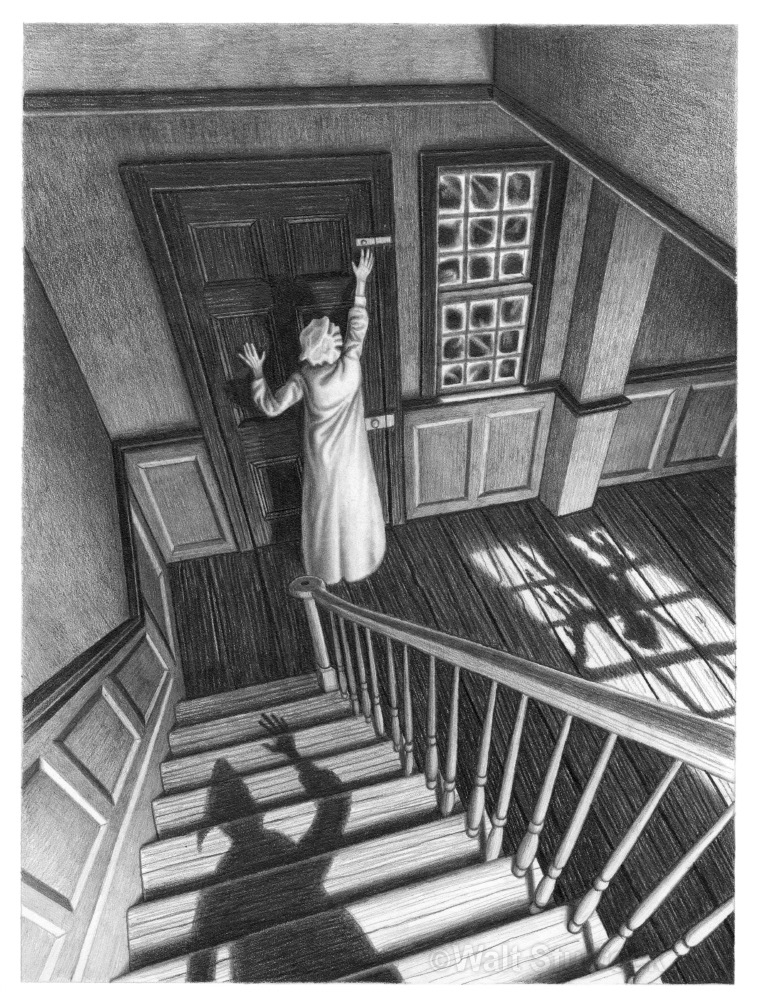 They went to bed feeling sad, miserable, and as unhappy as any two human beings could be. Later that night, they heard a scuffling coming up the path to their door. It sounded like something was being dragged. A knock sounded on their door, but they were both too afraid to move. A voice cried out “Mom, dad, it is Eli your son. I have come back. I am alive.” Almost too happy to describe, they bolted for the door. Upon opening it to let Eli in, they recoiled in horror. Eli did not look human. His skin was in tatters. His legs and arms were mere bones. His face was a skull with bits of skin and dried blood hanging off it. “Let me in, I have come back from the grave. You have summoned me. Let me in.”






 I have often been accused of being a pessimist but there is nothing about this quote that is pessimistic. It is simply a fact that we must use our imaginations to see a different world and to believe that a different world can exist. As long as we are stuck in the same thinking that generated our problems, we are not free to consider alternative realities. We need more thinking about possibilities and the future. We are bogged down with what Dr. Deming called the “problems of today.” Deming said, “We must balance the problems of today with the problems of tomorrow.”

 Aging Capriciously