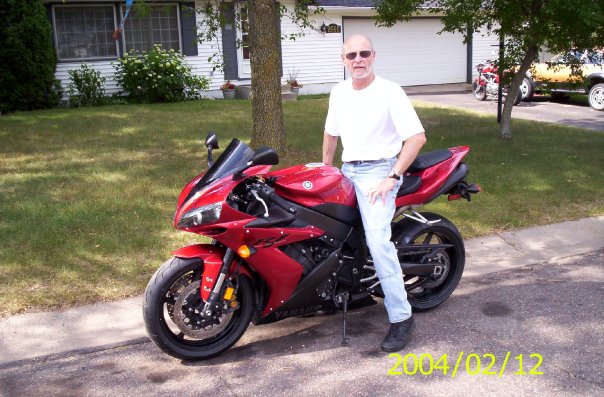
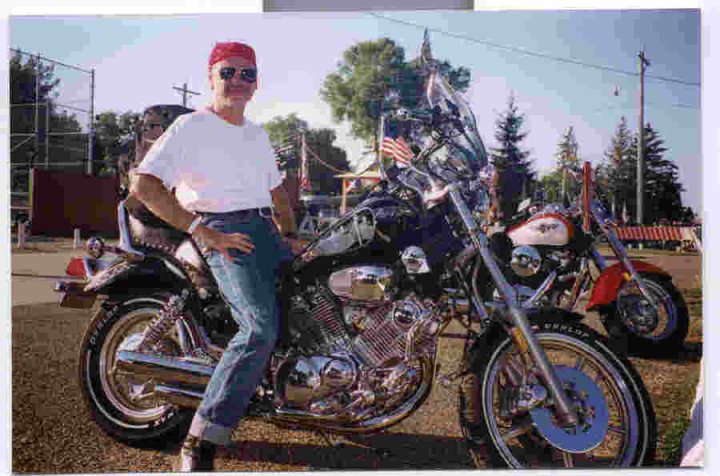
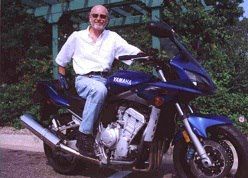
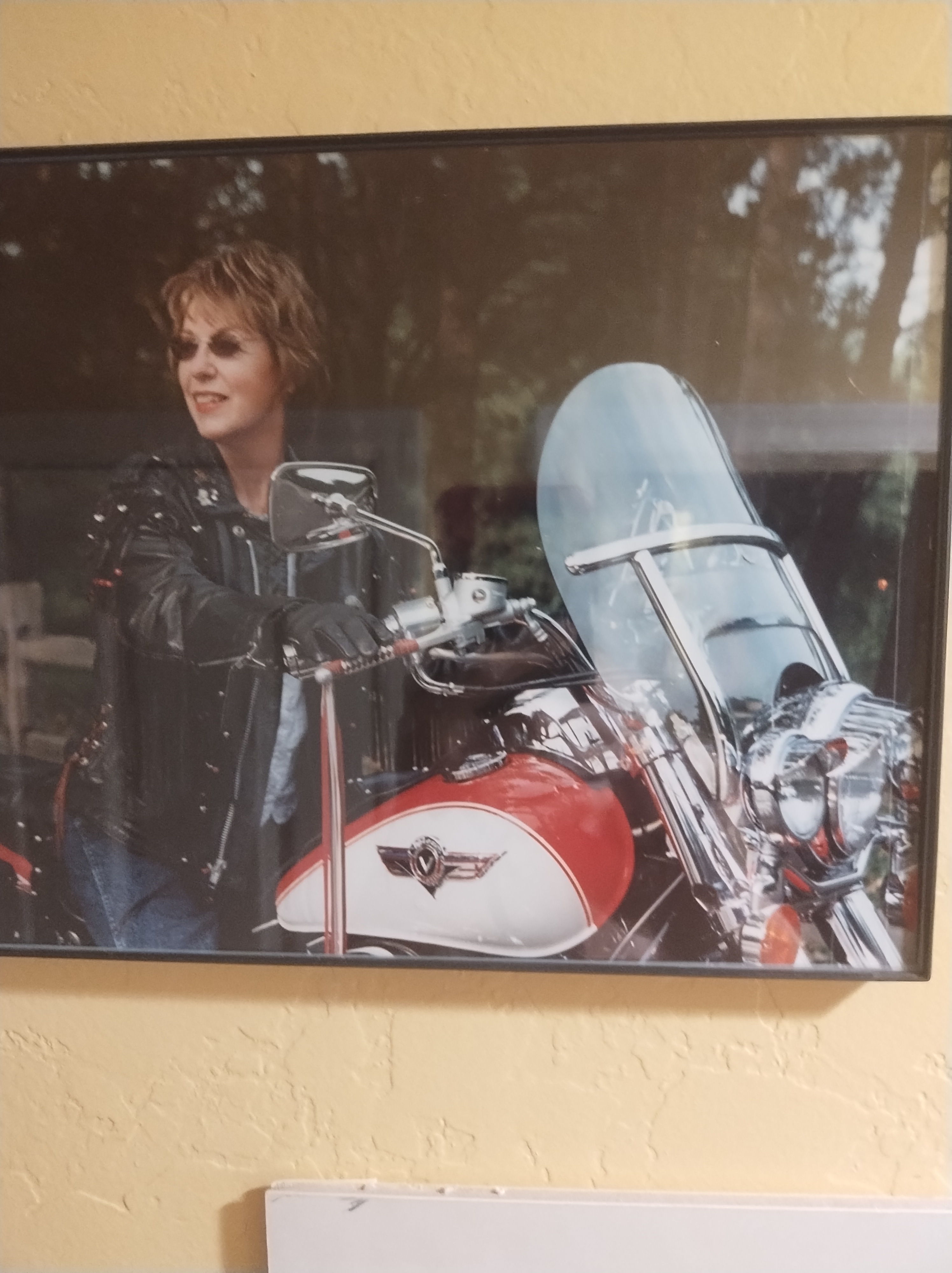
I spent twenty years riding a motorcycle, and over that time I came to understand something fundamental about risk: it cannot be eliminated. It can only be managed.
Among riders, there’s an old saying: “There are those who have crashed, and those who have yet to crash.” It’s not cynical—it’s realistic. When you choose to ride, you accept a higher probability of danger than if you stayed in a car or never rode at all. The question is not whether risk exists. The question is how you respond to it.
Over time, I began to think about people in three categories:
- Risk Avoiders – those who never ride. They eliminate risk entirely.
- Risk Maximizers – those who ride without protective gear, assuming skill or luck will carry them through.
- Risk Minimizers – those who accept the risk of riding but take every possible step to reduce both the probability of an accident and the consequences if one does occurs.
I was firmly in the third group. Every year, when better gear came out—helmets, jackets, and visibility enhancements—I upgraded. I rode with awareness, prepared for the unexpected, and assumed that someday I would crash. And I did—three times. Each time I walked away with little more than bruises.
That experience shaped how I think about planning, leadership, and decision-making. Because the lesson extends far beyond motorcycles.
Risk Is Inevitable—But Failure Doesn’t Have to Be Fatal
In life, as in riding, there is no such thing as a 100 percent certain outcome. We take risks every day—when we drive, when we invest, when we make decisions for our families or organizations. Even doing nothing carries risk.
So the goal is not to eliminate risk. That’s impossible.
The goal is to choose the path with the highest probability of success, while preparing for the reality that things will go wrong.
This is where many plans—and many leaders—fail.
They confuse optimism with probability. They design for success, but not for disruption. They assume that if the plan is sound, reality will cooperate.
Reality rarely cooperates.
The Difference Between a Plan and Planning
Years ago, I often quoted a line attributed to Dwight Eisenhower:
“Plans are nothing, planning is everything.”
At first glance, that sounds dismissive of planning. It isn’t. It’s a recognition that the value lies not in the document, but in the process.
A written plan is static. It reflects assumptions at a moment in time.
Planning, on the other hand, is dynamic. It forces you to:
- Gather information
- Confront uncertainty
- Consider alternatives
- Anticipate what might go wrong
- Build contingencies
The plan may fail. But if the planning process has been done well, you are not left helpless when it does.
In motorcycle terms:
- The plan is the route you map out.
- Planning is your awareness, your training, your equipment, and your readiness to respond.
Closing the Gap Between Assumption and Reality
When I served as a ride leader, I didn’t just map out routes on paper. I would often pre-ride them.
Why?
Because maps don’t tell the whole story.
A route might look perfect on paper, but reality introduces variables:
- Construction zones
- Poor road conditions
- Traffic patterns
- Blind turns or unexpected hazards
By pre-riding the route, I was doing something critical:
I was testing assumptions against reality.
This step—so often skipped in planning—is where many failures begin.
It’s easy to build a plan based on what we believe to be true. It’s much harder to confront what is actually true, especially when it contradicts our expectations.
But without that step, we are not planning. We are guessing.
The Most Dangerous Mistake: Ignoring Unwanted Information
One of the most consistent causes of failure in history, business, and life is the tendency to ignore or downplay information that conflicts with what we want to believe.
It happens more often than we’d like to admit.
Leaders receive data that challenges their assumptions, and instead of adjusting the plan, they reinterpret the data until it fits. They filter out dissent. They press forward.
This is not a failure of intelligence. It is a failure of discipline.
History provides sobering examples of what happens when leaders ignore information that contradicts their plans. At the Battle of the Little Bighorn, George Armstrong Custer dismissed reports from scouts that indicated a far larger Native force than expected. Rather than reassess, he advanced into a situation he did not fully understand—resulting in the destruction of his command.
A similar pattern appeared during Operation Market Garden in World War II. Intelligence suggested that German armored units were present near Arnhem, yet this information was discounted or minimized in planning. The operation proceeded under assumptions that no longer matched reality, leading to failure and heavy losses.
Even at the strategic level, Adolf Hitler’s decision to invade the Soviet Union during Operation Barbarossa ignored repeated warnings about logistics and winter conditions. Early successes gave way to catastrophic overreach when those ignored factors took hold.
In each case, the pattern is the same: when leaders choose the plan over the data, reality eventually enforces its own correction—often at great cost.
Good planning requires a willingness to say:
“If this information is true, what does it mean for our plan?”
That question can be uncomfortable. It may require delay, revision, or even abandoning the original approach. But ignoring it doesn’t eliminate the problem—it magnifies it.
The Weather Variable: True Uncertainty
Even with careful planning and validation, there is one factor that cannot be fully controlled or predicted: uncertainty.
For riders, that often comes in the form of weather.
I remember being out on rides when:
- A tornado was spotted nearby
- Snow began falling unexpectedly
- Hail made the roads dangerous
These weren’t theoretical risks. They were immediate, real, and potentially life-threatening.
In those moments, the original plan no longer mattered.
What mattered was the decision:
- Do we continue?
- Do we slow down?
- Do we seek shelter?
These decisions had to be made in real time, based on changing conditions.
And that’s the key:
Good planning includes not just a path forward, but decision points for when conditions change.
Conditional Thinking: The Heart of Good Planning
The best plans are not rigid. They are conditional.
They are built around statements like:
- If conditions remain favorable, proceed.
- If conditions deteriorate, adapt.
- If conditions become dangerous, stop.
This kind of thinking acknowledges uncertainty and prepares for it.
It doesn’t assume that everything will go according to plan. It assumes that something will go wrong—and builds in the flexibility to respond.
In motorcycle riding, this might mean:
- Slowing down when visibility drops
- Pulling over when roads become unsafe
- Rerouting when conditions change
In leadership, it means the same thing:
- Adjusting strategy based on new data
- Revising assumptions when evidence changes
- Being willing to change course when necessary
Risk Minimization: Reducing Probability and Consequence
When I rode, I didn’t just try to avoid accidents. I prepared for them.
That meant:
- Wearing a helmet
- Using protective gear
- Increasing visibility
- Riding defensively
These actions did two things:
- Reduced the probability of an accident
- Reduced the severity if one occurred
That’s the essence of risk minimization.
In planning terms, it translates to:
- Redundancy (backup options)
- Contingencies (plans for failure)
- Flexibility (ability to adapt)
- Feedback loops (continuous learning)
A plan that lacks these elements is like riding without protective gear. It may work fine—until it doesn’t.
When Plans Fail
Plans don’t usually fail because they were poorly written. They fail because they were:
- Based on incomplete or biased information
- Designed without sufficient contingency
- Executed without adaptation
- Maintained despite changing reality
The failure is rarely a single moment. It’s a process.
It begins when leaders stop listening to new information. It accelerates when they become committed to a specific outcome. And it culminates when reality finally asserts itself.
A Better Way to Think About Planning
If there is one lesson that comes from both riding and leadership, it is this:
The goal of planning is not to create a perfect path—it is to remain effective when the path changes.
That requires:
- Honest assessment of probability
- Respect for data, especially when it challenges assumptions
- Preparation for failure, not just success
- Continuous adaptation based on feedback
It also requires humility.
Because no matter how good the plan is, it will never be perfect.
The Final Metaphor: Wear a Helmet
If I had to reduce all of this to a single image, it would be this:
Planning without contingency is like riding without a helmet.
You might get away with it. You might even feel confident doing it. But when something goes wrong—and eventually, something will—the consequences can be severe.
Good planning doesn’t eliminate risk.
It doesn’t guarantee success.
But it does something just as important:
It ensures that when things go wrong, you’re still in a position to recover, adapt, and move forward.
Closing Thought
In the end, life, leadership, and even motorcycle riding come down to the same principle:
We operate in a world of uncertainty. We cannot predict everything. We cannot control everything.
But we can choose how we prepare.
We can choose to ignore inconvenient truths—or to confront them.
We can choose rigid plans—or adaptive thinking.
And we can choose whether or not to wear a helmet.
Because the goal is not to avoid every fall.
The goal is to survive the fall—and keep riding.


 One day, when the old man was out walking, he saw a woman who had been beaten and thrown into a ditch. Around her neck, was hung a sign which said “Beware, Witch.” Without even a slight hesitation, the old man ran to the ditch to see how he could help the woman. He gave her some water and bread that he had on him for lunch and tried to bind up some of her wounds by ripping up his cloak. She looked at the old man with compassion and said “No one is ever kind to me, but you have been. I have this monkey’s paw that I would like you to have. It will grant you three wishes. However, be careful. Be very careful. Wishes can often result in things that you do not really want.” The woman handed him a gnarled dried up old paw and bidding a farewell, walked on down the road. He put the paw in his pocket and walked on to his home.
 When the old man arrived home, he told his wife what had happened. She immediately asked to see the paw. Upon, looking at it, Marie said “Shall we try it.” The old man laughed and said, “You don’t really believe in such magic, do you?” “What do we have to lose,” said his wife. So they both picked up the paw and together made the following wish: “We wish we had enough money to never have to worry about food or clothes or other necessities for the rest of our lives.” They waited and waited and suddenly both began to laugh. Such foolishness and they were silly enough to think that it might be real.
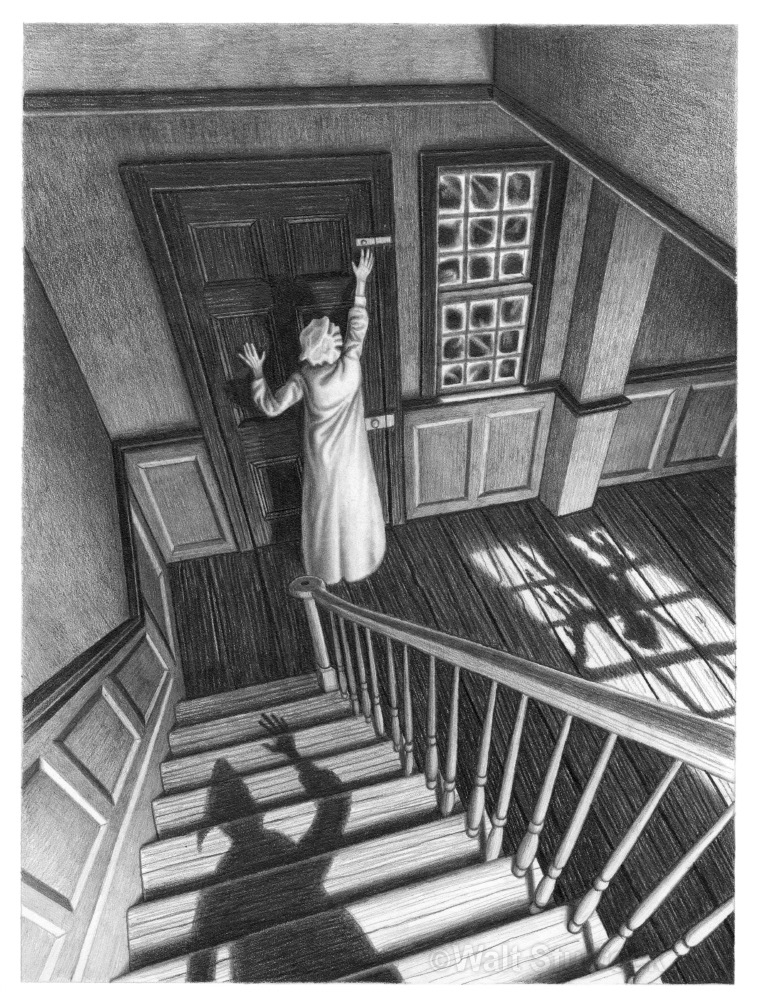 They went to bed feeling sad, miserable, and as unhappy as any two human beings could be. Later that night, they heard a scuffling coming up the path to their door. It sounded like something was being dragged. A knock sounded on their door, but they were both too afraid to move. A voice cried out “Mom, dad, it is Eli your son. I have come back. I am alive.” Almost too happy to describe, they bolted for the door. Upon opening it to let Eli in, they recoiled in horror. Eli did not look human. His skin was in tatters. His legs and arms were mere bones. His face was a skull with bits of skin and dried blood hanging off it. “Let me in, I have come back from the grave. You have summoned me. Let me in.”





 I have often been accused of being a pessimist but there is nothing about this quote that is pessimistic. It is simply a fact that we must use our imaginations to see a different world and to believe that a different world can exist. As long as we are stuck in the same thinking that generated our problems, we are not free to consider alternative realities. We need more thinking about possibilities and the future. We are bogged down with what Dr. Deming called the “problems of today.” Deming said, “We must balance the problems of today with the problems of tomorrow.”


