Some people have called me a control freak. I suppose that may be why I am so good at planning. For years, the most fun I had at the Process Management International consulting firm was when I was called on to help a client do strategic planning. I preferred to call it strategic thinking. I loved the challenges in trying to help a client set goals that they could accomplish or at least work towards. Nothing is ever certain in strategic planning. One of my favorite aphorisms was the comment by former President Eisenhower that “”Plans are nothing; planning is everything.”
But what is planning? In my opinion it is an attempt to control the future. It is a means of trying (Despite Yoda’s warning that there is no try. “There is only do or do not.”) to ensure that the goals and outcomes and wishes and dreams that you desire will come to fruition. You walk a tightrope when you do planning. You must balance between two poles. One pole is over- planning; the other pole is under-planning. If you over-plan, you create a rigidity that can not be maintained in the face of change and unpredictable events as well as unintended consequences. When you under-plan, you miss important factors that can jeopardize your intended outcomes and goals. This is the Yin-Yang of strategic planning.
 What does anxiety and uncertainty have to do with planning? This is an important connection. Uncertainty in my opinion either causes or leads to anxiety. The more uncertain we are, the more anxious we become. Many people will not attempt new endeavors, leave home, eat new food, travel to new places, meet new people, take on adventures or worst of all “listen to new ideas.” The uncertainty of these efforts creates anxiety. The unknown consequences of doing something new brings some anxiety to most of us. Change and newness can impinge on our efforts to maintain equilibrium and homeostasis in our lives. New things can disrupt the natural order that we so carefully craft to protect ourselves, our family, and our identities. “What if” can bring fear and panic to even the most courageous of us.
I am sure that each of us has various tolerances for change and each of us may have some coping mechanisms. Sadly, some people cope by giving up, hiding away some place where they pray that change and uncertainty cannot find them. This is the way they cope with uncertainty and prevent the dreaded anxiety.
The man who shot the little Black boy at his door recently and the woman who shot her Black neighbor on her porch are examples of anxieties caused by racist stereotypes that infect too many Americans. Go out and meet your neighbor! Go out and meet some Black people! Such recommendations are useless in the face of the anxieties created by news media, White supremacists and long held tropes about African Americans and other minorities.
I like to think of myself as enlightened and non-racist. Yet, only a few months ago, I went to my first traditional African American funeral for my friend Jay’s wife Gwen. Realizing that I am nearly 77 years old and had never been to an African American funeral did not make me feel very proud of my own efforts to erase the divide that can exist between Black and White folks. Who am I to tell you to go out and meet some people who are different than you?
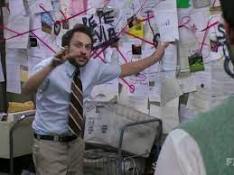 However, when it comes to anxiety my solution is planning. Karen would say I plan too much. I don’t need to go raging into the night of old age, but I do not want to get in my crypt yet and turn off the lights. Life has a way of closing in on us. The curtains for each of us are indeed coming down and will someday be down for all of us, but we can slow their coming down. As we age, we must push back. Planning can help us to hold the curtains off for a little while longer. But remember, “Plans are nothing, but planning is everything.”
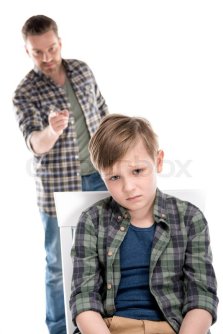 My theory is that I have been driven to reduce anxiety because I grew up with an abusive father. My childhood was a daily diet of fear and uncertainty as to when or how badly my father would fly off the handle and take it out on me. He might have had a bad day at the races, or something went wrong with his car, and it was all my fault. So many things became my fault that I was always looking up expecting the sky to fall on me. I looked under my bed and, in my closet, every night before going to sleep as a kid. Years later I would check under my car and in my back seat before getting in my vehicle. I never let anyone get on the inside track of me when walking down a sidewalk and I always look over my back when going to a public John. I am not paranoid, and I do not think anyone is out to get me. I simply want to be certain that I have an advantage just in case someone might be out to get me. 😊 Karen has learned to cope with my rather bizarre behavior and attributes it to my intrinsic anxiety.
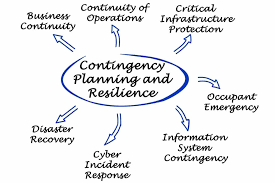
My extreme caution has had one positive side effect. I have learned to plan well and thoroughly. Certainly, sometimes I miss the mark. Planning is not a perfect activity. No one has a plan or ever will have a plan that is 100 percent guaranteed. That is why a good planner makes contingency plans. Plans for plans you could say. I call them backup plans. If A does not work, then we will do B or C. These plans have helped me to go more gently into the night. I take more risks than many people my age. I go to new places, meet new people, do new things, and eat new foods. I am not raging but I am purposeful.
I am not the same person as I was when I was sixteen and my nickname was “Mad Pazz.” I was so bent on killing myself that I took risks that today would seem unfathomable to me. Now, I even purchase health insurance when traveling overseas. Karen and I are going on a three-week trip to South Africa in October. We will fly into Cape Town and spend a week there. Then we will fly to Johannesburg where we will spend another week. Then off to Kruger National Park for a four-day mini safari. Back to Johannesburg and then off for three days to Victoria Falls. Then return to Johannesburg and finally to Arizona. We are on a custom tour and as of now, there is only Karen, me, and a guide for each portion of our trip. I am looking forward to riding an elephant as I have never done that before.
I planned this trip and had the help of a tour company that has been great to work with. Do I have some anxiety? Yes! Do I have some uncertainties? Yes! Will my plans all work out? NO! Of course not! Something will go wrong. Something unexpected will happen. We will have some problems and I will reproach myself for not anticipating them. I will have some moments where I will blame someone else for screwing things up. And life will go on. And if our trips are like the twenty-five or so other overseas trips that we have taken, this trip will be even more remarkable and unforgettable.
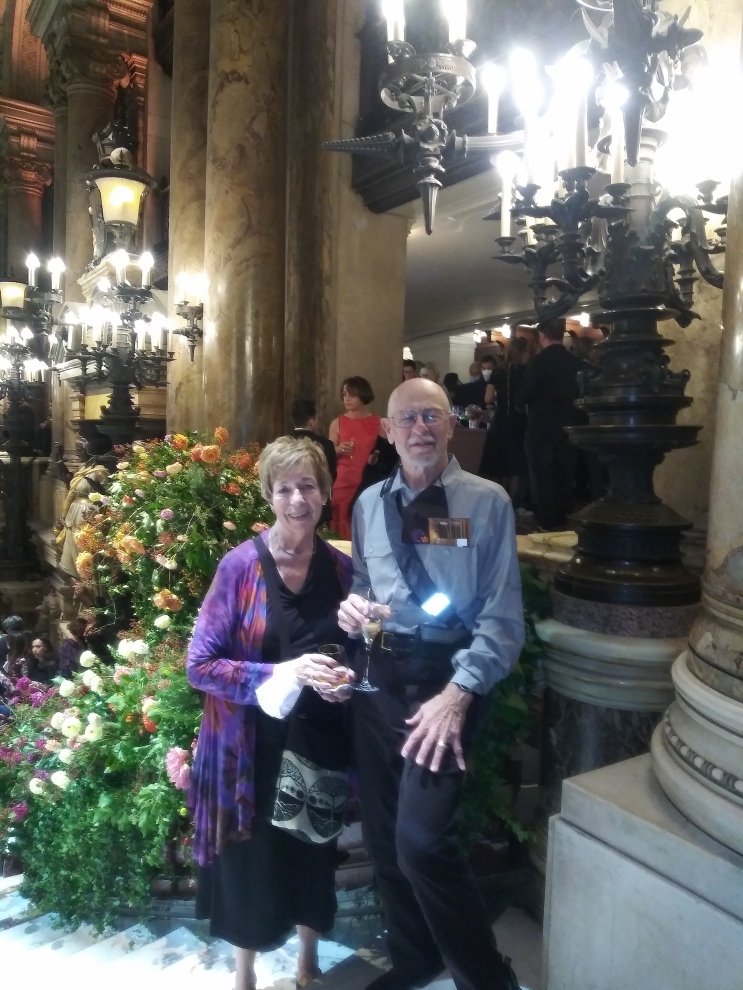
Which brings up a recurring anxiety that I have not yet discovered a plan for. Will I be able to keep all these wonderful memories of my life and times with Karen where I can readily access them after I pass into the great beyond? If I come back as a turtle or frog or elephant, will I remember all the good times we had together? All the great places we went. All the fabulous people we met. If there is a heaven and I get there, can Karen and I still reminisce about the special times and places that we shared together?

Maybe I can work out a backup plan just in case. 😊
Please Read This Caveat:
I have one caveat that should have been mentioned at the start of this blog. There is a great deal of clinical anxiety that NO AMOUNT of planning, strategy, or thinking ahead will ever cure. I spent years in therapy seeing different psychologists, reading everything I could on self-help, attending support groups, getting a BA degree and an MS degree in Psychology. My early life seemed one large effort to overcome dreams of being murdered, being chased by something trying to kill me, being thrown down a dark pit and worst of all my OCD which became more and more embarrassing when I left home. I tried to hide it as best I could. If you have ever sat at a book shelf for hours trying to stop arranging the books so you could leave the room, you will have some idea of my self-loathing and mental anguish. I still reap some of the fallout from my problems having been alienated from my only child since she turned 19. I am sure she hated me as much as I hated my father when I was a child. I did not make her life easy.
Somehow, I was lucky. Some combination of age, therapy and planning, reduced all of my mental health issues to manageable proportions. Somehow I did not kill myself or anyone else. Today, life goes on for me when I can manage to control being so controlling. Again, for me it is a two edged sword.
 I am having one of those days; when the questions of life that I have never been able to answer just seem overwhelming. I once looked forward to the day that I would know almost everything or at least know a great deal more than I did. Sadly, that day has retreated further and further from my grasp. Each day that I live, I find more questions that I cannot answer. So today, I am listing some of these in the hopes that you (my reader) may have found some of the answers that have eluded me. Please feel free to answer any of these questions in the comments section or send me an email with your answer. Any solutions will be greatly appreciated. For those of you who have never read my blog before, I am a 76 year old White guy who lives in the USA. I love lobster, liquor, reading, music, travel and making it difficult for racists, xenophobes, Trumpers, and other bigots to dominate current narratives.


 How do you know if you know anything? You have two paths to answer this question. The first path involves your belief that you do know something. You can choose this path if you are fairly certain that you know something. It may surprise you, but this is not a path of science. This is a Faith-Based path. No matter what anyone tells you, science relies on faith almost as much as religion relies on faith.


 The Faith Based Path could lead one to accept that hundreds of systems across America could not all have been wrong and that the tallies were accurate because someone you trust told you they were. If you do not trust the poll counters, you will reject the decisions made by election boards and cling to the idea that Trump was cheated by liars and scoundrels. Either way it is a matter of faith.

 Aging Capriciously