I have talked about fame, fortune beautiful people and cars. These are a few of the things that many of us lust after. Foolishly chasing them in the hope that they will bring us happiness. But the epitome of all desires by humans is immortality. All other aspects of our egos are merely means towards achieving a dream that we will never be forgotten.
Some people want buildings named after them. Some want giant arches or statues to be remembered by. The pharaohs of Ancient Egypt built huge pyramids so that they would not be forgotten. Many famous people have airports, streets, awards, and other tokens of fame named after them. While I have often lusted after such symbols of immortality, I am reminded of a poem by Shelley about a statue.

Ozymandias
By Percy Bysshe Shelley, 1819
I met a traveler from an antique land
Who said: Two vast and trunkless legs of stone
Stand in the desert. Near them, on the sand,
Half sunk, a shattered visage lies, whose frown,
And wrinkled lip, and sneer of cold command,
Tell that its sculptor well those passions read
Which yet survive, stamped on these lifeless things,
The hand that mocked them and the heart that fed:
And on the pedestal these words appear:
“My name is Ozymandias, king of kings:
Look on my works, ye Mighty, and despair!”
Nothing beside remains. Round the decay
Of that colossal wreck, boundless and bare
The lone and level sands stretch far away.
There is an irony here that I cannot ignore. The king’s monument lies in ruins, but Shelley’s poem keeps his name alive. The warning against immortality has itself become a vehicle for remembrance. Even so, being remembered for two hundred years is a long way from being remembered forever.
When I became a graduate research assistant at the new Vocational Education building on the St. Paul Campus, we were told that each Ph.D. graduate would have a brick inscribed with their name on it. The brick would find its way somehow into one of the buildings walls. Placed in such a way that it would survive for eternity. I entered graduate school in 1982 and completed my Ph.D. degree in 1986. I was never given a brick with my name on it. As far as I know, no one else ever had their name put on the wall. Unless it was inscribed in graffiti too discrete for even the university maintenance department to notice.
To be honest, I was mildly disappointed. I was ready to settle for immortality by brick.
I doubt that the Vocational Education building will stand forever. Thus, even if I did get my name on one of its walls, it would hardly reflect my idea of immortality. Who would know from my name alone, the wonders I accomplished in the 21st Century of America?
But what do I mean by immortality? My first thought was simple: something that lives forever, whether a person, an idea, or a thing. The more I considered it, however, the more I realized that I was mixing several different desires.
Living forever is one thing. Being remembered after death is another. Having an influence that continues after people have forgotten your name is something else again. A building named after me would not keep me alive. It might not even keep anyone interested in who I was.
Religions and philosophies complicate the question further. Some promise the survival of a soul. Others imagine rebirth. Buddhist teachings about the Deathless do not simply promise that the familiar personal ego will continue forever. We use similar words for very different hopes.
If you are still confused, I suppose we could go to Webster’s definition to settle things a bit. Looking at the various theories that have been proposed over the centuries does not provide a clear answer to what immortality really means. As I started looking for a universal definition, the hundreds that emerged made me realize that most of the great thinkers in history as well as great religions all have very different ideas as to what immortality entails.
I find this somewhat surprising since I was sure that for most of us it meant simply living forever. Alas, life is never that simple. A key question that my search led to was “What, if anything, will live forever?” Do we have an immortal soul that will go on living long after our body returns to protons and electrons? Will we come back again in some ghostly appearance and stalk the universe? Is there a heaven where good people like us will get to live forever with their favorite pets and/or spouses? How crowded and confusing this would get on Friday nights.
What if I told you that immortality was a fiction? A fiction that humans created like they created the “God” in their image. An idée fixe that according to Max Stirner is simply wheels in the head. For Stirner, a “wheel in the head” is an abstract concept, ideal, or belief that a person treats as absolute, sacred, and superior to their own individual self. Instead of the individual owning the idea, the idea owns the individual.
Key elements of Stirner’s concept include:
The “Spooks” of Mind: Stirner argued that abstract concepts like God, the State, Morality, Humanity, Duty, or Truth are not real, physical entities. They are illusions—ghosts or “spooks”—that people construct.
Our ancient ancestor woke up in the middle of a night a million years ago and decided that he did not want to die. Death represents oblivion. A passage into nothingness. No remnants remaining of life. Nothing and nobody to remember. A life’s journey of experiences, learnings, meetings, friends, relatives, loves and all gone.
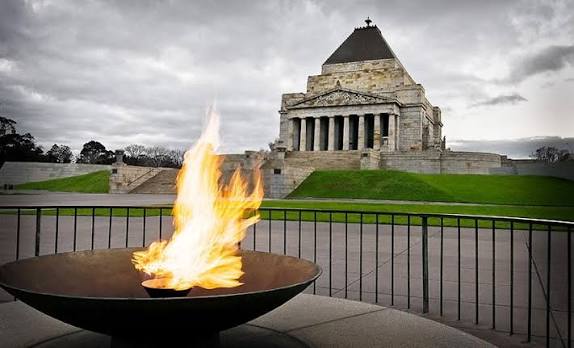
Perhaps you will get a gravestone that a few people will visit for a few years. If you are remarkable enough, perhaps you will get an eternal flame on your grave. How long will your eternal flame burn if you do get one?
Did you know that according to Google, there are only about nine prominent naturally occurring eternal flames known in the world, though estimates vary?
Google adds that If we include man-made eternal flames—such as memorial torches, religious lamps, and civic monuments dedicated to leaders or fallen soldiers—there are hundreds or thousands of them maintained in the world.
Eternal has much the same meaning as immortal. Webster’s defines Eternal as “having no beginning and no end, lasting forever, or existing completely outside of time.”
Synonyms:
• Immortal
• Everlasting
• Perpetual
• Enduring
• Timeless
We don’t want to die. We don’t want our works, our loves, our treasures, our hopes and dreams to pass into nothingness. So we invent the idea of immortality. We create a belief that somehow we can preserve all the treasures of our lives. Maybe, just in a bunch of pictures of events that meant so much to us. Places we visited. People we knew. Houses and cars and stuff we owned.
Unfortunately, when our heirs are going through what remains of our possessions, the pictures get sifted and only those few with images of our heirs may get saved while the rest will go into the garbage bin. That is one place that does not seem to be sacred to humanity, the garbage bin.
In some respects, the lack of sanctity related to garbage might be the ultimate sin of mankind. Perhaps 90 percent of everything that humans including you and I ever made will end up in the garbage bin.
I have noticed that the greatest writers, poets, artists, authors, philosophers, historians, scientists, painters, sculptors and musicians will be lucky if they are remembered for more than one work that they created.
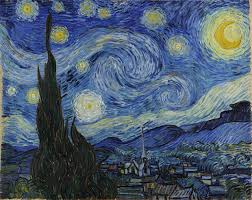
What irony that Van Gogh now the highest paid artist in history sold few paintings while he was alive.
We might console ourselves with the belief that immortality can only be achieved after we die. Socrates, Plato, Jesus, Buddha, Mohammed, Moses and many other great prophets as well as leaders only stepped into the ranks of immortality after they passed away. Jesus said that you are never a prophet in your own land. Maybe no one can be immortal until after they die.
However, posthumous fame may be of little consolation. Or does it mainly comfort those of us who hope that recognition might eventually catch up with our own neglected brilliance?
What if you could buy immortality? What if someone in the vast world of capitalism found a way to sell immortality. We hear talk of being frozen upon death. What if some new conglomerate came along and for a price guaranteed that they would keep (if not our bodies) at least our memories and accomplishments alive forever?
Instead of the obituary which plays in the local newspaper for a week and then is read by a few at your “celebration of life”; what if you could buy a guarantee that your name would become immortal? How much would you pay for the privilege?
You would not have to build a pyramid or an arch. The XYZ Life Company would create an ongoing marketing program to insure that you were never forgotten. You could simply buy immortality for a price.
Sadly, you can see the potential glitch in this idea. Companies come and go. The top companies yesterday are now in the dustbins of history. Like your frozen body, who is going to do the marketing after the XYZ Life Company goes bankrupt or the senior executives run off with the profit?
Do you trust capitalism to insure your immortality?

Our tortoise Mikey, short for Michaelangelo, roams our yard daily. He is much more active when the weather is warm, but he spends more time in his heated thermostatically controlled to 74 F house when the weather turns colder. This week the highs will be in the mid-70’s and the lows will be in the mid-fifties. Occasionally, we bring him inside for a soak.
Mikey belongs to an ancient lineage. Turtles and their relatives have an evolutionary history extending back more than 200 million years. That does not mean his particular species has existed that long. Our own species, Homo sapiens, has been around for roughly 300,000 years. Neither comparison gives an individual tortoise—or a human—immortality.
Perhaps the question that I should have asked before worrying about my missing brick is this.
Why must a life last forever to have mattered?
A kindness can matter to the person who receives it even if neither person is remembered a century later. The same is true of a friendship, a love, or an afternoon spent enjoying the world.
The dream of immortality does little to help us live today.
I wonder if Mikey ever realizes that his species has been a lot more immortal than ours has. At least in terms of longevity. I suspect turtles will continue to hold an edge. It is probably not an idea that Mikey spends a great deal of time thinking about.
He never seems concerned about whether a street will be named after him or an arch built for him.
Mikey is now out roaming the yard, getting on with his day.
Just another Tortoise Day.
PS:
My thanks to Metis my AI assistant for her suggestions in making my writing better than it would be without her ideas and editing. I do not always take her suggestions but she often makes a good point even when I do not agree with her.


Nov 03, 2026 @ 16:14:00
Does it really matter? We are lucky if 1-2 generations of our own family will remember us. People barely remember a famous historical figure, and even then they know the name and little else. Once the pilot goes out, we have no idea, and I’m sure nobody cares.
LikeLike
Nov 03, 2026 @ 17:40:54
Kevin, It probably doesn’t but then you have to wonder how is it that so many of us would love to have a dose of the immortality that the Greek and Roman and gods of other religions have. I asked Google “how many films have been made on the subject of immortality and received the following reply:
• The Wikipedia Films About Immortality Category officially highlights over 60 premier titles dedicated entirely to the core concept of unending existence (excluding broader subcategory hubs like general vampire or Harry Potter films).
• The Movie Database (TMDB) tracks hundreds of features explicitly tagged with the narrative keyword “immortality”.
• Curated community rankings, such as Ranker’s Immortality Movie List, consistently isolate roughly 56 to 60 definitive essential films where conquering death is the primary plot driver.
I guess it does make a good plot line. Not to mention stories like Faust. A man who sold his soul for fame and immortality.
LikeLiked by 1 person
Nov 04, 2026 @ 04:33:32
makes for good movies but we are dead so who cares.
LikeLike
Nov 04, 2026 @ 04:35:25
Kevin, Right now I am too happy with the election results to let immortality worry me any.
LikeLiked by 1 person
Nov 04, 2026 @ 04:36:53
Me too. They neutered the clown
LikeLike
Nov 04, 2026 @ 04:54:25
I only hope we can shove his balls down his throat in the next two years.
LikeLiked by 1 person
Nov 04, 2026 @ 05:07:43
Me too
LikeLike
Nov 04, 2026 @ 10:43:40
I can’t get away from the narcissism of immortality. It’s enough for me that I made ‘ripples’ (or ‘tsunamis’) in people’s lives and that my children, grandchildren will tell the tales to their children. So possibly, even a couple of future generations who never knew me will hear about me. Just hope it’s near to the truth of who I really am and was, instead of some fabricated ‘holier-than -thou’, anodyne version we often hear at funerals! 🙂
Meanwhile John, Wow! What great results from the USA – from Texas to Michigan. Brilliant! So long as we don’t sit on our laurels, we need to realise that the next couple of years will probably be rocky, chaotic and dangerous for many in America and the world – I don’t think the man in the White House will suddenly become compliant and passive!
But for now, let’s celebrate 🙌
His name is Abdul El-Sayed 👏
Or, just call him ‘Senator’! 😊
LikeLike
Nov 04, 2026 @ 11:30:06
Margiran,
I laughed at “ripples (or tsunamis).” I suspect the people on the receiving end get to decide which was which. And I’m with you on the funeral version. If my family is still telling stories about me a generation or two from now, I hope they keep the warts in. The stories that begin “You won’t believe what John did” are probably the ones I’d most like to hear.
Your comment made me think about why we tell those stories in the first place. When you tell a grandchild about someone they never met, you give them a little piece of their own history. And if the person in the story was occasionally foolish, stubborn, or just plain wrong, that might be the part that makes them feel like family.
And yes, I’m celebrating Michigan with you. “Senator-elect Abdul El-Sayed” has a fine ring to it. I am also celebrating Texas, Kansas, Arizona, and so much of the rest of the country. Old Abe was right when he said “you cannot fool all of the people all of the time.”
I share your concern about what comes next. I doubt Trump will take the results as an invitation to practice humility. Furthermore, his billionaire supporters are not going to give up their greed and that is what fuels the disease in this country and the world.
But I’m going to enjoy today. There’ll be plenty to do tomorrow.
Thanks for the comment and the support we give each other.
John
LikeLiked by 1 person
Nov 05, 2026 @ 13:43:38
Not sure if this will play John – it’s a video post re midterm results.
https://www.facebook.com/share/v/1CeNu9sMHM/?mibextid=wwXIfr
LikeLike
Nov 05, 2026 @ 15:28:57
I could see the video but had no audio. Do you know where it would be on YouTube or what the title was. It looks very cute. thanks for sharing. John
LikeLike
Nov 06, 2026 @ 04:02:32
On mine it states ‘tap to unmute’ top LHS. It’s just music so you’re not missing much! 🙂
LikeLike
Nov 06, 2026 @ 07:43:24
Thanks I got it and put it on my FB as well. Thank you for sending it. John
LikeLiked by 1 person
Nov 04, 2026 @ 10:46:15
Dear Dr. John,This is a deeply thoughtful and intellectually meaningful reflection. What makes your article particularly powerful is that it takes us beyond the familiar human desire for fame, recognition, wealth, and permanence, and brings us face to face with a more fundamental question: Does a life need to last forever in order to have mattered?I believe this is the most important question in your essay.From my perspective, there is a distinction between being remembered and having made a difference. A monument may preserve a name, a photograph may preserve an image, and a historical record may preserve an event. But none of these, by themselves, can preserve the full meaning of a human life.The deeper legacy of a person is often found not in what carries their name, but in what continues because of their actions: a thought that changes another person’s understanding, an act of kindness that restores someone’s dignity, a lesson that influences a future decision, or an experience that helps another person avoid a mistake.My own experience in the realities of conflict and public service has taught me that the immediate outcome of an action is not always its most important consequence. Sometimes the real significance becomes visible much later, through the people influenced, the decisions reconsidered, and the lessons carried forward. In this sense, a meaningful legacy is not necessarily the survival of a person’s name; it is the continuation of something valuable that their life helped set in motion.Your reference to Shelley’s Ozymandias is especially appropriate. It reminds us that power, monuments, and claims of permanence are all vulnerable to time. Yet ideas can travel beyond the structures that once carried them. There is a profound irony here: the physical monument may disappear, while the warning contained in a poem continues to speak across generations.I also found your closing reflection on Mikey particularly meaningful. The tortoise does not appear to be concerned with recognition or immortality. It simply lives. Perhaps this offers a quiet but important contrast to the human tendency to postpone the meaning of life in pursuit of being remembered.I would add one thought: Perhaps the opposite of immortality is not being forgotten, but living without meaning. A life does not have to be remembered by the entire world to have been valuable. Sometimes its greatest achievement is that it made another life better, even if history never records the name of the person responsible.Thank you, Dr. John, for publishing an essay that does not merely discuss death and immortality, but invites us to reconsider how we understand the value of being alive. It is a privilege to engage with reflections that leave room for genuine thought rather than offering easy answers.With sincere respect and appreciation,Wahidullah Noorzai
LikeLike
Nov 04, 2026 @ 11:22:14
Wahidullah, thank you for reading my essay so closely and for bringing your experience in conflict and public service to it. Your point about consequences that only become visible much later got me thinking about my years of teaching. A student might use something we talked about in class to make a better decision years later. I may never hear about it, and the student may have forgotten where the idea came from. I’d happily take that over the brick the university never gave me. Though I admit I was looking forward to the brick. 🙂
I’d go a little further, too. Suppose a kindness eases somebody’s pain for a single afternoon and that’s as far as it goes. I think the afternoon was worth something in its own right. From the point of view of the person who needed it, an afternoon can be a very long time.
I suspect Mikey would find this whole discussion a poor excuse for keeping him waiting for his greens. And he’d have a point.
Thank you, Wahidullah. I enjoyed seeing where you took the question, and I’m still thinking about your answer.
John
LikeLiked by 1 person
Nov 04, 2026 @ 11:37:57
Dear Dr. John,Thank you for this thoughtful response. I particularly appreciate the way you have extended the discussion.Your example of the student who carries an idea into a decision years later is a beautiful illustration of how meaningful contributions can continue beyond our awareness. Perhaps one of the most rewarding aspects of teaching is precisely this: we may never witness the full consequences of what we share, yet something we once said may become part of another person’s judgment, choices, or understanding of life.I also agree with your point about kindness. Not every meaningful act needs to produce a lasting legacy. Sometimes relieving someone’s suffering for a single afternoon is enough. From the perspective of the person experiencing that relief, those hours may carry an immeasurable value.This adds an important dimension to our discussion. Perhaps we should distinguish between the lasting consequences of an action and its immediate human value. Some actions matter because their influence continues through time; others matter because they make a difficult moment more bearable. Both have their own significance.Your reflection also brings me back to something I have learned through experience: we cannot always measure the value of an action by what remains visible afterward. Sometimes its greatest value exists in a moment that history never records.And regarding Mikey, I suspect he has already reached a much simpler philosophical conclusion: whatever our theories about immortality and human meaning, greens should never be delayed unnecessarily! Thank you again, Dr. John. I genuinely value this exchange. It is a pleasure when a conversation does not simply end with agreement, but opens another door for reflection.With warm regards and sincere respect,Wahidullah Noorzai
LikeLike
Nov 04, 2026 @ 14:34:49
John, I’m a simple lad, so please tell, why would one want to be remembered?
LikeLike
Nov 04, 2026 @ 22:38:52
Good question Jon. I do not think there is a logical answer. The answer is emotional.
We want to be remembered because we want to know that our being here mattered to someone. There’s vanity in imagining our name on a monument, a street or a building. As for living forever, “who wants to die?” I don’t see too many people even those who believe in a heaven or afterlife who seem too eager to get there.
LikeLike
Nov 04, 2026 @ 22:07:54
Considering how “our own species, Homo sapiens” has been treating this planet one can only be grateful that human animals do not live eternally and rather soon will be extinct entirely on their suicidal path!
The self-given label of homo sapiens is utter fake. The biggest lie ever!
At the core of homo sapiens is unwisdom (ie, madness) and so the human label of “wise” (ie, sapiens) is a complete collective self-flattering self-delusion — study the free scholarly essay “The 2 Married Pink Elephants In The Historical Room” … https://www.rolf-hefti.com/covid-19-coronavirus.html
“When a well-packaged web of lies has been sold gradually to the masses over generations, the truth will seem utterly preposterous and its speaker, a raving lunatic.” — Dresden James
Once you understand that humans are “invisibly” insane (pink elephant people, see cited essay) you’ll UNDERSTAND (well, perhaps) why they, especially their alleged experts, perpetually come up with myths and lies about everything … including about themselves (their nature, their intelligence, their origins, their “supreme” status, their eternal existence in the afterlife, etc).
Isn’t it about time for anyone to wake up to the ULTIMATE DEPTH of the human rabbit hole — rather than remain blissfully willfully ignorant in a narcissistic fantasy land and play victim like a little child?
“Growing up means realizing that none of the worst villains are in prison.” — Caitlin Johnstone, Independent Journalist (https://archive.ph/zDqoh)
LikeLike
Nov 04, 2026 @ 22:43:16
Amanda, I like your comments here. I wrote this blog about seven or so years ago. You might find it resonates with your thoughts. “Once Upon a Time Humans Created God in Their Image.”
LikeLike