Fame, Fortune, Cars, Women and Immortality – Part 1: Fame

Robots may one day bring us all supper.  AI programs may one day make college degrees obsolete.  Quantum computers may one day manage our finances and even our lives.  However, there are some things that no programs or electronic devices can ever give us. 

As a man growing up in America, the five things that I dreamed of, lusted for, desired more of than anything else, and sometimes broke my heart over, were: Fame, Fortune, Cars, Women and Immortality.  These were my gods.  These were my icons. 

Perhaps if I were a woman growing up in America, children would be included in this pantheon of desires.  If I am showing any sexism here, you will forgive me.  I grew up in an Italian family in Brooklyn, New York with a father who was a very typical American male of his day.  The message I received from him about women was that they belonged in either the bedroom or the kitchen.  Of course, they still  had to be desirable and beautiful.  It was all the better if all the guys on the corner envied you your girlfriend.  Needless to say, I never had a girlfriend while in high school or while hanging out on the street corner.

Today, I see that Fame and Fortune are still the Pied Pipers of existence.  Fame and Fortune are the pathways or tickets to fast cars or perhaps large trucks and glamorous women but most of all Immortality. 

I want to talk about the connections, relationships or nexus between these five concepts.  What do they have to do with each other?  Why do they loom so large in the minds of so many people?  What is the glue that binds them all together?  How do they end up killing our souls and spirits? 

The Bible says, “The love of money is a root of all kinds of evil.” 1 Timothy 6:10.  Money itself is not evil.  It is the mindless pursuit of money which is the evil.  The pursuit of something that recognizes no boundaries.  The pursuit which leads men and women to use illegal and immoral means to obtain their goals or if you will their Gods. 

Fame, fortune, cars, women, and immortality have become Gods for many of us.  Even those of us who learn to stop this reckless pursuit often admire, envy or dream of the attainment of one or more of these Gods.  How can you not want a God when all around you society is telling you how great you will be if you can only grasp a God.  Obtaining any of these Gods makes you at least a quasi-God.  

Fame:

You are admired and lauded by millions of adoring fans.  The paparazzi clamor to get your photo.  The reporters all want to get an interview with you.  Other rich people want to stand by your side or be your friend.  You get invited to the best hotels, the best restaurants, the best places.  Everyone wishes that they could get just a bit of your glamor.  You live in a house that could easily hold five families.  What does fame bring you?  Power.  Power and fame open doors.  Power and Fame go together like the Yin and Yang of existence. 

But fame has a downside.  Fame can cost you your soul.  If power can corrupt, fame can slowly extinguish your being.  You may no longer be you.  You become an image.  You have a reputation to maintain.  A persona that must be adhered to.  You no longer know who your real friends are or who are just sycophants who want a piece of your glory. 

You must walk and talk a certain way.  You must act and dress a certain way.  You belong to the public, and the public thinks that they own you.  You cannot go any place and just have peace and quiet.  Your old friends have fallen away because your glow has become too bright for them.  You stand on a pedestal that you have created.  You have become a God, and others can only worship you.  You are no longer a real person.  You are a celebrity.  You are a media personality.  A social influencer.  One of Fortune magazine’s 100 most admired people in America. 

But fame is fleeting. 

  • Fame is a vapor, popularity an accident, and riches take wing. Only one thing endures and that is character. – Horace Greeley
  • Don’t confuse fame with success.  Madonna is one; Helen Keller the other. – Erma Bombeck

Once upon a time you were “King of the Hill.”  Today you are a has-been.  A guy or gal who once made it big but are now forgotten.  No one views your old movies anymore.  No one  buys your albums.  The public has moved on.  Your invites to special events have become only memories.

You are now alone in your big mansion.  You are wondering how you are going to pay the bills.  No contracts are coming your way.  Your agent does not answer your calls.  Your spouse has left you for greener passions and taken most of your savings.  You lost all your old friends because you did not have any time for them.   

You wanted fame and you got it.  You forgot the old saying, “Be careful what you wish for, you might just get it.”  You thought Fame would bring you happiness.  You reveled in the power that opened doors for you.  You even thought that Fame would make you immortal.  Like the Gods of Greece.  Like Zeus and Apollo and Athena, you thought that your Fame would echo down through the centuries.  They would at least erect monuments in your name. 

But perhaps beneath the desire for power, fame and even immortality was something still more fundamental.  You wanted someone to see you and say, “You matter.”  Fame promises that recognition on an enormous scale.  Immortality promises that you will continue to matter even after you are gone.  But being known by millions is not the same thing as being loved by one person who actually knows you.

You go to the refrigerator to make your own sandwich.  The maid and cook are things of the past.  You look for something edible and remember the old days when at home your mom made you a peanut butter and jelly sandwich.  But you only have croissants and no jelly in the refrigerator.  You would call your mom and see if she could come over to make you a sandwich, but then you remember that she passed away a few years ago.  You did not go to her funeral because you were on a shoot.  You did send a nice bouquet of flowers. 

Life is not fair you think but again you remember your dad and mom telling you that life is never fair.  Your dad passed away a few years before your mom.  You regret that you did not spend more time with him.  Your parents seemed so proud of you when you became famous.  However, you remember your mom telling you that fame or not, they loved you and were always proud of you.  You wonder if Fame and Love can go together? 

Or are Fame and Love mortal enemies? 

What did Fame bring me?  You ponder this question.  Where can you get an answer?  You go to your computer AI program and type in the prompt:  “Are Fame and Love Mortal Enemies?”  Your AI program gives you the following reply:

Perhaps not mortal enemies—but they are uneasy companions.

Love depends on intimacy, trust, vulnerability, and the feeling that someone values us for who we are rather than for what we represent.  Fame works in almost the opposite direction.  It turns a person into an image, a commodity, or even a fantasy belonging partly to the public.

The famous person faces a peculiar problem: Who loves me, and who loves being close to my fame?  At the same time, the partner may wonder: Am I sharing this person with millions of strangers?

Fame also brings temptation, constant attention, travel, unusual power, and people eager to please.  None of these makes genuine love impossible, but each can put extraordinary pressure on it.

Perhaps the greatest danger is that fame feeds the ego while love requires us, at least occasionally, to forget the ego.

So, fame and love are not mortal enemies.  But love asks two people to create a small private world together, while fame continually invites the whole world inside.

In Part 2, I will deal with what Fortune Means to Us:   

Four Old People Talking about Aches, Pains, God, Death, Dying and Aliens

download (2)

If you are old, you might not want to read this.  If you are young, you probably won’t care about this story.  Years ago, I decided I hated to listen to “old” people or any people for that matter bellyache about their aches and pains.  I swore that when I got old or older or whatever comes when each month passes by, I would never sit down and importune anyone with my medical stories.  As we age, our number of trips to doctors, dentists, and optometrists increase exponentially.  Many of these visits recall vivid pictures of blood, surgeries, diagnoses, CAT scans, MRIs, and Ultrasounds.  To the storyteller, these episodes are a significant part of growing old. To the listener, (unless it is your mother) they are generally boring as hell.

download (4)

So today, I find myself sitting on a patio at the Dock Restaurant in Stillwater overlooking the St. Croix River with two dear friends and my wife Karen.  I am drinking a draft amber ale.  Karen has a glass of tea.  Jane has a coffee, and her husband Roger has a draft IPA.  The server is giving us time to decide what we want to order.  I know from the start that I will have their Walleye sandwich.  Karen orders a BLT.  Jane also goes for the Walleye sandwich and Roger orders a Reuben sandwich.

images (3)

As we sip our drinks and await our food, we watch the boats on the St. Croix River.  Large and small speedboats, houseboats, canoes, kayaks, and a great big old fashioned side paddle wheeler can be seen meandering back and forth from out vantage point.  The temperature is near 90 degrees, but we are in the shade of a large umbrella.  We are also sitting right next to the river where a cool breeze is blowing over us.  We could not be happier or more comfortable.  Four retirees with enough money to eat out every so often, pay our bills and spend a Friday afternoon perusing the Stillwater tourist and antique shops for things that we do not need.

Suddenly out of the clear blue sky, Roger says “My hip has been giving me some trouble lately.”  Roger is an avid bicyclist who at the age of 81 can no longer drive due to an eye condition called Macular Degeneration.  He stays in trim shape by bicycling everywhere.  You do not need a drivers license to drive a bicycle.

Jane laughs and says, “heck, every day, I have a pain somewhere.  If it isn’t here it is there.  I think they will only get more frequent as we get older.”  Karen notes that she has been having back spasms for the past few months, but her recent senior exercise class is helping her cope with them.  I bring up my knee pain which seems to come and go.  “Sometimes it takes several months to deal with the pain, but I keep trying new remedies.  I think it is very much a trial-and-error process.”

Roger rejoins, “It won’t really matter what you do, you will never get back to where you were when you were younger.”   I reply that I have no illusions about getting back to the younger John.  “I still think we do not have to accept all the problems that come with aging as inevitable. I think too many doctors see an older person presenting symptoms of pain and tell them ‘Well, you are old so you should expect that you will have some pain as you age.’  I don’t expect that I will have a life without pain, young or old but I know that some pains can be treated and others I must live with.   But don’t write me off before you know which is which.”

Karen switches the subject to some recent bites that she has received out at our campsite.  She attracts bug bites like Kim Kardashian attracts media attention.  Mosquitos, hornets, wasps, deer flies, chiggers and more all love her smooth delicate skin.  I try to stick close to her when we are outside.  From experience, I know that they will go to her first.  I guess I give up my husbandly protection when it come to bug bites.

I step out of myself for a minute to survey the four of us sitting at a table taking turns talking about our various aches and pains over the past ten years.  Here I am doing exactly what I said that I would never do.  Trading stories about medical issues mostly associated with growing old.  Roger is 80.  Karen will be 79 in July.  Jane is 75 and I will be 77 in September.  We are all college educated but in many ways none of us was ever really prepared for the travails of old age.  I remember hearing years ago that we age like “Fine wine.”  This is a load of BS.  More realistically we age like bananas.  We grow squishier and squishier and eventually get black spots then turn totally black and attract flies.  Finally, someone throws us out as we are no longer edible or useful.

images (1)I come back into myself and say, “Let’s take a walk.”  It is a beautiful day and a beautiful town, and everyone likes the idea.  We pay our respective bills, head to the bathrooms, and meet outside.  I suggest we walk the path alongside the river to PD Pappy’s than turn left onto Main Street where we can walk by the various tourist shops.  We head to an old antique store that we last visited almost a year ago to the day.  We spend a good hour or so in the store.  We see oodles of things that bring back memories from our childhoods, our old dreams and our wish-we-had-done that pasts.  We leave having bought nothing except a wistful yearning for the “Good Old Days.”  Pre-Trump.  Pre-Covid.  Pre-Climate Change.  Pre-Divisive Partisanship.  A time when we could still believe in the American Dream.

download (3)

The subject of death and dying is next on our agenda.  As we walk, we discuss some of the various friends who have recently passed away.  A regular part of our lives is now friends and relatives who have gone to another place or simply become fertilizer.  Roger is a proclaimed Agnostic.  Jane is Jewish.  Karen a Lutheran.  I declare myself to be 75 percent Atheist and 25 percent Agnostic.  I suppose I am hedging my bets just in case a god really does exist.

In the past three months, Karen and I have been to three funerals of friends.  I just finished planning a “Celebration of Life” for my friend Dick who took his life in January.  We will hold the celebration next month in the park where we used to meet for coffee several times each week.  Funerals as any old person will tell you become ubiquitous in our lives.  I should mention that even though we never met them we are also deeply saddened by the death of so many ICONS from our lives who we have fond memories of.  This past month saw Tina Turner, Treat Williams, Daniel Ellsberg, and Cormac McCarthy pass away.  These four are only a few of the recent celebrities who impacted my life in more ways than I can describe in this blog.  Each of these four people (as have many others) raised hopes and expectations that the world could be a better place than it now is.

My good friend Bruce was working this week on a set of Advance Directives for his wife Perm who has had major health problems over the past ten years or so.  No one over seventy takes death for granted even though we all know it is coming.  How, when, and where are unknown for many of us but WHY is easily explained.  Perhaps we each have our own whys, but medical science seems to point to the inevitability of death.  Immortality is reserved for the gods.

images (2)As we walk down main street, Roger tells me that he has seen a show recently that looks at the symbolism in the Catholic Church with a deep sense of skepticism.  He asks me if I think the Catholic belief in Jesus would be much different if Jesus had been garroted or beheaded rather than crucified.  I confess that I have never thought about this question, but I do find it intriguing.

I reply that my thoughts on religion deal more with the issue of theodicy, meaning “Vindication of God.”  “Theodicy is defined as a theological construct that attempts to vindicate God in response to the problem of evil that appears inconsistent with the existence of an omnipotent and omnibenevolent God (See Theodicy, Wikipedia).”  I do not see how there can be any god associated with omnipotence, omnibenevolence, and omniscience when there is so much evil in the world.

Many theologians have tried to defend the idea of God by invoking a “Free Will defense” which argues that God is possible because of “man’s free will.”  I am still not buying this argument.  “Why”, I ask “would any benevolent God make smoking and drinking and gambling bad for us if he was also omnipotent?”  I have ignored war, famine, poverty, disease, and pestilence since these have not really impacted my life directly.  Nevertheless, these latter problems do not reflect well on the idea of an omnipotent God who loves humanity.

downloadIt is now almost three hours since we met for dinner.  We are talked and walked out.  I am ready for my afternoon nap.  Karen wants to get back to her sewing.  Jane is tired of listening to us and wants some peace and quiet.  Roger is still thinking about God and whether there is other life in the universe.  We both seem to have come to the same counter-intuitive conclusion that there is not.  We are all alone in the universe except for a few Martians left over from the great Martian cataclysm.

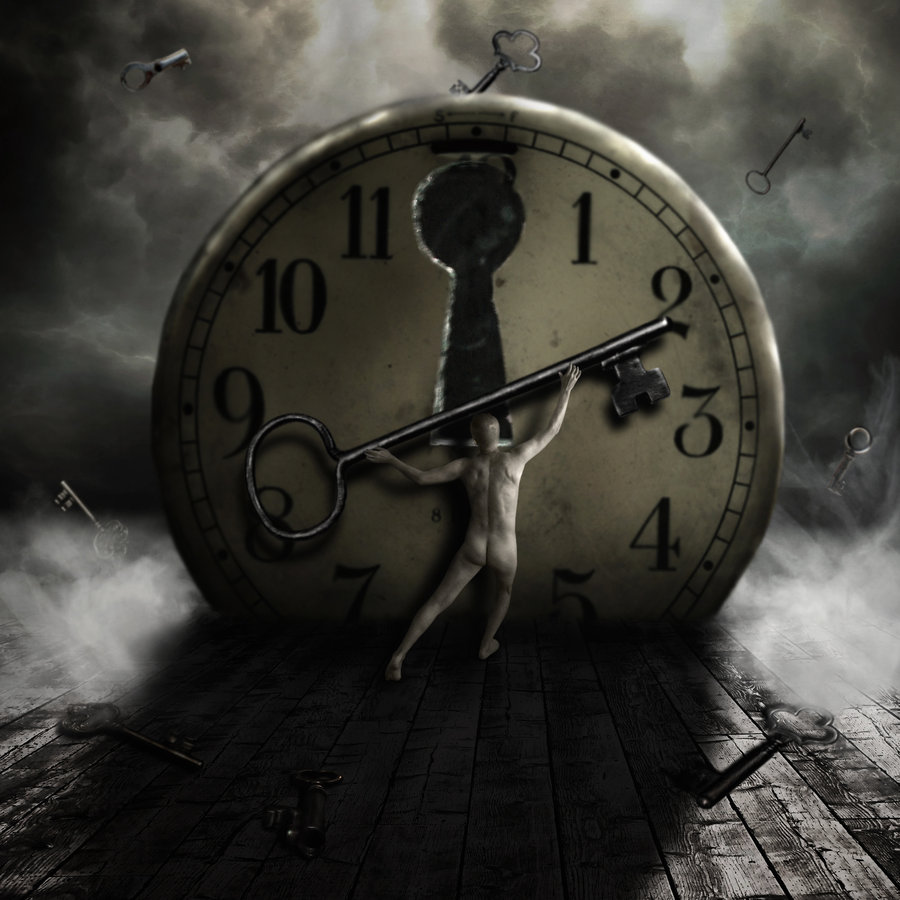
Today we have touched Mars. There is life on Mars, and it us us-extensions of our eyes in all directions, extensions of our mind, extensions of our heart and soul have touched Mars today. That’s the message to look for there: We are on Mars. We are the Martians!  — Ray Bradbury

The Fourth Greatest Mystery of All Time:  Can We Defeat Death and Achieve Immortality?

When, I was young, I remember reading about the Fountain of Youth. For some reason, I found Ponce De Leon’s search for this fountain to be mysterious and magical.  I wanted to search for it when I grew up and to be the person that actually found it.  I have long since realized that I am not the only one enamored with the idea of immortality. The desire to find a secret to immortality permeates literature sheimmortalityand history.  (I also remember reading H. Rider Haggard’s She in which the queen has found the secret of immortality by bathing in the blood of virgins.)  Some say the two trees in the Garden of Eden were the Tree of Life and the Tree of Knowledge.  To eat from both trees, was to become not merely Godlike but a God.  Thus, to be all knowing and to live forever are (at least historically, but perhaps this is changing) the characteristics most associated with God-ness.  Humans have been drawn to these concepts as a moth is drawn to a flame.

This blog is best read while listening to Celine Dion sing Immortality (click on link)

Today, modern medicine seeks to provide the “fountain of youth” in portents, elixirs, surgery and drugs designed to stave off death and allow humans to extend their lives.  Some scientists speak of finding the “death” gene and thus bestowing immortality upon humanity.  Others say that this is impossible since there are physical laws that show cells can only divide so many times before they are dead.  They call this the Hayflick Limit: 

“The Hayflick limit (or Hayflick phenomenon) is the number of times a normal human cell population will divide until cell division stops.  Empirical evidence shows that the telomeres     associated with each cell’s DNA will get slightly shorter with each new cell division until they shorten to a critical length.”  — http://en.wikipedia.org/wiki/Hayflick_limit

There are proponents and opponents on both sides of the issue.  Each side has worthy advocates to support their positions and points of immortalview.  Statistics show that humans have increased their longevity but a closer look at these facts show that most of the increase has come about from declines in infant and child mortality. These declines have the effect of increasing the “average” age for adults.  This seems to support the position that humans do not have the potential to live much longer than they did four thousand years ago.  The longest lived humans are seldom much older than 100 and throughout history there have been many humans who have reached this age.  We may be living healthier lives but modern medicine has not been able to increase the potential life span possible for most humans.

“For the 2010, the latest data available, the life expectancy for men of all races is 76.2 years and   81.1 years for women.”  —  Life Expectancy at Birth by Race and Sex, 1930–2010

“Richard g. cutler at the Gerontology Research Center, Baltimore city hospital, National Institute on Aging, has calculated the maximum life span for about 150 extinct mammalian species, and has also assessed the genetic potentials and traced the progress of the evolution of the maximum potential lifespan of man.  The first truly human species was Homo habilis which emerged from Australopithecus africanis about 1.8 million years ago.  Homo sapiens evolved about 100,000 years ago.  The maximum potential life span of our species was increasing at a very fast rate until about 100,000 years ago when the increase suddenly stopped, and has since remained fixed at about 120 years.” —  http://www.longestlife.com/forever.htm

Immortality-HeaderThe facts of course do not prove that immortality is impossible, but for numerous reasons, I would argue that the probability is highly unlikely.  Scientists can seek the “death gene” while lay people look for the Fountain of Youth.  I think both sets of seekers will be sorely disappointed.  However, I submit that we are not trying to solve the real mystery.   I cannot fathom why anyone would want to be immortal anyway?  A few theories which spring to my mind include either a fear of death or a fear of being forgotten and ignored.  Present circumstances seem to support the latter theory more than the former.

I recently read a blog wherein the author stated that celebrity has become a new religion.  The author David Porter noted that people are obsessed with fame, glamor and stardom.  Like a religion can bestow immortality so does the idea of being a celebrity.  In a world where meaning is ephemeral and people seek it through bizarre rituals and even more bizarre actions, becoming a celebrity can be akin to becoming a God.  You are suddenly worshiped by throngs of admirers and treated as the conquistadors initially were by the Aztecs and the Incas.

“Today, many people believe that the virtual reality they see on screen is the norm. They read and see so much about celebrities, they feel these people are their friends, their lovers and the myths of their red carpets, flashing press lights, big cars and idol adoration are in fact reality and worth sharing and imitating. Psychologists also recognize that despite the drawbacks, celebrities are common currency in our socially fractured world.” — David Porter

If we cannot achieve immortality, at least we can achieve celebrity status.  For many people, the next best choice in life seems to be to become a celebrity. If celebrities are not immortal, they nevertheless share many aspects of the old Greek gods: StardomTitlePic

  • They are exalted and unique
  • They have special powers and privileges
  • They are worshipped and admired
  • Their fame lives on long after they are irrelevant
  • They are glamorous
  • They lead exotic and adventurous lives

To be a celebrity is to be someone who matters. Someone who is on the A list, someone who has the red carpet rolled out for them.  If you are a celebrity, people will listen to you. Your opinion matters. The paparazzi will follow you everywhere. Autograph seekers will dog your footsteps and buy paper cups you have tossed away.  To be a celebrity is the next best thing to God-ness in today’s society.  Celebrities may even experience some sense of immortality in that while fame is fleeting, it can produce a trance-like state in which life and death are forgotten.  The only thing that matters to a celebrity is notoriety and popularity.  How many followers I have is the measure by which I gauge my worshippers.  Elvis Presley makes more money today then he did when he was alive.  Some people would say that a celebrity never dies.  Perhaps we have rechanneled our ancient search for immortality into a search for celebrity as the next best thing.

“We humans are naturally disposed to worship gods and heroes, to build our pantheons and Valhallas.  I would rather see that impulse directed into the adoration of daft singers, thicko footballers and air-headed screen actors than into the veneration of dogmatic zealots, fanatical preachers, militant politicians and rabid cultural commentators.”  — Stephen Fry, The Fry Chronicles

Time for Questions:

Are you a celebrity? Have you ever had your 15 minutes of fame?  What would you do with it? What if you became a celebrity tomorrow? How would your life change?  Would it change for the better or for the worse?  Why?

Life is just beginning.  

Ozymandias:  One of my favorite poems by Shelley.

I met a traveler from an antique land
Who said: “Two vast and trunkless legs of stone
Stand in the desert. Near them, on the sand,
Half sunk, a shattered visage lies, whose frown,
And wrinkled lip, and sneer of cold command,
Tell that its sculptor well those passions read
Which yet survive, stamped on these lifeless things,
The hand that mocked them and the heart that fed:
And on the pedestal these words appear:
‘My name is Ozymandias, king of kings:
Look on my works, ye Mighty, and despair!’
Nothing beside remains. Round the decay
Of that colossal wreck, boundless and bare
The lone and level sands stretch far away.”


The Third Greatest Mystery of All Time – Is There Life After Death?

No one or at least hardly anyone wants to die.  Suicides included, no one really wants to die earlier than they expect to.  We don’t choose death, we chose life.  We want immortality.  We want to live forever and ever.  Ideally, we would like to live forever in a young, healthy and happy state, surrounded by our friends and loved ones.  Let all our enemies perish and if there is a hell, let them go there, while we go to heaven.

“Surely God would not have created such a being as man, with an ability to grasp the infinite, to exist only for a day! No, no, man was made for immortality.” — Abraham Lincoln

lifeafterdeath.headThe question that we all ask at some point in our lives is: “What’s next?”  After this life, is there another life?  Some like Houdini said he would come back if he could.  There is no reported evidence that he managed to succeed.  Thus, even the great Houdini himself could not manage the feat!  Two years ago, I attended a séance in Kentucky.  There were about 20 of us at this séance and two young girls were the intermediaries or mediums.  We were at the old Wickland mansion in Bardstown Kentucky where a young slave woman had once lived along with three former Kentucky governors.  Somehow, these two young local women had found a “channel” to this former slave and were able to converse with her.  We were all there with the expectation that the “channel” could be opened and we could somehow share in this supernatural experience.

This blog is best read while listening to Jonas Frisk sing Wings of Eternity (click on link)

Lights flickered, candles glowed, one of the young girls (they were twins) seemed to go into a trance.  Pretty soon, her interlocutor (an older woman who communicated with the young girls when they were communicating with the former slave) told us that Sally (I am using fictitious names here) was now in touch with Anna the former slave woman.  Sally appeared to be talking to Anna.  Our interlocutor asked if we had any questions that we wanted to ask Anna.  Several people volunteered questions and Sally gave replies that Anna told her in response to the questions.  The séance went on for about an hour with each person taking turns to ask questions and communicate with the dead.  After Anna went back to wherever dead souls go, we all adjourned to the upstairs dining room for coffee and snacks.

“If you were to destroy the belief in immortality in mankind, not only love but every living force on which the continuation of all life in the world depended, would dry up at once.” — Fyodor Dostoevsky

I would guess about half of the attendees felt they had communicated with the dead while half of us thought it was mostly entertainment and acting.  Perhaps the life-after-deathsisters really believed that they were talking to the dead, but believing and reality are two different things.  I saw no evidence of any dead person talking or of any real communication with the hereafter.  Thus, the question “is there life after death.”  The evidence all suggests no. No life. No immortality. No heaven. No hell. No coming back. No eternity no ever after.

“I sent my Soul through the Invisible,
Some letter of that After-life to spell:
And by and by my Soul return’d to me,
And answer’d: ‘I Myself am Heav’n and Hell”
― Omar Khayyam

But what if we have the wrong conception of life after death?  What if we think that life after death is going to be some continuation of life as we have conceived it on earth.  Whether we return sentience or we morph into frogs or some other species, we are all basing our ideas of the hereafter on concepts we are familiar with.  We are thinking about “life after death” as strictly a continuation of life on earth.  Some of us think we will be sitting at the right hand of God and listening to his or her speeches on ethics.  Some of us think we will be playing around with 20 vestal virgins.  Some us think, Jesus Christ will be walking around and talking about faith, hope and charity with us.  Some of us think, we will be reunited with our loved ones. (If this latter case is true, I feel sorry for Mickey Rooney who had 8 wives).  Some us think we will born again as a prince or frog depending on the life we lived on earth.  Each of these conceptions is a continuation of our ideas of life as we know it now.  But what if there is another type of sentience?

life after death 1We all know that as humans we can only hear and see a small spectrum of the sound and light frequencies.  There are frequencies both above and below our normal hearing ranges.  What if the same was true of our thought ranges?  What if there were ranges of thought well above what we can think and perhaps well below?  Ideas and concepts that are hidden to us because they are out of our ability range.  We cannot fathom what it would mean to think differently because we think as rational human beings.

“I would love to believe that when I die I will live again, that some thinking, feeling, remembering part of me will continue. But as much as I want to believe that, and despite the ancient and worldwide cultural traditions that assert an afterlife, I know of nothing to suggest that it is more than wishful thinking.” ― Carl Sagan

What if there was some other type of thought besides rational thought?  Let me give an example of what this might mean.  Let us go back to Houdini and his inability to communicate after death.  Houdini dies with the desire to commune back to earth if possible.  However, upon death, his thought patterns become vastly different from anything we can conceive of.  Houdini’s life force lives on but his rational thought has been replaced by something else.  Houdini’s new thought processes see no value or reason or desire to communicate with human beings.  We cannot conceive of thought patterns like this because they are beyond our range of understanding.

“There is no such thing as magic, supernatural, miracle; only something that’s still beyond logic of the observer.” — Toba Beta, 

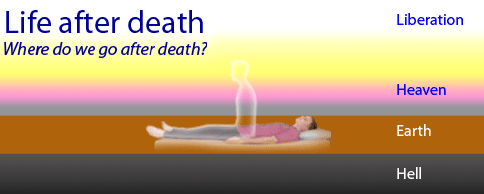
If such thought patterns can exist, perhaps sentience after the death of our mortal lives on earth can go on.  However, it will not be anything that we long for or 1251950806_Life-after-deathdream of today.  We will not become angels or born again as frogs or toads.  If life after death does exist, it must be something totally alien and foreign to any conception that we have of it now.  Present conceptions of heaven and hell notwithstanding, I believe that  life will go on and must go on, but any continuation of life in terms of immortality and eternity seems well beyond either our desires or ability to understand.   I love the idea that I will meet up with Socrates and Plato and Aristotle and be able to discuss philosophy and ethics with them.  However, I cannot put much faith in such a possibility.  Desires of humans often seem to trump logic.  We all want immortality, but it is either reserved for the gods or life as we cannot begin to comprehend it.

“Oh how wrong we were to think immortality meant never dying” — ― Gerard Way

Time for Questions:

Do you believe in life after death? What kind of life do you think exists after death? How did you arrive at this perspective?  What if someone convinced you that there was no life after death? How would this change your life? Why?

Life is just beginning.