
Introduction:
Perhaps few subjects are more complex than the relationship between drugs and medicine. While the word drug often denotes something “illegal”, medicine comes across with very benign connotations. Drugs are bad for you. Medicine is good for you. However, what is the difference between a drug and a medicine? Do you have to be sick before it is medicine? Does everyone occasionally need medicine but no one ever needs drugs? Why are some drugs legal and others illegal? Why is it that some legal drugs are illegal unless we have a prescription? In this blog, I will try to provide you some “divergent” views on drugs and medicines and the Pharmaceutical industry.
Pharmaceuticals:
First, we need to define the term pharmaceutical. We can find the following definition online:
Adjective: 1. relating to medicinal drugs, or their preparation, use, or sale.
Noun: 1. a compound manufactured for use as a medicinal drug.
It is important to understand the distinction between the medicinal use and the non-medicinal use of drugs. Obviously, any drug can be used for either purpose. However, the “moral” authorities which include the government, your neighbors, various religions and others who believe they have a right to dictate human behavior have used this distinction to decide when it is a crime to use drugs and when it is perfectly okay. Thus, in many states I may now use marijuana but only if it is for a bona fide medicinal purpose. If I want to simply use it like I use alcohol or caffeine or nicotine for recreational purposes, it is illegal and I will find myself in jail if I get caught.

This distinction between drugs and medicine is further complicated by the fact that some drugs are simply considered “bad” drugs whether they have a medicinal use or not. This category of “bad” drugs once included alcohol when (as many of you are aware) the 18th amendment to the US Constitution was passed to ban its legal use. Prohibition was perhaps one of the most misguided episodes in American history. However, it does have the unique distinction of being perhaps the only time in our history when a substance was banned strictly on moral terms. The prohibition against alcohol was primarily based on the idea that drunkenness was a threat to the moral fiber of the nation. Since then, our “War on Drugs” has been based on several reasons but morality is no longer a major reason.
Let’s get one thing clear from the start. There is no “War on Drugs” in the USA. If there were a war on drugs, then bars, cigarette shops, coffee shops, liquor stores, drug stores and doctors’ offices would be raided and closed. Doctors, baristas, druggists and Pharmaceutical CEO’s would be arrested along with the rest of the drug pushers on the street. We would need to build an entire prison system to house all the pharmaceutical executives, managers and workers who routinely make and sell drugs.
The “War on Drugs” is a sham, a myth and a hypocrisy of epic proportions. There are two reasons for this so-called war. The first is prejudice and the second is monetary. These two reasons are curiously intertwined.

Prejudice as a Factor in the Drug Wars:
Our prisons today are overflowing with people who have used or sold illegal street drugs. Drugs like heroin, cocaine, marijuana and methamphetamines make up the bulk of illegal drugs sold on the street. The majority of people selling these drugs are poor. Minorities make up a disproportionate number of the poor in America. Consider the following facts:

Poverty rates for blacks and Hispanics greatly exceed the national average. In 2014, 26.2 percent of blacks and 23.6 percent of Hispanics were poor, compared to 10.1 percent of non-Hispanic whites and 12 percent of Asians. — National Poverty Center
Of course, if minorities are a large percentage of the poor and if the drug war is really an attack on the poor, then it should follow that minorities will make up a larger percentage of those convicted of drug crimes and sent to prison. The facts support this:
- African Americans now constitute nearly 1 million of the total 2.3 million incarcerated population
- African American and Hispanics comprised 58% of all prisoners in 2008, even though African Americans and Hispanics make up approximately 25% of the US population
- About 14 million Whites and 2.6 million African Americans report using an illicit drug
- 5 times as many Whites are using drugs as African Americans, yet African Americans are sent to prison for drug offenses at 10 times the rate of Whites
The facts support that the so-called “War on Drugs” is really a war on the poor. Why war on the poor? Because they are regarded as a threat to the lifestyle of the wealthy. The wealthy in America are of course predominately White.

“96.1 percent of the 1.2 million households in the top one percent by income were White, a total of about 1,150,000 households. In addition, these families were found to have a median net asset worth of $8.3 million dollars.” — America’s Financial Divide: The Racial Breakdown of U.S. Wealth in Black and White, Huffington Post, 2015
It is seldom mentioned but wealthy people are fully aware of the fact that healthy non-drug addicted citizens make better workers. Furthermore, non-drug addicted people who are addicted to hard work are less likely to break into your house in the middle of the night and steal your Gucci purse and your Rolex watch.
On the other hand, if you are poor and uneducated, drugs might seem like a decent way to spend a day rather than knocking on closed doors for a job. I spent four years in the military from 1964 to 1968. Any war is an ideal breeding ground for drug use. Consider the daily effects of stress, confusion, attacks, wounds, death and uncertainty. The military was rife with drugs when I was in. Would anyone like to guess how much illegal drug use there was during the Vietnam War?

“In 1971, a report by the House Select Committee on Crime revealed that from 1966 to 1969, the armed forces had used 225 million tablets of stimulants, mostly Dexedrine (dextroamphetamine), an amphetamine derivative that is nearly twice as strong as the Benzedrine used in the Second World War. The annual consumption of Dexedrine per person was 21.1 pills in the navy, 17.5 in the air force, and 13.8 in the army.” — The Drugs That Built a Super Soldier, The Atlantic, 2016
The above article concerns speed only and does not deal with marijuana. My own personal experience was spending many weekends high on pot mixed with copious amount of whatever liquor we could get our hands on. Beer would do if liquor was not available. There were also many who simply sniffed glue and destroyed their brains. To the best of my knowledge, I knew of no one who was ever busted for drug use on any base I was stationed at. The moral is that it is okay to use drugs if they help you kill people but not simply to feel good about yourself.
The sanctimonious politicians who make drug laws in this country should be shot. Am I being too “divergent” in my condemnation of these hypocrites? Believe me, I could not be too hard on them. Consider the damage that their greedy misguided policies have done to our nation and our citizens. Millions of people have languished in jail only to serve their sentence and find that when they come out, they are even worse off than when they went in.

Consider the effects of a felony record for drugs in America: A convicted felon in Connecticut faces the following array of restrictions and constraints:
- Loses the right to become an elector and cannot vote, hold public office, or run for office, although he can have these rights restored
- Is disqualified from jury service for seven years, or while he is a defendant in a pending felony case (CGS § 51-217)
- Loses the ability to have firearms
- Could lose a professional license or permit,
- Employers can ask job applicants whether they have been convicted of a crime although federal anti-discrimination laws place some restrictions on the use of criminal histories.
- The State Board of Education (SBE) cannot issue or renew, and must revoke, a certificate, authorization, or permit to someone convicted of certain crimes. The SBE can also take one of these actions if the person is convicted of a crime of moral turpitude or of such a nature that the board feels that allowing the holder to have the credential would impair the credential’s standing.
- The Department of Children and Families must deny a license or approval for a foster family or prospective adoptive family if any member of the family’s household was convicted of a crime that falls within certain categories, which can include felonies.
- Landlords can evict a tenant who was convicted of a violation of federal, state, or local law that is detrimental to the health, safety, and welfare of other residents. Federal and state law for public housing allows eviction based on conviction of certain felonies. Different rules apply to elderly people.
- Someone convicted under federal or state law of a crime involving possession or sale of a controlled substance is not eligible for federal assistance for higher education expenses for certain periods.
- State law bars anyone convicted of a drug possession or use felony under federal or state law from receiving benefits under the temporary assistance for needy families or food stamp programs unless the person (1) has completed his court imposed sentence, (2) is satisfactorily serving probation, or (3) completed or will complete a court imposed mandatory substance abuse treatment or testing program (CGS § 17b-112d).
You have served your sentence for possession of a marijuana joint. You might have served between one and five years. You are now ready to return to society and be a hard-working honest citizen. Regard the above list! No one will hire you. You cannot get a student loan. You cannot get certain licenses and even some landlords will be legally able to not rent you a place to live. What would you do? What would Jesus do? Well, unfortunately, many of these people are not you and they are not Jesus. Thus, a life of crime on the street seems to offer more preferences for some than begging for money with a cup. Besides, every business endeavor has certain risks and the gains from drug dealing may seem to far outweigh the risks, particularly when you consider the alternatives.

What Role Does Greed Play in the So-Called War on Drugs?
Pharmaceutical companies are huge and make huge profits. They are consistently listed among the top most profitable companies in America. Here are the top ten most profitable drug companies by market value:
- Johnson & Johnson: $276 billion (market value)
- Novartis: $273 billion
- Roche: $248 billion
- Pfizer: $212 billion
- Merck: $164 billion
- Sanofi: $134 billion
- Bayer: $123 billion
- Novo-Nordisk: $118 billion
- Bristol-Myers Squibb: $115 billion
- AbbVie: $110 billion
In 2016, the Pharmaceutical Industry was at the top of the list for most profitable industries. Forbes, citing data from Factset, recently released its list of the 10 most profitable industries of 2016. “Pharma: Generic” led the way as the most profitable industry with a 30 percent net profit margin”
- Pharma: Generic: 30%
- Investment managers: 29.1 percent
- Tobacco: 27.2 percent
- Pharma: major: 25.5 percent
- Internet Software and Services: 25 percent
- Biotechnology: 24.6 percent
- Savings Banks: 24 percent
- IT Services: 23 percent
- Regional Banks: 23 percent
- Major Banks: 22.9 percent
https://www.surepayroll.com/resources/blog/the-10-most-profitable-industries#sthash.rVW6a7fs.dpuf

Please note where the tobacco industry is on this list. Now ask yourself this question. Do you think either big Pharma or Big Tobacco wants competition in the form of legalized drugs? I hope you answered NO! to this question because there is ample evidence that both industries spend a great deal of money lobbying against drugs that would pose competition to their industries.
“Both pharmaceutical companies and alcohol brands are spending money to keep prohibition around, too. As we reported last year, certain anti-cannabis academics are funded by big pharma. Alcohol companies are also lobbying against legalization. In one example, the California Beer & Beverage Distributors made campaign contributions to a committee dedicated to preventing marijuana legalization and taxation.
To summarize, police unions, prison guard unions, for-profit prisons, and drug and alcohol companies spend huge sums of money each year to keep cannabis illegal, and why? Because it ensures job security and profits.” — The Top 5 Industries Lobbying Against Cannabis Legalization Will Infuriate You by Sara Lilley in Leafly
Perhaps you are inclined to think that the prejudice and greed fueling the drug industry is not that bad. Perhaps you do not mind that America has one of the highest rates of incarceration of any developed country. Perhaps you do not mind that millions of your citizens are in jail for smoking or selling a joint. Perhaps you are happy smoking and drinking and do not want any other drugs. Maybe you feel that “Big Pharma” is on your side and helps you with all the new medicines they have coming down the pipeline. If so, you are living in a fools’ paradise. Big Pharma is more likely to steal from you and or kill you than the drug pusher on your street corner. In fact, they do so every single day.

They steal from you with exorbitant profits. Who do you think pays for all their advertising and research? They actually spend more money on advertising than they do on research.
“Prescription drug companies aren’t putting a lot of resources toward new, groundbreaking medication, according to a recent report in BMJ, a medical journal based in London. Instead, it’s more profitable for them to simply to create a bunch of products that are only slightly different from drugs already on the market, the reports authors said. The authors go on to say that for every dollar pharmaceutical companies spend on “basic research,” $19 goes toward promotion and marketing.” — Pharmaceutical Companies Spent 19 Times More On Self-Promotion Than Basic Research: by Alexander Eichler
Big Pharma also leads all industries in spending your money on lobbying. From 1998 to 2016, they spent over 3.5 billion dollars on lobbying. This was more than a billion dollars higher than for the next highest industry which was insurance. — Top Industries.
 Are you still wondering why drug costs are so high? Did you really think it was all research and development costs? The three major factors are: Profits, lobbying and Marketing. How much do you think these all add to the costs of your prescription drugs?
Well, perhaps you still do not care. After all, if the drugs do their job, what do you care if they cost a lot. Perhaps your insurance pays it all anyway. Well friend, what if you knew some of these drugs were going to kill you? Do you think I am exaggerating?
Here are some examples of potentially lethal side effects:
“Baycol, which lowers cholesterol, was strongly linked to a potentially fatal breakdown of muscle tissue. Approved in 1997, it was voluntarily withdrawn four years later. The anti-inflammatory drug Duract spent just one year on the market. Approved as a strictly short-term use product, the FDA found serious liver problems with people taking the drug for longer than what was recommended.
In 1985, employees of two drug companies were fined and/or sentenced to community service for not reporting adverse events involving the blood pressure drug Selacryn and arthritis drug Oraflex.” — Drug Side Effects Explained
Of course, drug companies do not want to kill you because that could result in costly litigation and even worse, bad publicity. Thus, most drugs come with a lengthy disclaimer and long list of potential side effects. These are more designed to protect the drug company than you or your health. You will probably not be able to read the small print on the label and even if you are able, you will probably not have a clue what they are talking about. On the odd chance that you do know what it all means, it would not matter anyway, since what is your recourse? If you are in pain and have gone through the process of obtaining your prescription how likely are you to decide that you will not take the risks associated with the drug? But, and here is the important “but”, all drugs, even over the counter drugs have potential side effects.

And this brings us to another major factor affecting the cost of drugs. This is the cost for Big Pharma to cover its butt when caught doing something wrong. A report by Pubic Citizen noted the following information:
In December 2010, Public Citizen published a report that, for the first time, documented all major financial settlements and court judgments between pharmaceutical manufacturers and the federal and state governments since 1991. At the time of the report’s publication, almost $20 billion had been paid out by the pharmaceutical industry to settle allegations of numerous violations, including illegal, off-label marketing and the deliberate overcharging of taxpayer-funded health programs, such as Medicare and Medicaid. Three-fourths of the settlements and accompanying financial penalties had occurred in just the five-year period prior to 2010. At the time of the report’s publication, there was no indication that this upward trend was subsiding.
 There are many other egregious practices that go on in Big Pharma and which are beyond the scope of this blog. My point in writing this was first to help alert you to the hypocrisy of the so-called drug wars and second to bring to your attention the inordinate amount of effort and money that Big Pharma spends in trying to get you to buy their drugs. If you watch TV or read any mainstream magazines, you cannot help but become inundated with ads for drugs to cure any problem you can think of.
 The drug companies are the biggest pushers of drugs in the world today and all for a profit. The fact that these drugs may help your condition is very secondary to Big Pharma’s primary goal which is profits. The fact that many drugs should not be taken long-term and may have life threatening side effects is also not particularly important to the drug industry. Between the ignorance of many medical doctors anxious to provide a fast treatment and the greed of the drug industry, you had best become a very informed and cautious consumer of any drugs you are going to take. You should also be skeptical of any information provided by the drug industry.
Time for Questions:
What medications do you take? Why? What has been your history with drugs? How informative has the drug information you have received been? What do you think about all the drug advertising on TV and in magazines? Do you think we live in an addicted society? Do you think the Drug War is real?
Life is just beginning.
“People use drugs, legal and illegal, because their lives are intolerably painful or dull. They hate their work and find no rest in their leisure. They are estranged from their families and their neighbors. It should tell us something that in healthy societies drug use is celebrative, convivial, and occasional, whereas among us it is lonely, shameful, and addictive. We need drugs, apparently, because we have lost each other.” ― Wendell Berry, The Art of the Commonplace: The Agrarian Essays

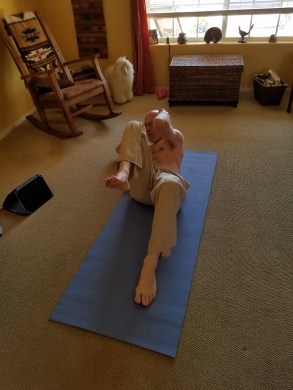 There is a difference between pain and hurt. When I tried to continue my ab exercises after my prostate surgery and then after my hernia surgery, I experienced pain. I wanted to get back into shape too quickly both times. I stopped the exercises and worked on other routines that did not cause pain. Mind you, the ab exercises still hurt and I have been doing them for six years. I am making a big distinction here between pain and hurt. Perhaps, I should say they “burn.” Burn is the athletic euphemism for hurt. Most people don’t like hurt. However, if you expect that you can get in shape without some discomfort, you are destined for life as a couch potato or in a surgery ward.
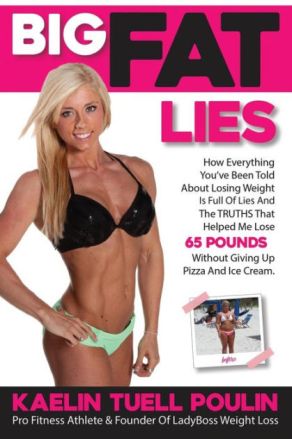 Americans are enamored with diets and each new diet best seller promises fantastic results in a short amount of time. The Amazon number 1 best seller in the health and exercise category was a book titled “Big Fat Lies.” The author promises you the “truths” that helped her to lose 65 lbs. “without giving up pizza or ice cream.” The author is Kaelin Tuell Poulin and the book has a very high rating in the customer reviews section. Ninety-eight percent of the 235 reviewers gave it a 5-star rating. However, while I often put a great deal of store in ratings, you must be careful about inflated ratings. The one negative rater had this to say about the book: (typos in the review were not changed)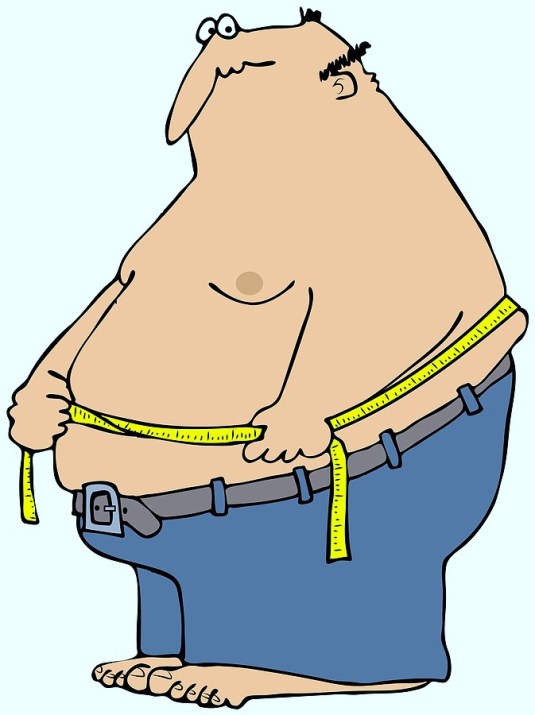
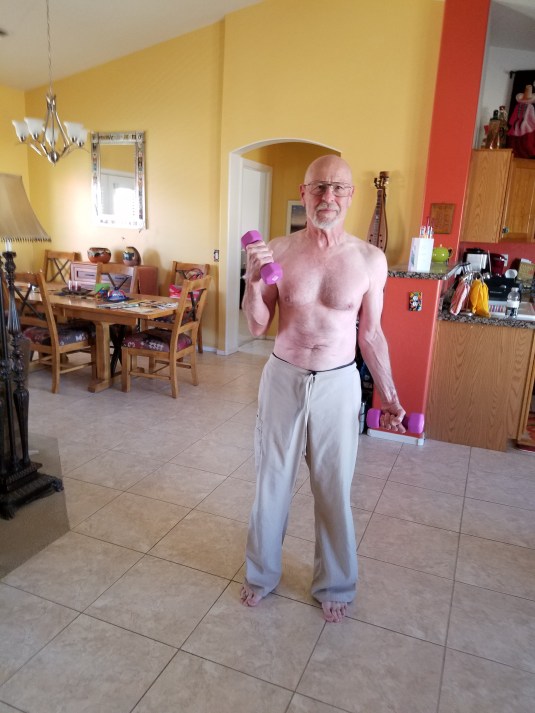 Two years ago, I started developing a pain in my right shoulder. I was not sure where it came from but after several months of it getting worse, I went to see an orthopedic doctor. He asked what if anything I might be doing to aggravate the shoulder. I mentioned that I swim frequently and am aggressive with my laps. His simple answer was “Well then, stop swimming.” I decided to follow his advice and for the next year, I stopped swimming. However, my shoulder pain did not get any better.
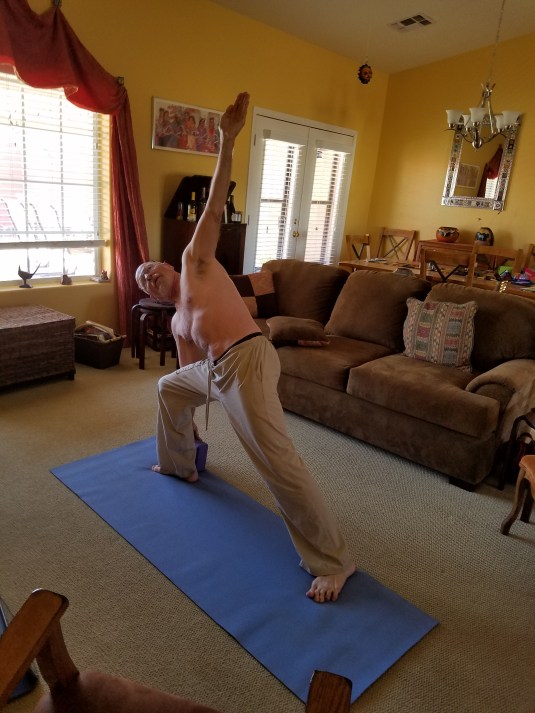 Some people are not so lucky. However, I hesitate to call all of my good health “Luck.” There is a saying by Thomas Jefferson that “The harder I work the luckier I get.” I have worked hard to stay in shape. I exercise regularly. I watch what I eat. I try to avoid excesses. No doubt, I have had some luck that goes beyond hard work and discipline. Nevertheless, I believe that hard work and discipline has played a large role in my ability to be healthy and still active at my age.

 If homo sapiens have a weak link in their skeletal structure it is the back. It has been argued that the problem arose when we switched from hanging in trees to walking upright. Whatever the cause, back problems are easily the most common and perhaps one of the most painful problems faced by Americans today. I have heard it said that the “opioid epidemic” is really a “pain epidemic” as more people age and have to deal with back problems, knee problems and hip problems. No one beset by continuous pain can be blamed for wanting to find an escape from that pain. However, as I noted in the previous blog, this desire to escape pain often leads to bad choices. Surgery is too often prescribed when other treatment modalities would be more effective with less side effects. This brings us to the issue of chiropractic adjustments for back pain. How effective are they? Here is another comment from Dr. Preston H. Long regarding the effectiveness of spinal manipulation: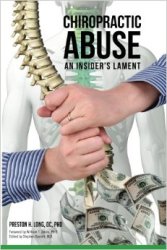


 Have you ever heard of a doctor turning anyone down for back surgery, knee surgery or hip surgery by telling them that they are overweight and would be better served by an exercise program or by physical therapy? If so, I can guarantee they are not typical of most medical practitioners. How many doctors look at the major cause of back, knee and hip problems and try to deal with that? Impossible, because doctors do not treat you over a lifetime. You don’t see a doctor until you have a problem and by then it may be too late. Surgery is the fastest solution because exercise, dieting and physical therapy take discipline and time. Doctors do not want to tell you the truth because it is an inconvenient truth but many problems should not be treated by surgery until it is a last resort. Too often, it is the first resort.
 If you have low back pain and see different specialists you will get different tests: rheumatologists will order blood tests, neurologists will order nerve impulse tests, and surgeons will order MRIs and CT scans. But no matter what tests you get, you’ll probably end up with a
  Recent research has also shown arthroscopic knee surgery works no better than placebo surgery, and when comparing treatments for knee pain, physical therapy was found to be just as effective as surgery, but at significantly reduced cost and risk. And yet another study showed exercise is just as effective as surgery for people with chronic pain in the front part of their knee, known as chronic patellofemoral syndrome (PFPS), which is also frequently treated unnecessarily with arthroscopic surgery.
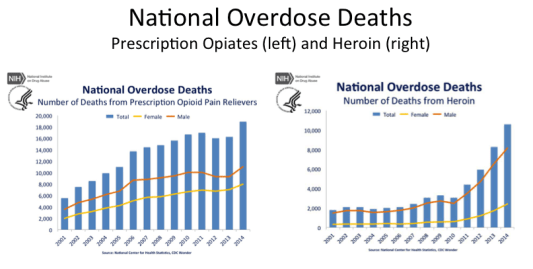 So if we assume roughly 326,000,000 (
 My disclaimer is that this does not make me an expert. In fact, I would maintain that expertise in medicine is like the five blind men who were trying to describe an elephant. Each man had a different perspective on what an elephant looked like. Individually, no one perspective was a very adequate description of an elephant. It would take a synthesis of all perspectives and even more to truly describe an elephant. That is the problem with medicine. Too often, each professional looks at a problem through the narrow lens of their own discipline. The reality of a medical problem can often only be understood by multiple perspectives because of the interaction of the systems that make up the human body. This defining perspective of the problem seldom occurs both because of the nature of medical practice and many times because of the egotism of the so-called medical experts we consult.



 There are beauty products, breast enhancements, hair implants, plastic surgery, expensive cars, perfume, jewelry, large homes, designer clothes, college degrees and many other products or services designed to help you feel less inadequate and more adequate. We all want to feel adequate which means we must somehow learn to escape or jettison our inadequacy paradigms. The marketplace strategy involves spending huge amounts of money on a regular basis to escape the “inadequacy paradigm.” This strategy is often a failure as money and products cannot provide for real happiness or address some of the cultural biases, prejudices, racism and bigotry that contribute to the “inadequacy paradigm.”
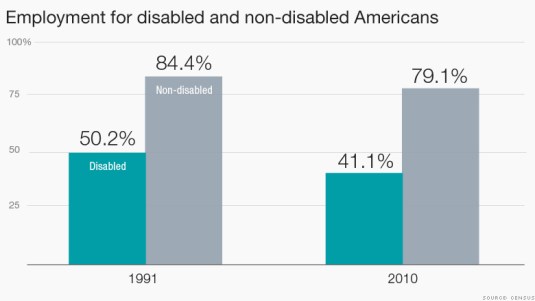
 If you have not read Hofstadter’s “Anti-Intellectualism in America Life” I heartily recommend it. I have often joked that the worst discrimination in America seems to be saved for people who think. Many companies trumpet their desire for “out of the box” thinkers. This is usually nothing more than a well parroted display of self-deception. What Human Resources and the company are really looking for is “people who fit in.” People who are iconoclasts, people who are critical thinkers, people who rock the boat “need not apply here.”
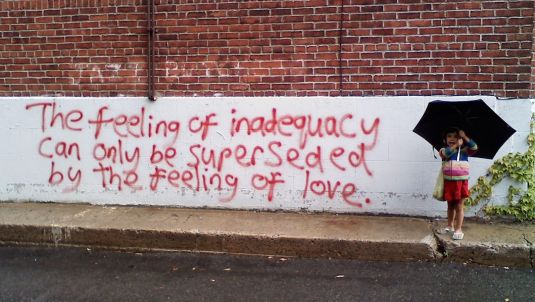 We have a pervasive problem that I labeled the “Inadequacy Paradigm.” Much of it is caused by racism, xenophobia, prejudice, stereotypes and bigotry. The majority of it is systemic and will need major changes in policies and institutions in this country to eliminate. However, it is felt on a very personal level. Feelings of inadequacy may be conveyed by others and cultural mores but they are received by an individual who assimilates these feelings into their psyche. Thus, inadequacy becomes a personal problem and not simply a social problem. Inadequacy is not “out there” it is right inside. The vast numbers of suicides in our society are testament to the inadequacy that many of our fellow citizens feel. This includes Whites as well as minorities.
 Marching forward in time to the period of the Revolutionary war when George the III was ruler of the American Colonies, what did they think of King George? Here is what is written in the Declaration of Independence:


