Zeitgeist is a German word that roughly translates to “tempo of the times or the sign of the times.” A sign of the times may be “ tattoos” or SUV’s, or black Fridays. I can see a list developing here. Some of the things I associate with the “Times” today are:
A “sign of the times” may be the poor attitudes of teenagers today. But wait, wasn’t that a sign of the times during the days of Socrates? A quote attributed to Socrates holds that:
“Our youth now love luxury. They have bad manners, contempt for authority; they show disrespect for their elders and love chatter in place of exercise; they no longer rise when elders enter the room; they contradict their parents, chatter before company; gobble up their food and tyrannize their teachers.”
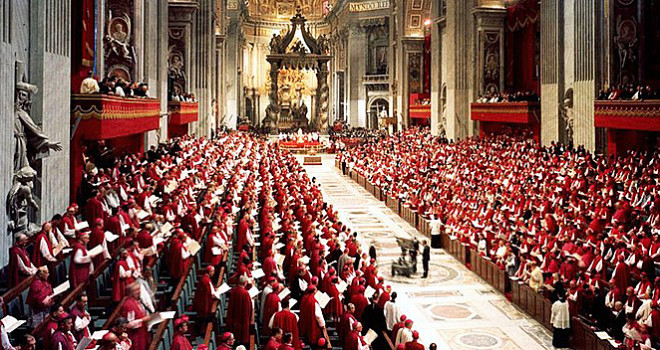
Perhaps a sign of the times is the “great recession” that we are either coming out of or going back into. Maybe a sign of the times is the “war on drugs” or maybe the increased road rage or maybe our attack on immigrants and immigration. Maybe it is our shift to the political right and the increased influence of evangelicals and Republicans. A sign of the times is an expression used to denote something that seems symbolic or emblematic of the era we are living in. “Sign of the times” was a phrase strongly related to Roman Catholicism in the era of the Second Vatican Council. It was taken to mean that the Church should listen to, and learn from, the world around it.” (wikipedia.org)
The problem is we do not have any good reference points to compare our times to. Most of us do not have a very good knowledge of history or of what happened even a few years ago. We all tend to forget how things really were. So, we think: crime is worse today, teenagers are worse today, life is harder today, etc. Then we say: “it’s a sign of the times.” However, it could easily be a sign of many times and eras gone by. What then are the dependable and predictable signs that would allow us to say with certainty that our times are different (for better or worse) than past times?
Very few things emerge that make good signs of the times. Rising costs and rising taxes have been true forever. War, famine, and pestilence were frequent during the days of the Pharaohs and are still with us today. Disease kills millions yearly and people do not really seem any less or more happier than in days gone by. Is life easier or more difficult today? You would probably notice that it depended on who you asked.
How then can we find a true and accurate “sign of the times?” Bottom line is you will probably not. The idea sounds good on paper, but it is just too subjective. There are few signs that exist today that could irrefutably tell you what year or even decade it was, without the value of hindsight. A hundred years from now, it may be possible to look back at today and say things about it with some certainty, but the present is never certain. That is why the past cannot predict the future.
We seem to dwell on the “bad signs” but maybe you can think of some good signs of the times. For instance, income levels are rising across the world and many diseases have now been eradicated that plagued humanity for centuries. We should make a list of all the good signs. I think it would probably be longer than the list of bad signs.
What do you think are the signs of the times today? How would these compare to your signs twenty years ago? Do you think your signs would hold up if you went back two thousand years? Will these (my list and your list) still be signs five or ten years from now? When do signs become obsolete? Do your signs tell you that things are better or worse today?
Perhaps no question in history has spawned more theories and more books to explain the “Trump Phenomenon.” Why would anyone with one iota of decency vote for and support someone who lacked all morality and all integrity? Trump is certainly not the first leader to lack any semblance of morality. However, given that he was elected to what some believe is the last great hope for “Democracy,” it boggles the mind that such a person could become President of the United States of America. Trump and his supporters stand against every principle that this nation was founded on.
I have read at least a dozen books and heard a different theory each month on why Trump was elected. From racism, to sexism, to xenophobia, to white supremacy, to rural alienation, to immigration, to abortion, to anti-immigration, to income gaps, to blue collar woes, to anti-globalism, to Christianity, to government overreach, to tax issues, to wage gaps, to inflation, to isolationism, to lack of American jobs, to anti-education, each one of these and several more have been promoted as the “reason” for Trumps support.
You can read volumes about these reasons, and you will still be looking for a reason. None of them seem to provide the “whole” explanation and new books are pumped out daily by Trump accusers and sycophants. These same ass-kissing, boot licking followers who now want to throw shit on Trump while exonerating their own culpability.
So imagine my surprise when I came across this explanation for why people followed Hitler written by Dietrich Bonhoeffer. He wrote this while in jail for his resistance to Hitler’s policies. Bonhoeffer was a famous Lutheran pastor and theologian who threw caution to the wind when he decided that he had to speak out against Hitler. He was arrested, tried, and found guilty. He was too well known for Hitler to immediately execute. Hitler put Bonhoeffer in prison but on April 9th, 1945 just three weeks before he died, Hitler opted for his trademark vindictiveness and cruelty. He ordered Bonhoeffer hung along with several other conspirators.
This writing was done while Bonhoeffer was in prison. In a very short piece, he sums up why anyone would support someone like Trump, Hitler, Mussolini, Stalin or any other actual or would be dictator. It explains “Why Trump” better than any of the long-winded studies I have read. Leave a comment and let me know what you think.
Bonhoeffer: On Stupidity
Stupidity is a more dangerous enemy of the good than malice. One may protest against evil; it can be exposed and, if need be, prevented by use of force. Evil always carries within itself the germ of its own subversion in that it leaves behind in human beings at least a sense of unease.
Against stupidity we are defenseless.
Neither protests nor the use of force accomplish anything here; reasons fall on deaf ears; facts that contradict one’s prejudgment simply need not be believed — in such moments the stupid person even becomes critical — and when facts are irrefutable, they are just pushed aside as inconsequential, as incidental. In all this the stupid person, in contrast to the malicious one, is utterly self-satisfied and, being easily irritated, becomes dangerous by going on the attack.
For that reason, greater caution is called for than with a malicious one. Never again will we try to persuade the stupid person with reasons, for it is senseless and dangerous.
If we want to know how to get the better of stupidity, we must seek to understand its nature. This much is certain, that it is in essence not an intellectual defect but a human one. There are human beings who are of remarkably agile intellect yet stupid, and others who are intellectually quite dull yet anything but stupid.
We discover this to our surprise in particular situations. The impression one gains is not so much that stupidity is a congenital defect, but that, under certain circumstances, people are made stupid or that they allow this to happen to them.
We note further that people who have isolated themselves from others or who live in solitude manifest this defect less frequently than individuals or groups of people inclined or condemned to sociability. And so it would seem that stupidity is perhaps less a psychological than a sociological problem.
It is a particular form of the impact of historical circumstances on human beings, a psychological concomitant of certain external conditions. Upon closer observation, it becomes apparent that every strong upsurge of power in the public sphere, be it of a political or of a religious nature, infects a large part of humankind with stupidity.
It would even seem that this is virtually a sociological-psychological law. The power of the one needs the stupidity of the other.
The process at work here is not that particular human capacities, for instance, the intellect, suddenly atrophy or fail. Instead, it seems that under the overwhelming impact of rising power, humans are deprived of their inner independence, and, more or less consciously, give up establishing an autonomous position toward the emerging circumstances.
The fact that the stupid person is often stubborn must not blind us to the fact that he is not independent. In conversation with him, one virtually feels that one is dealing not at all with a person, but with slogans, catchwords and the like that have taken possession of him. He is under a spell, blinded, misused, and abused in his very being. Having thus become a mindless tool, the stupid person will also be capable of any evil and at the same time incapable of seeing that it is evil. This is where the danger of diabolical misuse lurks, for it is this that can once and for all destroy human beings.
Yet at this very point it becomes quite clear that only an act of liberation, not instruction, can overcome stupidity.
Here we must come to terms with the fact that in most cases a genuine internal liberation becomes possible only when external liberation has preceded it. Until then we must abandon all attempts to convince the stupid person.
This state of affairs explains why in such circumstances our attempts to know what ‘the people’ really think are in vain and why, under these circumstances, this question is so irrelevant for the person who is thinking and acting responsibly. The word of the Bible that the fear of God is the beginning of wisdom declares that the internal liberation of human beings to live the responsible life before God is the only genuine way to overcome stupidity.
But these thoughts about stupidity also offer consolation in that they utterly forbid us to consider the majority of people to be stupid in every circumstance. It really will depend on whether those in power expect more from people’s stupidity than from their inner independence and wisdom.
——————————————————————————————–
You can keep looking for explanations. I think there surely will be more raised. However, I am content to stop here with Bonhoeffer’s explanation. I may not agree with everything he says but he explains quite well why discussion and debate with these people are a total waste of time.
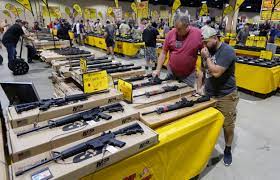
Every gun sold in America makes you less safe than you were the minute before that gun was sold. The gun lobbies and Second Amendment devotees want you to believe the opposite. There are two motives for this. One is to sell more guns. This is a motive for the gun lobbyists, gun manufacturers and NRA. The second motive is by the Second Amendment advocates who seriously believe that guns will protect you from “bad” guys with a gun. This is wishful thinking which more often than not is false. However, there are many cases on record where guns have protected people from criminals and other deviants. Nevertheless, statistically speaking, you are not safer with more guns. In fact, you are less safe as each gun sale adds to the growing epidemic of gun violence in USA America. You will only be safer when there are less guns to be had for sale. The argument I am going to present will clearly prove my point. However, before I present it let me state the following truths.
I am a gun owner
I am a military veteran
I actually like guns, knives, and other weapons (nunchakus, hunting bows, etc.)
I have hunted moose, seal, elk, pheasant, and deer
I do believe that some guns should be available for hunting and sports shooting
So, why do I believe that more guns lead to more school shootings, massacres, homicides, suicides, and other violence? Why do I think that we need to seriously dial back on the following three aspects of guns?
Gun availability
Gun lethality
Gun carry
To understand why more guns are dangerous, we must first start with understanding human psychology. You will accept that anger is a normal human emotion. Assuming a bell-shaped curve of ranges for anger, some people will get much angrier than others. Some people will resort to violence, road rage, domestic abuse, fights, etc. when they are angry. Let us assume that one percent of people sometimes fall into the “extreme” anger range. Thus, out of 1,000,000 people, there will be 10,000 people who may become violently angry at some perceived slight, disrespect, or abuse.
Next, let us establish a lethality of weapons. I will put it thus: fists are not as lethal as brass knuckles. Brass knuckles are not as lethal as clubs. Clubs are not as lethal as knives. Knives are not as lethal as guns. Handguns are not as lethal as rifles. The range of lethality that I have noted is “most” often true but there are always exceptions. Thus, I will say again, the lethality of the potential weapons structure I have described is most often the case but not always.
Now, let us assume that one percent of the people who fall into the “extreme” violent range might act out using a weapon of some sort. That would mean that during any particular episode of extreme anger, a hundred people or one percent of 10,000 people could conceivably pick up a gun to use as a weapon.
If we take the fact that there are 257,000,000 people over the age of 18 in the USA as of 2020 (Annie E. Casey Foundation Data Center), then extrapolating from the one million people we started with, we would have to multiply the 100 potentially violent and angry people who might use a gun by the percentage of gun owners in America who have a gun available. According to a Pew Study, four-in-ten U.S. adults say they live in a household with a gun, including 30% who say they personally own one.
So, we need to multiply as follows:
257,000,000 million adults over the age of 18 in the USA
X
30 Percent of adults who personally own a gun in the USA
X
100 potentially very angry people per every million adults who might be tempted to use a gun
257,000,000 x .30 = 77.1 million X 100 per million = 7710
That gives us the following: 7710 potentially very angry people on any given day who might use a gun in some act of violence. Now let’s half that number since women are not usually as violent as men and we arrive at the following figure of 3855 adult men in the USA who might go berserk, grab a gun, and enter what domestic abuse counselors call the “Cycle of Violence.”
The “Cycle of Violence” can be described as follows:
“The term cycle of violence refers to repeated and dangerous acts of violence as a cyclical pattern, associated with high emotions and doctrines of retribution or revenge. The pattern, or cycle, repeats and can happen many times during a relationship. Each phase of the cycle may last a different length of time, and over time the level of violence may increase. It often refers to violent behavior learned as a child, and then repeated as an adult, therefore continuing on in a perceived cycle.” — WIKI
This cycle explains quite well what happens in many cases of gun violence or other types of violent outburst. In phase two, tensions are building up. This could be from a variety of different causes. It might be strains from the work place or strains from home relationships with family and children. The strains are often cumulative particularly with people who may lack the ability or means to discharge their stress. The stress builds up until the individual finally explodes. The explosion could be in words or actions. Actions might involve throwing things, punching things, hitting things or various levels of assault against things or people using a wide range of weapons.
Phase three is the incident itself. A trigger is needed to set the individual off. Perhaps the individual gets fired or their spouse asks for a divorce. Maybe they have a fight with a neighbor, or a car cuts them off at an intersection. When the trigger occurs, the individual explodes. The explosion could involve a violent attack that might go from simple threats or curses all the way to shooting someone. The availability of weapons will play a major role in the level of violence. This is one reason why a “waiting period” for purchasing a firearm makes a lot of sense. In two recent mass shootings, there was no waiting period for the purchase of a high-powered rifle and the individuals engaged in shooting massacres within a week of buying their rifles.
Phase four is a down period or a period of extreme remorse. The violent individual feels a deep sense of guilt or regret and longs for forgiveness and to makeup to their victim for their transgressions. If their victim is still alive they will apologize profusely and swear to never do it again. They will promise anything to make amends and obtain forgiveness. Obviously, if their victim or victims are dead, one act that they can take to escape their feelings of remorse is to end their own lives. This explains why so many of these mass shooters commit suicide before they are apprehended.
If the violent individual makes it through phase four and is still alive, there will be a phase of calm and peacefulness. It will seem like everything is going to be okay. Phase one may last days or weeks but unless the individual receives some type of therapy, the tensions will inevitably build up again. The result will be another explosion after another triggering event takes place. This is how the cycle of violence works over and over again.
The result of this anger cycle combined with an easy access to guns is an epidemic of gun violence. It is an epidemic that includes nearly 25,000 suicides a year and about 14,000 homicides a year. There are clearly only two solutions to reducing this death rate. One solution would be to reduce the potential number of people in our society who are prone to violent outbursts or what some might label as mental illness. The second solution would be to reduce the number of guns available or at least make it more difficult to obtain a gun when someone has a violent outburst.
Many anti-gun control people push the solution that more mental health is needed. The problem with this solution is that anger and angry outbursts are as normal in the population as mom, God, and apple pie. There is no way to treat all the people in America who might lose their temper on a given day. There is no way to tell when or where these outbursts will take place. Therapy for “normal” people is not on the radar. Make no mistake, your best friend, your neighbor, your cousin just might “lose” it tomorrow and go on some type of violent jag that results in death for someone else. It happens all the time. The papers are full of reports of people who lose it and end up killing their loved ones and themselves.
The other solution is to reduce the availability or the lethality of guns in society. This solution makes the most sense. We can somewhat reduce the availability of weapons through background checks, waiting periods, age restrictions, gun training, and reducing the ability to carry a gun in public. We must get rid of these ridiculous concealed carry laws. It should be illegal to carry a gun in public concealed or otherwise unless you have a permit with a valid reason for why you need to carry a gun.
We can reduce the lethality of guns by limiting clip capacities and by eliminating rifles that were designed for military purposes and not hunting. Why anyone would need a rifle with more than a three round capacity is beyond me. Rifles should be for hunting or target shooting and nothing else. Any game that you are hunting will be gone long before you can chamber and fire your third round. A .223 caliber was first designed for the military in Vietnam. I had to qualify on an M-16 in 1965 when they were first issued. It was like shooting a bb gun. Easy to shoot with a round that was designed to wound and not kill. They said this would take two or more people out of the war instead of just one dead body. The individual shot by a .223 would be severely wounded and would need someone to take him back to a medic or out of the war zone. Read any of the gun magazines today and it looks like they are selling guns and accessories to someone who is going to war. Helmets, bullet proof vests, high-capacity magazines, laser sights and guns more fit for killing humans than hunting are touted and readily available.
I don’t deny that it would be difficult to make some distinctions between a military or assault rifle and a rifle that could be used for hunting. It some cases it would be like trying to differentiate between tweedle dee and tweedle dum. However difficult it might be, it could be done as long as two reasonable people could agree on the definitions. No definition will convince or persuade everyone. We must not let perfection stop us from trying to protect the lives of our children and our citizens. If some mistakes are made in banning guns that are best designed for killing then so be it. We will all be better off for it. It is the only solution that will end the epidemic of gun violence in the USA.
PS
I think my theory above accounts for a large percentage of mass murders and some suicides. I know that a small percentage of mass murders are committed by individuals with a grudge against another group, ethnicity or race. Call them racists or ideological nut cases. I doubt they go through any “cycle of violence” such as I have described. My guess is that they develop some screwball theory and believe that their violence will help them wipeout whatever group they harbor negative attitudes against. Their hatred could be political, racial, or other wacko ideologies.
As for suicides, the major reason for suicides according to the mental health literature (retreatbehavioralhealth.com) is due to depression. Women tend to overdose with pills while men tend to use a handgun. Gun checks, gun licenses, gun waiting periods are probably not going to reduce deaths by suicide substantially since I cannot imagine how a background check or a license would stop someone who is depressed from owning a gun. Nevertheless, the easy availability of guns and their lethality does make them very dangerous for anyone suffering from depression.
Twelve score and six years ago our founding fathers (and founding mothers) brought forth on this continent, a new nation, conceived in hypocrisy, and dedicated to the proposition that most white men were created equal, but women, Blacks and Indians were subhuman and much less than equal.
Now we are engaged in a great cultural war, testing whether this nation, or any nation so conceived and so dedicated, can long endure. We are met on a great battlefield of that war, called Washington, D.C. Many of us have come to protest on a portion of that field. A chamber where those who raised enough money to get elected can further their dreams of power, glory, and greed. Our enemies would strip us of the little democracy that is left in our country. It is altogether fitting and proper that we should protest this attack on our democracy; though it will probably not make much difference and may only end up with us getting beaten and clubbed.
But, in a larger sense, we cannot succumb — we cannot give up — we cannot forget– this ground. Brave men and women, living and dead, have struggled here before us, have protested here before us. From those honored protestors who have gone before us, we make increased devotion to the cause for which some gave their last full measure. It is perhaps far above our ability to add or detract from their valiant efforts.
The world may little note, nor long care what we say here. It will all too soon forget what we tried to do here as well. But let us not surrender to world opinion. As Americans one and all, we must be dedicated to the great task still remaining; to make this nation truly proper to be called a nation of justice, equality, and freedom.
We here highly resolve that those living, and dead shall not have struggled or died in vain. That this country, under manifold Gods, shall have a new birth of freedom — and that a democratic government of the people, by the people and for the people, shall not perish from this earth. And that someday, America will manifest the dream of Martin Luther King to become a country where little children will not be judged by the color of their skin but by the content of their character.
He’s not our kind of people. She should stick to her own kind. I don’t have anything against his kind, but I really think people belong with their own kind. It’s like the saying, “birds of a feather stick together.” I think people get along better with people who are more similar. Like parrots with parrots and robins with robins.
I’m not prejudiced against anyone. I have noticed that people seem happier when they are with people who are like them. It’s a big world out there and its got room enough for everyone, so why should we crowd it? Don’t you want everyone to be happy?
So if you like coke
And you like dope
You’re my kind of people
(My kind of people)
You’re my kind of people
(My kind of people) —- My Kind of People, CeeLo Green
Why force people who are different to live with people who are not like them? We would all got along better if like stayed with like. You don’t mix salt and pepper or sugar and pepper so why mix people? People are much happier when they are with people who have a great many similarities to them. Fish eaters get along better with fish eaters and vegans get along better with vegans.
It’s not about racism or privilege but everyone should have a right to say who they have to live with and go to school with or church with. I am all for equal rights for everyone and that includes my right to stick to my own kind. Does that make me a racist because I like one group of people more than another? We all have our baseball and football team preferences. That is what makes sports so much fun. I don’t have to like your team and you don’t have to like my team. Teams stick together and play with their own kind. You don’t see football players playing against baseball players or lacrosse players playing against rugby players.
“I’m waiting, for what, my kind of people, what kind is that? I can tell my kind of people by their faces, by something in their faces.” — Ayn Rand
If you took a can of blue paint and red paint and yellow paint and mixed them all together, you would get something really strange. If you blended the rainbow together, you would just get gray. That would be boring and uninteresting. You need to keep colors separate and then you get all of the beauty of the spectrum. Keeping people with their own kind improves life for all since the colors do not fade. Unless you get a tan and they never seem to last very long.
My kind of town, Chicago is
My kind of people, too — My Kind of Town, Frank Sinatra
That is why I am not a racist because I believe in the beauty of all colors. I don’t think one color is more beautiful than another. I prefer blue while I think my wife likes pink or green more. I just think you don’t want to mix the colors too much or you lose the beauty. It is also easier to clean a paint brush when you just use it for the same colors. Have you ever tried to clean a paint brush that has been used on too many different colors?
A little rock and roll
A whole lot of soul
You’re my kind of people
(My kind of people)
You’re my kind of people
(My kind of people) — My Kind of People, CeeLo Green
Now I suppose some of you will still say that I am a racist or prejudiced and that nothing I can say will change your minds. But I don’t dislike those kind of people, I just want to live with my kind of people and those kind of people can live with their own kind of people.
Don’t you think there would be less problems in the world if we all stuck with our own kind of people? Listen to what the bible says:
Leviticus 19:19 “Keep my decrees. Do not mate different kinds of animals. Do not plant your field with two kinds of seed. Do not wear clothing woven of two kinds of material.”
I have to show this to my wife because she wanted to get a Golden Doodle and now wants to buy an Aussie Doodle. I guess the bible says no doodle for her unless she wants to buy a pure doodle whatever that is.
————————————-
The above blog was inspired by my friend Kwame who was discussing race with someone who made the comment that we should all stick to our “own kind.” The thought resonated with me since we have all heard it at one time or another repeated as a “code” for discrimination and disrespect. “Stick to your own kind” sounds so benign but it is really a phrase full of hate and fear.
“It’s hard to be different,” Scarborough said. “And perhaps the best answer is not to tolerate differences, not even to accept them. But to celebrate them. Maybe then those who are different would feel more loved, and less, well, tolerated.” ― Bill Konigsberg, Openly Straight
I am looking out my back window. The headlines from another senseless tragedy still scroll across my video screen. But my backyard is serene and peaceful. I have a clothesline pole with three bird feeders and two suet feeders. A minute or so ago, there were more birds than I could count. Throughout the day, Karen and I watch the birds come and go. Sometimes there are more than twenty birds all taking turns at our feeders.
Yesterday, we saw hummingbirds, ravens, woodpeckers, finches, doves, grackles, robins, and several other species that we could not identify. Karen keeps a bird guide and binoculars at the ready and is always on the lookout for a new species to add to the list that we keep. We are not true birdwatchers, but we enjoy watching the birds. Amidst the carnage of life with its murders and wars, the birds are our escape. They help us to remember that there is indeed sanity in the universe.
Some of the birds we see are using the water fountain for a drink after an appetizer of suet. Several species prefer to eat the seeds that fall on the ground from the feeders. Birds are not always neat eaters. Eventually a few squirrels will come around. We never chase them away and they always appear happy to rummage about on the ground for food. We have never had a bear problem with the feeders, but we have had some raccoons that like to take the feeders down and enjoy a hardy meal. It does not bother Karen and me. We just reload the feeders and put them back up. In our daily scheme of things, bird feed is very economical. Even if it meant eating less red meat to buy more bird seed, we would gladly make the sacrifice.
Today, with the thoughts of yet another school massacre still running through my mind, I can’t help but notice the birds and how they interact. In all our years of watching the birds outside our kitchen window, I have never seen any bird fights. I see many birds of different species and they all get along. They take turns at the feeders. They come and they go but none attack any other birds. If there is such a thing as “bird discrimination” or “bird racism,” I have not witnessed any evidence of it.
Jesus told his disciples:
“See the birds of the sky, that they don’t sow, neither
do they reap, nor gather into barns. Your heavenly Father
feeds them. Aren’t you of much more value than they?” — Matthew 6:26
This translates for me as an admonition to worry more about my soul than about physical things. I do not need to acquire, accumulate, hoard, and stow away toys, stuff, and merchandise because God will take care of these things. She/he does it for the birds, so it will be done for me. With less concern for worldly things, I must turn my attention to my soul. I need to do the things that will make my soul worthy of continuing existence after I leave this third rock from the sun.
Now, those of you who know me will be pondering my above words with some confusion. I thought John was an atheist some of you will say. Others will say, I thought John was an agnostic. One of my best friends who is a pastor, says that I am more Christian than many of the people in his congregation. In truth, I disavow religion. I claim no knowledge to prove or disprove the existence of something or someone that created the food and earth that I survive with.
I write the above words from the perspective of an individual who wonders why so many people who profess to be Christians do not take Jesus’s words to heart. Call them hypocrites. They are in many religions. It frequently seems to me that religion is one large stew of hypocrites. A pot full of different denominations that unlike the birds cannot get along. A big stew that does not mix well with other stews. The Christian stew does not mix well with the Islamic stew. The Islamic stew does not mix well with the Jewish stew. Even within the same stew we find acrimony and bigotry. “My religion and my God are the one true and righteous paths to salvation. I will slaughter anyone who disagrees with me” says the “true believer.”
Before this blog becomes too negative, I need to go back to my bird watching window. The birds will restore my equanimity and smooth out the hills and valleys of my life.
Watch Beto attack the hypocrite Abbott on stage. Whether or not Beto is doing this for political gain or sincere convictions is beside the point. The point is Abbott and many of his Republican comrades have pushed and pushed gun rights for a gun toting minority until the rest of our citizens have no rights when it comes to walking the street without fear of being shot by one of the 350 million legal guns in the USA. Guns graciously provided by the gun manufacturers and legalized by hypocrites like Abbott who make it easy for any nutcase, maniac or person with a grudge to buy a gun without a permit, gun training and in some cases without a waiting period or a background check. Even as they provide their remorse for the deaths of 19 young children and three adults, these hypocrites are doing all they can in Michigan and other states to block any gun controls that might make us safer.
If Beto is an embarrassment, if he has forgotten civility, then maybe we should all put good manners aside until we have people willing to do what is right. Let’s call out these hypocrites whether Dems or Republicans for the money and favors they receive from the gun lobbies. These favors are paid for with the blood of our citizens. My kudos to Beto for standing up and speaking out.
“Federal lobbying is not the only way to influence political debates. From 1989 to 2022, gun rights groups contributed $50.5 million to federal candidates and party committees. Of that, 99% of direct contributions went to Republicans.” — Gun rights groups set new lobbying spending record in 2021
I will personally vote against any politician who takes one cent from a gun rights group or a gun lobby.
For some interesting comments and perspectives on the gun violence in the USA, see the following reader comments in the Philadelphia Inquirer:
I wrote this a year ago. It is nothing new. It is nothing many people have not said before. We will have a “moment of silence.” A week of debate on new gun control laws. A week of dithering. A week more to let the memory of Uvalde and the dead fade in our minds. A week to remember that the gun lobbies and gun fanatics will not tolerate any restraints on guns in America. A week to let things go back to “normal.” A few more weeks until the next episode of gun violence.
The Second Amendment is the lever for mass genocide in America. Every day Americans witness another mass killing or wanton murder. Road rage shootings. Family violence. Workplace shootouts. Shootouts in churches, parking lots, malls, grocery stores, Walmart’s, and on every highway and byway in America. Twelve-year-old children taking guns to schools to kill as many people as they can. Husbands killing entire families in a rampage. Employees terminated coming back to assassinate former co-workers and their ex-bosses. And throughout every one of these berserk episodes of violence, the same old tired excuses are made:
We need more mental health training
We need more guns to protect the innocent from the maniacs
We need better ways to screen people before they can purchase a gun
Guns don’t kill people, people do
When guns are outlawed, only outlaws will have guns
“What do we love more: our instruments of death or our future?”
People should be working now, the pope said, to ensure a similar tragedy can never happen again. In the U.S., his sentiment was shared by another senior Catholic leader: Cardinal Blase J. Cupich, the archbishop of Chicago.
“The Second Amendment did not come down from Sinai,” Cupich said via Twitter. “The right to bear arms will never be more important than human life. Our children have rights too. And our elected officials have a moral duty to protect them.”
The cardinal noted that research has shown the expired federal ban on certain rifles was effective in preventing the terror of mass shootings.
“As I reflect on this latest American massacre, I keep returning to the questions: Who are we as a nation if we do not act to protect our children? What do we love more: our instruments of death or our future?” Cupich asked.
There have been 27 school shootings so far this year in the U.S., according to Education Week, which tracks gun violence on K-12 school properties.
Ms Hudson’s piece is marvelous. She is a wonderful writer with insights on civility that we all need to think about. This copy is from a site it was posted on with shares. The site is called Civic Renaissance. I advise everyone to sign up for this site and enjoy some excellent writing.
On Plato and civility: reflecting on Plato during his traditionally recognized birthday month, and civility for International Civility Month + win a YEAR of WONDRIUM!
May is the month that scholars traditionally deem to be the birthday of Plato. Also, certain authorities have declared that May is International Civility Awareness Month.
The School of Athens, a fresco by the Italian Renaissance artist Raphael, painted between 1509 and 1511.
I’ve been thinking of both of these topics of late.
Plato and civility are never far from my mind, but I recently emerged from an experience that caused me to lean and reflect on them all the more.
A recent, tumultuous business transaction prompted me to consider how civility applies to the real world—a and to ask a question that you may have considered, too.
How can we be civil in an uncivil world?
Is it possible for people who are committed to the principles of decency, courteousness, and treating others with basic respect to succeed and thrive when others do not abide by these principles?
In a recent business situation, the opposite party lacked all manner of basic decency.
Their behavior did not quite reach the level of illegal — although it did come perilously close—they were certainly unethical. More than anything, however, they were just terribly unprofessional and unpleasant to work with.
But their conduct reminded me of the importance of basic civility that many of us take for granted. It is only when norms of courtesy and respect are broken that we fully appreciate their importance to helping us co exist with others in society.
It’s an important truth: we note and appreciate civility most in its absence.
I define civility as the basic respect we are owed by virtue of our shared dignity and equal moral worth as human beings. We owe this to others regardless of who they are, what they look like, where they are from, whether or not we like them, and whether or not they can do anything for us.
I live and breathe civility and have studied social norms across history and culture— including countless instances of when they have been broken. I was still taken aback by how unpleasant the entire interaction was because of the absence of civility and mutual respect.
From the outset the opposite party was more than rude. They dispensed of basic courtesies from the get go. They didn’t even attempt to appear generous, amicable, or conscientious.
They were single-minded in their aim: all things personal aside, they wanted to get the absolute best deal possible at any cost.
Business is business, I’m sure they were thinking.
They forgot that there was a person on the other end of the transaction.
This resulted in me feeling used, squeezed, bullied, nickeled and dimed throughout negotiations.
It brought out the worst in me.
Instead of making me want to help them or instead of making me want to reach an agreement of mutual benefit, their conduct inflamed my baser nature, tempting me to go “scorched-earth,” ensuring they didn’t get what they wanted even if it hurt me, too.
I was frustrated by the fact that we were operating on two different moral and ethical levels.
I tried to stay high when they went low, yet every grating exchange with them made me want to sink to their level, where all bets and codes of decency were off.
In the end, rather miraculously, we came to an agreement.
I managed to prevent my baser nature from winning out. I was able to rise above the pettiness and the vindictiveness that I wanted to respond with— a facet of the human personality that we all share when we feel we are under threat.
But it wasn’t an experience I particularly enjoyed.
I was left with feelings of frustration and exhaustion. I felt like I had been disrespected and degraded.
I also felt disappointed in myself.
Most of us have probably had thoughts like this during and after interactions with people who are willing to do whatever it takes to get the upper hand:
Should I have been tougher?
Was my commitment to civility in the face of incivility a handicap?
Did my attempt to uphold my values allow me to be taken advantage of?
This experience has caused me to consider the practical importance of civility in life.
Won’t the person who is willing to go low—one who is willing to throw off the shackles of decency and civility—always win out?
“How to be civil in an uncivil world” is a variation of an important question that people have been considering for a long, long time: how can a good person succeed in a world of evil?
Renaissance thinker and author of The Prince, Niccolo Machiavelli, who we have explored in a past CR issue, observed that, in history those who tend to gain and maintain power appear to have morals publicly, but privately dispense with their values the moment they get in the way.
“Politics have no relation to morals,” wrote Machiavelli.
Also in The Prince: “Thus it is well to seem merciful, faithful, humane, sincere, religious, and also to be so; but you must have the mind so disposed that when it is needful to be otherwise you may be able to change to the opposite qualities.”
In other words, Machiavelli argues that one who wishes to be powerful must be willing to dispense with the moral bounds of civility if the need arises.
While the civil person is contained by their commitment to civility, the uncivil person can do whatever is necessary to win.
Socrates—the Greek philosopher Plato’s teacher, and the protagonist in his dialogues—took a different view. He would take issue with how Machiavelli defines “winning.”
Socrates said that justice is to the soul what health is to the body. If a person gets the better end of a business deal, wins an argument, or comes out on top of a political battle, but does so by cutting corners and being dishonest, he hasn’t really “won” anything.
His soul is unhealthy and sick.
In Plato’s Republic, Socrates attacks the poet Homer, the educator of Greece, because he doesn’t like the values that Homer’s poems promote.
Achilles, the protagonist of The Iliad, embodies the ethics of revenge, slaughter, and vainglory.
Odysseus, the protagonist of The Odyssey, embodies the ethic of wiliness and deceit in order to come out on top of any situation.
Socrates purposes a new ethic: one that loves wisdom.
He wants to trade the ethic of revenge, “might makes right,” and vindictiveness with a shared love and pursuit of goodness, beauty, and truth.
Socrates believes that anyone who acts with injustice does so out of ignorance—after all, who would willingly make themselves sick? Who would knowingly choose sickness of the soul?
Socrates argues that a just person has an excellent and healthy soul, and the function of a just soul and person is to seek the justice and soulish health of others, too.
Socrates noted that it is not then the function of the just man to harm either friend or anyone else. Seeking to harm is an act of injustice, and therefore harms the harmer. The function of the just person is to seek the good of others, friends and enemies alike.
In a related sentiment, Abraham Lincoln once said, “Do I not defeat my enemy when I make him my friend?”
Final thoughts: on virtuous and vicious cycles, and on unbundling people and situations
There are three thoughts I’d like to leave with you.
First, we should not underestimate the power we each have to promote trust and civility in our world.
Second, learning to “unbundle” people and situations can help us mitigate the vicious cycles of incivility that are so detrimental to a free and flourishing society.
Third, we must remember when we encounter incivility in our modern world — and we invariably will, as the problem of incivility is endemic to human nature and human social life — we have a choice about how to respond.
Norms of decency and courtesy comprise an unwritten social contract between us and our fellow citizens. We take this contract for granted, which is why when this bond is broken, we are surprised, offended, and dismayed. When people don’t uphold their end of the social contract, we lose a little bit of faith and trust in society and others.
When that trust in others and society is corroded by the thoughtlessness and incivility of others, often we are less likely to act in good faith and civility in our future interactions. Our less-than-civil response to others may in turn cause them to be unkind to others with which they engage.
And so the vicious cycle continues.
My recent experience with bad actors made me appreciate those today who claim that “all bets are off” when it comes to decency in public life. We often hear things like, “The other side has gone to a whole new low. How can I be expected to stay civil?”
We also see evidence of the “vicious cycle” all around us in politics today. When one figure breaks norms and bounds of decency everyone else feels like they have to so as to keep up.
We contribute to this trust-corroding ripple effect when we are uncivil. Others do, too, with their incivility. The incivility of others often tempts us to relinquish the shackles of decency in order to “win.”
But we must resist—for our own sake, for others, and for society.
We cannot control the conduct of others.
We can only control ourselves.
We must also learn to mentally unbundle people and situations. This means not assuming things about their character because of one deed, word, or interaction you had with them. We must learn to unbundle situations. This means not allowing one bad interaction or instance to corrode your trust in society in general.
This is much easier in theory than in practice. This is much easier said than done. but again, in the end we cannot control others. We can only control ourselves.
Socrates and Machiavelli remind us of why we are civil in the first place. The reason to be civil isn’t instrumental. It isn’t just a tool of success. As we’ve seen, sometimes it can be an impediment to success. Civility is instead a disposition, an outgrowth of seeing people as they really are: as beings with irreducible moral worth and deserving of respect. This is worthy for it’s own sake, even if it means we don’t gain the upper hand of every business dealing.
Being uncivil is poison to the soul. When we treat people as means to our ends, it hurts and degrades them, but also us, too.
Machiavelli is famous for the amoral aphorism: “The ends justifies the means.”
Socrates would respond, “But what is your end?”
No earthly battle is worth compromising your soul for.
Here are some questions to consider:
Can you empathize with my experience? Have you had an experience where it felt like decency was not a match for indecency? Write to me with your story and how you dealt with it at ah@alexandraohudson.com
Who do you find more persuasive: Machiavelli or Socrates? Do you think we can be civil in an uncivil world? Or will incivility always win out?
Thank you Ms. Hudson for a great piece of writing and morality.
Hi, if you have comments, please post them in the comments section. However, if you have questions, please send me an email. I have been getting too many comments to respond to all of them. However, if you have questions about blogging or my website, send them to me at persico.john@gmail.com. This is a WordPress site and the theme is KOI. It is free. I welcome your questions. Feel free to reblog or cut and paste any of my stories or blogs. John