 I thought I would start the year of 2021 off with a positive slant. Namely, some things we can all do or practice to be better people. However, before anyone should pay any attention to what I am about to say, there are several questions they must ask themselves. I would advise you that the veracity and hence credibility of an author is critical to your acceptance of what the author is trying to sell you or convince you of. Do not buy an argument from someone who cannot be trusted. Think about the comment that “If you see the Buddha on the road, kill him.” An uncritical acceptance of any idea is dangerous to your own integrity and responsibility. Hence, the questions I would want answered (If I were you) would be as follows: Who is this writer to say what the “greatest” virtues for a human are? How did he come up with these Seven Virtues? What is the difference between a virtue and a value? Is this an important difference or is he about to sell me another new religion?
Taking each question as noted, who am I? What credibility do I bring to the subject?
 I would like to answer that I am a seeker of truth and knowledge. I am very opinionated, often highly judgmental and have frequently been accused of being a “know it all.” Many people would write my opinions off as being too liberal while others would say that I am too rational. I place great value on being logical and trying to stay open to many possibilities. I have been studying philosophy and religion since I was eighteen. I have no degrees in either. But the number of books and articles and stories that I have read number in the hundreds. I have attended many different worship houses and types of religious services. I was brought up as a Catholic until I rejected its teachings at about the age of 10. When no one would give me a good answer for “Who made God?” I more or less decided that most religions were based on superstitions.
I continue to read and study and write in the hope and belief that continuous learning is critical to living a good life. As Socrates noted “An unexamined life is not worth living.” I want to examine all aspects of existence. From good to evil, from logical to emotional, from predictable to unpredictable. I want to understand and comprehend all of the mysteries of the universe. Nevertheless, I am not trying to be omnipotent nor do I think that anyone can or will ever understand all that the universe holds. The quest is the most important thing, but the results of the journey are also very important. My goal is to dream the impossible dream. I am dedicated to the idea that truth and knowledge will bring me closer to being able to live this “impossible” dream. As the song notes:
To dream the impossible dream
To fight the unbeatable foe
To bear with unbearable sorrow
To run where the brave dare not go
To right the unrightable wrong
To love pure and chaste from afar
To try when your arms are too weary
To reach the unreachable star (From Man of La Mancha (1972) music by Mitch Leigh and lyrics by Joe Darion)
How did I derive these Seven Virtues?
In all honesty, seven is a good number for any set of factors since most humans can only remember between five to nine random numbers. Seven is the mean for a large proportion of the human race in terms of memory capacity. We note that many cultures have used seven as a sort of “perfect” number for deriving sets of values, ideas, virtues, and even mundane things like phone numbers and license plate numbers.
 Given that one could easily comprise a list of ten or perhaps one hundred important virtues, why do I believe that my seven are the seven greatest and most important? How do I have the audacity to make such an assertion? I might have been sitting under an apple tree one day, or perhaps simply thinking about life at one of my yearly silent retreats at the Demontreville Retreat Center, when I compiled a list of seven virtues. While I truly “value” these ideas, I understand them more as virtues than values. I will address this difference later. I decided that I want to live by these virtues. Each day for the last fifteen or more years, I have selected one of these seven virtues to help guide me through the day. Whether it is patience, kindness or courage, each day I start by reflecting on this virtue and trying to make it a part of my life.
How does my list compare to other lists? One of the most famous lists of seven virtues is the Catholic Hierarchy of Virtues. The top three in the Catholic Hierarchy are Faith, Hope and Love. Of these, my list includes Faith and Love, though I use the term compassion rather than love. The next four in the Catholic Hierarchy are justice, wisdom, moderation and courage. My list includes courage but not wisdom, justice or moderation. This is not to say that I do not think these are important, but my list is based on feelings more than knowledge. This is somewhat ironic since I believe that knowledge and wisdom are two of the keys to understanding life. However, l cannot argue with the question: “What wisdom is there that is greater than kindness?” Comparing my list to the Catholic list, I realize that I am emphasizing feelings over thinking. I am emphasizing the heart over the brain and love over logic. My final list of seven virtues includes the following:
- Gratefulness
- Forgiveness
- Patience
- Kindness
- Faith
- Compassion
- Courage
Over the next several blogs, I will present each of these as virtues and explain why they are important and how we can go about integrating them in our lives. I know and believe that we will all live better lives if we are living a life based on virtue.
What is the difference between a Virtue and a Value? Is it important?
I would like to include the following excerpt from an article by Iain T. Benson called “Values and Virtues: A Modern Confusion.”
“Now George Grant, the Canadian philosopher, whom I mentioned a while ago, made this point in an important comment on a CBC radio program a few years ago. Here is what he said, “values language is an obscuring language for morality, used when the idea of purpose has been destroyed. And that is why it is so widespread in North America.” In North America, we no longer have any confidence that there are any shared purposes for human life. We don’t. It is that dramatic. Consequently, we cannot order any human action towards an end, because all means are related to ends.”
Looking at the Oxford Dictionaries definitions of these two terms will also shed some light on the differences.
- Virtue is defined as follows:
- Behavior showing high moral standards: paragons of virtue
- Quality considered morally good or desirable in a person: patience is a virtue
- A good or useful quality of a thing: Mike was extolling the virtues of the car
- Value is defined as follows:
- The regard that something is held to deserve; the importance, worth, or usefulness of something: your support is of great value
- The material or monetary worth of something: prints seldom rise in value equipment is included up to a total value of $500
- The worth of something compared to the price paid or asked for it: at $12.50 the book is a good value
I think it is easy to see from these definitions that a value is generally something we attach to a product or service. A virtue is more often attached to a behavior or character trait. We value things, while we practice virtues. A man or woman may be virtuous but we would not say they are “valuous”, in fact the word does not even exist. We might say they were valuable, but then we would probably not be talking about their character but addressing their instrumental worth to us. Therefore, I have labeled these critical seven behaviors as virtues.
 The danger in this discussion lies in your taking a sectarian or religious approach to my writings. I assure you that I am not a religious person. I may be a spiritual person but I do not think of myself in either of these categories. I am an agnostic who wants to live a better life and help build a world that is a better place to live for future generations. Living by these seven virtues is one way I believe I can contribute to this goal.
My Vision for my life is “To live a healthy useful and wise life.”
My Mission is “To live one day at a time. To be the best person I can be each day and to do the best I can each day to do good for the world.” I hope I sometimes achieve at least some of these goals.
 If I have satisfactorily answered the questions that I posed above respecting my integrity and credibility, I will now set off to address each of my Seven Virtues and explain why they are so important and the difference that I think they can make in our lives. Look for my virtues over the next several weeks in my blogs.
Time for Questions:
What do you think of my list of seven? What would you change? Do you have your own list that you live by? Why or why not?
Life is just beginning.
“Just as treasures are uncovered from the earth, so virtue appears from good deeds, and wisdom appears from a pure and peaceful mind. To walk safely through the maze of human life, one needs the light of wisdom and the guidance of virtue.” — Buddha







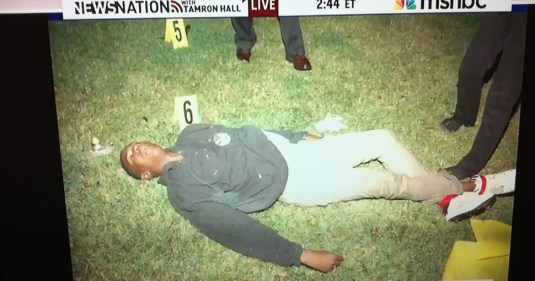


 with someone for an underlying motive or future advantage that they hope will accrue for their fawning behavior. People with integrity do what they believe is right whether or not any advantage will accrue from their efforts. People with integrity are consistent in their stated ideas and do not read the polls to see which way public opinion is blowing.
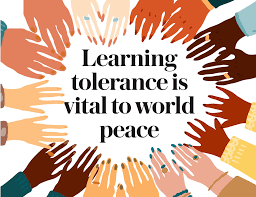 Tolerance is the willingness to respect and stand up for someone when you are in the majority and they are in the minority. Difficult it is to speak out against your peers and tribe. When someone has an idea that does not fit with the normal conception, the tolerant person will try to hear them out. Tolerant people respect those with seemingly strange and weird or wild ideas. The tolerant person does not say “That is crazy or that is a stupid idea.” A recent example I think that shows both tolerance and courage is the song by Tyler Childers – “


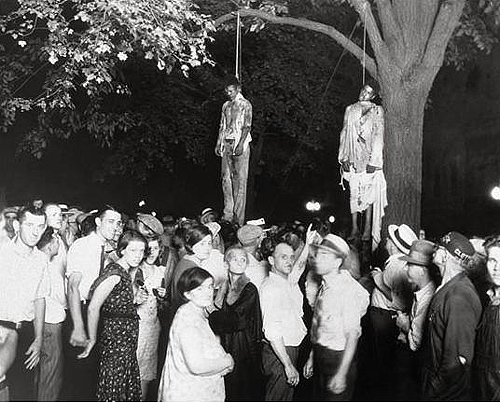 believed that German blood defined a German race which was superior to other races. This superiority led to the extermination camps wherein “inferiors” were eliminated. These inferiors included many people from other “races”, religions, ideologies, and with different physical characteristics. There was one tribe of Germans and not belonging to this tribe was a potential death sentence. Hitler set up a pseudo-scientific structure to discriminate between “True Germans” and other inferior “races.” There never was and never will be a scientific basis for a German race, but this did not stop millions of Germans subscribing to the Nazi ideology of Germanic superiority.
  If race does not exist but culture exists, what does this mean for group identity? How strong should group identify be? Should I sacrifice all for my group and fight to the death for my cultural identify? What if I believe that my culture is better than your culture? Could culture become just another banner to wave for those who want to commit acts of prejudice and discrimination on the basis of some perceived differences? I think this is a distinct possibility and has indeed occurred throughout history. How then can we have a cultural identify without resorting to racism and discrimination?

