This fantastic blog was written by Jane Fritz. This article is a compelling argument why we must believe in science and how science can lead to the truth while opinions and instinct do not.
It seems to be fashionable these days for people to pick and choose among scientific theories and advice, depending on whether they like the implications of that scientific advice. They may treat one scientific theory like the gospel and another theory like a hoax, to be ignored at all costs. It’s called the post-truth world: whatever we want to believe to be true is true and whatever is troublesome to be taken seriously is not true. How is this working out for you?!
As convenient as this is for personal and political decision making, presumably students are still taught and tested on established scientific principles. And while I can identify with not knowing the answer to every question on a science test, it never crossed my mind to just dismiss the question as wrong if I couldn’t get the answer. Maybe too difficult to understand without having done enough studying…
A number of years ago, I wrote an article about the famous “Golden Mean” of Greek philosophy. The mean was basically a rule that said the best way of living is to balance extremes. Another way of looking at what this rule implies is that evil or bad things happen when we over do something. We need to take all things in moderation. Thus, drugs, smoking, guns, watching TV etc., are not evil or bad in themselves but when we take them to extremes they became dangerous and counterproductive.
Life is an ongoing struggle to find our proper balance. However, it may never be a question of equal balance because the proper balance can never be static. There are many dimensions or polarities in life where it is not really a matter of moderation or balance but more a matter of dynamically imposing a temporary order between two extremes. The concept of Hegelian Dialectics comes to my mind as an aide in thinking about this process.
Dialectical thinking can be described as: “The ability to view issues from multiple perspectives and to arrive at the most economical and reasonable reconciliation of seemingly contradictory information and postures.” This is a much more complex process than simply balancing extremes. The more I thought about it the more I decided to add a corollary to the Greek Rule. Since I think time has easily proved the value of the Golden Mean, a corollary by definition is a proposition that follows from and is appended to one already proved. My corollary is as follows:
John’s Corollary:
Anytime, one concept in a set of opposing concepts is allowed to dominate the other concept, extreme dysfunction will result.
I want to discuss this more by using five pairs of concepts that I think are critical to our world today. I want to show you how the distortion created by proponents of each concept is dangerous to life as we know it. I do not use the word dangerous loosely or frivolously or for effect. The battle between these ideas is destroying life as we know it on this planet. The proponents of each side of these polarities seek to destroy the proponents on the other side.
Rather than looking at things from a systems perspective and trying to dynamically adjust the system, opponents are driven to allow one idea to dominate to the exclusion of the other idea. Witness the name calling between conservatives and liberals today. Each side demonizes the other side and assumes God is on their side and Satan is on the other side. Liberals are evil to conservatives and conservatives are evil to liberals.
Here are the five pairs of concepts we will look at in the next few weeks. This week we will look at number two on my list. We have already discussed the “efficiency versus effectiveness” dimension in part one of this blog series.
Efficiency versus Effectiveness
Growth versus Development
Society versus the Economy
Conservative versus Liberal
Rights of the Individual versus Rights of the Group
2. Growth versus Development:
I live in two counties in two different states. The states are about 2000 miles apart. In Arizona, I live in Pinal County. In Wisconsin, I live in Polk County. You would think that these two states could not be much different, but actually they are remarkably similar in many ways. Weather is not one of them. The one main way that they are similar is in the greed and stupidity that underlies attitudes towards growth and development. Both states have politicians and leaders that have no concern with balancing these concepts but instead fight to destroy the other side. I will give you an example that is now happening in both states and which I have been involved in. However, first we need to define and understand the difference between growth and development.
Most simply, growth can be defined as getting bigger. Development can be defined as getting better. Bigger and better may go hand in hand but they may not. A child can grow into an adult but if developmentally disabled will not get better in the sense of becoming a mature adult. The child can grow bigger but will never be and adult. Conversely, someone can fail to grow physically due to some systemic disease but can nevertheless develop mentally. My good friend Brian Rogers did not have much physical development but mentally he was a giant. He was not only brilliant intellectually, but he was kind and compassionate to everyone that he met. This in my mind is the ultimate development.
The noted scholar Dr. Russell Ackoff discussed these two concepts as they applied to a country. He described them as follows:
“Growth is an increase in size or number. Development is an increase in competence, the ability to satisfy ones needs and desires and those of others. Growth is a matter of earning; development is a matter of learning. Standard of living is an index of national growth; quality of life is an index of its development. Development is not a matter of how much one has but how much one can do with whatever one has. This is why Robinson Crusoe is a better model of development than J. Pierpont Morgan.”
“I hope we can help public policy and decision makers realize that development and growth are not the same thing. Neither presupposes the other. Rubbish heaps grow but do not develop. Einstein continued to develop long after he stopped growing. Some nations grow larger without developing. and others develop without growing.” —Transforming the Systems Movement, 2004
Dr. Ackoff died in 2009 and I would venture an opinion that he did not live to see his hopes come true. Too many politicians, real estate developers, business leaders and government officials still do not grasp the fundamental distinctions between growth and development. Even worse they ignore the balance that must happen between the two concepts that is essential to protecting our society, environment, and our very lives. Let me give you two examples from my life in Polk and Pinal counties.
Pinal County, Arizona:
When we bought a house in Arizona City in 2008 and decided to become snow birds upon retirement, we inquired into the issue of water in our area. Knowing that we were moving into a desert we were concerned about the availability of water. We were told not to worry. There was a water plan that would deliver all the water we needed for the next 50 years. This was pure BS. There may have been a water plan, albeit not anything that was useful, but there sure as heck was not enough water for another fifty years at the present rate of growth and given the increasingly warm summers and lack of rainfall.
It is widely accepted that the Southwest is hotter than ever and that drought conditions are widespread. Both Lake Powell and Lake Mead are near disaster levels in terms of water supply. Just a year or so ago, the Governor in Arizona sought to comply with a Federal order and mandated a commission to develop a DCP (Drought Contingency Plan). A group of 30 or so “leaders” selected by the Governor hastened to cobble together a plan in time to meet the Federal order. I attended one meeting with the Pinal County Economic Development Group to hear about the DCP. I was surprised and astounded to learn that there was nothing, nada, not a thing in the plan about water conservation. The majority of the plan was nothing more than a subsidy to local farmers to take less water from the CAP (Central Arizona Project) a pipeline bringing water from Lake Mead and subsidies to dig wells even deeper. Digging deeper despite the fact that aquifer water is down in many places to below 1000 feet.
I have since attended many meetings of the Pinal County Economic Development group. The group is mainly led by and composed of real estate developers and contractors. Despite their name, they care little about development and are only concerned with growth. Growth for more real estate in private homes. Growth for more business development. Growth for more industry and manufacturing. They have little interest in water conservation and are not concerned with helping the lives of Arizona citizens to get better. They are foremost and primarily driven by a greed that is fed by getting bigger and bigger. More and more houses, more and more businesses, more and more taxes to feed into the political coffers. More and more money paid to build homes and industries. These people would build homes on top of homes if they could convince people to buy them. The fact that Arizona is suffering from higher than ever temperatures and less water than ever before seems to matter little as the dollars signs apparently blind these so-called developers to reality. They should be called “growthers” and not developers since they contribute little or nothing to the development of Pinal County.
Polk County, Wisconsin:
About a year or so ago, we had just returned from Arizona to our home in Wisconsin. Upon returning, I learned a new word or acronym. It was CAFO. This stood for Concentrated Animal Feed Operation. I was totally ignorant about anything pertaining to this type of farming operation. I was soon to learn more than I wanted to know. A developer representing a large CAFO had come into our area to find a site for a Swine CAFO that would hold upwards of 50,000 hogs. He had come promising jobs and tax money and income for local farmers as they supplied some of the CAFO needs such as grain and other products used in the operation.
A few of our local community leaders immediately embraced this siting of a CAFO. Fortunately, many local citizens were aware of some of the potential negative impacts of a CAFO this large. Possible soil, water and air contamination were potential impacts that had occurred in other areas of the country where CAFOs had been established. Two sides soon emerged. One side is highly supportive of CAFOs. This side is mostly comprised of larger farmers in the county and many of our county supervisors. The other side is comprised of residents who live locally on lakes that are potential areas to be degraded by a CAFO and just plain citizens who do not see how the county will really benefit from a 50,000 swine CAFO. I fall into the latter group. I do not live on a lake. After learning of the many potential dangers posed by a CAFO to our environment, I am concerned that the CAFO ordinances are not strong enough to protect the county.
Many county board meetings have taken place in the last year. Signs are up all over the county opposing CAFOs. Signs say “Stop CAFOs” or “Support Family Farms Not Factory Farms.” There have been numerous protests outside county board meetings. At one we attended, over 175 people showed up to urge county supervisors to support a “moratorium” to study the land use ordinances in more depth and to support more research to make stronger ordinances. Not surprising many of the county supervisors support less effort to control CAFOs. They argue that state and local ordinances are strong enough already.
Pigs in a concentrated animal feeding operation (CAFO) barn
County boards always seem to have a lawyer on hand to instruct caution and who drives fear into every meeting with warnings about lawsuits that could be brought against the county board for government overreach. At the board meeting last week to extend the mortarium, it was voted down 8-7. A second resolution to pass a weak ordinance in lieu of further study was passed by a vote of 11-4. Even some on the board opposed to the CAFO voted for the resolution apparently cowed by the board lawyer or under the assumption that any ordinance was better than no ordinance.
Polk County leaders value growth at the expense of development. The fact that major negative impacts on our land and quality of life are highly probable matters little to those blinded by the economics of growth. More money, more revenue, more taxes, more business sales. All of these “mores” in terms of economic growth blind our leaders and many others to efforts to balance growth with development. It becomes a war between two opposing camps and not an effort to balance two extremes. The future is sacrificed to the greed of the present. A “my way or the highway approach” ensures that my corollary will hold true.
Anytime, one concept in a set of opposing concepts is allowed to dominate the opposing concept, extreme dysfunction will result.
With Global Warming, we have already set in place climate changes that are having profound negative impacts on the world. How many more times will we resort to extremes that serve only to create more devastation and destruction on the environment?
Thanks for reading. Please leave any comments or thoughts you might have on my blog site. Or email me atpersico.john@gmail.com
Yes, I know, the Democrats will take our guns away. They will let the starving hordes of immigrants ravage our country and steal our jobs. The Democrats will support the killing of unborn children. They will raise our taxes and prevent us from becoming rich like Trump. The Democrats will allow unions to take control of our businesses and destroy free enterprise.
Last week, my wife and I drove to Tomahawk Wisconsin to visit some friends. We drove via Hwy 8 and returned via Hwy 64. Just for fun, we decided to count political signs going and coming. Going we limited our sign counts to 1 sign per home passed. Most if not all Trump supporters have more than one sign in their yards. Some have flags and gigantic Trump signs. We even passed two guys on a street corner waving Trump signs. When we arrived at Tomahawk the score was Trump signs 41 and Biden signs 21. On the way back, we counted all signs regardless of how many were on one property. The score was 219 Trump signs to 25 Biden signs. Nearly a 10-1 advantage. Clearly a lot of people in rural Wisconsin like and maybe even love Trump. Non-Trumpers are confused, perplexed, and bewildered. What is there to like about Trump they ponder just as many people ponder the heavens and stars?
I have always been an independent. I vote the person, not the party. I sometimes call the Dems, the party of Wimps and the Republicans, the party of Greed. I think of both parties as the Democans and the Republicrats or Tweedle Dee and Tweedle Dum. What did the Democrats do for the rural white non-college working class older voter? Support for diversity, Gay marriage, NAFTA, Immigration, climate change and social welfare programs do not hit the mark with people in the hinterlands like Northern Wisconsin.
So along comes a Savior riding a Mercedes golf cart, living in a Florida mansion befit for a king and supporting a trophy wife, the envy of every male or at least straight male in America. He will bring jobs back, keep out the ravaging hordes of rapist immigrants, stick it to the Chinese, lower taxes, make everyone rich again, protect our unborn children, keep at least one gun in every house and perhaps most of all “drain the swamp.” The swamp as we know it is full of college educated brainwashed left-wing pedophiles and socialist bureaucrats. People who do not really work for a living but are blood suckers thriving on your tax money. None of your friends, relatives or neighbors live in the swamp.
So, given all the great things that Donald Trump will do, why will I vote for Biden and Harris? Simply because character matters. The ends can never justify the means. I have no illusions that Biden will drain the swamp or that he does not have his warts and blemishes. He is no hero to me, nor do I foolishly believe that he will make America great again. The only thing that will make America great or keep America great is when 100 percent of Americans get off their butts and get involved in the political process. In the last presidential election, only about 61 percent of Americans took the time and effort to pull themselves away from their TV screens and vote. We need to make changes in government, but it will only happen when we take the political process out of the hands of the lobbyists and career politicians.
So why will I vote for Biden and Harris? Because character does matter. Morality matters. Compassion matters. Concern for people more than money matters. Appealing to my humanity and not my fears or greed matters. I loath bureaucracies. I too want a safe place to live. I want to see jobs for people that want jobs and I don’t want to see freeloaders given a handout. But I also believe that Jesus said to feed the hungry and help the poor: “If anyone has material possessions and sees a brother or sister in need but has no pity on them, how can the love of God be in that person?” 1 John 3:17. I do not think this means only your neighbors or your friends or relatives. I think it means strangers, foreigners and people who may not be the same color or religion as we are. I do not think Jesus wanted us to discriminate between Black people, Red people, Brown people or any other people on the face of the earth.
So why will I vote for Biden and Harris. I think we made a big mistake four years ago. The swamp is even bigger now than it was then. The greed in Washington is ever worse. The political infighting ensures that nothing gets done. The lawyers seem to control everything, and corporations have grown richer on the backs of the working people that live in both rural and urban areas. These fat cat corporations have no loyalty to America but are “International” in scope. “America First” sounds great to many of us but it is a selfish policy that appeals to our sense of fear and greed. We need a leader with a vision that embraces humanity and does not demonize people or pit one group against another no matter where they live. We need a leader that respects all people and not just his base of supporters and the sycophants that in my day were called brownnosers for good reason.
I have been as disappointed by the Democrats as many of you have over the years. However, I will vote for Biden and Harris because I get a sense of character and integrity from both of these two candidates. They are not heroes. People get the government they deserve. If you want heroes or heroines, watch the Avengers, or read Marvel comic books. But character, morality, compassion, and humanity are the only things that have ever made America great. Vote for who you believe has the right stuff but vote my friend.
I am sick, sick, sick of being asked to donate money to people running for office. From Alaska to Hawaii to Maine, every day some incumbent or would-be incumbent is sending me a request for money. The requests come in various disguises. From surveys, to matching funds, to desperate pleas for a last-minute donation. I get requests on email, by phone, in regular mail and often text messages. I just completed a “survey” and the last question was a hook. “Are you willing to support the causes that you say you believe in?” If so, I am supposed to send a small $3 dollar donation off someplace. I am sick and tired of these click bait requests for money. I get even sicker when I think I have about 50 days more days to put up with these incessant requests for money, more money and ever more money.
John,
I wish I were emailing with a better update but unfortunately, we missed our goal Saturday night.
We needed to raise $75,000 to fight back against the more than $60 million Mitch McConnell and his allies plan to spend to beat us. But even with the support from this team, we still fell short.
There is an irony here as well. The Democrats which I am supporting for this election all agree that we need campaign finance reform. We must get money out of the political process. Too much money is spent on lobbying, advertising, promoting candidates, media, and media consultants. And what is the secret to getting money out of politics. Very Simple My Friend: “Just send me $10 dollars today so I can defeat my greedy opponent.”
A few months ago, my wife and I both received Covid Stimulus checks for $1200 each. When we received these checks, we had been self-quarantining to avoid contagion with anyone who might be harboring the virus. As a result of the virus, we had no place to go. Our auto gas bill was near zero. Our entertainment expenses were zero. Our eating out expenses were zero. We are both semi-retired and I lost some income since I had been doing substitute teaching work which was terminated when the schools all closed. My wife continued her part-time work as a medical coder working from home and her income did not decline. All in all though, we were in a better financial place than we had been in years.
Mark’s 72-hour fundraising deadline ends tomorrow, and I know he could use some help to close the gap, which is why I have to ask:
If you are able, will you make a $50 donation to Mark’s people-powered campaign? He can’t afford to fall short of this goal, not when Mitch McConnell and the NRA are spending millions on ads to defeat him.
When the checks came, we realized that many other people were hurting. Many people needed the money more than we did. We decided to donate the first check of $1200 dollars to six charities at $200 each charity. We sent the money to a variety of charities that we thought worthwhile. Subsequently, we sent another $400 dollars from the second stimulus check to a few other charities. We felt good that we could help others. During this time period, we also received many requests from politicians. We decided that we would not send any money to any politicians until after the primaries were over.
John, with our FEC end-of-quarter deadline approaching, we need to raise $41,000 more by September 30 to show that we can win this election.
It’s going to take a lot, but I know we can do it together. Can you contribute today to help us reach this goal and flip this seat blue?
Several months have gone by. Hundreds of requests for money to support this candidate or that candidate have been received. No exaggeration here either. I get between five and ten requests every day to send money to some would-be politician. Nevertheless, both my wife and I agreed that we would send at least ½ of any further stimulus money received to politicians that we supported. As time has gone by, we realized that: 1). Probably, no further stimulus money would be coming and 2). We needed to send money to candidates that we supported now before it was too late. Any money sent later would come to late to be of any use.
But look, John, this will still be an uphill battle against Lindsey and his massive fundraising war chest.
We need to raise another $40,599 by midnight tomorrow or we won’t be able to compete.
We decided to take six hundred dollars out of our savings and allocate it among the various candidates. Using an approach developed in baseball and called the “Money Ball” approach, we selected candidates based on the following priorities:
Defeating Trump for the Presidency
Flipping the U.S. Senate
Supporting three local candidates that we knew
Our money went as follows:
$200 to Biden
$250 dollars to U.S. Senate candidates (5 candidates at $50 dollars each)
$150 dollars to local candidates (3 candidates at $50 dollars each)
We sent the money directly to each candidate via their website donation buttons. Every candidate now has a prominent place to send money to them via their websites. We decided that if we received any more stimulus money, we would make a second round of donations. If not, this was all the money we were sending. Further pleas, requests, entreaties, appeals, supplications, and petitions for more money would be ignored. Balancing out our concern for a “Better USA” was our concern for many charities which we would like to support but could not since our extra money was now going to the political arena. An arena I might mention that is worse than a bottom less pit. Did you ever wonder where all the campaign money that you give to your candidate goes? Here is one break-down that I found on Wikipedia:
Grassroots fundraising
Opposition research
Consultation
Advertising
Canvassing
Retail politics
Election promises
Get out the vote efforts
Lawn signs
Attack ads
Push polls
Candidate needs
Campaign manager
Campaign staff
Political portals and websites
I have four political lawn signs that I either bought or gave a donation for. One of my signs is a Biden sign. It was stolen about a week ago. I went on line and purchased two more Biden signs. The first one lasted about two weeks. I figure that two more should get me through the election. After the election, they will either be a souvenir or junk depending on which way the voting goes.
Dear John
In a country devoid of national leadership on this public health crisis known as the COVID-19 pandemic, and devoid of a national health system like Medicare for All that would put the interests of the public over those of greedy commercial profiteers… Progressive Democrats of America (PDA) knows we can do better. Please support our efforts with a donation of $20, $10, or $5.
After we sent our money. We received one Thank You letter from the Wisconsin Democratic party but not a single acknowledgement from any single candidate on either a national or local level. What we did receive was at least 5 more requests for money from each of the national candidates. The Biden campaign alone has sent us more than a dozen requests since they received our $200 dollar donation. No Thank You message.
John, the first ballots are being cast right now in North Carolina, so I’m emailing you today to ask you to roll up your sleeves and join Joe and me in the fight for what he so rightly calls “the soul of our nation.” Will you split a $10 donation between our Biden-Harris ticket and Democrats nationwide to give our campaigns the important resources necessary to move the needle?
My wife Karen and I were talking about the aggravation we are both experiencing with all of these daily requests for money. I said I would like to start a “No Money Party”. She remembered an Andrew Greeley book she read. It had a candidate running for office who swore that he would never ask or request money for his campaign. People were so enamored of the idea that he received a great deal of unrequested money. I want to start a No Money Party. No candidates running under my party banner would ever request a single penny from anyone. We might request help in turns of time or volunteering, but we would never request a single penny. Of course, you are saying “How naive. Your candidates would never get elected.” You might be 100% percent right. However, that is not the point.
The point is that all of these people running for office are clueless. They all think or at least act like every USA citizen has a printing press in their basement. They are the most important people in the world. Their getting elected will cure the Covid-19 Pandemic. Their getting elected will end Global Warming. Their getting elected will create an economy like the world has never seen before. Promises, promises, promises and all you have to do to make these promises come true is to send MORE money.
Well friends, Romans, and other countrymen. I am making a promise today. NO MAS. No more money. I am not sending another penny, shilling, drachma, farthing or even an IOU to anyone running for office for the remainder of the 2020 year. If something happens and I am granted another Corona virus stimulus check before the election, my stimulus money will go to help someone get an education or get needed health care. I can’t think of any politician really worth sending another centavo to. Most of them have more money than I will ever see anyway. I am sure they all eat for free someplace on Capital Hill and laugh at the suckers who keep sending them money to get reelected.
If you agree with me, please don’t sent me any money. I will only waste it on buying another bottle of Tequila so that I can forget this election and drown my political sorrows.
A number of years ago, I wrote an article about the famous “Golden Mean” of Greek philosophy. The mean was basically a rule that said the best way of living is to balance extremes. Another way of looking at what this rule implies is that evil or bad things happen when we over do something. We need to take all things in moderation. Thus, drugs, smoking, guns, watching TV etc., are not evil or bad in themselves but when we take them to extremes they became dangerous and counterproductive.
I sincerely and whole-heartedly believe in this rule. However, recently I was thinking about it from another perspective. I was reflecting on the problems of government today and the extreme polarization that now exists in American politics. The more I thought about it, the more I realized that the Greek rule was not quite strong enough. It needs something more. Perhaps, an extension or a corollary to make the rule stronger. There are too many instances, where the rule taken at face value does not do enough justice for the circumstances.
For instance, when I was teaching business I always told my students that organizations needed to balance efficiency with effectiveness. Efficiency is doing things right, while effectiveness is doing the right things. Organizations do not need to balance these two concepts as you would a seesaw, but they need to be constantly aware of the tension and perhaps conflict that can exist between the two. It is an ongoing struggle but never a question of equal balance because the proper balance will never be static. There are many other polarities in life where it is not really a matter of moderation or balance but actually more a matter of dynamically blending and using synergy to impose a sort of order between the two extremes. The concept of Hegelian Dialectics comes to my mind.
Dialectical thinking can be described as: “The ability to view issues from multiple perspectives and to arrive at the most economical and reasonable reconciliation of seemingly contradictory information and postures.” This is a much more complex process than simply balancing extremes. The more I thought about it the more I decided to add a corollary to the Greek Rule. Since I think time has easily proved the value of the Golden Mean, a corollary by definition is a proposition that follows from and is appended to one already proved. My corollary is as follows:
John’s Corollary:
Anytime, one concept in a set of opposing concepts is allowed to dominate the opposing concept, extreme dysfunction will result
I want to discuss this more by using five pairs of concepts that I think are critical to our world today. I want to show you how the distortion created by proponents of each concept are dangerous to life as we know it. I do not use the word dangerous loosely or frivolously or for effect. The battle between these ideas is destroying life as we know it on this planet. The proponents of each side of these polarities seek to destroy the proponents on the other side. Rather than looking at things from a systems perspective and trying to dynamically adjust the system, opponents are bent on allowing one idea to dominate to the exclusion of the other idea. Witness the name calling between conservatives and liberals today. Each side demonizes the other side and assumes God is on their side and Satan is on the other side. Here are the five pairs of concepts we will look at in the next few weeks. We will start by looking at number one in my list and following the order given.
Efficiency versus Effectiveness
Growth versus Development
Society versus the Economy
Conservative versus Liberal
Rights of the Individual versus Rights of the Group
Efficiency versus Effectiveness:
I noted that I used to teach these concepts to my business students to emphasize the role and responsibilities of a corporation or business. Taken from a macro perspective, these two ideas might seem unimportant. However, when you realize that our entire government and system of capitalism runs on both of these concepts, their importance cannot be understated.
Business seems to sheer towards efficiency with less concern for doing the right things. If they were more concerned with doing the right things, there would be less of what economists’ call “externalities.” An externality is a side effect or consequence of an industrial or commercial activity that affects other parties without this being reflected in the cost of the goods or services involved. Externalities can be either positive or negative in terms of their consequences for society. Negative externalities include such issues as: water pollution, air pollution, soil contamination, fumes, dangerous side effects from drugs and many others. Businesses will invariably try to ignore the costs of these side effects and thus they get passed on to the society. It is society and environment that suffers from the effects since the consumer or customer generally benefits from the lower costs of production guaranteed by the business passing the costs of the negative externalities on to the world.
The opposite extreme is seen in government and this is the extreme reflected in how the government tends to manage its costs. The government focuses on effectiveness. That is trying to do the right things. This is actually why we have a government. The government exists to ensure that things needed by society are provided without regard to costs. The “without regard to costs” becomes a problem because too often government agencies seem to provide services with little or no emphasis on cost management. Senator William Proxmire was well known for his “Golden Fleece” award in which a government agency would be bestowed an award for its gross mismanagement of costs. Over the past decades, conservatives have increasingly tried to take the management of many government functions away from various government agencies due to their gross negligence and ineptness when it comes to management of budgets and costs. Unfortunately, when put into the hands of a business that is singularly bent on efficiency the quality of the service in terms of its effectiveness may suffer. One example of this is with our education system.
Conservatives and Republicans and even some Democrats have decided that public education is inefficient, and that business can do a better job of providing education to American students. A business exists on a profit and loss model. However, the idea of providing a quality education to all Americans on such a basis is flawed. Schools that are democratic institutions cannot cherry pick their students. In a typical public school, you have a bell-shaped curve of students in terms of both aptitude and attitude. A private school or charter school will select students with higher aptitudes and attitudes. This of course, begs the question of how and where the students with lower aptitudes and attitudes will get educated?
The education of Americans youth becomes an either-or proposition with losers and winners. No other solutions are looked at as groups coalesce around extremes. Either we have public education, or we have for-profit education. There are other solutions, but they involve a radical restructuring of our entire educational system which neither side wants to contemplate. I do not see public education as the answer to education nor do I see private and for-profit charter schools as the answer. See my blog on the subject titled: “Creating a Twenty First Century Education System.”
I could point to dozens of examples of the stupidity of businesses that focus more on costs than effectiveness. In my twenty some odd years as a management consultant, I worked with many businesses to help create a synergy between efficiency and effectiveness. The Deming Philosophy exhorted organizations to use systemic thinking to create this synergy. Much of my focus in consulting was with helping organizations do the right thing and to do things right.
Conversely, when I was working with a government organization, I would help the organization learn to do things more efficiently. I was often so frustrated with the inefficiency and economic stupidity of some government agencies that I thought they should simply be abolished. When Governor Perry was asked which government agencies he would eliminate, he could not name three. I could immediately think of six that I would abolish.
I am no friend of inefficiency. Inefficiency is a crime upon humanity. It robs people of valuable time and resources and money. It makes life more difficult by waste and rework and a callous disregard for the abilities of employees. I am also no friend of ineffectiveness. What good are products and services if they cannot do what they were designed to do or if in providing their intended functions, the unintended side effects are a disaster for our society or environment. Corporations need to provide a quality product that is wanted or needed by a customer “but not just at a price they can afford” but at a price that allows the negative externalities to either be avoided or addressed. In other words, costs of pollution and environmental degradation must be paid for by the organization and its customers.
I think you should now understand from much of my conversation above, the inherent dangers of not addressing both efficiency and effectiveness in the operations of any business or organization. As I have argued, ignoring either concept or taking either one to an extreme will create a dangerous situation that will become dysfunctional to life.
My next blog will look at the battle in our world between growth and development. This is a battle that is destroying our environment and lives throughout the world. The following has been noted by the Center for Climate and Energy Solutions:
Communities, builders, homeowners, and forest managers can reduce the likelihood and impacts of wildfires by:
Discouraging developments (especially residential) near fire-prone forests through smart zoning rules.
Increasing the space between structures and nearby trees and brush and clearing space between neighboring houses.
Thanks for reading. Please leave any comments or thoughts you might have on my blog site. Or email me at persico.john@gmail.com
Pontificating and writing books and articles about what I will call the Trump phenomenon has become (forgive my use of this cliché), a Cottage Industry. I have three books on my shelf right now in which an author has gone on a quest (to a remote area of America) to find the reason why so much of rural and middle America embraced Trump. The ostensible goal of these quests is to understand why anyone would vote for a racist, sexist, homophobic, xenophobic bigoted egomaniac. Fully twenty-eight percent of American voters selected Trump as well as more than 75 percent of the Republican Party. Most of those on the left, regard it as the proverbial enigma wrapped in a riddle.
Many of these quests endeavor to be “objective” exercises to find out why Americans voted for and in many cases “love” Trump. Not surprisingly, these authors tend to be on the left of the political spectrum. I suppose to be objective and qualify as research, each author must show sympathy for the “deplorables” that elected Trump by trying to listen, empathize and gently understand the forces that were at work in their embracing Trump. In one case, the author assumes that if you can party with the other side, you will better understand their perspective.
A few of these books have sold quite well, even if they do very little to shed any real light on the Trump phenomenon. They all seem to be researched (research to these authors means meeting with rural folks over tea or coffee and talking to them without insulting their intelligence) by a well-meaning liberal. Usually, the author is an academic who thinks that talking to anyone who would vote for Trump can solve the puzzle and perhaps make America great again. Reading these books, you will be no doubt be embellished with many narratives that involve a poignant description of a “typical” rural American to show how the other side really lives and how sad some of their lives are.
I find the solution to the enigma much less puzzling and much less difficult to solve. I did not need to go on a quest to find the solution. The solution simply involves “looking at rural America.” Rural America is dying, dying, dying. Churches are dying. Restaurants are dying. Retail stores are dying. Industries are dying. Banks are dying. Resorts are dying. Jobs are dying. Small farms are dying. Rural America is dying, and no one seems to notice. Even the people living there do not really notice. It is a case of the fish being the last ones to see the water. But on many levels, the angst exacts a toll on the citizens of these areas. Alcoholism, drug addictions and guns are all means of coping in rural communities.
People who live in many of many of these rural depressed areas have been told to “get retrained.” “Find employment in the new emerging industries.” “Join the information age.” “Learn computer programming.” “Go back to school.” “Go where the jobs are.”
In 1979, I was hired as a DVOP (Disabled Veterans Outreach Person) by the State of Minnesota. I worked as a job counselor with the DES (Department of Economic Security.) At about this time in Minnesota, the iron range was shutting down, many foundries in St. Paul were closing and the stock yards were closing. For years, these industries had provided relatively decent pay and benefits for people more amenable to working with their backs than with their intellects. As an employment counselor with a Masters in Employment Counseling from the University of Wisconsin Stout, my job was to help them regain financially viable employment. Here is what this meant.
I had to take a man (most often a man) with twenty or so years working in one industry, a bad back, little or no education beyond high school, responsible for supporting a wife and two or more children and find him or her a job paying twenty or so dollars per hour with benefits. There were no funds provided by DES for this man to go to school and even if there were, what kind of school could he go to? Over the years, both Wisconsin and Minnesota had shut down many vocational training schools to emphasize college over vocational education. Unions seldom provided apprenticeships and even if they did, most would go to younger workers with less physical problems.
Globalization was hailed as a great concept and as a business person, I would argue it was good for many Americans and much of the world. But for the man or woman who worked in American industries that were either outsourced, replaced by foreign labor or moved overseas, it was not so good.
I continued working as an employment counselor for the DILHR (Department of Industry, Labor and Human Relations) in Wisconsin. I had taken a Wisconsin State test and found work closer to my home in River Falls, Wisconsin. I became a Manpower Counselor II in charge of an office in Hudson and Ellsworth Wisconsin. I ran the WIN Program (Work Incentive), IHRAP Program (Indochinese Refugee Assistance Program), LEAP Program (Labor Education Advancement Program) and several programs for veterans and minorities.
We had minimal funds for people that could qualify for education and we had maintenance funds for eligible job seekers to help support them while they looked for gainful employment. With respect to education, there was no way anyone could go to school and support a family while they were in school on the available funds. For job seekers, the maintenance funds could help while they looked for employment but, in many cases, they had little chance of finding employment without further education. Regulations prohibited many of these “eligible” job seekers from going to school while they received AFDC (Aid to Families with Dependent Children), Welfare benefits or unemployment benefits.
Bottom line, both the Democrats and Republicans threw many of the people who lost their jobs because of Globalization under the bus or over the cliff. “Go get retrained they were told.”
The research that purports to explain the Trump phenomenon almost never goes beyond the “Right Wing” narratives for Trumps election. These narratives all point to abortion, guns, taxes, small government, immigration and jobs as the key factors in Trumps victory. Trump blames the Democrats for everything wrong in rural America and the Republicans have provided a compelling set of schemes that have convinced many in rural America that a partial solution to their problems lies in more capitalism.
Greed is good is a mantra among Republicans and they have managed to sell desperate people needing desperate measures with faith in the “Trickle Down Theory.” For those who might question this theory, the fallback narrative is to blame immigrants, Latinos, Blacks and Muslims with usurping the American Dream. Trump and the Republicans have sold the rest of the solution as “Make America White Again.”
Is it any wonder that people are sick of government and politicians? The vision and mission of most government agencies hardly ever comes close to matching the reality of the policies, laws and regulations that spew forth from these lawyer led entities. You would be forgiven for not realizing that the citizens of the United States of America are the customers of government rather than the other way around. Trump is a phenomenon of distrust, disgust and despair. Trump promised solutions to these problems while the rest of the government slept and slept and slept.
“I’ve always resented the smug statements of politicians, media commentators, corporate executives who talked of how, in America, if you worked hard you would become rich. The meaning of that was if you were poor it was because you hadn’t worked hard enough. I knew this was a lie, about my father and millions of others, men and women who worked harder than anyone, harder than financiers and politicians, harder than anybody if you accept that when you work at an unpleasant job that makes it very hard work indeed.” ― Howard Zinn, You Can’t Be Neutral on a Moving Train: A Personal History of Our Times
I find it ironic that there are Seven Deadly Sins or vices but they do not include the “Sin of Machismo.” I would venture to argue that there are more people killed in the world every day because of Machismo than any other cause or problem that you could name. To not include Machismo in any list of major crimes or sins or vices, is one of the most egregious oversights in history. Is it because Machismo is a uniquely masculine concept that it has never acquired the degree of condemnation that it merits? Or is it an example of the “Fish being the last one to see the water.” Some would argue that it is more likely a blatant example of sexism.
Men extol Machismo, reward Machismo, give medals for Machismo, High Five Machismo, glorify Machismo, drink toasts to Machismo, pat each other on the back for Machismo, die for Machismo and happily kill each other for Machismo. A Macho man never cries, never shows pain, never is soft, never loses, never surrenders, never shows fear, never gives quarter, never is remorseful and never ever changes a diaper. You are not a “Real” man if you don’t have Machismo. Machismo is the foundation for masculinity in every culture in the world.
Ma·chis·mo
[mah-cheez-moh, –chiz-, muh-]
1. a strong or exaggerated sense of manliness; an assumptive attitude that virility, courage, strength, and entitlement to dominate are attributes or concomitants of masculinity.
2. a strong or exaggerated sense of power or the right to dominate: The military campaign was an exercise in national machismo.
There are two opposite concepts to Machismo. You may ask how you can have two opposites. Well here is a case in which two opposites of a concept exist. The first opposite to Machismo is “femininity.” Femininity is soft, warm, supportive, nurturing, accepting, forgiving and the first to change the diapers. Femininity represents everything that Machismo is not. No one ever killed another or beat another to death because their “Femininity” was questioned. We don’t go to war because our “Femininity” was questioned nor do we invade another country to protect our “Femininity.”
“Machismo makes no provision for preparing lunch, doing the laundry, or minding the baby.” — Mason Cooley
The second opposite of Machismo is Gayness. Gay is not tough. Gay is “queer.” A “Real” man is not Gay. Gay men must be feminine since they cannot be Machismo. Gay men don’t play football or baseball or soccer or box or join the military since only “Real” Men do these things. If you are Gay, you can be a hair dresser or actor or flight attendant but you cannot be a police officer, firemen or truck driver since these “Real” men professions require one to be Machismo. Gays and Machismo are antithetical.
“The tragedy of machismo is that a man is never quite man enough.” — Germaine Greer
The number of women that are abused each year by men was the recent focus of a World Health Organization Multi-country Study on Women’s Health and Domestic Violence against Women (2013). Among the findings were the follows:
One in 3 women worldwide is a victim of physical or sexual violence, resulting in a global health epidemic, according to a new World Health Organization (WHO) report.
Most of these females are attacked or abused by their boyfriends or husbands. “This is an everyday reality for many, many women,” Charlotte Watts, author of the report and a health policy expert at the London School of Hygiene & Tropical Medicine, said to Reuters.
Nearly 38% of all women murder victims were killed by intimate partners, according to the report, which was co-authored by Watts and Claudia Garcia-Moreno of the WHO.
Forty-two percent of females who have experienced physical or sexual violence by a partner suffer injuries, the authors explained.
Common health issues they noted in the study include:
What are the reasons that men kill and abuse women? Experts identify different reasons for domestic abuse than for murder but the bottom line for both comes down to control and power.
“Most experts say there is no one profile of men who batter or beat women. Domestic violence crosses all social and economic boundaries. According to Dr. Susan Hanks, Director of the Family and Violence Institute in Alameda, California, men batter because of internal psychological struggles. Usually, men who batter are seeking a sense of power and control over their partners or their own lives, or because they are tremendously dependent on the woman and are threatened by any moves on her part toward independence.”
Some reasons given for the abuse by those who study domestic violence include: jealousy, envy, inferiority, anger, revenge, alcoholism, and simple sadism. Seldom do you see the issue of Machismo on any of these lists. However, while there may be different factors precipitating the abuse and violence, without the underlying foundation of Machismo, you would not have the resulting abuse. Machismo is the “entitlement to dominate.” If you remove the “entitlement” you remove the abuse and violence. For instance, if I find my wife going out with another man and I become jealous; it is my “Right to dominate” that gives me the privilege to attack her or the other man. If I do not believe in a “Right to dominate,” I can divorce my spouse, request counseling, ignore her unfaithfulness, but I will not abuse her.
Think of all the instances that you read in the paper of stalking, abuse and murder. In every one of these cases, there is the assumption that is seldom mentioned by psychologists that Machismo gives men the “right to power.” In fact, not to act on this right is to acquiesce ones maleness. It is to give up the Machismo that is culturally at the heart of our masculinity. The strength of this concept of masculinity varies across cultures but few cultures in the world lack the concept of Machismo though it may be called something else:
Code of Chivalry
Knights Honor
Warriors Code
Samoa‘s Toa class, which used a warrior code known as fa’aaloalo (Respect) that is still in existence today;
Arab-Persian ethical code of Furusiyya during the Middle ages
There is an underlying Machismo in all of these codes that is designed to instill a behavior in a culture which exhorts men to stand up for themselves and their beliefs. By itself, this would not be bad. Men must defend their families and countries when necessary. However, when it comes to defending the more ambiguous elements of honor, reputation, face, dignity, respect and self-esteem, the resort to arms and violence becomes counterproductive. Solomon Schimmel in “The Seven Deadly Sins” notes that the Sin of Pride led President George Bush to want to humiliate Saddam Hussein while Hussein claimed to be fighting for “Arab dignity.” How many wars have been fought for national pride or national honor?
One could make the argument that most if not all wars were not over territory, religion or economics but over national pride. The Greeks went to war with the Trojans not over Helen but because their masculine pride had been insulted. Hitler started WWII to avenge Germany’s defeat and loss of face in WWI. The USA went to war in Vietnam to show the communists that capitalism was more powerful. Pride is the greatest of all sins identified by religious leaders and philosophers. However, it is not pride but Machismo which is the trigger to violence and war. Pride may be the apparent foundation, but Pride by itself does not cause war or violence. Indeed, a healthy pride mixed with a certain degree of humility is a goal to be pursued by both individuals and nations.
The danger is that Pride mixed with Machismo creates a volatile concoction which is the source of most violence in the world. Take any of the Seven Deadly sins: Pride, Envy, Anger, Lust, Gluttony, Greed, and Sloth, mix these with a sense of Machismo and you have the recipe for violence. Machismo confers the right to act on our impulses and to compel others or dominate others that create our internal conflicts. Without Machismo, we would have to find other means to dispel the psychological problems that arise in each of us. Machismo allows us to circumvent any introspection by demanding that our honor be revenged or that our pride be restored. Machismo demands the duel and the Code Duello specifies the rules for killing.
“The two men stared at each other. Assumptions were made, judgments rendered, dicks measured.” — Jennifer Estep
Time for Questions:
Can women be Machismo? What would you be like if you had less Machismo in your character? Can someone have too little Machismo? What evil do you see in the world that you would contribute to Machismo? What positive effects of Machismo do you see? How can we minimize the negative effects of Machismo?
Lucy Parsons had three strikes against her. Who will remember a woman who fought for the rights of women to vote and to be equal to men in 1900? Who will remember an African American who fought against White Supremacy and lynchings of Blacks in 1900? Who will remember an Anarchist who fought for the rights of workers against the giant corporations in 1900? Now tell me how many people will remember and even admire a Black woman Anarchist who dedicated her life to fighting all three battles?
Today, you would have to look carefully to find her name in any history book. She is often little more than a footnote despite being one of the bravest Americans who ever lived. I know of no statues for Lucy. I know of no stamps ever issued with Lucy’s picture on them. I know of no coins that were ever struck with a facsimile of Lucy. You can find several books written on the life of Lucy Parsons which prove her courage and determination in the face of more adversity than most people will ever know, but you will find no streets or buildings named after her either.
Context:
Lucy Eldine Gonzalez Parsons (born Lucia Carter, 1851 – March 7, 1942) was born in Virginia. Her mother was an African American slave. Her father may have been her mother’s slave owner. Of the three strikes against Lucy in 1900, by far the most egregious was her advocacy of Anarchism. Bad enough being a former slave in Texas. Bad enough being a woman who does not know her place in society. But when you add to this mix, the fact that she was an avowed, dedicated, and passionate Anarchist, you now have a recipe for a hate that to this day has not subsided in the country.
There is still racism in America, yes. There is still sexism in America, yes. However, these are becoming increasingly unacceptable in America. The #MeToo Movement and the Black Lives Matter Movement have emerged as new armies to lead a rising tide of protests directed against these two evils. But where is the movement against giant corporations that relegates workers to second class citizens? Corporations where senior managers make 400 times what the average worker makes. Corporations where unions are denigrated and ever so much care is made to prevent workers from forming or joining a union. Corporations that on a whim will close a factory and take their plants to another country. Corporations that pay less taxes than a worker in those corporations.
“Never be deceived that the rich will allow you to vote away their wealth.” ― Lucy Parsons: Freedom, Equality & Solidarity – Writings & Speeches, 1878-1937
Lucy was a feminist and a woman who fought against white supremacy and corporate greed in a time when either position would make her an outcast. However, nothing in 1900 or in 2020 America could be a worse stigma than to be labeled as an Anarchist. Americans have been brainwashed to hate Socialists, Communists and Anarchists. Among the three, Anarchists are easily the most reviled, hated and despised in this country. When the average person thinks of an Anarchist, they conjure up a picture of a wild unkempt unshaven dirty man in a large overcoat. The man has hidden a bomb somewhere in the middle of a capitalist icon like the NY Stock Exchange or the WorldTrade Center and he has timed it to explode in the middle of a busy business day. His purpose is to kill as many capitalists as he can.
“Strike not for a few cents more an hour, because the price of living will be raised faster still, but strike for all you earn, be content with nothing less.” — Lucy Parsons
Do you know what Anarchists want? Do you know what Anarchists Believe? Wikipedia gives the following summary for the theory of Anarchism:
“Anarchism is a political philosophy and movement that rejects all involuntary, coercive forms of hierarchy. It calls for the abolition of the state which it holds to be undesirable, unnecessary, and harmful. It is usually described alongside libertarian Marxism as the libertarian wing (libertarian socialism) of the socialist movement and as having a historical association with anti-capitalism and socialism.” — Wikipedia
I will not deny that there have been examples of extremism among Anarchists. There have certainly been bombings and attacks against symbols of capitalism. Lucy herself at one time said:
“Let every dirty, lousy tramp arm himself with a revolver or a knife and lay in wait on the steps of the palaces of the rich and stab or shoot the owners as they come out. Let us kill them without mercy, and let it be a war of extermination.” — Lucy Parsons
But when you measure the violence perpetrated by the rich against the poor in this country, the scales would surely tip against the “dirty lousy tramps.” Measure the instances of violence by Anarchists versus the instances of violence by Corporations trying to prevent workers from organizing. Measure the instances of violence by Corporations against workers speaking out against racism and sexism in those same companies. Measure the number of times, Corporation leaders have gone to jail for white collar crimes versus the number of people who have gone to jail for trying to rob a bank. Without listing each of these, I can assure you the scales tip well in the favor of large Corporations against the average citizen. Is it any wonder, that activists sometimes lose their cool and resort to violence when violence is continually directed against them?
In 1886, Lucy’s husband, who had been heavily involved in campaigning for the eight-hour workday, was arrested, tried, and sentenced to death. He was hung on November 11, 1887, by the state of Illinois. He was found guilty of conspiracy in the Haymarket Affair, sometimes called the Haymarket Riot.
“It began as a peaceful rally in support of workers striking for an eight-hour work day, the day after police killed one and injured several workers. An unknown person threw a dynamite bomb at the police as they acted to disperse the meeting, and the bomb blast and ensuing gunfire resulted in the deaths of seven police officers and at least four civilians; dozens of others were wounded.” — Wikipedia
Mark the words above. It began as a peaceful really EVEN after the day before police had killed one and injured several other workers. These words should resonate today as not unusual behavior on the part of police everywhere in this country. Even today, we see peaceful protesters dispersed by police using violent tactics which are uncalled for. The police are called to “protect and serve” but many Americans today want to know who it is they protect and who it is that they serve. It certainly does not seem that they serve the poor or even the middle class. With few exceptions, it would seem that they exist to “protect and serve” the assets of the rich and wealthy.
I am an Anarchist Speech:
This particular speech was given by Lucy to help raise funds for her husband’s defense. Albert R. Parsons was a white Republican who had once served as a Confederate soldier but was now an organizer and labor leader.
“I am an anarchist. I suppose you came here, the most of you, to see what I a real, live anarchist looked like. I suppose some of you expected to see me with a bomb in one hand and a flaming torch in the other but are disappointed in seeing neither. If such has been your ideas regarding an anarchist, you deserved to be disappointed. Anarchists are peaceable, law abiding people.”
Lucy went directly to the issue. Haymarket had created an image of radical bomb throwing fanatics bent on destroying democracy. She started her speech by attacking this image and challenging assumptions regarding what an Anarchist was. She noted they were peaceful law-abiding citizens. Not an easy concept to accept when you understand that every force in a capitalistic society is aimed at protecting the greed and avarice that the government allows to reign in the marketplace.
“Do you wonder why there are Anarchists in this country, in this great land of liberty, as you love to call it? Go to New York. Go through the byways and alleys of that great city. Count the myriads starving; count the multiplied thousands who are homeless; number those who work harder than slaves and live on less and have fewer comforts than the meanest slaves. You will be dumbfounded by your discoveries, you who have paid no attention to these poor, save as objects of charity and commiseration.”
Lucy succinctly but powerfully lays out the reason that she and so many others are Anarchists. Look at the poverty that exists in our country today.
In 2018, the highest earning 20% of families made more than half of all U.S. Income
The U.S. has the highest level of income inequality among the G7 countries
The income gap between Blacks and Whites has not changed since 1970
The richest U.S. families are the only group to have gained wealth since the Great Recession
If it is still bad today, can you imagine what it was like in the early 1900’s when there was no social security, no unemployment benefits, no pensions or retirement programs, no welfare programs and no workmen’s compensation. People were little more than wage slaves to an industrial system that had displaced small family farms and was hell bent on creating the greatest profits they could for the owners. It did not matter who was hurt on the job or who had a family to support. The early 20th Century production system was well depicted by Charlie Chaplin in his famous movie “Modern Times.”
“Well, the bomb exploded, the arrests were made and then came that great judicial farce, beginning on June 21. The jury was impaneled. Is there a Knight of Labor here? Then know that a Knight of Labor was not considered competent enough to serve on that jury. ‘Are you a Knight of Labor?’ ‘Have you any sympathy with labor organizations?’ were the questions asked each talisman. If an affirmative answer was given, the talisman was bounced.”
The jury to try the men accused of conspiracy in the Haymarket bombing was not impartially selected. The judge at the time intervened to ensure that a jury prejudicial to the defendants would be selected. Ms. Parsons destroyed the alleged fairness and impartiality of the jury process in her speech, but it would do little good. More than one hundred years have passed since this trial and I would bet that it would be almost impossible today to find a jury that would not convict an avowed anarchist even before his/her trial had started.
“Liberty has been named anarchy. If this verdict is carried out it will be the death knell of America’s liberty. You and your children will be slaves. You will have liberty if you can pay for it. If this verdict is carried out, place the flag of our country at half-mast and write on every fold ‘shame.’”
The thought that “you will have liberty if you can pay for it” rings true 100 years after Lucy spoke these sad and forlorn words. Today we say “politics and courts are ruled by the Golden Rule. He who has the money makes the rules.” We all know that it takes money to get a law passed or else why are there so many lobbyists in the halls of congress. We also know that rich people get a better break in court because their money buys them better lawyers. We also know that poor people fare less well with our law enforcement agencies than do rich people. When was the last time you heard of a police officer stopping someone in Palms Springs or La Jolla for a broken taillight?
“People who enter the criminal justice system are overwhelmingly poor. Two-thirds detained in jails report annual incomes under $12,000 prior to arrest. Incarceration contributes to poverty by creating employment barriers; reducing earnings and decreasing economic security through criminal debt, fees and fines; making access to public benefits difficult or impossible; and disrupting communities where formerly incarcerated people reside.” — The Relationship between Poverty & Mass Incarceration
The last line in Lucy Parson’s speech was “Bread is freedom and freedom is bread.” This line was taken from a poem called “Freedom” written by her husband Albert Parsons. The last four lines in his poem speak to the thought underlying this phrase:
When thou speak’st: Enough is done!
Break this two-fold yoke in twain;
Break thy want’s enslaving chain;
Break thy slavery’s want and dread;
Bread is freedom, freedom bread.
Those who work for others have no freedom. The wage earner depends for his bread on the beneficence of his capitalistic benefactor. To toil for himself and to earn his own bread is to achieve freedom for the wage earner. The attitude of an Anarchist is that all goods produced belong to the man or woman who produces them. In a corporation, all the work and labor are divided equally and thus the profits and outputs should be divided equally. The manager works forty hours per week. The secretary works forty hours per week. The production employee works forty hours per week. The Anarchist believes that since each works the same amount of time, each should get nearly the same amount of pay. An Anarchist would be horrified at the fact than in the USA, CEO compensation has grown 940% since 1978 while typical worker compensation has risen only 12% during that time. (See Report by Mishel and Wolfe, 2019)
It is not a case of “treat everyone the same.” No one wants a system where everyone is treated the same. It is a case of treating everyone to equal measures of equity and equality. We have a long way to go in this country before we understand how applying these ideas would make for a happier and more just society. We are still a country that believes in the idea that the more money and wealth a person has, the better that person is and the happier their lives are. Nothing could be further from the truth.
“Happiness comes from spiritual wealth, not material wealth… Happiness comes from giving, not getting. If we try hard to bring happiness to others, we cannot stop it from coming to us also. To get joy, we must give it, and to keep joy, we must scatter it.” — John Templeton
The two key principles and the most important tenets of Christianity are that:
1. Jesus died for our sins
2. Jesus was God incarnate
I have heard many Christians and priests say that “If Jesus was not raised from the dead and is not the son of God than our religion is a farce.” I think both premises are faulty and show that most people do not really understand what Jesus died for. I would like to dispute the first premise that Jesus died for our sins. Many people have already challenged the second premise.
Jesus did not die for my sins. As much as it might hurt your feelings to know this, I seriously doubt that he died for your sins either. Jesus was born some 2020 years ago. That is at least 1900 years before either you or I were born. Jesus did not know either of us. He did not know me and frankly I can’t really think of any sins that I have committed that would be worth dying for. However, I can’t speak for you. But even assuming that you are a serial killer, Jesus would not have had any way to know about your aberrant lifestyle.
So, what did Jesus die for?
Maybe Jesus died for his naivete. Did Jesus really think the Scribes and Pharisees and Romans were going to lay down their hatred for each other and commit to a new religion that broke with sacred traditions? Religious beliefs and protocols that they had been practicing for hundreds of years. This was an egregious overreach on the part of Jesus, if we assume that he was naive enough to think that he had a chance of changing them.
“For everyone who exalts himself will be humbled, and everyone who humbles himself will be exalted.”
Maybe Jesus died because he had a martyr complex. Did Jesus perhaps believe that his only path to the acceptance of his new ideas was by sacrificing himself? Did Jesus think that once they killed him, his murderers would all suddenly feel compassion and for his precepts? If he did, then he seriously underestimated the difficulty that people have in accepting new ideas.
“My kingdom is not of this world. If it were, my servants would fight to prevent my arrest by the Jews. But now my kingdom is from another place.”
Maybe Jesus died because he miscalculated his popularity. Perhaps Jesus was taken in by the cheering crowds when he entered Jerusalem that Passover weekend. He may have assumed that they would stage some kind of an uprising or protest to protect their new Messiah. Instead they chose to save Barabbas and not Jesus.
“And behold, I come quickly; and my reward is with Me, to give every man according as his work shall be. I am Alpha and Omega, the beginning and the end, the first and the last.”
Maybe Jesus died because he trusted his apostles too much. Much has been made of the perfidy of Judas who sold Jesus out for thirty pieces of silver. Much has also been made of the cowardice of his 12 apostles who spent the time that Jesus was being interrogated and executed in hiding lest they be crucified with him. It would be accurate to say that they were not particularly good at having Jesus’s back.
“Why are you afraid, O you of little faith?”
So, what did Jesus die for?
Jesus did not die for fame. The story of his dealing with Satan on the mountain clearly shows that Jesus could not be tempted by fame.
Jesus did not die for glory. He had no desire to be the Messiah that the Jewish people wanted. He said many times that his kingdom was not of this world.
Jesus did not die for wealth. Jesus led a life of frugality and poverty. He believed in giving more to others than he received in return. Jesus said that if someone sues you and gets your shirt, you should also give them your coat.
Jesus did not die for power. Jesus believed in giving to Caesar what belonged to Caesar and he never attempted any coups of the power structure that existed among the Jews. Jesus made it clear that the first should be last and that a leader must be a follower.
So, what did Jesus die for?
If we accept that Jesus was no fool, there must have been something especially important that Jesus knew was worth dying for. I believe that there was, and Jesus clearly knew what it was. By his death, Jesus could show the world the power that was in this idea. Perhaps the only idea that Jesus would have been willing to die for. By dying for this idea, he made more changes in the world than could have been brought about by war, famine, disease, or political intrigue. The measure of his influence can be appreciated in the following verses:
One Solitary Life by James Allan Francis (1926)
He was born in an obscure village, The child of a peasant woman. He grew up in still another village where he worked until he was thirty. Then for three years he was an itinerant preacher.
He never wrote a book. He never held an office. He never had a family or owned a home. He didn’t go to college. He never traveled more than 200 miles from the place he was born.
He did none of the things one usually associates with greatness. He had no credentials but himself; he was only thirty-three when public opinion turned against him.
His friends ran away. He was turned over to his enemies and went through the mockery of a trial. He was nailed to the cross between two thieves. While he was dying his executioners gambled for his clothing, the only property he had on earth.
When he was dead he was laid in a borrowed grave through the pity of a friend. Nineteen centuries have come and gone and today he is the central figure of the human race,the leader of mankind’s progress.
All the armies that ever marched, all the navies that ever sailed, all the parliaments that ever sat, all the kings that ever reigned, put together, have not affected the life of man on earth as much as that One Solitary Life.
So, what did Jesus die for?
Jesus died for the most elemental force in the universe. Jesus died for love. Not a love for things, money, or material goods which our societies are obsessed with today. Had Jesus loved these things, he would never have died. He would have been hailed as a hero and honored in the halls and palaces where the rich and famous lived.
Jesus died because he preached love for humanity. When Jesus was born, there was no sin in the world for loving things too much. The same is true today, but Jesus preached that love for things and money was evil and sinful when life revolved around the acquisition of these things. It was not money itself that was evil but the means that people used to acquire money and fame and power. Jesus preached that it is not wealth which is sinful but the worship of wealth. This is a distinction that is ignored and not well understood by many in all religions today.
People could live with a Messiah who preached love for things. The Prosperity Gospel so popular among televangelists and some Christians preaches that money and wealth are God’s blessings for Christians who do good works. Even mainstream Christians do not see any evil in piling up hoards of money while the income inequality in our country grows. Money is viewed as a blessing for hard work and faith in Jesus.
But Jesus taught that money was the root of all evil. The sin was in loving money and wealth more than the human beings in your culture. It was a sin to have so much when others had so little. It was a sin not to help the poor and the sick and the needy. But just like now, the people blame the poor for being poor. “If they are poor, it is their own fault.” The poor are accused of being lazy or stupid. The sick are blamed for being sick. If they get the Covid 19 virus, it is their own fault.
Jesus died because he condemned the mindless and greedy acquisition of money and material goods. Jesus would have been appalled to hear people say that “I love my car.” Or “I love my new shoes.” For Jesus, love was for people not for things. The very use and associations of the word love today speaks to the values that people hold in our society. There is more love of things today than there is love for people.
Jesus gave a new commandment to the world when he told his disciples:
“I give you a new commandment, that you love one another. Just as I have loved you, you also should love one another. By this everyone will know that you are my disciples, if you have love for one another.”
Jesus was a radical and radicals never fare well. Nothing could be more radical in Jesus’s time or our time than to preach that you should:
Love the poor
Love the sick
Love the needy
Love the oppressed
Love the dispossessed
Love those different from you culturally
Love all people including people of a different skin color
Love the immigrants without a home
Love the downtrodden
Love the Ex-Felon
Love people who have different sexual orientations
2000 years have passed and if Jesus were alive today, he would be tried and found guilty of heresy and executed. His crime would be “Preaching Love.”
Jesus died because he exhorted others to love all people.
P.S.
I wrote the above blog with thoughts of Father Sthokal in my mind. A man who loved all people. Father Sthokal passed away on August 11, 2020. I attended many retreats when Father Sthokal was Retreat Director at Demontreville. He was 98 years old and a Jesuit for 78 years. He received licentiate degrees in philosophy and theology and a master’s degree in English from St. Louis University. He talked like a common man but had the mind of a genius and the heart of a truly compassionate individual.
Father Sthokal passed away this week on August 11th, 2020. He will be missed and never forgotten by the thousands of men who passed through Demontreville over the years that Father Ed was there. Such a remarkable man. This story deals with my first retreat and my first meeting with Father Sthokal way back in 1986. I have since completed 37 retreats.
34 years ago, I made my first retreat at Demontreville. Demontreville is a Jesuit Retreat Center in Lake Elmo Minnesota. I was not a Jesuit or even a practicing Catholic when I made my first retreat. In fact, I hailed myself as an atheist or sometimes an agnostic. I like agnosticism since it is a “just in case” religion. Just in case there is a heaven, hell, devil or god, I can always claim that I did not totally disavow him/her. This might give me a chance to get by the pearly gates. Anyway, I did not go to Demontreville for the religious experience.
It was January of 1986. I had finished all my course work for my Ph.D. degree. It had already been a long and cold and snowy Minnesota winter. I had finally collected all the data I needed to finish my dissertation. Four years in school, working…

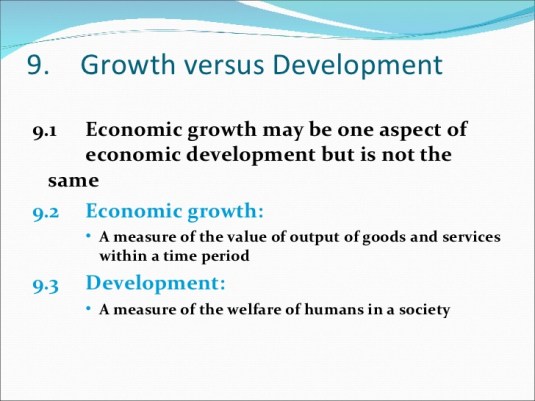








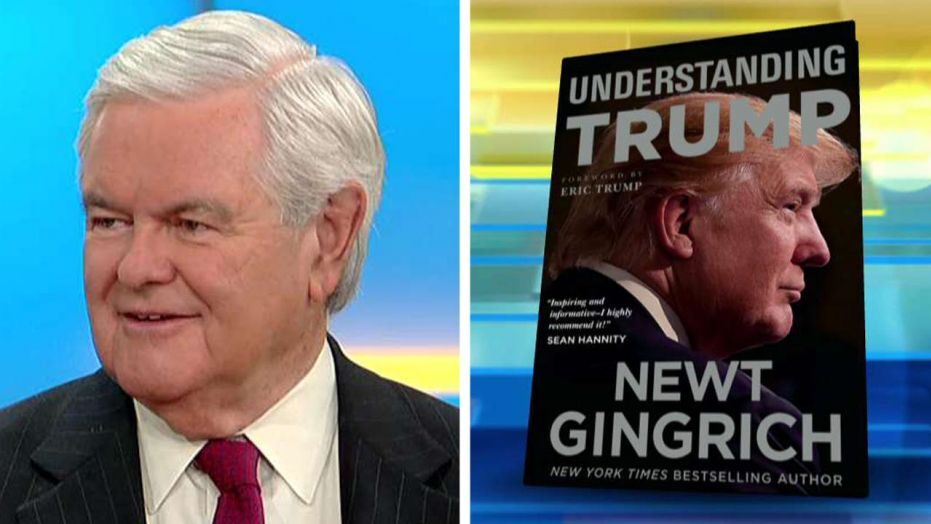 The research that purports to explain the Trump phenomenon almost never goes beyond the “Right Wing” narratives for Trumps election. These narratives all point to abortion, guns, taxes, small government, immigration and jobs as the key factors in Trumps victory. Trump blames the Democrats for everything wrong in rural America and the Republicans have provided a compelling set of schemes that have convinced many in rural America that a partial solution to their problems lies in more capitalism.


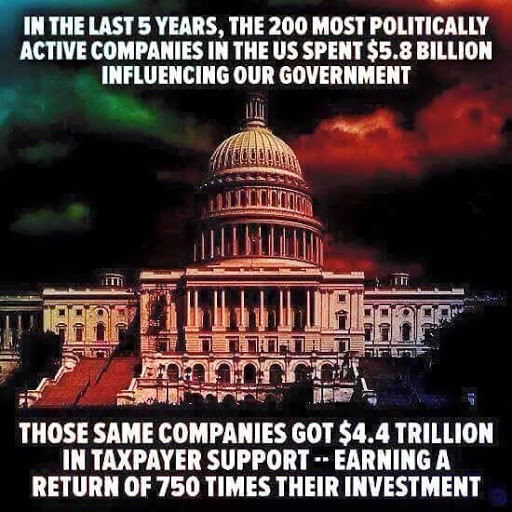


 The thought that “you will have liberty if you can pay for it” rings true 100 years after Lucy spoke these sad and forlorn words. Today we say “politics and courts are ruled by the Golden Rule. He who has the money makes the rules.” We all know that it takes money to get a law passed or else why are there so many lobbyists in the halls of congress. We also know that rich people get a better break in court because their money buys them better lawyers. We also know that poor people fare less well with our law enforcement agencies than do rich people. When was the last time you heard of a police officer stopping someone in Palms Springs or La Jolla for a broken taillight?


 It was January of 1986. I had finished all my course work for my Ph.D. degree. It had already been a long and cold and snowy Minnesota winter. I had finally collected all the data I needed to finish my dissertation. Four years in school, working…

