Where Can You Find Beauty?

Of course the answer to this question is that beauty is all around us.  However, some things seem more beautiful than others and they are either worth being noted or worth being found.  (And yes, I realize Beauty is in the eye of the beholder, but that is a cliché.  Some things are indeed universally beautiful.)  If noted, they are somehow singled out for special attention.  They may become landmarks or tourist attractions like: Niagara Falls, The Grand Canyon or Carlsbad Caverns.  If you have ever visited any of these places, you know that you can stare and stare and stare at them for days.  You want to somehow drink or absorb their beauty.  You can walk around them and from different vantage points they provide a different panorama of beauty.  I am sure you can add many places or items to the list that I call “Noted” beauty.  By the way, “noted” beauty may include people, place, things or even ideas.  Someone noted that Einstein’s Theory of Relativity was beautiful in its simplicity.  Matthew R. Crawford in his blog “Albert Einstein on Beauty, Science and God” believes that:

“what drove Einstein to his scientific conclusions was a conviction that nature displayed a beauty that was discernible, and that a characteristic feature of this beauty was simplicity.”

There are many lists of “beautiful men and women.  Every few years, the list of notable women beauties includes such familiar celebrities as:  Jessica Alba, Gwyneth Paltrow, Amanda Seyfried and Halle Berry.  These are just a few of the many notable beauties who get nominated each year for the “most beautiful woman in the world list.”  I keep waiting to get nominated for most beautiful man in the world but alas to date, my name has not appeared on any lists.  They keep picking guys that would be low on my list like:  Matthew McConaughey, Brad Kroenig and Josh Harnett.  So there is no accounting for taste which is why some people say “beauty is in the eye of the beholder.”   However, I have already stated that this is a lie.  Some beauty is universal.  The beauty of a rose or a humming bird or a newborn baby can be put on a list of things that are universally admired.

Then there are the items that I will put in the “unnoted” beauty list.  Unnoted beauty is beauty that surrounds us or that is often hidden to our eyes either because we take it for granted or because for some reason it has not become popular.  Many “beautiful” items become fashionable and then are assumed to be beautiful.  The “notable” beauty list is full of such items.  These items have the weight of public opinion on their side.  For instance, the Mona Lisa is considered to be one of the most beautiful pictures in the world and no trip to Paris is said to be complete without a visit to the Louvre to see the Mona Lisa.  Right?  Well, sorry but I don’t agree.  Not only would I say it was not worth the effort, (Go to the Louvre anyway, you will not be disappointed) but I did not think it was such a great picture and NO, the eyes did not follow me.  I am not sure where that bit about the eyes comes from but I think many viewers must have been sucked up into a form of mass hysteria if they really believe the eyes followed them anywhere.

“Unnoted” beauty surrounds us as well and unlike notable beauty, unnoted beauty is most often free.  You have only to open your eyes and you can find unnoted in everything that encompasses you. Sometimes unnoted beauty is found in the least likely places.  On our trip back to Wisconsin from Arizona, Karen and I stopped for two days in Bisbee, Arizona to see some sights.  We went to the art shops, clothes shops, and antique stores and spend a day in Tombstone watching reenactments of the “Old West.”  One night we went out for a walk (We stayed at the Bisbee Grand Hotel which I highly recommend).  Prices, food, service, rooms were all incredible.  For $65 dollars a night we had a wonderful room and a great hot full breakfast each morning.  The view from the balcony which we ate out on was spectacular and in the saloon next door on a Tuesday night we were able to hear a great live Klezmer band called the The Underscore Orkestra which played for three hours a variety of jazz, Balkan and swing music.  They were staying in our hotel and traveling around the world performing.  You can find their schedule at their website.  If you enjoy some eclectic music you will really enjoy the Underscore Orkestra.  If you see them say hi to Jorge and Joshua and Willo for me.  They were fun to listen to and talk to as well.

To return to our walk, we decided to journey up hill, Bisbee seems to have two parts, uphill and downhill.  We had already toured downhill so we decided to visit uphill.  As we walked by a number of shops we came to an area where there was a large town hall and some municipal buildings.  Right behind the buildings was a large church.   We always enjoy looking in churches to see how they are decorated.  Most churches would not be on any list of notable beauty but you can often find some very beautiful artifacts in them that are not on any tourist list or brochure.  Unfortunately, today most churches now are locked except during service hours.  Since it was nearly 7 PM, we did not expect the church to be open.

stpat6Remaining an optimist, I walked up the steps to the church and pulled on the door.  Sadly, it was locked. As I started to walk down the steps, I heard a voice call out “Would you like to go inside.”

I saw a young man in a pickup truck starting to climb out and approach me.  I did not want to importune him but since he offered, I said “sure, thanks,” He told us his name was Jesus and then opened the doors and turned the lights on for Karen and I.  When he did, we were astonished.  As the Millennium generation like to say, it was awesome.  Before us, were the most beautiful stained glass windows I have ever seen in my life!   I don’t want to brag, but I have been in many churches and cathedrals including the Vatican, Notre Dame and St. Patrick’s in New York.  Never in any place in my entire life, have I seen a more beautiful set of stained glass windows.  There were two large ones at the front and two at the back of the church, a ceiling window and stained glass windows along each side of the church.  Karen and I just looked and looked. We did not have our camera.  Finally, while we did not want to leave, we decided we should probably let Jesus go home.  I had introduced myself to the man that let us in and he told us a little about the church and we exchanged names and thanked him profusely for letting us in.

On this special evening in Bisbee, Arizona “unnoted beauty” was displayed before us in two ways.  The first is obvious. We saw some beautiful art that was not on any tourist list I have yet seen.  I should mention, we went back the next day and the church was open so we went in again and this time we took some pictures.  I was also so impressed that on the morning we left, I rose early and went to a 7:30 AM mass they held at the church.   Jesus was there as were about 7 or 8 other parishioners.  I found out that the name of the church was St. Patrick’s Roman Catholic Church.  A subsequent web search revealed the following facts about the church.  I should note that none of these facts were evident at the church or in any local tourist literature that I saw while in Bisbee.  Hence, I still proclaim this to be an “unnoted” treasure and beauty.

Perched 200 feet above the floor of Tombstone Canyon in historic Bisbee, Arizona, St. Patrick’s Roman Catholic Church stands as a monument to the exuberant determination of the town’s early residents to transform a primitive mining camp into one of the largest commercial centers in early Arizona.

bisbee

Listed on the National Register of Historic Places, the Gothic Revival church is a copy of St. Mary’s Catholic Church in the Irish district of Whitehaven, England.

St. Patrick’s 41 stained glass windows were designed and produced by Emil Frei, whose work is recognized as an unsurpassed example of Victorian-style stained glass.

The Bavarian-born Frei (1869-1942) studied at the Munich Academy of Art before immigrating to the United States in the late 1800s. In 1900 he opened the Emil Frei Art Glass Company in St. Louis, Missouri.

Now for the second example of beauty that day, it is not as obvious as the windows but it is even more beautiful than the wonders of the church.  Think about this for a minute.  It is 7 PM at night, you have been doing construction work all day and it is time to return home to your family and a hot meal.  Just as you are getting ready to start your car and head home, two yahoo tourists walk up to your church and appear to be trying to gain entry.  You are not a tour guide or the pastor and you do not earn one cent by abandoning your original plans to go home and letting them in.  Furthermore, you have no idea how long they will remain or whether or not other tourists will suddenly emerge who want to come in.  What would the average store clerk do? What would the average store owner do? And bear in mind, store clerks are potentially making some money off of visitors.

Jesus had nothing to gain and yet he took the time to let us in, talk to us and tell us some brief facts about the church.  So what was this “unnoted” beauty of which I speak?  I am talking about “beauty of the spirit” and that night in Bisbee, Jesus showed us what a beautiful spirit really was and how it gave to others with no thought of reward or privilege gained.   Jesus was not the parish priest and he had no responsibility at all in the area of perhaps talking to potential parishioners.  What Jesus did was done simply out of the beauty of the man’s heart.

“The ideals which have always shone before me and filled me with the joy of living are goodness, beauty, and truth. To make a goal of comfort or happiness has never appealed to me; a system of ethics built on this basis would be sufficient only for a herd of cattle.”  – Albert Einstein.

“Of life’s two chief prizes, beauty and truth, I found the first in a loving heart and the second in a laborer’s hand.” – Kahil Gibran

Time for Questions:

Do you look for beauty in unexpected places?  Do you find that beauty can lie in ideas and spirit and not just in things and glamour?  Do you raise your children to see the beauty of life and not just accomplishments or rewards?  How do you find beauty?  Do you have enough beauty in your life?  Can you still find beauty despite growing old and more infirm?  Can you help others by sharing your beauty with them?

Life is just beginning.

“Life is full of beauty. Notice it. Notice the bumble bee, the small child, and the smiling faces. Smell the rain, and feel the wind. Live your life to the fullest potential, and fight for your dreams.” — Ashley Smith

 

Now that the Indians Gone – You Don’t Have to Feel Guilty Anymore.   

Please, it is my birthday today, so read my favorite and most self-deprecating blog. Mea Culpa should be its real title. Let me know what you think.

Dr. John Persico Jr.'s avatarAging Capriciously

(Please listen to Buffy Sainte-Marie’sNow that the Buffaloes Gone”)

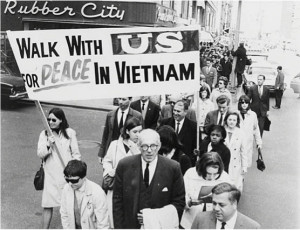
war protests1964.  A time of increased social consciousness:  Civil Rights marches.  Women’s Rights marches.  Free Speech marches.  Protests in the grape fields.  The Indian Movement.  The Free Love Movement.  The Whole Earth Movement.  Anti-war marches.  Lots of social commentary and inspiring folk songs written during this period by musicians such as Bob Dylan, Pete Seeger, Buffy St. Marie, Sixto Rodriguez, Richie Havens, Leonard Cohen, Country Joe McDonald, Peter, Paul and Mary, not to mention hundreds of others.   (Many others came before these, like Paul Robeson and Woody Guthrie.)

Can you remember the times
That you have held your head high
And told all your friends of your Indian claim
Proud good lady and proud good man
Your great great grandfather from Indian blood came
And you feel in your heart for these ones

hippies1The Baby Boomers (I…

View original post 1,664 more words

Lucy in the Sky with Diamonds or “How did our drug laws get so crazy?”

drug abuse

I wrote this blog four years ago about our ignorant policy and attitudes towards drugs and drug users.  I started it with a satire comparing obese people to drug addicts. You may not like the satire but the problem and analogy is spot on. We have an arbitrary drug policy in this country which hurts millions of people. Witness the incarceration rates for drugs. This article is about the reasons for this stupidity and why we need to change our thinking.

Just this week, I heard two candidates for sheriff in my county talk about the need for stronger drug enforcement and more SWOT teams. The answer is always more police and more arrests. When will we wake up and address the real problems of drug addiction and drug abuse?

Oct-13-Is-Drug-Legalization-the-Answer-Section-2-730x1146

Dr. John Persico Jr.'s avatarAging Capriciously

Picture yourself in a boat on a river
With tangerine trees and marmalade skies
Somebody calls you, you answer quite slowly
A girl with kaleidoscope eyes  —- (From the Beatles)(Click here to listen)

lucy_in_sky_with_diamonds_by_weirdplushie-d5r2kziHave you ever wondered why we do not arrest obese people?  What if we treated people who abused food like we treated people who abused drugs?  We could argue “Why don’t we arrest obese people since we arrest drug addicts?”  Do not both of them abuse their bodies?  If you look at the five most common reasons given for drug control policy:  Morality, Health, Profit, Discrimination and Social Control, it could be argued that obesity violates at least four of these principles.  As yet, we do not see too many obese people running amok, but who knows, maybe cases of “Crazed” obese people are just being under-reported.

It seems unfair to me that obese people are…

View original post 3,137 more words

New Revelations from a Senior Trump Aide: The Man has no Morality!

This is an op-ed piece from the NY Times written by an anonymous senior aide inside the White House.  Never before has anyone written anything about a President like this.  This clearly shows the incompetence of the man who is President of the United States of America. 

Please share, post, retweet this to everyone you can.  We need to show the world that there are millions of us who do not support this man or his policies.  We need to either impeach him or indict him.  He can and has done real damage to the United States of America.  The longer he remains in office, the more damage he will do.

I Am Part of the Resistance Inside the Trump Administration

I work for the president, but like-minded colleagues and I have vowed to thwart parts of his agenda and his worst inclinations.

President Trump is facing a test to his presidency unlike any faced by a modern American leader.

It’s not just that the special counsel looms large. Or that the country is bitterly divided over Mr. Trump’s leadership. Or even that his party might well lose the House to an opposition hellbent on his downfall.

The dilemma — which he does not fully grasp — is that many of the senior officials in his own administration are working diligently from within to frustrate parts of his agenda and his worst inclinations.

I would know. I am one of them.

To be clear, ours is not the popular “resistance” of the left. We want the administration to succeed and think that many of its policies have already made America safer and more prosperous.

But we believe our first duty is to this country, and the president continues to act in a manner that is detrimental to the health of our republic.

That is why many Trump appointees have vowed to do what we can to preserve our democratic institutions while thwarting Mr. Trump’s more misguided impulses until he is out of office.

The root of the problem is the president’s amorality. Anyone who works with him knows he is not moored to any discernible first principles that guide his decision making.

Although he was elected as a Republican, the president shows little affinity for ideals long espoused by conservatives: free minds, free markets and free people. At best, he has invoked these ideals in scripted settings. At worst, he has attacked them outright.

In addition to his mass-marketing of the notion that the press is the “enemy of the people,” President Trump’s impulses are generally anti-trade and anti-democratic.

Don’t get me wrong. There are bright spots that the near-ceaseless negative coverage of the administration fails to capture: effective deregulation, historic tax reform, a more robust military and more.

But these successes have come despite — not because of — the president’s leadership style, which is impetuous, adversarial, petty and ineffective.

From the White House to executive branch departments and agencies, senior officials will privately admit their daily disbelief at the commander in chief’s comments and actions. Most are working to insulate their operations from his whims.

Meetings with him veer off topic and off the rails, he engages in repetitive rants, and his impulsiveness results in half-baked, ill-informed and occasionally reckless decisions that have to be walked back.

trump-hitler-400x274

“There is literally no telling whether he might change his mind from one minute to the next,” a top official complained to me recently, exasperated by an Oval Office meeting at which the president flip-flopped on a major policy decision he’d made only a week earlier.

The erratic behavior would be more concerning if it weren’t for unsung heroes in and around the White House. Some of his aides have been cast as villains by the media. But in private, they have gone to great lengths to keep bad decisions contained to the West Wing, though they are clearly not always successful.

It may be cold comfort in this chaotic era, but Americans should know that there are adults in the room. We fully recognize what is happening. And we are trying to do what’s right even when Donald Trump won’t.

The result is a two-track presidency.

Take foreign policy: In public and in private, President Trump shows a preference for autocrats and dictators, such as President Vladimir Putin of Russia and North Korea’s leader, Kim Jong-un, and displays little genuine appreciation for the ties that bind us to allied, like-minded nations.

Astute observers have noted, though, that the rest of the administration is operating on another track, one where countries like Russia are called out for meddling and punished accordingly, and where allies around the world are engaged as peers rather than ridiculed as rivals.

On Russia, for instance, the president was reluctant to expel so many of Mr. Putin’s spies as punishment for the poisoning of a former Russian spy in Britain. He complained for weeks about senior staff members letting him get boxed into further confrontation with Russia, and he expressed frustration that the United States continued to impose sanctions on the country for its malign behavior. But his national security team knew better — such actions had to be taken, to hold Moscow accountable.

This isn’t the work of the so-called deep state. It’s the work of the steady state.

Given the instability many witnessed, there were early whispers within the cabinet of invoking the 25th Amendment, which would start a complex process for removing the president. But no one wanted to precipitate a constitutional crisis. So we will do what we can to steer the administration in the right direction until — one way or another — it’s over.

The bigger concern is not what Mr. Trump has done to the presidency but rather what we as a nation have allowed him to do to us. We have sunk low with him and allowed our discourse to be stripped of civility.

Senator John McCain put it best in his farewell letter. All Americans should heed his words and break free of the tribalism trap, with the high aim of uniting through our shared values and love of this great nation.

We may no longer have Senator McCain. But we will always have his example — a lodestar for restoring honor to public life and our national dialogue. Mr. Trump may fear such honorable men, but we should revere them.

There is a quiet resistance within the administration of people choosing to put country first. But the real difference will be made by everyday citizens rising above politics, reaching across the aisle and resolving to shed the labels in favor of a single one: Americans.

The writer is a senior official in the Trump administration.

Follow The New York Times Opinion section on Facebook and Twitter (@NYTopinion).


Four Remarkable People on a Quest

quotes-purpose-of-life-2-archives

Part 1 – The Meeting

Once upon a time, there were four remarkable men.  Well, actually there were two remarkable men and two remarkable women.  A confluence of circumstances brought them together in perhaps one of the strangest coincidences in history.

Jamal was from the north.  He was one of the highest scorers to ever take the Mensa Genius Examination.  When he was only four years old, he developed a program to block credit card companies from calling his parents on their cell phones.  When he was seven years old, he developed a new form of cryptocurrency which was impossible to hack, easily transferred, had high usability and presented a respectable means of acquisition.  The currency was so popular that Jamal became a billionaire when he was 15 years old.

Isabella was from the south.  She graduated when she was 12 years old from the University of São Paulo with a Ph.D. degree in Physics and Philosophy.  She burned through required credits like a hot knife going through butter.  She had no problem paying for her tuition since she was hired by the University of São Paulo physics department to help with a particle research project they were undertaking, while she was earning her degree.  When she graduated, half of the physics departments in the world tried to hire her.

Li Na was from the east.  She was born in Chengdu, a sub-provincial city which serves as the capital of China’s Sichuan province.  She was the only child of an older couple who really wanted a boy.  Li Na learned to play soccer, baseball, table tennis and hockey at a young age.  She wanted to please her parents.  She was an excellent athlete who competed in all four sports in the Olympics.  However, her athletic abilities were far overshadowed by her intellect.  Li Na had mathematical abilities that rivaled any mathematician in history.  She could take any number and give you the square root of the number down to 1000 roots without a calculator or even an abacus.

When Li Na was fourteen years old, she decided to tackle all six of the remaining Millennium Prize Problems set by the Clay Mathematics Institute in 2000.  Li Na was able to solve all six of them within a month, but she decided it would be unfair to accept the prize money as the solutions were so easy.  She therefore rejected the prize and kept the solutions to herself.  Corporations all over the world engaged her with solving problems that defied normal mathematical solutions.  She gave her money back to her parents to help support them and to put into savings.  No one knew what she was worth, but it was assumed that she was a mega millionaire.

Elijah was from the west. He was born in California in a commune that practiced a form of communal marriage.  Elijah was never sure of who his father was, and he seemed to grow up with several mothers.  At an early age, Elijah showed a talent for music.  When he was three years old, he taught himself to play a violin.  At four, he learned to play an oboe and at five, he learned to play a harp.  When he was six, he took first place in the Menuhin Competition beating out every other contestant regardless of age.

As remarkable as his talent for playing music was, Elijah’s skills and abilities in the area of composing music were even more incredible.  He had written six operas, twenty movie scores and five symphonies before he was 16 years old.  Orchestras all over the world were playing his compositions when most people did not even know his name.  Elijah hated publicity and avoided any of the usual celebrity events.  He donated most of his money to help other aspiring musicians.  He was well known among musicians and performers for his humility and kindness towards others.

cafe-wrenEach of our four remarkable people were into their middle years when by chance they met at a small cafe and restaurant in a town called Luck in Northwestern Wisconsin.  Luck is a small town of about 1200 residents, which in its heydays was the home of the Duncan Yo-yo.  In fact, it was once known as the Yo-yo Capital of the world.  Sadly, Yo-yo’s had declined in popularity and so had the fortunes of Luck in terms of prosperity and jobs.  Now perhaps, the high spot of Luck was the Wren Cafe.  A place that had excellent food, good beer and a unique ambiance imbued by its extremely creative owner Stephanie Lundeen.

The café is well known to locals and to many of the cabin people who come up on the weekends to enjoy their sojourns from the “big city” of Minneapolis.  Li Na, Elijah, Isabella and Jamal were each brought there by friends who were locals and who knew that the Wren was a very good place to eat.  The Wren being a small place and small towns being where everyone knows everyone, introductions were soon flying like falling Wisconsin snow.  Our four remarkable people sensed that a new chapter in their lives was about to begin.

Thus, at 12 PM on a cool summer day in Luck Wisconsin, Li Na, Elijah, Isabella and Jamal experienced a nuclear fusion of intimacy.  The result was like a billion tons of dynamite going off at once or the largest fireworks display in the world.  The talent that each had was like a magnet that created an instant bond between the four.  Finding other people of comparable abilities and demeanor was something that they had only dreamed about.  They all found the rapport and affinity they had for each other to be amazing.

After an hour or so of rapid conversation intermixed with more general discussion with others in their parties, our four remarkable people decided to meet again when they could have more time to discuss their lives without anyone else present.  Unbeknownst to their friends and families, Li Na, Jamal, Elijah and Isabella all had serious inner doubts that they had never been able to share with another living soul.  Each believed that they had found some kindred souls with whom they could share their secrets and perhaps find some piece of mind.  They agreed to meet again at the Wren the following week.  It was a week they knew they must spare from their busy lives.

silhouette-of-people-family-people-silhouettes-download-free-vector-art-stock

Part 2 – Four Doubts

For several years now, Jamal had begun to feel that there was no meaning to his life.  He had even contemplated suicide because he felt that he had nothing left to live for. The world did not seem to have people that cared about anything but their new smart phones or how fast their Internet speeds were.  Life was one vast merry go round with people constantly jumping on and off and reacting to whatever the current fads and trends were.  Nobody cared about anything but how much money they had and how many things they could buy.  Jamal desired to know if there was a true Purpose in Life or if life was simply meaningless.

Elijah had many of the same feelings as Jamal.  Elijah no longer found value in anything in life.  Everything he had ever owned or purchased soon became worthless in his mind.  The best yachts, cars and homes that anyone could buy could not make him happy.  Fame and talent and beauty all seemed to fade over time.  People were fickle.  One minute they loved you and the next minute they loved somebody else.  Elijah knew what it was like to be famous and admired but it had lost any value to him.  He thought that being known as the greatest musician in the world would satisfy his inner longings.  Even though he had obtained this goal, it did not seem to provide the value that he had hoped for.  Elijah longed to know if there was any true Value in Life or if everything was really worthless.

Isabella had once believed that there was a hidden truth to life that remained to be found.  She had studied physics and philosophy thinking that they would lead her to this truth.  She had spent many years searching for this truth.  However, every time she found a truth, she soon realized that it was also a lie.  The prophets and great religious leaders had always taught that “The truth will set you free.”  Isabella could never find the talisman that would set her free.

She desperately wanted to believe that there was some truth to existence and that life was more than just a series of lies and deceptions.  She had a desire to find this truth, but she had become increasingly discouraged.  Each day she read the news and only found “Fake Facts” and deceptions masquerading as truth.  The world seemed to have misinformation and disinformation but no truth.  Isabella wanted to find the Truth of Life.

464430-rethink-quotes

Li Na was another tormented soul.  A brilliant mathematician, she could not discover a single constant in life.  Every time she thought she had found a concept in mathematics that would provide such a constant, Godel’s Incompleteness Theorem would rear its ugly head proving still again that it is impossible to find a complete and consistent set of axioms for mathematics.  If mathematics had no constants, how could life have any constants.  Was is simply true that death and taxes were the only constants in life?  Li Na wanted to believe that there was more to life than simply death and taxes.  Li Na desired to find the one Constant in Life that would really make life worth living.  If she could find this constant, she believed that it would put her soul at rest and she might find true peace on earth.

Part 3 – The Doubts Unfold

To Be Continued:  I will publish the next part of this story when it is finished.  I appreciate your patience. 

Time for Questions:

What do you think so far?  How do you like the four people in the story?  Have you ever shared similar doubts?  What did you do about them?  What do you believe about life?

Life is just beginning. 

“Doubt as sin. — Christianity has done its utmost to close the circle and declared even doubt to be sin. One is supposed to be cast into belief without reason, by a miracle, and from then on to swim in it as in the brightest and least ambiguous of elements: even a glance towards land, even the thought that one perhaps exists for something else as well as swimming, even the slightest impulse of our amphibious nature — is sin! And notice that all this means that the foundation of belief and all reflection on its origin is likewise excluded as sinful. What is wanted are blindness and intoxication and an eternal song over the waves in which reason has drowned.”
― Friedrich Nietzsche, Daybreak: Thoughts on the Prejudices of Morality

Dragons I Adore

As part of a writing assignment, I describe one of my favorite hobbies.  I love to collect interesting and unique dragons.  Dr. Wedin, our writing instructor, asked each of us to do a short piece on any hobbies that we had.  The following is my contribution to this assignment for our writing club.  I have included a few of my dragons. 

20180827_094355[1]


I collect dragons.  Dragons are popular in many world cultures.  Three countries have dragons on their national flags.  Many more places such as Moscow also have dragons on their flags.  In China, the color of a dragon is symbolic.  Red, yellow, green, black, purple, white or gold, they all have different meanings.  A purple dragon represents love and romance.  A gold dragon symbolizes wealth and prosperity.  A white dragon is an omen of death.  There are nine types of Chinese dragons.  Some fly, some live underground, some have horns, and some are spiritual.  Dragons in China are generally benevolent or helpful to people.

In Western culture, dragons are usually depicted as evil.  We are all familiar with Saint George and the dragon and of course the famous Smaug in Tolkien’s story, the “Lord of the Rings.”  Throughout medieval history, one of a knight’s principle roles was to rescue women from dragons.  Why dragons loved to steal women is a good question since I have never heard of a dragon that ate a woman?

20180827_094514[1]

While most people regard dragons as mythical creatures, some people believe that dragons once really lived.  There is some evidence of this in the Bible.  The Book of Job, chapter 41 — seems to describe a dragon in great detail:

“I will not fail to speak of Leviathan’s limbs, its strength and its graceful form. Who can strip off its outer coat? Who can penetrate its double coat of armor? Who dares open the doors of its mouth, ringed about with fearsome teeth? Its back has rows of shields tightly sealed together; each is so close to the next that no air can pass between. They are joined fast to one another; they cling together and cannot be parted. Its snorting throws out flashes of light; its eyes are like the rays of dawn. Flames stream from its mouth; sparks of fire shoot out. Smoke pours from its nostrils as from a boiling pot over burning reeds. Its breath sets coals ablaze, and flames dart from its mouth” (NIV).

20180827_094443[1]

In Indonesia, you can still find a live dragon known as the Komodo dragon.  It does not fly or breath fire, but you would not want one as a pet.  The Komodo dragon is actually a species of lizard, but who knows, maybe the Komodo dragon is a descendant of some long dead dragon that once roamed the world with dinosaurs.

I am fascinated by the variety of dragons.  Some are cute and cuddly.  Some are mean and ferocious.  Some are noble and dignified.  Some are evil and malignant.  You can find a dragon to represent just about any value or virtue that is important to you.

20180827_094408[1]

My dragons keep me company and help reflect my different moods.  I have dragon paintings, dragon sculptures, dragon paper weights and a computer dragon which watches over me while I am writing or engaged in some internet search.  At night, my dragons keep the evil spirits of the world from entering my house.  They are my guardians and my friends.

20180827_094349[1]

When I pass from this world, I hope my wife will bury my dragons with me.  I will need to take them to the next world to begin a new adventure with them there.

Time for Questions: 

Do you collect anything?  Why or why not? If so, what do you collect?  Why did you choose these to collect?  What is the most fun for you in terms of collecting?

Life is just beginning.

You can’t take it with you, so who will you give it to?

The Best Writing Club in the USA!

author-at-work-1170x716Big News!  They are going to make a movie about a writer’s club.  They made the movie “The Book Club” staring a host of elderly semi-retired actresses and now they want to make a movie about a writer’s club.  I am volunteering our club.  It is the best writing club in the USA with so many talented writers.

“Poppycock” you say!  “There are hundreds of writing clubs across this country and there are more talented writers than there are spaces on the Times Best Seller list. What makes your writing club the best?”

“Thank you for asking.”

Well for one, our club has the greatest teacher in the entire world.  She is a retired Professor Emeritus (Whatever that means) and you would never (even if you looked high and low) find a better writing teacher.  I will say more about our instructor later and why she is so great.

Now you may not know too much about a writing club or then again, you may think you know a lot.  Perhaps you think you know why someone would join a writing club.  If you are a non-writer, the usual reasons that come to mind are:  Fame, fortune and the power to influence thinking.  These are certainly lofty goals and one that anyone might be forgiven for believing worth pursuing.  They are not our reasons though.  We meet for two hours every week during the best weeks of the year in the mid-west to share our stories and to listen to the stories of others. Our goals are not so egotistical or grandiose as fame and fortune.

What makes a great writing club besides a great instructor?  You could define a writing club by its demographics.  Ours is primarily comprised of elderly retired folks of mixed German and Nordic backgrounds.  Women outnumber men in our club by a three to one ratio.  We are middle class people with about fifty percent of us having a college education.

A more interesting way to define a club is by its type of writers.  I believe we are unique in this area.  Why are we unique?  The answer is simple.  Most of us are too old to give a damn about fame and fortune.  We will probably not live long enough to enjoy any new-found wealth or fame anyway.   Our average age is probably close to 75.

There are three types of writers in our club.  We have nostalgia writers, fiction writers and persuasive writers.  I put myself in the last category.

Nostalgia writers in our club often write stories about memories and friends and relatives that are long gone.  It might be stories about growing up on the farm.  It might be stories about life in the St. Croix valley.  It might be stories about the old school days when there were one room school houses.

Nostalgia writers love to share their bygone days with younger relatives and other people.  The times and days they write about might not interest too many people, but there is little worry about that.  A writer writes for themselves often more than other people.  The accuracy of their memories might also be tainted with the passage of time but often these memories are so funny and colorful that no one in our club really cares about how accurate they are.  Maybe the story happened in 1957 or maybe it was 1947, it really does not make any difference to those of us listening.

The fiction writers in our club delight in telling involved and esoteric stories about themes that came out of their fantasies or some whimsical vision they had.  However, our fiction writers are no starry-eyed idealists.  They are under no illusions that they will make the best sellers list with their stories.  They are also not motivated by fame and fortune.  We have tales of frogs, sheep, goats, aliens and humans who have adventures that you could only dream about.

In the six or so years, that I have belonged to the club, I have heard many fabulous stories of people, animals and events that were totally imaginary.  Sometimes, Carolyn our instructor will give us an assignment like writing about a cow in Norway that prompts our creative powers.  The results are stories written not for the best seller list but to exercise our brains and to employ our imaginations.  Most of these stories will never find their way into publication (excepting our fabulous local paper which weekly features the writings of various club members).  We do not get paid for getting published, but we are more than happy to share our stories with a wider audience.  There may be a Hemingway or J. K Rowling in our club, but no one puts on airs or has pretensions of grandeur.  We leave it up to the Gods to decide who will become immortal.

writing pen

I should tell you about the final group of writers but first, before I forget (It happens quite frequently with age) I want to tell you about Professor Carolyn Wedin, our writing instructor.

Now the typical idea of an English teacher sends shivers down most anyone’s spine who has ever been in school.  Grammar, punctuation, spelling and syntax are enough to make the hardiest soul give up the idea of becoming a writer.  But even worse are critiques such as: “That is shoddy writing, that is the poorest piece of writing I have ever seen or where did you steal those ideas from.”  Destructive comments such as these happen often enough in school to make any normal person hate English and writing.

Carolyn has the unbelievable ability to encourage all of us to keep writing.  She makes each of us think that we are wonderful writers.  She motivates us to be better writers with gentle ideas and suggestions rather than harsh criticism or comparing our work to others.  She seldom ever worries about syntax, grammar, spelling and punctuation.  I have often sat and listened to what I thought was a horrible piece of writing only to hear Carolyn provide ideas for improvement and say little or nothing that would smack of condemnation or disapproval.  I marvel at her patience and endurance and compassion. In the end, Dr. Wedin is teaching us not only to be better writers but also to be better people.  Judge not others less ye be judged yourself.

So now we come to the final and last category of writers in our club.  It is the category I put myself in.  These are the writers who write to persuade others.  The people who think that something they say can make a difference in the world.  We want to change the hearts and minds of people.

Speaking for myself, I write social and political satire with the goal of helping other people to better see and understand the foibles that our culture often pursues.  You may think this is a narcissistic goal or perhaps a naive goal and maybe it is.  One thing is certain.  It will never garner me fame or fortune.   But (you should know by now) that is not why we write.

As any writer will tell you (Paraphrasing the great French National Anthem):

Writers! Form your battalions!

Write On! Write On! Write On!  Write_On_logo

Time for Questions: 

Do you write?  Why not?  Have you ever tried writing?  Would you like to be a famous published writer?  It all starts with your first sentence.

Life is just beginning.

“You have to write the book that wants to be written. And if the book will be too difficult for grown-ups, then you write it for children.”  — Madeleine L’Engle

Four Things You Should Know About Facebook and the World

I have lost track of how many years I have been using Facebook.  However, I have not lost track of all the times that people say to me “I never use Facebook (FB) because it is etc., etc.”  They then proceed to give me a litany of reasons why they: 1. Have never used Facebook or 2. Why they think Facebook is useless.  I have found the following four beliefs to predominate among the reasons why Facebook has been deemed as either useless or even dangerous.

  1. Facebook is a waste of time. It has too much stupid stuff and trivia.

I would be richer than Mark Zuckerberg if I had a dollar for every time I have heard “What do I care about what people had for breakfast today.”  Great, you don’t want to know where I went, what I did, who I saw and what I eat?  Use your little finger to scroll down or push delete or go to another site.  I have lots of friends who do care and who want to know what I am doing.  I have had many comments on my FB site such as “It was so much fun to follow you on your trip.”  “I love your postings.”  “Thanks for sharing.”

If you think my postings are trivial, meaningless, inane, or asinine, great.  I respect your opinion.  So “Defriend” me.  Go elsewhere for your trivia.  Find your daily dose of bullshit someplace else.  But don’t criticize something you have never tried or condemn others because you find their lives not worth knowing about.

  1. Facebook can’t be trusted. They will sell valuable information about me.

Facebook is a business first and foremost.  How do you think Zuckerberg got so rich?  FB is full of advertising and advertisers want to know everything about you, so they can sell you stuff you don’t think you really need.  They will convince you that you really need it.  This has been going on since Moses convinced Pharaoh to let his people go.

Do I trust FB not to sell my innermost secrets?  Do I trust Zuckerberg not to share information about me with advertisers, political marketers, vendors, pollsters and other information seekers?  No more than I would trust hanging from the Empire State Building with my wife’s sewing thread.  You must either be deaf, dumb or blind if you think you can trust anyone selling you something or giving you something for free not to have some hidden catch or some gimmick to get more money from you.  Did you ever notice that FB is free or has that escaped your attention?  What is free?  Do you really believe it is free?

As far as information privacy goes, observe the following that I tell all my students and you will probably not have much to worry about.  It goes like this: “If you want to protect your privacy, then do not text, tweet, photo, Instagram, email, voicemail or say anything in public that you would not put up on a billboard in downtown New York.”  Period.  That is the only way that you will protect your privacy today and I doubt even this admonition is full proof.

  1. Facebook is full of lies and “false” facts.

So, you want to make decisions based on evidence, data and facts?  Facebook is no doubt full of bullshit, opinions, innuendo, conspiracies, lies and unsubstantiated claims beyond counting.  The lies on FB are more numerous than the stars in the sky or the molecules in the universe.  However, I will tell you a secret. There is no evidence, data or facts that are 100 percent true.  Everything we know about the world is only based on theories buttressed by repetition or replication.  The more our predictions happen, they more confident we are they are accurate.  However, science in like the weather.  You don’t count on the weather forecaster being 100 percent accurate unless you are a fool.

Throughout history, we have seen theories and facts overthrown by newer theories, newer facts and newer evidence that help better match reality with theory.  The world was once flat, then it was round, now it is more elliptical.  Our knowledge of everything keeps evolving and changing.  Some people see it as a search for the TRUTH.  However, the TRUTH does not exist or if it does, it is only like the wind.  It will blow one way today and another way tomorrow.  Facts, data and evidence have a probability of being accurate.  They will never be 100 percent true.  My father used to say, “believe nothing of what you hear and only half of what you see.”  I have found this to be moderately good advice.  It works very well on FB and on the Internet in general.

  1. Facebook should be a social media and not political.

“John, you are too political.”  “I don’t want to hear your rants and raves.”  “Why can’t you keep your politics out of your Facebook site.”  “Facebook is for family and friends and should not be political.”

The splash page on my FB site now shows a picture of Elie Wiesel and a quote by him that reads “To remain silent and indifferent is the greatest sin of all.”  He also said, “We must take sides.  Silence encourages the tormentor, never the tormented.”  Before this, my splash page had a picture of Martin Luther King and a quote by him that read, “Our lives begin to end the day we become silent about things that matter.” “In the end, we will remember not the words of our enemies, but the silence of our friends.”

I believe that living in a society and hence to be social means to be political.  If you live in a society, politics is the coin of the realm that defines the rules and procedures that govern the interactions between human beings.  No one can be apolitical in a society.  To believe so is to lie to yourself.  I put my politics out there.  I don’t care if you like them or if you don’t.  I want others to know that there is someone in the universe who probably feels like they do.

Before Trump was elected, I put up a Hillary sign in my front yard.  My neighbor who was also a Hillary supporter came over to warn me.  She said “John, I would not put that sign up in this town if I were you.  It could be dangerous.”  I decided to talk this over with my wife Karen.  I did not feel that I had the right to jeopardize her safety as well mine.  She said that she supported keeping the sign up.  My decision was sealed by her willingness to risk whatever might happen by putting a sign up in a mostly pro-Trump rural town in Arizona.  A week or so later, one of my good friends who lived nearby saw my sign.  She asked me to if I could get her one.  I did get her a sign and I think we might have had the only two Hillary signs up in our town.

I use FB as a means to share with others who in these rather trying times might have fears of speaking out or who might feel that they are alone.  I want my friends to know that I am political and that I share with some of them the same beliefs, values and ideas that they have.  I firmly believe that we cannot change our present problems or deal with issues by silence.  However, if you don’t like my politics or ideas then you can do as so many others have and simply defriend me.  Frankly, they say we are defined by the company we keep.  I would rather keep company with those who share similar convictions about life, liberty and the pursuit of happiness.

Time for Questions:

Do you use Facebook?  Why or why not

Life is just beginning.

“You should protest about the views of people you disagree with over major moral issues, and argue them down, but you should not try to silence them, however repugnant you find them. That is the bitter pill free speech requires us to swallow.” — Julian Baggini


Do you value old things or old people?

Did this eight years ago. Still like it.

Dr. John Persico Jr.'s avatarAging Capriciously

Antiques and time seem to go together. The older something is the more likely we are to call it an antique. Have you ever wondered how old something has to be before it is an antique? Rocks are very old and no one calls them antiques. One person’s antiques are often another person’s junk. The one thing I notice about antiques is that people of the “time” were more than happy to get rid of them. The last thing in the world they would have thought of was to hold onto these “antiques.” Back before their “antique” became “priceless,” if they could have traded up for something newer or better they would have. However, once something becomes an “antique” we want to hold on to it regardless of how useless or out of style it may be. Antiques seem to write their own rules for style.

Those who are into…

View original post 316 more words

My Name is Carmen: I Murdered Two Children

The following story is a work of fiction based on a true-life trial and murder.  This story follows a somewhat different history from the real-life story but will certainly be recognized by many as related to the story of Yoselyn Ortega and the Krim’s family.  The story occupied a major place in most newspapers for many months.  For any parent, it is a horror story.  No one can imagine the despair and misery that the Krim’s have gone through.

As I followed the trial, I was struck by the fact that so many of the newspaper articles about the murders were looking for a motive or reason for Ortega’s actions.  Ms. Ortega never testified at the trial and I suspect that many people thought it was simply a matter of allowing or encouraging her to “tell the truth.”  If only we could ask Ortega “why” she did it, we could find her motive and reason.   I have followed many related stories of murders and I have been struck by the lack of “truth” that is ever found.  Not just because suicide seems to be a way out for many murderers but even when the murderer is alive to tell their story.

two children

My name is Maria Carmen Fernanda Lopez.  I am a Columbian citizen.  I want to tell my story so that everyone will understand.  I am now in jail for the murder of two children that I was responsible for taking care of.  I was their nanny.  They say that both children loved me and in truth, I often loved them back.  The entire world wants to know why I murdered these children.

The prosecutors told a lie.  What they said about me was not true.  They wanted me to look very evil so that I could be convicted.  My defense attorneys also did not tell the truth.  They did not know me.  They only wanted to save me from receiving a death sentence.  It did not matter if the truth was told or not.  The psychiatrists who found many reasons for what I did do not know the reason why I murdered the young girl and young boy.  Each of the psychiatrists had a different theory.  I do not like to argue with anyone, so I simply agreed with each of them.  Nine different psychiatrists and nine different theories.

I never had the opportunity to testify.  My attorneys said it would be better if I did not.  I was convicted anyway of first degree murder.  I would like for you to hear my story.  Maybe, you can understand.  I do not deny killing my two young charges.  It was like killing my own children.  The children were very kind to me although sometimes they could be spoiled brats.  But what would you expect with a rich mother and a rich father both of whom could lavish much time and money on their children.  Most of the time they were fun to be around.

I was born in Cali Columbia in 1961.  I was one of twelve children.  My family was very poor.  My father sewed and fixed shoes for a living.  My mother tried to find enough food each day to feed us all.  I was the fifth oldest child and my job was to take care of all my siblings who were younger than I was.   I guess you could say I received nanny training when I was growing up.  I only went to school through the eighth grade.  No one in our family went any further.

I had a cousin Luisa who in 2001 emigrated to the United States.  She had a father who had received a degree in engineering from the Pontificia Universidad Javeriana.   He wanted to move up in the world and he was able to get a visa and a position with an electronics firm in New York City.  Luisa, her mom and her dad all moved to the USA.

My cousin Luisa and I were very close when we were growing up.  Luisa always had nicer clothes and was much prettier than I was.  Even though her family had much more money than mine, we were like sisters.  She had lots of boyfriends and we would sometimes sneak out at night to share time together.  She would introduce me to many young men, but I was very shy and not very good looking.  My first child was with one of these young men.  We did not marry, and I named my young boy Mateo.  Mateo’s father disappeared a few years after Mateo was born and I never saw him again.  My father was not very happy with me, but unwed pregnancies are the norm in Columbia.  My mother was actually very happy to have a new addition to the family.

A few years after Luisa moved to the USA, she wrote me a letter and asked if I would like to live with her in NYC.  I wrote back and replied that I would love to if I could bring Mateo along as well.  She wrote back that “Of course, you can bring Mateo.  Furthermore, I think I might be able to arrange a job that you would be very good at.”  She did not say anymore, and I was very curious.

I discussed going to the USA with my Mom.  She thought it would be a good opportunity for me but where would we get the money.  We did not have enough money for a bus trip to Bogota, never mind NYC.  My dad was also agreeable since it would be two less mouths to feed.  However, he did not have an extra peso to spare.  Sadly, I wrote back to my cousin to explain that it might be years before I could save enough money to come to the USA.

In a very short time, I received a letter from Luisa.  In the letter was a voucher for a one-way ticket to NYC.  Luisa said I should let her know when we would arrive, and she would meet us at the airport.  I immediately told my mom and dad.  My mother seemed sad to see me go but my father did not seem to care.  I packed my bags and purchased a ticket on Avianca S.A. for two weeks later.  I wrote Luisa and gave her our flight number and arrival time.

We arrived in NYC without any problems.  Luisa met us at the airport and we took a taxi to her apartment in Queens.  She was now living in her own apartment and had a very good job with Verizon company as a translator.  Her Spanish skills and good people skills had allowed her to work up from a customer service representative to a position as manager in one of their bi-lingual call centers.   Luisa had an extra bedroom which I was placed in.  My young son Mateo had a couch to sleep on.  We all hoped that I might find good employment and be able to rent my own apartment someday.

After catching up on family, friends and Luisa’s life in NYC, I was anxious to ask Luisa about this job she thought I might be good at.  Luisa explained that in NYC there were many wealthy families who wanted dependable mature women to work as caretakers or nannies for their children.  Such families were not hard to find, and she knew several families who were currently looking for a good reliable nanny.  With her recommendation, she was sure I would have no trouble finding a job.  My one concern was how I would take care of Mateo who was now eight and take care of someone else’s children.  Luisa said that I should not worry as she could help me with Mateo and most nanny jobs had some degree of flexibility.

Two weeks later after several interviews I was placed with Eric and Sarah Clarke as a nanny for their children.  They were a young couple with two children.  One child, Noah was six and in kindergarten.  The other child Emma was eight and going into the third grade.

Eric was an executive with an aerospace firm and travelled a great deal.  Sarah worked as a Public Relations specialist with the Magrino Company in Manhattan.  The Clarke’s lived in an area known as Tribeca in Manhattan.  It was a very wealthy neighborhood but very convenient in terms of Sarah’s job and Eric’s need to travel frequently.  From Tribeca to the Magrino company was less than twenty minutes by the metro or by car.  Both Sarah and Eric had a great deal of job flexibility and could often work at home.   This last point was what made me accept the position since I felt that I would not be needed twenty-four seven and I would be able to find more time to spend with my own son.  I was going to be a “live-out nanny.”

My starting pay rate would be $18. 00 per hour and I would work ten-hour days except for Wednesday and Thursdays when I would only work five-hour days.  I would work five days a week unless special occasions arose.  In the event of weekend work, my hourly wage would be $26.00 dollars per hour.  My gross salary would be $720 dollars per week.  I would take home about $600 dollars per week.

My expected job duties were as follows:

  • Meeting the children’s physical, social, emotional and intellectual needs.
  • Undertaking all tasks related to childcare, including doing the children’s laundry and preparing the children’s meals and cleaning up afterwards.
  • Caring for the family pet.
  • Meals for the children when parents were not home.

griefI worked for the Clarke’s for about two years.  During that time, I got along quite well with the children.  They were mostly well-behaved and pleasant to be around.  We would go on outings after school and take many walks.  I would buy them ice cream cones and take them to see the animals in the zoo and on library trips and museum trips.

I also got along very well with Eric Clarke.  He was not around as much but he was always polite and treated me as one of the family.  Sarah was a little more difficult and controlled the purse strings.  I had thought that after two years, I should get a raise, but she refused to increase my hourly rate.  She would sometimes ask me to do other jobs which I did not think were in my job description.  I generally acquiesced to her requests.

Now it has been said at my trial by the prosecution that I was angry at Sarah for pushing more work on me and for not paying me enough.  It is true that I thought she could be unfair at times, but I also appreciated the many times she helped me out when I needed help.  She was often very generous and was by no means a skinflint or cheapskate.  I harbored no ill will to either Eric or Sarah.  Then you might ask: “Why?”  Why murder two innocent children?

I have heard all the explanations.  I suffered from mental illness.  I was crazy.  I was overworked.  I was stressed.  I was angry.  I was feeling humiliated.  I was insulted by Sarah.  I was told to by voices in my head.  I did not have enough time with my own son.  I was jealous of the money and status the Clarkes had.  I was going to lose my job.  I was just plain evil.  EVIL, EVIL, EVIL.

Evil or Good

I am glad that I was not asked to testify.  I would not have known what to say.  I would have been asked “Why?” and no one would believe my answer.  You will not believe it.

We seem to think that whenever there is a killing, murder, suicide or mass atrocity that if only the victim lived we could find out “why?”  Humans have an insatiable desire to know the answer to the question: “Why, did they do it?”  The truth is that there is often no reason.

Theodore Bundy, Charles Whitman, James Huberty, George Hennard, Devin, Patrick Kelley, Adam Lanza, Seung-Hu Cho, Omar, Saddiqui Mateen, Stephen Paddock and the list goes on and on.  Why?  Why?  Why?  The public wants a logical reasonable answer.  The police want a motive.  The prosecution wants a reason to convict.  The defense wants a reason to acquit.  Our mental institutions want another reason to try out different therapies.

insanity

Why? Why? Why?

Don’t you think I owe the public an answer?  Don’t you think I owe the Clarkes an answer?  Don’t you think I owe my family an answer?

parental grief

What explanation or reason could possibly make any sense for such a vicious, depraved and wanton act of destruction?  Would any explanation make sense to Noah and Emma?  Would any explanation expiate my guilt and remorse?  What explanation would you believe?

I am certain that I have no explanation you would be satisfied with.  Maybe that is the real definition of craziness.  To do something with no reason, logic or explanation that can possibly make any sense.  I wish I could live my life over again, but I am not sure it would make any difference.  I have explored alternative realities and they all lead right back to this cell that I sit in today.  The ultimate tragedy of my life is inexplicably bound up with murder and chaos.

mother and dead child

They say I expressed no remorse or regrets during the trial.  I appeared to be a selfish and narcissistic person who was only concerned with herself.  I shed no tears.  But what good would regret do?  It would not bring back Noah or Emma.  What good would regret do for the Clarkes?  It would not bring their children back.  It would never help Sarah to forget the horror she saw.

In truth, I have no regrets.  I am a victim just as much as anyone else in this tragedy.  There is no escaping our destiny.

Time for Questions:

Is it possible that people do not know “WHY?”  Why do you think that people do evil things?  Are all of us evil at some point in our lives?  How do we overcome evil?  Is there really a devil who “makes us do it.”

Life is just beginning.

“One might expect that the families of murder victims would be showered with sympathy and support, embraced by their communities. But in reality they are far more likely to feel isolated, fearful, and ashamed, overwhelmed by grief and guilt, angry at the criminal-justice system, and shunned by their old friends.” — Eric Schlosser

Previous Older Entries Next Newer Entries