What Does it Take to Have the Courage to Change Your Mind? — by J. Persico and Metis (AI Assistant)

Do you hate to admit when you are wrong?  Do you try to defend your position even when it is indefensible?  If so, do not feel too bad.   You are in great company.   Throughout history, some of the greatest thinkers and most intelligent people in the world have refused to admit when they were dead wrong.   We are going to look at some of the most egregious examples of some very smart people who had some deeply mistaken ideas that they clung to despite  overwhelming evidence that they were dead wrong.   
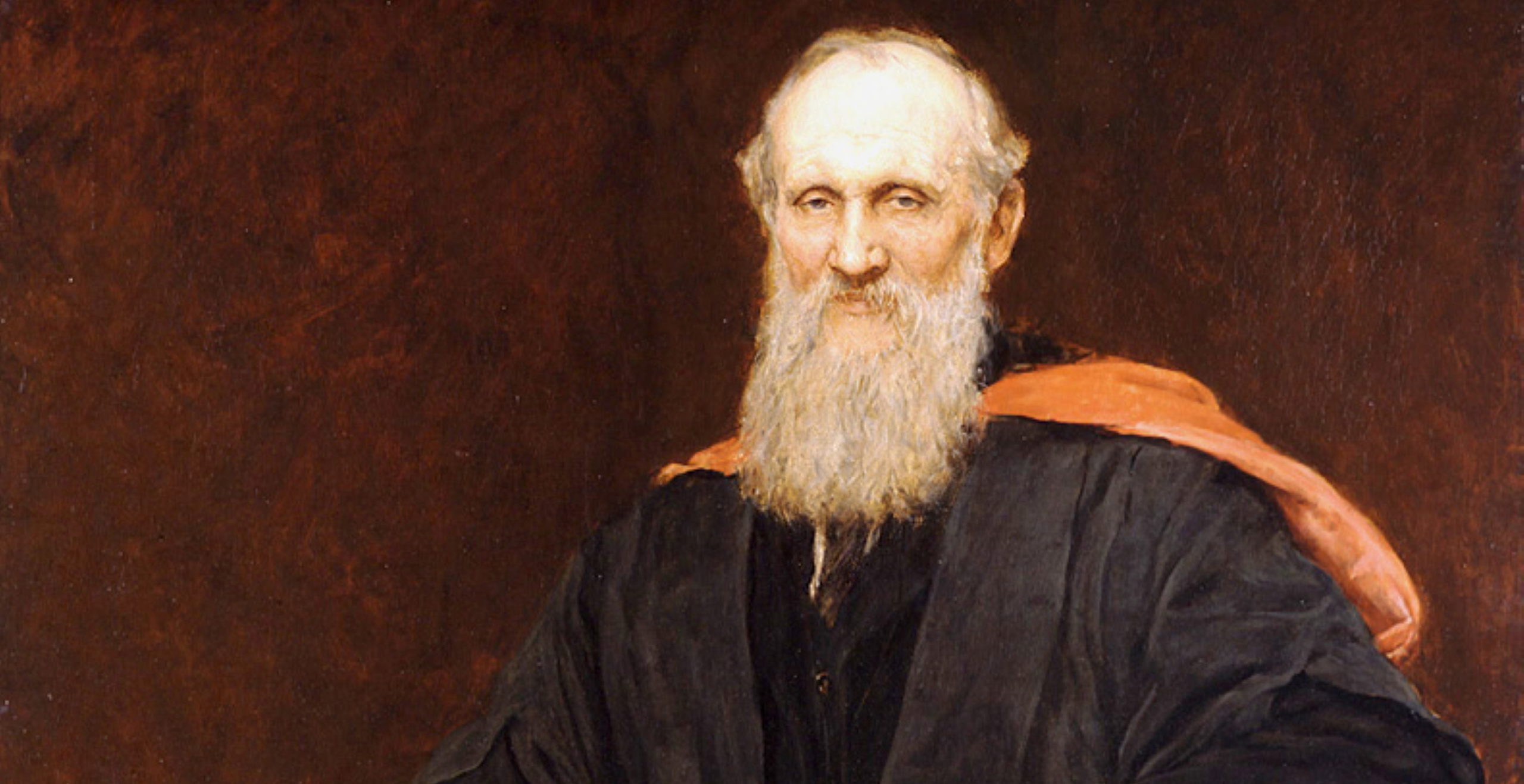
Lord Kelvin: When Great Certainty Meets New Evidence

Lord Kelvin was one of the greatest physicists of the nineteenth century.  His contributions to thermodynamics, electricity, and engineering transformed modern science.  Yet even Kelvin demonstrated that genius is no guarantee against error.

Kelvin argued that the Earth was only about 20 to 40 million years old.  Using the best physics available at the time, he calculated how long a molten Earth would take to cool to its present temperature.  Geologists and Charles Darwin objected that such a young Earth left far too little time for the slow processes of evolution and geological change, but Kelvin remained convinced that his calculations were correct.

The missing piece of evidence was unknown to everyone at the time: radioactivity.  After the discovery of radioactive decay in the late 1890s, scientists realized that radioactive elements inside the Earth continually generate heat, dramatically slowing the planet’s cooling.  Modern dating methods now show the Earth is approximately 4.54 billion years old.  Kelvin’s mathematics had been sound—but his assumptions were incomplete.  His refusal to reconsider those assumptions delayed acceptance of the overwhelming evidence.
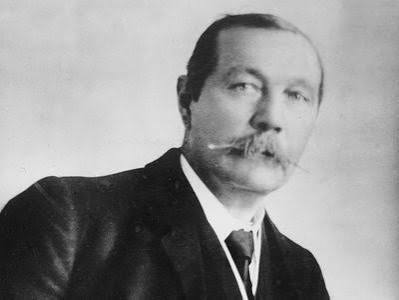
Sir Arthur Conan Doyle: When Belief Overrules Evidence

Sir Arthur Conan Doyle, the creator of the supremely logical detective Sherlock Holmes, spent the final decades of his life passionately defending spiritualism.  He became convinced that séances, mediums, ghosts, and communication with the dead were genuine phenomena.

Despite repeated investigations exposing many famous mediums as frauds, Doyle continued to defend them.  Perhaps the most famous example was his unwavering belief in the Cottingley Fairies photographs, which appeared to show two young girls playing with fairies.  Even after experts questioned the images and evidence accumulated that the photographs had been staged using paper cutouts, Doyle insisted they were authentic.  Decades later, the women involved admitted they had fabricated the photographs.

Doyle’s story is a powerful reminder that intelligence alone does not protect us from self-deception.  A person may apply rigorous logic in one area of life while allowing hope, emotion, or deeply held beliefs to override evidence in another.  His willingness to believe extraordinary claims despite repeated contrary evidence stands as one of history’s most striking examples of confirmation bias.
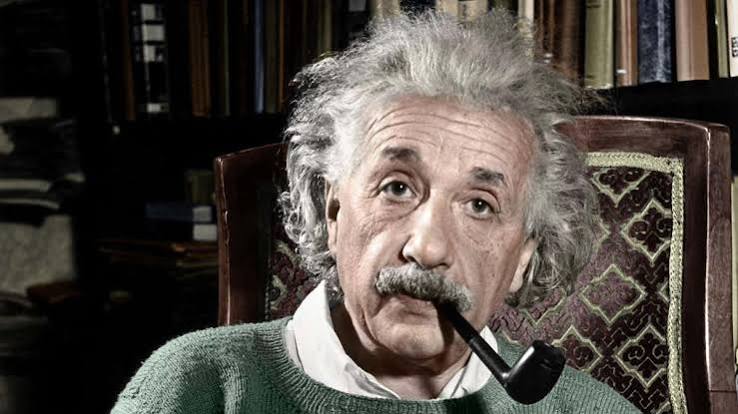
Albert Einstein: The Genius Who Resisted Quantum Reality

Albert Einstein revolutionized physics through the theories of relativity and helped lay the foundation for quantum theory itself by explaining the photoelectric effect.  Ironically, he spent much of the latter half of his career resisting one of the central conclusions of quantum mechanics.

Einstein believed that nature had to operate according to precise, deterministic laws.  He rejected the idea that events at the atomic level were fundamentally probabilistic, famously remarking, “God does not play dice with the universe.” Throughout his life he searched for hidden variables that would restore certainty to physics.

Over the decades, experiment after experiment supported the predictions of quantum mechanics.  The strongest evidence came long after Einstein’s death through tests of Bell’s inequalities, which consistently confirmed quantum entanglement and ruled out the kind of local hidden-variable theories Einstein had hoped would exist.  Today quantum mechanics stands as one of the most thoroughly tested and successful scientific theories ever developed.  Einstein’s skepticism helped sharpen the science, but in the end the evidence proved stronger than his intuition.  Nevertheless, Einstein’s objections helped force physicists to sharpen the theory and design better experiments.  In that sense, he was “wrong about the interpretation he favored,” but immensely valuable in advancing the science.

Now most of us probably know someone, perhaps not as famous as my three examples, but someone close or dear to our hearts that will never accept that they are wrong about anything.  You can argue with them until you are “blue in the face” and they will never change their mind.  These friends can be infuriating.  But have you ever stopped to think why they refuse to change their minds in the face of sometimes overwhelming evidence?  Psychologists have coined a term for such intransigence and call it “Belief Perseverance.”

This is the tendency to maintain a belief even after the evidence supporting it has been discredited or disproven.

Psychologists use this term when people continue believing something despite overwhelming contradictory evidence.

Example: A person continues to believe a conspiracy theory after every claim has been independently debunked.

Sometimes Belief Perseverance is confused with a close phenomenon called Confirmation Bias.  They are closely related but not the same. 

Confirmation Bias is the tendency to seek, notice, and remember only evidence that supports one’s existing beliefs while ignoring contradictory evidence.

Unlike Belief Perseverance, Confirmation Bias is about how people process information, not necessarily refusing to change after being proven wrong.

Before we leave the cognitive realm there is one more relevant term that we need to look at.  It is called Cognitive Dissonance.  This is one of my favorites since I have seen so many examples of this in my years on this earth that I have lost track.

Cognitive Dissonance is the psychological discomfort people experience when facts conflict with what they believe about themselves or the world.  When people are faced with a set of facts that cause them discomfort they will use a variety of ways to rationalize the evidence that ignores the reality in favor of a reality that they are comfortable with.  Like making excuses for someone’s behavior that is clearly immoral or unethical because they want to admire the person.

Now in today’s world of misinformation, disinformation, lies, distortions, fake ads, false messages, propaganda news, you can be pardoned if you cannot tell the difference between Perseverance Bias, Confirmation Bias and Cognitive Dissonance.  Truth be told, even Einstein could probably not tell the difference.  However, the bottom line here is clear. 

People, your friends and mine, and even those who are not our friends will continually use distorted logic and distorted facts to cling to ideas and perceptions that are false. 

And you may never be able to change their minds.  Nothing you say.  Nothing you do.  No experts you call on.  No preachers, teachers, ministers or nightly newscasters will ever make one dint in their belief systems.  Their minds are made up.  They are more than made up.  They are cast in stone, or iron.  You can take a sledgehammer, and you will not make a single dint in their ideas of what is true or not true. 

So why are we all so stupid that we waste our precious time trying?  Is it truly an impossible task to change anyone’s mind?  If Lord Kelvin, Sir Arthur Conan Doyle and Albert Einstein would not change their minds, what makes you think that your Aunt or best friend will?  Is the effort to convince them otherwise truly useless?  Perhaps we need to look as some examples in history where people did change their minds.  The most famous example may be Charles Darwin, the founder of “Evolution Theory by Natural Selection.” 

Charles Darwin provides a striking contrast to those who refused to abandon deeply held beliefs.  Throughout the more than twenty years he spent developing his theory of evolution by natural selection, Darwin deliberately searched for evidence that might prove him wrong.

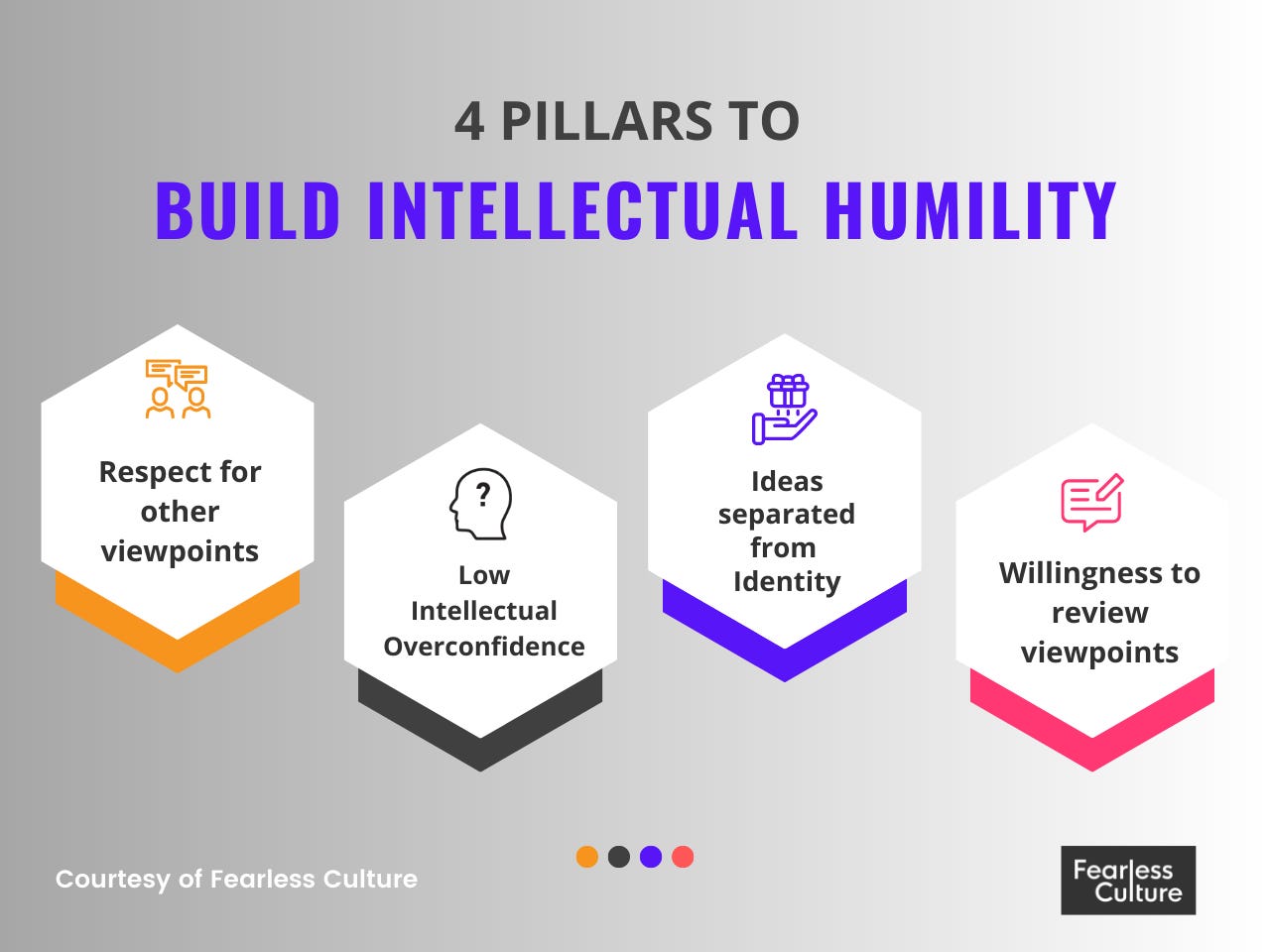
Darwin believed that no theory should be protected from evidence.  As he gathered new observations from geology, fossils, animal breeding, and the natural world, he continually refined and revised his thinking.  His willingness to let facts, rather than pride, determine his conclusions exemplifies what we now call Intellectual Humility—the recognition that being wrong is not a personal failure, but refusing to change in the face of convincing evidence demonstrates a lack of Intellectual Humility .

Darwin’s legacy reminds us that progress, whether in science or in life, belongs not to those who are always right, but to those who are willing to admit when they are wrong.  This brings us face to face with the concept of Intellectual Humility.  This is a willingness to question any concept or belief we hold in the face of new evidence or facts or logic which might question the assumptions upon which we hold said beliefs.  One might readily ask “How in the face of so much misinformation and lies can we tell facts and evidence from lies and fake facts?”  This is not an easy question to answer. 

Unfortunately, our schools and education systems seem to place more value on providing answers rather than asking questions.  The whole idea of critical thinking comes down to the willingness to ask and consider questions rather than blindly accepting facts.  Socrates was considered the smartest man in Greece because the Oracle said he was the only man who recognized how little he really knew.  The Socratic method is one of deducing truth and understanding by asking questions. 

Plato in his “Socratic Dialogues” described many of the stories wherein Socrates educated his students by asking questions and not by providing answers.  Ironically, Sir Arthur Conan Doyle created perhaps the greatest detective of all time whose main modus operandi was asking questions and keeping an open mind.  Something his creator did not seem to have the ability to do himself.    

My father gave me a bit of advice which I still adhere to today when I was a child.  He said, “Believe nothing of what you hear and only half of what you see.”  Lawyers know this truth when it comes to witnesses.  It has been said by the legal profession that “Nothing is as unreliable as an eyewitness.”  These thoughts mark a boundary for my intellectual humility.  It seems to be almost a curse that the smarter someone is, the more intransigent their humility can be. 

Living here in Arizona, we come into the summer season when temperatures soar into the triple digits.  We have heat warnings in the parks and posted in many public places.  Nevertheless, frequently people ignore these warnings and run or hike down a trail only to come back in a body bag.  Regardless of how many warnings they receive, some people insist that they know better.  They regard the park rangers or DNR people who are trying to warn them as stupid unthinking clods who really don’t know how much experience they have or how tough they are. 

Belief Perseverance not only affects science and politics, but it also sometimes kills people.

Go to YouTube and you can find countless examples of people who were so blinded by their own intellectual perceptions of their physical prowess and abilities that they thought they could ignore the advice of others.  There have already been four deaths on park trails in the Grand Canyon this year.  More will come. 

Many people do not realize that Arizona loses far more people to heat than to lightning, floods, tornadoes, earthquakes, mountain lions, bears, rattlesnakes, and scorpions combined.  Heat is, by a wide margin, the state’s deadliest natural hazard. 

Last year (2025) in Arizona, a total of 680 people died from heat related deaths.  Most were:

  • Over age 50,
  • Had underlying medical conditions,
  • Were outdoors for extended periods or lacked reliable air conditioning,
  • Were experiencing homelessness.

What does Intellectual Humility have to do with any of these facts?  I think it all comes down to recognizing our own limitations.  Sometimes this is made harder because we “used to be” good at something that we are no longer so good at.  My best time running a 10k was 38”48 seconds.  That is roughly six fifteen per mile.  If I ran one today, my mile times would be about 14 minutes per mile.  I could almost walk faster than I now run.   Our perceptions of ourselves as we used to be can blind us to a reality that we need to face today. 
Two sayings I like a lot are: 

  • “You got to know when to hold them and when to fold em.”
  • “God, grant me the serenity to accept the things I cannot change ,the courage to change the things I can, and the wisdom to know the difference.”

Growing old is never easy.  Letting go of ideas is perhaps even harder.  Intellectual Humility is a path to growing older longer and with less pain.  Without Intellectual Humility, your images of what you once were and what you once did can blind you to the reality that you are today.

The courage to change your mind is not a sign of weakness—it is one of the highest forms of wisdom.   Many good people would be alive today if they had developed more Intellectual Humility.

WHY?  Oh WHY? Oh WHY?

why-1780726_640

“WHY did this happen?” is a question that seeks reasons and meaning for an event.  Some answers to this question include:

“It happened because God/Allah/etc. willed it”

“It happened because that’s the way the stars aligned”

“There is no reason, it just happened”

WHY did Oswald kill Kennedy?  WHY did the shooter in Las Vegas kill 60 people?  WHY do people support someone like Trump?  WHY do we allow Israel to have nuclear weapons but not other nations in the Mideast?  WHY did a nice person like that ever marry a real jerk?  WHY did the chicken cross the road?  From the sublime, to the peculiar to the mundane to the trivial, we are obsessed with knowing WHY?  We must have a reason WHY.

The police call it motive.  If a crime happens today, someone will scourer Facebook, Twitter, Instagram, TicTok, and other social media to find out “WHY?”  WHY did they do it?  What was their motive?  WHY would a 47 year old married woman with three children who was a teacher have sex with a seventeen year old in the back seat of her husbands car?

When we don’t know WHY, we either begin a useless search for the reason or we brush it aside.  Your young child asks you WHY and you reply, “Because I told you to.”  Your employee asks you WHY and you respond, “Because I am the boss.”  You want to know WHY they laid you off or WHY you were fired, and you get a reply like “We had a reduction in force.”  You want to know “WHY” you were defriended on Facebook or WHY you did not get the job you applied for or WHY your good friend died so young or a million other WHYs.   No one stops to think, there is no sense in asking WHY?  In all probability, any WHYs you come up with will be suppositions, hypotheses, conjectures or out and out myths.

We are diseased with asking WHY.  We do not want to accept an arbitrary and capricious universe.  Even the great Einstein rejected Quantum Theory because it was built on the concept of indeterminacy.  Ironic, that so many people initially rejected Einstein’s theory of Relativity because it lacked absoluteness and determinacy.  Today, we still have a rebellion going on in morality in terms of whether or not there is any absolute morality or is all morality relative.  It is easy to posit a WHY if you have a solid concept of morality that you can refer to.  The favorite one among religious people is the concept of sinner.  A sinner is anyone who ruptures the boundaries of your own avowed religion.

So I run to the Lord

Please hide me, Lord

Don’t you see me prayin’?

Don’t you see me down here prayin’?

But the Lord said

Go to the Devil, the Lord said

Go to the Devil

He said go to the Devil  — Sinner Man by Nina Simone

I told a friend of mine the other day that I did not want to go to heaven.  “WHY,” he asked?  “Because.” I replied, “What if Adolph Hitler and Donald Trump are both there?”  I think the WHYs around such a situation would drive me to hell.

Another friend of mine is always good for theories on WHY people do things.  We discuss lots of problems in the world and he loves to seek out facts and evidence that might help to explain WHY.  He is driven to make sense of a nonsensical random capricious world that is frustrating.  Perhaps most frustrating is that just when we are beginning to realize that there are no answers to the WHYs of the world, suddenly an answer emerges or at least appears to.

The answer all depends on numbers.  A WHY can be found if enough people are willing to accept the explanation.  WHYs have a democratic aspect that has nothing to do with logic.  For instance, the question I raised above about WHY anyone would support Donald Trump has spawned a cottage industry of books purporting to provide WHYs to the Trump sycophancy.  From racism, to sexism, to caste, to identities, to religion, to abortion, to greed, to fear, to being rural, to the electoral college, there have been over fifty books dedicated to theories to describe WHY any rational human being would vote for Trump.

71K5t+FhguL._AC_UL640_QL65_

I asked ChatGPT “WHY would anyone vote for Donald Trump.”  Here is what she/he said:

ChatGPT:

“People vote for political candidates for a variety of reasons, and the decision to vote for Donald Trump in particular can be influenced by a range of factors.  Some voters are drawn to his positions on certain issues, such as immigration, trade, or foreign policy.  Others appreciate his outsider status and his perceived willingness to challenge the political establishment.  Additionally, some voters may feel a strong connection to his personality, viewing him as a strong leader who speaks his mind.”

“It’s also important to consider the broader political and cultural context in which elections take place.  Factors like party loyalty, economic conditions, perceptions of the opposing candidate, and regional or demographic influences can all play a role in why someone might choose to vote for a candidate like Donald Trump.”

I think this is a very good answer, but somehow it lacks a definitive characteristic.  I don’t want a hodgepodge of reasons WHY.  I want to know “THE WHY.”  All of the mitigating factors above are mere hypotheses.  If your neighbor has a Trump Flag flying outside his/her house or your cousin says that “I am going to vote for Trump no matter what he does”, the above reasons given by ChatGPT are not going to do much for you.  The problem with finding an answer to WHY is that it is like the Russian dolls.  One WHY is embedded in another WHY.  We want the bottom WHY but then the dolls become more like an onion.  You can peel the onion all day long and eventually there is nothing there.  If you are looking for a core seed or a core reason to explain all the other WHYs, you will soon be grasping nothing but air.  For instance:

“WHY did you vote for Donald Trump?”

“Because he is a Republican.”

“So, you voted for Trump because he is a Republican and you support the Republican party?”

“YES.”

“WHY do you support the Republican party?”

“I have always supported it.”

“WHY”?

“Well, my mother and father were both Republicans.”

“WHY”?

“I don’t know, they always were so I am too.”

“What if Trump decided to become a Democrat again, would you still vote for him?”

“Yes, I would.”

“So, it really has nothing to do with his party affiliation?”

“I guess not.” 

“Thank you for your cogent explanation.” 

Where oh where can I find the real reason WHY the world is so screwed up?  And what if it is not?  What does that mean for the universe?

29116_SB_text

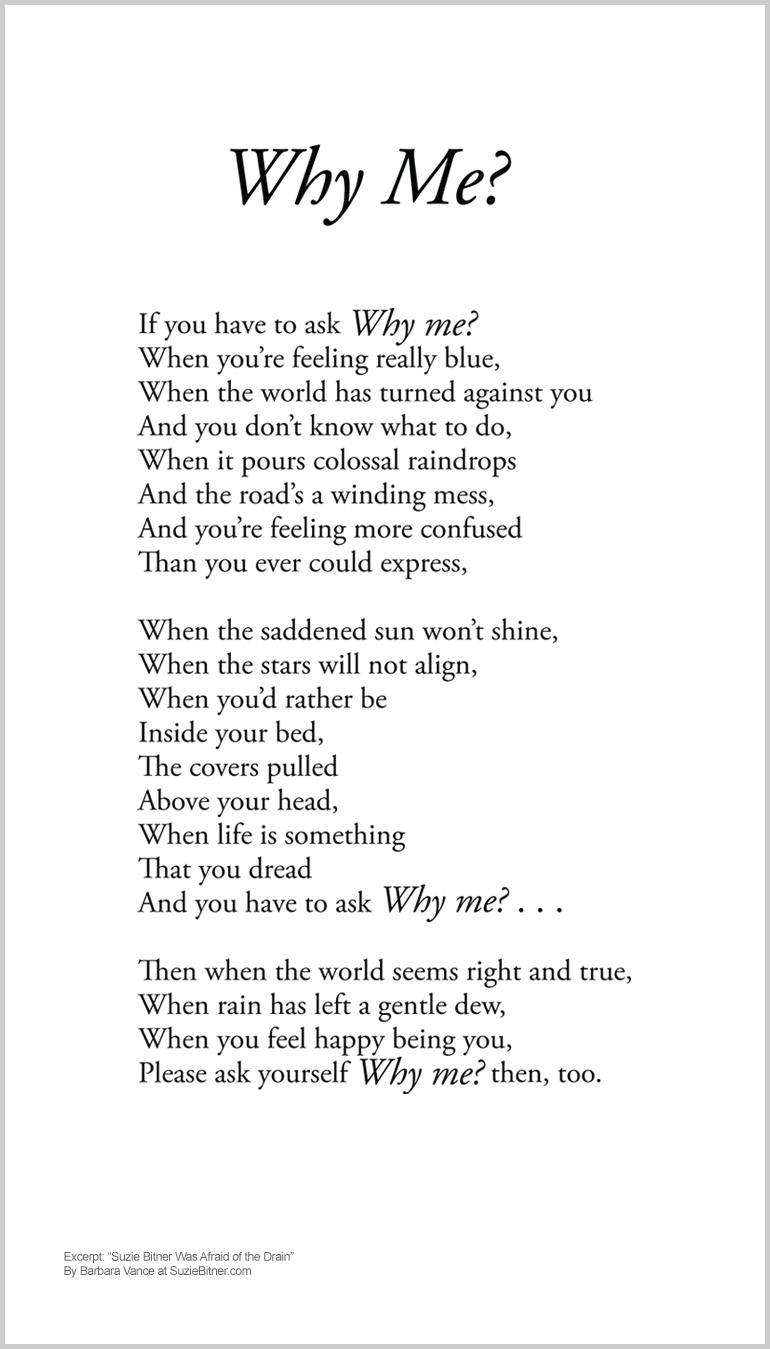
“Excerpt from ‘Suzie Bitner Was Afraid of the Drain’ by Barbara Vance.”

PS:

WHY are poems so confusing?

Four Remarkable People on a Quest

quotes-purpose-of-life-2-archives

Part 1 – The Meeting

Once upon a time, there were four remarkable men.  Well, actually there were two remarkable men and two remarkable women.  A confluence of circumstances brought them together in perhaps one of the strangest coincidences in history.

Jamal was from the north.  He was one of the highest scorers to ever take the Mensa Genius Examination.  When he was only four years old, he developed a program to block credit card companies from calling his parents on their cell phones.  When he was seven years old, he developed a new form of cryptocurrency which was impossible to hack, easily transferred, had high usability and presented a respectable means of acquisition.  The currency was so popular that Jamal became a billionaire when he was 15 years old.

Isabella was from the south.  She graduated when she was 12 years old from the University of São Paulo with a Ph.D. degree in Physics and Philosophy.  She burned through required credits like a hot knife going through butter.  She had no problem paying for her tuition since she was hired by the University of São Paulo physics department to help with a particle research project they were undertaking, while she was earning her degree.  When she graduated, half of the physics departments in the world tried to hire her.

Li Na was from the east.  She was born in Chengdu, a sub-provincial city which serves as the capital of China’s Sichuan province.  She was the only child of an older couple who really wanted a boy.  Li Na learned to play soccer, baseball, table tennis and hockey at a young age.  She wanted to please her parents.  She was an excellent athlete who competed in all four sports in the Olympics.  However, her athletic abilities were far overshadowed by her intellect.  Li Na had mathematical abilities that rivaled any mathematician in history.  She could take any number and give you the square root of the number down to 1000 roots without a calculator or even an abacus.

When Li Na was fourteen years old, she decided to tackle all six of the remaining Millennium Prize Problems set by the Clay Mathematics Institute in 2000.  Li Na was able to solve all six of them within a month, but she decided it would be unfair to accept the prize money as the solutions were so easy.  She therefore rejected the prize and kept the solutions to herself.  Corporations all over the world engaged her with solving problems that defied normal mathematical solutions.  She gave her money back to her parents to help support them and to put into savings.  No one knew what she was worth, but it was assumed that she was a mega millionaire.

Elijah was from the west. He was born in California in a commune that practiced a form of communal marriage.  Elijah was never sure of who his father was, and he seemed to grow up with several mothers.  At an early age, Elijah showed a talent for music.  When he was three years old, he taught himself to play a violin.  At four, he learned to play an oboe and at five, he learned to play a harp.  When he was six, he took first place in the Menuhin Competition beating out every other contestant regardless of age.

As remarkable as his talent for playing music was, Elijah’s skills and abilities in the area of composing music were even more incredible.  He had written six operas, twenty movie scores and five symphonies before he was 16 years old.  Orchestras all over the world were playing his compositions when most people did not even know his name.  Elijah hated publicity and avoided any of the usual celebrity events.  He donated most of his money to help other aspiring musicians.  He was well known among musicians and performers for his humility and kindness towards others.

cafe-wrenEach of our four remarkable people were into their middle years when by chance they met at a small cafe and restaurant in a town called Luck in Northwestern Wisconsin.  Luck is a small town of about 1200 residents, which in its heydays was the home of the Duncan Yo-yo.  In fact, it was once known as the Yo-yo Capital of the world.  Sadly, Yo-yo’s had declined in popularity and so had the fortunes of Luck in terms of prosperity and jobs.  Now perhaps, the high spot of Luck was the Wren Cafe.  A place that had excellent food, good beer and a unique ambiance imbued by its extremely creative owner Stephanie Lundeen.


The café is well known to locals and to many of the cabin people who come up on the weekends to enjoy their sojourns from the “big city” of Minneapolis.  Li Na, Elijah, Isabella and Jamal were each brought there by friends who were locals and who knew that the Wren was a very good place to eat.  The Wren being a small place and small towns being where everyone knows everyone, introductions were soon flying like falling Wisconsin snow.  Our four remarkable people sensed that a new chapter in their lives was about to begin.

Thus, at 12 PM on a cool summer day in Luck Wisconsin, Li Na, Elijah, Isabella and Jamal experienced a nuclear fusion of intimacy.  The result was like a billion tons of dynamite going off at once or the largest fireworks display in the world.  The talent that each had was like a magnet that created an instant bond between the four.  Finding other people of comparable abilities and demeanor was something that they had only dreamed about.  They all found the rapport and affinity they had for each other to be amazing.

After an hour or so of rapid conversation intermixed with more general discussion with others in their parties, our four remarkable people decided to meet again when they could have more time to discuss their lives without anyone else present.  Unbeknownst to their friends and families, Li Na, Jamal, Elijah and Isabella all had serious inner doubts that they had never been able to share with another living soul.  Each believed that they had found some kindred souls with whom they could share their secrets and perhaps find some piece of mind.  They agreed to meet again at the Wren the following week.  It was a week they knew they must spare from their busy lives.

silhouette-of-people-family-people-silhouettes-download-free-vector-art-stock

Part 2 – Four Doubts

For several years now, Jamal had begun to feel that there was no meaning to his life.  He had even contemplated suicide because he felt that he had nothing left to live for. The world did not seem to have people that cared about anything but their new smart phones or how fast their Internet speeds were.  Life was one vast merry go round with people constantly jumping on and off and reacting to whatever the current fads and trends were.  Nobody cared about anything but how much money they had and how many things they could buy.  Jamal desired to know if there was a true Purpose in Life or if life was simply meaningless.

Elijah had many of the same feelings as Jamal.  Elijah no longer found value in anything in life.  Everything he had ever owned or purchased soon became worthless in his mind.  The best yachts, cars and homes that anyone could buy could not make him happy.  Fame and talent and beauty all seemed to fade over time.  People were fickle.  One minute they loved you and the next minute they loved somebody else.  Elijah knew what it was like to be famous and admired but it had lost any value to him.  He thought that being known as the greatest musician in the world would satisfy his inner longings.  Even though he had obtained this goal, it did not seem to provide the value that he had hoped for.  Elijah longed to know if there was any true Value in Life or if everything was really worthless.

Isabella had once believed that there was a hidden truth to life that remained to be found.  She had studied physics and philosophy thinking that they would lead her to this truth.  She had spent many years searching for this truth.  However, every time she found a truth, she soon realized that it was also a lie.  The prophets and great religious leaders had always taught that “The truth will set you free.”  Isabella could never find the talisman that would set her free.

She desperately wanted to believe that there was some truth to existence and that life was more than just a series of lies and deceptions.  She had a desire to find this truth, but she had become increasingly discouraged.  Each day she read the news and only found “Fake Facts” and deceptions masquerading as truth.  The world seemed to have misinformation and disinformation but no truth.  Isabella wanted to find the Truth of Life.

464430-rethink-quotes

Li Na was another tormented soul.  A brilliant mathematician, she could not discover a single constant in life.  Every time she thought she had found a concept in mathematics that would provide such a constant, Godel’s Incompleteness Theorem would rear its ugly head proving still again that it is impossible to find a complete and consistent set of axioms for mathematics.  If mathematics had no constants, how could life have any constants.  Was is simply true that death and taxes were the only constants in life?  Li Na wanted to believe that there was more to life than simply death and taxes.  Li Na desired to find the one Constant in Life that would really make life worth living.  If she could find this constant, she believed that it would put her soul at rest and she might find true peace on earth.

Part 3 – The Doubts Unfold

To Be Continued:  I will publish the next part of this story when it is finished.  I appreciate your patience. 

Time for Questions:

What do you think so far?  How do you like the four people in the story?  Have you ever shared similar doubts?  What did you do about them?  What do you believe about life?

Life is just beginning. 

“Doubt as sin. — Christianity has done its utmost to close the circle and declared even doubt to be sin. One is supposed to be cast into belief without reason, by a miracle, and from then on to swim in it as in the brightest and least ambiguous of elements: even a glance towards land, even the thought that one perhaps exists for something else as well as swimming, even the slightest impulse of our amphibious nature — is sin! And notice that all this means that the foundation of belief and all reflection on its origin is likewise excluded as sinful. What is wanted are blindness and intoxication and an eternal song over the waves in which reason has drowned.”
― Friedrich Nietzsche, Daybreak: Thoughts on the Prejudices of Morality

My Name is Carmen: I Murdered Two Children

The following story is a work of fiction based on a true-life trial and murder.  This story follows a somewhat different history from the real-life story but will certainly be recognized by many as related to the story of Yoselyn Ortega and the Krim’s family.  The story occupied a major place in most newspapers for many months.  For any parent, it is a horror story.  No one can imagine the despair and misery that the Krim’s have gone through.

As I followed the trial, I was struck by the fact that so many of the newspaper articles about the murders were looking for a motive or reason for Ortega’s actions.  Ms. Ortega never testified at the trial and I suspect that many people thought it was simply a matter of allowing or encouraging her to “tell the truth.”  If only we could ask Ortega “why” she did it, we could find her motive and reason.   I have followed many related stories of murders and I have been struck by the lack of “truth” that is ever found.  Not just because suicide seems to be a way out for many murderers but even when the murderer is alive to tell their story.

two children

My name is Maria Carmen Fernanda Lopez.  I am a Columbian citizen.  I want to tell my story so that everyone will understand.  I am now in jail for the murder of two children that I was responsible for taking care of.  I was their nanny.  They say that both children loved me and in truth, I often loved them back.  The entire world wants to know why I murdered these children.

The prosecutors told a lie.  What they said about me was not true.  They wanted me to look very evil so that I could be convicted.  My defense attorneys also did not tell the truth.  They did not know me.  They only wanted to save me from receiving a death sentence.  It did not matter if the truth was told or not.  The psychiatrists who found many reasons for what I did do not know the reason why I murdered the young girl and young boy.  Each of the psychiatrists had a different theory.  I do not like to argue with anyone, so I simply agreed with each of them.  Nine different psychiatrists and nine different theories.

I never had the opportunity to testify.  My attorneys said it would be better if I did not.  I was convicted anyway of first degree murder.  I would like for you to hear my story.  Maybe, you can understand.  I do not deny killing my two young charges.  It was like killing my own children.  The children were very kind to me although sometimes they could be spoiled brats.  But what would you expect with a rich mother and a rich father both of whom could lavish much time and money on their children.  Most of the time they were fun to be around.

I was born in Cali Columbia in 1961.  I was one of twelve children.  My family was very poor.  My father sewed and fixed shoes for a living.  My mother tried to find enough food each day to feed us all.  I was the fifth oldest child and my job was to take care of all my siblings who were younger than I was.   I guess you could say I received nanny training when I was growing up.  I only went to school through the eighth grade.  No one in our family went any further.

I had a cousin Luisa who in 2001 emigrated to the United States.  She had a father who had received a degree in engineering from the Pontificia Universidad Javeriana.   He wanted to move up in the world and he was able to get a visa and a position with an electronics firm in New York City.  Luisa, her mom and her dad all moved to the USA.

My cousin Luisa and I were very close when we were growing up.  Luisa always had nicer clothes and was much prettier than I was.  Even though her family had much more money than mine, we were like sisters.  She had lots of boyfriends and we would sometimes sneak out at night to share time together.  She would introduce me to many young men, but I was very shy and not very good looking.  My first child was with one of these young men.  We did not marry, and I named my young boy Mateo.  Mateo’s father disappeared a few years after Mateo was born and I never saw him again.  My father was not very happy with me, but unwed pregnancies are the norm in Columbia.  My mother was actually very happy to have a new addition to the family.

A few years after Luisa moved to the USA, she wrote me a letter and asked if I would like to live with her in NYC.  I wrote back and replied that I would love to if I could bring Mateo along as well.  She wrote back that “Of course, you can bring Mateo.  Furthermore, I think I might be able to arrange a job that you would be very good at.”  She did not say anymore, and I was very curious.

I discussed going to the USA with my Mom.  She thought it would be a good opportunity for me but where would we get the money.  We did not have enough money for a bus trip to Bogota, never mind NYC.  My dad was also agreeable since it would be two less mouths to feed.  However, he did not have an extra peso to spare.  Sadly, I wrote back to my cousin to explain that it might be years before I could save enough money to come to the USA.

In a very short time, I received a letter from Luisa.  In the letter was a voucher for a one-way ticket to NYC.  Luisa said I should let her know when we would arrive, and she would meet us at the airport.  I immediately told my mom and dad.  My mother seemed sad to see me go but my father did not seem to care.  I packed my bags and purchased a ticket on Avianca S.A. for two weeks later.  I wrote Luisa and gave her our flight number and arrival time.

We arrived in NYC without any problems.  Luisa met us at the airport and we took a taxi to her apartment in Queens.  She was now living in her own apartment and had a very good job with Verizon company as a translator.  Her Spanish skills and good people skills had allowed her to work up from a customer service representative to a position as manager in one of their bi-lingual call centers.   Luisa had an extra bedroom which I was placed in.  My young son Mateo had a couch to sleep on.  We all hoped that I might find good employment and be able to rent my own apartment someday.

After catching up on family, friends and Luisa’s life in NYC, I was anxious to ask Luisa about this job she thought I might be good at.  Luisa explained that in NYC there were many wealthy families who wanted dependable mature women to work as caretakers or nannies for their children.  Such families were not hard to find, and she knew several families who were currently looking for a good reliable nanny.  With her recommendation, she was sure I would have no trouble finding a job.  My one concern was how I would take care of Mateo who was now eight and take care of someone else’s children.  Luisa said that I should not worry as she could help me with Mateo and most nanny jobs had some degree of flexibility.

Two weeks later after several interviews I was placed with Eric and Sarah Clarke as a nanny for their children.  They were a young couple with two children.  One child, Noah was six and in kindergarten.  The other child Emma was eight and going into the third grade.

Eric was an executive with an aerospace firm and travelled a great deal.  Sarah worked as a Public Relations specialist with the Magrino Company in Manhattan.  The Clarke’s lived in an area known as Tribeca in Manhattan.  It was a very wealthy neighborhood but very convenient in terms of Sarah’s job and Eric’s need to travel frequently.  From Tribeca to the Magrino company was less than twenty minutes by the metro or by car.  Both Sarah and Eric had a great deal of job flexibility and could often work at home.   This last point was what made me accept the position since I felt that I would not be needed twenty-four seven and I would be able to find more time to spend with my own son.  I was going to be a “live-out nanny.”

My starting pay rate would be $18. 00 per hour and I would work ten-hour days except for Wednesday and Thursdays when I would only work five-hour days.  I would work five days a week unless special occasions arose.  In the event of weekend work, my hourly wage would be $26.00 dollars per hour.  My gross salary would be $720 dollars per week.  I would take home about $600 dollars per week.

My expected job duties were as follows:

  • Meeting the children’s physical, social, emotional and intellectual needs.
  • Undertaking all tasks related to childcare, including doing the children’s laundry and preparing the children’s meals and cleaning up afterwards.
  • Caring for the family pet.
  • Meals for the children when parents were not home.

griefI worked for the Clarke’s for about two years.  During that time, I got along quite well with the children.  They were mostly well-behaved and pleasant to be around.  We would go on outings after school and take many walks.  I would buy them ice cream cones and take them to see the animals in the zoo and on library trips and museum trips.


I also got along very well with Eric Clarke.  He was not around as much but he was always polite and treated me as one of the family.  Sarah was a little more difficult and controlled the purse strings.  I had thought that after two years, I should get a raise, but she refused to increase my hourly rate.  She would sometimes ask me to do other jobs which I did not think were in my job description.  I generally acquiesced to her requests.

Now it has been said at my trial by the prosecution that I was angry at Sarah for pushing more work on me and for not paying me enough.  It is true that I thought she could be unfair at times, but I also appreciated the many times she helped me out when I needed help.  She was often very generous and was by no means a skinflint or cheapskate.  I harbored no ill will to either Eric or Sarah.  Then you might ask: “Why?”  Why murder two innocent children?

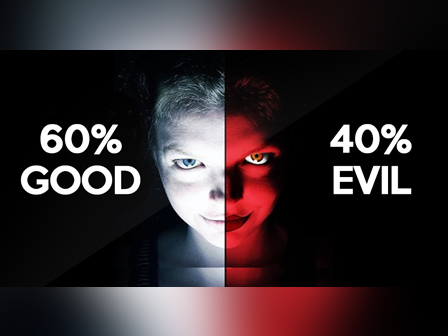
I have heard all the explanations.  I suffered from mental illness.  I was crazy.  I was overworked.  I was stressed.  I was angry.  I was feeling humiliated.  I was insulted by Sarah.  I was told to by voices in my head.  I did not have enough time with my own son.  I was jealous of the money and status the Clarkes had.  I was going to lose my job.  I was just plain evil.  EVIL, EVIL, EVIL.

Evil or Good

I am glad that I was not asked to testify.  I would not have known what to say.  I would have been asked “Why?” and no one would believe my answer.  You will not believe it.

We seem to think that whenever there is a killing, murder, suicide or mass atrocity that if only the victim lived we could find out “why?”  Humans have an insatiable desire to know the answer to the question: “Why, did they do it?”  The truth is that there is often no reason.

Theodore Bundy, Charles Whitman, James Huberty, George Hennard, Devin, Patrick Kelley, Adam Lanza, Seung-Hu Cho, Omar, Saddiqui Mateen, Stephen Paddock and the list goes on and on.  Why?  Why?  Why?  The public wants a logical reasonable answer.  The police want a motive.  The prosecution wants a reason to convict.  The defense wants a reason to acquit.  Our mental institutions want another reason to try out different therapies.

insanity

Why? Why? Why?

Don’t you think I owe the public an answer?  Don’t you think I owe the Clarkes an answer?  Don’t you think I owe my family an answer?

parental grief

What explanation or reason could possibly make any sense for such a vicious, depraved and wanton act of destruction?  Would any explanation make sense to Noah and Emma?  Would any explanation expiate my guilt and remorse?  What explanation would you believe?

I am certain that I have no explanation you would be satisfied with.  Maybe that is the real definition of craziness.  To do something with no reason, logic or explanation that can possibly make any sense.  I wish I could live my life over again, but I am not sure it would make any difference.  I have explored alternative realities and they all lead right back to this cell that I sit in today.  The ultimate tragedy of my life is inexplicably bound up with murder and chaos.

mother and dead child

They say I expressed no remorse or regrets during the trial.  I appeared to be a selfish and narcissistic person who was only concerned with herself.  I shed no tears.  But what good would regret do?  It would not bring back Noah or Emma.  What good would regret do for the Clarkes?  It would not bring their children back.  It would never help Sarah to forget the horror she saw.

In truth, I have no regrets.  I am a victim just as much as anyone else in this tragedy.  There is no escaping our destiny.

Time for Questions:

Is it possible that people do not know “WHY?”  Why do you think that people do evil things?  Are all of us evil at some point in our lives?  How do we overcome evil?  Is there really a devil who “makes us do it.”

Life is just beginning.

“One might expect that the families of murder victims would be showered with sympathy and support, embraced by their communities. But in reality they are far more likely to feel isolated, fearful, and ashamed, overwhelmed by grief and guilt, angry at the criminal-justice system, and shunned by their old friends.” — Eric Schlosser