The Twelfth Greatest Mystery of all Time:  Can We Solve All the Mysteries of Existence?

The-Mystery Well, we have come to the end of my Greatest Mysteries of All-Time Series.  So far, I have solved ten of the eleven.  This last one is the easiest of all.  Yes, we will solve all the mysteries of existence except for one.  Why do people do what they do?  I submit we will never satisfactorily solve this question.  Thus, I might as well say that the answer to this last mystery is NO!  We will not solve all the mysteries.  There will always be more mysteries.  As long as people are curious and unpredictable, life will be one long stream of continuous and never-ending mysteries.  Mysteries are like the stars in the universe. They are beyond counting and beyond measure.  They are as infinite as humanity’s quest for answers.  (Click here to listen to the Mystery of Existence Song by Farzin Darabi Far)

Although there are several ‘schools of thought’ relating to why God allows mental, emotional, and physical afflictions, it essentially remains a mystery” — R. Alan Woodslatmosphere_metereologie_populaire_camille_flammarion2

How many times have you picked up the newspaper, read a headline and asked yourself: “Why would anyone do that?”  Why would anyone do that? What were they thinking?  I once listened to a series of interviews with serial killers thinking I might find an answer to this question, instead, all I found were more questions.  The killers themselves did not know why they did what they did.  Yesterday, on one of the CNN vignettes on my IPAD, I found an article that started out as follows:  Inside the mind of a serial killer .  It featured an interview with Forensic psychiatrist Helen Morrison who has interviewed over 135 serial killers.  When asked by interviewer Brooke Burke “Why do serial killers continue to kill over and over?”; Dr. Morrison replied “I wish I knew.  It is still a big mystery of why.”   Here are some recent headlines that were in the news on CNN as I write this blog:


If you are like me, you probably look at several of these headlines, shake your head and ask “Why would anyone do that.”  Why?  Why? Why?

As I get older and presumably wiser, I find myself less able to come up with answers to this question:  “Why did he do that?”  “Why did she do that?”  “How could anyone do that?”  “What were they thinking?”  Is it just me?  Karen says she is amazed that I am almost constantly rendered speechless by the things that other people do: “Why would anyone vote Republican?  Why would anyone vote Democrat?

godsshadowHow come people put large ugly tattoos all over their bodies?  Why would anyone pay $300 dollars for faded ripped jeans?  How could anyone marry someone like that? Why would anyone let themselves be treated like that?”


“All is mystery; but he is a slave who will not struggle to penetrate the dark veil.” — Benjamin Disraeli


Mystery after mystery confronts my daily existence.  My best efforts to solve the mysteries of life are worthless in the face of this continuous barrage of mysteries.  While I may solve one or two great mysteries each day, one hundred others seem to pop up to take their place.  Solving my mysteries, I feel like a rat running on the tread mill and staying in the same place.  I apply genius, innovation, creativity, determination, perseverance, fortitude, patience, discipline and still the mysteries of life continue to multiply and accumulate faster than I can dispose of them.

“The most beautiful thing we can experience is the mysterious. It is the source of all true art and all science. He to whom this emotion is a stranger, who can no longer pause to wonder and stand rapt in awe, is as good as dead: his eyes are closed.”– –Albert Einstein

Do mysteries have some inestimable place in our daily existence?  Are they like vitamins and minerals a necessary part of our daily diet?  Can we live without all the perplexity and confusion that these numerous mysteries provide us?  Or without them, would we gradually wither away and die of sameness and complacency?

I know not what course others may take; but as for me, give me mysteries or give me death! John Persico Jr.

Time for Questions:

What are your greatest mysteries?  What makes a mystery for you?  What do you find most curious or interesting about life?  How do you go about solving your own mysteries?  Do you regard mysteries as fun and entertaining or challenging and provocative?  Do you hate mysteries?  Why?

Life is just beginning.

“Every woman that finally figured out her worth, has picked up her suitcases of pride and boarded a flight to freedom, which landed in the valley of change.”  ― Shannon L. Alder

The Thirteenth Greatest Mystery of All Time:  How can I Provide More Value to the World and Get Paid for It? 

Business-Consulting1If you have a good memory, you will note two facts. One, I skipped mystery number 12.  Two, I added a 13th mystery to my series of All Time Greatest Mysteries.  Call it a “baker’s dozen.”   Actually, this is a rather shameless advertisement for my services.  I have posted over 95 blogs on this site and nearly 600 blogs at www.timeparables.blogspot.com  and never one ad.  Today, I am posting an ad for myself.  I want to consult, teach, train, speak, lecture, educate, facilitate and help organizations innovate in the areas of cost reduction, strategic thinking, quality improvement, customer service, innovation and revenue generation.  Over the years, I have helped many profit and non-profit companies by solving problems and creating solutions to their most pressing business needs.

“Don’t think of your website as a self-promotion machine, think of it as a self-invention machine.”  ― Austin Kleon

I am now looking for potential clients that need the help of an honest, hardworking, creative and innovative consultant.  Over the years, my clients have made amazing improvements in all areas of their business including:  increased revenue, reduced operating costs and greatly improved customer loyalty.  I enjoy a collaborative working relationship with clients wherein I bring the best of twenty six years of organizational development experience to the client and meld this to the knowledge and systems perspective that is part of their inside working experience.   consulting_concept1

“Try not to sound like those singer-songwriters that go on and on with ten-minute, barely intelligible stories that everyone endures until the next song starts.”  ― Loren Weisman

You might be wondering:  “How do I fit into this marketing picture?”  If you know of any organization that is in financial difficulty or any organization or manager that simply wants to be better able to compete in a global market, please send me their names or send them a link to this blog.  I have a full-profile and resume at LinkedIn and examples of some presentations that I have used for organizational development at Slideshare.net.

I have a website at www.johnpersico.com  that displays my model of organizational excellence and some of the tools that I use in the quest for enhanced organizational performance.  I do not use a cost cutting model of organizational growth and change.  My models are all based on doing things better, smarter and more effectively.  Over the years, I have learned from such management experts as: W. E. Deming, Kaoru Ishikawa, Peter Drucker, Herbert Simon, Noriaki Kano, Yoji Akao,  Joseph Juran, Kenichi Ohmae and many others whose names I have now forgotten but whose lessons and models I have assimilated.  11596153-business-consulting-concept-in-word-tag-cloud-on-white-background2

“I’ve said it before, and by gosh, I’ll say it again — don’t be afraid to toot your own horn.”  ― Emlyn Chand

I have conducted hundreds of seminars, online classes, workshops, talks, training sessions, team projects and consulting engagements with government, education, for-profit, manufacturing, healthcare, transportation, IT, mining and retail industries.  I would be happy to speak to anyone to see how I can help them reach their goals or simply plan a strategy to help them more effectively accomplish their vision and mission.  My vision has been the same now for 25 years:  To Live a Healthy, Useful and Wise Life.   

“The true basis of morality is utility; that is, the adaptation of our actions to the promotion of the general welfare and happiness; the endeavor so to rule our lives that we may serve and bless mankind.”  —- Annie Besant

Please take 3 minutes to review my video.  I was asked to create a video for a potential client that wanted me to showcase my facilitation and teaching style.  This short video was the result.  Please feel free to pass it on to other people.  If it goes viral like Gangnam Style, I may have to create a dance to go along with it.

John Persico Consulting and Training Video 

Thank you for your help.  

I promise to post Mystery Number 12th this coming week.


The Eleventh Greatest Mystery of All Time:   Where is the Arc of the Covenant?

The Arc of the Covenant is the repository for the commandments given by Yahweh to Moses on Mount Sinai.  Precise descriptions for the repository were given by Yahweh to Moses.  The Book of Exodus gives detailed instructions on how the Ark is to be constructed.   (Listen to the Arc of the Covenant Song by the Congos)  Ark-of-covenant-God-face-to-face-1-

Ark of the Covenant from Exodus 25:10-22 New American Standard Bible (NASB)

10 “They shall construct an ark of acacia wood two and a half cubits long, and one and a half cubits wide, and one and a half cubits high. 11 You shall overlay it with pure gold, inside and out you shall overlay it, and you shall make a gold molding around it.12 You shall cast four gold rings for it and fasten them on its four feet, and two rings shall be on one side of it and two rings on the other side of it. 13 You shall make poles of acacia wood and overlay them with gold. 14 You shall put the poles into the rings on the sides of the ark, to carry the ark with them. 15 The poles shall remain in the rings of the ark; they shall not be removed from it. 16 You shall put into the ark the testimony which I shall give you.

17 “You shall make a mercy seat of pure gold, two and a half cubits long and one and a half cubits wide. 18 You shall make two cherubim of gold and make them of hammered work at the two ends of the mercy seat. 19 Make one cherub at one end and one cherub at the other end; you shall make the cherubim of one piece with the mercy seat at its two ends. 20 The cherubim shall have their wings spread upward, covering the mercy seat with their wings and facing one another; the faces of the cherubim are to be turned toward the mercy seat. 21 You shall put the mercy seat on top of the ark, and in the ark you shall put the testimony which I will give to you. 22 There I will meet with you; and from above the mercy seat, from between the two cherubim which are upon the ark of the testimony, I will speak to you about all that I will give you in commandment for the sons of Israel.

The precision of the construction of the Arc is remarkable.   Those who dispute the Bible as a historically accurate document should read it more carefully.  No doubt there are many historical inaccuracies in the Bible but only a fool could ignore the incredible detail that is contained in many Biblical narratives.  The Arc disappeared sometime after the destruction of Solomon’s temple and there are numerous claims as to what happened to it and where it is now located.

8 Alleged Resting Places of the Ark of the Covenant

To date there is no evidence that any of the present claims have any veracity.  If you think about it, the potential presence of the Arc is a powerful tool arc picture of waterfor bringing followers to whatever brand of theocracy one is selling.  It makes sense to keep the memory of the Arc alive and in good shape.  To many of the Jewish faith it is a sacred icon with enormous religious significance.  The possibility that it exists has profound implications for many of the more conservative religious faithful throughout the world.  As they say, “hope springs eternal in the human breast.”

Unfortunately, history provides many unpalatable lessons.  One lesson is the amount of grave robbing, tomb destruction and artifact desecration that has gone on since before written records.  This has taken place both in the name of greed and in the pursuit of fame.   Tomb robbers have been mainly motivated by greed while scientists have been mainly motivated by fame.  Imagine being the man or woman who finds the “Lost Arc” or the “Treasure of King Solomon” or Noah’s Arc?

“You and I are very much alike. Archeology is our religion, yet we have both fallen from the pure faith. Our methods have not differed as much as you pretend. I am a shadowy reflection of you. And it would take only a nudge to make you like me, to push you out of the light.”       — From Indiana Jones and the Raiders of the Lost Arc.”

Nevertheless, up until present times, archeology (if you can call it that) was dominated by tomb raiders.  For a tomb raider, the question is not fame, but how much money can the artifact bring.  As it relates to the Arc of the Covenant, this is the sad part.  Sad, because the gold and cherubim were undoubtedly worth a great deal more melted down then they would have been still attached to the Arc.  The wood most likely rotted away centuries ago and the gold would have been the only thing of value left.  The two stone tablets with the Ten Commandments inscribed on them were probably indecipherable to the tomb raiders and most likely became part of a rock pile.

Conclusion: 

947563-ark3Don’t waste your time looking for the Arc of the Covenant.  It no longer exists.  The gold in your earrings or wedding ring or coins may be part of the original Arc.  The rocks in your back yard may have some Hebrew inscriptions which if you look closely at are actually letters from the original Ten Commandments.  Fortunately, we have the remarkable description of the Arc that has been passed down in the Bible for over 5500 years now to describe what it once looked like.

Plato was right in that ideals never die.  Forms, structures, buildings will all eventually decay and wither away, but the ideas, beliefs, hopes and aspirations of humanity will go on as long as there is one person alive to remember them.  The Arc of the Covenant represents the hopes of a people for a system of law and morality that was created twenty seven hundred years before the Magna Carta and one thousand years before the Law of the Twelve Tables.  Based as it were on a set of religious beliefs, the Ten Commandments provided a set of ideas and principles for living with others in peace and harmony.

Time for Questions:

Where do you think the lost Arc is?  Do you agree with my conclusions?  Why are why not?

Life is just beginning.

“Nothing is predestined. The obstacles of your past can become the gateways that lead to new beginnings.”    ― Ralph H. Blum

John Persico Business Consultant and Educator

 I have several models for organization excellence that I think will help any business to be more successful. This short video provides some of my philosophy in respect to both consulting and teaching. Please feel free to contact me if you have any interest in my work or would just like to discuss how I can help your business or organization grow.

The Tenth Greatest Mystery of All Time:  Do Weapons Prevent or Create Violence?

peace textGuns don’t kill people, people do!  Obama wants to take our weapons away so the Communists can take over the country.  A well-regulated militia, being necessary to the security of a free State, the right of the people to keep and bear arms, shall not be infringed. We have the right to defend ourselves.  What if someone attacked us and we had no means of self-defense?  Ridiculous, you cannot eliminate weapons.  If we did not have guns and missiles, people would kill each other with sticks and stones.  They always have and they always will.  You can’t eliminate violence by taking people’s weapons away!  Or can we?   (Listen to Give Me Love by George Harrison)

“If everyone demanded peace instead of another television set, then there’d be peace.”  ― John Lennon

There are several paths to take that would help us solve this mystery.  We could look at all the time spent in current and previous wars and compare that to periods of time when the earth was relatively peaceful.  We could look at countries where dollars spent on weapons are high and compare war or violence in those countries to their counterparts where dollars spent on weapons on low.  We could look at the per capita number of weapons in various countries and compare that to crime rates.  Unfortunately, each of these we are warapproaches has been tried and they actually prove very little.  For the most part, it would be a toss-up for each approach.  Those in favor of weapons would argue that without them, there would have been even less peace and those against weapons would argue that the weapons caused the wars, violence and crime in the first place.  They might say “Can you imagine ISIS attacking with flowers and cotton balls?”

“Dad, how do soldiers killing each other solve the world’s problems?”  ― Bill WattersonCalvin and Hobbes: Sunday Pages 1985-1995

Looking at the role of weapons in violence actually misdirects us from a more important question. The more important question is how effective are weapons at resolving violence?  While it can be conceded that weapons do not create violence, are they the most effective means of dealing with violence?  It has often been said that “war is a continuation of politics by other means.”  It might even be more true to say that war represents a failure of politics and a resort to violence to solve problems.  So who is right?  Were Gandhi and King right or were Generals Sheridan and Patton right?  There has been some research which might cast light on this second question.

non violenceResearchers Maria Stephan and Erica Chenoweth show that non-violent movements are twice as effective in achieving their political goals as violent movements. For example, in Timor-Leste, where violent revolution failed, non-violent tactics secured independence and the country now earns a peace score of “high” in the GPI. (Timor-Leste scores 1.95; a score of one is perfectly peaceful.) When people choose non-violent movements they may be improving the structures that support peace in the long run even when governments respond violently in the short run.  http://economicsandpeace.org/

Let’s take a hypothetical case.  Paul and Mohammed are arguing over whose religion is best.  Paul is a Christian and Mohammed is a killed manMuslim.  The argument gets more and more heated until Paul slanders the prophet Mohammed and calls him a pedophile.  Mohammed fires back that Jesus Christ was a fake and not the son of God.  Paul is armed with a concealed carry permit and carries a Glock 36 in a concealment crew neck shirt.  Mohammed is carrying a small 6 inch Jambiya in the waistband of his trousers with a special quick draw holster concealed under his shirt.

“Peace cannot be kept by force; it can only be achieved by understanding.”  ― Albert Einstein

Paul throws the first punch at Mohammed who is knocked to the floor.  Mohammed starts to get up and reaches for his Jambiya.  Paul upon seeing the blade being pulled out of Mohammed’s waistband, draws his Glock.  Mohammed (still feeling the effects of Paul’s punch) lurches forward.  Paul aims and fires three times hitting Mohammed in center mass and right arm.   Mohammed dies almost instantly from a hit to the heart.

anger-cycle-3When the police arrive, Paul is very sorry. He did not mean for this to escalate as it did.  The police charge Paul with manslaughter.  Paul goes to court and is found not guilty.  Paul is then charged in a civil lawsuit with a wrongful death claim and found guilty.  The financial costs of Paul’s argument are well over 100 thousand dollars.  The mental and emotional strain to Paul and his family are incalculable as are the losses to Mohammed’s wife and children.

The strongest defenses to a murder charge are provocation and Self-Defense. If the defendant acted completely in self-defense, this fact may relieve the defendant of all criminal liability. If it does not relieve the defendant of all liability, self-defense at least may reduce the charge from murder to manslaughter. Provocation rarely results in complete absolution, but it may reduce the defendant’s criminal liability.

Now let’s rerun the same scenario with a few minor changes.  Paul is not carrying a gun and Mohammed is not carrying a knife.  The same argument ensues and Paul punches Mohammed.  Mohammed rises shakily from the ground and stumbles to his feet.  Mohammed is too disoriented to counter-attack and has no training in hand to hand combat.  He has no knife to rely on.  Instead, Mohammed asks Paul “Why did you hit me?”  Paul, now on the down stage of the Anger Cycle is feeling remorseful and says “I am really sorry.  I don’t know what got over me.  I did not appreciate your calling Jesus a fake.”  Mohammed says “well, you insulted the Prophet but I did not hit you.”  Both men go their own way vowing never to talk to each other again.  No police have been called and the only physical damage is a sore jaw for Mohammed.

“An eye for an eye will only make the whole world blind.”  ― Mahatma Gandhi

Road-RageAt this point, you might be laughing at my scenarios and decrying their likelihood.  However, I have been in many situations where fighting has occurred and the second scenario was the more likely of the two if no weapons were involved.  Put weapons into the mix, add alcohol and I guarantee you will be looking at the first scenario.  Add alcohol san weapons to the second scenario and you will simply have two drunks cursing each other but going home physically sound.

So, what role do weapons have in peace making?  Did the Russians not nuke us because we had a greater nuclear deterrent?  Quite likely this was the case during the Cold War.  However, what if neither side had nuclear weapons, or bombers or aircraft carriers or machine guns or hand grenades or napalm or bio-chemical weapons?  What if diplomacy and persuasion and peaceful non-violent protest were the only weapons to grace each side?  Would the world be more peaceful or simply less violent?  What is the difference you may ask?  A good question.

Peace can be defined:  A state of mutual harmony between people or groups, especially in personal relations.

Non-violence can be defined as:  The policy, practice, or technique of refraining from the use of violence, especially when reacting to or protesting against oppression, injustice, discrimination, or the like.

gun store 047Peace is never likely to exist perpetually.  People, nations, religions, ethnic groups will always have a degree of enmity between them.  Peace will be cyclical as the nature of the world is in most things.  Periods of civility will be interspaced with periods of incivility.  But incivility does not have to turn into violence.  Without weapons of mass destruction, without weapons of mayhem, without weapons of killing, people may be more likely to find non-aggressive means of settling disputes. The disputes will most certainly arise but a focus on peace as opposed to aggression can mean that we minimize violence and decrease the amount of murder and wars that our societies have seen since the first cave-people.  We must substitute non-violence for violence and teach peace and not war.

Time for Questions:

Do you feel peace in your life?  Are you confident in walking the streets at night?  Do you worry about road rage?  Do you carry a concealed weapon?  If so, does it make you safer?  What would it take to make you feel like the world is a safe place?  Do the Army, Navy, Air force and Marines help you to feel safe at night?

Life is just beginning.

“The artist is always beginning.  Any work of art which is not a beginning, an invention, a discovery is of little worth.”  ― Ezra Pound

The Ninth Greatest Mystery of All Time:  What is Life?

lifePeculiar that question is!  Perhaps it is the most peculiar of all the mysteries.  Life is life is it not?  I am either dead or alive.  When I stop living my heart stops beating.  I stop breathing.  My mind dies.  Rigor mortis sets in and my limbs become rigid.  My body begins to decay — BUT STOP– We are describing death not life.

Life is joy.   Life is action.   Life is love.  Love is friendship.  Love is compassion.  Life is charity.  Life is pain and life is pleasure.  Life is complex and life is simple.  Life is toil and life is rest.

In the famous story Frankenstein by Mary Shelley, a number of graves are robbed to provide body parts for a scientific experiment.  The goal of the experiment is to create life.  The patched up body is connected to a bunch of electrodes which are connected to some electrical conductors that are fed by huge electric generators.  At some point in the experiment, the generators explode amidst a large amount of sparks and electrical charges.  Somehow this has the effect of giving life to the dead body which is subsequently named Frankenstein monsterFrankenstein after the scientist who created him.  Of course, a body that is stitched together with multiple body parts lacks a certain symmetry that is considered necessary for human beauty.  Thus, Frankenstein is labeled a monster since he does not conform to traditional norms in terms of his physical appearance.

It is interesting that we find electricity to be connected with life.  Atoms resonate at a certain speed and when they stop resonating death ensues.  If we can mix the right ingredients in a petri dish or a test tube (some call it primal soup) and then run an electric current through it, will we create life?  We have described life earlier but we did not really describe life.  What we described were the symptoms of life, the effects of life.  Animation as opposed to stagnation.  Life is movement.  Death is stillness.  But what is life itself?  What is that spark that we think is connected to an electrical current?

See http://whatislife.stanford.edu/LoCo_files/What-is-Life.pdf  — This is the famous lecture given by Erwin Schrödinger in 1943 at Trinity College in Dublin.

While we live, we defy the logic and order of the universe.  We defy entropy and we defy chaos.  We defy all the known laws of existence.  On this planet, third from the Sun in a not so unique solar system in one of a zillion galaxies in perhaps one of a zillion universes, life has sparked.  Was it electricity, solar energy, geothermal heat, magnetic waves, primal radiation, DNA or will power?  What was the key which created animation from inanimate matter?

Genetics pioneer J. Craig Venter announced Thursday that he and his team have created artificial life for the first time.  Using sequences of genetic code created on a computer, the team assembled a complete DNA of a bacterium, then inserted it in another bacterium and initiated synthesis, or in Venter’s words “booted up” the cell.  In a statement, Venter called the results “the proof of principle that genomes can be designed in the computer, chemically made in the laboratory and transplanted into a recipient cell to produce a new self-replicating cell,” controlled only by the synthetic genome.   Time.com: Scientist creates life.

So we have self-replicating computer cells, interesting but the snag is that they started with a living cell.  They created a new cell out of an already living cell.  Quite a feat but not the same as creating life.  If we are going to create life, it seems we must first find out what life is.  Philosophers, scientists, generals and theologians will all have a different definition of life.

Socrates:  Life is honesty. Life is integrity.  Life is the search for truth.  Life is understanding yourself.

Edwin Schrödinger:  Life seems to be orderly and lawful behavior of matter, not based exclusively on its tendency to go over from order to disorder, but based partly on existing order that is kept up.

General George S. Patton Jr.:  Better to fight for something than live for nothing.

St. Thomas Aquinas:  The soul is like an uninhabited world that comes to life only when God lays His head against us.

DNASeems kind of funny, that no one whether they are a philosopher or scientist can answer the question “what is life?”  Well, they actually do answer the question, but it really tells us little or nothing about what “life” is.  Is life some type of electricity, organic plasma, atoms with a soul, a spirit or the breath of God?  What magic elixir or unknown form of energy renders inert matter into something living, learning and loving?  We can create babies but we cannot figure out how life begins or where the will to live comes from.

“It is interesting that Hindus, when they speak of the creation of the universe do not call it the work of God, they call it the play of God, the Vishnu lila, lila meaning play. And they look upon the whole manifestation of all the universes as a play, as a sport, as a kind of dance — lila perhaps being somewhat related to our word lilt”  — Alan Wilson WattsZen and the Beat Way

I remember years ago (from biology) that it was thought that the smallest unit of life was the cell.  Bacteria were considered to be alive but viruses were in some kind of limbo.  I still don’t really understand this since viruses seem to be doing the same think humans do: Replicating, killing and dying.  Here is what they say about viruses:

Viruses, like bacteria, are microscopic and cause human diseases. But unlike bacteria, viruses are acellular particles(meaning they aren’t made up of living cells like plants and animals are), consisting instead of a central core of either DNA or RNA surrounded by a coating of protein.

Viruses also lack the properties of living things: They have no energy metabolism, they do not grow, they produce no waste products, and they do not respond to stimuli. They also don’t reproduce independently but must replicate by invading living cells.

cold-virus-virus-The above sounds like a reasonable argument to make that viruses are not “living” in the same sense that cellular creatures are.  Nevertheless, they replicate, die and seem to have some will to live or at least as much will as many humans have.  If we assume that the opposite of living is dead, viruses are certainly not dead.  If one were to ask what the “life force” in a virus was or what motivates a virus to take over another organism’s cells, one would have to know what creates life.  The same problem with defining the life force in humans applies to viruses.

“For about 100 years, the scientific c community has repeatedly changed its collective mind over what viruses are. First seen as poisons, then as life-forms, then biological chemicals, viruses today are thought of as being in a gray area between living and nonliving: they cannot replicate on their own but can do so in truly living cells and can also affect the behavior of their hosts profoundly. The categorization of viruses as nonliving during much of the modern era of biological science has had an unintended consequence: it has led most researchers to ignore viruses in the study of evolution. Finally, however, scientists are beginning to appreciate viruses as fundamental players in the history of life.”  — http://www.scientificamerican.com/article/are-viruses-alive-2004/

So, where does that leave us with the initial question “What is life.”  I think the answer must remain we don’t know.  Is it willpower?  Is it a germ that we have not found yet?  Is it some chemical that when mixed with something else creates animation and sentience?  Is it some mysterious force in the universe that we have not yet identified?  Why are animals alive and rocks dead?  Could this mysterious force create “living rocks.”

I promised an answer to the 12 greatest mysteries of all time when I started this series of blogs.  In each one to date, I have attempted to provide some sort of an death-07answer.  Until now, I was fairly happy with my responses to each question.  This ninth question has me stumped.  I cannot think of any place to find an answer.  What makes life for humans may not be the same thing that makes life for a virus or a bacterium.  Goats and dogs might have very different definitions of life but seldom write books or poems about their feelings.   We may someday find out how to extend life but I think we are a long way from finding out what creates life.

“To be alive, it seemed to me, as I stood there in all kinds of sorrow, was to be both original and reflection, and to be dead was to be split off, to be reflection alone.”  ― Teju ColeOpen City

Time for Questions:

What do you think creates life?  Do you think humans will ever be able to create life? Why or why not?  What do you think living means?  Do you live to the fullest or do you take life for granted?  What is the secret to your life?  If you could redo one thing in your life, what would it be?

Life is just beginning.

“The beginning is always today.”  ― Mary Shelley

The Eighth Greatest Mystery of All Time:  What is the Purpose and Meaning of Life?

Life-Purpose-2013Once upon a time in a far far away land, there lived a little old lady in a shoe.  It was the best of times, it was the worst of times.  You know it’s going to be a good read if you start with a famous opening line, so I thought starting with four famous opening lines would be a sure winner.  If nothing else, did I get your attention?  If so, maybe the meaning and purpose of my life has been fulfilled?  On the other hand, is there more to life than just this?  What is the purpose of your life?  What meaning does your life have for others and for yourself?  Let’s start with the first part of this mystery, what is the purpose of life?  (Listen to Jill Zadeh’s What On Earth Am I Here For?)

“The purpose of life is to live it, to taste experience to the utmost, to reach out eagerly and without fear for newer and richer experience.”  ― Eleanor Roosevelt

The purpose of life is actually a rather senseless question if viewed from any perspective but that of a human being.  For example, dogs and cats do not sit around pondering the purpose of their lives.  Chickens, geese, goats and cows do not wonder why they are born or what they are born for.  Only people seem to worry about “why am I here?”  Purpose derives from an expected allocation of effort.  My purpose today is to mow my lawn.  Your purpose might be to take care of your children or to go to work and develop some new software programs.   When we expect something from either ourselves or others, we call this a purpose.  Webster’s defines purpose as:

  • The reason why something is done or used : the aim or intention of something
  • The feeling of being determined to do or achieve something
  • The aim or goal of a person: what a person is trying to do, become, etc.

Dogs and cats don’t need to justify their existence.  Humans seem to have a built in desire or even obsession with defining a purpose for their lives.  It is not enough for us to merely exist; we must be driven by a “divine” purpose or at the very least by a set of stupendous goals.  A very popular book was called the “The Purpose Driven Life.”  The author Rick Warren states that:

“If you have felt hopeless, hold on! Wonderful changes are going to happen in your life as you begin to live it on purpose.” ― Rick WarrenThe Purpose Driven Life: What on Earth Am I Here for?

Those who have no purpose in life are excoriated and blasphemed as rudder-less losers who will never amount to anything.  The highest good in life is to have a purpose.  The higher your purpose, the more important you become.  If your purpose in life is to become a janitor that ranks much lower than being President of the United States of America.  Wanting to become a janitor will probably not get you elected “most likely to succeed” in high school.  The more your purpose benefits others, the more impressive it is.  I am going to save the world, eliminate hunger and eradicate disease is much more impressive than I am going to make a lot of money, become famous and have ten Ferraris in my garage.  Thought it does seem that most of us choose the latter purpose and forget saving the world; it is still a much more admirable objective than “I am going to go fishing and golfing every chance I get.”

“The purpose of life is not to be happy. It is to be useful, to be honorable, to be compassionate, to have it make the-purpose-of-life is to be happysome difference that you have lived and lived well.”  ― Ralph Waldo Emerson

So the first part of the eighth greatest mystery of existence can be answered very simply.  Your goal or purpose, should you choose it, is to have as much dam fun as you can while you live, but don’t tell anyone else that this is your real purpose of existence.  Tell everyone else that you “want to make the world a better place for your children and your children’s children and to do this you will become a politician and help to bring peace to the world.”  On second thought, skip the politician role and make it a great theologian who will spread the word of God.  On third thought, skip the theologian role and become a famous comedian.

Next we move on to the meaning of life.  This is almost as silly an objective as finding your true purpose in life.  There is no meaning of existence.  I take that back.  Other people will tell you the meaning of your life long after you are dead.  History will tell you the meaning of your life if it ever has any.  If you are lucky, or unlucky, books, critics, reviewers, biographers and liars will tell the world what the meaning of your life was.  You my friend will never ever know what the meaning of your life was.  The reason is because “meanings” of life are always; yes always, bestowed posthumously.   (Listen to Monty Python’s The Meaning of Life)

“You will never be happy if you continue to search for what happiness consists of. You will never live if you are looking for the meaning of life.”  ― Albert Camus

the-meaning-of-life-is-to-find-your-gift-tthe-purpose-of-life-is-to-give-it-awayThe meaning of your life will be established after careful review of what you wanted to do and what you actually accomplished.  Just kidding!  But it is comforting to think that is the case.  Actually, the meaning of your life will be established through a random process determined by how many friends and how many enemies you managed to accrue in your lifetime.  In other words, who cared whether you lived or died!  If you had a rather small funeral service and very few cars in the funeral procession, chances are you won’t have enough people who care what the meaning of your life was.  Your survivors and children will probably not care either unless you left a large inheritance and an unclear will. To illustrate what I am saying let’s take a few famous and not so famous people and look at the meaning of their lives.

  • What is the meaning of Julius Caesar’s life?

Answer:  I don’t have a clue

  • What is the meaning of Abraham Lincoln’s life?meaning-of-life

Answer:  To save the union?  To free the slaves?  To give the Gettysburg Address?

  • What is the meaning of Elvis Presley’s life?

Answer:  To make music?  To make bad movies?  To make money?

You will notice that I have a lot of question marks above.  Perhaps I should have paid more attention during my high school history the-meaning-of-life toysclasses.  The truth is I really don’t have a clue.  There are few (if any) famous figures for which I could tell you the meaning of their lives.  As I sit here, I really can’t think of any.  Let’s take a couple of figures who are much less famous but who interacted with my life much more significantly than either Honest Abe or Elvis ever did.  Of course these dead souls of whom I refer are my mother and father.  (Listen to Kevin Max’s Just An Illusion)

  • What is the meaning of my mom’s life?

Answer:  I wish I knew and if I did, I would tell you. She was a good mother, caring friend and never hurt a soul but as to the meaning of her life, I haven’t an inkling.

  • What is the meaning of my father’s life?

Answer:  I once thought it was to make my life miserable.  I am now oblivious.  If the evil that men do lives after them and the good is oft interred in their bones, then I must have missed the meaning of my dad’s life  since I often thought Shakespeare had it just the reverse.  Paradoxically, I now miss him more than I miss my mom.

“There is not one big cosmic meaning for all; there is only the meaning we each give to our life, an individual meaning, an individual plot, like an individual novel, a book for each person.”  ― Anaïs Ninmeaning-of-life

Cogito ergo sum  I think I must find some meaning to my life, so I guess I will go on looking for it.  Everyone tells me, I can’t live without it so I will search until I die for the meaning of my life.  I am sure it is just around the corner and as soon as I find my purpose in life, my meaning can’t be far behind.  Until then, I shall assume the meaning that my dog Arnold seemed to have:  To run, to sleep, to chase, to eat, to lick, to bark, to poop and to die.  He never seemed to worry about much else.

Time for Questions:

Have you found the purpose of your life? Have you found the meaning of your life? Have you been looking?  If not, why not?  What do you think the purpose of your life is? What do you think the meaning of your life is?  After reading my blog, will you continue your search?  Why?  What do you think about the irrelevancy of such a search?

Life is just beginning.

As long as I am breathing, in my eyes, I am just beginning.”  ― Criss Jami

For some very profound thoughts on the issues that I address in this blog, you should listen to What is the purpose of human life? —- Sadhguru — This might just be the most valuable 12 minutes you have ever spent thinking about this issue.


The Seventh Greatest Mystery of All Time: Will Humanity Destroy Itself? 

This is an easy question to answer.  Because of course, it all depends on whether you are an optimist or a pessimist.   (Click on the End of Humanity Song by Dawn of Ashes)

nuclear waA pessimist will answer YES!  Humanity will destroy itself.  The end is near. Judgment day is coming.    The righteous will be exalted and the profane will be destroyed.  The guilty will be condemned to suffer everlasting fire and damnation in hell.  Weapons of mass destruction are everywhere.  War will continue to consume the earth.  Terrorists and barbarians will overrun the civilized worlds and plunge the earth into chaos.   Humanity will blow itself to bits with nuclear weapons of fusion and fission.  All it will take is one arrogant and ignorant country to set off a holocaust of nuclear war that will destroy all of humanity and make the earth forever uninhabitable.  The world will be covered by vast radioactive clouds that will blot out the sun and create a new ice age.  The ground will become barren due to the radiation that will last one million years killing all life as we now know it.

“They say the captain goes down with the ship, so when the world ends, will God go down with it?”
― Fall Out Boy

“If the world were coming to an end tomorrow, I’d probably call in sick to work.” ― Jarod Kintz

garden-of-eden-art-picture-the-bible-27092885-840-630An optimist will answer NO! Humanity will not destroy itself.  People are infinitely perfectible.  We keep learning from our mistakes.  Humans have colonized the earth and adapted to every known condition on every continent.  We have managed to end war over and over again with our enemies.  We can learn and do learn to forgive each other. The power of love will overcome hate and the golden years of humanity are still ahead of us.  We will conquer death and conquer disease and conquer the environment.  We will create a heaven on earth of gardens and crops that will feed all of humanity forever.  We will eradicate poverty, hunger and disease.   We have learned to overcome obstacles that seemed insurmountable to previous generations and we will continue to do so.  The human brain is more powerful than any computer and when we learn to all live together in peace and harmony anything is possible.

“Only add
Deeds to thy knowledge answerable; add faith;
Add virtue, patience, temperance; add love,
By name to come called charity, the soul
Of all the rest: then wilt thou not be loath
To leave this Paradise; but shalt possess
A paradise within thee, happier far.”
― John Milton

Another person might have replied to the initial question that it depends on whether you are a person of faith or a person of science.  I say nay to this assertion.  Scientists can be pessimists or optimists and people of faith can also be either pessimists or optimists.  Thus, I contend that my original division is the correct path to pursue the answer to this question.  The pessimist will say yes whether or not they are religious just as the optimist will say no regardless of their religious orientation.  Nevertheless, just for the hell of it, let’s see what a person of faith might be likely to say about this question and then compare their answer to the person of science.   For this, I have selected two friends.   The Reverend Dwaine Powers is a man of deep religious thinking and orientation.  He has studied the Upanishads, the Bhagavad Gita, the Bible, the Torah and the Koran.  He lives, breathes and walks with God and his faith.  We will also talk to Dr. Letitia Summers.  Letitia is a rationalist, agnostic and scientist.  She has her Ph.D. degree in Nuclear Physics and has been named several times to the list of most important scientists of the twenty-first century.  Her list of honors, awards and published works would fill many pages.  Letitia is a study in objectivity, rationality and studious interpretation of facts and not conjectures.

I have managed to convince both Dwaine and Letitia to visit me for this interview in my office in Frederic, Wisconsin.  Letitia came from the National Physics Laboratory in Washington, D.C. for this interview and Dwaine came from the Chapel of Enlightenment in San Francisco, California.  We conducted this interview over a table of Foie Gras, lobster stuffed oysters, bouillabaisse and fresh baby asparagus shoots that had been marinated in a tarragon, garlic and shallot sauce.  After we were suitably refreshed we cleared the table for a smorgasbord of my favorite drinks including Three Philosophers Ale, 12 year aged single barrel Bourbon, Casa Noble single barrel 7 year aged Anejo Tequila and some excellent 30 year aged dark Rum from Barbados.  As they say, “In vino veritas.”

John:  I think my blog readers will be really glad you both could join us and provide us with your responses to this question concerning whether or not humanity will destroy itself?   Can we start off by being unconventional and let the lady go last?

Dwaine:  My pleasure.  I noticed that you implied the answer will depend on whether or not one is a pessimist or an optimist?  I think you are dead wrong John.  You truly do not understand what religion really is or what the power of faith means.  I hope I am not giving offense.

John:  None taken.  The older I get, the less I know.  Can you explain this reply?

Dwaine:  Well first of all religion is not based on pessimism or optimism.  It is based on faith.  There is no such thinasteroid.impactg as destruction of humanity.  If God wanted to destroy the earth, he or she could do so tomorrow.  The earth is a place for us to develop our souls and spirituality.  It is like the cauldron of oil that a hot blade is plunged into in order to forge it and anneal its edge.  Without the cauldron, the steel is brittle.  The earth is the cauldron for humanity.  Some come through His process stronger and ready to move on while others break and must be put back into the elements and go through the process again.

Letitia:  I find myself agreeing with the first part of what you said Dwaine as it also applies to John’s understanding of science or should I say lack of understanding.  John also does not understand science or how a scientist thinks.  We are not optimists or pessimists.  We are interpreters of facts and evidence.  We measure outcomes based on inputs and precise calculations of probability.  There is no room for optimism or pessimism in scientific inquiry.

John:  Wow, I guess I really screwed up on this mystery then.  So what is your opinion Letitia or how do you respond to Dwaine’s interpretation?

Letitia:   Well, you have pointed out some possibilities of how humanity might destroy itself.  You noted war and weapons of mass destruction.  You hinted at environmental degradation which we have already started with global warming but you also I think totally skipped some potential disasters that could destroy humanity and come from outside.

John:  Such as?

Letitia:   We have been hit by many asteroids in the past and the probability of a major strike that couldDinosaursDieOut_small destroy all of humanity is pretty high.  It has happened before and is probably the major reason for the demise of the dinosaurs.  But even more important than this potential disaster is the fact that species may have built in limitations to their lifespans both as individuals and as species.  This is an area that has not been thoroughly studied but thousands of species have come and gone and there is just as high a probability that we will be one of them as for the Sabre Toothed tiger or Woolly mastodon.

Dwaine:  Letitia, I think we probably are more alike in our thinking on this than John is.  His view is very simple.  I am not talking about the imperishable of the human body but the imperishable of the human soul.

Letitia:  Science will go on and on whether or not humans are the ones to develop it and reflect on it.  As Plato noted ideas are indestructible.  Whether or not there is only one universe with many galaxies or whether we live in a multi-verse with an infinite number of galaxies and universes, science is the fulcrum for all eternity.  Science is the one constant that dictates laws and life.

Dwaine:  Perhaps eternity is where the soul and science become one.  Perhaps what you call Science, I call God?

John:  Well, I think that Dwaine’s comment is a good note to end things on.  I want to thank you both for coming and gracing us with your observations.  I hope you both have a good trip home and your planes land in one piece or at least you get an airplane with some seat space.

Time for Questions:

Will humanity destroy itself? What do you think? Why or why not?  Are you a pessimist or an optimist? Do you agree with me or with Dwaine or with Letitia? Why?

Life is just beginning.


The Sixth Greatest Mystery of All Time:  Who killed the Lindbergh baby, the Black Dahlia, Nicole Simpson and Jon Ramsey Benet?

MurderMysteryLogoAre you a “Crime Voyeur?”  Do you religiously follow all of the “Crimes of the Century?”  Can you hardly wait for the next tidbit of evidence or the suspect interview?  Do you spin your own theories based on conjecture rather than facts?  Do you get exasperated with the police, relatives, witnesses, prosecutors, defense attorneys, judges and jurors who are all so biased that they would not know the truth if it hit them between their eyes?  Of course, “who done it” is so elementary “My Dear Watson”, that Sherlock Holmes would not waste five minutes on the case.  But even though the case is elementary to all but the blind, you succumb to the newspapers and lurid TV stories with full knowledge that the media is selling RED.  If it’s red, it’s read!  Gore sells more!  When it bleeds, people read!

(Murder Mystery – Scouting For Girls)  Listen to the song as you read my blog.

So okay, I confess, mea culpa, I am a junkie for crime cases.  I too am one of the ones to spin theories and suspects out of thin air and “hardly facts.”  Alas, if only we were forensics specialists or the lead detectives, we could have these cases wrapped up as fast as they do on Glades or Midsomer Murders or Bones.  In less time than it takes to sweat a suspect, we would have the murder weapon, confession, body, motive and a jury screaming for blood.  Hang em high!  If you do the crime, you pay the time!

Why is it that no one else but us (and of course TV detectives) can figure out the obvious?  The clues are staring the police in the face but they don’t see them.  How can they miss the connections that are so apparent to us?  If only they would ask for our help.  We could easily solve the case.  But no, they are the professionals and they don’t want our help.  Thus, the case drags on and on and all the time we sit here knowing full well “who done it.” columbo

So you want to know who killed Nicole Simpson or Jon Ramsey Benet!  Well, you probably already know but either you do not want to believe it or you want Moses to come down with the perps name written on two tablets along with a confession.   If so, you have watched too many TV detective crime solving stories.  Understand that in TV crime solving procedure, everything is black and white.  There are no politics in TV murders or missing bodies.  The suspect only needs a little persuasion done by our intrepid crime fighters and a full confession is forth coming along with the motive and murder weapon.  The body has already been found or you would not have much if any story.  Most TV dramas start off with the discovery of the gruesome remains of a cadaver followed by much flippant analysis between the Medical Examiner and the lead detective or between the lead detective (LD) and the forensic pathologist (FP).

LD – They found the body about 11 PM in the park under the Cypress tree. 

FP – You mean with anyone else but me? (Laughs)

LD – That mean you want to tell me where you were between 10 and 12 PM last night? (Smirk)

FP – If you don’t remember, I’m not telling you. (Giggles)

LD – I suppose we should go over that again tonight, but right now we have a murder mystery and only 60 minutes minus 30 minutes of commercials to solve it.  (Serious)

FP – You bet.  Don’t think our advertisers and sponsor would want us to go over our time slot.

Did you pick up the “subtle” innuendoes about sex between our crime fighting team?  Did you notice how nonchalant they were over the body that was torn limb from limb or left in a reeking vat of sulfuric acid?  It takes a lot of fortitude to be a TV dick.  I am sure that most real life detectives wish they had these abilities.  Of course, if they did, they would be making closer to a million dollars a year and not under a hundred thousand dollars a year.  Real life is not fair.  Not only do TV dicks solve crimes faster they make a whole lot more money doing it.

off_beat_detective_stories_195905It seems like in the “good old days” (Whenever they were), it was much easier to solve crimes.  You did not have to waste as much time on procedure, facts, evidence and suspect rights.  Things started going south when the Miranda decision was rendered and suddenly suspects were entitled to their rights.  It is a lot easier to solve crimes when you can bypass this legal roadblock.  I mean really, why should I need a search warrant to look through your house or car?  Why should I need probable cause to wiretap your phone?  Why can’t I search you without consent or your lawyer being present?  How can anyone expect me to solve the crime if these legalities are tying my hands?  What ever happened to good old country justice?  Back when we knew they were guilty but couldn’t prove it and hung em anyway?  What a waste of time these trivial legalities are.  Real cases take years to solve and on TV they do it in less than 60 minutes and that often includes the trial.  Maybe we should be hiring more TV detectives on the real police force.

TV detectives are able to get warrants in less than five minutes and when they don’t have them, they break in anyway.  Ever notice how good TV dicks are at picking locks?  Real detectives never come out of a suspect interview with a confession whereas TV dicks get full confessions in less time than it takes for their coffee to go cold.

TV Dick:  We know you did it. (Nonchalant)

Suspect:  You can’t prove a thing. (Smug)

TV Dick:  You think you are clever, but you left the coffee pot on right after you stabbed your ex-wife to death. (Smile)

Suspect:  So what? (Perplexed)

TV Dick:  Well the water ran out and the butler had to refill the pot (Serene)

Suspect:  You don’t mean to say? (Worried)

TV Dick:  Right, he found the gun in the bottom of the coffee pot that you stashed there when you heard him coming and it had your finger prints all over it. (Resolute)

Suspect:  Dam – never thought anyone would look in the coffee pot.  (Chagrined)

TV Dick:  Next time you murder your ex, turn the coffee pot off.  (Fading laughter)

Did you notice a disconcerting fact that was overlooked during this repartee?  The wife was stabbed to death but the gun was the murder weapon.  Well, such contradictory facts often come up in TV dramas but you need to suspend belief or least put all logic on hold while you watch these crime stories.  Better to save your logic for the real life crimes.   Let’s look at a few of the most famous cases from the last century.  We will thus put a lie to the idea that there is ever a single solitary “crime of the century.”

Who killed Nicole Simpson? 

Well, we know from the facts (Forget the DNA) that he was big, strong, fast and angry.  That rules out just about everybody but O. J. Simpson.  Now if you are a White person you are puzzled by the fact that so many Black people felt O. J. was innocent.  Actually that was not the case.  Every Black person I knew thought O. J. was guilty.  The real question was who was guiltier:  The Police, Nicole or O. J?  Simpson represented a good many things to the Black community.  He was successful, good looking, famous and rich.  He was a Black man who had become respectable and admired in White society.

Oj and GloveThe L.A. Police department was racist, racist and more racist.  Nicole was a White woman taking advantage of her looks to marry a rich Black man and then trying to take him to the cleaners for alimony and child support while screwing as many other guys as she could.  So we have a three way triangle here.  Who is guilty?   Who was in the wrong place at the wrong time?  Who falsified evidence and clearly overlooked any semblance of objective police procedure?  The answers to these questions are as obvious as the lines in your palm.  The MAN who killed Nicole is now doing time for another crime.  Justice will out one way or another.

Who killed the Lindbergh baby?

What wonders about the conflict or confusion in this case?  You are found with the money.  You are spending the money.  You have motive and opportunity and ability.  You have wood from a ladder used in the murder.  You have a witness who recognized your voice.  What is the problem?  Bruno Hauptmann was so guilty it was a crime to even have a trial.  However, did he do it himself or have an accomplice?

The evidence suggests someone else got away scot free.  But I suggest you not worry about it.  Detectives are out to close cases not necessarily find all the guilty parties.  You cannot bring back Baby Charles by finding the other killer.  The parents were satisfied that justice was done.  The courts were satisfied.  The cops were satisfied, so what is the problem?  People seem to hate cases where conspiracies and great complexity do not exist.  Perhaps we are watching too many TV shows where the TV dicks generally have a dozen or more suspects and through mind boggling forensic and analysis techniques gradually narrow it down to the one whom you least suspect.  In real life, the one who you most suspect is probably the guilty party.

Who killed the Black Dahlia?

black_dahliaLong before Fatal Attraction and Basic Instinct, we had the Black Dahlia:  Beautiful aspiring actress trying to break into stardom by spending time in bed with the right people.  Was the killer a jilted boyfriend or simply some sick psycho?  Her body was found cut in half and posed in a manner either to provide ultimate humiliation or ultimate revenge.  There was no shortage of suspects or people who confessed to the murder.

“The Black Dahlia murder investigation was conducted by the LAPD. The Department also enlisted the help of hundreds of officers borrowed from other law enforcement agencies. Owing to the nature of the crime, sensational and sometimes inaccurate press coverage focused intense public attention on the case.

About 60 people confessed to the murder, mostly men. Of those, 25 were considered viable suspects by the Los Angeles District Attorney. In the course of the investigation, some of the original 25 were eliminated, and several new suspects were proposed. Suspects remaining under discussion by various authors and experts include Walter Bayley,[14] Norman Chandler, Leslie Dillon, Joseph A. Dumais, Mark Hansen, George Hill Hodel, George Knowlton, Robert M. “Red” Manley, Patrick S. O’Reilly, Woody Guthrie, Orson Welles, and Jack Anderson Wilson.”   http://en.wikipedia.org/wiki/Black_Dahlia

Which one of her many boyfriends could it have been?  Which one of the many “Avengers” could have done it?  Since she was a gold digging fame seeking femme fatale, each of them probably had plenty of motives.  The evidence suggests that whoever did it had a very sick mind and enjoyed the mutilation more than the murder.  Will we ever know?  Experts say probably not.  But that will not keep us from speculating.

Nothing is more fascinating that a sexy woman, lurid killing, and plenty of suspects.  Once upon a time, we had the antics of the Gods to keep us engrossed.  Greek God stories abound with twisted tales of murder, incest, rape, infanticide, parricide and imaginative revenge.  Today, we have serial killers and an endless series of stories about them.  There are biographies, autobiographies, TV shows, interviews, documentaries, movies and a zillion fictional novels about serial killers.  Type in “serial killers” on Google and you will get over one million hits. Type in “serial killer books” and you will get over two hundred thousand hits.  Who killed the Black Dahlia? Who really cares?  As long as the murders keep coming we can stay glued to the tabloids.  Next please!

Who Killed Jon Ramsey Benet?

Jonbenet-ramseyJon Ramsey Benet was a cute little six year old girl; beauty queen pageant winner at the age of five.  She was found strangled and bludgeoned in the basement of her own upper middle class home.  Suspects:  Parents or Kidnapper?  Initial police investigation focused on parents.  Shoddy forensic work, poor crime scene investigation and perhaps two killers smarter than the police all lead up to a tangled web of “who done it.”  Accusations went back and forth and forth and back.  Parents or kidnappers, kidnappers or parents, parents or kidnappers?

Let’s start from the three basics:  Motive, opportunity and ability.  Who had the motive?  Was it the parents or the kidnappers?  Jon’s mother was said to be high strung and pushy.  She had no apparent motive to kill her daughter but if it was an accident she did not seem like the kind of person to just admit it and take the consequences.  Together with her husband, they had plenty of motive to hide the crime and try to make it look like someone else did it.  The ransom note seems like a pretty farfetched piece of logic for any real kidnappers to have written.  It seems highly unlikely to have been written by anyone who did not know the family well.  If it was a kidnapping and they knew the family well, it stretches the imagination to think that they could have believed they could get away with it.  If Jon knew them and they needed to kill her then how could they follow up the ransom demand for the money?  The kidnappers would only have one motive and that was money.  But money was never taken or put on the table and how could they expect to get any money once Jon’s body was found?  If the kidnappers were really killers solely out for revenge, then why the bit with the ransom note?  Not a good way to get revenge. If you are out for revenge, you want the victim to know it.

Let’s move on to opportunity.  Kidnappers would have had far less opportunity for this crime than the family had.  They would have had to burglar the house, find their way around in the dark, make little or no noise and kill Jon silently so they did not wake her parents up.  If they were going to kidnap the child for money and by some unlucky chance they accidently killed her, then why not take the body and at least go through the charade of ransoming the child for money?  They did not take the body and it does not make sense to think that if they were prepared to take a live child away that they could not have taken her dead body.

Finally, who had the ability to kill Jon?  This is an easy question.  A six year old child could easily be killed by either a male or female adult.   Either by intention or accident, small children or killed every day by negligent parents.

Approximately fifteen children under the age of fourteen die every day in this country as a result of unintentional injuries, totaling more than 5600 children per year.  Although surely not all, many of these deaths were undoubtedly caused by parental negligence.  Yet despite the prevalence of these fatalities, almost no research explores the treatment of these cases by the criminal justice system.  Commentators often assert that parents are rarely prosecuted in cases involving deaths due to parental negligence, but they completely fail to cite any authority for that proposition.  In addition, prosecutors are relying on the common perception that a failure to prosecute is the norm when making charging decisions in individual cases. — CRIME AND PARENTHOOD: THE UNEASY CASE FOR PROSECUTING NEGLIGENT PARENTS Copyright 2006 by Northwestern University School of Law, Northwestern University Law Review, Vol.  100, No. 2

According to data from the National Child Abuse and Neglect Data System (NCANDS), 49 States reported a total of 1,593 fatalities.  Based on these data, a nationally estimated 1,640 children died from abuse and neglect in 2012.  The disparity in numbers between the two studies is created by the different definitions of negligence.  It would seem the 2006 study includes potentially accident deaths whereas the 2012 study only includes confirmed reports of abuse or neglect.

Given the large number of children either accidently or otherwise killed by parents, it does not seem far afield to think that either Patsy or John might have accidently killed Jon and then together engaged in an elaborate cover up.  This seems a more likely scenario then either of them calling the police and saying that they killed Jon by accidently hitting her in the head.  However, since the coroner ruled the main cause of death to be strangulation and asphyxia, it is harder to believe that any loving parents could resort to such a cold blooded method of murder, particularly when any actual motive by her parents to kill her did not exist.

Finally, complicating the question of “who done it” is the DNA found on two separate pieces of Jon’s clothing.

“The match of Male DNA on two separate items of clothing worn by the victim at the time of the murder makes it clear to us that an unknown male handled these items. There is no innocent explanation for its incriminating presence at three sites on these two different items of clothing that Jon Benét was wearing at the time of her murder.”  —- Mary T. Lacy, District Attorney (2008-07-09). “Letter from DA to John Ramsey”.  District Attorney’s Office, Twentieth Judicial District, Boulder, Colorado.  Retrieved 2008-07-09.

If the DNA rules out family members (seems like this is logical to assume), if the kidnappers did not seem to want the child and if we rule out revenge on Jon as a motive, we are left with no suspects.  No suspects, unless, the DNA evidence, handwriting analysis and medical examiner’s report are wrong.  If any of these are wrong or all are wrong, the logic of the case points right back to the family.  Either brother, father or mother may have had the Motive, ability and opportunity.  If the evidence is incontrovertible, then as Simpson’s attorney said “If the glove don’t fit, you must acquit.”  If the evidence is valid, then Jon’s parents are not guilty and we can assume that another motive which has not been uncovered was the reason.  Perhaps some nutcase parent thought Jon was too much competition for her daughter and decided to take matters in her own hands.  Sounds unlikely, but it has been known to happen.

Time for Questions:

Who do you think did it?  Why?  Can you provide Motive, ability and opportunity or just conjecture?

Life is just beginning.


The Fifth Greatest Mystery of All Time:  Where are the tombs of Jesus, Buddha, Alexander the Great, Genghis Khan and Attila?

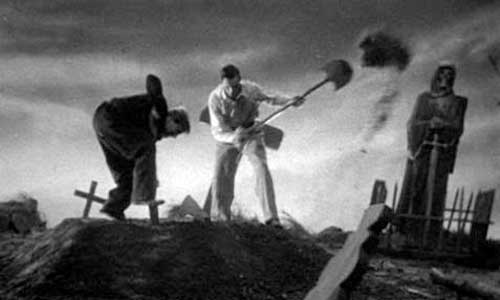
Grave-Robbing-MainThere is probably no trade as honorable or at least as old (besides prostitution) as the trade of grave robbing.  There are two types of grave robbing:  legal and illegal.  If you think history is impartial and objective, think again.  Archeologists, anthropologists and many other scientists are nothing but legalized and licensed tomb raiders.  There are a few significant differences between tomb robbers and archeologists.  Tomb robbers suffer more from a lack of fame and defamation of character than do archeologists.  Once you have a degree, you have the potential to become famous for looting the right tombs whereas grave robbers will forever remain faceless and nameless.  Furthermore, grave robbers have been the butt of much calumny throughout history.  Witness, the many movies made wherein our heroes (who are invariably famous scientists, i.e. legal grave robbers) are in contention with the bad bandits and crooks (i.e., illegal or at least non-degreed tomb raiders) who are attempting to abscond with the findings of the legal crooks.   (Click to hear the Archeologist Song)

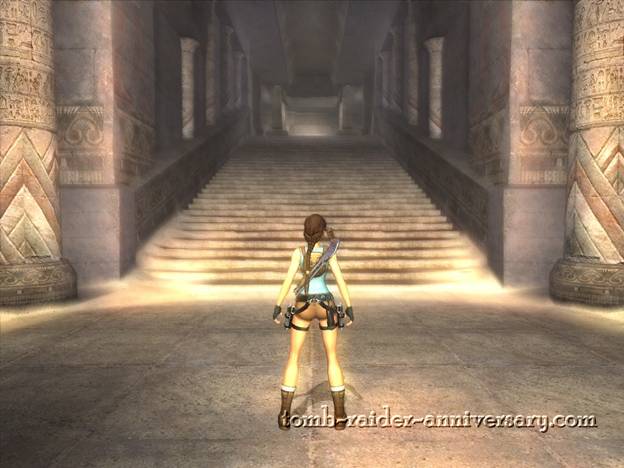
Alex West:
Lara Croft… still pretending to be a photojournalist? Ya know, I think it’s really cool that you can still keep a day job.

Lara Croft:
So, Alex, still pretending to be an archaeologist?
tomb raiders

Alex West:
Lara, do we always have to fight like this? Maybe we don’t.

Lara Croft:
Hmm… maybe we do.

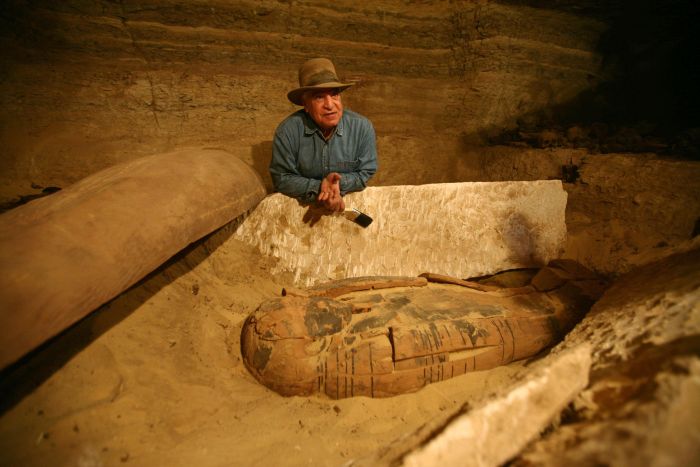
Egypt's chief archaeologist Zahi Hawass speaks to the media about the newly discovered rare intact mummy at the Step Pyramid of SaqqaraThe good archaeologist or tomb raider always has a beautiful girlfriend or boyfriend who acts as a side kick and someone disposable or at least predestined to be kidnapped and tortured.  Said kidnapping and torture are necessary for a variety of reasons, the bottom line being to get to the treasure first or to get hold of the precious antiquities that are invariably found in the burial vault.  If you are wondering why our heroes or heroines (Lara Croft) have any legal right or even more right to the claim than the bad guys, you should not finish reading this blog.  You need to pick up a copy of Adolf Berle’s famous treatise on power and read it at least ten times.  Here are Berle’s five rules for power.  Notice specifically rules three, four and five.  These three rules give the legitimacy to the anointed as opposed to the rabble who merely usurp power by virtue of want or greed.  Greed doth drive both archeologists and tomb raiders, but only the anointed can rob graves with impunity.

  • The “0th” rule . . . . “Power is always preferable to chaos.
  • Rule One: Power invariably fills any vacuum in human organization.
  • Rule Two: Power is invariably personal.
  • Rule Three: Power is invariably based on a system of ideas or philosophy. Absent such a system or philosophy, the institutions essential to power cease to be reliable, power ceases to be effective, and the power holder is eventually displaced.
  • Rule Four: Power is exercised through, and depends on, institutions. By their existence, they limit, come to control, and eventually confer or withdraw power.
  • Rule Five: Power is invariably confronted with, and acts in the presence of, a field of responsibility. The two constantly interact, in hostility or co-operation, in conflict or through some form of dialog, organized or unorganized, made part of, or perhaps intruding into, the institutions on which power depends.

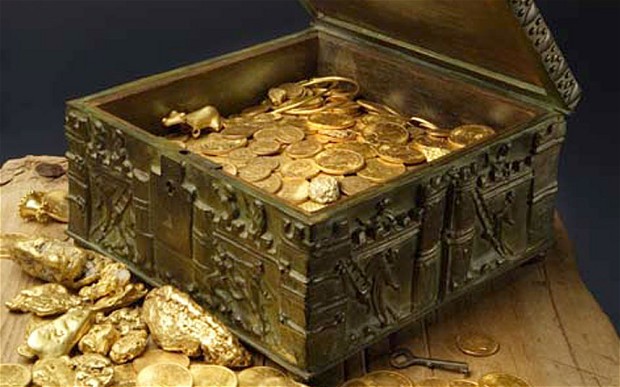
So why do we common folk care about the tombs of Alexander and Genghis Khan and Attila the Hun?  The fact is that what truly fascinates us is the same thing that drives tomb raiders and archeologists:  Lust!  Lust for buried treasure – the most holy grail of all holy grails!  To stub one’s toe on a golden eagle and to find that it is connected to a hundred other golden eagles is a fantasy that like gold in tresure boxwinning the lottery actually happens to people like us.  People who are average every day citizens going about their 8-5 jobs with hopes and dreams of someday becoming rich.  We have long since given up on the idea that we will strike it rich like Warren Buffet or Bill Gates, but we have not given up hope.  It is a hope that we too might just get lucky where hard work and brains have failed us.  It happens every day so why not to us.

Buried gold coins found in California backyard go on sale:  A hoard of roughly 1,400 U.S. gold coins from the 1800s discovered in a Sierra Nevada family’s backyard will go on sale Tuesday night in San Francisco, where most of the coins were minted. –— 2014, Los Angeles Times

However, what distinguishes most of us from archeologists and tomb raiders is that whereas we have merely hope and greed to motivate us and seldom do more than buy a lottery ticket, they take action.  Archeologists even go to college for many years to first legitimize their treasure hunting and gain a leg up on those who would simply head out with a pick and shovel.  Archeologists may also work for prestigious universities and museums which can then take the stolen treasure and display it legitimately.  (Read Berle’s rules for power again if you do not understand how they can get away with it.)  Generally with antiquities, there are no surviving relatives or wills to contest the legality of such actions and since Rule 1 states that “Power invariably fills a vacuum,” it is obvious that legal institutions can get away for years with such theft.

Elgin Marble Argument in a New Light:  Britain used to say that Athens had no adequate place to put the Elgin Marbles, the more than half of the Parthenon frieze, metopes and pediments that Lord Elgin spirited off when he was ambassador to the Ottoman Empire two centuries ago. Since 1816 they have been prizes of the British Museum. Meanwhile, Greeks had to make do with the leftovers, housed in a ramshackle museum built in 1874. http://www.nytimes.com/2009/06/24/arts/design/24abroad.html?pagewanted=all

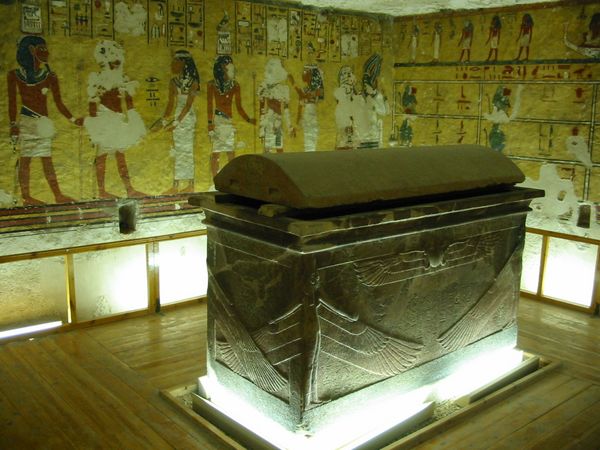
Now that I have subjected you to this bit of philosophy on the morality or immortality of tomb raiding, which I am sure you did not really want to hear, much less care about, the real reason that you wanted to read this blog was a secret hope that you might get a clue as to where you can find one of these tombs and perhaps usurp your own bit of fame and fortune.  However, it might have occurred to you that if I had the exact GPS coordinates in terms of latitude and longitude of these tombs, why would I share them with you or tomb-ay-luxor-valley-kingsanyone else?   Hope doth spring eternal in the human breast and so you read along this far (putting up with morality and philosophy) in the wishful thinking that perhaps you might just find a single clue, a small shred of evidence, a morsel or snippet of direction which would lead you on to discovery and fame.  You share like every other human being who walks the planet the dream of finding buried treasure. Perhaps, you thought, my blog might just motivate you to pick up your shovel and go out in search of the tomb of Buddha or the shrine for Alexander the Great (or is it the other way around).

“No thief, however skillful, can rob one of knowledge, and that is why knowledge is the best and safest treasure to acquire.”  — ― L. Frank Baum

Of course, I am being silly and frivolous. You are not reading my blog in the hope that you might actually find a clue.  No one could be that gullible or credulous.  You are simply amused by my ideas and writing.  Perhaps though you were just a tiny bit wishful that I might shed a small ray of light on where Jesus and Attila can be found.  Nevertheless, I submit that no amount information or vision of treasure would motivate you to go look for the tombs.  It is much easier to buy a lottery ticket.  We will leave these more perilous expeditions to the tomb raiders who would either legally or illegally undertake such rigorous activities.

However, I will give up the following —- IMHO

Buddha’s Tomb:  Probably found.  No tomb, just ashes buried in a number of crypts in India.  See Secrets of the Dead:  Bones of the Buddha on PBS.

Attila the Hun:  Reports last summer that his tomb was found were false.  It is probably located under the Vistula River someplace in Hungary.  It is best to have a snorkel and swim suit along with your shovel if you want to have any chance of finding it.  http://www.answers.com/Q/Where_is_Attila_the_Hun’s_grave

Genghis Khan:  Most say it is located somewhere in Mongolia close to the Onon River.  Bring plenty of water along with your shovel.  http://en.wikipedia.org/wiki/Tomb_of_Genghis_Khan

Jesus’ Tomb:  Go to Israel and you will find that they cannot even agree on where he was crucified.  There are at least two places in Jerusalem which both claim that they are the sites of Jesus’s crucifixion and burial.  My own personal belief is that the Pharisees wanted to make sure that his bones would never be found and become objects of veneration.  Thus, sad as it may be, his body was probably stolen and buried unceremoniously someplace in the Israeli desert.  The other option is that he was truly a God and he has ascended into heaven.  In the latter case, there would be no bones to be found making your search a waste of time.  http://en.wikipedia.org/wiki/Tomb_of_Jesus

Alexander the Great:  Most likely his tomb was plundered many times over the years and has now been lost to antiquity.  Without any means of verifying his actual bones, it seems highly unlikely that any conclusive proof could be found regarding his present burial site.  I doubt any treasure remains anyway.  http://en.wikipedia.org/wiki/Tomb_of_Alexander_the_Great

So there you have it.  Buried treasure, fame, fortune, the adulation of the masses awaits you. Go forth with pick, shovel, fortitude and hope.  Go where others have gone before you but failed.  Who knows, you might just be the one who succeeds.

“I love finding gems. However I’m not talking about ludicrously expensive diamonds, or priceless sapphires. I mean the impetuous, primitive rushes of passion and love we experience so rarely that they become impossible to ignore. That overwhelming sense of selflessness and beauty.  Hope and desire.  Happiness and strength. These are the moments that define us as people. As individuals. Should it be falling in love, playing a guitar for the first time, donating to charity, meeting new people, staying up till three in the morning listening to old Bob Marley vinyls or beating the elite 4 on Pokemon. Whatever it is, it’s moments like these that are worth more than any gem or diamond. Treasure or material goods.”   —  George MacDonald

Time for Questions:

Have you ever dreamed of finding buried treasure?  Do you dream of winning the lottery? How many times a month do you buy a lottery ticket? How many times have you ever gone in search of buried treasure?  Why not more? What if you did find a buried treasure? What would you do with the money?

Life is just beginning.


Previous Older Entries Next Newer Entries