I am a military veteran. I have hunted and shot a variety of rifles, revolvers and automatic weapons. I am not against guns. As an American, I am very concerned about the amount of gun violence in our country. However, I am even more concerned because too often it seems like the “Bad” guys win and the “Good” guys lose. Over the past twenty years, I have studied and read about many of the gun battles that have taken place in history. From cowboy shootouts, to holdups, to police shootouts such as the Newhall massacre and the Miami-Dade FBI debacle, I have read these stories in an attempt to find the underlying reasons for the good guys losing and the bad guys winning. My blog this week is about the risks and rewards that might accrue from carrying a gun. As with any tool or piece of technology, there are pros and cons to its use. In the case of guns, the nexus of these factors can be best characterized as “risk.” There is a risk. Carrying a gun is a risk. Not carrying a gun is a risk. What are the risks? When do the advantages outweigh the risks? These are the questions that my blog will look at this week. Hopefully, you will be able to make an informed decision about the issue of gun carry and gun control after you read my blog. Too many people are preaching the advantages of gun carry without looking at the risks and downsides.
My study of violent gun encounters has led me to see that the issues most people consider in a gun encounter do not adequately address the situation. There is no comprehensive theory of what it takes to win in a gun battle. Too often, gun advocates think that merely carrying a weapon will insure success or that weeks on the firing range will make a difference in a gun encounter. Several recent simulated gun battles have shown that this is not the case. All too often, the bad guys still win. Why? A good theory should answer this question. Furthermore a good theory should allow us to study the critical factors and identify ways to enhance these factors for the good guys or deny these factors to the bad guys. Until this can be done, both the people for guns and the people against guns are stating their cases from purely emotional viewpoints. A good theory supersedes emotions and passions by substituting facts and data for feelings and grief.
I propose that a successful gun encounter will depend on six factors. I will list and explain each of these factors. These six factors will make up what I am calling a model for a successful gun encounter. I will also suggest three scenarios to see how this model might be able to predict the outcome of each scenario. The three scenarios will include:
- A lone wolf terrorist shooting in a full capacity stadium or a large hall.
- A home invasion with the intent of robbery.
- An attempted holdup on the street by a bunch of thugs.
The six factors are:
- Speed
- Accuracy
- Firepower
- Offensive Position
- Defensive Position
- Nerve
In developing this model, I have toyed with the idea of some factors “weighing” more than other factors. However, this does not seem like a valid proposition. It is more likely that no single factor can be a deciding factor and that regardless of how strong any single factor is, it will depend on the relative strength of each of the other factors. Thus, no one factor in itself can decide the outcome of a gun battle. This fact alone is interesting since so much of the gun literature is involved in arguing whether you should carry a 10mm or a 44 magnum. I have read countless articles on whether a home owner should have a revolver or automatic weapon. The authors spend hours arguing about which is a more effective deterrent and ignore the other five critical variables. My model thus proposes that each variable or factor is a critical determinant of the outcome of a gun encounter. Let us look at each variable.
- Speed
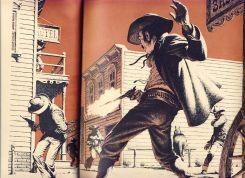 It is a well known fact that in the Old West gun battle speed did not always determine the outcome of the encounter. Speed without accuracy is useless. Speed without firepower may also be useless. It is often said “do not bring a knife to a gun battle.” Nevertheless, deployment of a weapon and the speed with which a weapon can be deployed is a key factor in the success of a gun battle. Numerous scenarios show a knife fighter killing a gun fighter because within a certain distance, the knife fighter with a fixed blade weapon may trump the gun fighter owing to the speed of deployment. A key problem in home invasions may be the speed with which the homeowner can access and deploy his weapons. The invader may have the advantage because they come in with a weapon in hand while the responsible gun owner may have his gun in a locked safe. The invader will probably not wait for the home owner to access his safe key, load and chamber his weapon and fire.
- Accuracy
This factor requires relatively little discussion. If you cannot hit what you are aiming at, no amount of speed or fire power will compensate, unless of course you are throwing a bomb which is not a factor that we are considering here. This is one area where practice and gun range time can make a difference in the outcome of the gun encounter. However, accuracy also must take into consideration the weapons used. Generally at longer differences, a rifle will be more accurate than a pistol. This latter fact might nullify any advantage of concealed carry in the event of a terrorist scenario where they are armed with assault rifles. A concealed carry holder will not have much accuracy beyond fifty feet or even less with some pistol models.
- Firepower
The gun magazines have published hundreds if not thousands of articles in the pages of their magazines arguing over the best rounds to use for self-defense. But ballistics size is only one factor. As noted above, the accuracy of a round is a critical factor as well. Furthermore, firepower does not just depend on the caliber of the weapon. Firepower also includes the timing and amount of ballistics that can be delivered in a given time frame. Obviously two bad guys with assault rifles with fifty round clips will have much more firepower than a good guy carrying a Colt 1911 or a Glock 10mm.
- Offensive Position
Offensive position is defined by asking “How easily can you make the shot?” The better your offensive position, the easier it will be to hit your assailant. Someone may have a strong offensive position but a weak defensive position. The converse is also true. You can have a strong offensive position but little ability to avoid being shot. Charging a pill box is one example that comes to mind. Surprisingly many gun battles have seen the assailant simply charge their attackers. This is one reason many experts recommend a strong enough ballistic to take down an opponent.
- Defensive Position
A strong defensive position can be defined by asking “How easily can I avoid the shot?” The stronger your defensive position, the more difficult it will be for your assailant to shoot you. You can have a strong defensive position but have no ability to make a shot. The optimum in a gun battle is to secure both a strong offensive position and a strong defensive position. However, as with everything in life, this is not always possible.
- Nerve
The gun battle with the Boston Marathon suspects was described by police officers as “eight minutes of sheer terror.” Put yourself in their place. Loud explosions, people screaming, smoke clouding the air, visions of blood splattering around you, more explosions, more screaming, suddenly you see your friend hit by a round, he is covered in blood and something gory is leaking from his gut. More screams, more explosions. You can see hardly anything now because of the smoke. You can’t hear anything except explosions, sirens and screams. But you must be calm because that is the only way you can fight back.
Marine Lance Corporal Anthony Andrada who had served in the Iraq War was asked to compare violent video games to a real life combat situation. Here is what he said:
“The games attempt to show how realistic the war situation is, but in the end, it’s just a game and not really what war is really like. They are all more of just shoot and move type games.” Even though these games may look and sound realistic to a degree, Andrada says, “The feeling of real danger isn’t there.” He adds, “During dangerous missions, I constantly feel uneasy and on guard at all times.” Furthermore, he says the games do not capture aspects of daily life that include the “fatigue of going out for long hours and daily stresses.” Due to the inherent limitations of the medium, Andrada believes that videogames don’t implement this sense of uneasiness because “they can’t.” — What Do Real Soldiers Think of Shooting Games?
Dave Spaulding in an excellent article in Handguns titled “What Really Happens in a Gunfight?” describes his observations from twenty-five years of lethal force investigations and talks with over 200 individuals who had survived a gun fight. He states:
“The various phases of body alarm reaction that have been discussed over the years such as tunnel vision, slow motion movement, loss of digital dexterity and the like, were all recalled by the subjects interviewed. None of the people I spoke with remember suffering all phases, but everyone remembers suffering at least one of the sensations listed under the category of body alarm reaction. Those that understood what was happening to them better handled the sensation during the encounter versus the people who did not. Without a doubt, forewarned is forearmed.”
The famous western pistoleer, Wild Bill Hickok, once noted that it was one thing to shoot at a target, but another thing to shoot at a man who was shooting back at you. Gun fighting takes strong nerves. This is perhaps the most subjective factor in my model. At least theoretically, all of the other five factors could be measured. However, I know of no way that “nerve” has ever been measured before the fact or any way that it could be measured.
Applying the Six Factor Gun Encounter Model
I want to show how the model could be used to study various gun encounters by using the three scenarios I mentioned above and applying the model to each one. One argument that probably will be made to my choices of decision factors is that I am biased. That is why, I am trying to make this model very transparent. Consider my evaluations of the various scenarios using my model and then go ahead and score the scenario yourself. See what you come up with for scores and outcomes.
Lone Wolf Shooter:
 The first scenario we will look at involves a “lone wolf” shooter in a packed theater or hall. Whether the shooter is mentally ill or a terrorist is irrelevant to the scenario. We will assume the shooter has put on a Kevlar vest and has a Colt AR 15 .223 caliber assault rifle as well as a Glock 40 caliber side arm. He has several extra clips for both weapons. Our good guy is in the hall someplace carrying a concealed 9mm Beretta with no extra clips
Here is how I would rate the situation using the Six Factor Gun Encounter Model: I am going to simply score it as + for an advantage, – for a disadvantage and 0 for no advantage. I will explain my reasoning below.
| Key Factors |
Bad Guy |
Good Guy |
| Speed |
+ |
– |
| Accuracy |
+ |
– |
| Fire Power |
+ |
– |
| Offensive Position |
– |
0 |
| Defensive Position |
– |
+ |
| Nerve |
+ |
+ |
Speed, I gave the advantage to the bad guy since he came out shooting. Accuracy goes to the bad guy and firepower as well due to his choice of weapons. Offensive position is poor for the bad guy but the good guy has no advantage since he/she is pinned down. Defensive position is also poor for the bad guy and our good guy may have an advantage assuming that he is concealed and the bad guy does not have any knowledge that he has a weapon. The problem for our good guy will be in deploying his advantage in this area which he will not be able to do unless he can get within an offensive position to use his weapon. Nerve, I will score equal and that is being somewhat generous. We know that the bad guys seldom lack the nerve, since their rampage is already a fact, but can our good guy face down the bad guy in a hail of bullets and blood?
I score this scenario 4-2 for the bad guy. I would give our good guy at best 10-1 odds against being able to prevail in this scenario. Now, what good is this model? Can it only help us after the fact? Does it only tell us things that we already know? Can we use this model to develop alternate strategies for our good guys that will help them prevail? I believe the answer is yes. Let us look at what would be the best options for out good guy in this scenario.
We are not going to be able to change our choice of weapons. Thus, any strategies will have to address the factors of position and nerve. Nerve is important here because our good guy needs to ask himself if he wants to do more than just survive, which would entail one set of strategies or does he want to try to be a hero and bring down the bad guy at a higher risk to himself. If he/she chooses the first option, he must find the best defensive position he can and simply stay there until an offensive opening occurs. If he/she chooses the second option, then he/she must find a way to develop a better offensive position without compromising his defensive position. He must develop a position that will nullify the advantages of firepower and accuracy that the bad guy has. This will not be easy.
Home Invasion:
 A friend of mine recently sent me the following story. Very similar to a home invasion but it involved a couple in a hotel room.
“Just watched an interview between a news show host and a couple in their sixties, who had recently been assaulted in a “reputable” motel chain! The man was exiting the shower and saw his wife trying to fend off an attack by a gun wielding assailant. He was able to eventually reach his handgun located in the nightstand, and a firefight ensued at a distance of less than five feet. The criminal was overcome, but the husband was shot three times and sustained injuries that require continued operations! The couple are suing the motel chain for not notifying them of the inherent danger in what proved to be a high risk area.” — CNN News Report
I was able to find the actual interview and can add the following facts from reading the report noted above:
- Assailant was killed by the good guy
- Assailant was attempting armed robbery and wanted money and valuables
- Gun battle happened when robber opened fire first
- Good guy was shot three times. Once in leg and twice in abdomen
- Good guy somehow accessed two handguns he and wife carried but had concealed in the room and/or her purse
I would rate this scenario as follows:
| Key Factors |
Bad Guy |
Good Guy |
| Speed |
+ |
– |
| Accuracy |
– |
+ |
| Fire Power |
– |
+ |
| Offensive Position |
0 |
0 |
| Defensive Position |
0 |
0 |
| Nerve |
+ |
+ |
The bad guy gets the nod for speed since his gun was already deployed. The good guy was the better shot and had two guns to the bad guy’s one so he gets the nod for accuracy and firepower. Neither side had a defensive or offensive advantage and were shooting at each other from a distance of five feet. I give both sides’ equal score for nerve, but perhaps a slight edge to our good guy who was fighting to protect himself and his wife.
Although this scenario shows a win for the good guy at 3-2, an additional question might be at what cost? In this case, our good guy is severely wounded and his wife could have been killed. For what? Some money and some jewelry in a hotel room. Given the odds in this scenario, which slightly favored our good guy, one should ask if the outcome was worth the engagement as it played out. I think our good guy would have been better off giving the bad guy what he wanted and then engaging him as he departed the room. The factors above suggest that a more reasonable encounter would have found our good guy looking for a more advantageous strategic position both offensively and defensively. It was only a certain element of luck that one or both of our good guys were not killed instead of the bad guy. I personally think the risk was not worth it in this scenario, but that a more thoughtful analysis of the factors could have led to a better outcome.
Street Mugging:
You and your boyfriend have just left the movie theater after a 9 PM show. It is now about 11 PM and you have two blocks to walk to your car. You are carrying a concealed weapon in a specially designed purse but your boyfriend is not carrying. As you walk down the block, you notice two guys coming towards you. They look in their early twenties or late teens and both are somewhat unkempt looking. As they approach you, one of them stops in front of you and asks you for light? You begin to explain that you don’t smoke, when he suddenly pulls a gun and starts yelling for you to “give it up.” Your boyfriend is bewildered and starts to take out his wallet while you try to calm both perps down a bit. “OK, don’t hurt us, we will give you anything you want.” The perp replies: “You bet your ass you will or we will cap both of you mothas.” What do you do?
I would rate the scenario as follows: (Assuming the situation remains relatively the same.”
| Key Factors |
Bad Guy |
Good Guy |
| Speed |
+ |
– |
| Accuracy |
0 |
0 |
| Fire Power |
+ |
0 |
| Offensive Position |
0 |
0 |
| Defensive Position |
0 |
0 |
| Nerve |
+ |
+ |
 I give the bad guys the + for speed since they already have their weapons deployed. The good guys have no advantage for either firepower or accuracy since they are standing face to face with the bad guys and even a 22 caliber can be deadly. Neither side has either a defensive or offensive position with a significant advantage, except to note that the bad guy already has his gun out. However, we already gave him a + for speed and firepower. In terms of nerve, we will assume that both sides have equal nerve. Thus, as the scenario stands, the bad guys have the edge 3-1. The good guys need to stand down until they can change the scales. Can they shoot the bad guys as they run or walk away? What are the repercussions should they do so? This is an interesting legal question that might be answered very differently from state to state. In most states, once you are no longer in bodily jeopardy, you cannot shoot an assailant as they are fleeing, regardless of how much of your money they have.
What can we conclude?
So what can we conclude from my model? What differences if any would such logic make in a real gun fight? I think we can draw the following conclusions with some degree of reasonableness.
- Carrying a gun does not necessarily confer any advantage
- When the bad guys have the advantage, you are at high risk by drawing your gun
- It is critical to wait until you have a distinct edge in one or more of the six factors described otherwise the risk is too high to risk drawing your gun.
- If you think the perps are going to kill you no matter what you do, then you must develop a rapid advantage in at least one factor or you are going to die anyway.
- A good guy with a gun does not mean he/she will beat a bad guy with a gun.
Where do we go from here?
I started this paper by making an argument that most considerations of gunfights as they are described in gun magazines are too superficial and do not realistically consider the key factors other than the weapon that are essential to a successful gun encounter. I believe this is true whether on the street, in the home, in a war zone or in a private venue of some sort. The initial advantage will be with the bad guys. The good guys must consider all six factors and attempt to manage these to his/her advantage. Failure to do so, will result in death for the good guys.
I hope this paper will start a dialogue that might lead to more varieties of strategies than simply carrying a concealed weapon as a solution to crime and violence. The thought that concealed carry will make our streets and home safer is both naïve and dangerous. Gun battles are won not simply by having a gun but by having a strategic advantage during the gun fight.
Time for Questions:
Are you willing to shoot someone to protect your property? Your life? Do you carry a concealed weapon? If so, have you ever had to use it to protect yourself? Do you think guns have made America a safer country? Why or Why not? What do you think it would take to make you feel safer on the streets at night?
Life is just is beginning.
The UK counter-terror officials have issued new official guidance for citizens to follow in the case of a Paris-style gun and bomb attack. The document outlines what to do in “response to a fast-moving incident such as a firearms or weapons attack” and also advises businesses to develop procedures for a “dynamic lockdown”.
The document is based on observations following the assault on Bataclan music hall where terrorists barged in and fired indiscriminately at the crowd.
Guidance says that it is better to “escape if you can”, “insist others leave with you” and “leave belongings behind”.
If there are no escape routes, then the best thing to do would be to find cover from the gunfire behind “substantial brickwork or heavy reinforced walls”. It should be noted that cover does not mean that you are safe as bullets can go through materials such as glass, brick, wood and metal.
First – Run, leave belongings behind and get yourself as far away as possible from the attacker
Second – Hide, find a cover from gunfire, but at all times be aware of your exits and try not to get trapped. Make sure your phone is silenced. Lock and barricade yourself somewhere but move away from the door.
Third – Call the police and inform them of the location and description of attackers. Stop others from entering the premises.
 We have a concept called the Double Standard which denotes a situation wherein some behavior is generally thought of as unfair, inequitable or simply wrong. It is a much used term employed by sexists and racists. It is generally used as an argument against some actions being taken on behalf of a minority or other exploited group. Such groups include immigrants, women, children, the poor, Native Americans, Blacks, Latinos and many other underprivileged groups or groups wherein an asymmetrical relationship exists with the dominant power group. Let me give you an example before I define some terms.
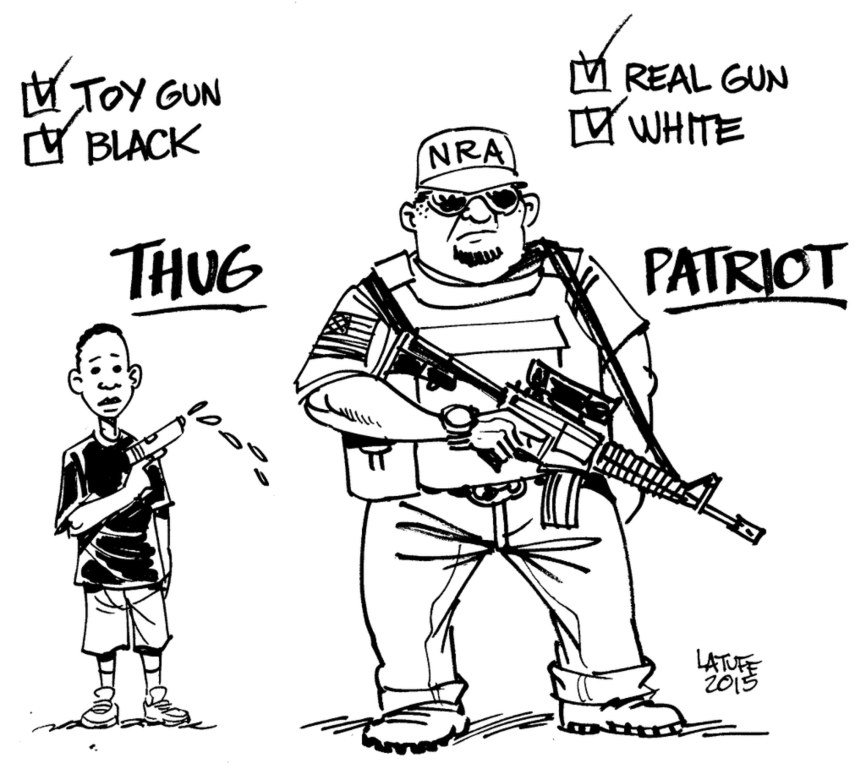 A friend was arguing about the laws impacting the actions that business owners may or may not take in terms of delivering service to customers. The recent spate of arguments by the so called “Christian” Right against serving gays and other minorities whose religion or beliefs they disagree with was the spur or nucleus of his rant. He made the following analogy. “Suppose a Black man went into a White baker to have a birthday cake made and he was refused service? What do you think would happen he argued?” The reply given by his audience was, “It would probably be seen as discriminatory or perhaps even illegal.” He then argued, “Ok, so suppose a KKK member went into a Black baker and asked for a cake made for a KKK celebration and he was refused. What do you think would happen?” I replied that this seemed like an argument “reductio ad absurdum” or something taken to the extreme absurd. His argument was that it was not ridiculous and such situations are typical of the differences between how Blacks and Whites are now treated in our country or that a “Double Standard” exists.
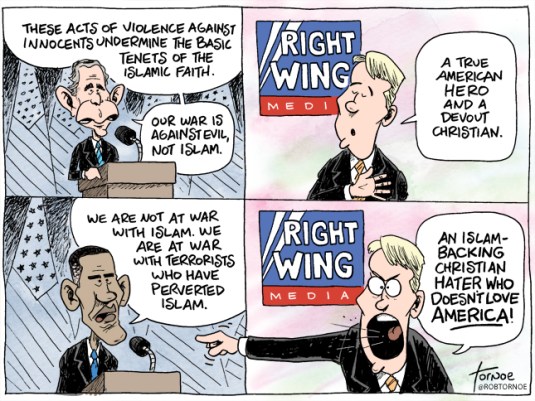 What if you were very poor and you were going out with a very rich person? Suppose you gave gifts to each other on your birthdays. You gave a modest low budget gift from Walmart to your loved one. She/he in turn gave you an all-expense paid two week trip to Paris. Would you scream and yell that this was an unfair double standard? Unfair because you could not possible meet such a standard on your much lower income? You might want to argue that the example I have provided is ridiculous. However, it is no more ridiculous an example that many of the examples given by opponents of civil rights, affirmative action, equal pay, immigration laws, welfare and other measures to help create a more equitable society. (PC opponents are often guilty of such ignorance and there are numerous situations wherein they perceive that Political Correctness has created an unfair Double Standard.)
 First: on what basis do we decide the symmetry of a relationship? Should we be looking at power, wealth, status, employment or opportunities as measures of symmetry? Second, when and how do we decide that relationships have become symmetrical and no longer need a Double Standard? Both of these questions are very difficult but they are also both critical since unless they are ultimately answered, the perception of unfairness will hover over any relationships where a Double Standard exists. This of course leads to such accusations as “reverse racism” and even claims that “Today White people are the real people being discriminated against.” (See 4 ‘Reverse Racism’ Myths That Need To Stop or “Why isn’t there a White History Month?!”)
 The answer to the first question concerning metrics for determining symmetry is fairly easy. We need to look at metrics that will help to create a fair and just society. If we are attempting to create a level playing field for all groups in our country, then we must consider any measures that will help us to obtain this goal. There are measures for income, jobs, opportunities, education, incarceration and health that have and should be used to apply Double Standards when they will help to level the playing field.
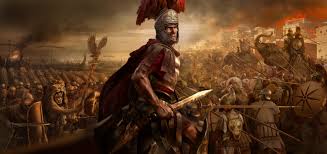
 This will be the war to end all wars. We are fighting for peace and justice. We have the moral high ground. Our enemies want to destroy the world. They seek a reign of terror and injustice. We are the good guys, it is clear. They are the bad guys, it is clear. Good guys have the right to maim and kill. We do it for the right reasons. God is on our side. This war will forever stamp out evil. We will march and sing hymns of praise to God. We will only kill those that need to be killed. Women and children that get in the way are collateral damage. We will save them from themselves. The world and history will thank us. Onward soldiers for God and country!
 This will be the war to end all wars. If we don’t stop them now, they will soon be over here. We must take the battle to them and show them we mean business. We are not afraid. Have you ever heard of the Domino Effect? If we let them take one domino, they will soon take them all. Pretty soon, they will come to our country to take our dominoes. We must keep our dominoes for ourselves. No one else can be allowed to play with our dominoes. What are a few thousand or million dead people? We must destroy the village before we can save it. We fight for a cause that is bigger than any one of us. Forget yourself, charge the enemy. Do not take any prisoners. They would not be kind to you.
 This will be the war to end all wars. We must be tough. No one who wants to win can flinch in the face of the enemy. Prime your rifles and mount your bayonets. Charge on command! Don’t think, just act. Yours is not to reason why. Follow your orders. The enemy will not hesitate. You must not give them any quarter. They will slaughter your wife and children. They will destroy your way of life. Heroism and medals await those of you who put your lives on the line for your country. Protect your flanks. Never retreat. When the going gets tough, the tough get going.
 This will be the war to end all wars. We have drawn a line in the sand and we cannot back down. The die is cast and we must stand up to injustice and tyranny. We will fight the good fight and God will be on our side. God asks us to be brave soldiers and to never fear. The only thing we have to fear is fear itself. Cowards die many times before their deaths but heroes only die once, though sometimes it is a slow lingering death. Never worry though, there is a special place in heaven for those who die in defense of liberty and justice and freedom. There are also many medals you can earn and if you die in the line of duty, there are posthumous awards which can go to your survivors or nearest relatives. Never fear, you will not be forgotten.
 This will be the war to end all wars. We must show them we mean business. We are a nation of practical business people. We are a nation that wages war like a business. We do not mean to really kill anyone but it is just good business. It is nothing personal you know. We might even like you if the circumstances were different but it is good for the economy. Practical matters aside, you don’t understand our economic system. Perhaps, if we could kill you more impersonally, you would not object so much. We can build more drones and you will not even see them coming. We don’t want bodies on the ground; it is not good for business. Good wars like any good business must be pragmatic. If we kill a few millions of you perhaps you will understand that God wants us to succeed. You must put your own personal problems aside when your country needs you. Ask not what your country can do for you but what you can do for your country. Be proud to die for your country and your economic system.
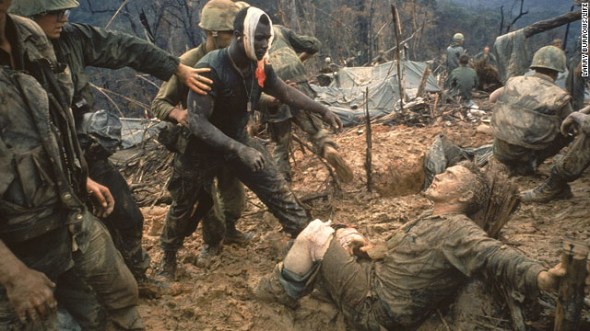 This will be the war to end all wars. We fight for the greater good. Right is on our side. Might makes right and we are the mightiest nation on the face of the earth. We are righteous and just and our enemies are cowards and liars. We fight to make the world a better place to live and for future generations. Our evil enemies only fight for themselves and their ill-gotten gains. Our battle is wondrous. Glory, glory, hallelujah! Our God is marching on. As he died to make men holy, let us die to make sure that all men are free. Ours is never to reason why, ours is never to make reply, ours is simply to do or die. There is no try. Greatness awaits us in heaven for this small price we must pay on earth. Never fear, you will get your rewards as all good soldiers must. Remember old soldiers never die. Their memories may fade away, but the glory of the valiant men and women who will give up their lives today to protect their native land will never be forgotten. Stand firm now, toe to toe, shield to shield, rifles to rifles. Be ready, be able and be willing. One can ask no more than that you are willing to give up your life to end all wars.
 Over the past few months, the vitriol between Hillary supporters and Bernie supporters has increased in both intensity and animosity. I have had numerous arguments with Bernie supporters. I suspect many of them were once my friends and are now no longer so. This is interesting since you would think that we would have more in common than not. It would not surprise me if you were a Republican or Trump supporter and banished me from your Facebook, Twitter or any other list of friends that you maintained. However, it seems sad that so much rancor has been generated by the Hillary/Bernie battle as to result in lost friendships when we have so much in common. I must take some of the responsibility though since I am not and never will be one to shy away from a fight. If a fight is what you want, I will give it to you and no holds barred. I support my candidate and I will explain my reasons but when you get personal or insulting that is the end of the line. It would seem to be a line that is easily crossed and that reasons and emotions are two very different things.
 Once upon a time, I thought debates were the answer to the question of “how do we discover the truth?” I thought that if you put two intelligent people together and each took opposing positions on an issue, that through the interplay of ideas the truth would emerge. If you think about this a bit, it is the basis for our judicial system in America. One side argues for the defendant, the other side argues for the prosecution or against the defendant. It is also the basis for an academic exercise called Dialectical Research or Dialectical Inquiry.
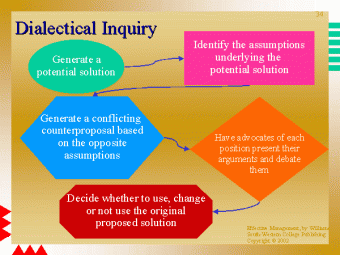 A dialectical investigation is a form of qualitative research which utilizes the method of dialectic, aiming to discover truth through examining and interrogating competing ideas, perspectives or arguments. This latter method is often applied through the use of case studies in which students or investigators discuss real world examples of complex situations. The purpose of a case study is to provide a more thorough analysis of a situation or “case” which will reveal interesting information to the reader. As I use them in my classrooms, my goal for my students is to help them understand how to better form strategies for success in business.
 Unfortunately, in the real world the strategy of debate does not work. Debates are a waste of time when honest discussion takes second place to winning or looking good. Dialectical Inquiry is also often useless since the complexity of the subject can be beyond the ability of many students to grasp. Real world situations are froth with uncertainty, volatility, complexity and ambiguity or as some have called it VUCA. VUCA is an acronym used by the military to describe or reflect on the volatility, uncertainty, complexity and ambiguity of general conditions and situations. Many complex situations are seldom able to be accurately modeled leading in most instances to weak images or portrayals of the actual situation. This is why debaters opt for simple explanations rather than complex explanations. Another example of this watering down of reality is a Hollywood movie depiction of a supposed “true” story. Recent movies that come to mind include the following:
 I have watched several of the debates now and I see no evidence that truth is being discovered. The debates have become hyperbolic spectacles of insults, half-truths, reality distortions, innuendos and petty personal attacks. I doubt if anyone has found much truth in these debates never mind elucidations of complex policy positions for any of the candidates. Trump
  will build a giant wall. Cruz will fix Syria. Rubio will fix health care. Sanders will fix inequality in America. Hillary will fix Obamacare. Do you know how any of the candidates will accomplish these lofty goals? Of course not, since they know that the “debates” are no place for such a complex discussion. Trump perhaps realizes this fact better than anyone and has kept his discussion and clarification of his policy positions to less than fifteen second descriptions. The general consensus seems to be that if a candidate cannot explain their position on any subject in less than fifteen seconds, they are doomed, i.e., they lose.
 On a more personal level, I have a problem with debates. I have a few friends who love to debate. I have noted as a result of recent discussions with them concerning the Presidential elections that do not want to understand or clarify any issues, they just want to argue or perhaps debate. I say that they want to argue, because their main agenda seems to be looking good or advancing their points and not understanding my points. They often enter into these contests (Since that is what a debate means to them. It seems to be a contest between winning their points and looking good or losing their points and looking bad.) with a pretense of trying to understand why I think or feel a certain way. Sometimes, they start the “debate” with a flat out rejection of my position or with a declaration such as “you are dead wrong” or “you don’t know what you are talking about.” I confess that such latter utterances often preclude my disposition to have a rational discussion with them. I see no point in it.