One of my writing goals is to simplify the complexity of the problems facing the USA today. This effort is like trying to find my way through a very complex maze. An instructor of mine once told me that “anytime you study a problem, it becomes more complex.” I agree with his analysis, but I also like the Zen thought that when we start studying a mountain, it first becomes a complex amalgamation of physics, geology, geography, chemistry, and biology. However, once we really understand it, it becomes a mountain again. A Zen cycle of simplicity, complexity and then simplicity.
This is the problem facing my analysis of the Education System in America. It is complex and overwhelming. I have been working in the system for almost fifty years now. I have taught every grade from pre-kindergarten to college Ph.D. classes. I have written several blogs on this subject already. However, as each day goes by, what I have said the day before seems less and less adequate. Many friends have disputed my thoughts on education. They think that I am wrong, and that the system can be saved by some tweaks here and there. I disagree. I have not changed my thoughts on this problem. We need an entirely new concept and system of Public Education.
The Public Education System in America is like a bomb that has exploded. You cannot put the bomb back together even if you do manage to find all the pieces of the bomb. The Public Education System in America is dysfunctional and outdated. It is rapidly disintegrating as the many outside forces that impact it are ignored or mishandled. The most important of these forces involve technological and social changes, but they also include a well-funded political effort on the Right to privatize education.
The rich in America understand that Public Education is not serving the needs of students and families. Those with money and power are cannibalizing the present Public Education System with vouchers and charters to establish elite schools for the wealthy and privileged. The dream of a Public Education System which would prepare all children with the tools and skills needed to be successful in a Democratic society has been abandoned by many in this country. We are moving towards a two-tier system of education. Much like we have one system of justice for the rich and powerful and another for the poor and underprivileged, we are moving towards the same structure in our schools
For the past seven years, I have been working as a substitute teacher in two different high schools in my local area. While I think many of the same problems plague elementary schools and universities, there are notable differences. Thus, in this blog, I want to focus on the problems that I have seen over the past few years that high schools are trying to deal with.
The two high schools where I am teaching are comprised of mainly low-income students in an area of low-income families. The two high schools I substitute for received the following ratings by Public School Review based on a comparison of test scores statewide.
High School 1 -Rating: 2/10 Bottom 50%
High School 2- Rating: 4/10 Bottom 50%
Arizona ranked worst state in America for teachers, study says
Arizona public school system ranked worst in America; study says
The results for Arizona are dismal and put Arizona at the bottom of states in terms of supporting education. However, I do not believe that these statistics should lead anyone to feel that Arizona is simply a bad state for education. In the first place, ratings and rankings only tell a portion of the story. I have seen many schools across this country. I doubt that the problems in Arizona are much different than for most public schools in America.
We have a systems problem here and my best guess is that most public high schools will be within three standard deviations of a mean around test scores or any other rating scales you can use. Thus, using the same statistical methods we use for determining the quality of any process, it would be foolish to say that any one school is clearly better than the rest. The same forces are at play across this country in our public schools. We are looking at a system and not simply a group of isolated schools.
The following are the major forces causing the deterioration of Public High Schools today. I will address each of these in more detail.
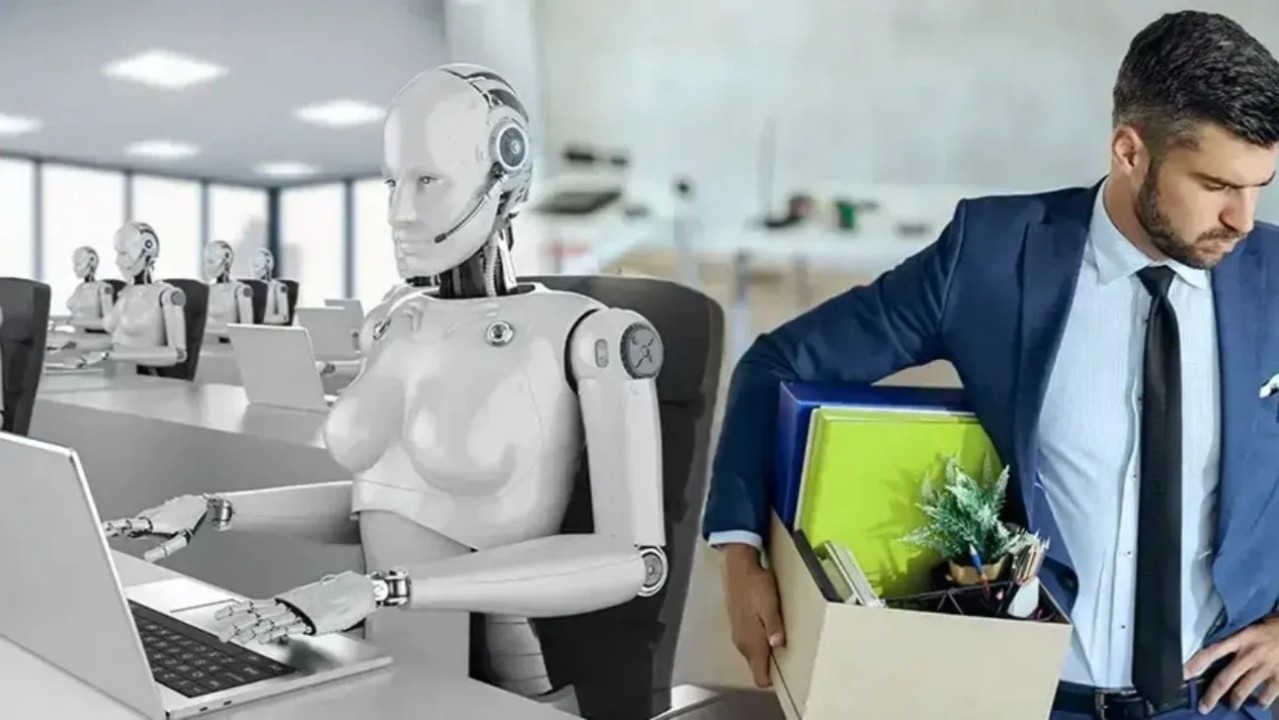
- Technology that replaces traditional skills learned in school. g., AI replacing writing skills
- Lock step education methods
- Low investment in education by students and parents
- Lack of student discipline
- Attacks by politicians on the Right who are pandering to voters and parents at the expense of teachers and students
- Over emphasis on testing and high school rankings

- Technology that replaces traditional skills learned in school. g., AI replacing writing skills
Years ago, in 1975 when I was doing my student internship for my undergraduate teaching degree, I allowed my students in my classes to use calculators. The math teachers in the school were appalled but I did not desist. They went to the principal who ordered me to stop allowing my students to use calculators. “What, he said if the batteries went bad? How would they do any math?” I replied, “What if their pencils ran out of lead?” He was not amused.
From calculators to computers to cell phones to the internet and now Artificial Intelligence, the world that students live in today bears little or no resemblance to the world that many of us once knew. However, the fundamental problem here is not technology. Marshal McLuhan nailed the problem fifty years ago. The world outside schools is now richer and more dense with knowledge and skills than the world inside schools. Once upon a time, students went to a dense environment of wise instructors, libraries and books that were unavailable to the wider community. Today, a child of three holds in their hands more knowledge than in the Library of Congress. That child is also exposed to ideas from all over the world and not just Po-Dunk Iowa. Schools cannot compete with this. Schools are becoming more and more irrelevant. Students know this but parents, teachers, administrators, and politicians either are blind to the fact or too vested in the present system to seek major changes.
- Lock step education methods:
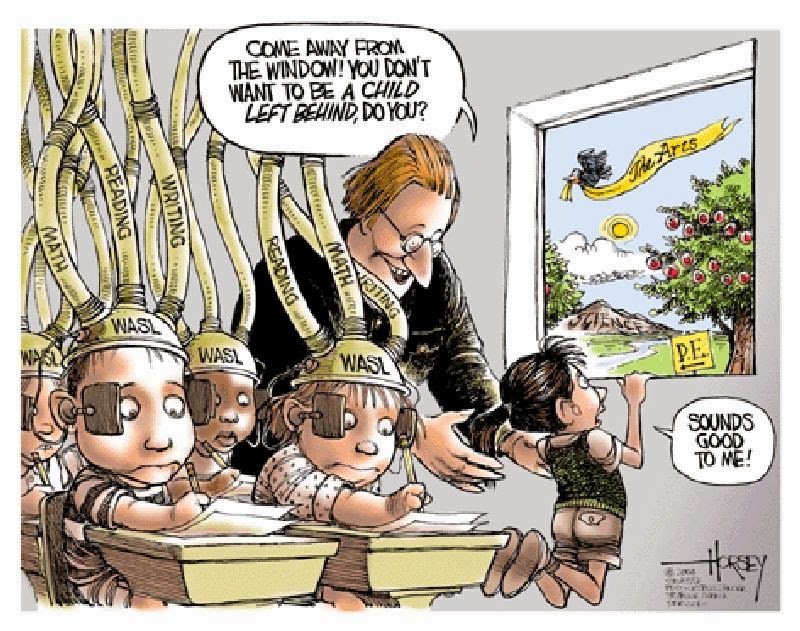
Standardized testing. Standardized curriculums. Grades following one after another in silent marching precision. Our nation seems obsessed with insuring that everyone marches to the same drummer. Do you have children? Do you see anything identical about each child? Take a classroom of 32 students and how many of them will be identical in knowledge, skills, abilities, and interests?
Now put 32 students, Latino, African American, Asian American, White American, and Native American all in an English class studying Romeo and Juliet in old English. How many of them do you think will be interested? I did not find an interest in Shakespeare until I was nearly fifty years old. My interest really began when I discovered something that high school English teachers seem to ignore. Plays were meant to be watched not read. They were never written to be read. And if they were read, they should be in a language that someone might understand. I watch many BBC shows on the tele and I use the English subtitles to understand what they are saying otherwise I am lost. I assume that the British are using some version of “Modern English.” They still argue that Americans do not speak English.
We need a system of Customized Education for all students today. My program of Free Public Education would start with three-year-old and extend to ninety plus year old. In other words, I want Free Public education for life and not just for a temporary time in youth. We say that people are our most important assets. We need to start treating them like they are important. We need to provide life-time education that will continue to prepare citizens for careers today, tomorrow, and next year.
- Low investment in education by students and parents:
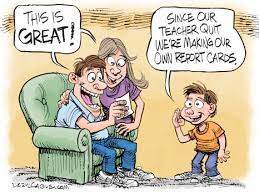
Here is a law. “If people have no investment in something they do not value it. When people are invested, they value it more.” Parents send their schools to free public schools. Students go to school for free until college and sometimes even to college for free. Many parents value schools for their babysitting function rather than for the purpose that schools were designed to serve. Parents are irate when schools and teachers go on strike. However, across America schools and teachers are at the bottom of the barrel when it comes to funding. I have seen more than eighty percent of funding requests here in Arizona vetoed in referendums since 2010. This comes at a time when funding for teachers and schools in Arizona ranks at the bottom of the US list of states.
I am for “Free Public Education” but that means in terms of money individually paid by parents and teachers for education. That does not mean I think students and parents should be given a Free Lunch. Indeed, I want to see accountability on the part of students and families for the education that their children will receive. Parents and students should have accountability not in terms of monetary compensation but in terms of time donated to the education system. They need to have a program in education whereby parents and students support public education using time allotments paid to the schools. One of the teacher aides I worked with a few weeks ago suggested that she would like to see parents with their children in school sitting in class with their kids on a regular rotating basis. This is a great idea but only one of many that could be instituted to help ensure that students and parents have a vested interest in education.
- Lack of student discipline:
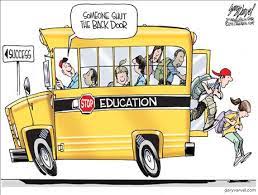
Student discipline is a major problem in public schools today. I have seen teachers and substitutes walk out of school after their first day on the job. Schools today are loaded with security guards and even armed police in some schools. On any daily roster of students there will be a few serving in-school suspension and some serving out-of-school suspension. Every year, I see more and more students in detention.
Kids behave towards teachers with the same arrogance that their parents may have for teachers and education. The poorer the classroom in terms of demographics, the worse the discipline will be. It does not matter whether the class is Black, White, Brown, or Red, the poorer the social economic status of the class, the more behavior problems you have in the classroom. The wealthier people are the more they seem to value education. This is not a hard and fast rule, but a general observation based on my almost fifty plus years of teaching. This is one of the reasons so many of the wealthy are pulling their kids out of public schools.
Today, teachers are so little respected that many of them are afraid to discipline their students. I had a security guard tell me that she would not intervene in a fight between students as she did not want to take the risk of either being hurt or sued. Teachers should not have to be disciplinarians. Once upon a time, when I was a young, if I disobeyed a teacher and my father found out about it, I was punished. This was typical of my generation. No questions asked. The teachers was right, and I was wrong. Somewhere in the mid-seventies, there was a sea change of major proportions. Suddenly, teachers were besieged with challenges like “What did you do to make my Johnny or Mary act out?” “It is your (teachers) fault that my child is failing.” Teachers are now in the wrong when students are disciplined or given a failing grade. There is little or no support among many families for teachers. The teacher is wrong. The student is right.
A few nights ago, before a concert, I sat with two other retired teachers. We discussed the sea change I noted above and what the potential causes were. Here were some theories”
- The teachings of Benjamin Spock were too liberal
- Parents feel guilty they do not spend enough time with their children
- Single parent families lack the ability to discipline their children
- TV promoting a set of values antagonistic towards education
- Too many people that were not well served by public school education in the past
At the time, I did not challenge any of these theories. I simply listened and questioned. Over the next few days, I found something wrong with each theory. I am still searching for the reason. I welcome any ideas you may have. Please leave them in the comments section. I will try to think about and reply to each idea. Nevertheless, discipline is a major problem, and it will go away unless we understand its root cause. One solution might be to have parents join their children for in-school suspensions or pay a fine for out of school suspensions. Perhaps that could be a “Parental Responsibility.” I think it would put a rapid stop to much of the behavior problems that teachers have to put up with today.

- Attacks by politicians on the Right who are pandering to voters and parents at the expense of teachers and students
The Right Wing in this country want to destroy Public School Education. They are waging a war on education every single day of the year in every single state in the Union. They are engaging the families of children with promises of “Parental Rights.” This panders to the same parents that have a low respect for education and believe that schools are brainwashing their children. This has been an issue among White Supremacists and Southern Bigots since the early years of the Jim Crow laws. This group is (though they would deny it) racist, sexist, xenophobic and homophobic. They are against Gay Rights, Minority Rights, Women’s Rights, and Immigrant Rights. They are for “Parental Rights” but not a word for “Parental Responsibilities.”
The right wing politicians will say anything to curry votes. They tell parents that books are pornographic or racist. Their tell parents that their kids are being brainwashed by liberal teachers. School boards are now being packed with radical parents who want to fire school superintendents, principals, and teachers over what is taught and how it is taught. In fact, I can point to some of each of the above groups that have been fired in the past few weeks here in Arizona. Books are being banned in over thirty states in America and librarians are fearful for their jobs. Politicians are enacting laws whereby teachers can be fined and charged with a crime for teaching certain topics like Critical Race Theory, Gender Studies or Sex Education.
In my seventy-seven years on this earth, I have worked with all sorts of people. But never have I seen a less moral or ethical group than the politicians that now sit mostly in the Republican Party. I have seldom believed in conspiracy theories ever since reading C. Wright Mills, “The Power Elite.” He argued convincingly to me at the time that the wealthy and powerful in America may seem to be working together but it was actually mutual interests that dedicated their actions rather than any coordinated planning or circumspect effort.
Wright Mills is probably now rolling over in his grave. There is an interlocking and well-coordinated group of Right-Wing organizations in this country which plan, fund, and orchestrate major efforts to elect politicians that support their interests, to push laws and bills that support their interests and to block any efforts to make their planning and funding more transparent. If you doubt what I am saying, look up the following names on Wikipedia and see what you conclude. Pay attention to the organizations they serve and their reliance on dark money for their activities. I think you will see more than just a casual converging of interests in their activities. They are orchestrating well-funded efforts to destroy public education.
What can we do about this situation? Is America doomed by money, power politics and large corporate interests that are overriding the public good? Many would say that the end is near. That the democracy we hoped for in this country is over. That we the people are powerless to change a juggernaut that is fueled by rich billionaires and served by minions with law degrees and no morals or ethics.
- Over emphasis on testing and high school rankings:
A well-intentioned effort to insure quality in schools. Unfortunately based on stupidity and ignorance of statistics and relevance. My teacher here was Dr. W. Edward Deming. The noted quality expert and pioneer who helped the Japanese become world leaders in quality. Deming was against ratings and rankings that were often used in business to assess employee performance. The same logic that he used to refute the relevance of these ratings apply to the schools system of ratings and rankings. Deming said:
“Evaluation of performance, merit rating, or annual review… The idea of a merit rating is alluring. The sound of the words captivates the imagination: pay for what you get; get what you pay for; motivate people to do their best, for their own good. The effect is exactly the opposite of what the words promise… The fact is that the system that people work in and the interaction with people may account for 90 or 95 percent of performance.”
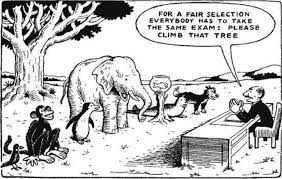
If you look at the ratings for schools anyplace in America, you will find that the wealthier the area in which the school is located, the higher their rankings will be in testing and all other metrics. Here in Arizona, my two schools are in the bottom twenty-five percent of schools in terms of rankings. Scottdale has the highest ranked schools in the system. It is no surprise that Scottsdale also has the highest per capital income in the state. The wealthier the school district the higher their performance rating will be. Nevertheless, I would not assume that students from Scottsdale have any greater native ability than my students. I would only assume that they do better on standardized tests.
A few years ago, I took the Forbes 200 list of richest people in the world. About sixty percent of them had a college degree. Forty percent never went to college or did not finish a degree. I did a correlation analysis to see what the strength was between net worth and education. I was quite surprised to find that the average net worth of those without a college degree was 1.5 billion dollars higher than those with a college degree. 3.5 Billion net worth with no college degree versus 2.0 Billion for those with a college degree. College has been overhyped as a path to success.
Ratings and rankings are no measure of life success or even of learning to think. I would argue that the people who excel on college standardized tests are less able to think for themselves and more likely to conform to norms of thinking and behavior. Regard all the lawyers in America who have gone to Harvard, Yale and Cornell but seem to have little or no ethics or standards other than winning or money. Both Deming and J. K. Galbraith wrote about the sorry state of MBA programs in America when it came to teaching ethics and morals. We have too many students now who excel on standardized tests but have no morals or ethics. They have learned that these things do not matter.
Conclusions:
Here is the part where we live happily ever after. The good guy wins, the bad guy loses. Right triumphs over might, and justice wins out over injustice. If only this were true. Maybe as Martin Luther King said, justice will eventually prevail. I am not so sure he is right anymore. All empires since the Akkadian Empire in 2330 BCE, (Arguably the first empire in history) have ebbed and waned and eventually declined. Many have predicted that the USA is now on the downward path. I will say one thing. Our Founding Fathers knew that a public education system was the cornerstone of a democratic society. Thomas Jefferson said:
”I know no safe depository of the ultimate powers of the society but the people themselves; and if we think them not enlightened enough to exercise their control with wholesome discretion, the remedy is not to take it from them, but to inform their discretion by education.”
Without a Free, Egalitarian and Open Public Education System, America will continue any decline that many believe has already started.
PS: Today I noticed that Jim Hightower had also published some thoughts on Education. I am providing a link to his thoughts as well. He is a good writer and I always enjoy reading his ideas. He has a great sense of humor.
 To think about what such a system might look like, I want to bring up an analogy that portrays a very different way of looking at life. The people that we call Indians who were indigenous to this country before Europeans arrived had a way of distributing food and shelter that was quite admirable. They believed that the land, water, resources belonged to everyone. No one could own the land, lakes or seas. If a buffalo hunt took place, the resultant meat was shared among all the tribal members. No one said “I killed that buffalo, so the meat belongs to me. But I will sell you some if you want any.”