December 31, 2025 – New Year’s Eve!

Out with the old and in with the new!   New Year’s Eve!  The end of our past and the beginning of our future!   All over the world, we count down the minutes and then seconds until a New Year begins.  New Year’s Eve represents a finish and a time to put failures, bad dreams, and a year dominated by bad politics behind us.  New Year’s Day will be a new beginning.  We pray and hope that each year will be better than the last.  Curiously, we celebrate this ending with a night of wild parties and much drinking. Not a good way to start off the New Year.  Thus, may I suggest a bit of Greek wisdom, “Moderation in all things.”

giphyDo you ever wonder why so many people get drunk on New Year’s Eve?  Is it simply to forget the past or is it to celebrate the past?  How many New Year’s days have been ruined before they even got started?  Tonight we drink, tomorrow we make promises about how different our lives will be and what changes we will make.

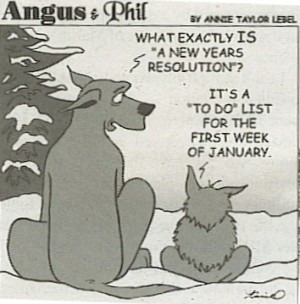
Each New Years promises a time new-year-resolutions-300x304of magic.  We think it will mean great differences in our lives, but how long do these commitments usually last?  Go to the health clubs on New Year’s Day and the parking lots will be full.  By early March, the parking lots will usually be back to their normal contingent of cars.  The landscape will be littered with failed promises and failed New Year’s resolutions.  Some may think that they can escape this debacle by simply not making any resolutions.  Instead their failure to make any commitments remain with them day after day.  Not making a commitment is akin to throwing the baby out with the bathwater.

new year resolutionThankfully, we have 365 chances each year to start our life anew. You don’t have to wait until New Year’s Day to begin again.  Each day you fail, tomorrow can be a new start.  If each day your commitments can last a little longer than the last day, you are making progress.  You do not have to wait until next New Year to start over.  Start now but get back up each time you fall.  The only failure in life is not trying again.  Every time you fall down and get up again you are a success.  Every day that you make a new commitment to try, you are a success.  Every time your commitment lasts a little bit longer than the last time you are a success.  So here’s to the success of each of you this New Year.  I drink a toast to all who try and try again.

Time for Questions:

What are you going to change in your life this New Year? What would you want to do differently?  What changes would help you to lead a happier and healthier life?  What are you going to do about it?  How long will your commitment last?  Can you fail and then keep trying?

Life is just beginning. 

Tonight is the first day of your new life.  Don’t wait to start.

thisyearwillbedifferent

Hearts First or Minds First – What is the Right Order of Change?

For many years now, I have seen people follow the most bizarre ideas.  Their beliefs defied all my logic and rationale thinking.  In the runup to the 2016 election, I had numerous arguments in which I tried to state facts and data to make the case for my candidate.  My arguments were largely ignored.  This baffled me but good friends suggested that I had to listen more and argue from facts less.  This method did not work either.  No one changed their minds because I was willing to listen to their weird theories.

Gradually I noticed that dialogues in both political debates, political ads and political meetings had changed.  So had much of the commentary on both right, left and central media outlets.  Logic and facts were replaced by narratives.  Stories about the man who lost his job to overseas low paid workers.  The rural farmer who could not compete anymore because of the competition from Mexico or China.  Joe the Plumber in the 2008 Obama election.  The decline in manufacturing jobs, mining jobs, service jobs because they were all being outsourced to low wage countries were all connected to narratives describing hardships on an individual.  Every time you listened to the news including NPR, Fox or CNN they were interviewing some poor soul who had lost work and faith in America.  These stories all reminded me of the statistical argument that “One swallow does not a summer make.”  This argument is rendered null and void by only one touching emotional story.   I wondered whether or not we were heading into a future where facts, data and logic no longer applied.

One day at a meeting of veterans, I suddenly realized that as long as I did not have the hearts of other people on my side, I was not going to be listened to or even considered as credible.  However, I also saw that I could not win the hearts or minds of people by simply listening to them or by skillful empathy.  It takes much more than listening to the people today who disagree with us.  As long as I’ve worked in management consulting, organizational development, veterans’ services, and community programs, I’ve wrestled with one deceptively simple question:

Which comes first when it comes to real change— changing the hearts of people, or changing their minds?

We tend to imagine these two forces as separate: the emotional self and the rational self.  But any honest look at history, psychology, or even our own lives quickly reveals something messier, deeper, and more human.

What I’ve come to believe is this.  There is a time when the heart will lead and a time when the mind will lead.  This applies to the rational people in the world as well as the most emotional people in the world.  To some extent we all vary in our tendency to resort to one or the other.  Different situations will necessitate different strategies.  Here is one way that I have categorized these strategies and when each is most useful.

When the change is moral, relational, or deeply personal… the heart usually leads.

Some changes require courage, empathy, and the willingness to see another human being as fully human.  These are heart-changes.  Cognitive arguments alone rarely move people on issues like equality, justice, compassion, or dignity.

  • Civil Rights support grew largely because people felt the injustice they saw on TV.
  • Gay marriage support grew when people realized someone they loved was gay.

Emotion is the brain’s prioritization system.  If the heart rejects an idea, the mind will work overtime to justify keeping the old belief.

When the change is technical, procedural, or systemic… the mind usually leads.

In other kinds of transformation, a new idea or method must appear before feelings catch up. Deming understood this well.  Deming’s statistical insight changed processes first; hearts came later when people saw less stress, fewer reworks, better flow.  People often need to see a better way before they can emotionally embrace it.  People shift cognitively first, then emotionally.

Technical Change Involves:

  • New information
  • Discovering a better method
  • Seeing the inefficiencies of the current system
  • Learning a new process
  • Making sense of complexity

Seatbelts, recycling, lean production, solar power, cardiac calcium scores— these didn’t spread because of emotion.  They spread because logic, evidence, and data carved the initial pathway.  Once the results became visible, the emotional commitment followed.  In these cases, cognition laid the track, and emotion rode in on it.

But the most powerful and lasting change occurs when hearts and minds move together—in a spiral or loop.

  • Not heart then
  • Not mind then

But an iterative loop:

  1. A new idea challenges us (mind).
  2. We see its human impact (heart).
  3. We seek deeper understanding (mind).
  4. Understanding strengthens conviction (heart).

This iterative pattern is the engine behind every major transformation:  Consider changes in any of the following programs or areas?  What was moved first:  Heart or Mind?

  • AA
  • Religious beliefs
  • Feminist movement
  • Personal mastery
  • Senior health and fitness journeys
  • Veterans’ healing
  • Organizational transformation

Most of us have lived this loop many times, even if we’ve never named it.  Love defies all logic and facts.  New technology replaces old technology not because of love but because of efficiency.  Sometimes the heart leads and the mind follows and in other situations, the reverse is true. 

In Summary:

If you want deep human change — heart first.
If you want procedural or systemic change — mind first.
If you want lasting change — both in spiral.

Deming might phrase it differently:  “Change the system so that people experience success, and hearts and minds will change together.”  Dr. Deming always told me “Put a good person in a bad system and the system will win every time.”  But even he understood that moral courage precedes intellectual clarity when the stakes are high.  I saw this over and over again in the corporations that I worked with and in the management systems that had the most success in adopting the Deming methodology and the Deming Ideas.  And maybe that’s the real takeaway.  The order doesn’t matter as much as the movement.  Deming described everything as a process.

Hearts awaken minds.
Minds strengthen hearts.
Change is a dance, not a formula.

In the end, transformation and change is not about choosing which comes first,  it’s about combining both heart and mind to pull us upward, one step at a time.

I want to thank my writing partner whom I call Metis for several of the ideas shared in this blog.  Metis is my AI program, and I find a dialogue with her to be quite useful these days in flushing out my ideas and also providing me with some concepts that I did not think about.  Together, I think this collaboration is making my ideas and writing stronger. 

A discussion on Moral Courage will be the subject of my next blog.

How We Can Leverage AI to Create a “Jobless” society: Part 1

Introduction:

Political pundits and other so-called experts are all taking sides on the advantages and disadvantages that AI poses for humanity.  Many are fixated on the large number of jobs that will be rendered obsolete by AI.  They seem to forget that throughout history, new jobs replaced old jobs when technology changed.  From sails to steamships, horse and buggies to cars, history is one vast unfolding of technology changing the way societies do work and are structured.

For the sake of compromise, I will assume the worse.  Let me speculate that in fifty years, AI will eliminate 95 percent of all jobs on the earth.  There are two ways that such a situation could be viewed.  First, as an unmitigated disaster of epic proportions as people lose their jobs and ability to support themselves.  Or as an opportunity of epic proportions based on an abundance of leisure time.  An opportunity that enables people to use this leisure time to pursue more rewarding and creative activities.  AI could eliminate the drudge of 9-to-5 work.  However, we are still going to need an economic system.  I believe such a system would be vastly different that any system that we have ever had either today or in the past.  The world stands at the threshold of a post-labor era.  Machines now do the work that once defined our lives, yet the rewards of that labor remain unevenly shared.  We need a new economic philosophy — one that aligns technological abundance with human fairness.

How could we structure an economic system in which people did not work but could still have access to health care, education, food, shelter and clothes?  Would this be possible?  We see Sci-Fi movies with civilizations on other worlds or in the future who live in a Utopia where robots and AI take of all the basic needs.  But how would a new economic system distribute the goods and services that are basic to humanity?  This is a lightning rod activity since many people are quick to oppose any efforts wherein someone seems to get something for nothing.  Witness, the ongoing criticism of social services such as welfare, unemployment and even social security.  A new economic system is going to call for new thinking.  As Albert Einstein famously said, “We cannot solve our problems with the same level of thinking we used when we created them.”

To think about what such a system might look like, I want to bring up an analogy that portrays a very different way of looking at life.  The people that we call Indians who were indigenous to this country before Europeans arrived had a way of distributing food and shelter that was quite admirable.  They believed that the land, water, resources belonged to everyone.  No one could own the land, lakes or seas.  If a buffalo hunt took place, the resultant meat was shared among all the tribal members.  No one said “I killed that buffalo, so the meat belongs to me.  But I will sell you some if you want any.”

Equalitarianism:

I want to propose that we cannot have a new economy based on selfish individualistic thinking that ignores any kind of social obligations.  If AI and automation do 95% of the work, we’ll need an economic system that (1) guarantees the basics, (2) steers scarce resources wisely, and (3) keeps meaning, dignity, and innovation alive.  I will call this new economy “Equalitarianism” as opposed to capitalism, socialism, communism or any other economic system that you have heard of. “Equalitarianism” is a democratic economic philosophy grounded in fairness, shared ownership, and universal well-being.  It envisions a society in which the fruits of automation and intelligence—both human and artificial—are distributed to ensure dignity, opportunity, and balance for all.

Core Principles of Equalitarianism:

  • Shared Prosperity: Wealth produced by automated systems and AI is treated as a collective inheritance, not private privilege.
  • Universal Security: Every person is guaranteed access to health, education, housing, food, and connectivity as rights of citizenship.
  • Democratic Ownership: Data, infrastructure, and automation are managed for the public good through civic and cooperative institutions.
  • Ecological Balance: Progress is measured not by growth alone but by sustainability and planetary stewardship.
  • Purpose Beyond Profit: Humans pursue creativity, service, and learning as the highest expressions of freedom in a post-labor world.
  • Transparency and Trust: Economic algorithms and institutions operate openly, accountable to citizens, not corporations.
  • Responsibility and Contribution: Freedom is balanced with duty—to community, environment, and future generations.
  • Cultural Flourishing: Arts, education, and civic engagement become the new engines of meaning.
  • Global Solidarity: Equalitarianism recognizes that abundance must be shared across borders to preserve peace and human dignity.
  • The Equilibrium Principle: Every policy seeks harmony between technological power and human values.

Building an Economy When Work Disappears:

Imagine it’s the year 2075.  Ninety-five percent of all jobs once done by humans are now performed by artificial intelligences and robots.   Factories hum without workers, crops harvest themselves, and algorithms handle every clerical task once requiring a cubicle.  Humanity’s most ancient concern—how to earn a living—has been replaced by a new question: “How to live meaningfully when earning is no longer required?”

For centuries, economies balanced two core elements: labor and capital.  Labor created value; wages distributed it.  The Twentieth Century saw “information” added to the two core elements. Productivity once dependent on land and labor has become increasingly dependent on information and data.  Humans cannot compete with AI when it comes to producing and managing such data.   When increased automation and AI can provide nearly all productive labor, the former equilibrium collapses.  Yet people will still need food, housing, healthcare, education, and belonging.  We will also need purpose.  The challenge is no longer how to produce, but how to share.  Here are some ideas on how resources could be managed in an Equalitarian economy:

A Universal Basic Bundle:

Instead of handing out only cash, the new economy could guarantee a Universal Basic Bundle (UBB)—a set of public services as reliable as electricity.  Healthcare would be universal, food credits digital, housing guaranteed, education lifelong, and connectivity and mobility free.  This bundle would ensure dignity without removing freedom; citizens choose providers and can upgrade privately.

An Automated Productivity Dividend:

While the UBB guarantees basics, citizens also receive an Automated Productivity Dividend (APD)—a monthly stipend reflecting humanity’s collective ownership of the machines that now do the work.  The APD would draw from public wealth funds, resource rents, and automation taxes.  It grows as automation grows—return on shared capital, not charity.

Ownership in an Age of Algorithms:

Without shared ownership, AI profits concentrate into a few hands.  Society must broaden who owns the means of computation through sovereign and municipal wealth funds, data trusts, and cooperative platforms.  This mosaic of ownership spreads wealth and gives every citizen a stake in the future.

Managing Scarcity in an Age of Plenty:

Even a post-labor world will face scarcities—prime land, rare minerals, medical specialists, and peak energy hours.  Instead of rationing by privilege, we can ration by fairness: dynamic pricing for peak resources, lotteries for non-market goods, and caps and dividends for carbon and material use.  Money remains, but it serves coordination rather than domination.

Purpose Beyond the Paycheck:

While work may vanish, meaning and purpose must not.  Society can elevate civic, creative, and ecological missions as the new currency of status—with prizes, recognition systems, open laboratories, and local media supported by public dividends.  In place of employment, people pursue engagement; work shifts from income to contribution.  In the early 1950’s, the Japanese created a prize for quality based on the ideas of Dr. Deming and named it the Deming Prize.  This effort greatly helped to catapult Japan to a world leadership in product quality and reliability.  The old saying that “Two heads are better than one” can now be changed to “Two heads with AI are better than only two heads.”  Together we can think our way to a better world.

Bottom Line for Humanity:

A society freed from compulsory labor can become either a gilded palace for the few or a renaissance of the many.  It can become a world of haves and have nots.  A world with a few super rich and billions of poor people with no jobs and no skills.  If we share the fruits of intelligence—both human and artificial—we can fulfill the dream that every prophet and philosopher has always embraced: a world where work is a choice, not a chain.  Where labor from 9 to 5 is replaced by time for family, friends and creativity.

How We Can Leverage AI to Create a “Jobless” society:  Part 2

In my next blog, I will dive deeper into some of the concepts and ideas that I presented in this blog.  I want to describe how many of the economic elements that I noted could actually work and discuss the pro’s and con’s of some of them.  We will discuss the feasibility of the scenario that I am advocating.

Nothing Left to Mourn

What happens when everything you believe in is shattered?  To mourn something means to regret its loss or disappearance.  What happens if your ability to mourn is overwhelmed by the sheer magnitude of the destruction impacting those people or things or ideas that you love?  Does our ability to face life with a positive attitude disappear in the wind?  Are we less able to effect a happy demeanor as we face each new day?  How do we cope when the world around us seems to no longer support anything that we trust in?

I am probably selfish when I ask these questions.  I am still healthy, can pay my bills and have a wonderful spouse.  But after reading the news this morning about still another Supreme Court victory for trump, I felt an overwhelming sense of depression and futility extend over my life.  Karen noticed my attitude and asked if anything was wrong.  I said yes and told her what I had read.  What can I do about it?  How do I help stop a juggernaut that now seems to be tearing our world apart?  I thought it could not get any worse than Covid and Climate Change and now I am trying to cope with a country that I do not recognize.  We have elected a government that seems to support evil, vengeance and extreme injustice.

I know that there are many people who feel the same way that I do.  I try to coach and counsel them with bromides about resistance and the power of one person to make a difference.  But then I look at the futility of my own efforts.  I march.  I write.  I speak out.  Things keep getting worse.  When will the arc of justice bend back towards love and mercy and compassion?  I am old enough now to think that I will see my life ebb away before this country returns to anything that I once believed it stood for.  Every institution in the country seems corrupted by greed or power or some type of anti-human ideology.  We are the greatest.  We are exceptional.  We can do whatever we want to do because we have bigger and more bombs than anyone else.

Perhaps I am just venting here and will rise like the Phoenix tomorrow.  Born again with hope and optimism.  But what if I cannot?  What if there is nothing left to mourn?  What if all my ideals and hopes for a better world are now simply a chimera?  A phantom that only exists in fairy tales and stories told by naïve writers.  Does the world really march towards progress and less iniquity or have we all been sold a childish narrative.  A story of good and evil where the good always wins over the evil.

Lately I find myself watching many of the reruns of old cowboy stories from the fifties and sixties on YouTube.  I watch them because I can’t read or find any good news in books or the media.  In these old cowboy stories, the good guys always win.  My biggest bit of joy these days is watching a person on the side of justice overcome the evil doers who would thwart the rationale rules of law and order.  In the old cowboy stories, the rule of law is always supported by the end of the story.

I have never shunned history or ever idealized the past.  I am too familiar with the barbarism of all the older and ancient empires in history.  The cliche that “Power Corrupts and Absolute Power Corrupts Absolutely” is as true as any of the laws of Physics.  History is a chronology of the powerful taking the rights away from the less powerful.  There has never been and perhaps never will be a humanistic empire.  Every empire that has ever existed has been an entity that has attacked, destroyed, stolen and devoured what belonged to others less powerful.  OSHO thought that humans would always be destructive since war provided a release from the boredom of everyday life.

If you think that wars have become any less violent or barbaric you need to only review your history books.  Modern wars since 1900 have killed more people than most of the ancient wars by the Assyrians, Babylonians, Egyptians, Romans, Huns, or Mongols.  The Spanish, French, British, German and Russian empires were just as brutal as any of the ancient empires.  That leaves the American empire.  The land of the free and the home of the brave.  A country that was fought and died for by patriots.  Patriots that killed millions of indigenous people and tens of millions of Africans shipped over to work in the fields and help build this country on their whipped backs.

The Great Dying:  Some sources suggest that colonization led to the death of around 56 million people, or about 90% of the indigenous population in the Americas between 1492 and 1600, leading to a period termed the “Great Dying”.  Thousands more were killed during the expansion of the US empire and what have been called the “Indian Wars.”  — Wikipedia

The Slave Trade:  During the Transatlantic Slave Trade, approximately 1.8 million Africans are estimated to have died during the Middle Passage, the horrific journey across the Atlantic Ocean.  This represents about 10-15% of the estimated 12.5 million Africans forcibly transported across the Atlantic between 1500 and 1866.

However, it’s important to understand this is just the mortality on the ships. The total number of deaths associated with the slave trade is much higher, including those who died during:

  • The initial capture and forced march to the coast.
  • Confinement in coastal barracoons awaiting shipment.
  • The “seasoning” process upon arrival in the Americas, where they adjusted to a new climate, brutal work routines, and harsh living conditions.
  • Resistance, mutiny, suicide attempts, and forced starvation during the voyage.

For every 100 enslaved people who survived the Middle Passage, another 40 died in Africa or during the voyage itself.  The Equal Justice Initiative reports that nearly two million Africans died during the Middle Passage, nearly one million more than all Americans who have died in every war fought since 1775 combined.  —- Digital History

It is not easy assimilating the truths about the American empire.  An empire that was and is about as bloody as any empire in history.  That is why the “truthtellers” want to eliminate concepts like Critical Race Theory and Diversity, Equity and Inclusion Training.  It is shameful and embarrassing to have to face the truth about a nation billed as the Shining City on the Hill.  Most of us who grew up in this country with any knowledge of history knew many of the facts concerning the American myth of Truth, Justice and Equality.  However, we held onto the idealism that underpinned the founding of this country.

We believed that someday the checks that Martin Luther King said were marked “Insufficient Funds” would be redeemed for their declared value.  We believed that we would move to a society where equality of income and opportunity would become a reality for all citizens.  We believed in the words inscribed inside the Statue of Liberty that we would provide a haven for all people looking for a better life regardless of where they were from.  We believed that democracy would be exported to other countries rather than a rapacious greedy system of corporate capitalism.  We believed that people would want to imitate our country because they would see firsthand a country that practiced the ideals that all people in their hearts cherish.

We never thought that we would see a country where greed had replaced morality and personal virtue as guiding principles. 

Unbreaking America: Solving the Corruption Crisis

Dear Friends, 
 
I am very impressed with this video, the ideas promulgated and the presentation made to support the ideas.  To me it is brilliantly done and executed.  It might provide a pathway out of the morass that we are now experiencing politically in the USA.  Please take 12 minutes to watch this video.  Send it to others if you like it or tell me to go to hell if you hate it.  
 

Peace, Wisdom and a Long and Healthy Life,
John,
Dr. John Persico
612-310-3803
www.agingcapriciously.com

Reconstructing the Great Speeches – Danton:  “Dare, Dare Again, Always Dare”

georges-danton-eadf825f-b590-4d60-ac4c-0971ec7c1e3-resize-750

George Jacques Danton born October 26, 1759 wanted to dare and dare he did.  He dared so much; he lost his head to a guillotine on the 5th of April 1794.  Danton was one of the prime movers during the French Revolution of 1789.  For those of you whose history is limited, the French Revolution was quite a remarkable event.  Here is some background before we look at Danton’s famous speech.  For more detailed history, go to Wikipedia or the library.

Revolutions-that-changed-the-world_2

The French Revolution (1789-1799)

What makes the French Revolution confusing is that there was actually two of them.  We are discussing the background of the first one.  The second one was in 1830.  The first one is noteworthy for two major reasons.  1)  It set a precedent for overthrowing the rule of divine right by kings.  You have to keep in mind, that with the major exception of the United States of America, the world was ruled by Kings and Queens.  Many of these rulers professed a “divine right” to rule.  In other words, they believed that they were ordained by God him/herself to rule over the lesser beings on the planet whom they regarded as subjects.  As “subjects” the people under the rulers were “subject” to all forms of abuse and intimidation.  In many countries, people had little or no rights except by the grace of their rulers.

256px-TroisordresThe Catholic Church in France was a major power.  The Catholic hierarchy managed to continue to exert influence in France long after it lost power in other countries.  The Catholic Church kept its power by a political collusion with the French monarchy which helped the Church fight off the Protestant religion that had swept so much of Europe.  From the beginning of the Protestant Reformation, the Church in France along with the Monarchy had persecuted, exiled, and killed thousands of Protestants.  Thus, there were many in France who hated the Catholic leaders as much as they hated their King and Queen, who by the way also lost their heads during the French Revolution.

c4641830b5625a961f89dca58b695f5f

Needless to say, the rest of Europe was not too happy at seeing the servants and peasants overthrow the royalty in France.  This idea that the royalty was not so special might just infiltrate the minds of subjects in other countries.  Which of course is just what happened.  Over time, most of Europe eventually marginalized the role of their monarchies and established a variety of democratic institutions.  These later institutions would rule by laws set by the people and not by “divine right.”

Three of the most important democratic concepts to come out of the first French Revolution is epitomized by the motto “Liberty, Equality and Fraternity” which became the national motto of France.  Liberty is the right to express one’s ideas without fear of repercussions.  Equality expressed the idea that all social classes were citizens of France and would have equal rights.  The monarchy and the Catholic Church would no longer be privileged.  Fraternity meant that we are all brothers and would share in a common unity of humanity and respect.  In 1789, The leaders of the revolution drafted a document called the “Declaration of the Rights of Man” which outlined a set of enlightened principles about governing and government which bore some resemblance to the Bill of Rights in the USA.  Of course, women were still among the unprivileged.  Which leads us to the second major reason that the first French Revolution is noteworthy.

This second reason is the devolution into chaos and anarchy that happened.  Faced with a great deal of opposition both in and outside France to these new enlightened ideas, the leaders of the revolution became increasingly paranoid.  They were beyond cautious about who their enemies might be and what they needed to do to protect the emerging values of the French Revolution.  This led them to adopt a rather expedient method of protecting the Revolution.  The guillotine was developed as a very effective instrument for cutting off the heads of anyone whom they suspected might be either an enemy of the Revolution or even those who did not fully support the Revolution.  During, what has become known as “The Reign of Terror” (June 1793 to July 1794) about 17,000 people were guillotined.  Many more people were shot or otherwise murdered during the French Revolution.

00-promo-french-rev

Looking back, it seems bizarre to think that a revolution founded on the democratic ideas of the American Revolution and such theorists as Voltaire, Rousseau and Montesquieu could have led to the slaughter of so many people.  A slaughter that sadly is now one of the major things we remember about the First French Revolution.  Furthermore, the Revolution eventually led into an outright dictatorship by Napoleon Bonaparte.  Human nature was no more consistent or predictable in the 18th Century than it is today.  We wonder today how so many people in the USA would seem to reject the principles that it was founded upon.  Everywhere you look, we find those who reject the concepts of democracy and the rule of law.

Danton (1759 – 1794)

Some say Danton was the prime mover behind the French Revolution (1789 – 1799).  Before the Revolution, Danton was a lawyer of no particular noteworthiness.  He came into his own as one of the major leaders of the French Revolution.  He held a number of significant offices as the leaders struggled to form a government that would uphold the new values driving the Revolution.  Danton was perhaps as bloodthirsty or paranoid as some other leaders, notably Robespierre and Saint-Just.  Danton’s trial before his execution tended to be highly political and he was found guilty of a number of charges including bribery, financial corruption, and leniency towards the enemies of the Revolution These charges were founded more on the fears of his political opponents than any real evidence.

220px-DantonSpeaking

Dare, Dare Again, Always Dare (1792)

Danton’s most famous speech was not given at his trial.  Due to his noted oratory, the leaders at his trial decided not to allow him to speak.  They were afraid that if anyone listened to him, he would convince them of his innocence and perhaps even regain power over his accusers.  This speech was given in the face of threats by enemies attacking France from within the country and outside the country.  Danton as a key leader of the Revolution would have been marked for death should the Revolution be overthrown.  Ironically, he was executed by his former comrades.

“It is gratifying to the ministers of a free people to have to announce to them that their country will be saved.  All are stirred, all are excited, all burn to fight.  You know that Verdun is not yet in the power of our enemies. You know that its garrison swears to immolate the first who breathes a proposition of surrender.”             

France was being attacked by Germany then known as Prussia.  Verdun actually surrendered the same day that Danton’s speech was given.  Danton is lauding the efforts of the French people to fight for the principles of the Revolution.  The monarchies in the surrounding countries want to put down the Revolution for fear it could lead to the people in their countries also revolting.  Thus, Prussia, Austria, Spain and Russia all fought to help overthrow the French Revolution.

“One portion of our people will proceed to the frontiers, another will throw up entrenchments, and the third with pikes will defend the hearts of our cities.  Paris will second these great efforts. The commissioners of the Commune will solemnly proclaim to the citizens the invitation to arm and march to the defense of the country.”

In this speech, you can see a resemblance to the famous French National Anthem, the Marseillaise.”  The song was written in 1792 by Claude Joseph Rouget de Lisle in Strasbourg after the declaration of war by France against Austria.  One of the refrains from the song is:

  • Grab your weapons, citizens!
  • Form your battalions!
  • Let us march! Let us march!
  • May impure blood
  • Water our fields!

hqdefault

“We ask that anyone refusing to give personal service or to furnish arms shall be punished with death.  We ask that a set of instructions be drawn up for the citizens to direct their movements. We ask that couriers be sent to all the departments to notify them of the decrees that you proclaim here.  The tocsin we are about to ring is not an alarm signal; it sounds the charge on the enemies of our country.  To conquer them we must dare, dare again, always dare, and France is saved!”

Danton wanted to impose harsh punishments for anyone refusing service to France.  France initially suffered a series of defeats by other countries.  Eventually, by rallying together, France went on the offensive and achieved many victories.  By defeating their enemies, they solidified the gains of the Revolution.  However, these victories also allowed Napoleon to gain power and become Emperor.  Not much difference really between an Emperor and a King.   France might have gone two steps forward but they also went two steps back.

Danton’s concluding line was an exhortation to boldness and audacity.  “Dare, Dare and Always Dare!”  I have always admired these words and have tried to use them in my own life.  Consider what it means, if you will, when you try to apply them.  What are areas of your life where you have fears?  What areas where you need to be braver or bolder?  Where do you think you need to speak out more?  Where do you need to stand up for yourself more?  If you find many areas where you lack bravery, think of Danton’s speech.

Remember the line from the play Julius Caesar “Cowards die many times before their death, heroes only once.”  The following is a short one minute video I found online that captures the spirit of Danton’s lines.

f99d4d14b52e1b7317cf5146a198b530

Why Public-School Education is Dying – Part 2 of 5 Parts

activity-learning-fi

In Part 1 of this blog on education, I stated that, “I am going to dive into the major reasons that are leading to the death of public-school education.”  In this part, we will look at

  • Why our present educational model is obsolete

Our present educational model is obsolete because it is based on several faulty principles or assumptions.  Perhaps at one time some of these reasons had some validity but that is no longer true.  We are not living in a 19th century agricultural or a 20th century industrial economy.  We are now in a digital economy that is moving faster than anything the world has ever known.  The following are the most important issues that one must understand to realize why our present educational system is useless.

our-education-system-needs-more-architects-e1494436705693

  1. Outdated concepts of how education should be conducted

The teaching in the early part of America was based on two principles.  First, that every child needed a broad liberal arts education to be qualified as a good citizen.  Second, that education curriculums would follow a set of orderly progression starting from simple concepts to more complex concepts.  Thus, you would learn simple arithmetic before taking complex subjects like calculus or trigonometry.

The above principles treated every student as though they were the same.  There was no customization.  There were no exceptions to the grading progressions that developed in most schools.  If you were an advanced student, you would need to wait for the less advanced to catch up.  If you were not as advanced, then you looked like the dummy in class and were often ridiculed.  If you were somewhere in-between, you kept your mouth shut and dreamed of the end of the school year.

These principles may have been useful in a society that was information poor.  Marshal McLuhan said that schools made sense when they could bring information to a central point. Prospective students from information poor societies could come together and feast on the abundance of knowledge that was now centralized in one location.  Over time, the reverse has taken place.  Societies and cultures have become much denser and richer in information than any school could possibly hope to capture.  Students today can access more knowledge on their smart phones than probably exists in the entire Library of Congress.

“Today in our cities, most learning occurs outside the classroom. The sheer quantity of information conveyed by press-magazines-film-TV-radio far exceeds the quantity of information conveyed by school instruction and texts. This challenge has destroyed the monopoly of the book as a teaching aid and cracked the very walls of the classroom so suddenly that we’re confused, baffled.” — Marshall McLuhan, excerpt from “Classroom Without Walls,”  Explorations in Communication (Boston: Beacon Press, 1960)

Treating students as though they are all the same ignores fundamental elements of human skills and abilities.  Some students may have better social skills.  Some have better musical, artistic, and athletic skills than others.  Even in the domain of cognitive knowledge some students excel at math and others excel at English and language.

Just imagine if music was the dominant purpose of education rather than liberal arts.  Children might enroll in schools where the curriculum included violins, drums, harps, guitars, pianos, trumpets, and harmonicas.  Each student would have to learn all of these instruments and get a passing grade in each to graduate school.  It would not matter if a child received an A in violin if they did not pass drums.  If this sounds ridiculous, it should not since it mirrors the way curriculum is handled today.

Furthermore, the system of education assumes that all children would need to progress systematically through learning each instrument.  You would have violin 1 before you had violin 2.  It would not matter if you could do violin 1 when you came to school, you would still be required to take violin 1 before you could take violin 2.  True, in some schools you can test out of a subject but that is still rare in most public high schools.

The idea of holistic learning is totally ignored by the rigid lock step progression that is built into curriculums in both public and private schools.  Fifty years ago I argued with math teachers about the use of calculators in a classroom.  Most felt that students would not learn the proper concepts behind the calculations if they were allowed to use calculators.  Ten years later, the Mathematical Association of America approved the use of calculators in high school classrooms.

The fear of technology is still prevalent in schools as most schools do not allow their students to make use of a smart phone’s capabilities.  In many high school classrooms, students are prohibited from having their cell phones out.  (There is a constant game today between teachers and students to prohibit students from “misusing” their cell phones.)  It is rather funny since some teachers do not restrict cell phone usage and others do.  A few students told me a while ago that they wished their teachers could agree on a “cellphone policy.”  True, many schools give students laptops and tablets, but their usage of these tools are limited to such programs as Blackboard, Desire to Learn and other instructional interfaces.  Students are not taught how to use the power of their cell phones to think.  Teachers often seem afraid of new technology perhaps fearing that it will replace them.  In truth, the times have changed in respect to what a teacher’s role should be.  Looking at the results in the Virginia Governor Race this year, where the pundits believed that parental dissatisfaction played a major role in the election results, I found the following comment.  It was made by one of the consultants that the Loudoun County School District in Virginia hired to incorporate equity and inclusion in their curriculum.

“I think the thing that public education offers… because I certainly don’t think we offer learning… are relationships.  What historically high schools were for was the dissemination of information very quickly…Well, actually, the internet is better than the high school is…Truthfully, the teacher in relation to the dissemination of information is obsolete.”  —Equity Collaborative Leader Jamie Almanza.  

JD-more-money-better-results2

  1. The concept that more money for educators and educational institutions will result in better student outcomes

During the 15 or so years that I was a management consultant, I often encountered the argument that employees would be more productive if they were paid more.  Now, I am a great believer in paying employees as much as the organization can afford and well beyond a simple livable wage.  I am well aware of the battle between employers and employees over wages and have myself often had to fight to get a salary that I felt was fair.  Nevertheless, I see little or even no correlation between productivity and wages and I have told this to many a manager and employee.  I have frequently asked people if they thought they would be “twice” as productive if I doubled their salaries tomorrow.  No honest person ever told me yes.

Teachers are no different.  Teachers who are paid more will not have more students getting higher test scores. There will not be more students graduating or more students learning more because their teachers are higher paid.  Yes, I believe teachers are underpaid based on their abilities and goals but that does not mean that I think schools will be more effective with higher paid teachers or with more capital outlays per pupil.

I looked at the rankings for Arizona High Schools a few days ago.  (Arizona High School Rankings) The top-rated school in the state was BASIS Scottsdale.  Their average student expenditure was $7, 231.  Their “Average Standard Score” was 99.9.  I then looked at Vista Grande High School where I have been substitute teaching this year.  They were ranked 205th out of 226 public high schools.  The average dollar spent per capita for students was $9,153 dollars.  Their “Average Standard Score” was 14.1.  I briefly looked at the student expenditures for all 226 high schools in Arizona.  I did not calculate a Standard Deviation for the 226 but if I did, my guess would be that all 226 schools would fall within 3 standard deviations of the mean.  I think the mean for “per capital student expenditures” would be about $7,500.

What do the above figures tell me?  First of all that per capita spending is not related to school or student performance.  Second, that there is a correlation between the wealth or affluency of a community and high school student performance.  Put simply, students from poorer families do worse in school than students from more affluent families.  The bad news is that no amount of money poured into any school system in the country is going to change these outcomes.  The World Development Report 2018 shows a similarly weak correlation between spending and learning outcomes.

screen-shot-2019-10-04-at-4.25.32-pm

  1. The belief that what can be measured is what is important to teach and that standardized tests and curriculums are essential to a quality education

This is another fallacy that I often encountered in my years as a management consultant.  There is some kind of a foolish business quote that says, “What gets measured, gets managed.”  What is more accurate is that “What gets measured, gets gamed.”  My mentor, Dr. W.E. Deming taught his students that a system is more important to performance than the individual.  A favorite saying of Dr. Deming’s was that “A bad system will beat a good performer any time.”  Dr. Deming taught how to measure the performance of a system and then to use those measures to improve the system, not to work on exhorting individuals or individual testing to improve the system.  Two of Dr. Deming’s 14 Points for Management were:

11 a. Eliminate work standards (quotas) on the factory floor. Substitute leadership.

11 b. Eliminate management by objective. Eliminate management by numbers, numerical goals. Substitute leadership.

12 a. Remove barriers that rob the hourly worker of his right to pride of workmanship. The responsibility of supervisors must be changed from sheer numbers to quality.

12 b. Remove barriers that rob people in management and in engineering of their right to pride of workmanship. This means, inter alia, abolishment of the annual or merit rating and of management by objective.

The standardized tests that are given to students all over America are no help in increasing school performance.  The ranking of schools and the ranking of students has no statistical validity in terms of improving the educational system in America.  In fact, not only are these measures useless, but they are a major impediment to improving any school system.  There are several reasons for this:

  1. They force teachers to focus on memorization and not learning
  2. They penalize students that are not good test takers
  3. They destroy student morale
  4. They stop educators from making the real reforms that are needed in education
  5. They have no scientific validity in terms of measuring student performance

The following comments are from a blog titled, “Here’s the Real Reason Why Public Education Will Never Get Better” by Shelly Sangrey

  • Schooling and education are two different things.
  • Education is about exploration and learning how to think.
  • Schooling (which is what our public schools are a part of) is about training and teaching children what to think.
  • Someone who is being educated will be told, “Do some research on this topic. Study the evidence, weigh both sides, and make an informed conclusion.”
  • Someone who is being schooled is told, “This is how it is because scientists, historians, and other people who are smarter than you have already figured it out. There’s no need to look into it further.”

a27d24_0df55d9d87aa443d9a3a78e835fc5347_mv2

You cannot measure education.  You can measure training.  But even measures of training are more likely to reflect the ability of the system rather than the ability of the students in the system.

Where has this emphasis come from in terms of measurement and metrics?  The first is from politicians who have little or no knowledge of education.  They also lack knowledge of data analysis or statistics.  These so-called leaders are more than ready to jump on bandwagons that sound good to their constituents but actually have little value in increasing educational outcomes.

The second is from educators themselves.  Believing that if they show good rankings they can justify the money needed for higher salaries and more resources, many teachers support the idea of “pay for performance” or “measuring educational outcomes.”  These teachers know little about business concepts but are more than ready to accept that business principles can work in a school system.  Unfortunately, many business principles lack any kind of validity either for education or for business.  All over America today, we have accountants running businesses and schools.  Our systems are driven by short-term numbers and bottom-line thinking.  These are major contributors to the death of public-school education.

In Part 3, we will look in more depth at the role that our political leaders play in murdering public school education in America. 

Taking It to Extremes – Part 4 of 5 – Conservative versus Liberal

unnamed

Introduction: (Skip if you have read Part 1 and Go to Part 4 below)

A number of years ago, I wrote an article about the famous “Golden Mean” of Greek philosophy.  The mean was basically a rule that said the best way of living is to balance extremes.  Another way of looking at what this rule implies is that evil or bad things happen when we over do something.  We need to take all things in moderation.  Thus, drugs, smoking, guns, watching TV etc., are not evil or bad in themselves but when we take them to extremes, they became dangerous and counterproductive.

Life is an ongoing struggle to find our proper balance.  However, it may never be a question of equal balance because the proper balance can never be static.  There are many dimensions or polarities in life where it is not really a matter of moderation or balance but more a matter of dynamically imposing a temporary order between two extremes.  The concept of Hegelian Dialectics comes to my mind as an aide in thinking about this process.

Dialectical thinking can be described as: “The ability to view issues from multiple perspectives and to arrive at the most economical and reasonable reconciliation of seemingly contradictory information and postures.”  This is a much more complex process than simply balancing extremes.  The more I thought about it the more I decided to add a corollary to the Greek Rule.  Since I think time has easily proved the value of the Golden Mean, a corollary by definition is a proposition that follows from and is appended to one already proved.  My corollary is as follows:

John’s Corollary:

Anytime, one concept in a set of opposing concepts is allowed to dominate the other concept, extreme dysfunction will result.

I want to discuss this more by using five pairs of concepts that I think are critical to our world today.  I want to show you how the distortion created by proponents of each concept is dangerous to life as we know it.  I do not use the word dangerous loosely or frivolously or for effect.  The battle between these ideas is destroying life as we know it on this planet.   The proponents of each side of these polarities seek to destroy the proponents on the other side.

Rather than looking at things from a systems perspective and trying to dynamically adjust the system, opponents are driven to allow one idea to dominate to the exclusion of the other idea.  Witness the name calling between conservatives and liberals today.  Each side demonizes the other side and assumes God is on their side and Satan is on the other side. Liberals are evil to conservatives and conservatives are evil to liberals.

Here are the five pairs of concepts we will look at in the next few weeks.  This week we will look at number four on my list.  We have already discussed the “efficiency versus effectiveness” dimension in part one of this blog series and the “growth versus development” dimension in part two and the “society versus economy” in part three.

  1. Efficiency versus Effectiveness
  2. Growth versus Development
  3. Society versus the Economy
  4. Conservative versus Liberal
  5. Rights of the Individual versus Rights of the Group

The-political-reference-point

Part 4.  Conservative versus Liberal:

Being a Liberal was once a label that someone could be proud of.  Today it has become a name of scorn.  Those to the left of liberals including progressives and radicals regard Liberals much like salt that has lost its flavor.  Jesus said “You are the salt of the earth, but if salt has lost its taste, how can its saltness be restored? It is not good for anything any longer but to be thrown out and trodden underfoot by men.” – Mathew 5:13

All too often Liberals seem to lack the desire to take a strong position.  They seem to prefer to walk a middle road that often goes nowhere.  Once upon a time a Liberal was defined as: “One who is open-minded and not strict in the observance of orthodox, traditional, or established forms or ways.” — Meriam WebsterBasically, a liberal was someone who was willing to change and was quite comfortable with change.  The political definition of a Liberal was someone who was committed to individualism, liberty, and equal rights. Liberals believed that these goals required a free economy with minimal government interference.  Today, we have a new concept for liberals or “Neo-liberals.”  A Neo-liberal is defined as someone who believes “in market-oriented reform policies such as ‘eliminating price controls, deregulating capital markets, lowering trade barriers’ and reducing state influence in the economy, especially through privatization and austerity.”Wikipedia

20200111_OPP501

The definition of a “Neo-liberal is somewhat of a paradox since it contains many of the same concepts as we see in a definition of a political Conservative.  If you accept (as many pundits claim) that Democrats are liberals and Republicans are conservatives, then it would be almost impossible to tell the difference between a Neo-liberal, a Conservative, a Liberal, a Democrat and a Republican.

I have always hated to be called a Liberal.  The liberals that I knew seemed like the proverbial salt that had lost its flavor.  Bleeding hearts who were more than willing to give anything away as long as it did not impact their well-being. They would not stand up in the face of adversity and they always wanted to acquiesce when the going got rough.  Never one to stand up and fight, Liberals exemplified a Democratic party that I thought was beset by cowardice albeit they were always civil and polite.

But that brings us to the Conservatives.  This is the other extreme of my Conservative Liberal dimension.  Today Conservatives are the Tea Party zealots who have little in common with traditional Conservative values.  The current Republican Party has become the residence for what we should to be calling “Neo-conservatives.”

People hold signs at a Tea Party Patriots rally calling for the repeal of the 2010 healthcare law on Capitol Hill in Washington

People hold signs at a Tea Party Patriots rally calling for the repeal of the 2010 healthcare law championed by President Barack Obama, on Capitol Hill in Washington, March 24, 2012. The Supreme Court will hear arguments next Monday to Wednesday over the fate of Obama’s healthcare law, a battle with legal, political and financial implications for the U.S. healthcare system’s biggest overhaul in nearly 50 years. REUTERS/Jonathan Ernst (UNITED STATES – Tags: POLITICS HEALTH CIVIL UNREST) – RTR2ZTA0

“Conservatism in the United States is a political and social philosophy characterized by respect for American traditions, republicanism, limited government, support for Christian values, moral universalism, pro-business, opposition to trade unions, strong national defense, free trade, protectionism, anti-communism, rugged individualism, advocacy of American exceptionalism, and a defense of tradition and Western culture from the perceived threats posed by communism, socialism, and moral relativism.”  — Wikipedia

The traditional definition of a Conservative was someone who wanted to conserve or someone who did not relish or look forward to changing.  It was more of a careful orientation to established policies, procedures, and institutions.  Merriam Webster’s online dictionary defines a conservative as someone who: “a: Tends or is disposed to maintain existing views, conditions, or institutions: Traditional conservative policies. b: marked by moderation or caution.”

FT_17.10.20_polarization_DemRep

Once upon a time a grudging respect existed between Conservatives and Liberals as exemplified in the show featuring Gore Vidal and William Buckley called “Firing Line.”  Each side knew that the truth politically and socially lay in a balance or a dynamic Hegelian tension between the two ends of the continuum.  I often thought of myself as socially liberal and fiscally conservative.  In the old days, this would have had me with a foot in both the Democratic Party and the Republican Party.  That day is long gone.  Murdered, assassinated, and executed by Right Wing Pundits and Corporate Capitalism that has no use for social benevolence or taking care of the sick and needy.

KTTH-Lineup

Starting in 2000, I listened nightly to AM 1280 in Minneapolis, also called “The Patriot Radio Station.”  This station was a haven for right-wing commentators like Laura Ingraham, Dennis Prager, Mike Savage, and Hugh Hewitt among many others.  Day in and day out, these fascists would spew out slander about Liberals.  Liberals were associated with all the bad in the world and none of the good.

I wrote a blog four years ago about these right-wing nutcases called “Bigots, Liars and Right-Wing Radio Talk Show Hosts.”  In this blog, I explored the lies, calumnies, slanders, and bigotry that characterized most of their discourse.  For seven years, I tuned into the station.  Sometimes, I listened during the day and other times at night.  Always it was the same drumbeat:  Liberals bad.  College Professors bad.  LGBTQ bad.  Socialists bad. Democrats bad.  Nowhere on any radio station in the country were people or talk show hosts using the same derogatory comments to define Conservatives.  I have no doubt that the lies and hatred spewed forth on this station as well as other right-wing stations have poisoned the USA population against the ideas of Liberalism.

I know I stated off with my own less than positive slant towards Liberals but my attitude has more to do with Liberalism as it exists today and less with the traditional notion of a Liberal person who is willing to change and accepts change when needed.  Similarly, I have nothing but the deepest respect for the traditional values of a Conservative who is oriented towards caution and discretion when it comes to change.  Nevertheless, which ever side I choose to be on, it goes without saying that according to John’s Corollary:

“Anytime, one concept in a set of opposing concepts is allowed to dominate the other concept, extreme dysfunction will result.

2020-10-01-Politics-101

Conservatives need Liberals and Liberals need Conservatives.  Many people are condemning the extreme partisanship that has divided America.  I could not begin to list all the books that purport to both describe this partisanship and propose to have a solution to end it.  Most of these solutions are what I would call “pie in the sky” or looking at the world through “rose collared classes.”  There are many reasons for the divides that exist.  I am not a big believer in the idea that simply condemning the partisanship will end it.  What is my solution, you have every right to ask?  Am I any more pragmatic and less naïve than many of the pundits out there?   Sadly, I do not think there are any fast solutions, and I am not sure how many that I might propose would be workable.  But here goes my short list:

  1. Just as Nazism was outlawed in Germany, we need to outlaw and label as terrorist organizations many of the right-wing groups that exist in America.
  2. We need to broaden the definition of hate speech to make it a crime to label people and equate them with evil just by virtue of their job or title. Unless an organization advocates violence and bigotry they should be entitled to respect.
  3. Establish a bi-partisan group to monitor media and to restore some balance to reporting in terms of objectivity and factual relevance.
  4. Expect schools to teach critical thinking and not simply recite facts for Standardized Achievement Tests. Students need to learn to see the pros and cons in any position or argument and to understand that the world is not black and white.
  5. Create a national award system for journalists and commentators that are able to bridge the divide between left-wing and right-wing positions and who seek to find a solution that is win-win.
  6. Create a higher standard for ethics in the Legal Profession. Today the Legal profession in the USA actively aids and abets the right-wing fanaticism that is fueling much of the hate in this country.

Neither the fanatics nor the faint-hearted are needed. And our duty as a Party is not to our Party alone, but to the nation, and, indeed, to all mankind. Our duty is not merely the preservation of political power but the preservation of peace and freedom.  ― John F. Kennedy

I am open to other ideas.  If you would share any, please send them to me via email or post them in the comments section.

Taking It to Extremes – Part 1 of 5

A number of years ago, I wrote an article about the famous “Golden Mean” of Greek philosophy.  The mean was basically a rule that said the best way of living is to balance extremes.  Another way of looking at what this rule implies is that evil or bad things happen when we over do something.  We need to take all things in moderation.  Thus, drugs, smoking, guns, watching TV etc., are not evil or bad in themselves but when we take them to extremes they became dangerous and counterproductive.

I sincerely and whole-heartedly believe in this rule.  However, recently I was thinking about it from another perspective.  I was reflecting on the problems of government today and the extreme polarization that now exists in American politics.  The more I thought about it, the more I realized that the Greek rule was not quite strong enough.  It needs something more.  Perhaps, an extension or a corollary to make the rule stronger.  There are too many instances, where the rule taken at face value does not do enough justice for the circumstances. 

For instance, when I was teaching business I always told my students that organizations needed to balance efficiency with effectiveness.  Efficiency is doing things right, while effectiveness is doing the right things.  Organizations do not need to balance these two concepts as you would a seesaw, but they need to be constantly aware of the tension and perhaps conflict that can exist between the two.  It is an ongoing struggle but never a question of equal balance because the proper balance will never be static.  There are many other polarities in life where it is not really a matter of moderation or balance but actually more a matter of dynamically blending and using synergy to impose a sort of order between the two extremes.  The concept of Hegelian Dialectics comes to my mind. 

Dialectical thinking can be described as: “The ability to view issues from multiple perspectives and to arrive at the most economical and reasonable reconciliation of seemingly contradictory information and postures.”  This is a much more complex process than simply balancing extremes.  The more I thought about it the more I decided to add a corollary to the Greek Rule.  Since I think time has easily proved the value of the Golden Mean, a corollary by definition is a proposition that follows from and is appended to one already proved.  My corollary is as follows:

John’s Corollary:

Anytime, one concept in a set of opposing concepts is allowed to dominate the opposing concept, extreme dysfunction will result 

I want to discuss this more by using five pairs of concepts that I think are critical to our world today.  I want to show you how the distortion created by proponents of each concept are dangerous to life as we know it.  I do not use the word dangerous loosely or frivolously or for effect.  The battle between these ideas is destroying life as we know it on this planet.   The proponents of each side of these polarities seek to destroy the proponents on the other side.  Rather than looking at things from a systems perspective and trying to dynamically adjust the system, opponents are bent on allowing one idea to dominate to the exclusion of the other idea.  Witness the name calling between conservatives and liberals today.  Each side demonizes the other side and assumes God is on their side and Satan is on the other side.  Here are the five pairs of concepts we will look at in the next few weeks.  We will start by looking at number one in my list and following the order given. 

  1. Efficiency versus Effectiveness
  2. Growth versus Development
  3. Society versus the Economy
  4. Conservative versus Liberal
  5. Rights of the Individual versus Rights of the Group
  1.  Efficiency versus Effectiveness:

I noted that I used to teach these concepts to my business students to emphasize the role and responsibilities of a corporation or business.  Taken from a macro perspective, these two ideas might seem unimportant.  However, when you realize that our entire government and system of capitalism runs on both of these concepts, their importance cannot be understated. 

Business seems to sheer towards efficiency with less concern for doing the right things.  If they were more concerned with doing the right things, there would be less of what economists’ call “externalities.”  An externality is a side effect or consequence of an industrial or commercial activity that affects other parties without this being reflected in the cost of the goods or services involved.   Externalities can be either positive or negative in terms of their consequences for society.   Negative externalities include such issues as:  water pollution, air pollution, soil contamination, fumes, dangerous side effects from drugs and many others.  Businesses will invariably try to ignore the costs of these side effects and thus they get passed on to the society.  It is society and environment that suffers from the effects since the consumer or customer generally benefits from the lower costs of production guaranteed by the business passing the costs of the negative externalities on to the world. 

The opposite extreme is seen in government and this is the extreme reflected in how the government tends to manage its costs.  The government focuses on effectiveness.  That is trying to do the right things.  This is actually why we have a government.  The government exists to ensure that things needed by society are provided without regard to costs.  The “without regard to costs” becomes a problem because too often government agencies seem to provide services with little or no emphasis on cost management.  Senator William Proxmire was well known for his “Golden Fleece” award in which a government agency would be bestowed an award for its gross mismanagement of costs.  Over the past decades, conservatives have increasingly tried to take the management of many government functions away from various government agencies due to their gross negligence and ineptness when it comes to management of budgets and costs.  Unfortunately, when put into the hands of a business that is singularly bent on efficiency the quality of the service in terms of its effectiveness may suffer.  One example of this is with our education system. 

Conservatives and Republicans and even some Democrats have decided that public education is inefficient, and that business can do a better job of providing education to American students.  A business exists on a profit and loss model.  However, the idea of providing a quality education to all Americans on such a basis is flawed.  Schools that are democratic institutions cannot cherry pick their students.  In a typical public school, you have a bell-shaped curve of students in terms of both aptitude and attitude.  A private school or charter school will select students with higher aptitudes and attitudes.  This of course, begs the question of how and where the students with lower aptitudes and attitudes will get educated? 

The education of Americans youth becomes an either-or proposition with losers and winners.  No other solutions are looked at as groups coalesce around extremes.  Either we have public education, or we have for-profit education.  There are other solutions, but they involve a radical restructuring of our entire educational system which neither side wants to contemplate.  I do not see public education as the answer to education nor do I see private and for-profit charter schools as the answer.  See my blog on the subject titled:  “Creating a Twenty First Century Education System.”

I could point to dozens of examples of the stupidity of businesses that focus more on costs than effectiveness.  In my twenty some odd years as a management consultant, I worked with many businesses to help create a synergy between efficiency and effectiveness.  The Deming Philosophy exhorted organizations to use systemic thinking to create this synergy.  Much of my focus in consulting was with helping organizations do the right thing and to do things right. 

Conversely, when I was working with a government organization, I would help the organization learn to do things more efficiently.  I was often so frustrated with the inefficiency and economic stupidity of some government agencies that I thought they should simply be abolished.  When Governor Perry was asked which government agencies he would eliminate, he could not name three.  I could immediately think of six that I would abolish. 

I am no friend of inefficiency.  Inefficiency is a crime upon humanity.  It robs people of valuable time and resources and money.  It makes life more difficult by waste and rework and a callous disregard for the abilities of employees.  I am also no friend of ineffectiveness.  What good are products and services if they cannot do what they were designed to do or if in providing their intended functions, the unintended side effects are a disaster for our society or environment.  Corporations need to provide a quality product that is wanted or needed by a customer “but not just at a price they can afford” but at a price that allows the negative externalities to either be avoided or addressed.  In other words, costs of pollution and environmental degradation must be paid for by the organization and its customers. 

I think you should now understand from much of my conversation above, the inherent dangers of not addressing both efficiency and effectiveness in the operations of any business or organization.  As I have argued, ignoring either concept or taking either one to an extreme will create a dangerous situation that will become dysfunctional to life.

My next blog will look at the battle in our world between growth and development.  This is a battle that is destroying our environment and lives throughout the world.  The following has been noted by the Center for Climate and Energy Solutions:

  • Communities, builders, homeowners, and forest managers can reduce the likelihood and impacts of wildfires by:
  • Discouraging developments (especially residential) near fire-prone forests through smart zoning rules.
  • Increasing the space between structures and nearby trees and brush and clearing space between neighboring houses.

Thanks for reading.  Please leave any comments or thoughts you might have on my blog site.  Or email me at persico.john@gmail.com

Can you control the past?

picmix.com_10014249

We have all heard the comment or perhaps said ourselves, “I wish I could turn back the hands of time.”  Have you ever thought how this could be done with a digital clock?  Not as simple as just turning back the hands. We must now press the right buttons.  Progress and time seem to forever march on and on and on into the future.  However, what if we could get progress to march backwards?  What if we could turn back the hands of time?  Imagine all the events that it would be possible to alter.  Would we be smart enough to prevent disasters?  For instance, what if we could go back to the beginning of WW II?  Would we be able to find a way to stop Hitler and the Holocaust?  What if we could go back to the assassination of Julius Caesar?  Would you grab him by the toga and warn him that his best friend was going to kill him?  Do you think he would believe you?  If there were a way to turn the clock back, who would have the power to do so?  Can you imagine everyone running back into history to change things?  Who would decide what to change?

But let us imagine just for today, that you had the power to turn your clock back.  What time would you turn it back to?  Where would you turn it back to?  Then what would you do?  What would you use your power to change or to do differently?  Would you try to save the world or simply undo some stupid things that you personally did?  Sadly, we all seem to forget that while we can not take back any actions or words that hurt others in the past, we can make amends for them today.

Questions for Reflection:

What if you made a list of things that you would like to change in the past and started today to make amends for those things? Could you pick one thing you would like to make amends for each week and work on it?  How would you feel?  How would this change your life? You really do control your own destiny.