 Are we living in Heaven or are we living in Hell? There was an old Twilight Zone episode where a big-time gangster died and found himself in a room with a nerdy middle-aged man and his frumpy wife. They were showing endless repeats of their boring vacation 8 mm film clips. At first the gangster was polite but after a while he could not take it any longer. He went to the door and tried to get out of the room. A monstrous demon appeared and told him that he could never leave. He was in hell. The gangster said that he could understand why he would be in hell but what has this nerdy couple done to deserve it. The demon gave an uproarious laugh and screamed at the gangster, “They are not in hell, this is their heaven.”
Two more famous men, C.S. Lewis and William Blake wrote books with diametrically opposed views of heaven and hell. C. S. Lewis’s book was “The Great Divorce.” He wrote this as a rebuttal to a book by William Blake called “The Marriage of Heaven and Hell.” Here is a brief dialogue between the two men at a fictitious meeting discussing what they might have said to each other.
Blake (smiling): So—you are the Oxford don who annulled my marriage of Heaven and Hell.
Lewis (bowing): And you the engraver who dared to join fire and light in one bed. I fear your union lacked divine sanction.
Blake: Ha! Eternity laughs at sanction. Heaven and Hell are not realms, but the two wings of imagination—reason and desire. To clip one is to fall.
Lewis: Yet ungoverned desire burns the wings that bear it. I wrote of ghosts who mistook appetite for freedom.
Blake: Then your eyes were half shut. ‘Energy is Eternal Delight.’ You worship order; I, the creative storm.
Lewis: And I have seen storms that destroy the very life they claim to free.
My father was seldom patriarchal but often insightful. He told me at an early age that heaven and hell were right here now on this earth. Our choices made our lives. We could choose to live in heaven, or we could choose to live in hell. I often reflected on the meaning of his words. Sartre said, “Hell is other people.” He was noting that the judgment and objectification by others can cause torment, leading to a loss of one’s freedom and sense of self. To lose both is to live in hell.
Another quote that I have sometimes accepted was said by Satan in John Milton’s epic poem, “Paradise Lost”. “Better to reign in hell than serve in heaven.” This famous line is a declaration of rebellion by Satan, who prefers to rule over his fallen kingdom rather than be subservient to God in heaven. Anarchists have a comparable thought which goes “”Ni Dieu, Ni Maitre.” Translated this means “No Gods, No Kings.” As an atheist, I find myself trying to live with these thoughts in a world suffused with religious fervor for a God who supposedly waits on humanity to plea for his help and guidance. Unfortunately, it often seems that God is either deaf, dumb or blind.

For years, I saw organized religions as the Bain of humanity. I believed that more wars had been fought over religious differences than perhaps any other reason ever known. I wanted nothing to do with a God who belonged to any religion. My “conversion” to Atheism was attached to a belief that humans could self-regulate their behavior. People would naturally do what was right without the threat of hell or the promise of heaven. Seventy-nine years on this earth has taught me the error of this thought. It would now seem that the further we get from heaven and hell, the more chaotic our world has become.

In many religions of the world, “bad” people go to hell. Good people go to heaven. But thoughts and beliefs about hell have varied widely over the centuries. Here are some of the more common thoughts about hell summarized from the world’s major religions:
What Hell Is:
- Historically, Hell is not originally a large universal fiery lake of eternal damnation that the popular imagination may picture.
- Hell in some traditions is temporary (in many Indian religions; in early Judaism in some texts). Hell is more of a place to get your life in order.
- Hell is often metaphorical or theological — e.g., separation from God or loss of the ultimate good. Catholics say the best thing about Heaven is seeing God. In their version of hell, you will never see god.
- Hell’s imagery is heavily shaped by cultural, social, and historical contexts (prisons, mines, burial rites, afterlife beliefs).
What Hell Is Not:
- It is not uniformly defined across religions — one model of Hell does not fit all faiths.
- It is not always eternal or always fiery.
- It is not always the first idea in the tradition; often developed later (Hellenistic Judaism, Christian Latin Fathers).
- It is not only about punishment; in many traditions the emphasis is on purification, transformation, or consequence of one’s own actions (karma) rather than a punitive act by God.

What Heaven Is:
We must then contrast our ideas of hell with the ideas of heaven that many people have. I was brought up in a Catholic tradition where heaven was this wonderful place in which we would be united with all the good people in our lives that we loved but most importantly with God and Jesus. Heaven was a place where every wish we could ever think of would be granted and there would be no toil, no pains, no hardships, no misery. Everything that anyone could ever want in their wildest dreams would exist in heaven. Heaven was a very personal place since we could all find and achieve our dreams there.
Now think about this for a minute. Does the idea of heaven that I have described seem somewhat preposterous? How could all this be possible? Could two realms actually exist? One holds all the bad people that ever existed and the other all the good people. And how does St. Peter decide who is good and who is bad? What magical talisman could exist to objectively separate the two? Lewis and Blake also differed greatly on their attitudes towards heaven and hell.
Lewis: If Heaven and Hell are one, where lies choice? Good and evil must part, else neither lives.
Blake: Contraries are life itself. ‘Without contraries there is no progression.’ The dance between them drives creation.
Lewis: Yet the dance must end in a yes or no. The soul cannot waltz forever between God and self.
Blake: Perhaps your yes is my spectrum. You see white; I see all colors folded in it.
Lewis: But colors fade without the light that births them. Love orders even the rainbow.
Blake: And fear of color breeds night. You guard truth so tightly it cannot breathe.
Lewis: You set it so free it forgets its name.
Lewis: There are only two kinds of people in the end: those who say to God, ‘Thy will be done,’ and those to whom God says, in the end, ‘Thy will be done.’
Blake: To obey God is to create with Him; submission divides, imagination unites.
The difference between the moral absolutist Lewis and the Blake version of good and evil still divides us today For Blake, “Good” is whatever springs from imaginative love, energy, and vision. “Evil” is whatever crushes imagination through repression, hypocrisy, or self-righteousness. For Lewis, a moral foundation is built upon objective, divine law discerned by reason and revelation.

We can discern these two opposing themes concerning morality, good and evil, heaven and hell in every fabric of life today. Theologians, politicians, leaders from all walks of life are all divided upon the questions concerning good and evil, absolute morality and moral relativism. Is humanity innately good and bound to follow the “right” path based on its own self-interest or is humanity a neutral vessel in need of a moral code to help guide their choices in life?
I have come to believe that this apparent dichotomy simply reflects the complex ambiguity that humanity entails. Some people need heaven and hell to do the right thing. They will break laws, take advantage of other people, as long as they think they can get away with it. Taking any moral codes or fire and brimstone away from them only makes it easier for them to prey on others.
Conversely, there are many good people who do good because it is the right thing to do. They obey laws when laws are not apparent. They help others not because of fear but because of love. They feed the hungry and welcome immigrants because they understand the need to have a better life. They do not clamor about hand-ups versus hand-outs because they know that many people lack the arms and legs to climb up the proverbial ladder. They do good not because of a fear of hell or desire to get into heaven but because they yield to a greater law. A Law of Love and Compassion for all of humanity.


 This years election is going to force people to decide between the lesser of two evils. Trump is undoubtedly the winner in being the most evil person to ever run for president in the USA. His former Chief of Staff said that Trump was the most vile man he had ever met. Kelly declared:


 I have read at least a dozen books and heard a different theory each month on why Trump was elected. From racism, to sexism, to xenophobia, to white supremacy, to rural alienation, to immigration, to abortion, to anti-immigration, to income gaps, to blue collar woes, to anti-globalism, to Christianity, to government overreach, to tax issues, to wage gaps, to inflation, to isolationism, to lack of American jobs, to anti-education, each one of these and several more have been promoted as the “reason” for Trumps support.


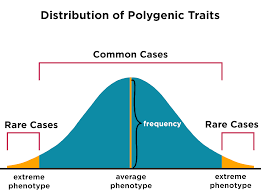 I suppose in one sense, “life is not fair” means that life is indeed following a bell-shaped curve and some of us are on the undesirable end. In other words, some of us are too short, too fat, too unappealing, or any number of other less-desirable traits that we find on the extremes of the bell-shaped curve. Last night I was watching a 3-year-old do stunts on a sized down motorcycle. I could not do these stunts if my life depended on it. This young boy was a natural on the motorcycle. He took to it like a fish to water. We have all seen and perhaps envied some of the more fortunate on our bell-shaped curve who can do things we only dream about doing. For those of us on the wrong end of the bell-shaped curve, life will never seem fair.
 I understand why so many people want to believe in heaven and hell. It would be much easier to go on living peacefully if I could really believe that there was someplace better to go to than this earth I now reside on. Too many bad days now seem to intrude on my equanimity. You and I and everyone else that resides on this 3rd rock from the sun are abused and tormented every day with disease, starvation, accidents, environmental devastations, and pandemics. I could handle all of these things but for one thing. It is called “mans’ inhumanity to man.” The stupid cruel things we do to each other over and over again. The wars, murders, and injustices that we inflict on other human beings. And it is not just the average person that inflicts these cruelties, it is the “best” people in the land. In fact, it would seem that the inhumanities done by those with the most money, most intelligence and those we call our leaders are the worst of all the brutalities and savagery that we see in the news each day.


 There are things that bother other people which may not be flaws at all. In fact, some so called flaws demonstrate individuals who are marching to a different drummer or who are defying conventional social norms. To defy anti-Semitism in Germany during the early 20th century would have been considered a character flaw. To be an abolitionist in the South prior to the Civil War would have led to persecution by your fellow citizens. Who today would consider these character flaws? History will often show that a “flawed” individual was a hero or heroine rather than someone with a character defect.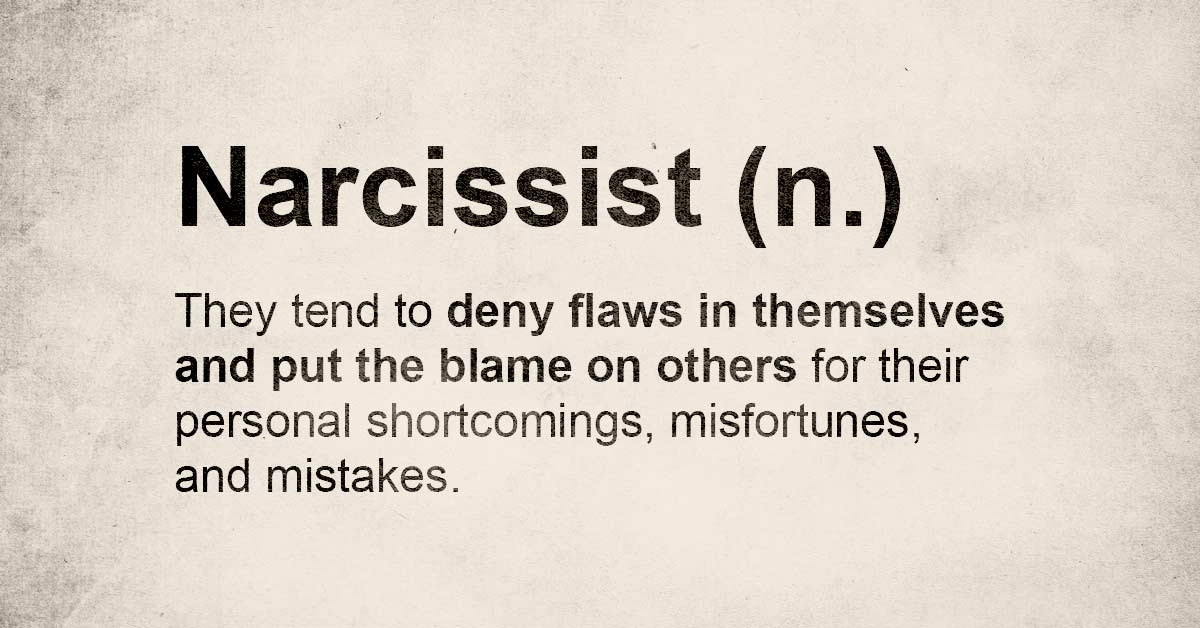

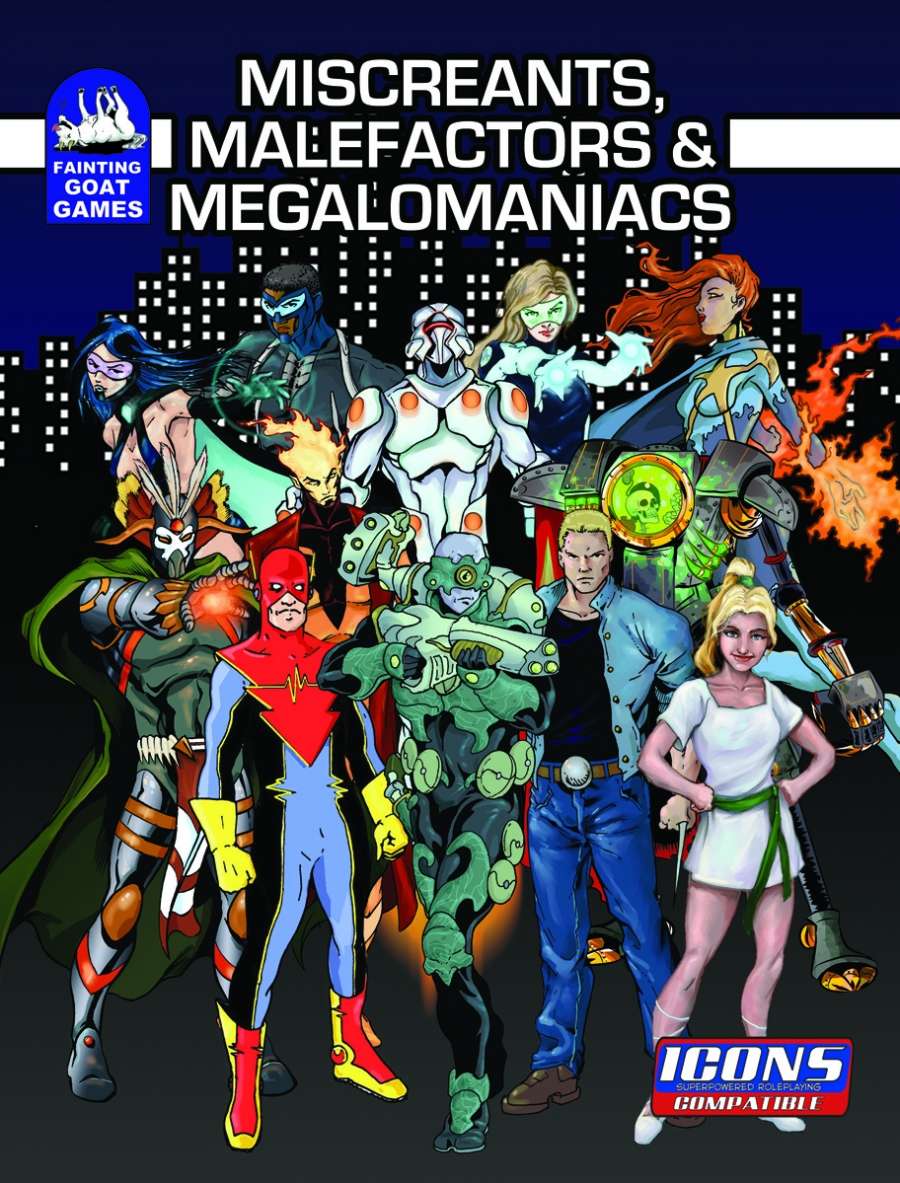

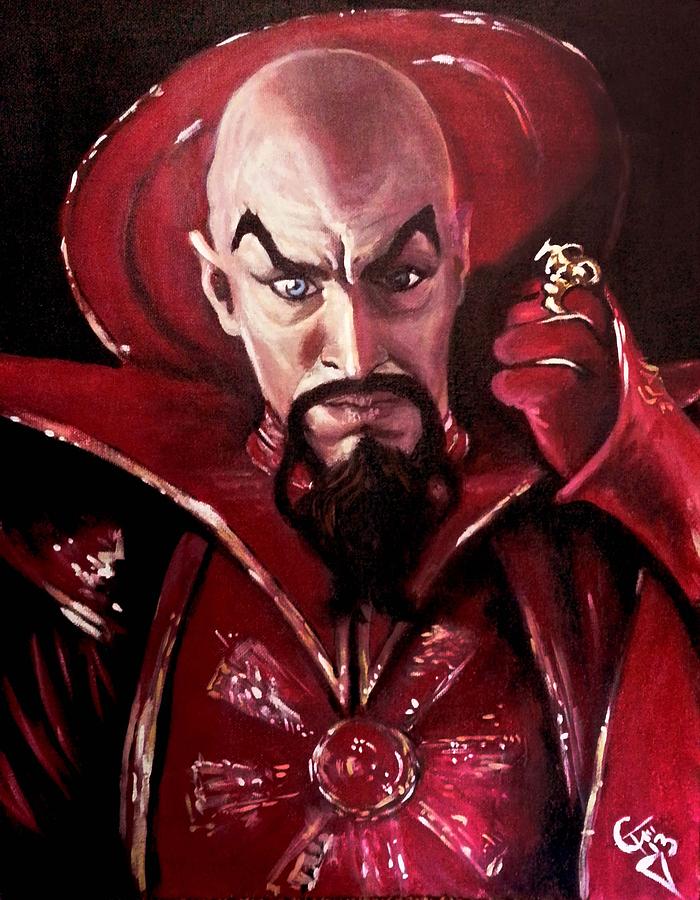 My first real hero was Ming the Merciless. He had all the primary characteristics of an evil genius. He was a megalomaniac who wanted to rule the world. He was always smarter than Flash Gordon. He had dozens of minions who followed his every order. He obeyed no rules except his own. And finally, he lusted after Dale Arden who was a pretty hot babe for the time. Dale had wonderful blond curls, a great figure and was into bare midriff before it became popular in the 90’s. Flash was a wimp when it came to Dale but Ming the Merciless knew what he wanted and really went after it. I suppose tying women up today would not be proper but if you are an evil genius it is simply part of the expectations.
 My second Hero was Dr. Fu Manchu. A character created by the writer Sax Rohmer. Fu was as evil as they came. He was a brilliant megalomaniac. He obeyed no rules or laws except his own. He was alleged to hold doctorates from four Western universities. Unlike the wimpy college professors who one associates with a Ph.D. degree, there was nothing wimpy about Dr. Fu Manchu. He would not hesitate to murder anyone who got in his way. In the 1932 film, The Mask of Fu Manchu, Fu tells an assembled group of his minions that they must “kill the white men and take their women.” Evil geniuses have a knack for thinking big and ignoring the normal bonds of propriety and civility.
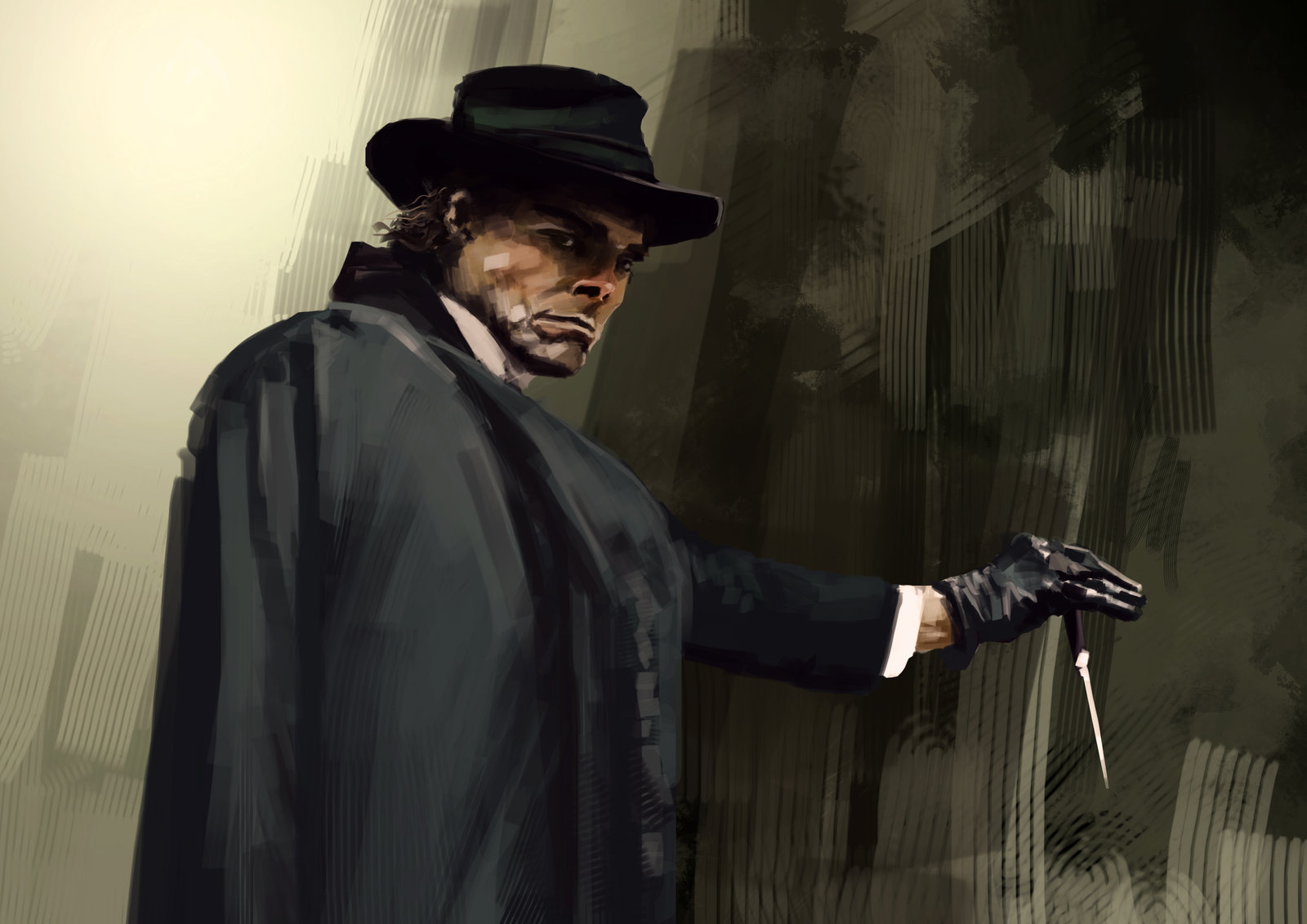 As is usual with evil geniuses, Moriarty was always one step ahead of Sherlock. Perhaps because it was still the Victorian age, Moriarty did not have much to do with lusting after women. There was no kidnapping, tying women up or forced kissing in any of the Moriarty tales. However, Sherlock was not much better in the womanizing category and seemed to be a confirmed bachelor. His main relationship with a woman was with his housekeeper Mrs. Hudson which always stayed platonic.
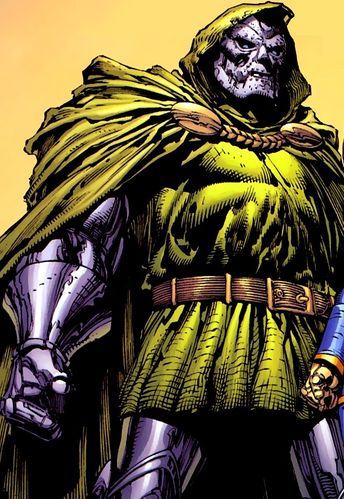 Von Doom. You must love someone with a name like that. Dr. Doom was evil and ruthless and a certified genius. He had many gadgets and inventions that enabled him to defeat an entire pantheon of superheroes. When it came to bad, he took a back seat to no one. Imagine, someone who would let his childhood sweetheart be savagely sacrificed so that he could gain the power to rule the world. Yes, like most other evil geniuses, Dr. Doom was also a megalomaniac who wanted to rule the world.
 I have not had time to describe all the evil geniuses whom I have loved and admired. I have given you only a few of the ones who have punctuated my life. I do not have the space to do justice (sic) to some of my other heroes such as Lex Luther, the Kingpin, The Joker, Green Goblin and of course Sauron. By the way, recently we had a female megalomaniac out to destroy the world. It was quite refreshing to see how Hela kicked Thor’s butt from one end of Asgard to the other. But to bring you up to the present, I have now found perhaps the most evil genius in history. He has all the truly great characteristics of evilness. He is also a genius.



 Aging Capriciously