For years I’d heard a curious idea, that most revolutions are won by only a third of the population. Supposedly the American Revolution broke down this way—one third for independence, one third against it, and one third sitting on the fence. I began wondering whether this pattern was unique to America or common across world history. And if it was true, even in spirit, how is it possible for a minority to defeat a larger group?
Let me get something very straight with this blog. This is not about theory. This is about praxis. We are in the midst of a cold war rapidly becoming a hot war in the country. One third of Americans want a democracy. One third want a Hitler. One third don’t give a damn. I want to see the winning side be the side for democracy. I am posting this blog so that we can all understand what it will take to win this war.
I am under no illusions that this war will be won overnight. I have no illusions that the mid-term elections will make more than a ripple in this war. I have no illusions that releasing the Epstein files will make any more difference than getting Trump’s tax reports make. I have no illusions that Trump supporters will suddenly join the “good” guys. I have no illusions that Congress, the Senate or the Supreme Court will help us to win this war.
The only illusion I am under is that we need a large mass of people who will stand up, speak out, march and refuse to settle quietly into a country dominated by autocrats, plutocrats and oligarchs. As Patrick Henry so bravely stated “I know not course what others may take but give me liberty or give me death.” If you want to live under a democracy, you must be willing to fight for it. You must even be willing to die for it. Nothing less than this will help to restore democracy to America.
As usual, my friend Metis helped me uncover a deeper truth: while the “one-third rule” is more myth than precise statistic, it captures something essential about how societies change.
Revolutions are not majority events. They are minority movements that succeed when the conditions are right. But we do not have to wait until the conditions are right. In fact, one will only know when the conditions were right. That is, it is something we can only know after the fact. We must act on the assumptions that our efforts will create the right conditions and indeed that is the only possibility that exists.
Myth and Reality: Was the American Revolution Really One-Thirds?
Historians don’t agree on exact numbers. Loyalists (Those who wanted to stay with King George III) probably made up 20–30% of the population; active Patriots only 40–45%. The rest moved with the winds of power, fear, or convenience. But the spirit of the one-third idea is accurate:
Revolutions rarely begin with majority support. They are propelled by determined minorities, resisted by others, and observed passively by the rest. Today we may be in the minority. However, as this blog will show, it does not matter. We can still win the war and restore democracy if we meet certain conditions which I will discuss.
This same dynamic repeats across Paris in 1789, Russia in 1917, Cuba in 1959, Iran in 1979, and even some modern uprisings today. The numbers vary, but the structure remains: a committed minority clashes with a protective minority, while most people watch and wait.
If Numbers Don’t Decide Revolutions, What Does?
Here is where the history becomes fascinating. Revolutions are not democratic moments. They are power struggles, and the deciding factors are not how many people agree but how many crucial systems shift. The enemies of democracy today have shifted several crucial systems in their favor. This includes the Congress, Supreme Court and religious systems across the spectrum as well as across the country.
Metis helped me understand that six forces usually determine the outcome of a revolution.
- The Power of the Narrative
- The side that wins is often the side that tells the most compelling story.
- American Patriots framed independence as liberty versus tyranny.
- The Bolsheviks promised “Peace, Land, Bread.”
- Iranian revolutionaries cast the Shah as un-Islamic and corrupt.
 When one group claims the moral high ground—and gets people to believe it—it gains legitimacy, the most valuable currency in any upheaval. The political legitimacy concerning a moral high ground has shifted from the beginning of the USA up to present times. When the Republican party was against slavery, they held the moral high road. This legitimacy shifted to the Democratic party when they began to espouse fair treatment and wages for working class people. The legitimacy has now shifted back to the Republican party as they have assumed the high ground against efforts to reduce income inequality and a decent wage for all people. They have created this new legitimacy by their constant hammering on what they call “Trickle Down Economics” and the danger presented to the USA by anything that bears a faint resemblance to socialism or (GOD FORBID) Communism. Trickle Down Economics much like the Prosperity Gospel promises untold wealth to people based on their religion or willingness to defer gratification to someone else. This someone else is either the Uber-Rich controlling the corporations or the Ministers selling the tickets to heaven.
- The Weakness of the Old Regime
Revolutions succeed when the ruling system is already coming apart because of:
- Economic crisis
- Political division
- Corruption
- Military overstretch
The American colonists fought an empire spread thin.
The French monarchy was bankrupt.
The Russian Tsar faced famine, inflation, and a collapsing army.
 A revolution doesn’t topple a strong system—only a wounded one. The downfall of the Democratic party as the “Ruling Party” did not happen overnight. Democrats maintained nearly unbroken control of both the House of Representatives and the Senate for roughly 60 years, from the early 1930s until the mid-1990s. While the presidency alternated more frequently, legislative control and overall party identification favored the Democrats for most of the century.
As the Democratic party shifted from their traditional alliances with labor and working class people to supporting corporate driven efforts like NAFTA, their former allies shifted their allegiance. The Republican Party starting promising to deliver on issues like
- Removing gun control: The rights of individuals versus the “overreach of the Government. This went beyond gun control to encompass many other efforts to reduce Government power or regulations.
- Repealing Roe Versus Wade: Family Values became a consistent Republican theme. Beginning in the 1970s, the Democratic Party’s platform became more progressive on social issues, which alienated many religious and culturally conservative voters.
- Elitism versus Popularism: As the Democratic Party became increasingly associated with college-educated professionals and urban “elites,” many working-class voters without degrees began to feel culturally alienated. Issues such as environmental regulations (which affected mining and logging jobs) and “identity politics” were often framed by Republicans as evidence that Democrats had lost touch with “average Americans”
- Economic Disillusionment and Deindustrialization: For decades, the “New Deal Coalition” was held together by white working-class labor unions. However, the economic crises of the 1970s (stagflation) and the decline of American manufacturing (the “Rust Belt” phenomenon) led many to feel the Democratic Party’s policies were no longer working for them.
- Scapegoating: One strategy that always works to win supporters is to blame someone else for our problems. The Republicans became very adept at blaming criminals and crime for all of America’s drug problems and Immigrants for the lack of jobs and disintegration of our manufacturing industries.
- Military Defection: The Decisive Factor
This may be the single most important factor. It is also the most difficult one to harness to any efforts at change. Throughout history, if the army remained loyal to the old regime, revolutions died quickly. But if even a portion of soldiers defected—or refused to suppress protesters—the balance shifted overnight. We are seeing this factor play out right now as people like Senator Mark Kelly speak to soldiers about the rules of the UCMJ and as Congress and the courts attempt to bridle the power of the Presidency to use the US military for “Insurrectionist” causes.
- Organization Beats Majority
A united minority will defeat a divided majority. Samuel Adams said that he didn’t need the people, only “An irate, tireless minority keen to set brushfires of freedom.” He understood the mathematics of commitment: organized passion overwhelms scattered opposition.
This explains everything from Lenin’s disciplined Bolsheviks to Castro’s small, cohesive guerrilla force. Passion and commitment can win out over elements like greed and fear. If we can gain the moral clarity that we need to appeal to a large minority of people and couple that with a zeal and passion that reflects more than economic need or even religious fervor, we can surely topple the anti-democratic elements in our country. This is not to say that many of these people are not also driven by passion and fervor for what they believe is right. Unfortunately, the passion and fervor of the Republican positions is even more aligned with greed and fear. There is a decided lack of empathy and compassion in Republican policies for the poor, minorities and underprivileged.
- Support from Outside Powers
The Patriots needed France. Vietnam needed the Soviet Union and China. Afghanistan’s Mujahideen needed the United States. Revolutions are seldom isolated. When outside powers tilt the scales, even a small domestic movement can triumph.
It has become increasingly apparent that the Anti-Democratic forces in America are alienating not only our enemies but also many of our former allies. The recent moves by Trump to annex or acquire Greenland, together with his unilateral invasion of Venezuela has angered many of our NATO partners. Add to this the Non-NATO countries that are horrified by Trump’s actions and you have a phalanx of countries that believe America’s foundation for world peace is unstable and unreliable.
It is not clear to me what impact the attitudes of other nations can have on our efforts to restore a Democratic country, but seldom in history has a Tyrant nation lasted when faced with a united opposition from the rest of the world. Trump is digging a grave for America with each of his so called efforts to “Make America Great Again.”
- The Middle Third Doesn’t Stay Neutral Forever
Here is the most intriguing factor. That passive third—the cautious, undecided, go-along-to-get-along crowd—will eventually move. The forty million Americans who did not vote. They will tend to shift toward whichever side appears:
- More legitimate
- More competent
- More likely to win
- More capable of maintaining order
Revolutions are psychological events. People want to be on the right side of history—or at least on the side that won’t punish them.
As Metis reminded me, “When the middle begins to believe one side is the future, the tipping point arrives.”
So Which Third Wins?
It isn’t the largest group. It’s the group that hits the Five-Factor Threshold:
- A powerful, morally compelling story
- A weakened ruling order
- Some degree of military support
- Strong organization and cohesion
- External allies or neutrality from the outside world
Meet these conditions, and even 20% of the population can win a revolution. Fail dramatically at any one, and even 70% support may not be enough.
History is not a democracy—it’s a contest of energy, legitimacy, and timing.
A Deeper Personal Reflection
I’ve shared with Metis that I look back nostalgically at times when integrity seemed to matter more, when people believed in duty and morality. Our culture has grown cynical, sometimes preferring anti-heroes to actual heroes.
The lesson from the one-third rule is both sobering and hopeful:
A society can decline even when most people are decent—if the active minority pushes it downward.
But society can also be uplifted if a committed minority of citizens with integrity act with courage and clarity.
Small groups bend history. Which means that every generation—including ours—must decide which minority will shape the future.
Either choose Democracy or choose a Dictatorship. The choice is yours!

 As with any of the constitutional amendments there is a certain, indeed I would say “high” degree of ambiguity as to the limits of what the Founding Fathers meant by their words. We know for instance that they did not mean that you could slander or libel anyone with your words. We know that they did not mean that you could yell “fire” in a crowded theater. We also know that there are many instances of what the Founding Fathers did not have a clue would become an interpretation for “Free Speech.” For instance, the Citizens United decision by the US Supreme Court says that the right to make political contributions is a form of free speech. This will probably go down in history as one of the most egregious interpretations of what the Founding Fathers meant. The only interpretations that seem more egregious concern several earlier court decisions regarding slavery and the buying and selling of human beings.
 Recently, I read of the case of an eleven-year-old convicted of killing his stepmother. His appeal took three and a half years to come to court and then found him not guilty. On the other hand, Kari Lake, the big lie advocate and loser in the Arizona Governor’s race this past year had appeal after appeal and each one seemed to take less than two or three weeks. It takes three and a half years to get justice for an eleven-year-old wrongly convicted of murder, but Lake got trial after trial for her baseless and politically motivated claims that they “stole” the election from her. This same scenario has played out repeatedly in the past few years. Poor people with no money wait years to get a “fair hearing” while rich bottom feeders like Lake walk in and out of court on an almost daily basis.





 This past Thursday I attended a meeting for a new Veterans group that had recently formed in our town. There were three people at a table in front of the group (two men and a woman) and about 20 or so people in chairs facing the table. The two men whom I assumed were leaders mentioned that the key-note speakers, someone from the Arizona Posse and someone from the Pinal Country Sheriffs department may or may not make the meeting. Apparently there had been a few recent killings in area and both groups were lending support to the Casa Grande Police department. The woman in front was the spouse of one of the men leading the group. She was also the club secretary.
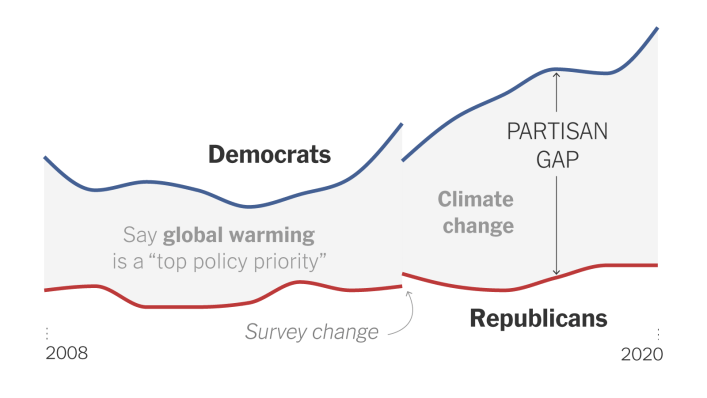
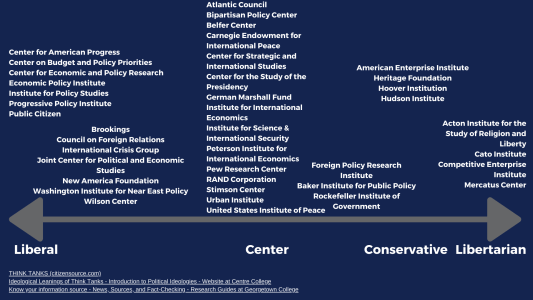
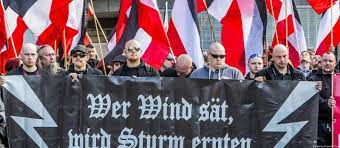 Now in America today, we have five political perspectives arranged along a continuum. On the extreme right, we have the “extreme conservatives” as they may think of themselves. However, they are fascists and anti-democratic in symbols, outlook and beliefs. On the extreme left we have a smaller group who might think of themselves as progressives or socialists but in the minds of many on the right they are “card carrying communists.” Indeed, some of the extreme left-wing do fit this perspective. Slightly to the right of center we have the true conservatives and slightly to the left of center the true liberals. In the middle we have people who support some social programs but are fiscally conservative. We also have people in the middle who support some government but are against too much government.
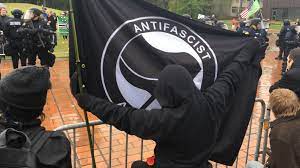 One characteristic of both the extreme right and the extreme left is the inability to see perspectives different than their own. To the extremists, the world is black and white. Good and bad. Each extreme entirely rejects the perspectives of the other extreme. Each extreme feels that they are not allowed to speak but that the other extreme is. Newspapers and zealots take sides with the extremists and promote narratives designed to appeal to the extreme views exposed by each side. The ability to condone or support multiple perspectives becomes more and more difficult as a greater and greater polarization ensues. People bemoan the death of compromise but each side ladens itself with oaths and pledges guaranteed to insure that they will not try to see the world from the other side.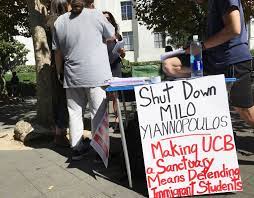
 The result is a form of warfare between each side. The middle groups become more and more polarized as they find that they must take sides to survive. Liberals talk about the importance of listening to understand what the other side says and thinks as though this will solve the problem. It will not. Unless someone listens with an OPEN MIND, no amount of listening will make a difference. I was once approached by an employee who asked me to speak to his boss on his behalf. I asked him why he did not do it himself. I pointed out that his boss had “an open door policy.” The employee looked at me and replied: “Open door but closed mind.”
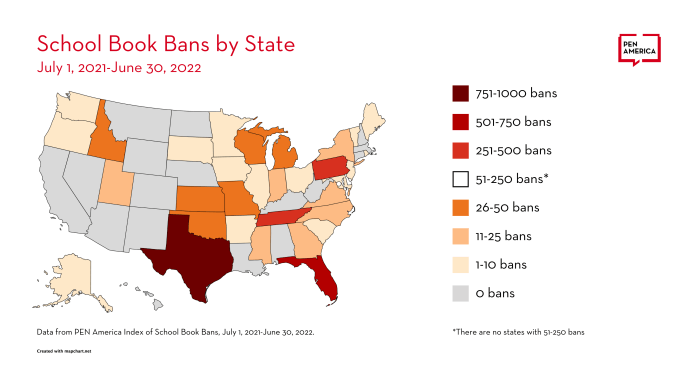
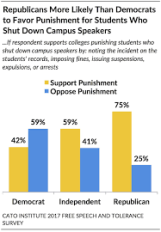
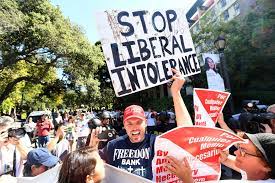 Our schools have failed us because they teach right answers and not right questions. They teach closed minds and not open minds. We have a generation who are now increasingly anti-education. We have a war against our schools by people who do not believe that schools exist to teach right thinking but only right answers. Liberal schools are boycotting right-wing fanatics and not allowing them to speak. Fox News prints daily rants against schools portraying the worst aspects of what once was a liberal education. The right wing increasingly wants a technocratic education which will result in a job that pays well. Any focus on mindfulness, morality, ethics, and integrity plays little or no role in the education system desired by the right. Those on the left believe that public education should be for the masses but ignore the needs of many rural and poor people to get a job that pays a living wage.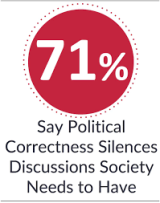
 Once upon a time I had more friends on Facebook. I had both Democratic friends, Republican Friends and friends who cared not one whit about politics. Many of all political persuasions were friends who simply wanted to ignore politics. During the run-up to Trump’s election, I discussed, debated, argued, reasoned and fought with many friends who wanted to support Trump. The results were not pretty. Zero changed their minds. I was angry and frustrated.


 ays every American citizen has Freedom of Expression. Thus, we are just expressing our free rights as American citizens to beat up on people we don’t like.”
 “Look, said Tattoo Guy, we voted for Donald Trump and he respects our Freedom of Expression rights. We are sick and tired of the PC shit you pussies and commies have been spreading in this country for years. We are tired of watching what we say and do because we might be called rednecks or bigots or even racists. It’s a new day for America. We are going to make our country great again.”
 “You are more or less on the right track” says Tattoo Guy. “Used to be you could tell some nigger jokes, put up pinups of nude girls, even grab a few pussies once in a while and no one bothered you. Then, all this PC stuff started and before you knew it, you had to watch what you said and did. A White person’s Freedom of Expression went down the drain. Well, no more PC now. So can we please get back to beating the shit out of this nigger?”
 “Well, what if I told you that I had a Glock Model 40 10mm in my pocket and that if you hit this man one more time, I will take it and blow your fucking brains out. What would you think of that” I replied indignantly.

 Aging Capriciously