What the hell is Xenophobia? Whenever I have used this word, this is a common question I get asked. Ironically, it is a very common behavior in America. You would think that everyone knew exactly what it means. On any given day in the USA, there are examples of Xenophobia in the news.
Now I pride myself on doing blog posts that will appeal to the average person. No big words that only someone with a Ph.D. can understand. Yet here I am using a word that perhaps a large percent of Americans would not know what it means. So, I guess that it is time to pull the curtain back and “give it up.”
Xenophobia is the irrational fear, hatred, or dislike of people from other countries, cultures, or backgrounds who are perceived as foreign or strange.
Key Characteristics
- Origin: The word comes from the ancient Greek words xenos (meaning “stranger” or “guest”) and phobos (meaning “fear” or “flight”). It first appeared in English in the late 19th century.
- In-Group vs. Out-Group: It is built on the mental division of people into an “in-group” (those who belong) and an “out-group” (outsiders viewed as a threat).
- Common Triggers: It often spikes during economic hardship, political instability, or rapid social and demographic changes, where outsiders are used as scapegoats for local problems.
- Manifestations: It can lead to social exclusion, verbal harassment, discrimination, institutional policies against migrants, or violence.
A Xenophobe is a person who strongly dislikes, distrusts, or fears people perceived as foreigners, strangers, or members of a different culture or nation.
How often have you heard people say “This is America, speak English” or “If you don’t like it here go back to your own country?”
Let’s break this definition of Xenophobia down further:
In-Group vs. Out-Group:
My team, my church, my religion, my God, my beliefs, my group, my club, my race, my ethnic group is better than your group. In fact, my group is so much better than your group, that I think we need to eliminate your group from America.
The thinking that underlies the belief that my group is superior can lead to the idea that violence is justified so as to eliminate your group. In some cases, this will mean taking the rights away from other people. In the extreme it can mean denial of basic rights, expulsion, physical attacks or murder. History has repeatedly shown us a progression of violence against others that goes from stereotyping, to blame, to tolerating humiliation of others, to denying fair treatment and sometimes ending in violence. Think Nazi Germany.
If you have been paying attention, you will notice that people we call racists, bigots, sexists all share many of the characteristics of Xenophobia.
Xenophobia, racism, sexism, and Homophobia can share common biases and reinforce one another, while targeting different characteristics. However, there are some substantive differences between Xenophobia and Racism as well as between Xenophobia and Sexism and Xenophobia and Homophobia. For instance:
Xenophobia vs. Racism
- Xenophobia focuses on a person’s nationality, culture, or foreign status (the idea that someone is an “outsider” who does not belong).
- Racism is a belief system that judges an individual’s worth or capabilities based on fixed physical attributes like skin color or racial category.
- While they often overlap and feed into each other, a person can experience or display them independently.
Xenophobia vs. Sexism
Xenophobia and sexism are both forms of systemic prejudice and discrimination, but they differ fundamentally in their targets, origins, and expressions. Xenophobia targets people based on their nationality, geographic origin, or cultural foreignness, whereas sexism targets individuals based on their sex or gender identity.
Xenophobia vs. Homophobia
Xenophobia and Homophobia are both forms of systematic prejudice rooted in an irrational aversion to a specific group, but they target entirely different aspects of identity and operate on different social dynamics. While Xenophobia targets a person’s geographic, national, or cultural origin, Homophobia targets a person’s sexual orientation.
Shared Similarities between Xenophobia and other Prejudices:
- Scapegoating: Minorities, women, gay people and immigrants are frequently scapegoated by political or social movements during times of societal stress to deflect attention from structural problems.
Now one might well ask, well how much Xenophobia actually exists in the USA today or perhaps how many Xenophobic people are there in the USA? Here is what my AI assistant gave me in response to this question.
| Survey | Finding | What it tells us |
| PRRI, March 2026 report | 33% agreed that “Immigrants are invading our country and replacing our cultural and ethnic background”; 62% disagreed. | A substantial minority endorses a belief I would interpret as a strong indicator of xenophobic attitudes. |
| Gallup, June 2026 | 21% said immigration is bad for the country; 73% said it is good. | Most Americans favor immigration overall. The negative response alone does not establish prejudice. |
PRRI: Immigration Enforcement, ICE, and Civil Liberties in the Second Trump Administration — March 26, 2026. Source for the 33% agreement with the invasion-and-cultural-replacement statement.
Gallup: Americans’ Support for Immigration Down, Still Strong — Source for the June 2026 findings: 73% said immigration is good for the country; 21% said it is bad.
My best assessment is Xenophobia affects tens of millions of Americans and has considerable political significance, but the evidence does not support calling most Americans xenophobic. We can measure the prevalence of specific hostile beliefs much more confidently than we can count “xenophobic people.”
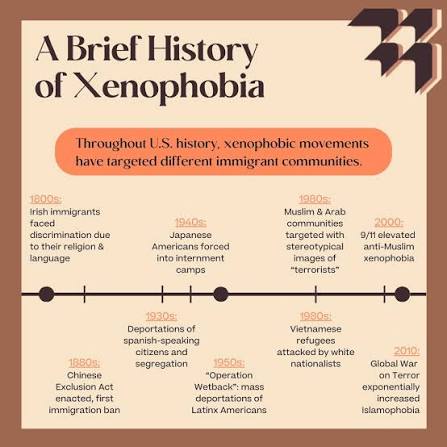
Conclusions:
I would like to leave you with three questions. If we can create one iota of doubt in even a few of the people out there who exhibit some of the hostilities I have discussed we would have made some progress.
No one is born Xenophobic. Many of us welcome meeting new people, experiencing new cultures, talking with people who are not “just like we are” or people who “do not belong to our clan or church or group.”
Just like Racism, Sexism and Homophobia, Xenophobia is learned. Something that is learned can be unlearned. But it takes developing some empathy and compassion for all people. The Baháʼí believe in the Unity of all humanity. We are all one people on the face of the earth trying our best to do what we can to lead a decent life and create a good future for our children.
Xenophobia is a virulent disease. It spreads from one Xenophobe to another. It becomes a group identity and a safe haven from having to question one’s own prejudices.
An open Democratic society is not a society that is without risks.
In the “Parable of the Good Samaritan”, the Samaritan gave aid to a wounded traveler thought to be Jewish. First-century Jews and Samaritans were divided by deep religious and historical hostility. The Samaritan gave his own money and time to help the victim with no guarantee that he would be paid back. The Samaritan crossed a boundary of prejudice to help someone outside his own group.
Three Questions:
- How do you think people coming to this country for a better life feel when they are told “Go back to where you belong, we don’t want you here?”
- How do you think people who belong to a different group than you do feel when they are told they are dirty, dangerous and unclean or worthless?
- What do you think Jesus would say to an immigrant who needed asylum or to a Gay person who simply wanted to be treated like other people?


 The internet has made the problem even worse. We are deluged with a tsunami of viewpoints every day. From right, left, central, religious, agnostic, scientific, spiritual, communal, familial and hundreds of other perspectives our viewpoints of the world are bombarded by messages that challenge our thinking and our very reason for being. Whose shoes should I stand in? Whose perspective should I try to take?


 One year at a Martin Luther King memorial service on the University of Minnesota campus at Northrup Auditorium, the keynote speaker was Dave Moore, a well-known news and television personality. Karen and I attended many of the MLK day celebrations over the years. I had never seen a White keynote speaker. I was somewhat surprised and wondered what he could say about Martin Luther King or any other issue dealing with racism. It turned out to be quite an interesting talk.
 Now we get back to the difficult if not impossible people to understand. How do we put ourselves in the shoes of a rapist or pedophile? There are many that would think I am crazy for asking this question. I believe we will never eliminate these problems if we do not understand the causes. We cannot cure the problem simply by locking up all the pedophiles and rapists in the world. I do not believe that these are inherited characteristics. There have been times and places in the world where practices bordering on rape and pedophilia have actually been legal and condoned.


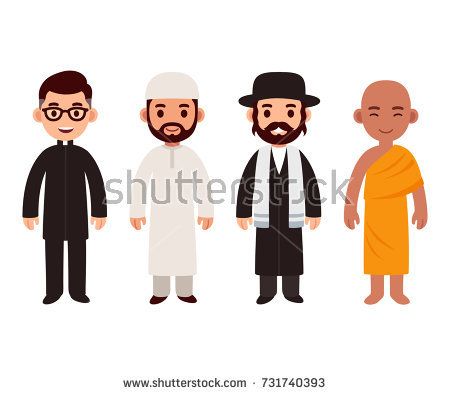 A Rabbi, Iman, Pastor and Buddhist Priest were all discussing the issue of peace in the world and in particular peace in the Mideast. The Rabbi said there could only be peace in the Mideast if all the Muslims left. The Iman said that there could only be peace if all the Jews left. The Pastor jumped into the argument and said there would only be peace if all the non-Christians left. The Buddhist cleared his throat to interrupt the argument and said, “There will never be peace anywhere as long as there are Muslims, Jews, Protestants, Catholics and even Buddhists in the world.”

 The peaceful person does not use violence against others. The peaceful person is a diplomat who solves problems with his/her brain and not with tools of aggression. The peaceful person is confident because they have integrity. The peaceful person has serenity because they have no fear. Fear is the enemy of peace. When the world is on red-alert, people live in fear. People become fearful of others and fearful of living. Racism, sexism, discrimination, greed, and militarism create fear. With fear, no one can be at peace.
 We should all be grateful for peace. This means we need to appreciate peace and understand that it cannot be taken for granted. Peace is up to us to create. It is too important to leave to religious leaders and politicians. If we want peace in our lives and peace in the world, we must create it. There can never be peace for anyone if there is not peace for everyone.


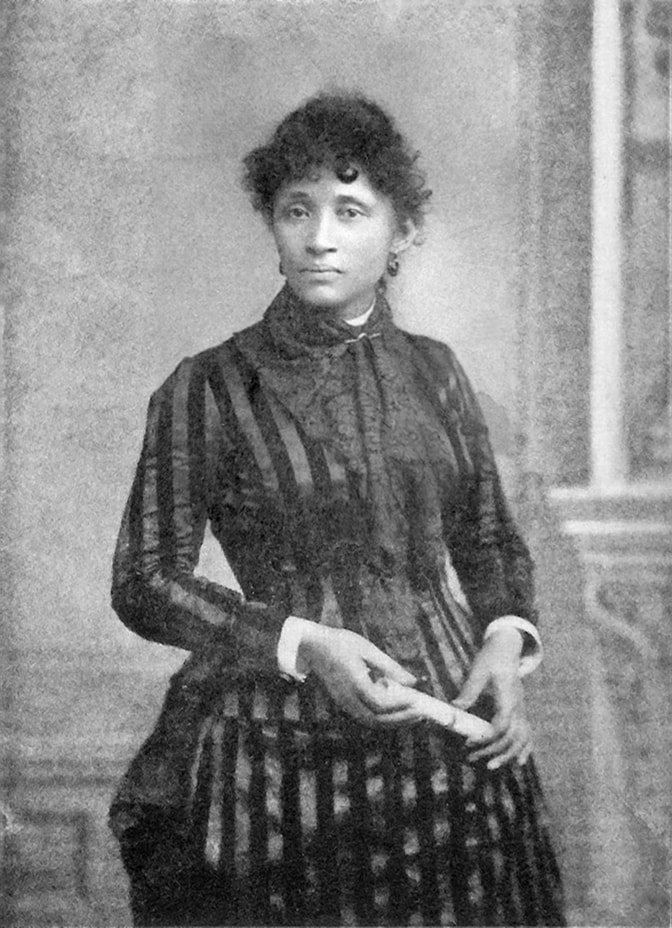
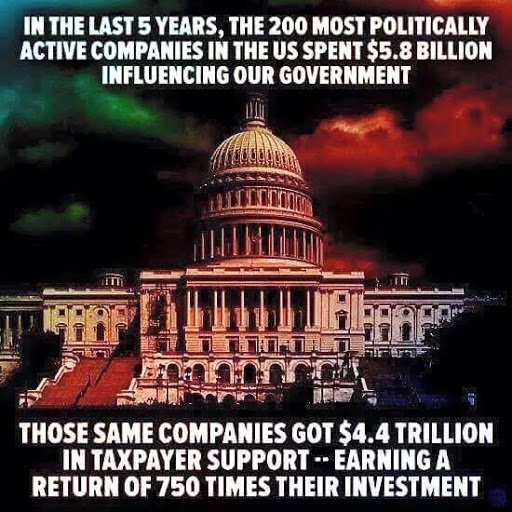


 The thought that “you will have liberty if you can pay for it” rings true 100 years after Lucy spoke these sad and forlorn words. Today we say “politics and courts are ruled by the Golden Rule. He who has the money makes the rules.” We all know that it takes money to get a law passed or else why are there so many lobbyists in the halls of congress. We also know that rich people get a better break in court because their money buys them better lawyers. We also know that poor people fare less well with our law enforcement agencies than do rich people. When was the last time you heard of a police officer stopping someone in Palms Springs or La Jolla for a broken taillight?
 Once upon a time I had more friends on Facebook. I had both Democratic friends, Republican Friends and friends who cared not one whit about politics. Many of all political persuasions were friends who simply wanted to ignore politics. During the run-up to Trump’s election, I discussed, debated, argued, reasoned and fought with many friends who wanted to support Trump. The results were not pretty. Zero changed their minds. I was angry and frustrated.


