A number of years ago when I first started graduate school, I was talking to a professor who had just purchased a brand new yacht. This was nearly 40 years ago and I was pretty judgmental (I am hoping I am somewhat less judgmental today). I remember saying to him exactly what was on my mind: “Don’t you feel guilty with all of the poverty and problems we are facing in this world, to spend your money on such an extravagant purchase?” To this day (Perhaps, my continued naiveté) I remain both shocked and amazed at his reply. “John, if I can afford it, I deserve it.” I was shocked because it seemed so insensitive to the world’s problems and I was amazed because I had expected that someone who had earned a Ph.D. would have had a more reflective and thoughtful reply. Instead, he simply parroted back to me what I had labeled as the “Protestant Ethic.” According to Wikipedia:
“The Protestant work ethic (or the Puritan work ethic) is a concept in theology, sociology, economics and history which emphasizes hard work, frugality and prosperity as a display of a person’s salvation in the Christian faith. The phrase was initially coined in 1904 by Max Weber in his book The Protestant Ethic and the Spirit of Capitalism.
Somewhere in the course of the development of American Capitalism, guilt or perhaps conscience was replaced by the moral certainty that if you only work hard enough, you can spend your money as frivolously as you want to. At least, this was the interpretation I drew and continue to draw from my understanding of the Protestant Work Ethic. Now of course, it has morphed into an abomination called the “Prosperity Gospel.” In some sense, I can understand this idea. If you work hard, why should you not be able to harvest the fruits of your labor? Why should you be expected to share with those who are less fortunate? After all, how many of the “less” fortunate are “less” because of their own laziness, stupidity, inertia or lack of ambition? Should I have to pay more taxes to support people who don’t want to work or whose entire goal in life is to eat their way to obesity, drink their way to liver failure or drug their minds to an out of this world zombie state? Why should I have to put up with the lack of ethics and self-discipline that it would appear in so many of the indigent and poor in this world exhibit? A study in England in 2009 found that:
Four out of five people see nothing wrong with stealing from their workplace – while more than half think it acceptable for a care giver to persuade an elderly person to rewrite their will, according to a new study.
http://www.dailymail.co.uk/sciencetech/article-1211629/How-80-think-OK-steal-work-study-reveals-wavering-moral-compass.html#ixzz2RU850BbL
In some sense, the Protestant Ethic is a direct refutation of the morals that I had been given in my early Catholic school training. Perhaps, that is why Catholics and Protestants did not get along in years gone by. I remember every lunch break being told by one of the nuns or sisters at my Catholic school to be sure to “clean my plate.” When queried why this was so important I always received the same reply “Because of the starving kids in India.” Somehow, I was expected to feel guilty for these starving children in some far away country who did not have enough food to eat. Was it my fault that they did not have enough to eat? However, it was okay if I cleaned my plate and did not leave any scraps. Kind of reminds me of when I go to a Chinese Buffet and it says on the sign posted: “Please do not take more than you can eat.” I weight 147 lbs. and scrupulously (well, sometimes) obey this admonition. I watch the 400 lb. plus people with plates that are stacked higher than the Eiffel Tower and I wonder if they saw the sign or is it simply that they are on a diet? See, there I go again, being judgmental.
Well, here it is nearly 40 years later and the question I posed to my professor colleague still seems quite legitimate to me. When is it okay to indulge? When can I binge? When is it permissible to go buy my brand new Ferrari or brand new yacht? What would Sister Evangeline say if she knew I was spending $350,000 dollars or more to purchase a new boat that I might only use two or three times per year? What would Martin Luther say? I can not imagine Luther saying: “Well, John, don’t worry about it. You are supporting the economy. Every boat you buy is a job for some boat builder in India or Pakistan or some other place where the kids don’t have enough to eat.” “Thank You Martin Luther, now I don’t feel so guilty.” Hooray for the Protestant Work Ethic!
Here is what the Gandhi Institute has to say about this issue:
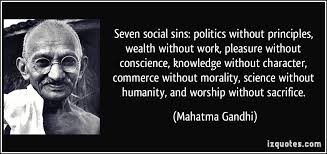
Pleasure Without Conscience: This is connected to wealth without work. People find imaginative and dangerous ways of bringing excitement to their otherwise dull lives. Their search for pleasure and excitement often ends up costing society very heavily. Taking drugs and playing dangerous games cause avoidable health problems that cost the world hundreds of billions of dollars in direct and indirect health care facilities. Many of these problems are self-induced or ailments caused by careless attitudes. The United States spends more than $250 billion on leisure activities while 25 million children die each year because of hunger, malnutrition, and lack of medical facilities. Irresponsible and unconscionable acts of sexual pleasure and indulgence also cost the people and the country very heavily. Not only do young people lose their childhood but innocent babies are brought into the world and often left to the care of the society. The emotional, financial, and moral price is heavy on everyone. Gandhi believed pleasure must come from within the soul and excitement from serving the needy, from caring for the family, the children, and relatives. Building sound human relationships can be an exciting and adventurous activity. Unfortunately, we ignore the spiritual pleasures of life and indulge in the physical pleasures which are “pleasure without conscience.”
From: http://www.rabbitadvocacy.com/gandhi_teachings.htm
A person I really admired was the teacher and prophet OSHO. OSHO also believes that all the violence in the world comes from the need people have to address the boredom and meaninglessness in their daily lives. People who are bored and who feel that their lives have no meaning turn to violence and or drugs in an effort to fill their lives with something that excites them or makes them feel alive. The problem with such stimulation is that it never really fills the void and as with any panacea it is only temporary. The void returns and the need to find new or greater stimulation also returns. The cycle is not broken by the search for outside stimulation since the only real meaning of our lives must come from within. No matter how great the wealth we achieve, no matter how many titles we accrue, no matter how famous we become and no matter how many people want our autographs, this kind of stimulation can never fill the void that we have if we do not find real meaning for our existence.
Let us pose the central issue here (Pleasure without Conscience) in the form of series of questions. Each question puts a slightly different slant on the issue: Here are some ways to reflect on the issue:
- How much pleasure is it okay to feel before I feel guilty?
- If I am enjoying my life, should I feel guilty?
- Do I have to feel guilty if I am feeling great pleasure?
- Does a sense of conscience have anything to do with my personal pleasure?
- Do I need to tie the concept of pleasure in with conscience?
Depending on which way we posit the question, we will come up with different answers. Try the exercise yourself and see what you find as your personal answers. For me, I would answer some of these questions in the negative and some in the positive. Nevertheless, such a pedantic method of addressing the issue actually ignores what I think Gandhi was really getting at. I don’t think this is an issue of us not enjoying our lives or not finding pleasure but it is more of what I have come to think of as a “Happy Days” issue. Do you remember the sitcom that ran from the mid-seventies to mid-eighties? It featured Ron Howard as a too good to be true teenager and Henry Winkler as a thuggish type of Greaser. The term “Happy Days” was associated with how many Americans felt about the period of time between the end of the Korean War and the beginning of the Vietnam War. Leave it to Beaver, Father Knows Best, I Love Lucy and the Mickey Mouse Club show were only a few of the sitcoms to depict a happy America where all was right with the world and Americans knew only bliss and prosperity.
Those “Happy Days” for middle class White male Americans were not so happy for the rest of the world. During this period, there were many groups and constituencies in the USA who were denied rights, served excessive prison terms, could not find employment and were often subject to abuse and/or lynching. I refer here to minority groups and women in the USA during our “Happy Days” period. One could argue that either stupidity or a lack of conscience was a prerequisite for putting on “Happy Days” blinders. Kind of like those folks who miss the “Good Old Days” down south. Those nostalgic summer days when the happy slaves would sing and dance all day long in the cotton fields. At the end of the day, they would trudge merrily home to their cozy cabins to sit by the fire-place and eat their fill of watermelon, sweet potato pie and Kentucky Fried Chicken. Before going to bed, the young slaves would all have cute stories read to them by Uncle Remus. Stories that would prepare the young slaves to get ahead in a world dominated by racism, discrimination and non-citizenship. No doubt migrant workers, women and many other minorities would have their own version of the “Happy Days” fantasy that dominated American Psyche for so long. In fact, there are many Americans who still believe in the “Happy Days” fantasy.
The point I am getting at is that no matter how you look at it, it is immoral and unethical to divorce Pleasure from Conscience. To do so, is to be guilty of at best a form of benign neglect and at worst, a criminal conspiracy to keep other people degraded and denied the same opportunities as we might have. Christians should all be familiar with many of Jesus’s teachings on this subject:
- “It is easier for a camel to go through the eye of a needle than for someone who is rich to enter the kingdom of God.” Mark 10:25
- “Jesus, looking at him, loved him and said, You lack one thing; go, sell what you own, and give the money to the poor, and you will have treasure in heaven; then come, follow me.” Mark 10:21
- “For what does it profit a man to gain the whole world, and forfeit his soul?” Matthew 16:26
Clearly anyone who claims to be a follower of Jesus Christ could not put profit or pleasure above conscience. Jesus was all about helping others even at the expense of his own life. His entire mission was to help those who were poor, sick or downtrodden. Is there anyone who could do this without a conscience? Perhaps we have focused too much in the past few decades on success and getting ahead. This intense focus may have allowed many of us to put our consciences aside with the result that they seem to have atrophied or in many cases disappeared. Too many people now measure success by how much money they have made and not how many people they have helped. It is time we start focusing on conscience again. Pleasure without conscience is simply hedonism.
Ok, time for questions:
What pleasures do you have that you may sacrifice your conscience for? Do you think it is possible to have both conscience and pleasure? What does it mean to have an “ethical” conscience? Can we have too much conscience? Do you think people should have more pleasure or more conscience? Why? What about yourself? Where do you fall on this issue?
Life is just beginning.
I wrote this blog more than four years ago. Many have read it during the past few years. With hindsight, I can see that we have gone further down the path. Our political systems are rife with a lack of conscience. Furthermore, this lack of conscience is justified by a “Prosperity Gospel” which preaches that: financial blessing and physical well-being are always the will of God and that faith, positive speech, and donations to religious causes will increase one’s material wealth.
In other words, that God rewards increases in faith with increases in health and/or wealth. Thus, if you are wealthy, you are a “true believer”, anointed by God and deserving of your wealth. The poor and sick are not true believers and thus are deserving of their fate and little or no sympathy or help.
Too many of us have given up on conscience and have become more and more Amoral. We don’t care what we do or the consequences of our actions as long as they are “legal.” Unfortunately, the law has never been a good barometer for ethics and morality. The law has too frequently been usurped by the rich and powerful to promote their own self interests. A history of the Supreme Court decisions in the USA would show this truth as would the Nazi Laws in Germany during the 30’s or the slavery and apartheid laws that existed throughout history in many parts of the world. Law does not make right. It never did and it never will.









 This type of courage is the most obvious and perhaps least subtle. The mountain climber, the motorcycle racer, the football player, the sky diver all display what to some of us would seem to be a reckless disregard for life. Each of these individuals risk life and limb for either fame, fortune, fun or to achieve some goal. Often money is the least of their motivations for risking their lives. These people do things that leave most of us awestruck but also inspired. We watch their events on TV, in the movies and at live shows. We never fail to be impressed by the exploits and daring do that such individuals undertake. Risk is the hallmark of their efforts and we note that many of them pay for their risky behaviors. Death is an ever present companion for these people. Somehow though, they rise above the fears that chain the rest of us to the TV and they are out there doing what many of us only do in our dreams.
 What do you do when someone tells you that your ideas are stupid and that you will never amount to anything? If you are like most of us, you give up and go on to something else. The person with intellectual courage though is different from the rest of us. They don’t give up on their ideas. They plod forward in the face of distain, insults and criticism. Many times they are dead and buried before the value of their ideas are recognized. Darwin, Mendel, Pasteur and Copernicus were all ridiculed and ostracized for many years before their ideas were accepted. Socrates was executed for his ideas. Indeed, here is what Socrates said at his trial:
 I have a good friend of mine who will not go to funerals. They make him feel very sad and he tries to avoid such feelings. No one of us likes to feel sad. It takes a kind of courage to go to a funeral. What do you say at a funeral to the friends and relatives of the departed one? How do you act? What if you did not know the person very well? There are many ways to feel embarrassed or like a fish out of water at a funeral. Easier to stay home then go. But it takes a certain kind of courage to deal with emotional risk. Any courage is difficult because of the risk. Emotional risk entails looking stupid, feeling stupid or having to deal with difficult feelings. A person with emotional courage confronts these situations with a degree of bravery and élan that escapes many of us.
 One of the greatest fears that many people have is called “stage fright” or fear of public speaking. Many professional speakers and actors/actresses feel significant stage fright. Actress Carol Burnett was so nervous that she threw up before many of her performances. Most of us would never think of getting up on a stage. I know that people call it stage fright, but it is not really about the stage, it is really about us. Who wants to look stupid and particularly in front of hundreds or people? It takes emotional courage to deal with life. All of us have it, but we often choose not to exercise it. We simply spend our lives trying to avoid situations that might make us look dumb or embarrass ourselves. The people with emotional courage deal with these situations and take the risk that the rest of us hide from.
 The world is full of examples of moral courage. However, to my way of thinking, the amount of moral cowardice far outweighs the shining examples of moral courage. The number of Martin Luther Kings, Gandhis, Mandelas, Parks, Kellers and Kyis are dwarfed by the number of moral cowards who turn the quote I noted above around. These are the people who when in the majority would tyrannize the minorities. They are the moral cowards who use their positions to foster hatred and bigotry and intolerance towards the disadvantaged and weak. They prey on the sick and
  hungry and would deny benefits or help to anyone who is not a member of their tribe or affiliation. They go through life pretending to be good people and deluding themselves that they are.
 Nevertheless, in the face of all this iniquity, the majority of humankind has a spiritual courage that defies logic. The majority of people want to do good for the world. The majority of people are good and most people try to leave the world a better place then they found it. This is truly an amazing observation. More people are spiritual heroes than not. Every day those who have the courage and strength to get out of bed and to start a new day show a sense of spiritual courage. It would be easier to hide and to do nothing then to face the daily rigors of life on our planet. Yet, that is what the majority of people do each day. They get out of bed. They go to work. They volunteer. They innovate and create. They campaign for their ideals. They build. They love. They pay taxes. They die. And the cycle starts all over again for the next generation.
 Faith is number five of my seven essential virtues for leading a happy and successful life. Every Friday I start my day with the following prayer:
 I decided that I must first understand what Faith really means. To do this, it is helpful to deconstruct how we think about Faith and how we use the word. I thought about how we use both Trust and Faith in common language. For instance we use trust in English as follows:
 I think you can readily see that there is a certain degree of overlap between the two concepts. However, Faith generally seems to convey a more sectarian or theological concept of belief whereas Trust is generally used in more secular terms. Thus, we don’t “trust” God but we have Faith in her. Faith seems to be a term that is not contingent upon any kind of physical or logical proof. We might not trust a person with our money without proof that they are “bonded” or trustworthy, but we would not expect such displays of material evidence when it comes to having Faith in God. So what is the relevance to this in our lives? What good is Faith if we can substitute trust for faith and have more security in the long run?
 The answer seems to be (IMHO) that sometimes we can trust without evidence but generally we are better off trusting with some element of surety that can mitigate the risk of our trust being unfounded or mistaken. Whereas, there is little or no evidence that can prove your need or desire to have Faith. You must have Faith like a parent has love for a child. It is unconditional. You have Faith simply because you want to believe. You have Faith because you accept something without conditions. You need no proof or evidence to support your Faith. Is this a good thing or a bad thing? Should you have Faith without proof? What would a life without Faith be like? Would we be safer or happier with less Faith?
 Fortunately, the 3.4 percent of respondents have been more than enough to help me keep my Faith. (Should I really need such sustenance if I have Faith?) Yes, I have Faith that my writing is making a difference to the world but alas, I have no proof for the empiricists, the materialists or the skeptics. I have to ask you as well as myself to believe that I am. It is Faith that keeps me motivated. Without Faith, life would appear to be a futile waste of time. Faith helps us to carry on when everything and everyone is saying to quit. The woman in the life raft, the athlete with a severe injury, the parents with a disabled child, the poor fighting hunger, the righteous fighting injustice are all sustained by the power of Faith.
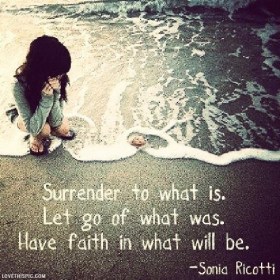 Faith can believe everything
 You may have noticed that many great leaders seem to have had a sort of doppelganger or one who directly opposes their strategies and methods. Martin Luther King had Malcolm X. Sun Yat-sen had Zhang Binglin. Nelson Mandela had Steve Biko.
 Memories of the atrocities committed by the British in the 1857 uprising were still prevalent among the Indian population. There were atrocities on both sides, but even after the war was concluded, the British engaged in a number of substantial revenge and retribution attacks against the Indians suspected or known to have supported the uprising.
 Perhaps Bose saw the writing on the wall. He is warning his supporters that they may “not see the promised land.” The promised land being independence for India. Nevertheless, they should remain committed to the effort.


 Aging Capriciously