 If you have gone this far with “My Final Will and Testament” you will not need the introduction that I have used for the past 9 Reflections. If this is your first visit to my series of fourteen reflections than I suggest that you go back to number one and start there. This link will take you to the first reflection in my series: “Things that I Have Loved in Life.” You will get the background to my thoughts and desires concerning this series of Reflections in this first blog.
Imagine that this is the last day of your life on earth. In the time that you have left, you want to leave a “Testament” for your family and friends.
- These are the Influences (people, literature, and Music) that have shaped me.
There are many categories of things which I could describe that have shaped my life. However, for reasons of expediency I have limited them to three: People, music, and literature. I will briefly discuss some of the major formative experiences in each category. On any given day, I could add or subtract several of these experiences and swap them out with others. The things that have made a difference in my life are like the desert sands. They shift and take various shapes depending on how the winds of my mind are blowing. Because the elements of this reflection are so numerous, I am going to break them down into three parts. In Part 1, I will reflect on the People who have made the greatest contributions to my life. In Part 2, I will reflect on the Literature that has most influenced my ideas and thoughts. In Part 3, I will describe the Music that has moved my feelings, my emotions, and my soul.
Part 1, People:
This is easily the most formative and impactful of the categories that have made me the person I am today. This category includes the people who have had the most influence on my life. People that I will never forget. These people have all helped me to be a better person. They have been positive forces in my life. I will refrain from discussing those people who have had a negative impact on my life. It should be noted that negative events can easily be just as life changing as positive events. However, in this “Last” testament, I want to stay positive. There are ten people I need to mention who stand out from the rest. My apologies to anyone who I have left out who reads this blog and feels slighted. I am listing these friends, counselors, and mentors in chronological order of appearance in my life.
Mother Fyndoca: (1956)
My fifth-grade teacher at Mount St. Francis Academy who knew that I was a rascal and a troublemaker but who also saw the potential I had. She never let me off the hook for any mischief I did but she never let go of believing in me. She was always there to encourage me with compassion and understanding. She died to young from cancer.
Kwame Rice: (1971)
I met Kwame while taking a Sociology class at Rhode Island College in 1971. We had a diverse group of students including Latinos, African Americans, and Italian Americans in the class. Providence is a very heavy Italian Community. It is also quite a melting pot for other cultures. The major focus in the class was going to be on Race Relations and Prejudice. The class was excited because we reflected quite a bit of diversity and experiences. We anticipated many interesting discussions.
The Professor must have been worried about conflict because he selected Judaism as the subject for our talks. There was not a single Jewish student in the class. Kwame, an African American student, who was also a returning veteran, and I met after class. Both of us were equally annoyed by the Prof’s decision. We jointly decided that whether he wanted to or not, we were going to bring up other ethnic groups in the class for discussion as well as Jews who faced discrimination. The class had so much diversity that we were not going to let this opportunity pass. It was clear from the start that Kwame and I were kindred spirits.
It is fifty-three years later, and we are still good friends and brothers. Kwame is now a Pastor, and we regularly have discussions on the problems of America in terms of religion, politics, race, and a host of other subjects. Over the years, these talks and our friendship have given me a whole different insight into the history of America and how Black people and other minorities have been treated very differently than White people. Kwame cares deeply about people and trying to create a just society for all people regardless of race or religion. Now that he is retired, he devotes much of his time to helping Veterans at a center in Providence. He is still fiery about his passions and convictions and has not given up on any of them.
Margo House: (1976)
Margo was a counselor and a good friend. During my separation from my first wife, she more or less adopted me. I was alone with no job, no friends, no family in a town 2000 miles from where I was brought up. Margo invited me on trips with her family and helped me to see that there was still light at the end of the tunnel. She was a kind woman who never took any money for the counseling and advice that she gave me.
Evelyn Rimel: (1977)
Dr. Rimel was my counseling instructor when I took the MS program in Counseling at Stout State University. She was open-minded and never gave negative comments to any students. She showed her compassion for all of her students and did not discriminate among the students. Every student had her complete attention and help when needed. She could demonstrate the power of love and compassion to change lives far better than anyone I have ever known before or since. She loved all people and it showed up in her efforts to help make her students into change agents for a more loving world.
Sister Giovanni: (1979)
I was hired as a counselor/teacher at Guadalupe Area Project (Gap) in West Side St. Paul by Sister Giovanni. Sister G as she was known to all was a direct forceful woman who brooked no stupidity or false pretenses from anyone. She was the founder and leader of GAP. You might say that she could be as hard as iron and as soft as cotton. She was never ambivalent, but she always knew the right amount of force to apply to any problem or person. She accepted me for the teacher that I was and helped give me guidance to become a better teacher both mentally and spiritually. During my hiring interview, I told her that I was an Atheist, her reply was, “I don’t care what your religion is as long as you are a good teacher.”
Bill Cox: (1980)
The separation with my first wife led me to a period of introspection and self-reflection into my life, my heart, and my emotions. I realized that I had a great deal of blame for the problems in my marriage. Many of these problems stemmed from the macho culture that I grew up in. It is a culture that America seems to be imbued with. Women are often treated as chattel and as second-class citizens. Somehow I found my way to something called the “Men’s Center.” It was in the heart of downtown Minneapolis on Park Avenue. The director of the center was William (Bill) Cox. He was a retired Methodist Minister.
The Men’s Center hosted a weekly gathering of men who wanted to discuss what it meant to be a man today. What were the pros and cons of the messages that society sent us about being male in America? Something akin to the Women’s movement was going on during the early 80’s and the Men’s Center and Bill Cox were at the heart of it in Minnesota. There were numerous new books coming out on the subject of male masculinity. We even developed a yearly conference on masculinity in Minnesota. I eventually took a role in this movement and presented several workshops.
Bill was a unique individual. He was instrumental in founding and funding the Men’s Center. He lived and breathed the desire to help other men. He spent most of his waking time trying to grow the Men’s Center. Over the years, Bill and I became close friends. We did workshops and talks together on Masculinity. He was another brother in my life along with Kwame. When Karen and I were married in 1989, Bill was the minister for our wedding. I could always go to Bill for advice and support. He was one of the kindest, most intelligent men I had ever met.
Dr. W. E. Deming (1986)
I met Dr. Deming for the first time at one of his five-day Quality Improvement seminars in San Francisco. Dr. Deming forever changed the way I looked at work and productivity. I credit three people as geniuses that I have read about in my life: Sigmund Freud, Albert Einstein, and Dr. W. E. Deming. Of the three, I have only had the pleasure of knowing Dr. Deming personally. I worked with Dr. Deming during the period from 1986 until he passed away in 1993. My relationship with Dr. Deming was one of the great adventures of my life. Dr. Deming could be charming or to say the least disarming. He was never one to mince words or as they say to “suffer stupidity lightly.”
I had joined Process Management International (PMI) after completing my Ph.D. degree in 1986. PMI was founded by three former managers from Control Data Corporation in Minnesota with the guidance of Dr. Deming. The practice of PMI was based on Dr. Demings famous 14 Points for Management. I was familiar with Dr. Deming but did not know anything about his points/principles. At the conference with Deming in San Francisco, I was designated to be one of his two helpers. My boss Lou Schultz introduced me to Dr. Deming. Lou said to Dr. Deming, “I would like you to meet one of my new employees. Dr. Persico has just graduated from the University of Minnesota with a Ph.D. in Business.” Dr. Deming shook my hand while replying “Humph, business schools, teach you all the wrong things. Ph. D in business a total waste of time.” That was my first meeting with Dr. Deming. I cannot say that I was totally enamored with Dr. Deming at this point in our relationship.
Over the years, I worked with Dr. Deming many times. At first, I was willing to concede that he might have been right about some of the things that I learned in business school being useless. However, the more I learned from Dr. Deming, the more “right” he became in his pronouncement about business schools teaching all the wrong things. Later on, I was 99 percent sure that he was correct. I learned more about business from Deming than I ever did in my five or so years at the University of Minnesota.
The teachings of Dr. Deming opened a whole new way for me to see the world. There was good in this and bad in this. The good was in teaching me what a force for solving the problems of the world a business perspective could be. The bad was in raising my expectations about how things could be only to see smart business-people doing dumb things over and over again. Dr. Deming used to say, “There is nothing common about common sense.” Also, “You put a good person in a bad system and the system will win every time.”
Sam Pakenham Walsh: (1986)
Sam was easily the most educated and one of the smartest men I have ever met in my life. If there ever was a model or prototype for an educated Oxford man it would have been Sam P-W. Sam was also a consultant at PMI. I was assigned to work with Sam on my first consultant engagement with International Nickel Corporation (INCO) in Canada. While I learned most of what I know from Deming about business, I learned everything about consulting with clients from Sam P-W. Like Deming, Sam was direct and did not mince words. I respect this in a man or woman and value it most highly in a friendship. Sam and I became good friends over time. We had our share of disagreements and arguments, but we never lost respect for each other.
One of Sam’s most powerful abilities was what endeared him most to me but often was his downfall with clients. Sam was the quintessential intellectual. He reminded me of Thomas Jefferson. Sam read more and knew more about philosophy and science than anyone else I have ever met in life. Up to the time that Sam died at the age of 86, he was still learning and studying new ideas and new theories. Sam’s ideas could be very esoteric, and this often did not go over well with clients. Only the most open-minded and astute clients who would take the time to understand what Sam was telling them were receptive to some of his ideas. He was frequently discounted as being too intellectual.
When it came to the realm of intellect, I lost my primary benefactor when Sam passed away. Never one to be pragmatic, Sam taught me about thinking and logic and reasoning. He understood more about the Scientific Method and Process Analysis than anyone else that I have ever worked regularly with. Being logical and rationale is an endeavor that with Sam in mind, I continue to try to develop in my life.
Dr. Hana Tomasek: (1987)
Dr. Tomasek was a refugee from the Czech republic who fled her native land after the Russian invasion of 1968. Hana came to this country speaking little English and with only her husband Yara and two suitcases. They fled in the middle of the night and somehow evaded the border guards to find freedom in the USA. Hana had a Ph.D. in Chemistry, and her husband Yara was an inventor and mechanical engineer with several patents to his name. Since she could speak no English she could not find a job commensurate with her knowledge, skills, and abilities. Hana took a job in a piece work factory nights making jewelry until she learned enough English to find other employment.
When I met Hana, she had become a contract consultant with PMI. She helped other consultants to develop teaching, consultant skills and methods for working with clients. Hana helped me with several classes and seminars that I had to put on while I was working with clients. Hana had the people skills that anyone would be envious of. She could always get her ideas across without offending anyone. While I learned my business skills from Dr. Deming and my consulting skills from Sam P-W, I learned my people skills from Hana. We became good friends.
Over the years, Hana, Karen, Yara and I did many things together. From canoe trips to parties and Fourth of July celebrations, our lives were enriched by our times together. We eventually went to the Czech Republic and stayed with a friend of Hana who took us around Prague and the Czech Republic. We met some of Hana’s other friends and relatives. Hana never forgot her folks back home and regularly made trips to her homeland to start a consulting company there. Her company helped to put the Czech Republic on the road to Quality Management and Quality Improvement. She spoke many times at conferences in the Czech Republic and was much admired by all the people there as well as anyone she ever met in the USA.
When Hana passed away, some of us put a memorial bench up in her honor near the lake that she loved so much. Hana was one of those unique individuals who help to make the world a better place.
Helen Boyer: (1999)
In 1999, I quit full time consulting and went to work for the Minnesota Metropolitan Council. My title was Principle Consultant 2. It was my job to put the Met Council on the right path to implementing a Quality Improvement Program. Helen Boyer was the Director of the division that I worked in called the Environmental Services Division. I had a boss directly over me, but I reported to Helen on a regular basis. She was a severe but totally fair task master. I was the expert in Quality Control, but she was the expert in managing a regional government body representing seven of Minnesota’s metropolitan counties including, Anoka, Carver, Dakota, Hennepin, Ramsey, Scott, and Washington County.
Perhaps more than any other manager I have ever worked for, Helen gave me the opportunity to do the work that I was hired for. She backed me up when needed and provided me with the time and labor to implement a large number of major quality improvement projects. She never rejected any of my ideas out of hand. In fact, I never remember her rejecting any of my ideas. She always insisted on facts and data to support an idea, but she was one of the most open-minded people I have ever known. Helen had a degree in Law and a degree in Chemistry which served her well as the leader of a division that was scientifically oriented but still rife with politics.
When I came to the Met Council, I was about a 1 in knowledge of Government politics. With Helen’s help, when I left two years later, I had graduated from a one to a five. If I had stayed longer, I would have made even more progress. However, “Ever Upward” was my financial motto back in those days and I left for a great deal more money than I could be making in the Government.
Karen Blomgren: (1983) Due to my “Special” relationship with Karen she is out of sequence.
In 1989, Karen Blomgren Hinze and I went to China together. We went there on our own and came back about two weeks before the Tiananmen Square Massacre on June 4, 1989. The Chinese uprising had actually started nearly two months earlier when the Chinese Communist Party (CCP) general secretary Hu Yaobang died in April 19. We spent three weeks traveling around China from about the third week of April to the second week of May. During this time, we traveled from Shanghai, to Hangzhou, to Huangshan, to Nanjing and back to Shanghai. We traveled by local bus, commuter bus, train, bicycle, foot, car, and even a gondola. We traveled most of the trip by ourselves but a few times with some new friends that we met on our travels whom we remain friends with today. During this trip, I bought Karen an engagement ring.
When we returned to the states, we planned our marriage. On Sept 5th, 1989, Karen Blomgren Hinze became Karen Blomgren Persico. Karen does not actually use the name Blomgren which is her maiden name. However, I have a difficult time not thinking of her as a Blomgren since she was so close to her Mother and Father.
Karen grew up as an only child. She may have been somewhat spoiled. Nevertheless, Karen’s parents not having enough money to pay her way to college for a degree in Nursing, Karen worked and paid it all off herself. She has never shown any resentment for her parents not being able to give her a free ride. Karen has never expressed anything other than gratitude and admiration for the way that she was treated as a child and for the lessons that her parents taught her.
Karen is one of the kindest and most optimistic people you will ever meet. She is also one of the most frugal humans I know. She would rather shop at a Goodwill or Salvation Army than go to any regular retail store. The other day, I wanted to take her to some upscale designer outlet shops in Tucson to buy a new purse and dress for my 60th high school reunion. I told her “why am I still working part-time if we can’t afford some luxury items once in a while?” Fourteen years down here and we had never been to even one of these fancy outlet shops.
We drove down and went from outlet store to outlet store. We saw all the big names, Michael Kors, Prada, Coach, Ives Laurent, and many others. Karen looked and looked. She picked out products that had sixty percent off. A purse that went for 500 dollars was reduced to 200 dollars. Item after item she put back on the shelf or rack. The same thing happened in every store we went to. Frankly, I was bewildered at how much many of these products still cost even with a sixty percent discount.
I finally said, “how about we go back to Casa Grande and check out the Marshalls and Ross stores there?” In the blink of an eye, we were back in the car and headed north to Casa Grande. Once we arrived in the Promenade parking lot, It did not take Karen 20 minutes to find a nice dress and a new purse. I think the total amount for both was about 60 dollars. No one could ask for or find a better wife if they went to every continent in the world. Karen is always ready to give me a back rub when I need it. She is a great cook. Sews many of the things that grace our house and is always ready to take off with me on some of my adventures. She is not a complainer even when my adventure turns out to be a dud. Karen is optimistic, always positive and hopeful as well. Many people have told me that it is a miracle that she puts up with my pessimism, my radical politics, and my negativity towards the world. If I were to use the word blessed, here is what I would say “I am blessed to have Karen for my wife.”
Well, that’s all. I could have said a lot more about each of these wonderful people. I should also have remembered many other people whom I have passed over. Alas, our allotted space and time in the world never permits us the ability to recognize all the good deeds that others have done for us. My apologies again for anyone that I have slighted or overlooked.
Next, I will publish Part 2 of my reflections on the Influences that have shaped my life. More specifically, Part 2 will deal with the “Literature and Authors” that have shaped my thoughts and behaviors.


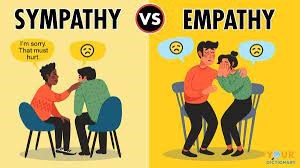 I started running in 1975 after being a very good bicyclist for many years. I ran in freezing rain, below zero wind-chills and blistering heat. I even went out one time and ran with a tornado coming through the neighborhood. Like the U.S. Mail, nothing could stop me. Over the years, I met many people who would tell me “I used to run but my knees went out and I had to give it up.” I had enough sense not to tell them what I was really thinking so I usually said nothing or just a “too bad.” What I was really thinking was “If you really wanted to you could still be running.” The latter comment would be an example of neg-empathy. My silence was an example of neutral empathy. I did not make any connection to the feelings that the other person had, nor did I much want to. I could not identify with them since I ran “no matter what.” I was better than they were.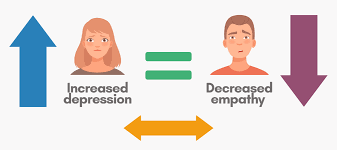


 Kindness is number four of my seven essential virtues for leading a happy and successful life. Every Thursday I start my day with the following prayer:
 There were few heroes when I was growing up who could measure up to my standards for clear and unemotional thinking. I grew up with a father who demanded toughness. My father’s motto was not to “get even” but to “get one up.” If someone hit me, he taught me to make sure that they would never think of hitting me again. My father was 6’ 4” tall and had been a professional boxer with a 21 and 3 record. He taught me fighting skills at a very young age. My neighborhood taught me to disregard the “rules of boxing” and to fight with whatever I had to win. I could easily protect myself and few people would bother me. Somehow, I became a protector for those kids who were less aggressive and who were picked on by the ever pervasive bullies. I kicked more bullies asses then I can count. I was always proud to help the underdog. Paradoxically, these traits did not make me more compassionate but made me harder and tougher.
 Through hardness and toughness I began to forge a wall that nothing could get through. Sentiments, compassion and empathy were increasingly blocked out by my need to be tough and to not take any shit from anyone in the world. Each episode where toughness prevailed was another brick that helped to build my wall higher and higher. I never thought I would get married but after getting my first wife pregnant, I “did the right thing” and married her. It was the manly thing to do. My dad had always taught me to take responsibility for my actions and my baby Chris was a direct result of my actions.
 One day we were in a grocery store just before Christmas. An apparently legless man pushing himself along on some kind of a wheeled board was inside the grocery looking for some money. I walked by him with Julie (my first wife) and ignored him. My wife turned back and started to give him some money and I said: “Shit, don’t give him any money, he can probably outrun me. I will bet he is just a fakir.” She gave him the money anyway and replied “What if he is not?” I never forgot that comment. I am not sure why my first wife married me. She once said that she thought all people had feelings and emotions until she married me. We subsequently divorced but I have to say that I probably owe my life to my first wife. She cared for me when I was suicidal and she always looked after me when I was hurt or needed help. Through her, I began to see what compassion and kindness were. This journey has continued with my second wife Karen who is one of the most considerate and most compassionate spouses anyone could have. Every day I learn something about kindness from her.
 I disagree with Shaw. I am getting older and I still respect and uphold the values of our Founding Fathers, but I refuse to live in a gated community or allow a homeowner’s association to tell me what color holiday lights to put up. I am not a believer in mincing words but I respect the rights of minorities and anyone else to be referred to as they want to be referred to. I respect the rights of Indians to have their ancestor’s graveyards not dug up for commercial or even academic reasons and I respect their rights not to be depicted as silly mascots for some college team. Trump and his supporters believe the US has become too PC. They blame minorities for this. They would like to live in a land where it is ok to call a Black person a nigger since we call Italians wops and French frogs. A Black person they argue has a double standard or they apply a double standard for Blacks and Whites. The bottom line of all this double talk is not too much PC but a lack of empathy and compassion and kindness towards others.
 Yes, there are extremists who want to take Huckleberry Finn out of the library just like there were Popes that knocked the genitals off of statues in Rome. But if you have any empathy or even the slightest understanding of culture and history, you will be less apt to say “My father didn’t own any slaves.” That is a little like replying to a woman who was raped “Well, I did not do it.” To which I can now hear someone replying, “Yes, but no Black people alive today were slaves, so why should they be so upset?” Yes indeed, why should they be so upset? If you are serious about looking at a reason, please regard the following article:
 The people that we will remember in our lives and who make the most impact on our lives are not the rich and famous. They are the people who most cared about us and looked after us. They were kind and loving towards us and somehow showed that we meant something to them and to the world. They may have been our fathers or mothers or an aunt or teacher or perhaps a close friend. How much money they had or how successful they were did not make a difference to us. Indeed, what they gave us could not have been purchased by money. Money doesn’t touch us but kindness does.
 Aging Capriciously