The Ninth Greatest Mystery of All Time:  What is Life?

lifePeculiar that question is!  Perhaps it is the most peculiar of all the mysteries.  Life is life is it not?  I am either dead or alive.  When I stop living my heart stops beating.  I stop breathing.  My mind dies.  Rigor mortis sets in and my limbs become rigid.  My body begins to decay — BUT STOP– We are describing death not life.

Life is joy.   Life is action.   Life is love.  Love is friendship.  Love is compassion.  Life is charity.  Life is pain and life is pleasure.  Life is complex and life is simple.  Life is toil and life is rest.

In the famous story Frankenstein by Mary Shelley, a number of graves are robbed to provide body parts for a scientific experiment.  The goal of the experiment is to create life.  The patched up body is connected to a bunch of electrodes which are connected to some electrical conductors that are fed by huge electric generators.  At some point in the experiment, the generators explode amidst a large amount of sparks and electrical charges.  Somehow this has the effect of giving life to the dead body which is subsequently named Frankenstein monsterFrankenstein after the scientist who created him.  Of course, a body that is stitched together with multiple body parts lacks a certain symmetry that is considered necessary for human beauty.  Thus, Frankenstein is labeled a monster since he does not conform to traditional norms in terms of his physical appearance.

It is interesting that we find electricity to be connected with life.  Atoms resonate at a certain speed and when they stop resonating death ensues.  If we can mix the right ingredients in a petri dish or a test tube (some call it primal soup) and then run an electric current through it, will we create life?  We have described life earlier but we did not really describe life.  What we described were the symptoms of life, the effects of life.  Animation as opposed to stagnation.  Life is movement.  Death is stillness.  But what is life itself?  What is that spark that we think is connected to an electrical current?

See http://whatislife.stanford.edu/LoCo_files/What-is-Life.pdf  — This is the famous lecture given by Erwin Schrödinger in 1943 at Trinity College in Dublin.

While we live, we defy the logic and order of the universe.  We defy entropy and we defy chaos.  We defy all the known laws of existence.  On this planet, third from the Sun in a not so unique solar system in one of a zillion galaxies in perhaps one of a zillion universes, life has sparked.  Was it electricity, solar energy, geothermal heat, magnetic waves, primal radiation, DNA or will power?  What was the key which created animation from inanimate matter?

Genetics pioneer J. Craig Venter announced Thursday that he and his team have created artificial life for the first time.  Using sequences of genetic code created on a computer, the team assembled a complete DNA of a bacterium, then inserted it in another bacterium and initiated synthesis, or in Venter’s words “booted up” the cell.  In a statement, Venter called the results “the proof of principle that genomes can be designed in the computer, chemically made in the laboratory and transplanted into a recipient cell to produce a new self-replicating cell,” controlled only by the synthetic genome.   Time.com: Scientist creates life.

So we have self-replicating computer cells, interesting but the snag is that they started with a living cell.  They created a new cell out of an already living cell.  Quite a feat but not the same as creating life.  If we are going to create life, it seems we must first find out what life is.  Philosophers, scientists, generals and theologians will all have a different definition of life.

Socrates:  Life is honesty. Life is integrity.  Life is the search for truth.  Life is understanding yourself.

Edwin Schrödinger:  Life seems to be orderly and lawful behavior of matter, not based exclusively on its tendency to go over from order to disorder, but based partly on existing order that is kept up.

General George S. Patton Jr.:  Better to fight for something than live for nothing.

St. Thomas Aquinas:  The soul is like an uninhabited world that comes to life only when God lays His head against us.

DNASeems kind of funny, that no one whether they are a philosopher or scientist can answer the question “what is life?”  Well, they actually do answer the question, but it really tells us little or nothing about what “life” is.  Is life some type of electricity, organic plasma, atoms with a soul, a spirit or the breath of God?  What magic elixir or unknown form of energy renders inert matter into something living, learning and loving?  We can create babies but we cannot figure out how life begins or where the will to live comes from.

“It is interesting that Hindus, when they speak of the creation of the universe do not call it the work of God, they call it the play of God, the Vishnu lila, lila meaning play. And they look upon the whole manifestation of all the universes as a play, as a sport, as a kind of dance — lila perhaps being somewhat related to our word lilt”  — Alan Wilson WattsZen and the Beat Way

I remember years ago (from biology) that it was thought that the smallest unit of life was the cell.  Bacteria were considered to be alive but viruses were in some kind of limbo.  I still don’t really understand this since viruses seem to be doing the same think humans do: Replicating, killing and dying.  Here is what they say about viruses:

Viruses, like bacteria, are microscopic and cause human diseases. But unlike bacteria, viruses are acellular particles(meaning they aren’t made up of living cells like plants and animals are), consisting instead of a central core of either DNA or RNA surrounded by a coating of protein.

Viruses also lack the properties of living things: They have no energy metabolism, they do not grow, they produce no waste products, and they do not respond to stimuli. They also don’t reproduce independently but must replicate by invading living cells.

cold-virus-virus-The above sounds like a reasonable argument to make that viruses are not “living” in the same sense that cellular creatures are.  Nevertheless, they replicate, die and seem to have some will to live or at least as much will as many humans have.  If we assume that the opposite of living is dead, viruses are certainly not dead.  If one were to ask what the “life force” in a virus was or what motivates a virus to take over another organism’s cells, one would have to know what creates life.  The same problem with defining the life force in humans applies to viruses.

“For about 100 years, the scientific c community has repeatedly changed its collective mind over what viruses are. First seen as poisons, then as life-forms, then biological chemicals, viruses today are thought of as being in a gray area between living and nonliving: they cannot replicate on their own but can do so in truly living cells and can also affect the behavior of their hosts profoundly. The categorization of viruses as nonliving during much of the modern era of biological science has had an unintended consequence: it has led most researchers to ignore viruses in the study of evolution. Finally, however, scientists are beginning to appreciate viruses as fundamental players in the history of life.”  — http://www.scientificamerican.com/article/are-viruses-alive-2004/

So, where does that leave us with the initial question “What is life.”  I think the answer must remain we don’t know.  Is it willpower?  Is it a germ that we have not found yet?  Is it some chemical that when mixed with something else creates animation and sentience?  Is it some mysterious force in the universe that we have not yet identified?  Why are animals alive and rocks dead?  Could this mysterious force create “living rocks.”

I promised an answer to the 12 greatest mysteries of all time when I started this series of blogs.  In each one to date, I have attempted to provide some sort of an death-07answer.  Until now, I was fairly happy with my responses to each question.  This ninth question has me stumped.  I cannot think of any place to find an answer.  What makes life for humans may not be the same thing that makes life for a virus or a bacterium.  Goats and dogs might have very different definitions of life but seldom write books or poems about their feelings.   We may someday find out how to extend life but I think we are a long way from finding out what creates life.

“To be alive, it seemed to me, as I stood there in all kinds of sorrow, was to be both original and reflection, and to be dead was to be split off, to be reflection alone.”  ― Teju ColeOpen City

Time for Questions:

What do you think creates life?  Do you think humans will ever be able to create life? Why or why not?  What do you think living means?  Do you live to the fullest or do you take life for granted?  What is the secret to your life?  If you could redo one thing in your life, what would it be?

Life is just beginning.

“The beginning is always today.”  ― Mary Shelley

The Goals of Life or Should We Live a Life without Goals? Part 1

ImageOne of the common assumptions of modern life is that we all need to set goals.  It is said that our goals should be purposeful and measurable.  Furthermore, we are told that without such goals, we are doomed to live a life of meaninglessness.  Minus thoughtful goals, we will be like Alice in Wonderland where since Alice had no purpose or direction in Wonderland, it did not matter which direction she went.  Heaven forbid it!

But could modern wisdom be wrong?  Could common assumptions about the importance of goals be another of life’s many canards?  In my blog this week, I would like to explore the role of goals in our lives and look at whether or not they really are useful or are they simply another tyranny of a materialistic society that wants us to be running like rats on a treadmill.  Forever and forever scurrying through all eternity trying to achieve more and more and enjoying life less and less!  (By the way, I love exclamation points because they get rid of those annoying green lines that Word places in phrases that it does not like.)

Let us start our discussion by breaking goals down into two fundamental categories.  The first category concerns “goals for others.”  These are goals that we set either by malevolence or benevolence but they are destined to impact the lives of others.  Missionaries (depending on who you ask) may be thought of as having benevolent goals.  Dictators and tyrants (depending on who you ask) may be thought of as having malevolent goals.

The second category concerns “goals for ourselves.”  These are goals that we set to help us achieve either current or future objectives.  Thus, if I want to become set goalssuccessful, I may set a goal of going to college and obtaining a degree in law or politics or business.  This will be a future goal.  A more current goal would be to find some means to raise enough money to pay for my college education.  The element of time is somewhat flexible in determining whether it is a future goal or current goal and the distinction has created many an argument between people.  The indisputable element here is that we pursue these goals to benefit our own well-being. There is no altruism or charity in this category of goals.  Having said this, all distinctions are really like water. They are very fluid.  I am using these two basic categories to facilitate discussion and not with any hope of creating a uniform or indisputable and universally accepted definition.

Proceeding on with our discussion, we can identify under these two categories of goals, four specific goals that many would say are the four most important goals in the world.  I am not going to challenge this assumption.  For our discussion of goals, I will accept that these four goals are extraordinarily worthwhile objectives.  Furthermore, they are four in both of our major categories.  The four specific goals are:

  • Happiness
  • Health
  • Wealth
  • Wisdom

I am going to accept each of these goals at face value and forego any discussion of whether they are cause or effect.  I am also willing to accept that whether outcome or process they all are objectives that few of us would forego.  Thus, if a genie appeared to almost anyone on the face of the earth and said:  “Would you like to have eternal health, wealth, wisdom or happiness, there would be very few who would turn any one of these goals down.  We can put these goals into a table as follows.

Goals for Others Goals for Ourselves
Happiness Happiness
Health Health
Wealth Wealth
Wisdom Wisdom

Returning to the original question, “should we live a life with or without goals?” it is obvious that we must first answer a second question:  “Can any of these goals (In either category) ever be accomplished?”  If the most important goals we can set for life are impossible to achieve then it would seem wise to assume that “goal setting” is a waste of time.  Let us consider one by one each of these eight possible goals and see how many (or even if any of them) are really attainable.  What can we honestly expect to achieve for ourselves and others?

 Image

Happiness for Others:

My goal is to help make other people in the world, in my life or in my family happy.  What would you say to that goal?  If you are honest, you would probably say that it was a ridiculous goal and that no one can make anyone else happy.  No matter how hard we try, we cannot insure that the things we do will bring happiness to other people.  Happiness, you may wisely note is more of an inside job.  It depends more on our expectations and views of the world then what other people do for us.  Conclusion:  Don’t waste your time. 

Health for Others:

My goal is to help make other people in the world, in my life or in my family healthy.  This sounds like a goal that someone in a medical profession might pursue.  But how healthy can even a doctor make someone else?  Again, honesty would lead to the conclusion that nature and personal factors have more to do with health than even the best MD or medical practitioner.  Science has made major strides in helping populations become healthier but few are the medical people who could claim that they have made people healthy.  To make someone healthy would be almost an impossible task.  The best we can accomplish is to help prevent certain diseases and to help alleviate the effects of other diseases.  Conclusion:  We can help make people healthier but health is a state influenced by too many variables to be under the control of anyone but God.

Wealth for Others:

My goal is to help make other people in the world, in my life or in my family wealthy.  If I could make enough money, I could donate or leave it to my heirs or to some type of philanthropic foundation.  The skeptic in me would reject the idea that all of the donations in history have had much impact on world poverty.   I could be a teacher and teach other people how to make money or run a successful business. I could also be a consultant or business investment advisor and teach others how to wisely run their businesses or investments.  There is little doubt that we can help people have more money or even use their resources more wisely, but how many people have been made wealthy by the advice of others?  As a business instructor and management consultant for over 30 years, I can tell you that the answer is very few. When I look at the Forbes List of Richest People in the World, I see self-made billionaires, most of who were initially laughed at for their efforts.  I doubt Bill Gates, Sergei Brin, Jeff Bezos, Larry Ellison, Richard Branson or Warren Buffett depended very much on consultants or business teachers for advice.   Conclusion:  We can help people manage their money better but individuals make themselves wealthy. 

ImageWisdom for Others:

My goal is to help make other people in the world, in my life or in my family wise.  In order to see if this is possible, let us first look at Socrates.  Socrates was a teacher.  According to the Oracle at Delphi, Socrates was the wisest man in the world. Thus, we may ask the question:  Did Socrates teach other Athenians to be wise?  This is not a simple or easy question to answer.  Socrates did not accept that he was wise and went looking for a wise man but could not find one.  He never claimed to be teaching his students to be wise, but merely how to question assumptions and conventions.  Is a person who questions wise? How many wise people do you know?  Is wisdom a matter of age or does college teach you to be wise?  I would argue that school and teachers can give you knowledge but only life and your experiences drawn from life can give you wisdom.  Conclusion:  No one can make any other person wise.

If you accept the majority of my arguments so far, I think it would lead to the obvious conclusion that we cannot really make anyone else healthy, wealthy, wise or happy.  These are tasks that are far beyond our ability to have more than a minor impact on.  However, I am not yet ready to dismiss the power of goal setting.  Before I can do this we must turn to the second category of goals: goals for ourselves.  Do we have the ability to accomplish goals for ourselves?  If we can achieve even one of these objectives, then it would be ridiculous to say that goal setting is a waste of time.  In fact, given the seriousness of each of these goals, it would necessitate establishing goal setting as a serious repertoire in our lives.

In Part 2, which I will publish next week, we will look at each of these second category goals and see how much impact we can have on them.  If we really cannot make much of a difference for others, perhaps we can at least set goals that will make a difference in our lives.

Time for Questions:

Have you ever set goals for other people?  What goals have you set for others?  Have you been able to accomplish them?  What helped you or hindered you in this effort?  Do you think it was a valuable use of your time? Why or why not? What would you do different if you could do it over?

Life is just beginning.

Grow Old Along with Me

We think of growing old and we think of aged people, old people, retired people, elderly people, nursing home people and dying people.  When we think of growing old, we don’t think of babies, teenagers, young people and college students.  Ironic in a way, since everyone from birth to death is growing old or is at least growing older.  Perhaps that is the difference.  Growing old seems to Imagemean aged.  Growing older is a process while growing old denotes a physical condition.    Old means droopy skin, failing health, difficulty walking and a general decline in one’s ability to be mobile.  To some, old is a state of being or as others would say a state of mind.  Call old what you will, but none can deny the physical deterioration that comes with growing older.

In the Velveteen Rabbit, as the stuffed toy rabbit grows older, he becomes more and more worn and raggedy.  Despite his aging, the rabbit becomes more and more loved by the boy who has become his constant companion through the years.  The love of the boy eventually makes the ImageVelveteen Rabbit “real.”  Regardless of the rabbit’s becoming threadbare, torn and disfigured, the Velveteen Rabbit gains a persona that can only be understood by someone who values longevity, companionship and friendship.

Of course, we all value companionship and longevity; many people in our lives are like the Velveteen Rabbit.  Our sisters and brothers, our grandfathers and grandmothers, our mothers and fathers and our good friends and spouses; will all become older and older and older.  Eventually, they all become aged, misshapen, wrinkled and decrepit.  But if they have been good companions through the years, we are blind to their aging process.  We only see the love and caring that they have shown us.  We are blind to their difficulty with hearing and their inability to keep up with us.  We only see the person who was kind and thoughtful to us.  We are blind to their infirmaries and disabilities.  We only see the person who took care of us and helped us in our time of need.

I sometimes look at my spouse Karen who has put on pounds and wrinkles and walks slower than she used to.  Over the years, she has become more and more beautiful.  Looking back, I am not sure Karen was real to me when we were first dating and even married.  It has taken nearly 30 years of togetherness for Imageme to more fully appreciate the person that she is and it is still a process that is evolving.  The commitments that she makes to others often go beyond my understanding.   The kindness and compassion that she shows to those who are in need is more than touching.  The many ways she sacrifices what she wants so that she can help me get what I want have all made Karen real to me.

One of the saddest things, you hear at funerals, is the comment “I wish I had spent more time with them.”   It is probably inevitable that we feel this way.  Having pondered this comment over many wakes and funerals, I wonder if more time would really have made a difference.  I rather think it would be the “quality” of time we spent with others.  You may think that I am simply citing a cliché “quality of time?”  What is this elusive quality of time?  Some examples from my own life with Karen illustrate this concept for me.  Perhaps for you it will be different:

  • Sharing meals together
  • Going to hospital visits together
  • Sharing back rubs and massages
  • Reading together
  • Traveling together
  • Shopping together
  • Spending quiet time together
  • Being concerned with each other’s work
  • Helping each other whenever we can
  • Checking in each day to see how the other is doing
  • Always hugging and greeting each other when going or coming
  • Taking care of each other when sick

My list might seem trivial to you.  Your list might be very different.  Nevertheless, what if we spent the time with our loved ones that enabled all of us to say when they are no longer with us that:  “I am glad I spent the time with them that I did.”   Is the time we spend watching TV or football or golfing, or fishing so precious that we could not have spent a little more time growing older with our loved ones?

Image

We are inundated with emails, text messages, advertisements, news, news and more news.  Our minds and brains are saturated with people beseeching us to buy, sell, rent, borrow, donate, loan or vote.  The rest of our time, we are numbed by media depictions of trivia, deprivations and horror.   We are fascinated by Hollywood, Bollywood and royalty.  For many of us, Princess Kate is more real than our own brother or sister.

When Princess Diana was killed, I remember seeing a co-worker who had a shrine in her cubicle for the Princess.   Princess Diana was one of the most popular people in the world.  She was real for many because they lived her life with her.  Recent polls show ImagePrincess Kate is now as popular as Diana once was.  The media is making Kate real for us just as it once did for Diana.  The sad part of this is not that we identify with and make these people real, it is that we fail to make the truly important people in our lives real.  How much do you know about the lives, wishes, hopes, dreams and fears of the really important people in your life?  Do you get as much news about and with them as you get about Princess Kate?

GROW old along with me!   (From Rabbi Ben Ezra by Robert Browning)

The best is yet to be,

The last of life, for which the first was made:        

Our times are in His hand    

Who saith ‘A whole I planned,                 

Youth shows but half; trust God: see all, nor be afraid!’

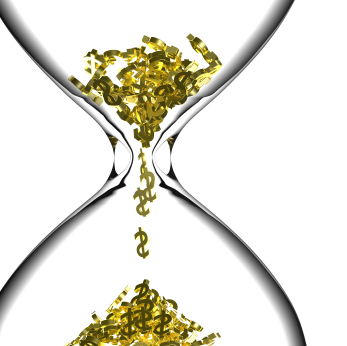
I think we fail to teach our children the value of time.  We teach the value of money, but we neglect to teach the value of time.  It might be argued that money and time are valued according to their scarcity.  To the young, time is plentiful and money is scarce.  To the old, time is scarce and money is (if not plentiful) at least often more abundant.  If this argument is correct, then it would be a waste of time trying to teach the value of either time or money.  Their value is fixed according to age.  I disagree with this argument.

ImageI think if you look closely, many older people have never valued time as much as they still value money.  And many young people fully understand the value of time and would readily put it over the lure of more and more money.  If this is so, then it suggests that the value of each is not fixed by age but by some mental process perhaps not fully understood.  If a mental concept or construct is at work here, it can be modified or changed by reason and logic.   I may be justified in thinking that young children need to be told that time is valuable and that in many cases it is not fungible.  You can never replace or substitute money or goods for the time that you did not spend with your family, friends or loved ones.

Time has every right to be as respected a discipline as the study of money.  In capitalism, money becomes King, money is good. We pervert nature by upending the true value of things. Tangibles become more important than intangibles.  Goods become more important than services.  Greed becomes more important than charity.  Youth becomes more important than experience.

Aristotle was right in his use of the Golden Mean concept to show how to create a balance that was harmonious with the world.  ImageAnything taken to extremes becomes evil or distorted.  Time and money are the pivots upon which the world rotates.  They must be kept in harmony.  We have lost our balance though and let money become the sacred source of happiness and success.  Perhaps the really wealthy people are the ones with more time.  Why wait until retirement to become truly wealthy?

Time for Questions:

Do you have a balance in your life between time and money?  Do you keep the really important things in your life in proper perspective?  Do you value time as much as you value money?  Do you think we need to do more to help have a balance in our country?  Are you willing to share your time with others?  How about your money?

Life is just beginning. 


The Seven Secrets of Everything: Part 1

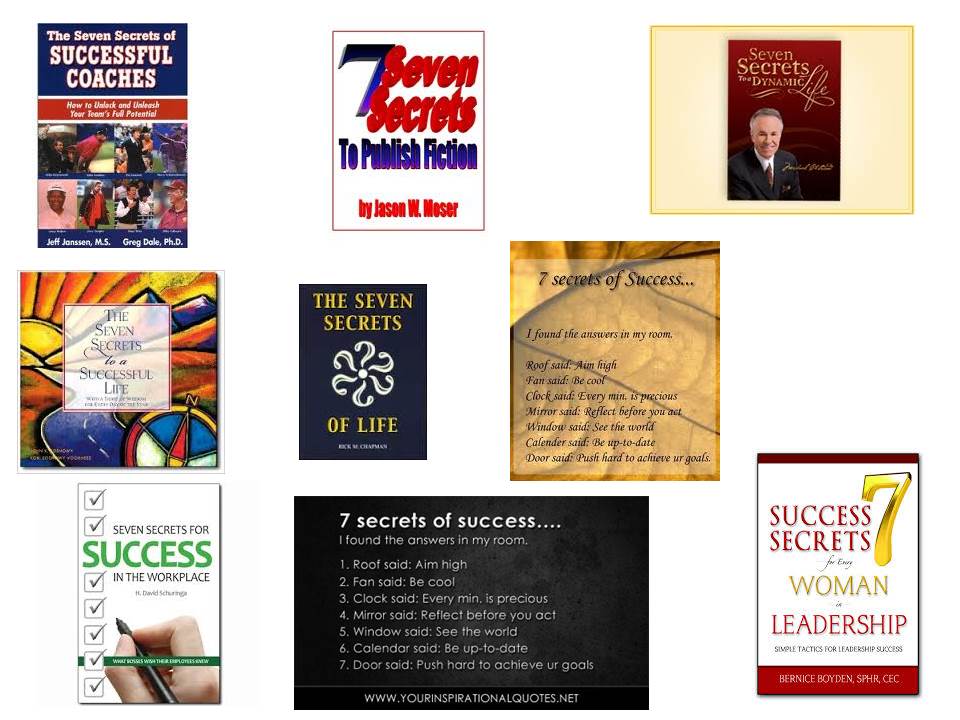
seven secrets cover pageI must apologize.  I know there are hundreds, perhaps thousands of books with “Seven Secrets” that you need to know for love, happiness, wealth, health or whatever.  Over the years, I have been amazed at the sheer volume of memoirs and self-help books that rely on the number seven to dispense their wisdom.  I remember learning in a psychology course, that the average person can remember seven unrelated items with the range being 5 to 9.  Statistically, we could say that five to nine defines a range of three (+/-)standard deviations within which 99.73 percent of a normal population will fall.  Practically speaking, this means that most human beings can remember between five to nine random numbers the ideal or mean being 7.

Thus having phone numbers, car license plates, or anything requiring memory retention based on the number seven makes a great deal of sense.  This also explains why there are so many books and writers who base their theories on the number Seven!  You did not really think that Seven of anything would suffice to provide you with success, wealth and happiness?  Not to mention happy polite children and a health regimen where you could eat whatever you want and not gain weight.  Of course, there is a multitude of “experts” trying to sell you their system who want you to believe that “Seven” is the magic number.

To explore the above hypothesis, I went to Amazon and typed in the following words in parentheses in the books section.  I then queried Google Search and tried them for results.  Below alongside the word pairs are the number of entries:

                                   Amazon Books            Google Search

  • Two secrets:              1,104                    212,000
  • Six secrets:                    597                    204,000
  • Seven secrets:           1,333                    1,090,000
  • Eight secrets:                 291                   43,000
  • Ten secrets:                   714                   211,000


You can clearly see that regardless of methods, “Seven Secrets” is by far the preferred theory.  On Google Search Seven Secrets was over 5 to 1 as numerous as any other combination.

Okay, so now that we have established the reason for and the importance of “Seven”, I will give you my list of Seven Secrets.  I call my list the Seven Secrets of Everything for the simple reason that my Seven Secrets will give you all the abilities, skills and talents that you need to know in life.  The other lists will be helpful when it comes to specifics.  However, my Seven Secrets are the keys to unlocking all the other Secrets that those more well-known authors (Covey et. al) and pundits will be trying to sell you.

My secrets are the keys to “Everything.”  Like Tolkien’s “One Ring to Bind them All,” my secrets are the keys to unlocking the power of all the other secrets in the universe.  Whether you are trying to overcome divorce, build a new business, find a life partner, relocate to another climate or simply find the best recipes on the web, my secrets will guide you to Total Personal Satisfaction in whatever you do 100 percent of the time.  And here is the best part of all.

Unlike other authors, writers, philosophers and lecturers, I will give you mine for free and I also promise that you will never be asked for an endorsement or any follow-up purchases.  I also promise not to bombard you with advertisements, send you text messages or spam email.  I also promise that I will not do any product related endorsements to compromise the value of my Seven Secrets of Everything.  You only get a deal like this once in a life-time so read on for the Seven Secrets of Everything.

Well, I have a confession to make before we go any further.  On Wednesday of this week, I had Prostate surgery and spent most of Wednesday (Jan 22) and Thursday at the Mayo Clinic in Scottsdale.  No, I did not forget the Seven Secrets of Everything, but I am home now spending most of my time in bed.  I noticed while writing this blog, that at the point of sitting for about one hour, I was hurting and tired.  Thus, I have decided to do this blog in two parts.  Next blog, I promise I will share my Seven Secrets of Everything with you and give you some good solid reasons for believing in these secrets.  For now, I will go back to bed, rest and write some more later.  Thanks for your patience.

Time for Questions:

Do you have a favorite list of Secrets?  How many Secrets do you practice or follow?  Why?  Would you share your List of Secrets with us in the comments section?  Can we really reduce life to Seven of anything?  Can these lists be helpful to guide us to more success and happiness?

Life is just beginning.

One of my physicians called me on Friday (Jan 24) to say that the lab results suggest they were able to get most of the cancer and that it had not spread out of my prostate.  Thus, I am minus one prostate, but also minus one cancer.  It was probably a good tradeoff and certainly an apt way to continue living the beginning of my life.

Next Newer Entries