Loneliness in America:  A Tragedy of the Commons by J. Persico and Metis – AI Assistant

As I get older, I have noticed more and more people talking about loneliness.  One of my greatest fears has always been loneliness.  I remember embracing the song “Sometimes I feel like a Motherless Child” by Richie Havens.  He was not the first singer or author of this song, but he made it quite popular during the sixties and seventies.  This song reflected how I felt about life and growing up.  I was on my own with no one who loved or cared about me.  No mother.  No loved ones.  Just myself.

“The most terrible poverty is loneliness and the feeling of being unloved.” —Mother Teresa

I grew up somewhat hard and even at times cruel because it was my way of fighting back against the possibility of loneliness that lurked around every corner.  I never trusted anyone because I was sure that they would abandon me and then I would feel the pain of loneliness.  It is hard to describe this pain.  It is not a physical pain.  For me it felt like being thrown off the top of a high mountain or bridge and spiraling down as I waited to hit the ground.  During acute panics of loneliness, I would feel dizzy and lose my sense of balance.  My core felt empty.  I was shrouded with feelings that embraced despair and contempt for myself.  There was nowhere to run or anyone to turn to.  I was alone on an island barren of people, trees or any living creatures.  Not like purgatory and not like limbo.  Just a nothingness in which I existed with no other human beings.

“When you have nobody you can make a cup of tea for, when nobody needs you, that’s when I think life is over.” —Audrey Hepburn

I dreaded these feelings and would do anything to avoid them.  I would abandon other people before they could abandon me.  This destroyed many relationships I had over a period of years including my first marriage and to some extent the relationship I had with my daughter.  It continues to intrude on my life whenever I feel threatened with the loss of love in my relationship with Karen.

“You can be lonely even when you are loved by many people” — Anne Frank:

I tell you these things not because I want sympathy or any feelings of support.  I want you to know that I take loneliness more seriously than many other elements of life that cause us pain.  For this reason, I want to look at loneliness and what seems to be behind the increase that many people say is happening in America.  If one asks well, “Define Loneliness” or what data do you have that supports loneliness is on the increase in America, I am going to plead “Mea Culpa.”  I don’t have the requisite data to prove conclusively that loneliness is an epidemic as some have claimed.  But frankly, I don’t give a damn.  If there is one person in America or the world that is suffering from loneliness, that is one person too many for me.  However, there is in fact some data to support the five major trends that I am going to discuss later in this blog as contributing factors to the loneliness that so many people experience.

“There were moments of intense pain & utter darkness that I wanted to end it all.  The only thing I wanted was not to live.” ― Lala Agni,

For those of you that are not convinced that loneliness is a problem today.  Here are some facts and data that point in that direction.  Because surveys define loneliness differently (daily vs weekly vs “often”), the cleanest approach is to present a small set of credible, recent benchmarks.  Here are some that my AI assistant Metis found:

  • Gallup (daily loneliness): 20% of U.S. adults reported feeling lonely “a lot of the day yesterday” (Aug 27–Sept 4, 2024), up from ~17–18% earlier in 2024 and below the pandemic peak of 25%. Gallup.com
  • Pew Research Center (frequency): 16% say they feel lonely/isolated all or most of the time, 38% say sometimes, 47% hardly ever/never (report published Jan 2025). Pew also finds adults under 50 report “often” loneliness more than 50+ (22% vs 9%). Pew Research Center
  • Harvard “Making Caring Common” (overall prevalence): A nationally representative May 2024 survey found 21% of U.S. adults feel lonely. Making Caring Common
  • AARP (older adults trend): Among adults 45+, AARP reports 40% are lonely (fielded Aug 2025), up from 35% in 2010 and 2018. AARP
  • Workplace-focused lens (Cigna Group): “More than half of American workers classify as lonely,” with the report tying loneliness to absenteeism, disengagement, and turnover risk. MediaRoom

Depending on how it’s measured, loneliness shows up in anywhere from about one in five Americans to well over half in some surveys—especially when you ask about frequent feelings or focus on workplaces.  Gallup found that 20% of respondents felt lonely ‘a lot’ on the prior day, Pew found 16% of respondents feel lonely all or most of the time, and the nation -wide Harvard survey put overall loneliness at 21%.”

Now lets look at five of the reasons commonly cited for the increase in loneliness in America. 

1) We spend less time “doing life” with other people

Large-scale time-use data show Americans are less likely to socialize on a given day than a decade ago, and when we do, we spend less time at it.  In 2024, BLS reports 30% socialized/communicated on an average day (down from 38% in 2014), and average time fell from 43 minutes to 35 minutes. – Bureau of Labor Statistics

I often ask my students what they are going to do on the weekends.  The majority of times, the reply I get reflects their intentions to stay home and play video games.  I find it amazing that they are not going to go out to a park to play sports with other people.  Instead, they are going to interact with their friends through the digital world.  We all see this today wherever we go.  People texting and playing video games in restaurants, bars and parks, rather than talking or interacting with others.  We may not want to admit it, but older adults can be just as addicted to their phones as children seem to be.

2) Social networks are shrinking (fewer close confidants, weaker “bench strength”)

The Surgeon General’s advisory summarizes evidence that social networks are getting smaller and social participation is declining and cites research showing a steep drop in daily social time (e.g., “companionship/social engagement”) from 2003 to 2020.  That same advisory highlights the broader “fraying” context—lower trust in each other and institutions—which makes connection harder to initiate and sustain.

Once upon a time family dinners on Sunday were a major social event in the lives of most Americans.  Today, large-scale displacement of families now make such events almost impossible on a weekly basis.
3) Demographic and household shifts leave more people without built-in companionship

The Surgeon General’s advisory points to long-run declines in marriage rates and family size, plus a rise in single-person households (e.g., 13% in 1960, rising substantially over time).  That matters because for many people, spouses/partners, kids, and nearby kin are the default daily social glue.

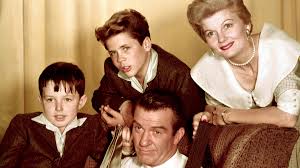
There is probably no place in America where “Leave it to Beaver”, “Father Knows Best” or “Ozzie and Harriet” families are the norm anymore.  Two parent families are becoming rarer and rarer.  Many young people opt for simply living together either to avoid a commitment that they are apparently not willing to make or else feel that they could not keep.  You can argue about the value of a traditional relationship all you want.  I am not going to argue that children must be brought up by a Mom and Dad.  However, having two or even more adults to help in child raising has always made the task somewhat easier.  Many years ago, the task of child raising was presumed to be a communal or extended family activity.  Few homes today include a mom, dad and grandparents.

It is even rarer to find homes where either parent is home to simply look after their children.  The economics of modern life demand that both parents have jobs.  It is unbelievable to me when I remember that my father was only a postal worker and never a manager and that my mother stayed home with four kids.  Nevertheless, we had a tidy small home in a small town and food on the table every day.  We might even have had a lot more if my father was not a compulsive gambler spending his earnings or at least a portion of them on the horses.
4) Erosion of “third places” and community institutions

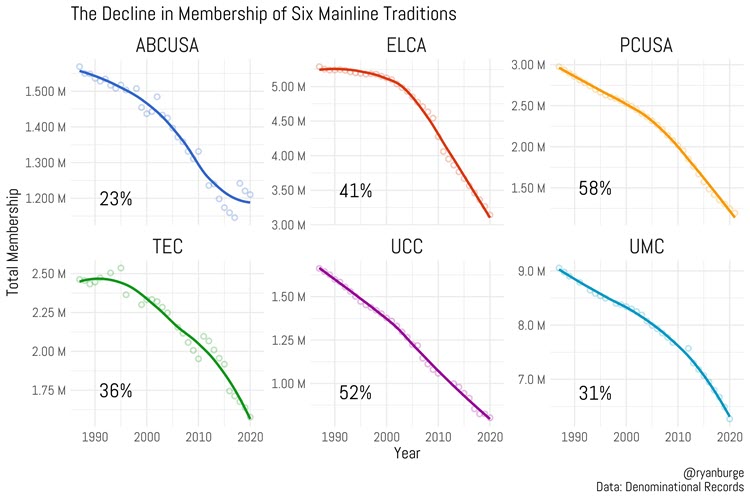
Over the years, there has been declining participation in traditional community anchors—religious groups, clubs and labor unions.  When these institutions fade, people don’t just lose activities; they lose the repeated, low-effort contact that turns acquaintances into friends.

If you are my age, you may remember the large number of social networks that people once belonged to from Camp Fire Girls to Girl Scouts to Boy Scouts to Fraternal groups like the Elks, Moose, Eagles,, Masons, and Shriners.  Churches were another source of community for many people.  I will repeat that the data shows sharp declines in participation in all of these groups.

5) Technology reshapes connection (often replacing, not enriching, relationships)

The Surgeon General’s advisory is careful here: the evidence is “complex,” but there are documented benefits and harms, and it concludes we have reason to be concerned about certain kinds of tech use affecting relationships and social connection.  Once upon a time, it was claimed that TV would destroy family life.  Then it was the Internet.  Now it is the social media programs.  Experts seem to pop up to dispute that any of these technologies have had or are having an adverse impact on socialization.  However, common sense argues against the wisdom of paid shills who benefit and profit from the exploitation of others via the media platforms that they shill for.

So How Do We Address the Loneliness that Exists in our Country Today?

This is a very difficult question to answer.  Lets start by describing what we are not going to do.

  • We are not going to eliminate TV or streaming digital media. This is not likely to happen given the number of hours people spend in front of TV’s.
  • We are not going to eliminate or ban Smart Phones. This will never happen as they serve too many good uses and are now a necessary part of doing business in the world.
  • We are not going to ban social media groups or make participation in real time groups like church or fellowship groups mandatory. This would involve a gross violation of the freedom and individual rights that people have.

Where Do We Go from Here?  Three Realistic Ways Forward

  1. Rebuild everyday human contact—where people already are

Loneliness will not be solved by telling people to “try harder” or “get out more.” It will be addressed when we intentionally rebuild regular, low-effort human contact into the places people already show up: libraries, senior centers, veterans’ halls, walking paths, coffee shops, classrooms, and clinics.  What matters is not the size or novelty of these efforts, but their consistency.  A weekly discussion group does more than a one-time event.  A familiar face does more than a thousand online “connections.”  Human bonds form through repetition—by seeing the same people, in the same places, over time.  We once understood this intuitively. Community was not something we scheduled; it was something we inhabited.  Recreating that does not require nostalgia or ideology—only intention.

When Karen and I moved to Wisconsin after she retired, we discovered several places in Frederic, Wisconsin where people would meet.  The farmers met in the Dairy Coop.  The literary people met in the library.  The mechanically oriented people met in the Holiday Gas Station.  We lived in Frederic for 14 years and knew about everyone in town.  The meetings at the venues mentioned above went on every day when each venue was open.

Before we left Frederic to move to Arizona permanently, the library had decided not to allow meetings anymore.  We were too noisy they said.  The Holiday Station took out the table and chairs that we had set around claiming the space could be used for more products.  The Dairy Coop caught fire and was not rebuilt.  This past year, the Safeway store in Casa Grande removed the outside tables they had where people could rest and not be in the way of food carriages.  You could sit, drink coffee and carry on a conversation with friends.  It seems as though all over America there is a conspiracy to eliminate places where people can socialize.

  1. Reclaim in-person connection as the default, not the exception

Technology has given us extraordinary tools, but it has also quietly taught us that presence is optional.  Texts replace visits.  Zoom replaces conversation.  Scrolling replaces sitting with one another in silence.  This does not mean rejecting technology.  It means re-establishing boundaries.  Phones down during gatherings.  In-person meetings when distance allows.  Choosing eye contact over convenience when the choice is ours to make.  Loneliness is not cured by communication alone; it is cured by being seen.  And being seen requires physical presence, attention, and a willingness to tolerate a little awkwardness.  The cost of connection has gone up—but the cost of avoiding it is far higher.

“Society is the product of our relationships – if our relationships are confused, egocentric, narrow, limited, national, we project that and bring chaos into the world.” — Krishnamurti

A few years ago, my wife’s adopted daughter came out to visit.  She had her cell phone with her and spent more time on the phone than she did talking to us.  I was very peeved and told Karen, next time she comes tell her to leave her phone in her luggage.  Realistically now though, how do you think this would go down?  Parents fight schools that want to ban cell phones in the class because they say, “What if I had to call my son or daughter or they have to call me?”  It is amazing that we grew a nation of people long before we had cell phones.

  1. Treat loneliness as a shared moral responsibility, not a private failure

Perhaps the most damaging myth about loneliness is that it is a personal shortcoming—a sign of weakness, poor social skills, or individual failure.  When loneliness is framed this way, people hide it.  And hidden loneliness only deepens.  A healthier society would name loneliness for what it is: a civic and moral challenge.  One that affects public health, democracy, trust, and social stability.  One that cannot be solved by individuals acting alone.

A simple but powerful starting point would be for organizations, churches, employers, and communities to ask regularly: Who has disappeared from our circles—and why?” and “How can we create more shared space for people to communicate and get to know each other.”  

My wife Karen has been in a choir for over ten years now and she often does not know the names of new members or even all the old members.  I asked her why several times and I always get the same response “Well, we don’t get time for socializing as we are busy practicing our songs for the Sunday service.”  This seems criminal to me.  I never started a business meeting that I facilitated without going around and allowing each person to introduce themselves and say a little about their background.  What is so important that we cannot take a few minutes to let others know we care about who they are?

A final thought

Loneliness in America will not be solved quickly, cleanly, or perfectly.  In fact, it will not be solved at all unless we decide—quietly and collectively—that showing up for one another is not optionalConnection is not a luxury.  It is the infrastructure of a humane society.

Martin Luther King Jr. developed the concept of an “inescapable network of mutuality” where the fate of individuals is interconnected.  He also stressed the mutual obligation individuals have for each other’s development.  King emphasized that unity is crucial for survival, stating, “We must learn to live together as brothers or perish together as fools.”
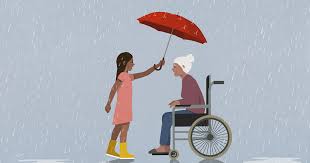
Reaching out should not be seen as charity.  It should be seen as a survival skill.  It should reflect Love, Empathy and Compassion for others.


Making friends as an adult (an idea for you) by Brock McGoff

This week, I want to focus in on friendship.

Don’t worry, I still have some snacks for ya down below 😉

But the meat and potatoes of today’s email is about making friends.

Specifically, making friends as an adult man.

An adult man with a family and a job and financial obligations, and maybe a few hobbies to boot…

Back in the day…

Back in the day, you’d collect a handful of close friends during the first 20 years of your life. You know:

  • Kids who lived on your street growing up
  • Classmates from middle and high school
  • Your college roommates

Then, you’d keep most of these friends for the rest of your life.

The original crew: my older brother and our two best friends who lived across the street.

College pals on a cruise (we thought we were so classy 😂)

These days, though, everyone scatters. They move across the country for a job or spouse.

Even your new friends might relocate in middle age. It’s just normal now.

The percentage of men with six or more close friends dropped from 55% in 1990 to just 27% in 2021.

Psychology Today

It’s hard to make new friends. It takes time, effort and vulnerability.

But we need friends. Loneliness leads to depression, and social isolation can shorten lifespans.

Try this at home 👇🏼

When I moved back to Tucson, I was determined to make some dang friends.

As a busy dad, here’s what’s working for me right now:

About once a month, I invite 7-8 guys from my neighborhood over to my house for a beer or three (or water…it’s really not about drinking).

All different kinds of guys:

  • Dave is a retiree who’s lived on my street for 30 years.
  • Edgar is an accountant who moved in two months ago.
  • Eugene is my age and also has two young kids.

I provide a cooler, table snacks and background music. The back gate opens at 8p.

We hang out and talk for a couple hours, then everyone heads home.

This doesn’t come naturally to me. I’m an introvert. I’m uncomfortable at parties.

Leaving Homer Simpson GIF

Me at social functions | Source: Giphy

But I’m forcing it. I’m making these gatherings happen.

And you know what? Most of the people I invite show up.

I think most people are just waiting for an invitation to hang out.

And, the more time we spend together, the closer we become.

We’re becoming friends. It’s amazing!

✍🏻 Your Homework

Host your own neighborhood hang.

Do it this week.

Go knock on some doors, or if you already have contact info, send an email/text.

Your place, Saturday night, 8p.

Maybe one guy will show up. Fine! Do it again next week.

Email me with your results…

What is Life without a Song to Live By?

Sometimes my mind simmers with proverbs or aphorisms.  “Eat, drink and be merry for tomorrow you may die.”  “The test of courage comes when we are in the minority; while the test of tolerance comes when we are in the majority.”  Hardly a day goes by when one or more of these pithy sayings does not assume authority over my daily life.

On other days, I am more guided by messages embedded in some song.  For instance, the idea of “Tradition” is a theme in the musical Fiddler on the Roof.”

Who, day and night, must scramble for a living,

Feed a wife and children, say his daily prayers?

And who has the right, as master of the house,

To have the final word at home?

The Papa, the Papa!  Tradition.

The Papa, the Papa!  Tradition.

My blog this week is simply a mélange or medley of some of the songs that give me inspiration.  Messages that without being invited often invade my life.  There is no particular order or priority to the songs in this blog.  I don’t know why or how these musical pieces pop up;  but suddenly, some extraneous words, activities or events trigger them.   Before I know it, I am humming a refrain in my mind. (If you care to hear the songs noted below, just click on the title which is hyperlinked.

Respect: Aretha Franklin

All I’m askin’ is for a little respect when you come home

(Just a little bit) Baby

(Just a little bit) When you get home

(Just a little bit) Yeah

(Just a little bit)

Isn’t this something we all want?  Just a little respect!  Sometimes it seems so hard to find these days.  The idea of a “Righteous Person” or a Mensch does not seem to resonate with modern society.

Ambition: Wale

The time is now on everything

Took my heart away from money, I ain’t interested in fame

And I pray that never change

Ambition is priceless, it’s something that’s in your veins

What is ambition?  When is it good and when does it corrupt our lives?  The Greeks had the concept of the “Golden Mean” and it certainly should guide our ambition or we become totally corrupted.

Trouble:  Robert Preston

We’ve surely got trouble (we’ve surely got trouble)

Right here in River City (right here)

Remember the Maine, Plymouth Rock and the Golden Rule

(Our children’s children gonna have trouble, trouble, trouble, trouble)

A cute song but it reminds me constantly of the need to be on the lookout for politicians that use hyperbole to sow fear in the polis so that they can reap their rewards.

Dreamin:  Johnny Burnette

Well, I’ll keep on dreamin’

Keep right on dreamin’

Dreamin’ ’til my dreamin’ comes true

My entire life often seems like one big dream.  Dreaming is more of a process for me than an end state.  I like to think that I am a Realist but more often I am an idealist.  I dream of a world defined by the words of Martin Luther King.

“I have a dream that one day down in Alabama with its vicious racists, with its governor having his lips dripping with the words of interposition and nullification, one day right down in Alabama little Black boys and Black girls will be able to join hands with little White boys and White girls as sisters and brothers. I have a dream today.”

Camelot:  Richard Burton

The snow may never slush upon the hillside

By nine p.m. the moonlight must appear

In short, there’s simply not a more congenial spot

For happily ever after in than here in Camelot

Is there a place on this earth where peace and justice reign?  Where I can live happily ever after.  Where there is no fear or evil.  I am still looking for this place.  It exists in my mind.  If only I could find its physical manifestation.

Lonely Teardrops:  Jackie Wilson

My Heart Is cryin’, cryin’

Lonely Teardrops

My pillows never dry of

Lonely Teardrops

Who among you has not felt the pain of loneliness?  James Bond said that “Boredom” was the worst curse of all.  I disagree.  Loneliness is the worst curse of all.  No physical pain is as great as the heart ache of loneliness.  No man or woman wants to do battle with loneliness.  Sadly, it must come to all of us someday.

Satisfaction:  Rolling Stones

I can’t get no satisfaction

I can’t get no satisfaction

‘Cause I try and I try and I try and I try

I can’t get no, I can’t get no satisfaction

Sounds like a whine!  But we all have those days when nothing seems to go right.  We call our insurance companies, or we call our bank, or we call our hospital and we “Can’t get no satisfaction.”  I often wonder if anyone really cares about our satisfaction.

Old Man River:  Paul Robeson

Ah gits weary

An’ sick of tryin’;

Ah’m tired of livin’

An’ skeered of dyin’,

But Ol’ Man River,

He jes’ keeps rollin’ along!

I’m sitting on the bank of the Mississippi watching the river flow or I’m watching the tide roll in on the “Dock of the Bay.”  I am sick of tryin and I am sick of livin.  Suddenly, every problem I have just melts away.  My problems are mostly in my mind.  The river doesn’t care.  The ocean doesn’t care.  The river rolls.  The tide comes in.  Life goes on.

Well, that’s all folks!  I have dozens, maybe hundreds of other refrains.  Many of them will remain hidden until suddenly the right chord is struck, and I will be humming them in my mind.

So long, farewell

Auf Wiederseh’n, goodbye

I leave, and heave

A sigh and say goodbye

Goodbye

From — The Sound of Music


My Final Will and Testament – Regrets – Reflection #11

0_ZoCuoHrsdojaIQIt

Last year at my 40th Demontreville Retreat, one of the exercises that we were given by the Retreat Master included a very challenging set of thoughts.  The worksheet for the activity was labeled as “A Testament.” I took the worksheet and instructions home with me.  It had fourteen tasks or reflections to complete.  I did not desire to complete them during the retreat.  It is now almost a year since my retreat, and I have decided to make the mental and emotional effort necessary to complete this “Testament.”

The worksheet started with these instructions:

Imagine that this is the last day of your life on earth.  In the time that you have left, you want to leave a “Testament” for your family and friends.  Each of the following could serve as chapter headings for your “Testament.”  This is Reflection Number 11 on the worksheet.

  1. These are the things that I Regret about my life.

I would rather not write this section, but I am going to anyway.  I have thought about it for several weeks now.  I dreaded when I would reach this reflection.  I had one friend who said he had “No regrets” before he died.  How I envy that perspective.  I still wonder whether he was telling the truth or whether there was something wrong with him.  Perhaps, if he is telling the truth, he may someday be canonized as a Saint.

There will be no sainthood for me.  I have more regrets than I can count.  Some days, I feel like my entire life is one big series of regrets.  Instead of being a serial killer, I am a serial regreter.  If I could go back into the past and try to undo some of the things I did, I would not know where to start.  I have decided to lump my Regrets into three categories.  Each category has some common traits.  The first is Regrets due to a lack of patience.  The second is Regrets due to a lack of compassion.  The third and final category is Regrets due to a lack of kindness.

Let us get started on this task of sorrowful confessions.  In my defense, I hope I have learned over the years many things to mitigate making the same mistakes that I did when I was younger.  I would like to think that I am a very different person now than I was forty years ago.  Many of my Regrets are in the past.  My biggest Regret is that I cannot go back and rewind the past.

patience-498-x-498-gif-k8tzla3s8ut1qerf

Regrets Due to a Lack of Patience:

A lack of patience may just be one of the most destructive traits that anyone can have.  You can defend it if you want to, but I have too often been impatient to see much virtue in it.  Most good things come to those who, if not willing to wait, at least have the patience to persevere in a task or mission that could take years.  We keep reminding ourselves that Rome was not built in a day but neither did it fall overnight.  History is replete of antecedents to subsequent events proving that most of the problems of today actually started many years if not decades or centuries earlier.

There are certain calculations I should like to make with you,

To be sure that your deductions will be logical and true;

And remember, ‘Patience, Patience,’ is the watchword of a sage,

Not to-day nor yet to-morrow can complete a perfect age.  

— From  Sarah Williams, Twilight Hours: A Legacy of Verse

I was not a patient person.  I had a great many talents but foolishly I thought that these talents gave me the right and ability to circumvent practice, dedication, training and experience.  I wanted everything today or at least by next week.  I expected that my brains and intellect gave me the privilege to neglect what all the great writers, artists, musicians, athletes and other talented people know.  There is no greatness without hard work and discipline.

1_KMWUekxMKn2M4Bbm1ZbTHQ

Regrets Due to a Lack of Compassion:

I grew up believing that emotions were somehow evil.  Thinking and brains and knowledge and intellect were everything.  Emotions led us astray.  Somewhere in life, I learned that unless you suffer the same emotions as other people do, you cannot empathize with them.  Until you experience what pain and heartbreak and sorrow and Regret, and joy and love feel like you cannot understand what other people are going through in their lives.  Without empathy, there is no compassion.  Without compassion there is no forgiveness or mercy.  You end up becoming hard like a rock but with about as many feelings.  You protect yourself by eliminating feelings, but that process creates an unscalable wall between you and other human beings.

You eventually are doomed from this lack of feelings to acquiring perhaps the most horrible feeling of all.  That is the feeling of absolute loneliness.  You are no longer part of the human race or anything else.  You exist in a vacuum.  You neither care about anyone nor does anyone care about you.  Loneliness kills.  There is evidence that dying early is linked to loneliness and social isolation.  Suicides due to loneliness are well known to be one of the major causes of death in the USA.

“A meta-analysis of 90 studies examined the links between loneliness, social isolation and early death among more than 2 million adult.  They were followed for anywhere from six months to 25 years.  Participants who reported feeling lonely were 14% more likely to die early than those who did not.  People who experienced social isolation had a 32% higher risk of dying early.”  —  Kristen Rogers CNN, December 24, 2023

“Men who often experienced loneliness, or those who were lonely and living alone, or with a non-partner, were found to have three times higher risk for death by suicide compared to those who were cohabiting.”  — How living alone, loneliness and lack of emotional support link to suicide and self-harm

Loneliness has been found to be different by the generation we are born with as well as by race and gender.

Generation Z (ages 18-22) is the loneliest generation, with 79% reporting feelings of loneliness according to a study by Cigna.

Millennials (ages 23-37) also report high levels of loneliness, with 71% saying they feel lonely at times in a survey by YouGov.

According to a study by YouGov, women are more likely to report feeling lonely than men, with 72% of women saying they feel lonely at times compared to 60% of men.

According to a study by the National Academies of Sciences, Engineering, and Medicine, Black Americans report feeling lonely more often than white Americans, with 44% of Black adults reporting feelings of loneliness compared to 37% of white adults.

Looking back on my life, I see many people who I pushed away because I would not let my feelings show.  Over the years, I have lost friends and relatives because I did not care enough about maintaining the relationships to reach out and “touch someone.”  It was often easier for me to just ignore my feelings and assume others would do likewise.  I have written several blogs where I say, “Don’t wait.”  “Tell them you love them now.”  “Tell them you admire them.”  “Tell them how important they are to you.”

Do it now.  Don’t wait until you are full of Regrets.

tumblr_60bf231c542f31141e336d1957c19437_2bac72bf_640

Regrets Due to a Lack of Kindness:

Kindness is not the same as compassion.  Though I think without compassion there can probably be no kindness.  I might be wrong here but I think kindness (at least physical kindness) like opening doors for people or letting another person sit down first can simply be good manners.  A robotic reaction taught by habit and custom and enforced by upbringing that might have little or nothing to do with compassion. Kindness of whatever stripe involves action.  You must demonstrate kindness by your behavior towards others.

I do not think that emotional kindness can exist without empathy and compassion.   Emotional kindness is a nurturing of the spirit whereas physical kindness is a nurturing of the body.  I think I have always been good at the latter but seldom good at the former.  As I think more about the matter, my regrets come from the emotional and spiritual harm I have done to others by ignoring their emotional and spiritual needs.

For instance, when my daughter was growing up, I took her skiing, bicycling, swimming and camping.  All activities where I spent time in physical empathy with what I assumed were fun and enjoyable needs of my daughter.  As for her emotional needs, I cannot say that I ever really recognized any.  Mores the pity, because that is where I did the damage.  Like a bull in China shop, I treated her in ways that I can reflect back on now and realize led to a suicide attempt and two failed marriages for her.  On the few times in the past years that we have been together, I can see that she is a hard person.  The kind of person I thought it was great to be.  A person who could (to paraphrase Hamlet) “suffer the slings and arrows of outrageous fortune and take up arms against a sea of troubles, and by opposing end them.”

I did not realize that sometimes a person needs a shoulder to cry on more than they need arms and arrows.  Could I go back and be a different dad, I would do so in a heartbeat.  Alas, I have not found the time machine to take me back to undo the many hurts I caused by trying to ignore feelings.  I wish I could say that I never do so anymore, but that would make everything in my final will and testament “One Big Lie.”  If nothing else, I want to tell the truth.  Perhaps the truth that I tell can set someone else free.

Next Reflection:    

  1. These are my life’s Achievements

I don’t want to have to say goodbye to you, someday – by Kevin Holten

im-grieving

Mr. Holten was kind enough to grant me permission to reprint an article that he wrote as a columnist for a number of major newspapers.  I was very moved by his article about grieving and the death of a loved one.  I have written many blogs on the subject of love, death, dying and loneliness over the past 13 years but none of them come close to the images and memories that Kevin’s article evoked in me when I read his piece.  It is simple and short but quite poignant and moving.

The Following Story is by Kevin Holten:

If I was going to write a love song, this is what the title and/or chorus would be: “I can’t love you, because I don’t want to have to say goodbye to you someday.”

You see, on earth, love hurts.  Which seems so wrong because, if anything shouldn’t hurt, it should be love.

Which reminds me to ask you this question: Do you know what the most painful thing in life is?  It’s when there’s nobody left.

My grandmother died on her 99th birthday.  She laid in her hospital bed, the day before, with her arms held upward. And my mother had enough insight to ask her what she saw.

“My sisters,” she replied. They were beckoning her.

“If you want, grandma,” my mom said to her, “you can go with them.  We’ll be okay here.”

And the next day, on her birthday, as winds fueled another winter storm, she did just that.

Thinking back now, it hurts to think of how lonely she might have been.  As the youngest of 12 kids, she’d outlived them all.  Plus, her husband and my uncle, her son.

Oh sure, she had my dad (her son), my mother, us kids, and many grandkids. But no one to share the very early years.

And it must have been so different early on, when she was growing up and surrounded by so many brothers and sisters with so many kids, and even nieces and nephews almost her age.  There was no direction that she could look and not have family in sight.

Of course, I’m sure she thought it would be that way forever.  But nothing on this earth lasts forever.  Instead, it never lasts long enough.

My mom’s dad used to tell me the same thing when I was a kid.  “Yah, yah,” he’d say, “they’re all gone now.

He lived to be 96, and this was a man with six kids and plenty of grandkids to pack a house every holiday.  But he had no one there to talk about the very early years.  The “Olden Days” as they used to call them.  And I know that had to hurt.

“I can’t love you because I don’t want to have to say goodbye someday.”

As I look at him now, at the images stored in my mind, I can see that he felt alone, even in that crowd.

One day some years ago my dad and I drove out to where he, his brother and my grandparents lived when he was in grade school, high school and when he went off to war.  It was by then a barren farm/ranch yard on a hilltop with the only mementos being rusty tin cans and grandma’s old cook stove on a rock pile.

Some tears snuck out of my dad’s eyes while we were there that day.  Because, after all, there was no one else left who also knew about the things that took place there when he lived there.  He was with me.  But he was alone.

Irish poet and writer, Brendan Behan, once said that at the innermost core of all loneliness is a deep and powerful yearning for union with one’s lost self.

That’s it isn’t it?  When someone close to you dies, the part they have of you dies too.

The Man Who Was Smarter Than God

Business-Intelligence-and-Management-leaders-1-768x432

Once upon a time there was a man who was smarter than God.  At least that is what his friends said behind his back.   Michael was indeed one of the smartest men you could ever meet.  Now some might call this a blessing while others might call it a curse.  His mother was fond of saying that “ignorance is bliss” while his father believed, (though he did not practice it himself) that intellect and knowledge was everything.  A man who was smart enough could rule the world.  His father continually berated Michael to think and to use his intellect.  Michael’s father demanded that Michael read only non-fiction and in an argument stick to the facts.  The only things that mattered in the world were facts, data and evidence.  Emotions ruled stupid people and decisions based on emotions were decisions that were stupid.

Michael grew up with very little respect or tolerance for anyone or anything that was not logical and rationale.  When the first Star Trek series became popular, Michael was surprised at the admiration for Lt. Commander Spock.  Many people saw Spock as the epitome of logic and rational thinking versus Kirk’s impulsiveness and McCoy’s rampant emotionalism.  However, Michael saw Spock as divided between emotions and intellect.  He could not accept that Spock was a role model for logical thinking.  Nothing was as important to Michael as mind and intellect and the ability to ignore and suppress emotions. This of course had its negative side as far as Michael’s social aspirations were concerned.

Michael had few if any male friends and zero female friends.  Men did not like Michael because they feared his put downs and lack of acceptance of their often biased and illogical thinking.  Michael was very intolerant of what he saw as inept thinking and has no qualms about correcting anyone.  It was hard to deny that Michael was usually right, but this meant that being around him would make you feel inferior and stupid.  No one wants to associate with anyone who makes them feel insignificant.

Michael was attracted to women and would have liked to date and have a social relationship with the opposite sex.  However, most women saw him as wooden and unemotional.  This was a state that Michael was rather proud of.  Moreover, compassion and love were traits that Michael saw as incompatible with a rational human being.  There traits would lead to decisions based on emotions and not logic.  Dates that Michael went on with the opposite sex usually lasted less than an hour and calls for a second date by Michael would always go unanswered.

Somewhere along the line, some of Michael’s friends (more like acquaintances really) tagged him with the moniker “The man who was smarter than God.”  This was the source of endless jokes and laughter, all of course behind Michael’s back.  Michael grew more and more isolated from any human contact, particularly after his mother and father passed away.  Michael never even bothered to attend their funerals.  “They are dead” he reasoned, “So my going to their funeral is not going to bring them back.”

As the years went by.  Michael became lonelier and lonelier but also richer and richer.  Michael was a genius with computers and also finance.  He invested his money earned from writing software programs into a stock portfolio that he managed.  This portfolio grew to nine figures and Michael never had to worry about working for a living or where his next meal would come from.

136104625lonelinesscrop

Michael loved to take walks to break up his work and enjoyed being outside.  One day while taking a walk, he stopped at a little bench in a park and sat down to take a short rest.  A young man about 16 years of age walked up to the bench and sat down next to Michael.  “Hi,” the young man said, “My name is Joshua and I am special.”  “That’s nice,” replied Michael, hoping to end the conversation quickly.  “I am running away from home” came back a reply.  “Oh”, said Michael, not particularly caring why.  “Nobody likes me” explained Joshua.  “My sister makes fun of me and my mom and dad don’t do anything about it.”  Somewhat curious, Michael asked “Where are you going to go?”  “I always go to this bench until its time to go home” said Joshua.  This did not make any sense thought Michael, so he continued the conversation to find out more about this strange boy.

29870179-portrait-of-cute-boy-with-down-syndrome-posing-at-camera-outdoors-

Joshua was fifteen years old and a developmentally disabled child.  He had suffered a fall when he was very young which left him with a severely diminished cognitive capacity.  He also suffered from some physical limitations.  He was now in high school but spent most of his time in special needs classes.  From early on, his family told him he was special.  They were very loving parents and did their best to help him cope with his limited capacities.  They knew he would never be able to live on his own.  His older sister Inez, whom Joshua loved dearly, frequently became exasperated with him.  She did not quite have the patience of his mother and dad, but right about now, she would go out looking for Joshua.  The typical pattern was that Joshua would become angry with her and “run away from home” to this park bench.  Inez would come and “find” him and take him home.  She loved him as much as he loved her.

The conversation finally ended when Inez showed up.  Joshua introduced his new friend Michael to Inez.  She said hello to Michael and that she was very happy that Joshua had a new friend.  Joshua asked Michael if he could come to visit him after school sometime if he did not live too far away.  Michael reluctantly agreed thinking that he would never see Joshua again.  In some respects he regretted this since he actually felt a stirring of compassion towards Joshua and he was moved by Joshua’s openness and lack of pretentiousness.  Goodbyes all around and each left to go home.

str2_ez_ezautism_DONTUSE-e1524195982754

A few days later, much to Michael’s surprise, who should knock at Michael’s home but Inez and Joshua.  Inez said that she would drop Joshua off if it was okay with Michael and pick him up in an hour or so.  Michael agreed and spent the next hour or so talking to Joshua about many different things.  Joshua was surprisingly able to comprehend many things that Michael would bring up and they had some interesting if eclectic conversations.

Michael learned that Joshua loved science and animals and nature.  He also learned that Joshua’s parents were not very wealthy.  Michael deduced that they did not have enough money to buy some of the things that Joshua wanted and that they often struggled to buy some of the things he needed.  Apparently, the fall did more than just brain damage to Joshua and he had some severe internal injuries which needed ongoing treatment.  Joshua never complained though and saw most of these hardships as simple facts of his life.

al_roker_marqueeThe first day that Michael and Joshua spent together turned into weeks and the weeks turned into months.  Each week, Michael and Joshua would spend at least an hour together.  Some days, Michael would play video games with Joshua and other days they would do “walk and talks.”   Inez would drop Joshua off and Michael would take Joshua home.  Michael looked forward each week to seeing Joshua and spending time with him.  Michael often tried to buy Joshua some of the things that he wanted, but Joshua’s parents were very proud and explained that they would prefer that he did not.  Michael accepted their request but would take Joshua out for a hamburger or pizza whenever possible.  His parents did not mind this as Joshua had a prodigious appetite.

A few years went by and Michael s life became less lonely and much happier.  Michael greeted people on the street and spent time talking to other people without correcting them or giving them advice.  Every week Michael and Joshua would get together.  Then one week, Joshua did not come by.  Michael was disappointed but simply thought that some event had come up and Joshua had to attend it.  The following week went by and again no Joshua.  By now, Michael was very worried.  He called Joshua’s parents.  Inez explained that they were at the hospital with Joshua who was very sick.  She said she was sorry she had not come by to tell Michael about it, but things had been rather chaotic.  She said Joshua had asked about Michael and when would he come up to visit.   Michael told her that he would go right now.

When Michael arrived at the hospital, he found Joshua in bed with many tubes sticking out of him and his worried parents at his bedside.  Joshua looked up when Michael entered his room and his face turned into a big smile.  “I knew you would come,” he happily exclaimed.  “I am dying,” he whispered to Michael.  “But don’t worry about it, I will be OK.”

Michael stayed for awhile until Joshua fell asleep and then went out of the room followed by Joshua’s parents.  “We are very sorry we did not call you sooner”, they apologized.  “We always knew this time would come but we thought he had a few more years.”  “Isn’t there anything they can do?” replied Michael.  “No”, said his father.  “We wish there was, but they have done everything they could.”

05_022

Michael came up every day to visit Joshua for a week.  Then one day, when he came to the hospital Joshua was no longer in the room.  The nurse explained that Joshua had died in his sleep the night before.  Funeral arrangements were made by Joshua’s parents and Michael attended the wake.  At the funeral, Michael gave his condolences to Inez and Joshua’s parents.  Michael was nearly as devastated as they were.  Joshua had a simple funeral, but Michael made sure that there were plenty of flowers there.

peace-always-casket-spray-SY020318.425 (1)

Michael went home and for the next week did nothing and said nothing.  Then one day, he thought.  I am not going to forget Joshua.  I am sitting on a pile of money that is not doing anything for anyone.  I am going to start a home for “special” children where they can come each day to play games, have meals and interact with toys that their parents could not afford for them to have.  My home will have first class aides that are well trained in caring for special needs children and we will have all the security needed to ensure that these children have a safe and secure environment when not home.  This will be someplace that parents can drop their children off when they need a break or rest.

So Michael started this home.  It had the capacity for about 150 children.  The home had numerous playrooms, security cameras in each room and a full kitchen staffed by cooks with degrees in dietary nutrition.  The home was free to qualified children which was based on need and not income.  Parents would fill out an application and it was reviewed by a board of professionals versed in the needs of special education children.

Michael came each day and spent at least four hours at the home.  During these visits, he would meet the parents of each child and spend time with all the children to find out how they were doing and what they liked and did not like about the home.  Michael was constantly making improvements to the home.  When he was not at the home, he was using his genius to earn more money that he would then plow back into the home.  Michael named the home: “The Joshua Home for Very Special Children.”  Michael was admired by parents and loved by the children for the care and compassion he put into this home.

largefuneral

Twenty years or so when by and Michael passed away.  In his will, he set up a foundation and trust to manage the home.  Every penny he had was put into this foundation.  Michael specified that he did not want an elaborate funeral and wanted a very simple burial.  Despite his request, the number of people that called to inquire about his wake and funeral soon dictated that his request would go unheeded.  A number of unnamed benefactors put up money to have the funeral moved to a larger venue.  Even with a bigger church, there was standing room only.  Estimates were that over a thousand people attended Michael’s “simple” funeral.  Many people stood up to talk about his generosity and compassion and all the children that he had helped not only with the home but often with medical expenses and care that they could not afford.  And no one referred to him as: “The man who was smarter than God.”

The End

58bd0e1ca771212e3288e3bb960d1227