
A few years ago, I started writing and talking about evil and sin. Some of my friends questioned my use of these typically religious terms. They wondered whether the secular complaints against modern society that I was making were amenable to such terms as sin and evil. I would have agreed with them many years ago but more recently I began to think somewhat differently. No, I did not get “born again” or discover Christ or God. I have never found either of them and I stopped looking many years ago. What I did discover is that there is something sublime about the concepts of sin and evil that can be very useful in discussing modern problems in the world. Today, I would like to focus on evil and how it relates to the problems facing us today.

What is Evil?
Evil is taking advantage of other people when the outcome will be win-lose. Meaning that you win, and they lose. Evil is disregarding the needs of other people and putting your needs first. Evil is deliberately hurting other people either physically, mentally, emotionally, or socially. Evil is killing your children to get even with your ex-wife or spouse. Evil is harassing or sexually intimidating women and gays. Evil is putting people of other ethnic backgrounds or color down and abusing their rights to life, liberty, and the pursuit of happiness. Evil is a willful and volitional violation of the rights of any other group, religion, or country for the pursuit of your own well-being.
“When I despair, I remember that all through history the way of truth and love have always won. There have been tyrants and murderers, and for a time, they can seem invincible, but in the end, they always fall. Think of it–always.” — ― Mahatma Gandhi
The Four Types of Evil:
I have thought about the differences we see in the world in terms of evil. Primarily with a leaning towards understanding the causes of evil. I suspect that evil might exist apart from causes, but I have not found any examples yet. Evil is either caused by passion or intellect. Smart people and stupid people can be equally evil. A college degree, a Ph.D. or a Nobel Prize does not suffice to distinguish who might be evil and who might not be evil. The four types of evil that I have found are as follows:
- Principled Evil
- Passionate Evil
- Greedy Evil
- Ambitious Evil
“Nothing is easier than to denounce the evildoer; nothing is more difficult than to understand him.” — Fyodor Dostoevsky

Principled Evil:
Principled evil stems from taking your own beliefs and ideology and expecting the world to be molded to them. It sounds good to be a person of principle but as Aristotle noted evil can come from extremes. When I believe my principles are so righteous and significant that they should replace your principles I am headed to a stairway of evil. Evil starts at the first step and may be barely noticeable but as it progresses it becomes more and more tyrannical and vicious.
The Nazis were a prime example of a philosophy or ideology that started with some semblance of rationality. However, it gradually devolved into a belief that relegated any non-Nazis to a state of inferiority. Under their belief system, the Nazis came to accept that anyone who did not subscribe to their principles could be murdered and eliminated from the face of the earth. Their adherence to a set of rigid principles allowed the Nazis to take over the government of a country which had sympathy for their beliefs. The result of their principled beliefs was one of the greatest evils that the world had ever seen.
Today, we still have many groups in America who think the Nazis had the right idea. Their belief in principles of blood, soil and country lead them to tyrannize those who do not look like them or think like them. We call these groups by various names: Neo-Nazis, Alt-Right, White Supremacists and simply racists. In recent times, we have seen a resurgence in terms of an acceptance of the principles that these groups stand for. Many people believe that this resurgence is because the White Majority in America is threatened by an increased influx of minorities. Regardless of the reason for their popularity, these groups are a danger to democracy and any rule of reason and justice.

Passionate Evil:
Sean Jean marketed his products with the byline that “Life without Passion is Unforgiveable.” I have a bottle of his perfume which was of course called “Unforgiveable.” A great marketing idea and a rather catchy phrase which I still think has merit. We all want and need passion in our lives. Passion adds color to our days and nights. It makes us excited about life and steers us to spend time with those things that we value. Passion is one of life’s beautiful things. Unfortunately, passion can be dangerous.
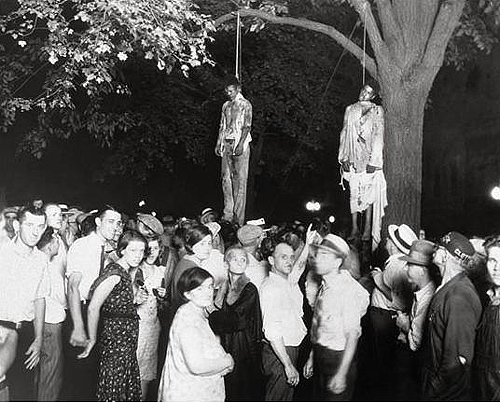
The South was passionate about their way of life and a system of economics which depended on slave labor. They were so passionate that they were willing to die for their ideology. The war for a lifestyle which the Civil War embodied never really ended. Over a hundred and fifty years later and the beliefs that underlie the civil war seem to be almost as strong as they were back then. The racism that many in the South held onto after the war was more based on passion than logic. The KKK was a prime example of this passion. A group of white people driven by passionate adherence to protect an idealized lifestyle and their right to dominance. Blacks, Jews, and Northerners were considered inferior or to lack the sophistication that the Plantation Mentality bestowed on the South. Any time one group for whatever reason thinks they are superior, it is a formula for terrorism and violence. The passion of the South has played out over the years in a plethora of laws, court cases and behaviors that have had the effect of murdering and tyrannizing primarily Black people in America.

Greedy Evil:
Whenever I think of greed, I think of the story about Silas Marner by George Eliot. Silas sat at his table each evening counting his gold pieces. He was lonely and he had no life except for his gold coins. Then there is the story of King Midas whose greed for gold turned everything he loved into solid unfeeling gold. I think the greatest sickness in America today is loneliness. Loneliness drives much of the unhappiness and anger that is so evident in American politics. The rise of “Identity” politics is based on a desire to belong. The way to belong is to acquire things, stuff, money, positions. The concept that “he who has the most toys wins” is proof of the belief that the way to win and to be accepted is to have more money or things than anyone else.
“Where do the evils like corruption arise from? It comes from the never-ending greed. The fight for corruption-free ethical society will have to be fought against this greed and replace it with ‘what can I give’ spirit.” — A. P. J. Abdul Kalam
I often wonder if we now live in the greediest period of history. Driven by an incessant stream of advertising that we need more and more and more; we seem less and less happy. Commercials 24/7 exhort us to buy, buy, buy. To spend, spend, spend. We can only be happy if we have more than our neighbors. Our kids need more. We need more.
Of course, greed has always been with us. Greed is mentioned over twenty-four times in the Bible.
Book of Job (600-400 BCE) — 20:15 “He hath swallowed down riches, and he shall vomit them up again: God shall cast them out of his belly.”
In Buddhism, the 3 poisons of greed, hatred, and delusion are thought to be the root cause of all unnecessary human suffering.
In the Quran it says: [9:34] “O you who believe, many religious leaders and preachers take the people’s money illicitly and repel from the path of God. Those who hoard the gold and silver, and do not spend them in the cause of God, promise them a painful retribution.”
In Hindu theology, the six enemies of the mind are: desire, anger, greed, arrogance, delusion, and jealousy.
I talked about greed quite a bit in my previous two blogs on morality. I suggested I would propose an answer to the prevailing winds of greed that blow us from one purchase to another. I think we need leadership to do this. However, our present leaders lack the desire and skills to take us out of this wilderness of greed that we are in. Some people may find their way out, but I fear that these individuals are a minority.

Ambitious Evil:
Ambition is another one of those ideas which we are taught when we are young is a positive attribute. We are told that to be ambitious is desirable. Who would admire someone who lacked all ambition? Nevertheless, ambition can be dangerous.
Marc Antony in Shakespeare’s Julius Caesar delivers a eulogy for Caesar and says:
“So let it be with Caesar. The noble Brutus hath told you Caesar was ambitious: If it were so, it was a grievous fault, and grievously hath Caesar answer’d it.”
Ambition has been the ruin of many a man, Shakespeare’s MacBeth was another man undone by ambition. The men who ruled Enron destroyed a company because of ambition. There is a fine line between greed and ambition, and it might seem as though they could not be separated. I see greed as more a penchant for money and things and ambition more a penchant for status and power. You can have a great deal of money and still lack status. Perhaps that is behind the term nouveau rich as contrasted with established wealth. The Bush family was established wealth. Elon Musk is nouveau riche.
“Nouveau riche is a term used, usually in a derogatory way, to describe those whose wealth has been acquired within their own generation, rather than by familial inheritance.” — Wiki
One hears the term “unbridled” ambition to refer to extremes of ambition. These extremes are usually dangerous not only to the ambitious but also to those who depend on the ambitious. American politicians who continue to pursue election after election may not suffer from an abundance of greed, but they are certainly rife with ambition. I continually hear calls for term limits today along with age limits. The average age in the US Senate is 64.3 years. Twenty-six senators are over the age of 70. — “How Old is the 117th Congress?”
I think it is safe to say that many if not most of the older US Senators are out of touch with the US Population. If their wealth was not enough to make this statement true, I think the age and lack of interface with the daily life that most people face would cement my assertion as a fact.
I will make the following statement: “We will not be able to save American democracy with the people and demographics that we now have in Congress.”
Unless we make some major changes in institutions that have existed nearly two hundred years without change, we are going to see the decline of the American dream. The dream will have succumbed to ambition and greed if not passions and principles.
 Years ago, religions enforced what I would call a pseudo moral code through the power of the state to enact laws desired by the most powerful religions. This of course reflected the power that religions had in society back when you could go to hell for missing mass on Sunday. Gambling was verboten. There was legalized horse race betting in only a few states, and a few states had some other sports such as greyhound racing or Jai Alai which you could bet on. Legally, you could only place bets at the venue. Of course, organized crime found it very lucrative to offer “off track” betting. Every street corner where I grew up had a bookie some place or other. And of course, the numbers game was a very popular way for fools to lose their money. Sports betting was done privately, and casino gambling did not start in Las Vegas until 1931. It had been legal earlier but was outlawed in 1910 and not legalized until 1931. The only lottery I ever heard of when I was growing up had to do with the Irish Sweepstakes. There must have been some way to buy these tickets, but I never investigated it.
 Whiskey can now be purchased almost 24/7 in many states. You can buy it in grocery stores, gas stations, bars, and convenience stores. Perhaps no substance has been more abhorred by religions than whiskey. Benjamin Franklin said that “Beer is proof that God loved man and wanted him to be happy.” However, this was not the attitude of most religious organizations. Temperance movements motivated by so called moral considerations did their best to ban alcohol in the US. It is illegal in thirteen countries in the world. Several of the world’s major religions ban the use of alcohol. There are seventy-five scripture (Bible) warnings against the drinking of alcohol. Is it any wonder that so many religions have prohibited the drinking of alcohol.
 Now there may be some of you reading my blog and expecting a fire and brimstone sermon regarding the sins of humanity and the temptations of the devil. Nothing could be further from my mind. I am not advocating going back to the religious sanctions or beliefs that fueled so much of our political system. In the first place, they were misguided and in the second place they penalized those who could practice moral virtues along with those most reluctant. I could never understand why I could not buy liquor on Sunday or after 10 PM on weekdays or in a grocery store. I have never received a DUI or even a warning for driving drunk.
 The government has always been in the marketing business. They would market “SIN” if they could find a way to sell it or allow it to be sold. In some respects, they are already doing that with the legalization of gambling and their promotion of bigger and bigger lotteries. The poor buy more and more tickets when the odds go ever higher against anyone winning. Powerball’s odds are 1 in 292 million, and the combined populations in the states where tickets are sold equal nearly 320 million. What would anyone do with 2 billion dollars? (As I write this, the lottery of 2.0 billion has been won by a single person in California)


 Thus, the uncoupling of Church and State in the constitution of the United States set the stage for a catastrophic imbalance between Moral Policy and Economic Policy. Over the years, the lack of influence in organized religions at the political level was abetted by the horrendous influence and power of Economic Policy. If Moral Policy was once the heart of a religion, it was supplanted by an Economic Policy which has become the main religion in America. This policy states that more is better and that you can never be too rich or have too much stuff.
 What we once believed was a great political innovation to separate Church and State has led to this imbalance. There was no place in the state for religion and no place in religion for politics. America’s dominant dream for peace, justice and equality was replaced with a dream for more money, more power and more fame. The push by the State for this dream dwarfed any efforts by religion to provide a moral balance and the State had no legitimacy for morality. People are cast adrift amidst a chaotic and vicious ocean of competition for more and more stuff. No moral anchors exist that are powerful enough to counterbalance the tide of greed that this has brought to our shores. Guns have replaced morality as citizens arm themselves to prevent imagined attacks at taking away their STUFF.


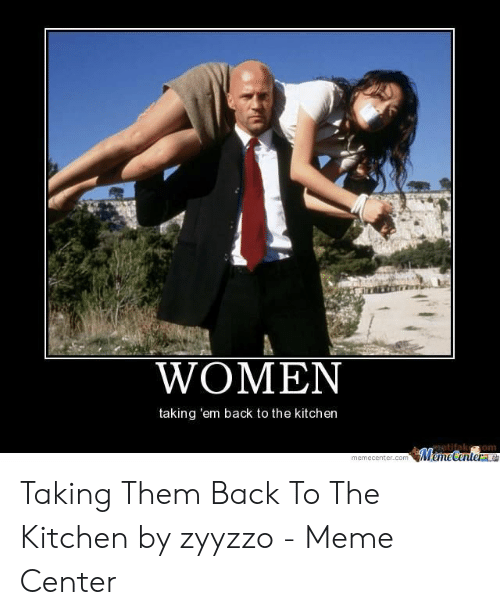 When we get back to normal, two parent families will again reign supreme. Mom will stay home to cook, while dad goes to work. There will be no trans-people. Girls will stick to cheerleading and let the boys play the sports. Contraceptives will be banned, and no one will dream of getting an abortion. Priests and ministers will be male, and gay people will disappear. Everyone in America will go back to being good Christians.


 with someone for an underlying motive or future advantage that they hope will accrue for their fawning behavior. People with integrity do what they believe is right whether or not any advantage will accrue from their efforts. People with integrity are consistent in their stated ideas and do not read the polls to see which way public opinion is blowing.
 Tolerance is the willingness to respect and stand up for someone when you are in the majority and they are in the minority. Difficult it is to speak out against your peers and tribe. When someone has an idea that does not fit with the normal conception, the tolerant person will try to hear them out. Tolerant people respect those with seemingly strange and weird or wild ideas. The tolerant person does not say “That is crazy or that is a stupid idea.” A recent example I think that shows both tolerance and courage is the song by Tyler Childers – “


 believed that German blood defined a German race which was superior to other races. This superiority led to the extermination camps wherein “inferiors” were eliminated. These inferiors included many people from other “races”, religions, ideologies, and with different physical characteristics. There was one tribe of Germans and not belonging to this tribe was a potential death sentence. Hitler set up a pseudo-scientific structure to discriminate between “True Germans” and other inferior “races.” There never was and never will be a scientific basis for a German race, but this did not stop millions of Germans subscribing to the Nazi ideology of Germanic superiority.
  If race does not exist but culture exists, what does this mean for group identity? How strong should group identify be? Should I sacrifice all for my group and fight to the death for my cultural identify? What if I believe that my culture is better than your culture? Could culture become just another banner to wave for those who want to commit acts of prejudice and discrimination on the basis of some perceived differences? I think this is a distinct possibility and has indeed occurred throughout history. How then can we have a cultural identify without resorting to racism and discrimination?





 Aging Capriciously